Impact of Quality of Internet Services on Internet Users

Impact of Quality of Internet Services on Internet Users

Impact of Quality of Internet Services on Internet Users

QOIS

OVERVIEW

In the era being described as “Digital India”, it is important to increase the internet penetration but it is also important to improve the quality of internet services to be able to realize the goal of “Digital India”. Having taken the first step of getting connected, quality of services cannot be ignored and is the necessary second step that needs to be taken.

VOICE initiated a study on ‘Assessment of Impact of Quality of Internet Services on Internet Users’, in September 2016, supported by Ford Foundation, which was based on a sample of 52,000 across 19 states of India. The purpose of this study was to assess the impact of quality of internet services delivered to its consumers. It found several shortcomings/impediments which require attention for further enhancing quality of internet.

OBJECTIVES OF THE STUDY

Assessment Of Impact of Quality of  Internet Service is a national study under taken by Consumer VOICE to assess the:

  • Current status of Quality of Internet Service in India
  • Patterns of current usage of Internet
  • Interpret the effect of Quality on Usage of Internet
  • Impact of Internet usage on various aspects of life

FINDINGS OF THE STUDY

The report subsumes 3 volumes:

  • Volume 1: Concept Scope and Dimensions  Read More
  • Volume 2: Assessment of Quality of Internet Service    Read More
  • Volume 3: Impact of Quality of Internet Service on Various Aspects of Life  Read More

NEEDQOIS CAMPAIGN

‘NeedQoIS’ is an initiative taken by VOICE in the interest of internet users (consumers) to educate and enlighten them about Quality of Internet Service (QoIS) and engaging consumers in the fight for better internet service nationwide to make it a truly Digital India. (For more details, please visit https://www.facebook.com/NeedQoIS/)

STUDY HIGHLIGHTS

The study, besides seeking perceptions on various parameters of quality of internet, sought perceptions on the impact of internet on various aspects of life, which include daily lives, development of rural areas, education and research, business and jobs, health and medical services, political and civic participation, shopping, travelling and commuting, women empowerment and empowerment of people with special needs, and e-governance. It was found that each of these aspects is significantly impacted by internet.

The measurement of wireless internet speeds in this study was also undertaken. The average 3G speeds were only 1.5 mbps while average 4G speeds were only 4.10 mbps. These are among the lowest in the world. By definition, 4G speeds are 40 to 150 mbps and Indian telecom companies, claiming use of 4G technology are delivering 3G speeds to their customers.

Based on the study, following recommendations were made to TRAI –

  • For better quality of speed a Mandatory disclosure of min avg download speed be made, which must be met at least 95% of the times.
  • ISPs to include a speed measurement tool in their apps and maintain a record of average speed during the day, week and month.
  • ISPs to disclose minimum and maximum speeds on daily, weekly, monthly and quarterly basis. Compensate consumers for failing to adhere to average download speeds and down time. TRAI should create a mechanism for compensation for quantifiable losses below the benchmark.
  • Declare minimum speeds at the time of sale of plans.
  • TRAI’s MySpeed App should be made more robust and user-friendly. It should be able to provide speed comparisons for each BTS and also show comparisons of ISPs at given BTS.
  • Each ISP app must have a complaint feature with follow up of outcome of complaints.
  • TRAI should find a way so that consumer using internet can come to know the reduction in speed or loss of signal at a particular point of time. At present the phones show E or 3G or 4G signal when there is in fact no signal. When signal is lost there should be a way to inform the consumer about loss of speed or signal by an adequate label mechanism.
  • TRAI should be able to provide speed comparisons for each BTS and also show comparisons of ISPs at given BTS.

Creative Commons License
This work is licensed under a Creative Commons Attribution 4.0 International License.

CAMPAIGN UPDATES

WORKSHOP HELD IN BANGALORE:

NEED FOR BETTER QUALITY OF INTERNET SERVICES TO MAKE INDIA TRULY DIGITAL”

Consumer VOICE celebrated World Consumer Rights Day (#BetterDigitalWorld) at Bangalore by organizing a workshop in collaboration with the The Chair on Consumer Law and Practice, National Law School of India University. Prof. (Dr.) R. Venkata Rao, Vice Chancellor, NLSIU was the Chief Guest. Prof Sriram Khanna, Consumer VOICE and Prof.(Dr.) Ashok R. Patil, NLSIU were the expert speakers who discussed and explained the findings of this national study.  Read More 

CONSUMER VOICE CONVERSATION SERIES

DIGITAL INDIA IN LIGHT OF SUB-STANDARD INTERNET SERVICES

Consumer VOICE Conversation Series held 18 Dec’17 aimed at enlightening consumers about the quality of internet services and also to awaken the concerned authorities to take the appropriate action to improve the quality of internet service in India under the initiative – NeedQoIS. The event also had officials from TRAI (Telecom regulatory Authority India) to present their point of view and answer the questions and issues raised by the audience. 

INDIA: HIGHEST GDP GROWTH RATE AND LOWEST INTERNET SPEEDS

Indian consumers are consistently battling with low internet speeds while dreaming of a new and better ‘Digital India’. It is disappointing to see that a country making its mark on the world map for its excellent GDP growth is worse than Pakistan and Algeria when it come to internet speeds (as found in a study by OpenSignal). Consumer VOICE conducted a study titled “Assessment of Impact of Quality of Service on Internet Users” in the last quarter of 2017 and found that the average 4G speeds delivered to consumers is a mere 4.10 mbps. The speed tests were conducted on TRAI MySpeed app on which TRAI has recently released a white paper elaborating on the methodology behind working of the app. The paper only focuses upon the technicalities of the app but does not focus on getting faster internet speeds. Sign the petition –  http://chn.ge/2GT3Chi

ITS RAINING DATA

As soon as Reliance JIO offered its free services to consumers, the level of competition reached its peak among the Internet Service Providers. The data which was available per month at the price of Rs. 30 to 50 per GB in Indian telecom markets has come down to Rs 5 per GB in the year 2017, as data consumption has increased. It has become cheaper to watch movies and web series on Internet and Wi-Fii. However, it has been observed that after these developments, post-paid subscribers are paying more as compared to the pre-paid subscribers. Being in the field of consumer education and empowerment for over three decades now, Consumer VOICE requests TRAI to take prompt action on the same so that there is no discrimination between the pre-paid and post-paid consumers and they are benefitted from the rising competition between ISPs.  Sign the petition –  http://chn.ge/2GT3Chi

CAMPAIGN UPDATES

Internet Speed – Where is the Speed?

Internet Speed – Where is the Speed?It’s an irony that while writing this blog on internet speed, work was hampered several times because of slow internet speed. At a time when India is trying to make headway as Digital India, people in India are still struggling over...

read more

Digital India – Do we have the Right Internet Speed?

Digital India – Do we have the Right Internet Speed?Better living in the 21 st century is directly related to a better digital world. But is India really making progress in being Digital India? Do we have the sufficient bandwidth and speed to match up with the world?...
read more

MEDIA REITERATES OUR EFFORTS

Apr 16, 2018 | Mydigitalfc.com Impact of Internet on agriculture
Feb 25, 2018 | SundayGuardianLive
  E-commerce has empowered consumers
Internet speed far below what service providers claim: Study
Safer Cars in India | Consumer VOICE Initiative

Safer Cars in India | Consumer VOICE Initiative

Safer Cars in India | Consumer VOICE Initiative

OVERVIEW

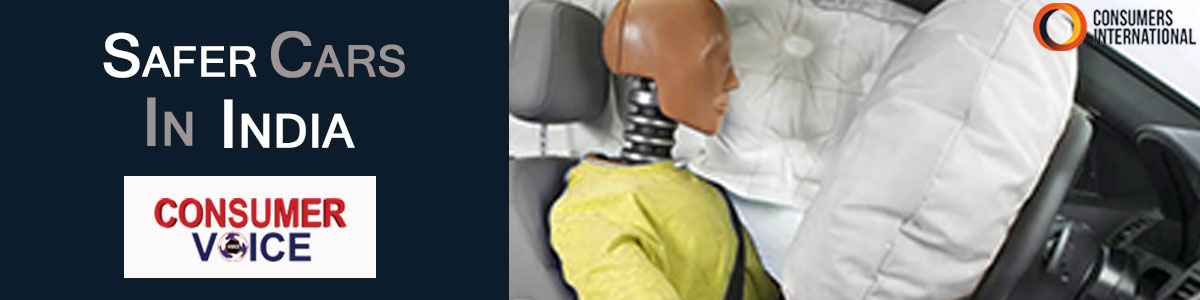
Safer Cars in India is an initiative of Consumer VOICE as part of a global campaign for safer cars by Consumers International. Consumer VOICE organized 15 workshops in the months of June and July, 2017, across India to demand for safer cars for consumers in India. The pan-India campaign took place across 15 states from Jammu and Himachal Pradesh to Assam and Odisha which was aimed to reach out to over 5000 consumers.

CAMPAIGN FOCUS

When the world is making a shift to automated cars, Indian cars still lack in basic safety features like airbags, Antilock Braking System (ABS) and Electronic Stability Control (ECS). In order to demand for safer cars in India, Consumer VOICE organized workshops across India with the following objectives:

  •  To educate consumers on Car Safety aspects to create a demand of basic car safety features in all models introduced.
  •  To create a platform where ‘Voices’ across states will emerge to put pressure on Government and manufacturers to incorporate safety features.
  • To create awareness across states on the subject matter among masses through target audience, VCO’s and media.
  • To put pressure on manufacturers to stick to timelines for introduction of safety features.

STRATEGY

All of the consumer empowerment workshops started with a five minute film highlighting the real experiences of car crash victims, their relatives, and the trauma they have gone through and message they want to convey to all the
consumers, manufacturers and Government.Presentations were made by road safety experts, automobile experts and educated consumers on various road safety aspects and the need for safer cars. Throwing some light on the alarming figures on road traffic crashes,

Mr. Ashim Sanyal, COO, Consumer VOICE, during one of the workshops said,

“As per Indian Government figures, approximately 146,133 people were killed in road accidents in 2015 alone – averaging an alarming 1,374 crashes per day. Apart from reckless driving, a crucial component to road safety is safer vehicles on our roads. The worrisome part is that, despite being the world’s 4th largest automobile market, almost 60% of the cars sold in India aren’t equipped with basic safety features such as airbags and ABS, which can protect lives of car occupants in a crash." He further elaborated on the issue of safer cars as 5 popular Indian cars received a zero-star rating in GNCAP results. Zero-rated cars being bought and sold in India is a cause of concern often overlooked.”

IMPACT

  • Government officials from Traffic Police, and Road Safety joined the workshops and addressed the audience on various road safety aspects.
  •  Experts from Road Safety, Automobile Sector came forward and joined the workshops to impart education to target audience about safer vehicles, need to have safety devices and demand for safer vehicles in India.
  •  Pressure was created by efforts from workshops on manufacturers and Government.

CAMPAIGN UPDATES

No Results Found

The page you requested could not be found. Try refining your search, or use the navigation above to locate the post.

MEDIA REITERATES OUR EFFORTS

Global road safety initiative

Feb 5, 2018 | The Tribune

The Drug De-addiction Society of the Government College of Commerce… Read more

Vehicle makers, govt agencies urged to focus on road safety

Jan 2, 2018 | The Hindu

Consumer education on vehicle safety requires greater involvement of vehicle makers… Read more


tobacco intervention

tobacco intervention

OVERVIEW

267 million tobacco users in India.

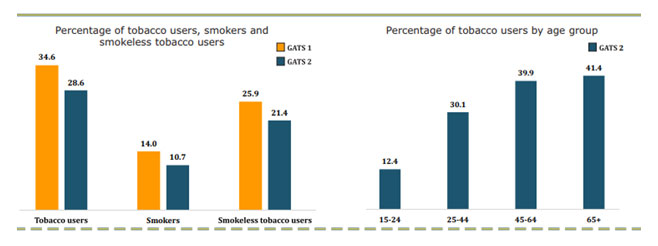
Among people above 15 years, 28.6% of the population currently uses tobacco products

Among youth (ages 13-15 years), 14.6% currently use some form of tobacco (boys 19.0%; girls 8.3%) and 4.4% smoke cigarettes and 12.5% use other tobacco products.

12.1% of daily users of smokeless tobacco aged 20-34 had started using smokeless tobacco when they were younger than age 15 and 36.2% of daily smokeless tobacco users aged 20-34 had started smoking or started smokeless tobacco use when they were minors i.e. younger than 18 years.

The prevalence of tobacco use varied across the states/UTs from 64.5% in Tripura to 9.7% in Goa. The mean number of cigarettes smoked per day by a daily cigarette smoker was 6.8 and the mean number of bidis smoked per day by a daily bidi smoker was 15.1.

COVID-19 Pandemic and Tobacco Use in India

Tobacco use is a major risk factor for the four main Non-communicable Diseases (NCDs) — cardiovascular disease, cancer, chronic lung disease and diabetes, which puts people with these conditions at higher risk for developing severe illness when affected by COVID-19. Smokers are likely to be more vulnerable to COVID-19 as the act of smoking means that fingers (and possibly contaminated cigarettes) are in contact with lips which increases the possibility of transmission of virus from hand to mouth. Experts have confirmed that smokers are more likely to develop severe symptoms or die from COVID-19, as it primarily attacks the lungs. Further smoking products such as water pipes or hookah often involve the sharing of mouth-pieces and hoses, which could facilitate the transmission of COVID-19 in communal and social settings. Read more


(Source : Ministry of Health and Family Welfare)

(Source : Ministry of Health and Family Welfare)

If these facts are not scary enough, there are some more. 

  • Smoking and exposure to secondhand smoke kill about 926,000 people each year.
  • Smokeless tobacco use kills an additional 200,000 people in India each year, accounting for 74% of the global burden of smokeless tobacco.

Not many are aware that smoking  tobacco is actually dominated by bidis in India.  While bidi smoking has been shown to increase the risk of chronic bronchitis, tuberculosis, and respiratory diseases, bidi rolling is no less hazardous. Bidi smoke delivers more tar, carbon monoxide and nicotine than western-style cigarettes, and therefore Bidis are more or equally harmful as cigarettes.  Bidi rollers experience exacerbation of tuberculosis, asthma, anaemia, giddiness, postural and eye problems, and gynecological difficulties.


E CIGARETTES ACT 2019 EXPLAINED

The Parliament of India passed the “ Prohibition of Electronic Cigarettes (Production, Manufacture, Import, Export, Transport, Sale, Distribution, Storage, and Advertisement) Bill, 2019” by voice vote and with long discussion in both the houses (Lok Sabha & Rajya Sabha). Read More

THE GLOBAL ADULT TOBACCO SURVEY (GATS)

The Global Adult Tobacco Survey (GATS) is a global standard for systematically monitoring adult tobacco use (smoking and smokeless) and tracking key tobacco control indicators.

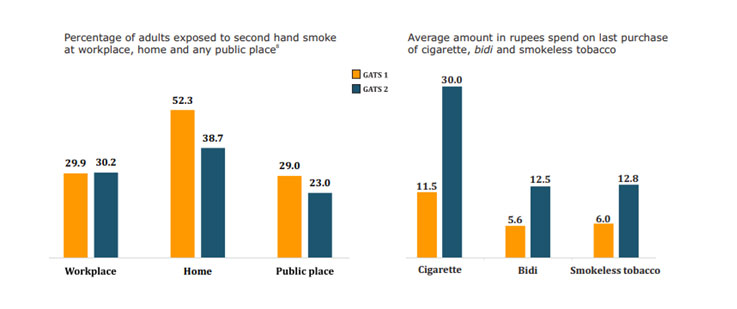
GATS-1 was conducted between June 2009 and January 2010. The second survey was conducted between August 2016 to February 2017. It was conducted by Union Health & Family Welfare Ministry and Tata Institute of Social sciences. Comparing GATS-1 with GATS-2 we found an overall reduction in tobacco consumption at national level by 6% which is a very good news.

GATS 2 India 2016-17 Factsheet

Tobacco Control Policies in India

CAMPAIGN FOCUS

  • To ensure that all tobacco products including bidis, cigarettes and smokeless tobacco be taxed at the highest rate of taxation
  • Selling Tobacco products along with toffee /chocolate to attract children this habit needs to be curbed down with vendor licensing.
  • Protecting the health of the citizens of the country by:
    • Sensitizing the people on the ill effects of tobacco in any form
    • Ensuring implementation of stringent laws on tobacco use especially among minors
    • Generating awareness among people on second hand smoke

STRATEGY

Tobacco products are easily available at every nook and corner. Easy availability is causing an increased use of tobacco and tobacco related products among all sections of the society. The harmful effects of tobacco are not unknown and therefore there is an urgent need to decrease the use of tobacco.

So, one of the important steps taken towards this is vendor mapping in various states with support from network of state partners.

Another effort of Consumer VOICE is sensitization of stakeholders through evidence based data to have laws to facilitate selling of tobacco through licensed shops so that one can put a curb on the mushrooming of tobacco stores everywhere.

Consumer VOICE is also working towards tobacco intervention  focused on youth and children.

Shops authorized for selling tobacco products cannot sell any non-tobacco products such as toffees, candies, chips, biscuits, soft drinks, etc., which are essentially meant for non-user, especially children.

It is also ensuring no tobacco shops within 100 yards of any educational institution.

Sensitization of various stakeholders such as media, consumers and people working for the social cause through educational workshops and events.

OUTCOME

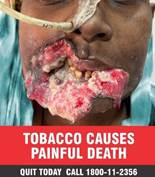
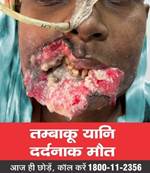
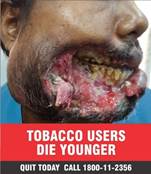
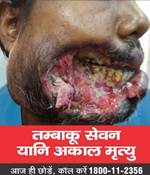
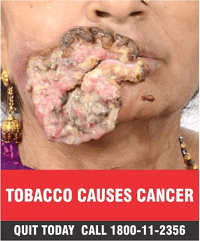
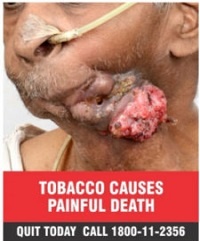
A series of strong actions have been taken at both the national and state level to curb the country’s enormous tobacco epidemic, which claims one million lives each year. These actions include large, graphic warning  or pictorial warning that cover 85 percent of tobacco products. India’s warnings are among the largest in the world, showing that graphic warnings depicting the deadly consequences of tobacco use work to help current users quit and prevent people from starting to use tobacco.

To prevent use of tobacco it has to be a joint effort of the government and the people. The government is doing its bit by forming several legislations like banning smoking in all public places, prohibiting advertisement and promotion of all tobacco products and sale of tobacco to minors.Quit Today,’ a toll free helpline number (1800-11-2356) to be printed on all tobacco products.

Ashim Sanyal, COO Consumer Voice  welcomed the decision of the Health Ministry and said that the “Health Ministry has implemented from April 2016, large pictorial health warnings occupying 85 percent on both sides of all tobacco packages of cigarettes, bidis and all forms of chewing products. He also said said that the vendor licensing is an effective way to manage random sale of tobacco products and aims at controlled sales through registered vendors.

Cigarettes and Other Tobacco Products (Prohibition of Advertisement and Regulation of Trade and Commerce, Production, Supply and Distribution) Act, 2003 or COTPA 2003 prohibits advertisement of and sale and supply of cigarettes and other tobacco products in India. The Ministry of Health and Family Welfare took up several initiatives to create awareness about the harmful effects of tobacco use and tobacco products out of which pictorial warning is a hugely successful one.However, the key to success is the implementation of these measures.

COTPA 2003

Cigarettes and Other Tobacco Products (Prohibition of Advertisement and Regulation of Trade and Commerce, Production, Supply and Distribution) Act, 2003

Various Sections are hereunder: –

  • Prohibition of smoking in a public place (4)
  • Prohibition of advertisement of cigarettes and other tobacco products (5)
  • Prohibition on sale of cigarette or other tobacco products to a person below the age of 18 years and in particular areas (6)
  • Restrictions on trade and commerce in, and production, supply and distribution of cigarettes and other tobacco products (7)
  • Punishment for failure to give specified warning and nicotine and tar contents (20)
  • Punishment for smoking in certain places (21)
  • Punishment for advertisement of cigarettes and tobacco products (22)
  • Punishment for sale of cigarettes or any other tobacco products in certain places or to persons below the age of 18 years (24)

WHAT IS PICTORIAL WARNING

The specified health warning shall cover at least 85% of the principal display area of the package of which 60% shall cover pictorial health warning and 25% shall cover textual health warning and shall be positioned on the top edge of the package and in the same direction as the information on the principal display area.The tenure of the existing health warning was to end on March 31, however, the Government has extended the duration of existing health warnings on tobacco packs till August 31.

New Specified Health Warning on Tobacco Products Packs

The Ministry of Health and Family Welfare, Government of India has notified new sets of specified health warnings for all tobacco product packs by making an amendment in the Cigarettes and other Tobacco Products (Packaging and Labelling) Rules, 2008 vide GSR 592 (E) dated 21st July, 2022 “The Cigarettes and other Tobacco Products (Packaging and Labelling) Third Amendment Rules, 2022”. The amended Rules will be applicable w.e.f. 1st December, 2022.

The new set of specified health warnings shall be-

  • Image-1, shall be valid for a period of twelve months following its commencement from 1st December, 2022.


  •  Image-2, which shall come into effect following the end of twelve months from the date of commencement of specified health warning of Image-1.

    Tobacco Packet           Tobacco

    • The said notification alongwith the soft or printable version of the specified health warnings in 19 languages are available on the websites www.mohfw.gov.in and ntcp.nhp.gov.in

    In view of the above, it is informed that;

    • All tobacco products manufactured or imported or packaged on or after 1st December, 2022 shall display Image -1 with the textual Health Warning as ‘TOBACCO CAUSES PAINFUL DEATH’ and those manufactured or imported or packaged on or after 1st December, 2023 shall display Image-2 with the textual Health Warning ‘TOBACCO USERS DIE YOUNGER’.
    • Any person engaged directly or indirectly in the manufacture, production, supply, import or distribution of cigarettes or any tobacco products shall ensure that all tobacco product packages shall have the specified health warnings exactly as prescribed.
    • Violation of the above mentioned provision is a punishable offence with imprisonment or fine as prescribed in Section 20 of the Cigarettes and Other Tobacco Products (Prohibition of Advertisement and Regulation of Trade and Commerce, Production, Supply and Distribution) Act, 2003.
    • The existing specified health warning (Image-2) – notified vide GSR 458(E) dated 21st July, 2020, shall continue till 30th November, 2022.

    CIGARETTE PACKAGE HEALTH WARNINGS – 2018-19

    • Cigarettes and other Tobacco Products (Packaging and Labeling) Second Amendment Rules, 2018  will be applicable w.e.f. 1st September 2018
    • Image-1 came into effect from 1st September, 2018
    • Image 2 will be displayed on tobacco products packaged or imported on or after 1st September, 2019
    • India’s ranking was 136 in 2014 and 123 in 2012.
    • India jumped to third rank (tied with Thailand) with the implementation of these rules.
    • Our neighbor Nepal has the largest warning requirements in the world at 90 per cent of the package front and back.
    • The Ministry of Health and Family Welfare notified new sets of specified health warnings for all tobacco product packs
    • Click here for press release
    WHERE IS IT WRITTEN
    • Rules were to come into effect from April 1, 2015 but after hue and cry from tobacco industry it was delayed.
    • A group of activists approached the Rajasthan High Court, which, in July 2015, asked the Centre and the state government to immediately implement the 2014 Rules.
    • From April 1, 2016 rules were finally implemented.
    • Before this we had only 40 per cent warning on one side, which means 160 per cent of the space was given to advertisement and promotion.
    • Supreme Court stayed an order by the Karnataka high court which struck down a regulation that tobacco product packages must have a pictorial warning covering 85% of the space.
    • Apex court gave primacy to the health of citizens over the concerns of the tobacco industry.
    • Bench led by Chief Justice Dipak Misra said it is mild to say that tobacco consumption and use causes “deterioration of health”. The apex court said “destruction of health” is a more appropriate phrase to explain the harm caused by tobacco.

    MEDIA REITERATES OUR EFFORTS

    Civil society groups laud govt’s efforts on tobacco taxation

    July 2, 2019 | Business Standard

    Several civil society groups across India lauded the ongoing efforts of the government … Read more

    36 e-cigarette brands illegally operating in India

    May 31, 2019 | ET HealthWorld.com

    Even as the union health ministry continues its efforts to prevent the entry of e-cigarette …. Read more

    E-cigarette industry still the centre of controversy

    May 31, 2019 | Health Issue India

    The controversy over the e-cigarette industry in India shows no signs of abating as …. Read more


    CAMPAIGN UPDATES

    Big Tobacco, Tiny Targets Study 2020

    Big Tobacco, Tiny Targets Study 2020On 12th January, on the occasion of Swami Vivekanada’s birth anniversary, which is also celebrated as National Youth Day, the report of Big Tobacco, Tiny Targets Study 2020 was released online. The study was conducted across 1011...
    read more

    India and WHO Framework Convention on Tobacco Control

    India and WHO Framework Convention on Tobacco Control The WHO Framework Convention on Tobacco Control (WHO FCTC) is the first international treaty negotiated under the auspices of WHO. It was adopted by the World Health Assembly on 21 May 2003 and entered into force...

    read more

    Green Action Week (GAW)

    Green Action Week (GAW)

    Green Action Week (GAW)

    OVERVIEW

    Green Action Week (GAW) is a global campaign held every year in October. It is an initiative by the Swedish Society for Nature Conservation (SSNC) and is carried out in coordination with Consumers International (CI). The theme of Green Action Week in 2019 is Sharing Community, extension of the same theme that was in 2018.

    AIM

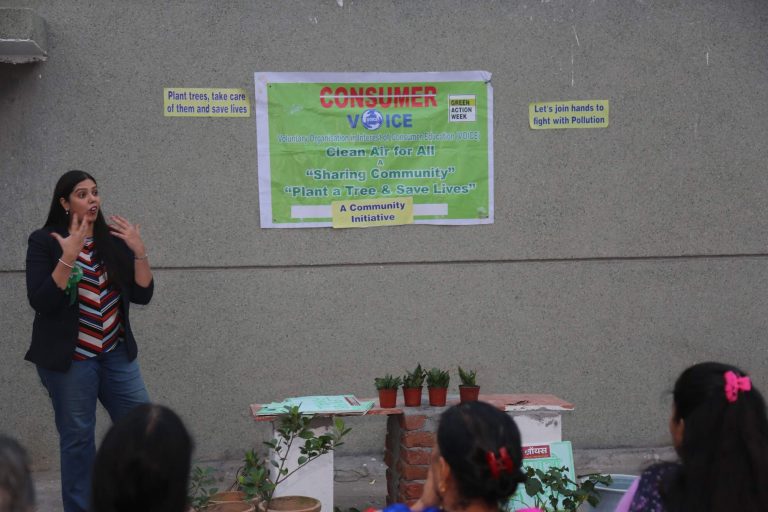
    To ignite cultures of sharing and collaboration and to make sure everyone has sustainable access to goods and services. This time too Consumer VOICE is participating in the campaign through Community Sharing. Providing clear air to all is the main objective of Consumer VOICE this time, as we all know that with each passing day pollution level is rising to new heights and there is deep lack of clean and pollution free air in Delhi. The need to inculcate green practices is greater than ever before. We need to breathe clean and help others breathe as well.

    WHAT IS COMMUNITY SHARING?


    Not all people have equal access to the goods and services needed a decent life, and too much stress is being put on the planet. Green Action Week therefore focuses on sustainable consumption because it is crucial to tackle both the social and environmental causes of this crisis.

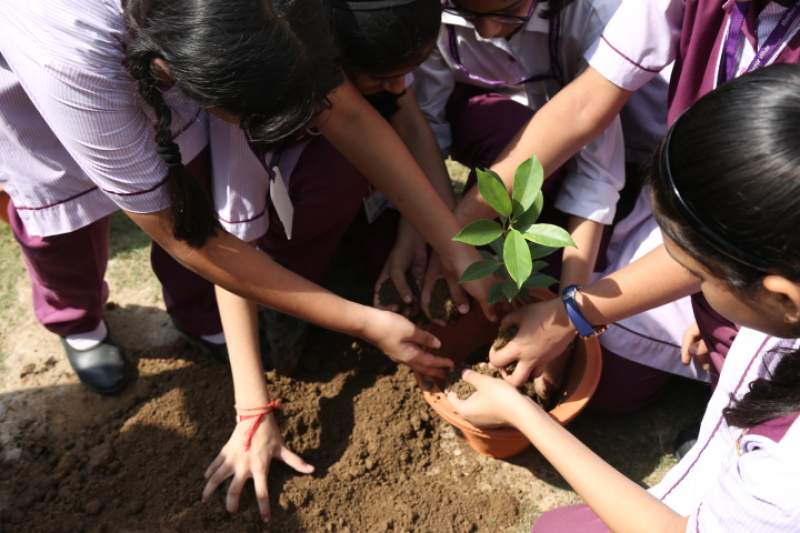
    Through Green Action Week, Consumer VOICE wishes to reinforce the culture of sharing and giving it back to the community. One of the best tools in the fight against air pollution through community sharing is planting of trees and preserving them. Communities including school students, members of Resident Welfare associations, and women together can make a difference. A small step taken by all will result in a big change.

    • Student community must be encouraged to plant saplings from an early stage but it should not stop there. They should adopt the plant and be responsible for nurturing it as well.
    • Since the sources of pollution are diverse, a concerted effort is needed from all sections. Home -makers should be encouraged to use cleaner fuel and RWAs should also encourage residents to opt for public transport rather than personal vehicles. In a city like Delhi, where there are more cars than all the other 3 metropolitan cities put together, residents should switch to public transport atleast once a week.
    • Kitchen wastes should also be segregated based on degradable and non-degradable components. One of the best ways to use kitchen waste is turning it into compost which is not very difficult.

    Last but not the least, gift a plant to preserve the environment!

    CAMPAIGN FOCUS

    • To create community sharing where citizens will be putting their efforts for society where without ownership everyone will be getting benefit of clean air and environment.To create culture of sharing community through environment
    • To motivate, encourage and train school students/citizens towards environment protection and become volunteer for taking care of plants.
    • To put efforts towards pollution control through plantation of trees and saving environment.
    • To encourage citizens specially youngsters to come forward and take initiative towards sustainable practices through sharing community.

    CHALLENGES:

    Pollution level in Delhi is nothing new to the world. As per one of the studies, air pollution in Delhi is responsible for approximately 10,000 to 30,000 deaths in the city. This means the capital city loses 80 lives every day to pollution from PM 2.5. Planting of trees /anti pollution plants is one of the effective measures to tackle the problem of pollution and step towards sustainable environment.According to the latest data compiled in the IQ Air Visual 2018 World Air Quality Report and interactive world’s most polluted cities ranking, which is prepared in collaboration with Greenpeace Southeast Asia in order to reveal the state of particulate matter (PM2.5) pollution in 2018, Delhi had an average yearly PM2.5 concentration at 113.5 micrograms per cubic metre. The report is based on air quality data collected in 2018 from public monitoring sources, with a special focus on data which has been published in real-time or near real-time.

    STRATEGY

    • In the continuation of the previous year’s activities we will be organizing three 3 follow up workshops in Delhi/NCR and one on site practical demonstration of sustainable practices by experts.
    • We will facilitate planting activities together which will help all the participants to grow the feeling of working together, take responsibility and fight against pollution together besides nurturing the love for nature and mother earth.
    • While working together participants will be encouraged to build network and bring various tools /methods and ideas to plant and preserve trees, to adopt environmental practices.
    • Will involve last year’s participants and local residents especially women participants for making compost and share their experiences.
    • Experts will be giving practical examples ,participants will be encouraged to bring waste with them ,women participants will be encouraged to share their experiences in the kitchen the ways to utilise waste
    • Will create an interesting quiz based application to students /participants on importance of sharing in community and saving the environment.
    • We will be also spreading about our activities using social media platforms of face book and twitter.
    • Consumer-voice.org  will be our online face for all campaign updates and events.
    • We will also disseminate through newspapers and sensitize journalists, media about the initiative.

    IMPACT:

    • Society will be benefited as trees /anti pollution plants give benefits to all.
    • Community sharing practices are helpful for people to come out of their comfort zone and shed their inhibitions and contribute to the whole society.
    • Youngsters (students) are going to be trained at early stage to understand the importance of sustainable practices and save environment.
    • Students will go back and share their experiences with their families.
    • Collective efforts will inculcate the habit of giving to the community.
    • Sharing community will increase unity in diversity.
    • Women will have more exposure through community efforts.

    CAMPAIGN UPDATES

    VIDEOS

    Loading

    Green Action Week (GAW-2020)

    Green Action Week (GAW-2020)

    Green Action Week (GAW-2020)

    OVERVIEW

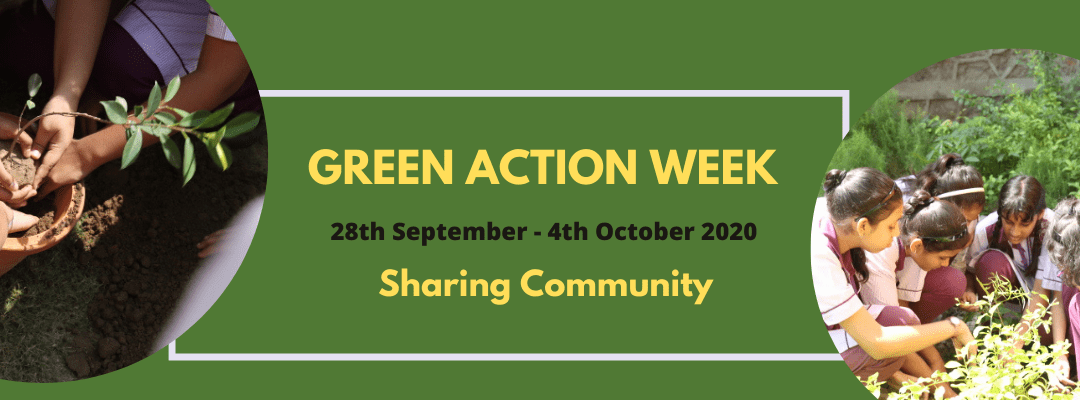
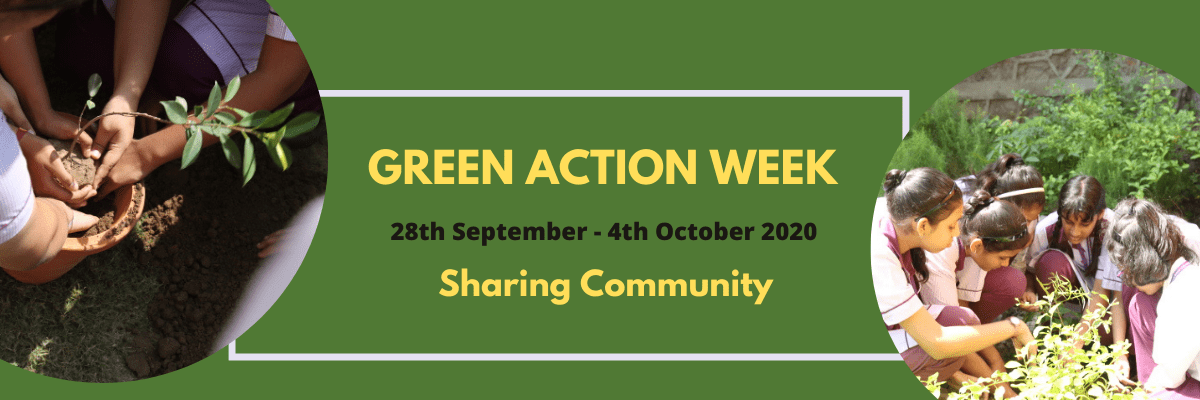
    Green Action Week (GAW) is an annual global campaign held in the first week of October every year, to promote sustainable consumption. It is an initiative by the Swedish Society for Nature Conservation (SSNC) and is carried out in coordination with Consumers International (CI).

    THEME OF GREEN ACTION WEEK 2020

    “Sharing Community with focus on sustainable consumption”

    #sharingcommunity

    AIM

    Lockdown during COVID-19 led to no or lesser vehicles on road resulting in curbing down the pollution levels. However, lockdown is temporary, it has taught us that protecting of the environment is a continuous process. This lockdown gave us an opportunity to understand the value of connecting with nature and contributing towards sustainable consumption through sharing community. Consumer VOICE aims promote sustainable practices and will create a culture of community efforts towards protecting the environment.

    WHAT IS COMMUNITY SHARING?


    There has been too much stress on Mother Earth and COVID-19 has been an eyeopener of sorts. It has made us realise that we need to take care of our environment so that we can reap benefits from it. Some of the benefits that community sharing will provide are:

    Sharing community is to encourage people to share their available resources, knowledge, skills leading to sustainable consumption to benefit the whole community and society. It also leads to the creation of new resources without ownership.

    • Collective efforts will encourage the ‘giving’ attitude amongst people.
    • People will learn and share their experiences with each other which will benefit the society as a whole.
    • New ideas will lead to innovative ways to deal with environmental problems.
    • Women participants are encouraged to come forward and contribute actively with their experiences and also to learn from others.

    CAMPAIGN FOCUS

    • To develop sharing among community members without ownership.
    • To shed inhibitions and to encourage community members to come forward to contribute to society 
    • To encourage young minds to take a break from the virtual world and rekindle their love for nature while still under lockdown.
    • To encourage women to reuse kitchen waste and have their own small kitchen garden
    • To persuade women to stop use of chemicals in their daily lives and move towards sustainable consumption so that environment can be protected
    •  To motivate, encourage and train school students towards environment protection.
    • To promote planting and nurturing of more trees among for a cleaner and greener environment

    STRATEGY

    COVID-19 has affected us in ways more than one. With no social interaction and minimal physical activity, young minds are locked in the virtual world. It is a proven fact the nature helps us to relax and stay calm. These young minds need to be channelized and the best possible way to do so is through nature. Planting trees, nurturing them to protect the environment will help the young minds to stay calm.
    We will also involve women and instill a culture of sharing of experiences among them. They will be encouraged to reuse kitchen waste and minimise use of chemicals.
    We will be organising webinars and follow up webinars for target audiences will be organsied where women and young minds (students) will be encouraged to share their knowledge and expertise on making the environment a cleaner and safer one.
    Young minds will be motivated to use technology to spread awareness about sustainable consumption, green practices and to create bond in community instead of playing video games or spending un-necessary time on the internet.
    We will encourage participants to form citizens groups and social media platforms of their respective communities to keep the knowledge flowing.
    We will be capturing the experiences of those people who already indulge in environmental activities and encourage them to share with others and motivate them to take up such activities.

    EXPECTED OUTCOMES:

    • At present we all are going through difficult times whether economically or financially. It is therefore important to keep communication channels open and have youngsters involved in meaningful activities.  This edition of GAW will enhance sharing and caring through community efforts.
    • We will encourage the young minds to share their experiences with their peer group and help their friends understand the importance of sustainable practices in saving the environment.
    • Women and the neighbourhood will be encouraged to reduce use of plastics and chemicals from their day to day life.
    • We expect target audience to connect with nature and calm down their minds to face the tough phase especially the children
    • We expect interaction of cross cultural sections as webinar is digital way of connecting people .

    Loading

    Road Safety Initiative

    Road Safety Initiative

    Road Safety Initiative


    Report on Analysis of status of Road Safety Laws and Policies related to key risk factors

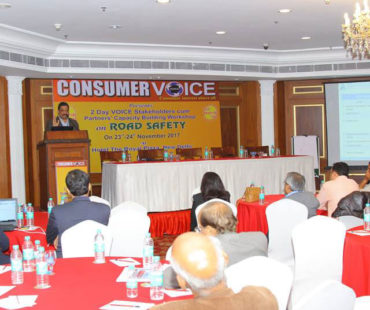
    Consumer VOICE, dedicated to road safety issues, recently concluded a  research on national-level and 2 state level laws and policies concerning safety risk factors. High casualties states of UP & MP were covered. The aim was to pinpoint any deficiencies in MVAA 19 and matching state policies, enabling us to formulate recommendations for policymakers. These recommendations will address the identified gaps and propose additional measures for more effective implementation of MVAA19.

    Furthermore, there exist state-level rules, regulations, policies, schemes, and best practices associated with these risk factors. Therefore, in their target states, Uttar Pradesh and Madhya Pradesh, an analysis of these laws and policies was essential. Specifically, this analysis encompasses the examination of state motor vehicle rules, state road safety policies, and action plans related to the specified risk factors. Besides this, Amendment of MVAA 19 is also being proposed for advocacy. 

    Read the full report here

    Consumer VOICE observes 7th UN Road Safety Week

    NATIONAL ROAD SAFETY WEBINAR

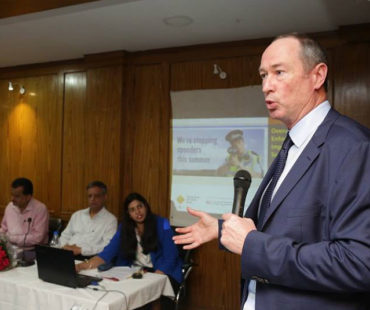
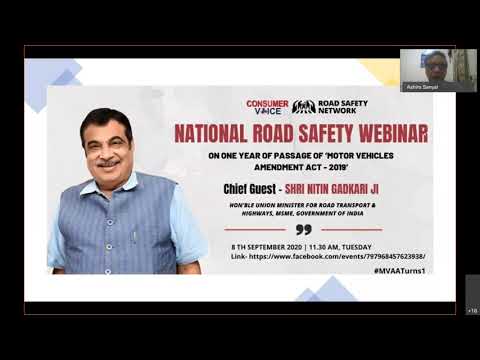
    Nitin Gadkari, the Road Transport, Highways, and MSME Minister said road fatalities can be reduced by 50 per cent by 2025 as against the target of 2030 while addressing a webinar organised by Consumer VOICE along with the other partners of the Road Safety Network.  The webinar was organised on September 1, 2020 to mark the completion of one year of Motor Vehicles Amendment Act 2019. Read More

    ROAD TO MOTOR VEHICLES AMENDMENT ACT 2019

    According to the road transport and highways ministry, half a million accidents are reported in India every year, in which 150,000 people lose their lives.
    A long awaited Motor Vehicles Amendment Act 2019 that introduces several amendments in the 30-year-old law has been passed by the Lok Sabha on 23rd July 2019 and Rajya Sabha on 31st July 2019. President Ram Nath Kovind on 9th Aug 2019 gave assent to the Motor Vehicles (Amendment) Act, 2019, that aims to make Indian roads safer, reduce corruption and use technology to overhaul the country’s transportation system.

    The amendments mainly focus on issues relating to improving road safety, citizens’ facilitation while dealing with the transport department, strengthening rural transport, last-mile connectivity and public transport, automation and computerization and enabling online services. The Bill was introduced in Parliament by the road transport and highway ministry in 2016, after which it was passed by the Lok Sabha in 2017. However, it failed to gather support in the Rajya Sabha.

    LIST OF INCREASED PENALTIES UNDER MOTOR VEHICLE AMENDMENT ACT 2019


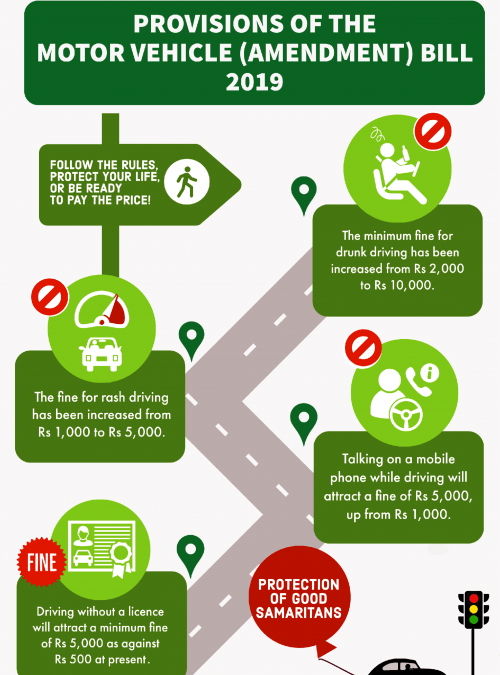
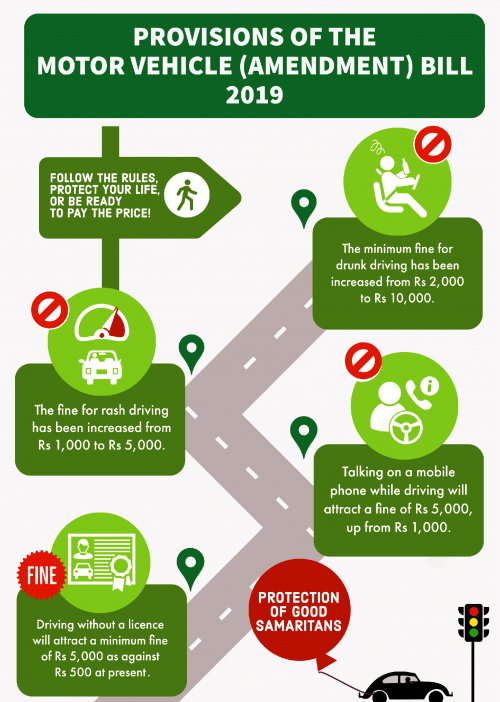
    The Ministry of Road Transport & Highways (MoRTH) notified, the provisions of Motor Vehicles Amendment Act, 2019, for enhanced penalties (including Speeding, drink driving, helmet, SB), came into effect from September 1, 2019.

    Section(Old Section)Old Provision/PropertyNew Proposed Provision/Minimum Penalties
    177GeneralRs 100Rs 500
    New 177ARules of road regulation violationRs 100Rs 500
    178Travel without ticketRs 100Rs 500
    179Disobedience of orders of authoritiesRs 100Rs 500
    180Unauthorized use of vehicles without licenceRs 1,000Rs 5,000
    181Driving without licenceRs 500Rs 5,000
    182Driving despite disqualificationRs 500Rs 10,000
    182 BOversize vehiclesNewNew
    183Over speedingRs 400Rs 1,000 for LMV, Rs 2,000 for medium passenger vehicles
    184Dangerous driving penaltyRs 1,000Up to Rs 5,000
    185Drunken drivingRs 2,000Rs 10,000
    189Speeding/ RacingRs 500Rs 5,000
    192 AVehicle without permitUp to Rs 5,000Up to Rs 10,000
    193Aggregators (violation of licencing conditions)NewRs 25,000 to Rs 1 lakh
    194OverloadingRs 2,000 and Rs 1,000 per extra tonneRs 20,000 and Rs 2,000 per extra tonne
    194 AOverloading of passengersRs 1,000 per extra passenger
    194 BSeat beltRs 100Rs 1,000
    194 COverloading of two-wheelersRs 100Rs 2,000, disqualification of licence for three months
    194 DHelmetsRs 100Rs 1,000, disqualification of licence for three months
    194 ENot providing way for emergency vehiclesNewRs 10,000
    196Driving without insuranceRs 1,000Rs 2,000
    199Offences by juvenilesNewGuardian/ owner shall be deemed to be guilty. Rs 25,000 fine with 3 years imprisonment. Juvenile to be tried under JJ Act. Registration of motor vehicle to be cancelled.
    206Power of officers to impound documents Suspension of driving licences u/s 183, 184, 185, 189, 190, 194C, 194D, 194E.
    210 BOffences committed by enforcing authoritiesTwice the penalty under the relevant section.

    SIX MAIN RISK FACTORS OF ROAD SAFETY

    1. Seat Belt

    Seat belts dramatically reduce risk of death and serious injury. Among drivers and front-seat passengers, seat belts reduce the risk of death by 45%, and cut the risk of serious injury by 50%. People not wearing a seat belt are 30 times more likely to be ejected from a vehicle during a crash. More than 3 out of 4 people who are ejected during a fatal crash die from their injuries.

    Front or Back -Always Wear Your Seat Belt

    1. Speed

    The speed of motor vehicles is at the core of the road traffic injury problem. Speed influences both crash risk and crash consequence. The physical layout of the road and its surroundings can both encourage and discourage speed. Crash risk increases as speed increases, especially at road junctions and while overtaking – as road users underestimate the speed and overestimate the distance of an approaching vehicle.

    1. Helmet

    The main risk factor for motorized two-wheeler users is the non-use of crash helmets. The lack or inappropriate use of helmets increase the risk of fatalities and injuries resulting from road crashes involving motorized twowheelers. Head injuries are a major cause of death, injury and disability among users of motorized twowheel vehicles. Many of these head injuries could have been prevented or their severity reduced through the use of simple and inexpensive helmets. Read More

    1. Drink & Drive

    Impairment by alcohol is an important factor influencing both the risk of a road crash as well as the severity of the injuries that result from crashes.

    1. Child Restraints

    A child safety seat is a seat designed specifically to protect children from injury or death during vehicle collisions. Child restraints work in the same way as adult seat-belts.

    1. Mobile distractive driving

    Using mobile phones can cause drivers to take their eyes off the road, their hands off the steering wheel, and their minds off the road and the surrounding situation. This cognitive distraction have the biggest impact on driving behaviour.

    IMPACT

    • We submitted a petition on December 2015 to the Honorable Minister Shri Nitin Gadkari and State Minister for an immediate introduction of Road Safety Bill in monsoon session at central level.
    • At state level our partners have submitted petition to Transport Ministers of the respective states and copies have been sent to Shri Nitin Gadkari.
    • We have received support from 58 Members of Parliament across all parties.
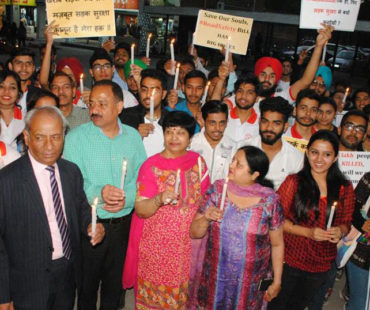
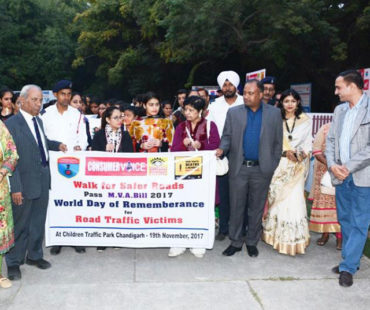
    • Workshops and Candle Marches were held on World Day of Remembrance (WDR) for Road Safety across major states and cities in India like Chandigarh, Lucknow, Cuttack, Bhopal and Patna which were a huge success.
    GRSP-gallery-4-370x310
    previous arrow
    next arrow
    Some of the important activities that formed part of our campaign were:
    • Consumer VOICE organized Cyclothon (Cycle Rally) event on January 7, 2017  on the occasion of Road Safety Week at Nehru Park, Neeti Marg, Chanakyapuri, New Delhi. The theme of the Cyclothon was ‘Child Safety
      and Safer Roads – Every Life Counts’.
    • The VOICE team also approached relevant ministries (Ministry of Road Transport and Highways and Ministry (MORTH) and Ministry of Consumer Affairs to push for the bill.
    • World Day of Remembrance (WDR) was organised in 2015, 2016 and 2017 from 15th till 20th November in 10 states
    • A National workshop was held on February 2015 to brief our state partners to garner support from MPs across states.

    CAMPAIGN UPDATES

    MEDIA REITERATES OUR EFFORTS

    Making road safety a national priority: A targeted mission to save lives

    February 14, 2025 | dailypioneer

    Every year, India observes Road Safety Month, during which various events and programmes … Read more

    Walk to create road safety awareness

    November 18, 2019 | The Telegraph

    Citizens on Sunday participated in a walk organised by  … Read more

    City observes World Day of Remembrance

    November 18, 2019 | The Sentinel

    Consumer’s Legal Protection Forum, Assam, Consumer VOICE, …. Read more

    Road Safety Network urges the government to issue an ordinance on road safety

    February15, 2019 | Business Standard

    A day after the last session of the current Lok Sabha, the Road Safety Network … Read more

    Citizens Awareness Group holds walk in memory of mishap victims

    Nov 19, 2018 | Times of India

    The Citizens Awareness Group here organized a walk which originated from … Read more

    Citizens Awareness Group holds walk

    Nov 19, 2018 | The Pioneer

    Citizens Awareness Group, Chandigarh with support from Consumer Voice,.. Read more


    Enquire Now

      X
      Enquire Now