Deets of availing a wedding insurance

Deets of availing a wedding insurance

Deets of availing a wedding insurance

Marriages are made heaven, true! But look at the present situation we have been surrounded with. There are slew of wedding arrangements getting cancelled due to the imposition of Covid curbs/restrictions etc. What if your money is stuck in arranging a wedding? I’m sure, you would be looking forward if there is an escape from this situation. So, our below piece brings you information on how you can insure a wedding. So that, if need be, your money does not get waste. 

Subas Tiwari

There are a host of insurance companies in the country selling wedding insurances to offer financial security ranging from wedding cancellation to theft of jewelry and sudden accident after a wedding. No one wants a wedding to be canceled or venue to be changed. Even if such a situation arises, you must ensure that there is no loss of money. And this is possible only if you get your wedding ceremony insured. Like other types of event insurance, wedding insurance is designed to protect you from various potential losses associated with your big day. Broadly speaking, these events generally fall under liability coverage or cancellation coverage.

Wedding insurance covers

1) Cancellation/postponement of the wedding event due to the following reasons:
  1. a) Earthquake/fire and other perils at the venue of the event
  2. b) Theft or burglary
If the person(s) named under the policy does not appear for the wedding event due to death, personal injury, hospitalisation and other reasons mentioned in the policy document. The sum insured under the policy covers costs of cards printed, advance paid to the caterer/wedding hall, and advance paid for decorations, hotel reservations/travel tickets. 2) Physical loss or damage to the property insured under the policy. The scope of cover is as follows.
  1. a) Earthquake & fire (related perils included)
  2. b) Theft or burglary
Material damage condition includes decoration costs, jewelry and stones, appliances, precious metals and others as specified in the policy document. 3) The Personal Accident cover provides the following benefits to the persons covered under the policy.
  1. a) Persons named in the policy which includes blood relation would be covered against accidental death.
  2. b) Permanent total disability and permanent partial disability is covered for persons whose name have been declared prior to availing the insurance.
4) The Public Liability cover ensures protection against injury/death arising out of accidents at the wedding venue. It also covers third party property damage.

How wedding insurance functions?

Applying for a wedding insurance is a quick and a hassle-free process. It broadly covers the loss due to certain situations that are out of your control. It cannot compensate for the emotional loss, but surely for the financial loss to some extent. Through the following steps, you can apply for the policy and make claims when needed:
  • Identify requirements and choose the most appropriate wedding plan
  • Submit the required documents and a duly filled application form
  • Insurance company verifies the details and determines the premium
  • In case of an eventuality, the beneficiary intimates the insurer about the same
  • The insurer investigates the claim and settles the same

Wedding insurance claim process

In case of an unwanted event or risk during the marriage ceremony, the policyholder can claim compensation by following the below steps:
  • Intimate the insurance company as soon as possible, after the eventuality occurs.
  • Fill up the claim form and submit it to the insurance company with other required documents.
  • A representative from the insurance company investigates the loss/damage.
  • If the claim is genuine the compensation amount is paid in the beneficiary account. Else the claim is rejected.
  • The insurance company may also decide to pay to the wedding venue or vendor directly.
  • If the policyholder is not happy with the claim amount or the resolution, he/she can raise a dispute in the court of law.

Documents required for claim process

The following documents are required to file the claim under the wedding insurance:
  • Duly filled in claim form
  • Photocopy of the policy
  • Details of the damaged property
  • List of valuables damaged/lost
  • Invoice or purchase receipt of the valuables
  • If there is a robbery or theft, a FIR copy
  • Credit card statements, purchase dates and location details of the lost/damaged property
  • Confirmation from a qualified expert, if any of the damage cannot be repaired

How long does it take to pay out a claim?

A wedding insurance claim can be settled within 30 days of the mishap. Even if the insurance company needs some clarification, it has to be done within these 30 days.

Wedding insurance exclusions

Wedding insurance covers multiple risks, but policyholders cannot claim wedding insurance for the following issues:
  • Terrorist attacks
  • Strike/civil unrest
  • Cancellation of the wedding
  • Kidnap of the bride/bridegroom
  • Loss of damage to the clothing and personal assets of the wedding guests
  • Unexplained or sudden unavailability of the wedding venue
  • Bride/bridegroom unable to join the wedding due to flight delay
  • Breakdown of the vehicle which prevents the bride/bridegroom from reaching the venue
  • Damage or destruction of the wedding venue as per the instructions of the policyholder
  • Damage caused to the wedding venue due to wear and tear with time, electrical or mechanical breakdown
  • Property damage due to negligence or lack of supervision

Reasons you will you get an insurance

  • Advance given to caterer
  • Advance money for any hall or resort booked for the wedding
  • Advance given to travel agencies
  • Hotel advance booking payment
  • Payment given on printing of wedding cards
  • For decoration and music
  • From wedding venue sets to other decorations
Companies such as ICICI Lombard, Future Generali, HDFC Argo, Bajaj Allianz General Insurance are providing wedding insurance in India.

Important aspects 

To get the best out of a wedding insurance, the below facts should be kept in mind:
  • Even if the expenses exceed, the company will pay only the sum insured
  • The bonds, bills and certificates for valuable need to be submitted to get the compensation for loss and damage of the same
  • To get the claim amount in less time, the insurance company must be provided with a clear breakup of the loss and damage
  • Wedding Insurance covers only the loss or damage of jewelry gifted by relatives and in- laws
  • If more vendors are engaged, the premium amount will also increase

Advantages of buying a wedding insurance

Some of the key benefits of a purchasing a wedding insurance are:
  • Premium is quite economical. It is only 0.7 to 2 per cent of the insured amount
  • Insurers offer customised wedding insurance policies. The beneficiary might opt insurance only for the primary event or can go for a combined package.
  • Through the public liability coverage, one can be relaxed because certain companies even take care of food poisoning taking place due to food served at the function
Related
All that you want to know about IPO

All that you want to know about IPO

All that you want to know about IPO

Investing in IPOs (initial public offerings) has been picked up lately. The trend is going to be here with Indian companies minting millions including the likes of Nykaa, who made its employees millionaires overnight with the listing. In the year 2021 alone, we saw nine startups to went public raising funds to the tune of $5.86 Bn. The year 2022 might see 16 startups to go public out of which two have received SEBI’s approval and five DRHPs are yet to be approved. There are quite a few Indian companies including MobiKwik, Delhivery, travel giant Ixigo, OYO, Droom to file their draft-red-herring-prospectus (DRHP). We consumers invest in IPO to get good returns. On the other hand, IPO is a similar process in which companies raise money from the market with the condition. So, what are the procedure to try one’s luck at the bourses? Let us check here.

Subas Tiwari

IPO or Initial Public Offering occurs when a company issues its common stock or shares to the public for the first time. IPO is issued by limited companies so that they can get listed on the stock exchange. After listing on the stock market, the shares of the company can be bought in the stock market. The company issues IPO to raise funding in case of investment or expansion. The two main reasons for a firm to start an IPO are to raise capital and to enrich former investors.

There are two types of IPO

  • Fixed Price IPO- Fixed Price IPO can be referred to as the issue price that some companies set for the initial sale of their shares. Investors get to know about the price of the shares which the company decides to take public. The demand for shares in the market can be ascertained after the issue is closed. If investors participate in this IPO, they must ensure that they pay the full value of the shares at the time of applying.
  • Book Building IPO- In the case of book building, the company initiating the IPO offers investors a 20 per cent price band on the shares. Interested investors place bids on the shares before the final price is decided. Here investors need to specify the number of shares they wish to buy and the amount they are willing to pay per share.

The lowest share price is known as the floor price and the highest stock price is known as the cap price. The final decision regarding the price of the shares is determined by the bids of the investors. 

Some recent examples

IPOs are ready to make the stock market buzzing in the new year as well. Companies are expected to raise up to Rs 1.5 lakh crore (IPO of 2022) from IPOs in 2022 as well, after the spurt in 2021. The IPO of the company (Ruchi Soya IPO) from Gautam Adani to Baba Ramdev is going to hit this month. Significantly, 2021 was the best year for IPO in the last two decades in the Indian market. Excess liquidity and increased participation from retail investors continued to fuel the IPO’s enthusiasm and companies raised over Rs 1.2 lakh crore this year amid the gloom of the pandemic. LIC’s IPO is also about to come.

Gautam Adani and Baba Ramdev’s companies to hit IPO

Adani Wilmar’s IPO is going to come this month, which will be around Rs 4500 crore. Ruchi Soya’s IPO of about Rs 4300 crore is also going to hit this month. Go Airlines is also going for close to Rs 3600 crore IPO. MobiKwik’s Rs 1900 crore IPO is also expected this month. Apart from these, Rs 998 crore IPO of ESAF Small Finance Bank Ltd and Rs 500 crore IPO of Traxon Technologies will also come this month. On the other hand, Skanray Technologies will have an IPO of Rs 400 crore as well as OFS. ESDS Software Limited’s IPO of Rs 332 crore is also coming with OFS.

LIC’s IPO will come this year

In the year 2022, massive fund raising through the primary market will start with a big IPO of public sector company Life Insurance Corporation (LIC). Apart from this, many new age digital players are ready to enter the IPO market. 

However, some believe that the enthusiasm will be a bit low in 2022. The market sentiment next year will be affected due to the new nature of Covid-19 and in such a situation the uncertainty is taking a toll on the markets and the economy. The 2022 IPO will not be as encouraging as 2021 for the markets, especially considering that some of the big public issues like Paytm has not done well post listing in the recent past.

Let’s know how does IPO work

IPOs can be rewarding investments. As an investor, you definitely don’t want to miss out on these opportunities that don’t present themselves all too often. Here’s what you need to know about IPOs before investing.

  • An IPO is an offer of new shares of a private company to the public for the first time. Ownership changes hands – from being entirely privately held, the company is now giving ownership to the masses
  • Not every company can afford to raise enough money from private investors. Also, going public presents other benefits than just raising capital
  • As an investor, you stand to make extremely high returns on your investment if you pick the right IPOs

Let’s get the basics right first

  • An IPO is an offer of shares by a company in exchange for capital
  • The entire process is regulated by SEBI – the Securities & Exchange Board of India
    To buy shares of any company in an IPO, you have to bid for these shares
  • If your bid is accepted, you are allotted shares. In case shares aren’t allotted in case of over subscription, you’ll get your money back
  • If you participate and buy stocks in an IPO, you become a shareholder of the company
  • As a shareholder, you can enjoy profits from sale of your shares on the stock exchange, or you can receive dividends offered by the company on the shares you hold
  • To file an IPO, companies must measure up to strictly enforced criteria and regulations to get SEBI’s (Securities Exchange Board of India) approval
  • IPO issues is open to all retail investors. Any client can apply through a broker.

Related

Handy checklist for availing a two-wheeler loan

Handy checklist for availing a two-wheeler loan

Handy checklist for availing a two-wheeler loan

We Indians want to own a vehicle, be it a car or a two-wheeler. However, not all people have enough cash to go and buy a bike in one go and settle with it. So, the best solution for this is to take a loan. With the passage of time, getting a loan for a bike is no longer difficult. Depending on your credit history, you get loans up to 85 per cent of the cost of the bike and in some places up to 90-95 per cent. This can help you buy a bike easily, and then repay the loan in affordable EMIs. But choosing the best bike loan for you is not an easy task. A lot of research is needed before choosing a loan that best suits your needs. We’ve compiled all the necessary information in the following article for you.

Subas Tiwari

It is important for you to know what documents will be required to take a bike loan. In the absence of the life and safety of the document, the approval of your loan may take longer wasting your time. Therefore, go collect all the necessary documents before applying for the loan. For loan approval, banks ask for different types of documents from the salaried person and the self-employed. Let us know what all are required for these two sections of loan applicants.

Documents for two-wheeler loans

Every lender requires you to submit certain documents while applying for a loan. Some of the general documents required are given below:

Documents

For Salaried

For Self-employed

Identity Proof

PAN card, voter’s ID, passport, driving license

PAN card, voter’s ID, passport, driving license

Address Proof

Utility bills, passport, etc.

Utility bills, passport, etc.

Income Proof

Salary slips, IT returns, bank statements

Bank statements, IT returns, audited financial statements

Tips for availing two-wheeler loan

A few loan applicants have had their applications rejected by lenders. This is not a pleasant feeling and it is not good for your credit score. We have put together a checklist that can help you apply successfully for a two-wheeler loan. These are as follows:

  • Determine the exact loan amount required:You should assess your needs and calculate exactly how much money you need to buy the bike you want. You should never apply for an amount larger than what you need.
  • Check your eligibility and compare your options:Once you decide how much money you need to borrow, take a look at all the loan options that you are eligible for. This is important. Never apply for a loan you don’t qualify for. This will automatically get your application rejected. Check your eligibility for a two-wheeler loan and make sure you fulfil all the criteria.
  • Check your credit score:Your credit score is one of the most important factors that determine loan approval. Lenders usually reject applications with low credit ratings. So, if your credit history is poor, look at improving it before applying for the loan.
  • Get a guarantor or co-applicant:If your credit score is not up to the requirement of the lender, see if you can get a guarantor or co-applicant. Having a guarantor or co-applicant who has good credit can help you get the loan you want.
  • Fill your loan application properly:Make sure your application is fully filled with all the details your lender requires. An incomplete application or an application that has wrong information may be rejected.
  • Submit all the necessary documents:While submitting your loan application, make sure you submit all the documents the lender requires as well. If you don’t submit the required papers, your application may be rejected.
  • Try applying with your existing lender:If you already have a good existing relationship with a bank, try taking the loan from them. This good standing may help you get a loan even if you don’t fulfil all their criteria.

Keep in mind while applying for a two-wheeler loan

Now that you know how you can successfully apply for a two-wheeler loan, let’s check out what you need to keep in mind while applying for it. These points can help you find the right loan and avoid paying more than you should.

  • Do your research well:This is the first step before you apply for a motorbike loan. Make sure you do your research well. Compare all the options that various lenders offer you. Compare interest rates, processing fees, repayment options, and other loan terms. This will help you find the best and cheapest option.
  • Choose your tenure wisely: The tenure of your loan will determine how much you have to repay each month. Make sure you can afford your EMI. This means you have to be wise about choosing your tenure. A shorter tenure will help repay the loan faster. But your EMIs will be high. So, choose matching your affordability to pay off every month without facing a financial crunch.
  • Choose an affordable interest rate:Your interest rate determines the overall cost of your loan. It also has an impact on your EMI. Choosing a loan with a low rate of interest can help keep your EMIs low. It will also make your loan cheaper.
  • Compare floating rates versus fixed interest rates:Some lenders may offer you both floating interest rates as well as fixed interest rates. Floating rates change as per the changes in the market rates. Fixed rates remain constant irrespective of market rate changes. That said, floating rates are usually lower than fixed rates.
  • Compute your EMIs before applying:When you compare your loan options, make sure you compare the respective EMIs as well. Choose a loan that gives you an affordable EMI with a convenient repayment period.
  • Ask about prepayment fees:If you plan on prepaying or foreclosing your two-wheeler loan at any point, find out the charges for the same. Some lenders may charge you a fee for this while others may not. Prepaying your loan can help you save interest costs.
  • Read the terms and conditions properly:This is also called the fine print. Read your loan offer document thoroughly and go through every single term and condition before you sign it. The fine print may reveal hidden charges and fees that may otherwise never be mentioned. Knowing these terms can help you avoid paying heavy penalties.

Do’s and Don’ts for Two-Wheeler Loan

Do’s

Don’ts

Do your research well before you apply

Don’t apply for multiple loans at the same time

Make sure you are eligible for the loan you are applying for

Don’t apply for a loan simply because you get an attractive welcome gift

Compare interest rates and find the best option

Don’t forget to fill in the application form properly

Compare processing fees and other charges

Don’t sign the loan documents without reading them thoroughly

Evaluate your credit score before you apply

Don’t choose an EMI you cannot afford

Submit all the required documents without fail

Don’t forget to pay your EMIs on time

Read the offer document carefully before signing it

Don’t forget to prepay your loan if you can

Easy financing for superbikes

In India, the price of a luxury bike starts from Rs 5 lacs and it can go up to Rs 35 lacs or even more, depending on the model. Easy availability of finance from banks as well as non-banking finance companies for high-end two wheelers prompt customers to take up bike loans.

While 60-65 per cent of the customers buy bikes on loan, some of them may go for a superbike loan only to avoid questions from the tax angle and not because they cannot afford it. But there are also instances of people with a monthly salary of Rs 30,000 buying these bikes.

For banks, offering loans for high-end bikes is one way of getting high net worth individuals (HNI) as customers. Strangely, many banks offer loans for luxury two-wheelers at rates lower than that for standard two wheelers. However, the tenures may be longer due to high cost of the bike.

In some cases, the bank might not have an off-the-shelf loan product but could tailor one to suit the buyer’s needs. After all, someone who can afford to buy a bike of more than Rs 5 lacs could be a potential high net worth customer for the lender. The loan amounts are usually 70-80 per cent of the bike’s cost, but can also go up to 90 per cent, if the bank is happy with the customer’s profile.

People who buy high-end two wheelers do it more as a status symbol or for pleasure. But those who take loan for standard two wheelers are people who buy them for necessity, for their daily commute.

The market for high-end bikes in India is at a nascent stage, although it is growing. Harley-Davidson has tie-ups with some private banks. Triumph is the superbike from U.K and is financed by a few other private banks under a tie-up. Bucati is also a luxurious bike which is now sold in India. However, only a small percentage of customers opt for such loans.

While a large section of the demand comes from Delhi and Mumbai, cities like Bangalore, Ahmadabad and Chandigarh, too, have been excellent markets as a rich biking-culture already exists there. There is also an increasing demand from the south of India with Kochi, Chennai and Hyderabad where there is scope for a growing market for such superbikes.

What precautions/factors should one take before buying a 2-wheeler loan? As haste makes waste, any hasty decision could land you a two-wheeler which you feel like selling immediately while also could burn a hole in your pocket. Let us read on as to what they are.

Important factors to consider before buying a two-wheeler

Gear less two wheelers 

They are easy to drive and their easy-to-handle capabilities makes it very popular among the teenagers. Before buying a two-wheeler however, you are advised to go through the following and take an informed decision.

Brand

There are numbers of two-wheeler manufacturers in India. The brand value also helps in the re-sale of the bike.

Budget

This is a very important factor to be considered. You can buy a good two-wheeler within a budget of Rs.60,000. But you should be ready to pay a little more for the newly- launched bikes with extra features and attractive colours.

Weight

Nowadays, there are low weight bikes available but it is extremely important to check the weight of the two wheelers so that you can ride comfortably and not get stranded when there is a puncture in your tyre.

Storage

Helmet is now getting compulsory in all major metros, cities and towns. So, one should check the storage for the same. Also, it should have enough space for storing shopping items.

Mileage

A good two-wheeler should give you a mileage of 35 to 40 kms per litre.

Height

This is another important factor after weight. Since most of the Indians are of average height, a two -wheeler should not be too high or else it will be uncomfortable to ride.

Auto Start

Kick-starting a two-wheeler is not easy especially for women riders. So, check for Auto Start and battery durability.

Durability

Check out the technical review of the bike; it doesn’t make sense to make a hasty decision and settle for something that simply looks good and offers more mileage.

Service Center

The location of your service center should be nearby your area, so that during any emergencies you should not land up traveling long distances for repairs and services.

Low Maintenance

Servicing and maintenance of two-wheelers is very important.  It makes travelling very convenient because of low running and maintenance costs- which means you can get very good mileage.

Availability of Spare Parts

All the newly launched two-wheeler companies do not have their spare parts easily available in the market. Consider this point while choosing your preference.

Resale Value

Resale price depend on the brand, year and current condition of bike. A branded bike could give you better deal as compared to other two wheelers.

Related

What does the new bank locker guidelines mean

What does the new bank locker guidelines mean

What does the new bank locker guidelines mean

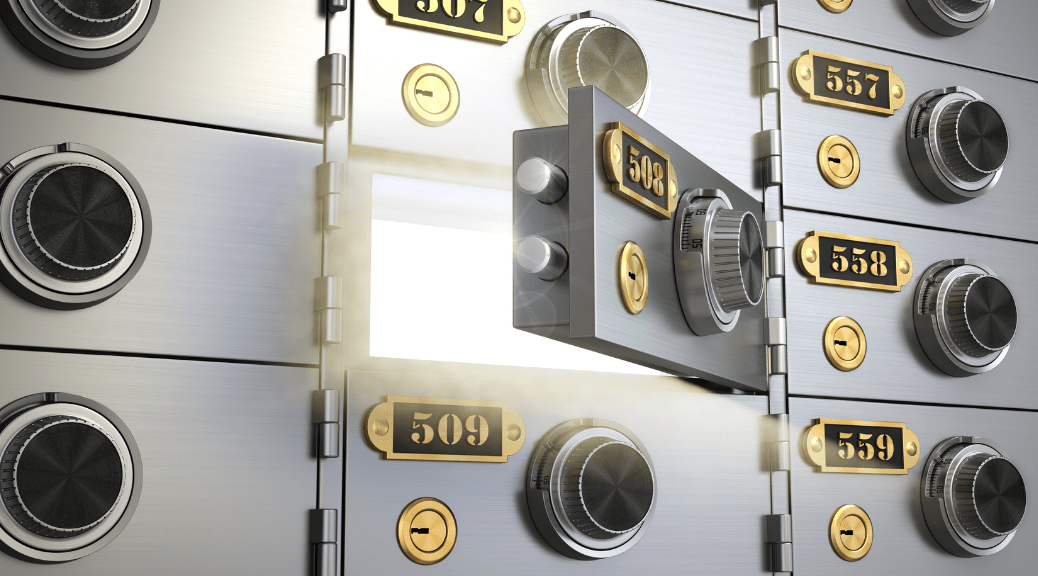
bank Locker

The RBI has announced a few changes in the starting and keeping a bank locker. As the news guidelines are going to be affected from January 1, 2022, let us take a quick look of what it necessitates. 

Subas Tiwari

Under the new guidelines, the liability of the bank towards locker in case of fire, theft, building collapse and fraud by bank employees will be limited to 100 times of its annual rent. The revised locker guidelines will come into effect from January 1, 2022. Banks will have to include a provision in the locker agreement under which the person renting the locker will not be able to keep any illegal or dangerous goods in it.

The Reserve Bank said that on the basis of various developments in the banking and technology sectors, nature of consumer complaint and information provided by banks and Indian Banks’ Association (IBA), it has decided to “deposit lockers/safe custody items provided by banks” facility’ is reviewed.

Let us know here about the new rules and how they are going to affect you.

  1. The responsibility of the banks will be fixed

According to the new RBI guidelines, banks will have to implement a board approved policy, in which their responsibility can be fixed for the goods kept in the locker due to negligence. According to the rules, the bank will not be responsible for any loss in case of natural calamity or ‘Act of God’ i.e. earthquake, flood, lightning and storm.

  1. If theft, fraud happens, the bank will give compensation

But this does not mean that the bank is free from its responsibilities. Banks will have to ensure proper arrangements to protect their premises from such calamities. Apart from this, the entire responsibility of the security of the premises where there are safe deposit lockers will be with the bank itself. According to the new rules of the Reserve Bank, in case of fire, theft, building collapse or fraud on the part of bank employees, the liability of banks will be limited to 100 times of their annual rent.

  1. If payment is not made

If the rent for the locker has not been paid by the customer for three consecutive years, then the bank can take action on it and can open any locker following the due process.

  1. Cannot store illegal goods

According to the RBI new rules, banks will have to include a provision in the locker agreement, under which the locker rental customer will not be able to keep any illegal or dangerous goods in the locker.

  1. Waiting list number will be released

According to the new rules, it will be necessary for banks to send SMS and email of locker operations to the customers. Banks will have to provide receipt for all applications for locker allotment. If the locker is not available, the banks will have to give the number of the waiting list to the consumers. The branch wise locker allotment information and waiting list of banks will be linked to Core Banking System (CBS) or any other computerized system compliant with cyber security framework.

  1. These customers will also get the facility

As per the new guidelines, the existing customers of the bank who have applied for locker facility and who are fully compliant with CDD (Customer Due Diligence) norms can be given the facility of Safe Deposit Locker/Safe Custody Article. According to the new rule, the facility of Safe Deposit Locker/Safe Custody Article can be given to the customers who do not have any other banking relation with the bank.

  1. Shifting of lockers

Banks will be able to shift the locker from one place to another only after informing the customer. Term deposit can be used as locker rent. The bank will have to take adequate steps to protect the strong room/vault. It will be necessary to keep the CCTV footage of entry and exit for at least 180 days.

Why a common man needs bank lockers?

In the earlier centuries, people went to the banks demanding a personal locker facility in view of a spate of robberies which were happening in their households. Their take that banks usually are safe havens with high-end security systems in place, security guards, alarms, etc-so banks were the safest places on earth to keep one’s valuables such as gold ornaments. But this high-end security systems in banks have spurred a burning question nowadays!

Everyone is reviewing their decision to continue to hold a locker in a bank in the light of recent incident of stealing of contents of bank lockers in Haryana by burglars. Readers might also remember the 2014 fire which engulfed one of India’s leading banks in Chennai (fortunately, the locker cabinets escaped the fire) which stoked media discussion about the safety of bank lockers under these circumstances.

So, we venture here to try and understand the way to go about hiring a bank locker and the responsibilities which come with being a locker hirer and the limited uses of this service which are offered by banks under public utility services 

Why banks hire out lockers?

During earlier times, banks were letting out lockers as a favor to high-end customers who were even otherwise dealing with the bank in the matters of deposit/loans/remittances. However, during the latter part of 1970s, after nationalisation of private banks, banks were looking to increase their customer base while looking into ways of accruing non-fee- based income to boost profits. This hunger for additional business threw a slew of public utility services such as issuance of letter of credits, guarantees and of course hiring out bank lockers.

How does one hire a locker?

It is as easy as opening a bank account. Request in writing for a bank locker of the size you need; request for a free personal look-in to the locker cabinets to know the depth of the locker you wish to hire; sign an agreement for locker-hiring; open a bank savings account to deposit locker rent and locker deposit; obtain the key to your allotted locker and come some other day or same day to keep the contents in the hired locker. You would also have to sign the locker visit register to mark your presence.

Locker operation conditions

  • Banks recognise you only by your signature; so, make sure you sign as normally as you always do
  • Locker deputy’s signature would also have to be affixed in the allotted page of the locker register (in case you appoint one)
  • Locker agreement provides for repaying the contents of the locker to you or your nominee (in case of the deceased of the locker-hirer) or either-or survivor clause in case the locker is hired jointly (with a blood relative) or against all the locker-hirers jointly
  • Some banks insist on a declaration from one other person accompanying you (non-locker-hirer) to request for bank’s permission to enter the locker room along with the locker-hirer
  • Quite a few banks are also obtaining a declaration to the effect from the locker-hirer that he/she has personally verified that the locker allotted to him/her has been safely secured with the locker key, after completing the operation of the locker

Benefits of a bank locker

  • In spite of the hullabaloo created in the media questioning/debating on the safety of bank lockers, it is still the safest place to keep your valuables, till some other alternatives come to replace them
  • Banks still provide a secured environment by providing bank lockers which are made of high-quality steel plates with MS screws fitted on them and difficult to penetrate
  • Bank lockers come cheap for the space you hire, which is incomparable with any other alternative system
  • Bank lockers are secured by insurance cover against fire and other hazards and nowadays are backed by internal circuit TV (CCTV)
  • Locker-hirer(s) can nominate/appoint a locker deputy to operate the locker in his/her absence (which acts as a Mandate as in a deposit account as POA holder)
  • Bank officials do not see as to what is being kept in the bank locker; they at best take a declaration that the locker contents are not opposed to public policy. So the secrecy of the customer is maintained

 Disadvantages/drawbacks of a bank locker

  • One can operate the bank locker only during the time the business hours

of a bank which severely restricts the freedom to get the locker contents in case of an emergent situation; incidentally, bank holidays in an area often coincides with a religious public holiday, thereby denying access to bank lockers (to enable the locker-hirer to take out the ornaments for wearing on such important occasions)

  • Normally, banks charge locker rent in advance for a specific period (eg., say for 1 year) and in case the locker-hirer vacates the locker in the middle of the year, banks mostly do not refund the locker rent for the unexpired (broken) period to the detriment of the customer
  • Banks usually insist, albeit orally, on depositing a sizeable sum as fixed deposits to be held with them for a longer period for letting out a locker
  • Lockers are not available at small/medium-sized branches in urban/semi-urban and rural centres where the fear of theft is the maximum due to the of the remoteness of the place
  • The RBI has recently come out with a response to an RTI filed wherein it has clarified that bank locker hirer in India  is that of  a lessee (tenant for that space he hired) while the bank acts in the position of  a lessor (landlord-the owner of the bank locker which is let out for hiring). So in case of a locker theft where the contents were removed without the connivance of the bank officials, the bank is under NO LIABILITY FOR LOSS OF VALUABLES IN LOCKERS.

Do insurance companies give locker insurance?

Insurance companies dealing with non-life (general) insurance products do not cover bank lockers for the purposes of extending insurance cover under a household package policy. However, in case one wishes to have insurance cover on the jewellery items (such as ornaments in gold, silver, platinum; precious stones, diamonds, etc)  and/or currency notes kept in bank locker(s), insurance cover under Jewellery Block Insurance Policy (as a part of the Household Package Policy) is being made available by most of the insurance companies in India.

However, this insurance cover is only for ornaments and other pieces of jewellery as well as cash. Also, one may have to show supporting receipts for having purchased them with their purchase value (other than what was acquired from marriage gifts).

Credit and debit cards

Credit and debit cards

Credit and debit cards Today life is about credit and debit!
curd
Even 10 years before having a credit card or a debiit card was considered a welathy choice. It has become an essential and almost mandatory commodity these days. All banks issue credit and debit cards to their customers. Charges vary from bankand bank. Consumer VOICE financial experts analyse various cards from time to time.

Reviews

Articles
There are various types of credit cards when you apply for credit card and you are offered one based on your needs and repayment power.
If you are a credit card owner there is a chance that you may be subject to credit card frauds like thousands of others around the world.
A credit card offers unlimited financial freedom. But as all freedom, a credit card too comes with its own set of responsibilities.
If you are an Indian consumer who often wonders is it safe to shop online with a debit card then you should know the answer is yes.
If you have never used a debit card before and you have questions like how to use a debit card online or how to use a debit card online safely, then you must read on.
Related
How to save Tax

How to save Tax

In March, the fiscal year 2022–2023 will come to an end. Only on the basis of your annual savings will you receive a tax rebate. If you have a job, firms will start requesting investment documentation in December. These will determine whether or not tax deductions are...

read more
Home Loan Protection Insurance

Home Loan Protection Insurance

Your loan is insured in the same way that you acquire life insurance, accident insurance, etc. In fact, when you take out a home loan to purchase a property, you are responsible for paying back a sizable sum of money. There are numerous more obligations in addition to...

read more
14 Investment Options for Your Child’s Better Future

14 Investment Options for Your Child’s Better Future

Parents want their children to be happy. They want them to be healthy. They want them to be successful in their life and have everything they desire. These desires are directly or indirectly connected to one thing- money. Today, we will tell you about that financial...

read more
Decoding the new gold hallmarking rules

Decoding the new gold hallmarking rules

Decoding the new gold hallmarking rules

Gold Hallmark

Gold hallmarking is the accurate determination and official recording of the proportionate content of precious gold metal articles. Hallmarking is done of six caratages of gold jewellery/ artefacts, viz. 14, 18, 20, 22, 23 and 24 carats. While, the mandatory hallmarking is surely a welcome move for the consumers, let us take a quick look at the set regulations.

Ashok Kanchan

Bureau of Indian Standards (BIS), the national standards body of India through its network of regional/branch offices all over the country operates the hallmarking scheme for gold and silver jewellery. Regular surveillance audit of assaying and hallmarking centres and testing of random market samples drawn from registered jewellers.

Hallmarking provides third party assurance and satisfaction that customer gets right purity of gold (or silver) for the given price (value for money).

 Hallmarked gold jewellery  has five marks: BIS mark, purity in carat, assay centre’s name, jewellers’ identification mark and year of hallmarking.

Points to take note while purchasing gold jewellery

  1. a) Check the BIS certificate of registration displayed in the shop. 
  2. b) Check hallmark, consisting of five marks, on the article with the help of a magnifying glass of 10 X magnification available in the shop.
  3. c) Do not forget to take the bill/cash memo which should mention hallmarking cost, net weight of gold, purity in carat and fineness on the bill/cash memo. 

The new gold hallmarking rules

PREMIUM 

The central government has made it mandatory for the jewellers to sell only hallmarked jewellery. The mandatory hallmarking of gold jewellery is coming into force from 16th June, 2021.

A few points of latest government order

  • The hallmarking scheme has started with 256 districts of the country, which have assaying and hallmarking centres. 
  • At present, 943 assaying and hallmarking centres are operational in the country.
  •  Jewellers with annual turnover of up to Rs 40 lakh will be exempted from mandatory hallmarking. Watches, fountain pens and special types of jewellery like kundan, polki and jadau will also be exempted.
  • Export and re-import of jewellery as per the Trade Policy of Government of India – Jewellery for international exhibitions, jewellery for government-approved business to business domestic exhibitions will not be hallmarked.
  • According to the government order, any manufacturer, importer, wholesaler, distributor or retailer engaged in selling precious metal articles has to mandatorily get registered with the BIS. The registration process will be one-time and there will be no fees charged from jewellers for it.
  • Artisans or manufacturers who are manufacturing the gold jewellery on job work basis for the jewellers and are not directly related to sale to anyone in the chain are exempted for registration, the government said.
  • Gold of additional carats i.e. 20, 23 and 24 will also be allowed for hallmarking.
  • The ministry in its release clarified that old un-hallmarked jewellery available in households can be sold to jewellers. It said that that, jewellers can continue to buy back old gold jewellery without hallmark from consumer and in order to give adequate time to the manufacturers, wholesalers and retailers of gold jewellery, there would be no penalties till August end.
  • BIS (Hallmarking) regulations were implemented with effect from June 14, 2018. According to BIS, hallmarking will enable jewellery buyers to make the right choice and save them from any unnecessary confusion while buying gold.

Is the order applicable to gold bullion and coins also?

No, the order is applicable for gold jewellery and artefacts only. Gold bullion/coins of 999/995 fineness are permitted to be hallmarked by BIS approved Refinery/Mints (39 licensed refineries are in operation at present as on 01 Jan 2021). The list of BIS licensed Refineries/Mints is available at BIS website www.bis.gov.in under the hallmarking tab.

Information on hallmarking

All the information regarding hallmarking in detail has been provided at BIS website, www.bis.gov.in under hallmarking section. The information includes procedure and guidelines for jewellers and hallmarking centre, all the forms and list of registered jewellers and hallmarking centres etc. 


Related

Enquire Now

    X
    Enquire Now