No Results Found
The page you requested could not be found. Try refining your search, or use the navigation above to locate the post.

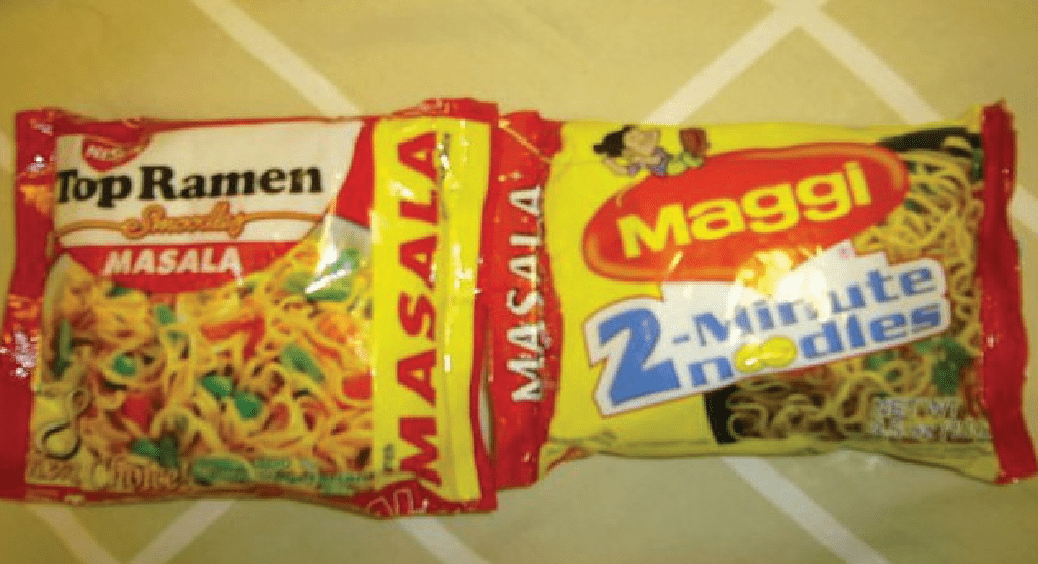
The popularity of instant noodles has come to the point where we almost count it as our essential grocery item. It meets our untimely hunger pangs and sometimes get served as breakfast and evening snacks as well in a few households. While the acceptance of this product among all age groups is unanimous, the product is still subject to careful investigation for consumption. Does it contain required amount of salt? How much is the toxic content? If we care to make ourselves informed with all these facts, then this piece of reading is for you. Here, we tested five popular instant noodles and ranked them as per their performance scores. The test has been conducted in a NABL accredited lab ensuring only the best makes the cut. Here’s a report.
Instant noodle is a ready to cook and consumable product prepared from wheat flour or other flours as the main ingredient. Instant noodle is characterised by the use of pregelatinization and dehydration processes either by frying in any oil or fat. Such products then get presented as fried noodles or non-fried noodles.
“Instant Noodle,” gets prepared with wheat flour or rice flour or flour of any other cereals, millets and legumes with or without the addition of herbs, condiments and seasoning, spices, iodised salt, sugar, wheat gluten by kneading the dough. It may be added with starches, dried fruits and vegetables, or their products or extracts, nuts, edible protein and egg powder, meat, poultry, marine or their products if required.
Normal noodles are mostly made of maida (the fine product made by milling or grinding wheat). Atta noodles are made of atta (the coarse flour product obtained by milling or grinding wheat). Atta contains more dietary fibres than maida. Fibre helps in better digestion and therefore, atta noodles are considered better than maida noodles. Yet, we also now have oats noodles in the market.
The testing has been conducted following the FSSAI standard/regulations; besides, consumer centric tests and product claims. As mentioned above, we have selected a NABL accredited lab for the product testing to maintain all fairness.
We singled out the following five instant masala noodles brands for comparative testing. The table below is to tell you succinctly which brand scored the highest.
| Rank | Overall Score (rounded off out of 100) | Brand | MRP (Rs) | Net weight (in grams) | MRP
per 100 gm, Rs. |
Best Before, months | Marketer /Manufacturer |
| 1. | 92 | Maggi | 12 | 70 | 17.14 | 9 | Nestle India Limited |
| 2. | 86 | Wai Wai | 60 | 360 | 16.66 | 9 | CG Foods |
| 2. | 86 | Top Ramen | 64 | 420 | 15.24 | 10 | Indo Nissan Food Pvt Ltd |
| 2. | 86 | Smith Jones | 68 | 360 | 18.88 | 9 | Capital Food Pvt Ltd |
| 3. | 84 | Snac tac | 70 (buy one get one free) | 300 | 23.33 | 9 | Reliance India Limited |
• Brand Maggi has been ranked number 1 followed by Wai Wai, Top Ramen and Smith & Jones.
• Our Value for Money brand is Top Ramen.
• Lowest saturated fat has been found in Maggi followed by Snac tac and Smith & Jones.
• Lowest sodium content has been found in Maggi and highest in Wai Wai.
• Highest protein has been found in Maggi and lowest in Snac tac.
• Maggi also scored the highest in sensory panel tests followed by Smith & Jones and Top Ramen.
• Trans fat has been found highest in Top Ramen and lowest in Smith & Jones but well within the standard limit.
• Toxic metals, such as lead, arsenic, mercury and aflatoxin have been found well within the specified limits thus the products are safe for consumption.
• Here’s a word of caution for consumers: As noodles are added with saturated fat and salt, hence, limited consumption is suggested.
Comparative performance of instant masala noodles
| Brand
Parameter |
Wt. % | Maggi | Wai Wai | Top Ramen | Smith &
Jones |
Snac tac |
| Physico-chemical tests | ||||||
| Moisture | 5 | 4.20 | 4.85 | 4.30 | 4.33 | 4.03 |
| Carbohydrate | 3 | 2.69 | 2.63 | 2.97 | 2.79 | 2.55 |
| Total protein | 10 | 9.85 | 8.50 | 8.50 | 8.35 | 7.30 |
| Fat | 5 | 4.14 | 4.60 | 4.08 | 4.28 | 4.32 |
| Saturated fat | 5 | 3.60 | 2.90 | 2.70 | 3.00 | 3.40 |
| Trans fat | 5 | 4.60 | 4.90 | 3.10 | 5.00 | 4.90 |
| Energy | 4 | 3.26 | 3.88 | 3.31 | 3.46 | 3.17 |
| Acid insoluble ash | 7 | 6.44 | 5.88 | 6.86 | 3.92 | 7.00 |
| Sodium (as Na) | 4 | 3.72 | 2.74 | 3.72 | 3.16 | 3.16 |
| Acid value of extracted fat | 7 | 7.0 | 6.58 | 6.72 | 6.02 | 5.46 |
| Lead | 2 | 1.7 | 1.2 | 1.8 | 1.8 | 1.5 |
| Arsenic | 2 | 2.0 | 2.0 | 2.0 | 2.0 | 2.0 |
| Mercury | 2 | 2.0 | 2.0 | 2.0 | 2.0 | 2.0 |
| Total aflatoxin | 3 | 2.0 | 2.0 | 1.91 | 2.0 | 1.93 |
| Net Weight | 2 | 2.0 | 1.94 | 2.0 | 2.0 | 2.0 |
| Cooking time | 4 | 3.60 | 3.52 | 3.60 | 3.60 | 3.20 |
| Sensory panel tests | 25 | 24.06 | 21.19 | 21.68 | 23.20 | 21.12 |
Sensory Panel Test | Acid Value of Extracted Fat| Acid insoluble ash| Total Protein| Fat| Trans Fat| Saturated Fat| Moisture| Energy Value| Total Carbohydrate| Cooking Time| Total Aflatoxin| Net Weight| | Sodium| Mercury| Arsenic| Lead| Marking |Packaging
This is a very important parameter where subjective panel tests have been conducted in a laboratory, based on their critical examination and opinion of panelists. During this test, we determine the overall sensory quality of the product. We conducted the sensory tests against colour and appearance, flavour/ aroma, taste and after taste, texture and overall acceptability. These tests have been done in the lab involving panel members under the supervision of trained experts. The average score of all the panel members have been given in the below tables.
The noodle shall be of good characteristic colour, appearance, texture, aroma and taste and shall be free from undesirable taste, dirt, insect’s larvae and impurities or any other extraneous matter.
| S.No | Brands | Overall Score out of 25 |
| 1. | Maggi | 24.06 |
| 2. | Smith Jones | 23.20 |
| 3. | Top Ramen | 21.68 |
| 4. | Wai Wai | 21.19 |
| 5. | Snac tac | 21.12 |
Maggi performed on top followed by Smith & Jones and Top Ramen. Maggi performed highest score in all the sensory attributes and preferred by the panelists.
Determination of acid value is used as a general indication of the condition and edibility of oils. Acid value shall not be more than 2.0. Acid value of Maggi was lowest and it was highest in Snac tac but within the specified limit.
Acid insoluble ash indicates the presence of impurities i.e. dirt and dust. As per FSSAI, acid insoluble ash content should not be more than 0.3 per cent by mass. All the brands have been found with acid insoluble ash well within the prescribed limit of 0.3 per cent by mass. However, the substance has been found lowest in Snac tac followed by Top Ramen.
Higher protein intake is beneficial for health and it is an essential nutrient in diet. Protein plays an important role in the cellular maintenance, growth, and functioning of the human body. Protein is generally considered good. Highest protein has been found in Maggi and lowest in Snac tac.
Trans fat is double trouble for the health of the heart. It increases bad cholesterol and lowers good cholesterol in the body. Just like saturated fats, they also raise the level of “bad” cholesterol in our blood. Trans fat has been found between 0.01 to 0.20 per cent. It has been found highest in Top Ramen and lowest in Smith & Jones.
Fat is a main source of energy. Fats should be largely consumed in the unsaturated form. The consumption of unsaturated fatty acids especially mono and poly unsaturated fatty acids should be encouraged in everyday diets. As per the dietary guide lines, adults with sedentary lifestyle should consume about 25 gm/day of visible fat, while individuals involved in hard physical work require 30-40-gms/day of visible fat. No requirement has been specified in national standard. Fat has been found between 15.4 to 18.0 per cent by mass. Highest fat has been found in Wai Wai and lowest in Top Ramen.
While consuming healthy fats is a good idea, most instant noodles are high in saturated fat, which is directly tied to coronary heart disease and strokes. Take one look at the total grams of fat on the nutritional label, and you’ll find that about half of the total fat in noodles is saturated fat. There is no requirement specified in national standard. We’ve found lowest saturated fat in Maggi followed by Snac tac and Smith & Jones. We found highest saturated fat in Top Ramen.
Moisture shall be within the specified limit (10 per cent maximum) as per the FSSAI regulation. Higher content of moisture may spoil the product. As per the FSSAI regulation, moisture content in instant noodle should not be more than 10 per cent in fried noodles and 13 per cent in non-fried noodles. All the brands have been found well within the prescribed
limit. We’ve found the moisture content lowest in Wai Wai and highest in Snac tac, however, they are well within limit.
The energy value of a food indicates its value to the body as a fuel. Energy value is the number of calories which our body obtains from the foods. There is no requirement prescribed in Indian standard. We’ve found it highest in Wai Wai and lowest in Snac tac.
Carbohydrate is the source of energy. However, the national standards do not suggest its inclusion in noodles. We found it highest in Top Ramen and lowest in Snac tac.
We cooked the noodles following given instructions on the product labels. We calculated the cooking time excluding time required for boiling of water. It may be noted that all the brands have declared the cooking time in the range of 2 to 3 minutes, excluding time for boiling water. Maggi, Top Ramen and Smith & Jones took least time (3 mins) in cooking and Snac tac took highest time (4 mins).
Aflatoxins are highly toxic compounds and can cause both acute and chronic toxicity in humans. It shall be 30 µg/kg maximum. We detected it in Top Ramen and Snac tac, but well within the specified limit.
Sodium (as Na), percentage by mass
Sodium is a mineral commonly referred as salt. Sodium is a naturally occurring mineral found in many different foods. It is used for seasoning as well as food preservation. Salt also inhibits the growth of bacteria in food articles. Sodium helps to control the amount of water in the body. WHO’s recommendation on sodium consumption for adults is 2-g sodium/day (equivalent to 5-g salt/day). Excess sodium intake is an important determinant of hypertension and cardio-vascular (CV) risk. We found sodium highest in Wai Wai and lowest in Maggi.
Net weight of a product should be as per the declaration and shall not exceed the tolerance limit of legal metrology. Net weight in all brands except Wai Wai has been found to be above the declared weight. In the case of Wai Wai, the difference between the declared value and the actual value was within the permissible limit.
Lead (as Pb)
Lead is a toxicant that affects multiple body systems, including your liver and kidneys in particular. It is especially harmful to infant and pregnant women as it can cause damage to the central nervous system in children. It shall be not more than 2.5-mg/kg. Lead has been found between 0.2 to 0.8-mg/kg. However, all the brands have been found well within the specified standard limit.
Arsenic can have immediate toxic effects. Ingestion of large amounts can lead to gastrointestinal symptoms such as severe vomiting, disturbances of the blood and circulation, damage to the nervous system, and eventually death. It shall not be more than 1.1-mg/kg. All brands we found below the detection limit (LOQ-0.1mg/kg).
The inhalation of mercury can cause neurological and behavioural disorders, such as tremors, emotional instability, insomnia, memory loss, neuromuscular changes and headaches. They can also harm the kidneys and thyroid. High exposures can lead to death.
It shall not be more than 1.0mg/kg. All brands have mercury level below the detection limit (LOQ-0.1mg/ kg).
The material shall be packed in moisture- proof material or in suitable plastic film or moisture proof bags sealed to prevent ingress of moisture. The material has been packed in poly packs and sealed to prevent ingress of moisture.
Each container shall be legibly and indelibly marked with the following:
a) Name of the material
b) Name and address of the manufacturer/ packer
c) Batch or code number
d) Net weight
e) Date of manufacturer
f) Green/red dot mark
g) Nutritional information
h) Best Before
i) MRP
j) Direction for preparation
k) List of ingredients
l) FSSAI license number
m) Customer care details
We found all brands with necessary marking requirements.
Conclusion
We purchased five brands of instant masala noodles from the retail markets. We tested the brands on various parameters including total protein, acid-insoluble ash, acid value, fat, carbohydrate, cooking time, sodium and toxic metals. We assigned high weightage (25 per cent) to the sensory tests which includes colour/appearance, taste, flavour/aroma, texture and overall acceptance parameters.
Brand Maggi has topped in overall score and therefore ranked number 1 followed by Wai Wai, Top Ramen and Smith & Jones. Maggi was mostly preferred in sensory panel tests followed by Smith & Jones and Top Ramen. Toxic metals as lead, arsenic and aflatoxin have been found well within the specified limits. All the brands have met the standard requirement. However, as noodles are added with saturated fat and salt, limited consumption is suggested.
• High salt is added to noodles through the seasoning supplied in sachets. So, reduce the sodium content by using the minimum amount of seasoning, preferably half of the sachets.
• Instant noodles can serve as snacks but not as main meals. Limit the consumption.
Related
The page you requested could not be found. Try refining your search, or use the navigation above to locate the post.
As a banking product, debit cards have gained in popularity over recent years, with more and more consumers swiping these more and more. Sample this – while debit-card usage in ATMs dropped by 18 per cent between August 2013 and August 2018, its usage at point-of-sale (PoS) outlets increased by 200 per cent during the same period. At the same time, this is also true that when a certain product begins to be used extensively, the negative features/fallouts come to the fore. In the following report, we will focus on these aspects and also assess the various banks’ offerings on some standard parameters.
For this study, we chose private banks mainly because they are more aggressive in their approach in providing latest technologies to customers, as compared to nationalized banks. Among the private banks, we considered their people-to-bank network ratio in the country as measured in the number of branches serving customers. Narrowing it down, we selected those private banks that were operating more than 500 branches in India.
An e-payment system is a way of making transactions or paying for goods and services through an electronic medium, without the use of cheque or cash. It’s also referred to as an electronic payment system or online payment system.
The final 12 banks were compared on their charges, if any, for services/facilities such as card issue, annual maintenance, PoS transactions, transactions per month at ATMs (own bank), ATM-transaction fee (beyond limit), international card-transaction fee, renewal of card, and issue of duplicate card/PIN. We gave the highest weightage (20 points) to customer feedback, which also helped in determining the most important and beneficial variables. These variables have a direct bearing on the product structure. Our questionnaire covering various features of banks’ debit cards received responses from more than 500 customers.
In India, total debit cards in circulation as on November 2017 was 731,332,595 and this grew to 805,522,146 as on August 2018, thereby registering about 109% growth. Consequent growth in rupee value was 2,492,721.70 Mn (November 2017), as against 2,759,761.00 Mn (August 2018), which is a jump of 109.67%.
| CV Weightage Points (100) | e-Payments thru Debit Card | Yes Bank | Tamilnad Mercantile Bank | Karur Vysya Bank | Federal Bank | Lakshmi Vilas Bank | Karnataka Bank | HDFC Bank | Axis Bank | IndusInd Bank | City Union | South Indian Bank | Bandhan Bank |
| 10 | Card-issue fee | 149 (4) | Nil (10) | 125 (7) | Nil (10) | Nil (10) | Nil (10) | NS (0) | Nil (10) | 249 (2) | Nil (10) | 200 (2) | 200 (2) |
| 10 | Annual-maintenance fee | 149 (4) | 100 (7) | 175 (2) | 150 (4) | 100 (7) | 150 (4) | 200 (2) | Nil (10) | 249 (2) | NS (0) | 200 (2) | 200 (2) |
| 5 | Renewal of card fee | 149 (3) | NS (0) | Nil (5) | Nil (5) | NS (0) | NS (0) | 200 (1) | NS (0) | 249 (1) | Nil (5) | NS (0) | NS (0) |
| 5 | Issue of duplicate PIN fee | 50 (3) | 50 | Nil (5) | 50 (3) | 100 (1) | NS (0) | 50 (3) | Nil (5) | 20 (3) | NS (0) | 100 (1) | NS (0) |
| 5 | Duplicate-card fee | 149 (3) | 200 (3) | 100 (5) | 300 (1) | 200 (3) | 100 (5) | 200 (3) | NS (0) | 249 (1) | 250 (1) | NS (0) | NS (0) |
| 10 | PoS transaction charge (%) | NS (0) | Nil (10) | NS (0) | 2.5 (5) | NS (0) | 2.5 (5) | Nil (10) | NS (0) | NS (0) | NS (0) | NS (0) | NS (0) |
| 10 | Free transactions per month at ATMs (own bank) (no.) | Free (10) | Free (10) | Free (10) | NS (0) | Free (10) | 8 (7) | 5 (4) | 4 (1) | Free (10) | NS (0) | NS (0) | Free (10) |
| 10 | Free transactions per month at other banks’ ATMs (no.) | 5 (4) | 5 (4) | 5 (4) | Free (10) | 3 (1) | 8 (7) | 3 (1) | 4 (2) | 5 (4) | 5 (4) | 5 (4) | 5 (4) |
| 5 | ATM transaction fee (beyond limit) | 20 (3) | 20 (3) | 20 (3) | 20 (3) | 18 (5) | 20 (3) | 20 (3) | NS (0) | 20 (3) | 20 (3) | 20 (3) | 20 (3) |
| 5 | International card-transaction fee (cash withdrawal) | 120 (5) | 100 (5) | 125 (5) | 100 (5) | 100 (5) | 150 (2) | 110 (5) | NS (0) | 125 (5) | NS (0) | 150 (2) | 125 (2) |
| 5 | International card-transaction fee (balance enquiry) | 20 (5) | NS (0) | 25 (2) | 25 (2) | 25 (2) | 25 (2) | 25 (2) | NS (0) | NS (0) | NS (0) | 25 (2) | 25 (2) |
| 20 | Customer feedback | 18 | 6 | 5 | 3 | 4 | 2 | 10 | 8 | 3 | 6 | 2 | 1 |
| Total | 62 | 61 | 53 | 51 | 48 | 47 | 44 | 36 | 34 | 29 | 18 | 29 | |
a) Information given here has been sourced from banks’ websites and brochures as on 03-12-2018.
b) Unless specified otherwise, all figures are in rupees.
c) NS – not specified
d) For the purposes of this study, we have considered only those private banks that have 500 or more branches in India.
e) The figures mentioned above pertain to metropolitan branches.
f) In many banks the GST is included in service charges and is hence not specified here.
g) Charges for services described differently in nomenclature are grouped under major heads.
There are usually two types of charges on a debit card. One is the annual fee that a bank charges for issuing the card to the customer. The other is the convenience fee that is charged at merchant outlets for swiping the card at a point-of-sale (POS) terminal.
A customer is entitled to eight free monthly transactions at an ATM (five at their home bank ATMs and three at non- home bank ATMs) in a metro city. Thereafter, a bank charge is levied on each ATM transaction.
Banks have introdu+ced chip-enabled credit/debit cards to enhance data security. Customers need to contact their banks and complete the formalities for exchanging their old cards for the new chip-based debit cards.
Reserve Bank of India, in its circular dated 06.07.2017, spelled out zero liability and limited liability.
A customer’s entitlement to zero liability shall arise in the following events:
A customer shall be liable for the loss occurring due to unauthorized transactions as under:
| Type of Account | Maximum Liability (Rs) |
| Basic SB deposit accounts | 5,000 |
| All other SB accounts, prepaid
payment instruments and gift cards, etc. |
10,000 |
| All other accounts and credit cards (above particular limits) | 25,000 |
| Time Taken for Reporting Fraudulent Transaction | Customer’s Liability (Rs) |
| Within 3 working days | 0 |
| Within 4–7 working days | The transaction value or the amount as mentioned in the table below (on maximum liability), whichever is lower |
| Beyond 7 working days | As per bank’s board-approved policy |
Related
The page you requested could not be found. Try refining your search, or use the navigation above to locate the post.
The page you requested could not be found. Try refining your search, or use the navigation above to locate the post.
Instant Noodles
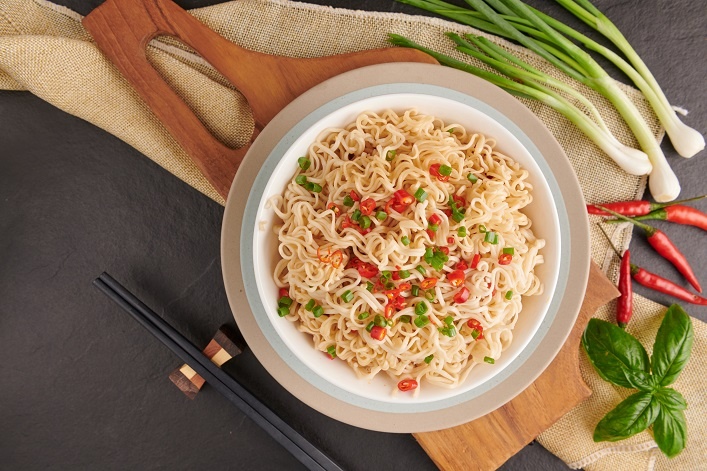
Young and old – instant noodles are always a favourite. Just pour, wait and enjoy!
Instant noodles are pre-cooked noodles sold with a flavouring powder.
The flavoring is usually in a separate packet, although in the case of cup noodles, the flavoring is often loose in the cup.
It’s a geasy-to-prepare food. Either for evening hunger or late night hunger pangs – instant noodles have always come to our rescue.
Articles
Most of us eat noodles almost every week or month because they are tasty, convenient and a filling option.
If you haven’t been living in a cave since the last few centuries, it is very likely that you have heard of or have experienced eating instant noodles at least once in your lifetime.
Related
The page you requested could not be found. Try refining your search, or use the navigation above to locate the post.
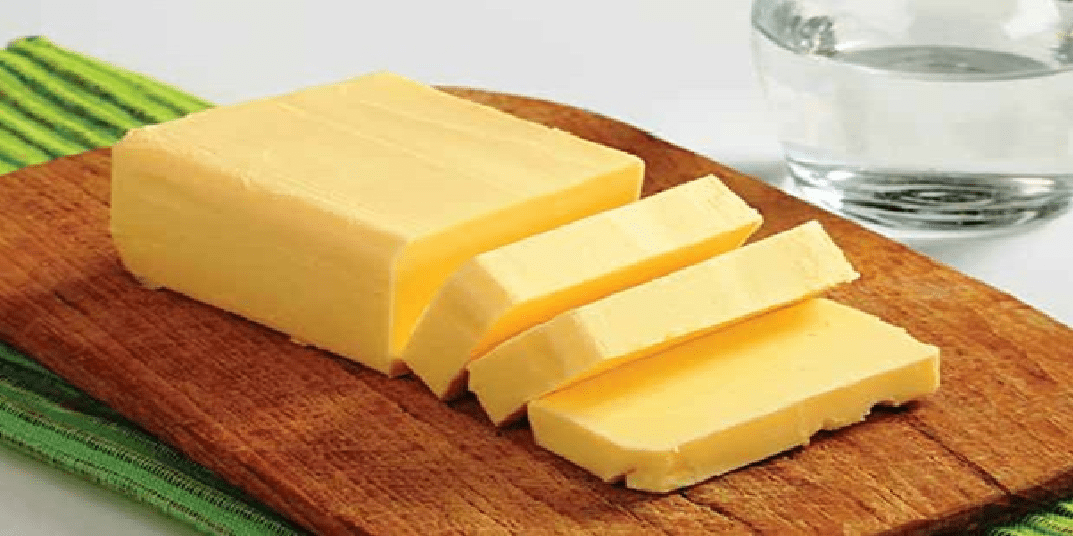
| Rank | Total Score out of 100 (rounded off) | Brand | MRP (Rs) | Net Weight (gm) | Price (Rs) per 100 gm | Best before (months) | Manufactured/Marketed by |
|---|---|---|---|---|---|---|---|
| 1 | 93 | Vita | 44 | 100 | 44 | 12 | The Rohtak Co-Op Milk Producers Union Ltd |
| 2 | 91 | Verka | 46 | 100 | 46 | 8 | The Punjab State Co- Operative Milk Producers Federation Ltd |
| 3 | 89 | DMS | 210 | 500 | 42 | 12 | Delhi Milk Scheme |
| 4 | 87 | Mother Dairy | 46 | 100 | 46 | 12 | Mother Dairy Fruits & Vegetable Pvt. Ltd |
| 4 | 87 | Gowardhan | 80 | 200 | 40 | 12 | Parag Milk Foods Pvt. Ltd |
| 5 | 86 | Amul | 46 | 100 | 46 | 12 | Gujarat Cooperative Milk Marketing Federation Ltd |
| 6 | 84 | Paras | 225 | 500 | 45 | 12 | VRS Foods Pvt. Ltd |
DMS
| Parameter | Weightage (%) | Vita | Verka | DMS | Mother Dairy | Gowardhan | Amul | Paras |
|---|---|---|---|---|---|---|---|---|
| Milk fat | 30 | 27.36 | 27.36 | 24.72 | 23.52 | 23.28 | 23.76 | 22.80 |
| Milk solids not fat | 8 | 7.04 | 6.80 | 7.76 | 6.80 | 6.80 | 5.60 | 5.36 |
| Curd | 6 | 5.52 | 5.28 | 6.00 | 4.80 | 4.80 | 3.84 | 3.84 |
| Reichert Meissl value of extracted fat | 6 | 6.00 | 4.80 | 5.70 | 5.55 | 5.70 | 5.40 | 5.52 |
| Butyro-refractometer reading of extracted fat | 6 | 5.52 | 5.10 | 5.22 | 5.64 | 5.70 | 5.82 | 5.70 |
| Moisture | 5 | 4.15 | 4.10 | 3.55 | 3.60 | 3.50 | 3.85 | 3.50 |
| Acidity (as lactic acid) | 4 | 3.68 | 3.36 | 3.84 | 3.68 | 3.84 | 3.68 | 3.84 |
| Common salt as NaCI | 3 | 2.58 | 2.70 | 2.46 | 2.34 | 2.40 | 2.40 | 2.64 |
| Brand | Score out of 12 |
|---|---|
| Amul | 11.76 |
| Mother Dairy | 11.54 |
| Vita | 11.39 |
| Verka | 11.32 |
| Paras | 11.16 |
| Gowardhan | 11.08 |
| DMS | 10.46 |
The page you requested could not be found. Try refining your search, or use the navigation above to locate the post.