ATM Facilities, Payment Utility services in ATM

ATM Facilities, Payment Utility services in ATM

What else you can get from an ATM?

ATM

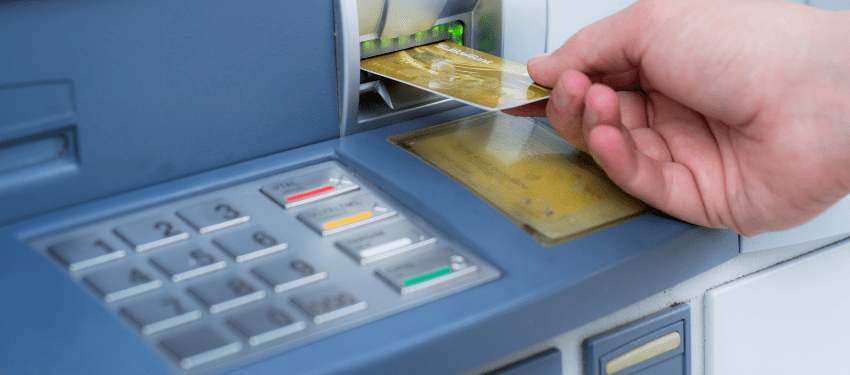
Withdrawal of money, balance check or mini statements form a small part of a lot of ATM services. Read on what are the other services you can avail from an ATM.

                                                                                                                                                             Subhas Tiwari

Banks including SBI, ICICI, HDFC and Yes Bank offer you different facilities from their ATMs. Let’s look at some of the ATM services other than cash withdrawal and balance check.

FD and checkbook request

You can request for fixed deposit at an ICICI Bank ATM. Under which, request for FDs ranging from Rs 10, 000 to Rs 50, 000 can be put through. You must have a resident savings or salary account with ICICI Bank. It is also necessary to have a debit card and PIN. SBI and ICICI Bank ATMs also have the facility of requesting for checkbook. The check book will be delivered to the register address in your bank.

Mobile recharge and pin change

Debit/ATM card PIN can be changed by going to the ATM. Also, you can recharge your prepaid mobile connection from an ATM if you are facing internet connectivity issues. There are many other banks including SBI, which are providing this facility from their ATMs.

Card to card transfer

You can also transfer funds to a customer of your own bank or a customer of another bank. A card-to-card transfer of up to Rs. 40,000 per day can be done from one SBI debit card to another at an SBI ATM. Union Bank of India, Bank of India, Canara Bank, Yes Bank etc. also provide funds transfer facility to their customers using debit cards of other banks as well.

Payment of utility bills and credit card bills

Utility bills such as electricity, water, and mobile postpaid bill can also be paid from an ATM. This facility is available in ATMs of SBI, HDFC Bank etc. Besides, credit card bills can also be done from ATM. One will just need to keep the credit card number handy.

Tax payment and donation

Tax can also be paid from ATM. Union Bank of India and HDFC Bank ATMs have this facility. For this, one has to register the debit card for payment of tax from the ATM on his bank’s website. ATM will provide you a slip with SIN number on payment of tax. You have to submit this number on the bank’s website within 24 hours. On the other hand, if you want to donate to a temple or charity, then this work is also done from ATM. For example, SBI ATM will give you Vaishno Devi, Shirdi Saibaba, Gurudwara Takht Saheb (Nanded), Tirupati, Sri Jagannath (Puri), Palani (Tamil Nadu), Ramakrishna Mission (Kolkata), Kashi Vishwanath (Banaras), Tulja Bhavani and Mahalakshmi Mandir (Mumbai) like many other temples and trusts.

Deposit and mobile banking registration

This facility is available at Axis Bank ATMs. You can withdraw cash from here as well as make a cash deposit. For this, you have to put money in the ATM machine or deposit it by cheque. Through ATM, customers can also register for mobile registration. SBI, ICICI Bank ATMs etc. are providing such facility to their customers.

Insurance premium paid and loan applied

Many banks have the facility of paying the insurance premium by going to the services option in ATMs. Apart from this, you can also apply for loan from ATM. ICICI Bank and HDFC Bank ATMs have this facility. ICICI Bank is providing an instant personal loan of up to Rs. 15 lakh to the customer through an ATM.


Related

Five steps to know if you miss paying your home loan EMI during this pandemic

Five steps to know if you miss paying your home loan EMI during this pandemic

Five steps to know if you miss paying your home loan EMI during this pandemic

Home Loan EMI

The pandemic has hit the salaried employees gravely and a lot have lost jobs as well. In facing such tough situations, what if you miss paying the EMI of your home loan. Here is a guide that gives a heads up.

Subas Tiwari

Generally, the majority part of one’s salary goes to pay the home loan EMI and when that person has to suffer a job loss or salary cut, the EMI goes for a toss. And, the interest amount is added to your overall balance every month. Consequently, this increases the tenure of the loan as well as many more difficulties may come. If you face such difficulties, first of all, contact your bank and tell them about your situation frankly. The bank will certainly offer you an extension if your credit history is good and you have paid EMI regularly. The bank also has the right to extend the duration of your home loan, which will reduce the EMI.

Three to tango

The bank does not take immediate action if you miss one or two EMIs. Firstly, it will issue a notice if you miss three EMIs in a row. However, the bank will give you a grace period of two months for the last time to resume EMI if the borrower does not pay EMI for six consecutive months. Even after all these efforts, if EMI is not deposited, then the bank declares such loan as non-performing asset i.e. NPA. Now, the bank can seize your property and proceed with the auction process.

What is SARFAESI Act of 2002?

SARFAESI or the Securitization and Reconstruction, of Financial Assets and Enforcement of Security Interest Act of 2002 helps financial institutions, including nationalised and private banks, in securing the quality of their assets in a different way. Banks also use this Act for debt collection, on which a writ was also filed by the common people in the High Court and Supreme Court of many states.

This Act empowers banks to auction property of borrowers. Through this Act, the bank reduces the burden of its NPA. For this, the bank does not need approval from any court. But the bank first tries to ensure that the EMI starts again in some way. When all the options are closed, the bank moves further with the property auction process.

The borrowers have a chance to acquire their property until the day the bank announces the auction date. The borrowers can stop the process of this auction by making a payment to the bank. Apart from this, due to the announcement of the auction process by the bank, some charges will also have to be paid separately.

The SARFAESI Act is commonly used to recover the debt. As NPAs of banks continue to grow and loans were not recovered even after strict action against defaulters, the Act gives banks a form of force through which they can acquire their assets. Let us know some more about this SARFAESI ACT 2002.

Rights of banks under SARFAESI Act

The bank has the facility of money transactions, loans are also sanctioned by almost all banks. Money is issued from home loans to personal loans. According to the RBI guidelines, it is the responsibility of the banks to help common men financially. Arrange loans for them and they can also be given relief on delay in repayment of a loan. Not only this, but banks have also been explicitly instructed that they will give preference to lower-and middle-class people in loan disbursement.

Troubles of banks with the Act

The biggest difficulty of banks is that their NPA is increasing. In 2019, the NPA increased to around Rs. 10 lakh crore. Most of the NPA cases are related to loans. Banks have released money for loans to a large number of people, but their recovery has not been done. Many big industrialists are also involved in this, who have been declared defaulters due to inability to repay the loan amount. They have fled the country after securing loans worth billions of rupees from banks. Apart from this, loans were also sanctioned to promote small companies, development authorities, and cottage industries, but in most cases, banks have not been able to recover.

The attitude of banks for recovery

The SARFAESI Act gives a range of powers to banks. It also includes debt collection rights. It has been said by RBI that banks can recover their loans from people. However, banks have also been accused of misusing this law. In many cases, extortion was done by banks. The banks used to threaten the borrowers by reaching home and then dragging the vehicles in the case of personal loans. Lawsuits were also filed against them in the respective police stations, due to which the common people, who were unable to repay the loan, had to face many challenges.

Banks cannot mistreat borrowers using this Act

True that the SARFAESI Act 2002 gives banks the right to recover loans, but banks cannot mistreat borrowers for this. Recovery agents can go to people’s homes only between 7 am to 7 pm. Can talk to them. Consumers can adopt legal processes matching their needs. If any kind of misbehavior is done by the recovery agents, then customers can complain to the banks. In the absence of a hearing in the banks, the voice authorities can also be written.

SARFAESI Act 2002 for co-operative banks

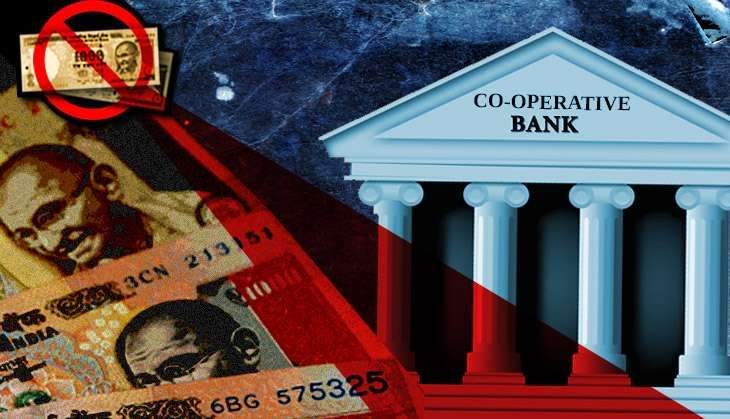
The Supreme Court has said in a case that the SARFAESI Act will be applicable in co-operative banks as well and such banks are covered under it. Debt collection is an essential part of banking activity and this cannot be excluded from this Act. However, the court has also instructed banks to listen to the customers or borrowers before taking any action.

Ways to repay your home loan EMIs during difficult times


  • Use of an emergency fund

It’s advisable to maintain an emergency fund by either keeping the amount in a savings account or in some debt instrument such as fixed deposits.

Ideally, this fund should be at least six times your current monthly income. You could go for a bigger emergency fund savings if you want to. The emergency fund can help you pay your EMIs and keep you from defaulting.

  • Take loan insurance

There are various loan insurance plans in the market that can cover your EMIs for a short period. You can consider buying such a plan along with your home loan. A typical scenario where you will find this insurance useful is when you have lost your job. Hence, a loan protection insurance plan is a short-term measure, but beyond it, you will need concrete ways to repay your debt.

  •  Raise funds by disposing of assets

If you have exhausted your income and savings and are unable to repay the loan, then you can look at other options for raising some cash. You may dispose of your assets such as gold, a car that now seems like a luxury, electronics you don’t need, or withdraws some amount from any long-term investments such as Public Provident Fund (PPF).

  • Contact your lender and find a solution

When your inability to pay EMIs is due to a genuine reason such as loss of employment, a serious medical condition, or short-term difficulty, you can discuss the matter with your lender. You can try to persuade your lender to understand your difficulties and convince them that you can resume your loan re-payments soon.
You can show your track record of repaying your previous loans (other than home loan) on time in order to convince the lender. On a case-to-case basis, after an evaluation of your credit history and your current difficulties, your lender may agree to offer you some options that can ease your financial stress. These options include:

i) Grace period:A brief moratorium on re-payments of loan can be given to you by the lender, that is, a short time period during which you do not need to pay your EMIs to enable you to recover yourself from your short-term difficulty and re-start re-paying the home loan.

ii) Refinancing/restructuring of loan:Restructuring of your loan- where the lender can increase the loan tenure and reduce your EMI amount – can also help you.

  • Interest rate reduction

A lower interest rate may be offered to you with certain terms and conditions. The lender can reduce the rate of interest on your loan provided such rate is non-discriminatory and is as per the published rate grid. However, case-specific interest rate reduction to a level below the rate grid is neither permissible nor customary, except in case of a settlement in which case the home loan account would be classified as a ‘settled’ or ‘written off’ (partially or fully) account. “In such a case, the bank will have to recognise the loan as a write-off and your credit score would also be negatively hurt. Hence, it is in your interest to not get caught in a legal tangle and instead find a way to repay your loan. Therefore, maintain contact with your lender and go over any options you may be offered.

Related

Recovery of Guarantor Loans

Recovery of Guarantor Loans

Have you ever opted for guarantor loan? Do you think your friends and family will stand by you if you go for a guarantor loan? Well they probably...

read more

Ombudsman Scheme for Digital Transactions (OSDT)

Ombudsman Scheme for Digital Transactions (OSDT)

Ombudsman Scheme for Digital Transactions (OSDT)

The Reserve Bank of India (RBI) launched the Ombudsman Scheme for Digital Transactions (OSDT) vide a notification dated 31 January 2019 for redressal of complaints against ‘system participants’ as defined in the said scheme. It is an expeditious and cost-free apex-level mechanism for resolution of complaints regarding digital transactions undertaken by customers of the system participants. What is this office all about and what is it expected to do, and what may constitute grounds of complaint for customers, are aspects that this article will explain. So, the next time you are staring at the ‘transaction failed’ message on your screen, you may have to worry less, knowing that someone has got your back.

THE OMBUDSMAN WILL DEAL WITH YOUR COMPLAINTS

  1. The scheme, launched under Section 18 of the Payment and Settlement Systems Act, 2007, will provide a cost-free and expeditious complaint-redressal mechanism relating to deficiency in customer services in digital transactions conducted through non-bank entities regulated by RBI.
  2. The offices of Ombudsman for Digital Transactions will function from the existing 21 offices of the Banking Ombudsman and will handle complaints of customers from their respective territorial jurisdiction.
  3. The scheme provides for an appellate mechanism under which the complainant/system participant has the option to appeal against the decision of the Ombudsman before the appellate authority.
  4. Complaints relating to digital transactions conducted through banks will continue to be handled under the Banking Ombudsman Scheme as per existing guidelines.

In its ‘Statement on Developmental and Regulatory Policies’ issued in December 2018, RBI said this: “With the digital mode for financial transactions gaining traction in the country, there is an emerging need for a dedicated, cost-free and expeditious grievance redressal mechanism for strengthening consumer confidence in this channel. It has therefore been decided to implement an ‘Ombudsman Scheme for Digital Transactions’ covering services provided by entities falling under Reserve Bank’s regulatory jurisdiction. The scheme will be notified by the end of January 2019.”

WHO ARE THE SYSTEM PARTICIPANTS?

System participant means any person other than a bank participating in a payment system as defined under Section 2 of the Payment & Settlement Systems Act, 2007, excluding a system provider.

  1. The Ombudsman for Digital Transactions is a senior official appointed by RBI to redress customer complaints against system participants for deficiency in certain services covered under the grounds of complaint specified under Clause 8 of the scheme.

THE GROUNDS ON WHICH YOU MAY COMPLAIN

As per Clause 8 of the scheme, the Ombudsman for Digital Transactions shall receive and consider complaints on deficiency in services against system participants on any of the following grounds:

  1. Prepaid payment instruments
  2. Mobile/Electronic fund transfers
  3. Non-adherence to instructions of RBI/respective system provider to system participants, on payment transactions through payment gateways (UPI/BBPS/Bharat QR Code/UPI QR Code)
  4. Non-reversal/failure to reverse within reasonable time, funds wrongly transferred to the beneficiary account due to lapse at the end of system participant
  5. Any other matter relating to the violation of the directives including on fees/charges, if any, issued by RBI in relation to digital transactions

In respect of digital transactions done on third-party platforms, it will be the responsibility of the payment service provider to resolve customer disputes arising out of such transactions.

THE PROCESS FOR FILING THE COMPLAINT

  • Any person who has a grievance on any one or more of the grounds mentioned herein may herself/himself or through her/his authorized representative (other than an advocate) make a complaint against the branch or office of the system participant with the Ombudsman in the applicable jurisdiction. As for a complaint arising out of services with centralized operations, the jurisdiction would be the declared address of the complainant.
  • The complaint is made within one year after the complainant has received the reply from the system participant to her/his representation, or if no reply has been received, not later than 1 year and 1 month after the date of representation to the system participant.
  • The complaint shall be in writing duly signed and shall be in the complaint form furnishing full details.
  • The complaint shall be accompanied by copies of documents to be relied upon.
  • E-complaints are accepted.
  • Complaints received by RBI/GoI can also be taken up by the Ombudsman.

WHAT THE OMBUDSMAN WILL NOT TAKE UP

  • Complaints already settled in a previous proceeding or with the same cause of action or that may be proceeding before any court/tribunal/arbitrator/forum
  • Complaints that fall under the disputes covered under Payment and Settlement Systems Act, 2007
  • Complaints of disputed transactions between customers

WHAT MAY YOU EXPECT OF THE OMBUDSMAN

The Ombudsman shall receive and consider complaints relating to deficiency in services on the grounds mentioned above, irrespective of pecuniary value. He shall dispose of the complaints through

  • Settlement by agreement between the parties, OR
  • Conciliation and mediation between the parties, OR
  • Passing an award

The Ombudsman endeavours to promote settlement of the complaint through conciliation/mediation by means of an agreement between the complainant and the system participant. If the terms of settlement (offered by the system participant) are acceptable in full and final settlement of one’s complaint, the Ombudsman will pass an order as per the terms of settlement and the same will then become binding on the system participant and the complainant.

If the system participant is found to have adhered to the extant norms and practices and if the complainant has been informed to this effect through appropriate means and the complainant’s objections, if any, are not received by the Ombudsman within the time frame provided, the Ombudsman may pass an order to close the complaint.

AWARD OF THE OMBUDSMAN

  1. If the Ombudsman is satisfied that there is indeed a deficiency of service on the part of the system participant and the complaint is not settled by agreement within a specified period as allowed by the Ombudsman, he/she proceeds to pass an award.
  2. Before passing an award, the Ombudsman will provide reasonable opportunity to the complainant and the system participant to present their case. It is up to the complainant to accept the award in full and final settlement or reject it.
  3. Any person aggrieved by an award or by the decision of the Ombudsman rejecting the complaint can approach the appellate authority.

COMPENSATION

  1. Amount of compensation

The compensation amount is limited to the amount arising directly out of the act or omission or commission of the system participant, or two million rupees (Rs 20 lakh), whichever is lower. The compensation shall be over and above the disputed amount.

  1. Amount of compensation for mental agony and harassment

The Ombudsman may award compensation not exceeding rupees 0.1 million (Rs 100,000) to the complainant for mental agony and harassment. The Ombudsman, while giving the compensation, shall take into account the loss of time and expenses incurred by the complainant, as also the harassment and mental anguish suffered by the complainant.

APPELLATE AUTHORITY

The complainant has the option to explore other recourse and/or remedies available as per the law.

One can file an appeal against the award or the decision of the Ombudsman rejecting the complaint, within 30 days of the date of receipt of communication of award or rejection of the complaint. The appellate authority may allow a further period not exceeding 30 days.

ADDRESS OF THE APPELLATE AUTHORITY

The Appellate Authority
Ombudsman Scheme for Digital Transactions
Consumer Education and Protection Department
Reserve Bank of India
First Floor, Amar Building Fort
Mumbai 400 001

13 Reasons Why You Need to File Income Tax in India

13 Reasons Why You Need to File Income Tax in India

13 Reasons Why You Need to File Income Tax in India

Health Insurance

I am a tuition teacher, I don’t need to file income tax. I am just a middle-class woman earning some money from my home kitchen, surely, I don’t need to file income tax. If you can relate to these statements then it’s probably time, we enlighten you on why tax filing is important for everyone, a self-employed person, a freelancer or a white collared employee of an MNC.

To make things easier, we have highlighted 13 reasons why you need to file income tax in India. Read them all here.

  1. To Help the Government

One good reason to file an income tax is to help the government decide the means and amounts of expenditure of citizens. When the government has realistic data, it helps in creating citizen-friendly policies.

  1. It’s Mandatory at Times

Filing returns become mandatory for people who earn a specific amount of money in a year. If it is found that you are not filing the income tax when it’s mandatory for you, you can get in trouble with the income tax department.

  1. Registration of Property Becomes Easier

If you want to register a property in your name, furnishing income tax returns of the past three years might help you to get done with the process easily.

  1. Getting Loans Becomes Simple Too

People who want to take a home loan should maintain a steady record of all income tax returns as a loan provider would certainly want to see the same to establish your credibility as a loan seeker.

  1. Getting a Credit Card is Simpler

If you want a new credit card, providing copies of your income tax returns will help the card provider to issue you a card swiftly.

  1. Claiming Adjustments

Claiming adjustments against past losses is easy when you have filed income tax consistently.

  1. Revised Returns

In case you want to file a revised return, you must have filed the original return previously.

  1. Revoking Rejections

When you have filed income tax returns for years, you can show it as a proof of your reliability to a loan company and persuade it to cancel your loan application rejection. It also comes in handy if the loan provider is offering a less amount than the amount of loan you need.

  1. Visa Processing

If you want to go abroad, you will need to have a visa interview. During the interview, you will be asked to furnish ITR receipts of the last few years or the latest year. It will ensure the country administration of the nation you plan to travel to that you will come back to India and won’t settle there.

  1. Purchasing High Life Cover

In case you want to get a high valued life cover, the ITR receipts will come in handy. This is especially needed when you want to buy a term policy with a sum insured that is of INR 50 lakhs or more.

  1. Government Tenders

If you plan to bid for any government tenders, you will need to provide ITR receipts to prove that you are reliable. The number of receipts you need to provide varies from one government department to the other.

  1. Proof of Income

If you are self-employed or work as a freelancer, an ITR return might work as a substantial proof of income. It comes in handy during job interviews if you plan to join the corporate world again.

  1. Marriage Prospects

Believe it or not, if you are self-employed and you need to prove your earnings to a prospective bride or groom or their families, ITR receipts will help them trust you better, especially if it’s an arranged marriage.

Why Are Co-Operative Banks in India Essential for the Country?

Why Are Co-Operative Banks in India Essential for the Country?

Why Are Co-Operative Banks in India Essential for the Country?

Health Insurance

There are a lot of co-operative banks in India and so long that we are just used to them being there. Have you ever paused and thought why India has so many co-operative banks?  Are they essential for the economy? Are they vital for democracy? If so, you’ll get all the answers right here.

WHAT IS A CO-OPERATIVE BANK?

For the uninitiated, a co-operative bank is a financial entity that belongs to the members. The members of such banks are the customers as well as the owners of the bank. Though these banks need to comply with prudential bank regulations, they usually belong to the people who created them. These people often belong to the same professional or local community.

KEY CHARACTERISTICS OF CO-OPERATIVE BANKS

  • The main goal of such banks is not to earn a profit but to provide quality services to all the members and even the non-members.
  • The Board of Directors are elected by the members who have the same voting right. One person, one vote principle, is followed.
  • Most of the profits are usually used to build reserves, but some of them can be allocated to members as well.
  • In India, co-operative banks have short- and long-term co-operative structure.
  • Key types of co-operative banks in India are Primary Co-operative Credit Society, Central Co-operative Banks, State Co-operative Banks, Land Development Banks, and Urban Co-operative Banks.
  • These banks have to abide by the Co-operative Societies Act of 1904.
  • They also need to follow the rules laid down by the Registrar of Co-operative Societies.

WHY ARE CO-OPERATIVE BANKS IN INDIA ESSENTIAL?

  • Rural Financing

These banks play a key role in rural financing which includes but is not limited to providing finances for agriculture, milk, livestock, personal finances, nursery, etc.

  • Urban Areas’ Development

They promote the development of urban areas by facilitating self-employment, personal finance, home finance, consumer finance.

  • Promotion of Small Industries

They also help in the promotion of industries and small-scale units.

  • Promotion of Democratic Values

These banks promote democratic principles because they are created for the people, by the people and are of the people.

In essence, it can be said that co-operative banks in India are essential because they help in the development and welfare of the people and are not just profit-oriented. These banks reach out to those in need of money in rural areas and hence help in the development of remote areas. Though upgrading these banks and managing them better is the need of the hour, eliminating them won’t be a good idea.

Mutal Funds

Mutal Funds

Mutual Funds

Fixed income funds, money market funds, SIPs, NAVs, know about the best mutual funds here.

A mutual fund is a type of investment vehicle consisting of a portfolio of stocks, bonds, or other securities.

They are divided into several kinds of categories, representing the kinds of securities they invest in, their investment objectives, and the type of returns they seek.

Consumer VOICE banking and finance experts have studied different mutual funds and will help you with the best choice.

Articles

No Results Found

The page you requested could not be found. Try refining your search, or use the navigation above to locate the post.

Related

Loan Against Securities (LAS)

Loan Against Securities (LAS)

Sometimes in times of emergency, we need money immediately. In such a time, instead of selling your investment, taking a loan against securities is...

read more
Enquire Now

    X
    Enquire Now