Green Action Week (GAW) 2025

Green Action Week (GAW) 2025

Green Action Week (GAW) 2025

OVERVIEW

Green Action Week (GAW) is a global campaign to promote sustainable consumption. It is an initiative by the Swedish Society for Nature Conservation (SSNC) and is carried out in coordination with Consumers International (CI). This year (2025) the theme of GAW is ‘Empowering the Sharing Community: Promoting Circular Economy Practices’ with focus on reducing waste using circular economy practices.

Our Focus

In the GAW 2025 campaign, we aim to address greenwashing in industries like fashion, beauty, and food, where misleading eco-claims confuse consumers and hinder real sustainability. By providing practical tools and resources, we empower consumers to identify truly sustainable brands and make informed choices. Through interactive workshops on sustainable living, upcycling, and recycling, along with fostering a Sharing Community, we encourage collaboration and mindful consumption. Our goal is to reduce waste, curb pollution, and inspire lasting behavior change for genuine environmental impact. 

What is Greenwashing?

Greenwashing — the use of misleading environmental claims — is a growing challenge that prevents consumers from making truly sustainable choices. Industries such as fashion, beauty, and food often market products as “eco-friendly” without genuine practices behind them, leaving consumers confused and misled. This lack of transparency contributes to rising waste, pollution, and carbon emissions. Without the right knowledge and tools, consumers struggle to identify authentic, sustainable options, limiting their ability to make informed, responsible decisions. Addressing greenwashing is essential to empower individuals, encourage mindful consumption, and build lasting solutions that protect both people and the planet.

Objectives

  • Educate & Empower Consumers about greenwashing practices in industries like fashion, beauty, and food etc, helping them recognize misleading environmental claims and make informed decisions.
  • Encourage Community Participation through workshops that promote sustainable practices like composting, upcycling, and circular economy principles. These workshops will engage residents in collective action, building a shared commitment to sustainability.
  • Protecting environment by shifting focus to authentic sustainability, and contributing to protecting ecosystems, conserving biodiversity, and mitigating climate change, thereby ensuring a healthier, more sustainable environment for future generations.
  • Advocate for resource conservation through recycling, reusing, and upcycling practices, ensuring efficient material use, reduced energy consumption, and preserving resources for future generations.

Strategy

Workshop with Consumers

Participants will learn to recognize greenwashing tactics and assess product labels to identify misleading claims. A hands-on upcycling session will involve repurposing household waste into useful items like planters or bags, such as plastic bottles or old clothes.

Expected Result: Consumers will gain the tools to evaluate products and make informed, sustainable purchasing choices critically.


Workshop with Women & Young Girls 

This session will focus on sustainable consumption, teaching participants to identify genuinely sustainable products and reduce waste. Women and girls will engage in upcycling activities, turning old clothes into accessories or bags. They will also make eco-friendly household items like natural cleaners.

Expected Result: Women and young girls will embrace sustainable practices, reduce waste, and lead by example in their communities.

Workshop with Children & Youth

Youth will discuss greenwashing and engage in creative upcycling projects, such as turning old t-shirts into shopping bags or using cardboard for storage. The session will also cover recycling education and creating DIY recycling stations.

Expected Result: Children and youth will be empowered to reject greenwashing, engage in eco-friendly activities, and inspire their peers.

Spreading the word

Using Digital Channels 

Using digital channels to amplify the messages to garner support, stories of change, experiences will be featured. 

Advocacy with Government Stakeholders

We will engage in policy advocacy through letter campaigns and dialogue with relevant departments, urging stricter regulations against greenwashing and promoting consumer rights.

Videos

Workshops

 Articles

Green Action Week (GAW 2024)

Green Action Week (GAW 2024)

Green Action Week (GAW 2024)

OVERVIEW

Green Action Week (GAW) is a global campaign to promote sustainable consumption. It is an initiative by the Swedish Society for Nature Conservation (SSNC) and is carried out in coordination with Consumers International (CI). This year (2024) Green Action Week will be celebrated from 30th September – 6th October. The theme of GAW 2024 is Empowering the Sharing Community: Promoting Circular Economy Practices with focus on reducing waste using circular economy practices.

The Problem

According to a study published in the Journal of Urban Management (December 2021), the 62 million tons (MT) of waste generated annually in India includes 7.9 MT of hazardous waste, 5.6 MT of plastic waste, 1.5 MT of e-waste, and 0.17 MT of biomedical waste. Moreover, the Indian Central Pollution Control Board (CPCB) has projected that annual waste generation in India will increase to 165 MT by 2030.

Until now, most municipal solid waste (MSW) is disposed at landfills or unmanaged dumpsites, which not only causes greenhouse gas emissions and other environmental, social and economic problems, but also disturbs operations of existing composting facilities. The hurdles include an absence of waste segregation-at-source, deficient management capacities, a lack of data regarding waste composition as well as insufficient financing and enforcement of existing regulations and policies.

Objectives

1. Consumer Empowerment: Understanding the lifecycle of the products—from manufacture to disposal—makes them appreciate the value of eco-friendly alternatives. Empowered consumers would be more willing to purchase from sustainable brands leading to the increase in demand and therefore the market will have to offer greener products and services. Not only will the efforts in education and clear labeling help distinguish truly sustainable products from those greenwashing, but also consumers will be empowered with the true difference of their informed choices. 

2. Encourage Community Involvement: Community programs to be encouraged through the sharing community workshops, which educate and make residents involved in sustainable practices such as composting, upcycling, to build in a collective effort toward a circular economy.

3. Environmental Protection: Reusing and recycling products will help protect natural resources and limit biodiversity loss. A circular economy strives to utilize waste and resources as efficiently as possible, putting minimal pressure on the natural ecosystems and therefore mitigating climate change. 

4. Conservation of Resources: The practices in the circular economy focus on reusing, recycling, and reusing materials to conserve the precious natural resources. The environmental benefits from the efficient use of materials and reduced energy consumption related to production, and resources are guaranteed to be available for future generations.

What is Municipal Solid Waste (MSW)

Commonly known as trash or garbage that is discarded by households and collected by the municipality is known as Municipal Solid Waste (MSW). It consists of everyday items such as product packaging, grass clippings, furniture, clothing, bottles, food scraps, newspapers, appliances, paint, and batteries. This comes from our homes, schools, hospitals, and businesses. This also emphasises the importance of sustainable materials management which includes the  use and reuse of materials in the most productive and sustainable ways across their entire life cycle.

Challenges

Currently, In India around 377 million urban dwellers generate an estimated 55 million tonnes of municipal solid waste per year. India is among the largest producers of polymers and among the largest generators of un-managed plastic waste leaching into terrestrial and marine ecosystems. 

Based on projections, this number will rise drastically to 125 million tonnes annually by 2031. This trend highlights the urgent requirement for developing a solution that addresses the root causes of waste generation.

From the consumer perspective, the challenge is the lack of a circular economy practices. The prevalent linear consumption and disposable pattern depletes resources, degrades the environment, and generates waste. Products manufactured are used and then thrown away, continuing the cycle of waste and harm towards the environment. Common challenges consumers face includes limited product portfolios for sustainable consumption, high costs of sustainable alternatives, information shortage regarding the purchase impact and awareness on sustainable environmental practices.

Currently, only 8 per cent of plastic in India gets recycled, 29 per cent is mismanaged, and the rest is incinerated or dumped. But India also has an economy and culture that repairs, re-uses and recycles its resources. 

Residual waste in India

Crude dumping of waste occupies ~1250 hectares of precious land in India each year. 

There are 2120 existing dumpsites (CPCB annual report 2016-17) 

Landfills were originally located outside of the cities, but as cities expanded, dumpsites are now almost inside the cities. 

Delhi’s open dumps at Ghazipur (69 metres high), Okhla (55 metres high) and Bhalswa (56 metres high), have resulted in garbage dumps of 13 MMT, 7 MMT and 6 MMT respectively. 

Estimated that more than 10,000 hectares of urban land is locked in these dumpsites in India.

(Source: Ministry of Statistics and Program Implementation)

STRATEGY

Workshop with consumers along with experts & environmentalists 

This workshop aims to:

1.Provide tools and tips on how to shop more sustainably, such as choosing products with less packaging, how to do waste management etc.

2.Offer resources for identifying eco-friendly brands and certifications.

3.Encourage the idea of reusing and sharing within the community.

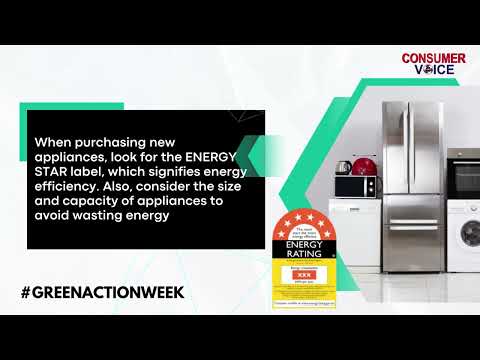
4. Educate consumers on how to reduce energy consumption at home through simple actions like using energy-efficient appliances, unplugging devices, and optimizing heating and cooling

Workshop with Women & young girls 

This workshop aims at:

1. Composting and creating a zero-waste kitchen (showcasing how to use food scraps creatively to make new dishes ,reduce food waste.

2. Demonstrating how to make eco-friendly cleaning products using common household items like vinegar, baking soda, and essential oils.

3. Providing  guidance for basic repairs and fostering a repair culture through sharing community efforts. 


Workshop with Children & Youth

This workshop aims to

1. Teach children how to plant and care for a small garden using recycled containers.

2. Conduct experiments that teach children about biodegradation, composting, and the impact of waste on the environment. Include hands-on activities like creating mini compost bins.

3. Use recycled materials like paper, plastic bottles, and cardboard to create art projects.

EXPECTED OUTCOMES:

1.Educated and empowered consumers will make the right sustainable choice.

2.Collaborative efforts within the sharing community will be strengthened.

3.Economic gains will be realized through reduced waste and adoption of sustainable practices.

4.A positive environmental impact will be observed, particularly in waste management and the adoption of renewable  sources.

5.Long-term sustainability will be promoted as a key outcome.


Workshops

Workshop on Best out of Waste

As part of Green Action Week, Consumer VOICE, in collaboration with Being Artistic by Himani, organized a "Best Out of Waste" workshop at Soami Nagar Model School, Delhi, on October 5th. The...

read more

 Articles

Green Action Week (GAW 2023)

Green Action Week (GAW 2023)

Green Action Week (GAW 2023)

OVERVIEW

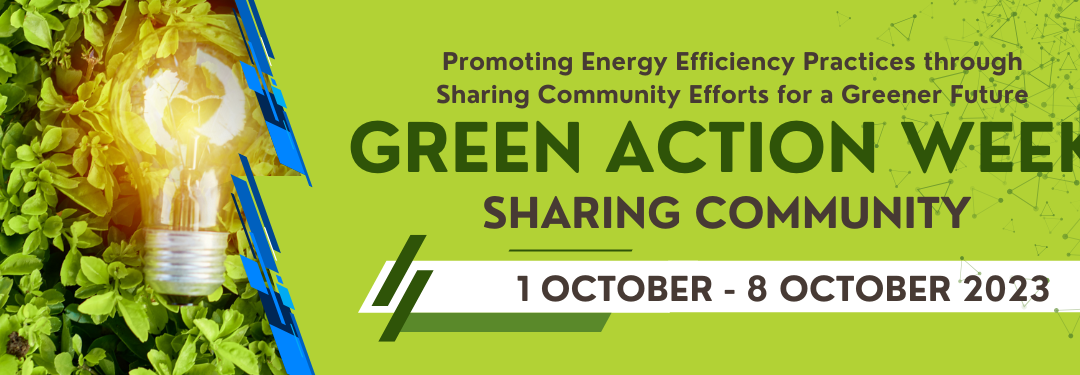
Green Action Week (GAW) is a global campaign to promote sustainable consumption. It is an initiative by the Swedish Society for Nature Conservation (SSNC) and is carried out in coordination with Consumers International (CI). This year (2023) Green Action Week will be celebrated from 1st October to 8th October. The theme of GAW 2023 is Sharing Community which works for people and the planet. We need to work together by ensuring that everyone has sustainable access to goods and services.

Objectives of GAW 2023

  1. To address unsustainable Consumption patterns among target groups (audience).
  2. Encouraging use of natural resources, reducing energy consumption and conserve resources and promoting sustainable alternatives.
  3. Supporting sharing community efforts to promote sustainable consumption patterns leading to adopt energy efficiency practices among consumers.

What is sustainable consumption?

Sustainable consumption is the use of products and services in ways that minimizes impacts on the environment. For several years humans have been behaving irresponsibly especially with nature and putting future generations at risk. Everything human does affects nature. The United Nations Environment defines sustainable consumption as the use of material products, energy and immaterial services in such a way that it minimizes the impact on the environment, so that human needs can be met not only in the present but also for future generations. Preserving the planet is not only the responsibility of an individual but requires a collective effort and therefore Sharing Community is so very important. A crucial part of sustainability is that sustainable consumption must enable socio-economic justice for everyone involved in the supply chain, as much as it addresses consumer and environmental concerns.

Current Challenges

India‘s rapid economic growth and urbanization has resulted in the challenge of unsustainable consumption patterns among its population and is an urgent need to address this. Consumer education is crucial to adopt sustainable and responsible consumption practices that minimize environmental impact and ensure a greener future through a sharing community.

With a rapidly growing population and a growing economy, the demand for energy in India has skyrocketed in recent years. At the same time, India is also grappling with severe environmental issues caused by fossil fuel-based energy systems, such as air pollution and climate change. India has a relatively high energy intensity, indicating the amount of energy required to produce a unit of GDP. As per 2019 data India’s per capita energy consumption equals 0.6 tonnes of oil equivalent (toe) as compared to the global per capita average of 1.8 toe. In Indian households appliances such as fans, refrigerators, ACs, microwaves and lighting contribute to significant energy consumption. We will be focusing on unsustainable consumption patterns of consumers in various sectors and promote sustainable practices through sharing community efforts.

WHAT IS SHARING COMMUNITY?

With the theme “Sharing Community”, Green Action Week seeks to highlight practical examples of more sustainable ways to access goods and services. People have also realised that adopting sustainable practices and reducing plastic consumption in their lives is the best gift that one can give themselves and to the environment.

Sharing Community brings people from diverse backgrounds together despite various limitations to put action oriented efforts through empathy and collaboration. Sharing is a concrete example of a more sustainable consumption culture.

STRATEGY

In our Green Action Week (GAW 2023 Campaign) we will promote responsible use of natural resources through energy efficient practices, and exploring sustainable ways of living will be encouraged through sharing community efforts. This will contribute towards reducing resource depletion, minimizing waste generation and creating a more sustainable and greener future for the society.

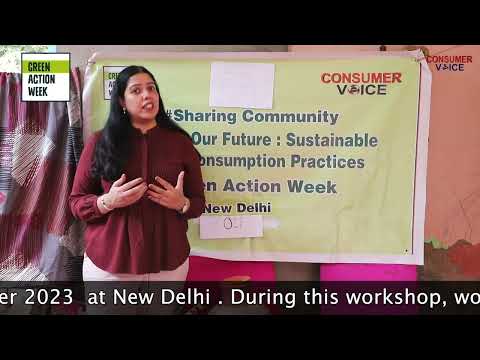
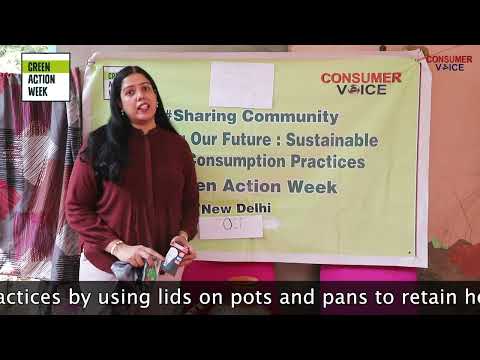
A workshop with consumers along with energy efficiency expert, environmentalists focusing on:

  • ways leading to energy efficiency and conservation
  • renewable sources such as solar cooker, switching to energy efficient LEDs, using star labelled products
  • dissemination of information of various energy efficiency schemes

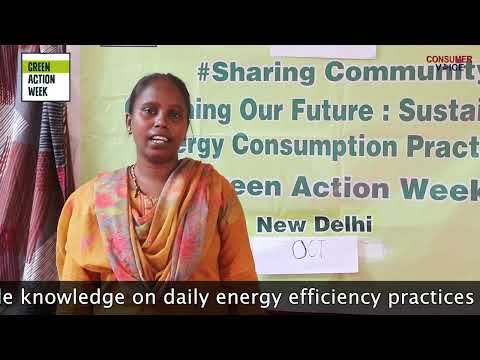
A workshop with women & young girls focusing on:

  • promoting various ways to reduce energy consumption
  • promotion /finding natural resources (example using mud pitcher as a water coolant and chik/bamboo usage in houses as a coolant in homes).
  • demonstration of using available natural resources /upcycled products for energy efficiency purposes such as rainwater harvesting, collecting rain water to water plants, flushing toilets.
  • using up-cycled packaging material, finding creative ways to reuse packaging materials can contribute to reduce energy consumption and waste.

Workshop with Children & Youth- Encouraging Children & youth:

  • to adopt sustainable energy saving practices,
  • promote public transportation, pooling of car etc. Encouraging them to manage wastage etc.

Workshop with Children & Youth- Encouraging Children & youth to explore and document different visions of a future world. The goal is to capture the many ways in which people see consumption in this future world, and to inspire change worldwide.

The workshop’s objective is to delve into the concept of sustainable consumption in the future. This will be accomplished by engaging in visioning exercises that capture diverse perspectives on the future. By analyzing and contrasting these varied visions, we aim to craft a comprehensive report accessible to all, intended to spark inspiration. Moreover, our goal is to drive transformative change. Drawing from the success of envisioning alternate futures in futures studies research, we recognize the potential for these workshops to propel us towards positive advancements.

Mini Stories

EXPECTED OUTCOMES:

  • Through community efforts we will promote sustainable patterns and by adopting these patterns consumers can contribute to environmental sustainability, energy conservation and transition to a more sustainable future.
  • Strengthening VOICE of Women -As women play an important role in running daily household activities, strengthening their voices and educating them is very crucial to promote sustainable patterns of energy consumption and to promote energy efficiency.
  • Promoting sustainable way of living for greener future – Sharing community efforts will lead to strengthen the bond among various groups /stakeholders and entire community will be benefitted while tacking environmental problem.

 Articles

Envisioning Workshop

Consumer VOICE took a proactive step towards shaping a sustainable future by organizing an Envisioning Workshop on the 24th of November in New Delhi, as part of the Green Action Week project...

read more

Green Action Week (GAW 2022)

Green Action Week (GAW 2022)

Green Action Week (GAW 2022)

OVERVIEW

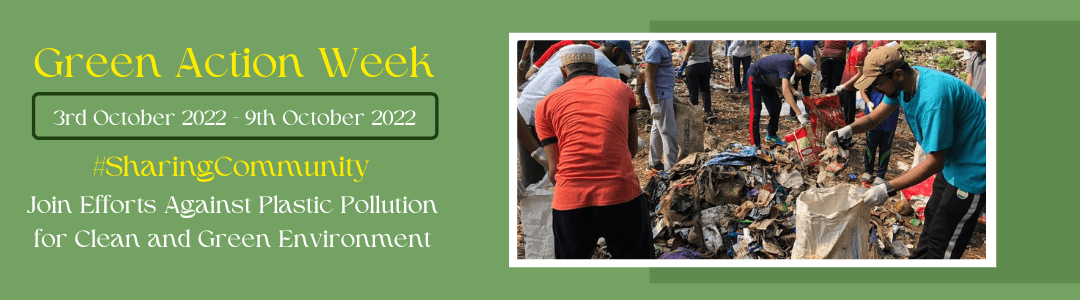
Green Action Week (GAW) is a global campaign to promote sustainable consumption. It is an initiative by the Swedish Society for Nature Conservation (SSNC) and is carried out in coordination with Consumers International (CI). This year (2022) Green Action Week will be celebrated from 3rd October to 9th October. The theme of GAW 2022 is Sharing Community which works for people and the planet.

CAMPAIGN FOCUS

Fighting plastic pollution and building a sustainable environment through sharing community.

Objectives of GAW 2022

  1. To create community sharing where citizens are going to put their efforts for society through action-oriented activities.
  2. To train and sensitize various stakeholders such as consumers, vendors, women etc through youth volunteers and influencers, environmental activists, consumer activists on various aspects to fight plastic pollution, inform them about current laws, finding sustainable alternatives and adopt sustainable options in their lives.

Plastic Pollution and its harmful effects

Plastic has its own use but not without harming the environment and our planet. With plastic being used everyday, it is actually choking our planet. To just highlight the severity of the problem, while you are taking a minute to read this, one million plastic bottles are being purchased around the world. Today we produce almost 400 million tonnes of plastic every year. India’s Central Pollution Control Board (CPCB) Report (2019-20) stated that 3.5 million metric tonnes of plastic waste are generated in India annually. 

Single use plastic products like water bottles, shampoo bottles, milk packets, food packets, cutlery etc which are now an integral part of our lives is harming the environment. Most of us use these everyday without even thinking where they might end up to. The plastic waste which eventually lands up in oceans and seas are major contributors to ocean pollution and harming the marine life. Plastics do not undergo degradation and therefore stays in the soil for several years thereby affecting the soil fertility. Improper plastic disposal also block the pipes and the drains causing waterlogging.

Addressing the Problem

According to a notification issued by Union Ministry of Environment, forest and climate change, Government of India single use items such as plates, cups, glasses, forks, spoons, knives etc are banned from July 1st ,2022. “The manufacture, import, stocking, distribution, sale and use of following single-use plastic, including polystyrene and expanded polystyrene, commodities shall be prohibited with effect from the 1st July, 2022,’’ says the Ministry notification. This movement gives a huge scope to sensitize various stakeholders such as housewives, vendors, consumers about alternatives available, sustainable resources to use and to meet the needs and how to contribute to environment friendly practices through community efforts.

WHAT IS SHARING COMMUNITY?

With the theme “Sharing Community”, Green Action Week seeks to highlight practical examples of more sustainable ways to access goods and services. People have also realised that adopting sustainable practices and reducing plastic consumption in their lives is the best gift that one can give themselves and to the environment. Sharing Community brings people from diverse backgrounds together despite various limitations to put action oriented efforts through empathy and collaboration. Sharing is a concrete example of a more sustainable consumption culture.

STRATEGY

Environmentalist led action oriented workshop to sensitize and educate people on :

  1. Existing laws on single plastic usage and which products comes under single plastic
  2. Use of sustainable products in our day to day lives
  3. Green labelling in India and the products that fall under it

Young volunteers led action oriented workshop will :

  1. Disseminate information about single use plastic and other products harmful for environment and how to choose sustainable, green products.
  2. To Clean plastic from nearby surroundings and reaching out to vendors to make them aware about laws on single use plastic and provide alternatives to customers and also how to disseminate information to customers not to use plastic ,use alternatives

Women led action oriented workshop will :

  1. Help women find out sustainable options in their kitchen and to replace single use plastic or by using existing resources to contribute to sustainability.
  2. Demonstrate recycling of plastic and turning them into useful product using available resources.
  3. Inform them about various recyclers and how they are contributing to environment.

GAW Sensitisation Workshops

EXPECTED OUTCOMES:

  • Sensitized and informed consumers will be contributing towards environment.
  • Sharing community efforts will lead to strengthening the bond among various groups and stakeholders and entire community will be benefitted while tacking environmental problem.
  • Responsible disposal and recycling in safe way contributing to environment with trainers, environmentalists, consumer activists, practicing entrepreneurs who are recycling the products using sustainable alternatives.
  • Vendors and consumers both will be sensitized to opt for alternatives and contribute towards environment through sharing community efforts.

Loading

Green Action Week Workshop in Vivek Vihar and Ghaziabad

Green Action Week Workshop in Vivek Vihar and Ghaziabad

Green Action Week Workshop in Vivek Vihar and Ghaziabad

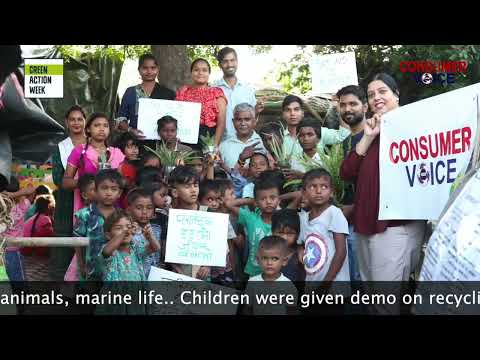
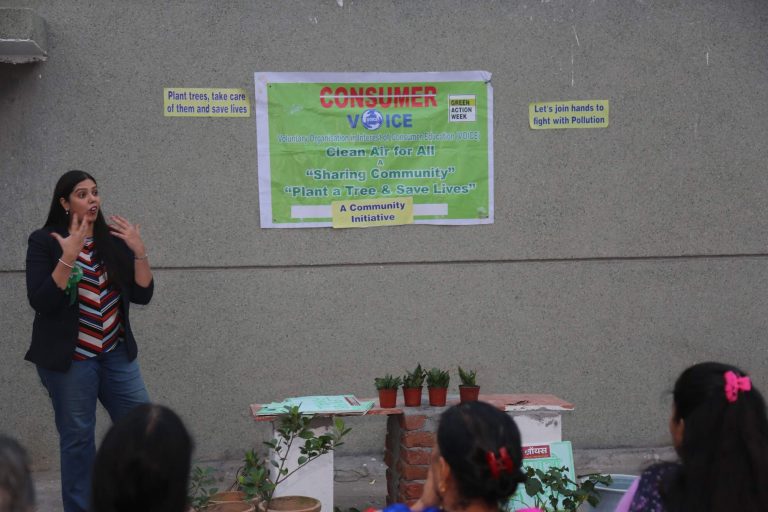
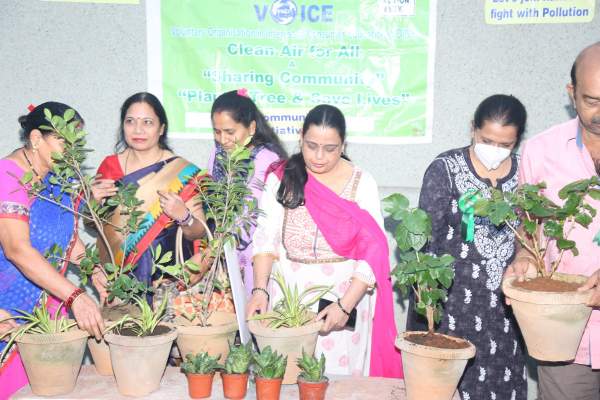
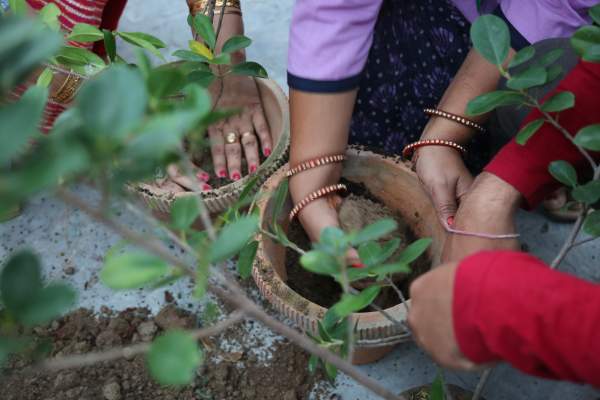
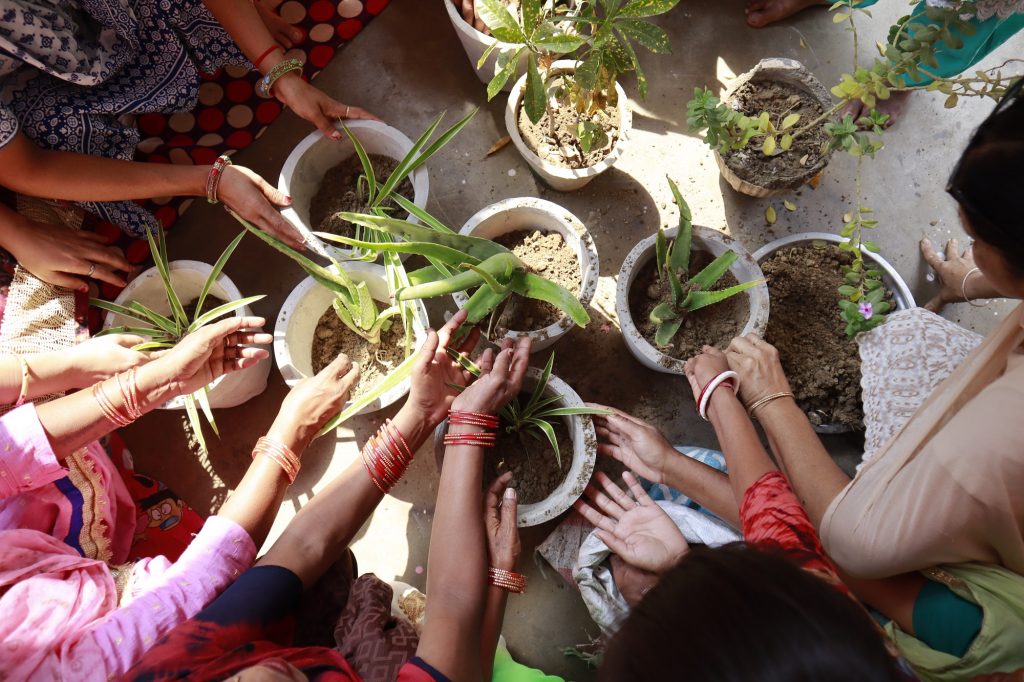
As part of Green Action Week, on the theme of sharing community, Consumer VOICE organised an event on 31st October 2019 with the residents of Vivek Vihar and Ghaziabad (NCR). The residents joined hands by planting air purifying plants and trees to contribute towards clean air for all campaign activities.

Vivek Vihar and Ghaziabad are some of the worst polluted areas in Delhi/NCR. The residents of the region reel under severe pollution and therefore the residents decided to take the fight in their hands through ‘Community Sharing’.

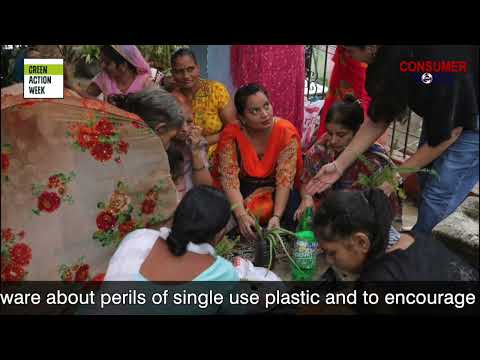
Women participants shared their experiences on green practices and working together in the community. They enthusiastically participated in the planting activities and decided to involve their kids in environmental friendly activities.

Ms.Rinki Sharma,Head Projects Consumer Voice addressed the gathering along with Shri Virender Rawat from the society association.


Participants were sensitized on the problem of air pollution and how joint efforts can contribute towards the solution. There were discussions on green practices such as using compost pit ,discarding single use plastic from everyday life, pooling for vehicles and adopting a healthy way of life etc. Participants appreciated the efforts of Consumer VOICE where they can work together and learn from each other.

Green Action Week Workshop in Rajpur Khurd village

Green Action Week Workshop in Rajpur Khurd village

Green Action Week Workshop in Rajpur Khurd village


As part of Green Action Week, the residents of Rajpur Khurd village joined hands by planting air purifying plants and trees on 12 Oct 2019. Based on the theme of sharing community, Consumer VOICE celebrated Green Action Week, with the residents of Rajpur Khurd village who enthusiastically planted trees for a cleaner and greener environment.Participants were sensitized on the problem of air pollution and how joint efforts can contribute towards the solution. Discussion also took place regarding green practices such as using compost pit ,discarding single use plastic from day to day life ,adopting a healthy way of life etc.
gaw4-370x310
previous arrow
next arrow

Enquire Now

    X
    Enquire Now