No Results Found
The page you requested could not be found. Try refining your search, or use the navigation above to locate the post.


The page you requested could not be found. Try refining your search, or use the navigation above to locate the post.
The page you requested could not be found. Try refining your search, or use the navigation above to locate the post.

To be resilient should be the first lesson irrespective of what work you are doing. Irrespective of the time and severity, you will be knocked down at some point and the mental strength to bounce back and punch a blow on the “face of failure” is your mental superpower. If you are able to do it repeatedly and come out as the winner then you are a champion of your life and profession! Should I include students here? Surely yes. This is not easy for any age, sure. However, as Bob Marley once said, “You never realize how strong you are, until being strong is the only choice you have.”
Take the example of Saikhom Mirabai Chanu. The endearing smile on Mirabai Chanu’s face after winning the silver medal in the women’s 49-kg class weightlifting competition in the Tokyo Olympic Games has been etched in all our minds forever. We all cheered for her win, however, only a few know the pain that she has had to endure. Her win at the Tokyo Olympic Games is the happy culmination of a journey punctuated by a range of pain both physical and emotional. It is this self-determination that pushes you beyond boundaries and limits that were set as goalposts.
She has defeated her loss at the 2016 Olympic Games. There, she had registered a no-lift. She has overcome the pain of missing the Asian Games due to an injury. With total lifts of 203kg, including 87kg in Snatch and 115kg in Clean and Jerk, she earned herself the Olympic Games silver medal, an appropriate reward for the sacrifices she has made in her pursuit. And there are many Mirabai Chanu who have been constantly hitting the boundaries and coming out as winners. She is the most recent example to put here. And likewise, there are many in the shadows who will win medals with their grit and willpower. Few more names would have surfaced by the time I finish writing.
This is the power of resilience. Just when you think it’s over and you can’t go on, you rise from that moment. You accumulate your strength and decide to give it another try. Time and again, experts keep saying that mental toughness wins as many medals as physical strength. It’s a balance. So, don’t you think we all should glean mental toughness from an Olympian and adapt it to our working life? It is wonderful if you’re talented but what if you are not mentally strong enough. Your journey can end midway if you don’t have the mental capacity to go on until you reach your destination. There’s always going to be somebody else out there who will outwork your talent. This life is short. You’ve only got time for so many shots.
At some point in our lives, we tend to become stressed, overwhelmed and sad. Some folks start eating unmerited food to cope with the pain of being broke. Life gives us tough times. The key is enforcing standards, a mark to reach and to start your journey afresh from the last failure. However, this too is tough. It means we need to challenge ourselves, mentally and physically, to meet the new standard if they are for our ultimate betterment. As we all should, we need to embrace the new standard to be a master of all areas of our lives and achieve success. It’s not about what you are doing but all about how you are doing!
Happy Reading!
Sharmila Das
Editor
The page you requested could not be found. Try refining your search, or use the navigation above to locate the post.
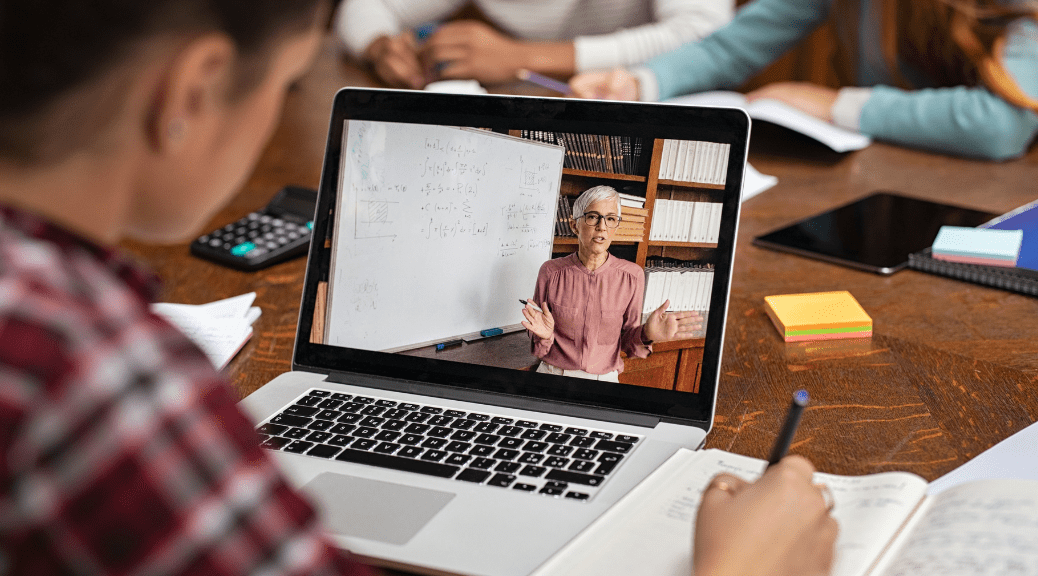
Atul, a boy in grade 5 used to be a bright and talented student until the pandemic began. Due to the closure of schools, he like many of his friends were unable to continue classes and studies. His mother who used to work in a nearby shoe factory had to give up her job. His father, too, who used to sell vegetables lost out on daily earnings. This cumulatively impacted the livelihood of many families and affected many boys and girls alike Atul. Atul’s school, though, was adaptive enough to start sharing class notes and study materials on the smartphones. Atul and his family could not access such a smart education as we call it. So, he and some of his classmates were left out with the education system not providing any alternative umbrella beyond smartphones. Thus, here we see a large segment of deprived students. Some also just because of no internet connectivity.
Students who do not have access to any such digital medium through which they can continue their studies have lost out on their future to the pandemic, it seems. Atul’s life reality paints a picture altogether for lacs of rural and semi urban societies for whom free or subsidised education meant nothing as they couldn’t access it. That’s where our hearts cry out! Are we going to let a chunk of our population go uneducated?
Besides the rural – urban divide, think about the substantial effects that the disparity of accessing education will throw us at. Closures of educational institutions hamper the provision of essential services to children and communities, including access to nutritious mid-day meals, affect the ability of many parents to work, and increase risks of violence against women and girls.
A recent UNESCO report says, the pandemic-induced disruption has affected more than 90 per cent of the world’s student population, accounting for over 120 crore students and youths across the planet. The estimate for India is that more than 32 crores of students have been affected, of which about 14 crore are primary and 13 crore secondary level students.
Education experts say that many children may not be able to recoup from the poverty ditch and go back to school for some years, widening the gap between rich and poor and jeopardising the prospects of tens of millions of children trying to pull themselves out of poverty. Can we think about any social or financial packages or stimulus here, at this juncture when the harrowing Covid gaps are still present?
However, there are a few silver linings. Research says, a few schools have gone out of their way creatively. Some schools in MP started broadcasting their classes over loudspeakers, while outdoor group classes have also been organised in some villages there so that pupils can keep a safe distance while they learn. Also, reports of broadcasting study lessons on specified television channels is another good idea here.
We as individuals, technology providers, organisations can do our bit too if we realise education is one of society’s greatest equalisers. Just donating money won’t help. A thought to ponder upon!
Happy Reading!
Sharmila Das
Editor
The page you requested could not be found. Try refining your search, or use the navigation above to locate the post.
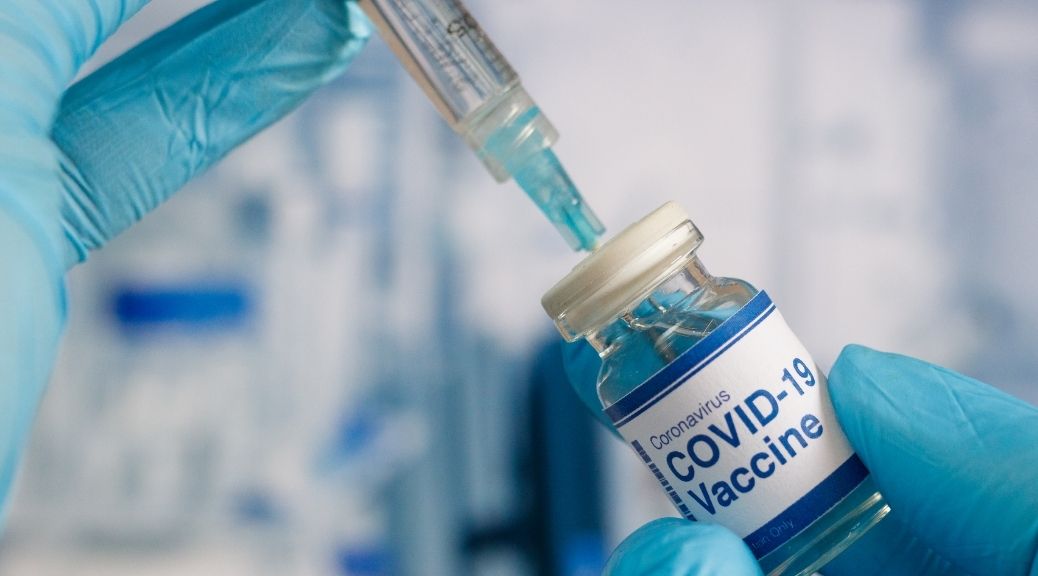
There was a popular tweet doing the rounds lately. It said, India’s vaccination drive is like going for a marriage. At first, the groom wasn’t ready for it, then there was no suitable match and then the groom, because of not getting what he wanted, had to settle with whatever available. This is a very close comparison to the vaccination scenario in India. At first, we Indians were reluctant in taking the jab, then we started looking for the one we thought was perfect; then we went for whatever was available. This is still pertinent in some parts of India where a good share of the rural and semi-rural population is hesitant in taking a jab. I faced it at my home too when our domestic help refused to take the shot fearing her mother’s threat of dying of vaccination.
If we look around, it is clear as daylight that there are different layers of malfunctioning operating in our country when it comes to the vaccination drive. First, we celebrated defeating the virus early then we started exporting it to our neighboring countries and then all hell broke loose! We had the second wave even more severe. We had no vaccine for the vast 1.38 billion population and still the country is experiencing the shortage issue.
Keeping aside the unavailability issue, think about it. A country with approximately 65% rural population where availability of smartphone and Internet is scarce (approximately 35% access internet through smartphone), the functioning of the vaccination drive through a technology-enabled platform Cowin is a mayhem. Even with the 35% smartphone users, how many are digital savvy to book a slot on Cowin? Understandably, we are bearing its share of outcomes with rampant pandemic spread in rural areas for the first time.
Then there comes the state-center, public/private spat at the cost of the lives of common men. States are blaming for the unavailability of buying foreign vaccines where the center looks baffling without a clear buying and distribution framework. Also, the Supreme Court now calling the center’s vaccine policy “arbitrary and irrational”. As per reports, the Court wanted to know why people between the 18-44 age group need to buy the vaccine when the older population is getting it for free. Moving on, health experts stressed that the only way to win the fight against Covid is by rapidly vaccinating at least 80 per cent of the country’s population to create herd immunity. Its importance cannot be overemphasised especially in the context of the virus’ spread in rural India which is affected by rickety healthcare infrastructure.
A dear friend of mine, working with a media daily recently wrote an analysis where he said, the Covid-19 second wave is shifting base. It is more going to the eastern part of the country-where the occurrence of the disease has already seen a sharp spike of 20% compared to last year. Clearly, vaccination is the only answer to the deadly disease in such areas where healthcare facilities are laughable. And for the larger part of the country too, it is the only succor.
But how are we going to see this happen? By the time the edition will be out, I’m sure there will be more such questions if we do not settle the storm sooner. Putting to rest all such a stalemate, can we look at a policy where a framework to provide free vaccination to the population can be laid? Sure, if we wish to be a $5 trillion economy, $5 billion to vaccinate all is not a big ask.
Happy Reading!
Sharmila Das
Editor
The page you requested could not be found. Try refining your search, or use the navigation above to locate the post.

The recent guidelines announced by the Advertising Council of India (ASCI) has created a lot of buzz among the brands, influencers, agencies and consumers. While the majority section of the stakeholders is saying this new guideline is going to bode well with the new age consumerism, a section of it calling the social media rules by the government are intermediating, curbing one’s freedom of expression and privacy.
If I go by my analysis, I would say the ASCI guidelines are self-explanatory for the better usage of different digital platforms. With this new set of guidelines, we the consumers are going to receive what was greatly missed before. Every consumer in the country has the right to be served with genuine information and that should not be misrepresented by the name of an organic content. Rather they should have clear mention of brand/product endorsement so that the audience aka the consumers know the message can be a bias information supporting the influencers’ cause.
ASCI had also earlier announced rules for different companies claiming ranking, awards for use in different advertisements which I feel is a much-appreciated step to safeguard the interest of consumers. Brands and services need to ensure that the endorsing bodies involved in showing awards or rankings are authentic and credible, while validating their claims in advertisements. The ASCI statement said this is to curtail the “superiority claims” in advertising for the products and services based on awards and rankings received, which “sometimes misled into believing” by the consumers.
On the other hand, there are new set of government guidelines that have addressed user issues related to the OTT platforms. Now you and me know the awkward situations we all go through while watching any streaming content on our smart TVs. Certainly, we wanted clear disclaimer of minimum age of consuming such content which was not there. Also, tobacco or any alcohol advertisements on such shows were clearly deplorable for us. Now, with the self-classification for streaming services on content that is for 13-plus, 16-plus or adults on the basis of age, sex, violence and nudity is something we always wanted. We now know that there will be a framework filtering children friendly content.
And there are government notified rules to regulate social media as well. This new regulation bars content that is defamatory, obscene, libelous, racist, harmful to minors, threatens the unity, integrity, defence, security or sovereignty of India and its ties with other countries also are there. The new rule also states that SM platforms will need to remove or disable offensive or illegal content within 36 hours of being notified or of a court order. Now, that implies the govt is going to decide what is defamatory and yes, I hear you right! In a democratic country, can there be a unified parameter to define the nature of a post? Likewise, our end-end-to encryption messages being sent on WhatsApp, Telegram and Signal will come under rigid surveillance that means, if need be, users’ data will be identifiable.
To sum up, I must say while these ASCI and government guidelines are going to help consumers to a great extent; yet the feeling of a sword is hanging over our heads while messaging online or on social platforms can’t be ignored.
Happy Reading!
Sharmila Das
Editor
The page you requested could not be found. Try refining your search, or use the navigation above to locate the post.