No Results Found
The page you requested could not be found. Try refining your search, or use the navigation above to locate the post.


The pandemic has hit the salaried employees gravely and a lot have lost jobs as well. In facing such tough situations, what if you miss paying the EMI of your home loan. Here is a guide that gives a heads up.
Subas Tiwari
Generally, the majority part of one’s salary goes to pay the home loan EMI and when that person has to suffer a job loss or salary cut, the EMI goes for a toss. And, the interest amount is added to your overall balance every month. Consequently, this increases the tenure of the loan as well as many more difficulties may come. If you face such difficulties, first of all, contact your bank and tell them about your situation frankly. The bank will certainly offer you an extension if your credit history is good and you have paid EMI regularly. The bank also has the right to extend the duration of your home loan, which will reduce the EMI.
The bank does not take immediate action if you miss one or two EMIs. Firstly, it will issue a notice if you miss three EMIs in a row. However, the bank will give you a grace period of two months for the last time to resume EMI if the borrower does not pay EMI for six consecutive months. Even after all these efforts, if EMI is not deposited, then the bank declares such loan as non-performing asset i.e. NPA. Now, the bank can seize your property and proceed with the auction process.
SARFAESI or the Securitization and Reconstruction, of Financial Assets and Enforcement of Security Interest Act of 2002 helps financial institutions, including nationalised and private banks, in securing the quality of their assets in a different way. Banks also use this Act for debt collection, on which a writ was also filed by the common people in the High Court and Supreme Court of many states.
This Act empowers banks to auction property of borrowers. Through this Act, the bank reduces the burden of its NPA. For this, the bank does not need approval from any court. But the bank first tries to ensure that the EMI starts again in some way. When all the options are closed, the bank moves further with the property auction process.
The borrowers have a chance to acquire their property until the day the bank announces the auction date. The borrowers can stop the process of this auction by making a payment to the bank. Apart from this, due to the announcement of the auction process by the bank, some charges will also have to be paid separately.
The SARFAESI Act is commonly used to recover the debt. As NPAs of banks continue to grow and loans were not recovered even after strict action against defaulters, the Act gives banks a form of force through which they can acquire their assets. Let us know some more about this SARFAESI ACT 2002.
The bank has the facility of money transactions, loans are also sanctioned by almost all banks. Money is issued from home loans to personal loans. According to the RBI guidelines, it is the responsibility of the banks to help common men financially. Arrange loans for them and they can also be given relief on delay in repayment of a loan. Not only this, but banks have also been explicitly instructed that they will give preference to lower-and middle-class people in loan disbursement.
The biggest difficulty of banks is that their NPA is increasing. In 2019, the NPA increased to around Rs. 10 lakh crore. Most of the NPA cases are related to loans. Banks have released money for loans to a large number of people, but their recovery has not been done. Many big industrialists are also involved in this, who have been declared defaulters due to inability to repay the loan amount. They have fled the country after securing loans worth billions of rupees from banks. Apart from this, loans were also sanctioned to promote small companies, development authorities, and cottage industries, but in most cases, banks have not been able to recover.
The SARFAESI Act gives a range of powers to banks. It also includes debt collection rights. It has been said by RBI that banks can recover their loans from people. However, banks have also been accused of misusing this law. In many cases, extortion was done by banks. The banks used to threaten the borrowers by reaching home and then dragging the vehicles in the case of personal loans. Lawsuits were also filed against them in the respective police stations, due to which the common people, who were unable to repay the loan, had to face many challenges.
True that the SARFAESI Act 2002 gives banks the right to recover loans, but banks cannot mistreat borrowers for this. Recovery agents can go to people’s homes only between 7 am to 7 pm. Can talk to them. Consumers can adopt legal processes matching their needs. If any kind of misbehavior is done by the recovery agents, then customers can complain to the banks. In the absence of a hearing in the banks, the voice authorities can also be written.
The Supreme Court has said in a case that the SARFAESI Act will be applicable in co-operative banks as well and such banks are covered under it. Debt collection is an essential part of banking activity and this cannot be excluded from this Act. However, the court has also instructed banks to listen to the customers or borrowers before taking any action.
It’s advisable to maintain an emergency fund by either keeping the amount in a savings account or in some debt instrument such as fixed deposits.
Ideally, this fund should be at least six times your current monthly income. You could go for a bigger emergency fund savings if you want to. The emergency fund can help you pay your EMIs and keep you from defaulting.
There are various loan insurance plans in the market that can cover your EMIs for a short period. You can consider buying such a plan along with your home loan. A typical scenario where you will find this insurance useful is when you have lost your job. Hence, a loan protection insurance plan is a short-term measure, but beyond it, you will need concrete ways to repay your debt.
If you have exhausted your income and savings and are unable to repay the loan, then you can look at other options for raising some cash. You may dispose of your assets such as gold, a car that now seems like a luxury, electronics you don’t need, or withdraws some amount from any long-term investments such as Public Provident Fund (PPF).
When your inability to pay EMIs is due to a genuine reason such as loss of employment, a serious medical condition, or short-term difficulty, you can discuss the matter with your lender. You can try to persuade your lender to understand your difficulties and convince them that you can resume your loan re-payments soon.
You can show your track record of repaying your previous loans (other than home loan) on time in order to convince the lender. On a case-to-case basis, after an evaluation of your credit history and your current difficulties, your lender may agree to offer you some options that can ease your financial stress. These options include:
i) Grace period:A brief moratorium on re-payments of loan can be given to you by the lender, that is, a short time period during which you do not need to pay your EMIs to enable you to recover yourself from your short-term difficulty and re-start re-paying the home loan.
ii) Refinancing/restructuring of loan:Restructuring of your loan- where the lender can increase the loan tenure and reduce your EMI amount – can also help you.
A lower interest rate may be offered to you with certain terms and conditions. The lender can reduce the rate of interest on your loan provided such rate is non-discriminatory and is as per the published rate grid. However, case-specific interest rate reduction to a level below the rate grid is neither permissible nor customary, except in case of a settlement in which case the home loan account would be classified as a ‘settled’ or ‘written off’ (partially or fully) account. “In such a case, the bank will have to recognise the loan as a write-off and your credit score would also be negatively hurt. Hence, it is in your interest to not get caught in a legal tangle and instead find a way to repay your loan. Therefore, maintain contact with your lender and go over any options you may be offered.
Related
The page you requested could not be found. Try refining your search, or use the navigation above to locate the post.

Debunking Covid-19 myths
Mindfulness has taken the form of paranoia and is contributing to the current infodemic related to the Coivd-19 outbreak. An infodemic is defined by the World Health Organization (WHO) as, “too much information including false or misleading information in digital and physical environments during a disease outbreak.” In this article, we attempt to discuss some common myths related to Coivd-19 infection and provide actual facts.
Richa Pande
As the Coivd-19 positive cases surge in India, there is an influx of information on the web and social media for its containment. Fake information like freshly cut onion can make a person Coivd-19 negative instantly or taking antibiotics will help in preventing Coivd-19 infection are being forwarded on social media. People have developed strong notions against some food items such as chicken, eggs, meat, and ice cream and they believe that eating them can cause Coivd-19 infection.
Myth: Let’s start with a very common myth. You won’t have a Coivd-19 infection if you can hold your breath for 10 seconds or more.
Fact: At the starting stage, dry cough, fever, tiredness are the most common symptoms of Coivd-19, and in some cases, there are no symptoms. So being able to hold your breath for 10 seconds or more without any discomfort does not mean you are not infected by the virus. If you have the above symptoms you must opt for a laboratory test for Coivd-19 and don’t just blindly follow what the social media or forwarded messages say.
Myth: If women take Coivd-19 vaccinations 8-10 days before or after their ovulation or during periods, they might face fertility issues.
Fact: Many gynecologists have come forward and clarified that this claim has no scientific backing.
Myth: Eating garlic and onion (with Himalayan Salt) helps in the prevention and treatment of Coivd-19 infection.
Fact: It’s true that onion and garlic have antimicrobial and anti-inflammatory properties but to date, there is no scientific evidence that they can prevent or cure Coivd-19. Consumption of too much of garlic can cause heartburn, nausea, diarrhea, and many other problems.
Myth: Antibiotics can prevent and treat Coivd-19 Infection.
Fact: Antibiotics work against bacteria, and not viruses. And we all know that Coivd-19 is caused by a virus. Therefore, antibiotics cannot cure or prevent Coivd-19 infection. When Coivd-19 positive patients are hospitalised, they are given antibiotics to prevent any other bacterial infection that might occur due to the hospitalisation. If you consume antibiotics without a doctor’s consult, you might develop anti- microbial resistance.
Myth Consuming alcohol can kill the Coronavirus.
Fact: The myth stems from the fact that alcohol in the sanitizers is effective in killing the COVID-19 Virus. Consuming alcohol will not destroy the virus or prevent your body from getting infected from it. Rather, consumption of alcohol weakens the immune system and thus reduces the ability to cope with infectious diseases.
Myth: Poultry products such as egg, meat cause Coivd-19.
Fact: There is no evidence to date that consuming poultry products are unsafe or can transmit COVID-19. Therefore, the consumption of poultry and related products may be considered safe. But to be preventive from other food-borne illnesses, meat should be thoroughly washed and cooked at the right temperature before consumption.
Myth: It is not safe to breastfeed your baby if you are infected with Coivd-19
Fact: As per WHO guidelines, it is safe to breastfeed your infant if you are infected by the virus, and the benefits of breastfeeding outweigh the potential risk of transmission. Also, you must wear a medical mask while breastfeeding the baby. Wash your hands with soap and water, or use an alcohol-based hand rub before feeding.
Myth: Exposing yourself to sun or temperature higher than 25 degrees Celsius will protect you from the disease and hand dryers can kill the Covid-19 virus.
Fact: No studies or evidence preach this. Therefore, exposing yourself to a higher temperature is not going to protect you from Covid-19, no matter how sunny or hot the weather is you can still get infected by the virus. And staying in the sun for too long can lead to age spots, precancerous skin growths, and skin cancer. Similarly, using the hand dryer frequently can cause adverse effects to the skin.
Myth: Ultra-violet (UV) lamps (some can even fit into your pockets) can be used to sanitise the surfaces and your hands to prevent the spread of the Covid-19 virus.
Fact: Ultra-violet (UV) lamps can be used to sanitise the surfaces but should NOT be used to disinfect hands or other areas of your skin. You must be very careful while using it. Exposure to UV radiation can cause skin irritation and damage your eyes. Using an alcohol-based sanitiser (minimum 70 per cent alcohol) or washing your hands with soap and water are the most effective ways to remove the virus.
Instead, here are some activities we should actually be doing to contain the spread of Covid-19 infection, and nurture our mental and physical wellbeing. For example:
Staying informed with the right facts in one of the most effective ways to fight the Covid-19. There are several other myths related to Covid-19 which could negatively impact our health as well. Let us decide to be mindful and act only on science-based facts and stop forwarding any misleading information. Specifically, the ones that indicate magical recovery or support the idea of excessive consumption of something. Let us act mindfully! Let us break the chain.
Related
The page you requested could not be found. Try refining your search, or use the navigation above to locate the post.

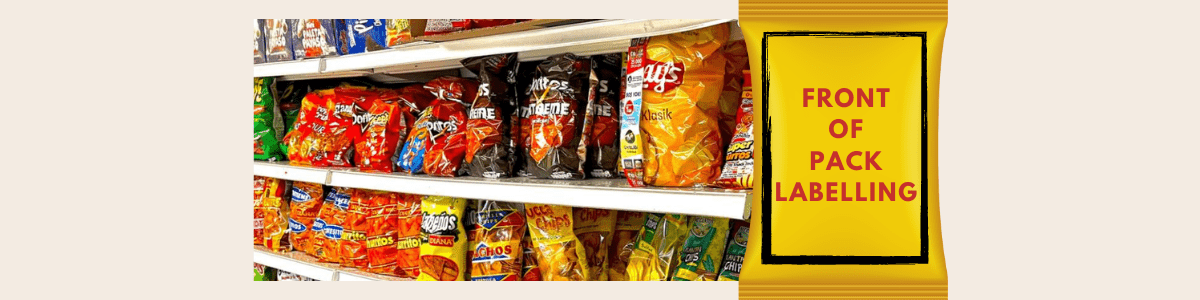
Front-of-Pack Labelling (FOPL) refers to the nutrition labeling systems present on the front side of the food packages. FOPLs are based on nutrient profiling models. These profiling These profiling models either consider the overall nutrition quality of the product or/the nutrients of concern associated with non-communicable diseases like diabetes, hypertension, heart diseases, etc. FOPLs often focus on presenting the nutrition information thoroughly and comprehensively.
Objective of FOPL
The objective of the FOPL policy is to inform consumers in a simple and fast way about the content of sugar, sodium and saturated fat & Trans fats to discourage the purchase of unhealthy packaged food. .
Nearly 5.8 million people or 1 in 4 Indians are at a risk of dying from an NCD before they reach the age of 70. Disease burden of NCDs increased from 30% ‘disability-adjusted life years’ (DALYs) in 1990 to 55% in 2016, with deaths due to these conditions increasing from 37% in 1990 to 61% in 2016. Cardiovascular disease (CVD) accounts for at least 27% of NCD deaths. Untreated and uncontrolled hypertension contributes to an estimated 1.6 million deaths annually in India – 57% of these deaths related to stroke and 24% related to coronary heart disease. India is also fast becoming a diabetes and cancer hotspot.
This crisis is being further aggravated by the COVID-19 pandemic, as persons living with NCDs face a greater risk of becoming severely ill or dying from COVID-19. All of these conditions such as high blood pressure, high fasting blood sugar levels and obesity are closely linked to unhealthy diets, and an excessive intake of sugars, total fats, saturated fats, trans fats and sodium. In turn, the excessive intake of these “nutrients of public health concern”, is largely driven by the widespread availability, affordability and promotion of processed and ultra-processed food products with unhealthy nutritional profiles. Reports indicate that the COVID-19 pandemic generated a unique opportunity for the food and beverage industry to thrive in low- to middle-income countries and expand their market of unhealthy, ultra-processed foods and sugary drinks.
Dr Chandrakant Pandav, President, Indian Coalition for the Control of Iodine Deficiency Disorders (ICCIDD), warns that there is no time is to be lost. “It is clear as day that our food environment needs to change drastically if we are to reverse the health crisis and safe guard our future generations. Even as we move to fortify our food, it is equally critical to equip people with information regarding harmful nutrients in their food products including ie, high concentration of salt, sugar and fats, is an equally important strategy.”
With Front of Pack labelling, consumers can understand whether a food is specifically high in a nutrient, for example, protein or fiber, and compare it to other products as well.
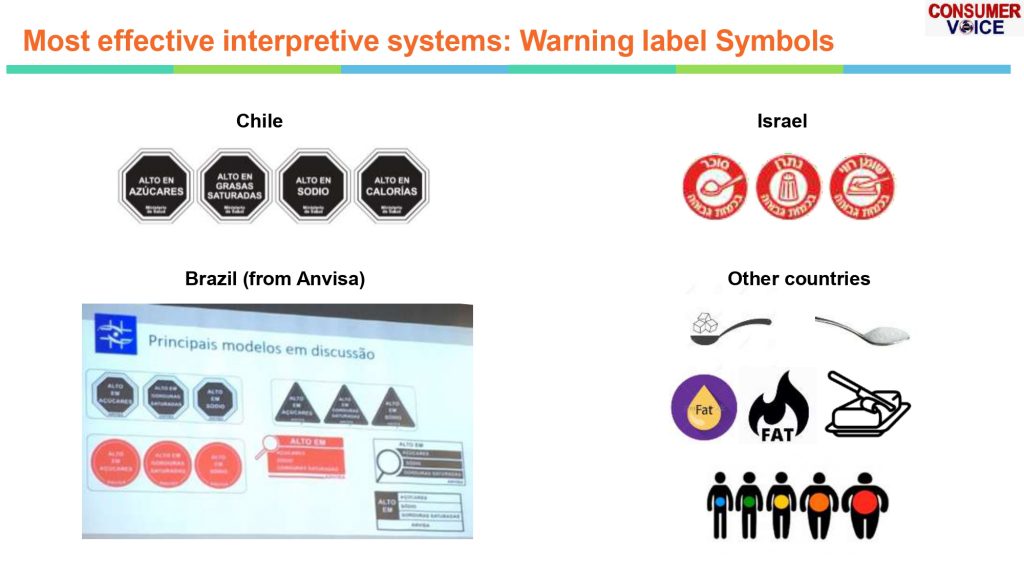
Research evidence suggests that FOPL makes nutrition information more accessible to consumers. Using the FOPL, consumers can make informed and healthy food choices. They can pick food items that are low in saturated and trans fats, sugar, and sodium. A strong front-of-package label is one of the most efficient tools of influencing consumer behaviour to alter dietary choices and reduce their vulnerability to NCDs. According to Dr Barry Popkin, the W. R. Kenan Junior distinguished professor of nutrition at the University of North Carolina Gillings School of Global Public Health sharing his experience from leading research on impact of FOPL in multiple countries said, “In our ongoing evaluations we have found that all countries which have adopted warning label system of FOPL that are easy to interpret, have succeeded in reducing consumption of the most unhealthy ultra-processed foods and beverages. As suggested by available evidence, this is one of the most effective approaches to preventing obesity and nutrition-related NCDs like diabetes and hypertension. People need to understand clearly and simply what is in the food that they are buying. Food labels have to interpret the nutrition information for consumers across age, income and literacy levels.”
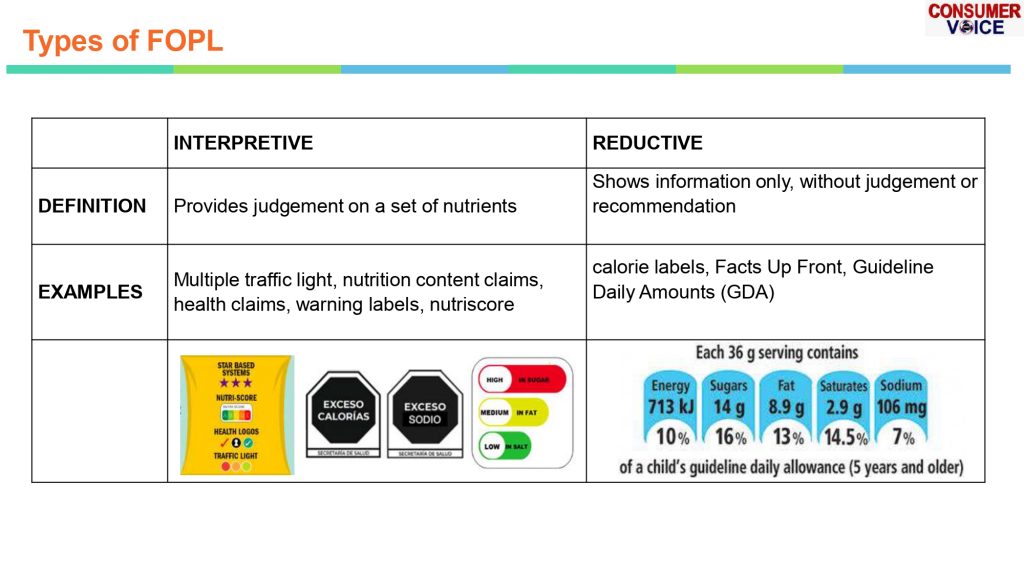
WHO Guiding principles and framework manual for front-of-pack labeling for promoting healthy diets: “Briefly, interpretive FOPL systems that use interpretational aids and minimize numerical information are most useful for aiding consumer comprehension of FOPL information”
Report from the WHO Commission on Ending Childhood Obesity: “Recommendation 1.7: Implement interpretive front of-pack labeling supported by public education of both adults and children for nutrition literacy”
The UN Special Raporteur on the right to health: “Front-of-package warning labeling is a key measure for countries to tackle the burden of NCDs”.
In 2018 the Food Safety Standards Authority India (FSSAI) published draft regulation for FOPL which was subsequently withdrawn for further deliberation. In 2020 December, FSSAI restarted the process of developing FOPL and has been in consultation with civil society, industry and nutrition experts for a viable model for India.
Do you check the amount of salt present in the snack pack you pick from the store? This pack of snacks could be containing more than half of the amounts of salt you should consume in a day. Hence it is necessary to check the nutrition information on the food pack before buying. And mind the amounts of such food items accordingly as they could be high in fat, sugar, and sodium. Needless to say, their excessive consumption is often interlinked with the development of diseases like hypertension which could further progress into cardiovascular diseases. Read this article to know about HFSS (high in fat, salt, and sugar) foods, their association with non-communicable diseases, and how food labelling could aid consumers in choosing an apposite food item. Click here to read our expert’s view on this..
Proposed study on FOPL in India for Consumer perception
Objective of the Study:
Primary outcomes:
Consumer VOICE is playing an active role in advocating front of pack labelling in packaged foods to inform consumers on foods that are rich in fat, salt and sugar content and thereby regulating consumption of such foods. Consumer VOICE has represented consumer organisations in several meetings conducted by the regulatory body FSSAI for the same. It has also sensitised consumers through articles by experts both on the print and social media platforms.
Apr 12, 2025 | New Delhi
The Supreme court directive that packaged foods campaign must display vital information about product ingredients on packs has dealt… Read More
Apr 12, 2025 | Hindustan Times
A petition in the Supreme Court sought directions to make front-of-package warning labels mandatory for packaged foods… Read More
Jan 14, 2024 | Daily Pioneer
Millets belong to the family of cereals, but because of their coarse texture, they were often seen… Read More
The page you requested could not be found. Try refining your search, or use the navigation above to locate the post.
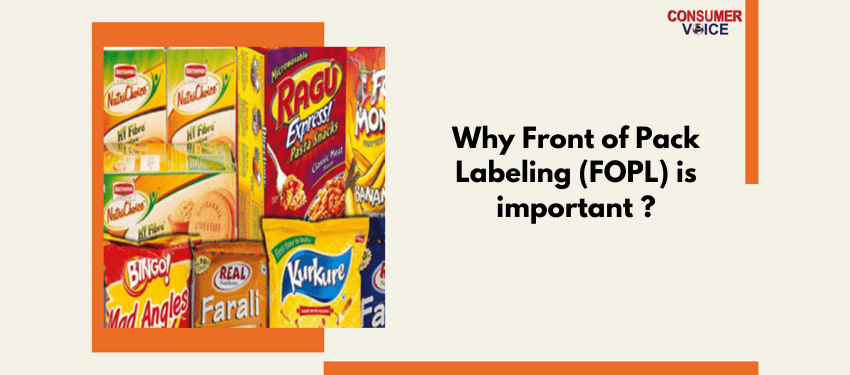
With more than 135 million Indians obese and a sharp rise in childhood obesity, India is nearing a health flashpoint. Three conditions, namely high blood pressure, high fasting blood sugar levels and obesity, are the main drivers of this disease burden in India. Front-of-package warning labelling (FOPL) represents a key component of a comprehensive strategy to promote healthier lives, as it enables consumers to identify in a quick, clear and effective way, products high in sugar, sodium, saturated fats, trans fats and total fats, the critical nutrients associated with the NCD burden in India.
Research evidence suggests that FOPL makes nutrition information more accessible to consumers. Using the FOPL, consumers can make informed and healthy food choices. They can pick food items that are low in saturated and trans fats, sugar, and sodium. Consumers can aim to have food items with low calories. Not only this, with the help of FOPLs, consumers can understand whether a food is specifically high in a nutrient, for example, protein or fiber, and compare it to other products as well.
FOPL symbol’s position on the food pack plays an essential role in capturing consumers’ attention. For example, when the position of FOPL is on the top right-hand side of the food pack (for individuals who read from left to right), its visibility increases. The size of the FOPL, compared to the other visual elements on the food pack, also plays a role in increasing its visibility.
FOPL targets to empower consumers to make informed and healthier food choices and motivate food manufacturers to work towards improving the nutrient profiles of their food products. Therefore, developing a FOPL scheme relevant for Indians and accessible to consumers from different socio-economic groups can enable them to make healthier and informed food choices.
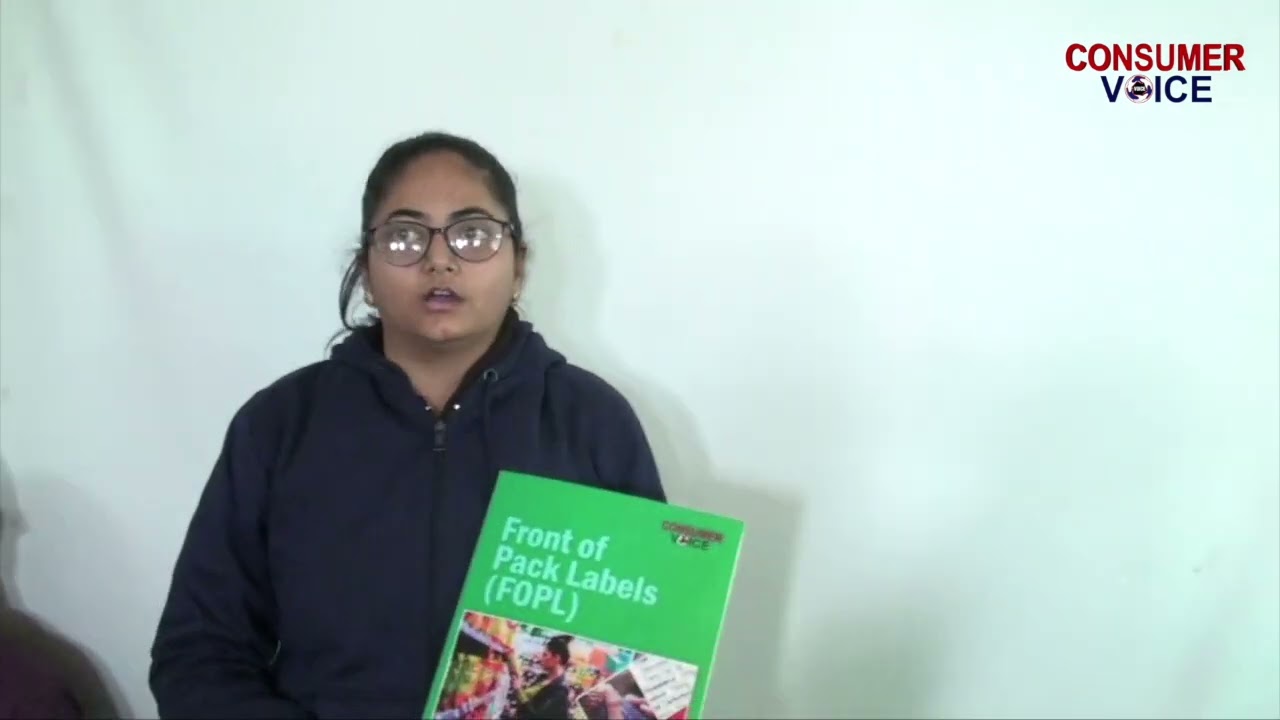
To learn more about FOPL and if it can regulate the consumption of ultra-processed foods or foods high in high fat, sugar, and salt/sodium (HFSS), get a copy of the March 2021 Consumer VOICE English digital magazine.
Related
The page you requested could not be found. Try refining your search, or use the navigation above to locate the post.
Mornings in most Indian homes begin with a cup of freshly brewed tea. Long conversations, heated arguments, debates and even gossips are incomplete without that cup of tea. The popularity of tea is such that in India, now one can find various types of tea – masala chai, cutting chai, gur chai,elaichi chai, adrak chai, green tea, black tea and the list is endless. Tea consumption which originated in ancient China and reached the European continent in the 16th century, in India, its cultivation began in Assam in the 19th century.
Tea has several health benefits besides being a sign of Indian culture. Tea is believed to boost immunity, improve digestion and also helps in elimination of toxins from the body. White tea also helps in lowering cholesterol level and regulating blood pressure. A blend of effective herbs in tea quiets helps in relaxing the mind and body. When it comes to health benefits, it is very important to know what exactly you are consuming.
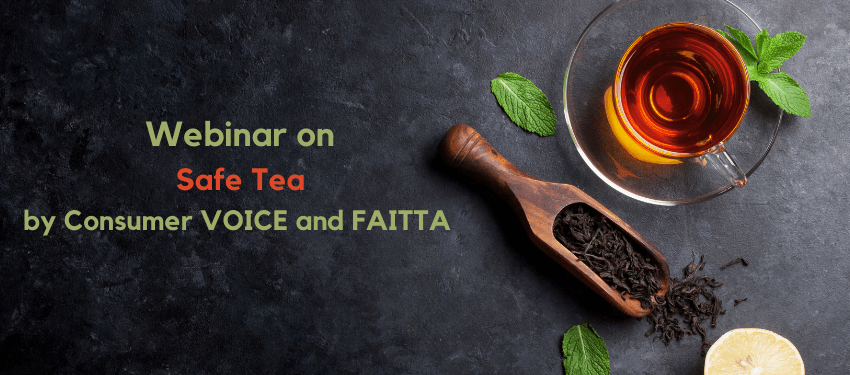
The webinar marking the World Consumer Rights Day on 15th March was addressed by Mr. Viren Shah, Chairman, FAITTA (Federation of All India Tea Traders Association), Mr. Pramod Kumar Sahoo, Deputy Chairman & CEO, Tea Board of India and Dr. Harinder Singh Oberoi, Advisor (QA) FSSAI (Food Safety and Standards Authority of India). The Panellists covering technical aspects were Mr. Sandip Sanyal Principal Scientist, Tea Research Association (TRA), Mr. Prashant Bhansali, President, UPASI (United Planters’ Association of Southern India), Mr. Paras Desai, ED Wagh Bakri Tea Group, Mr. Ashim Sanyal COO Consumer-Voice and Dr. Sanu Jacob, Director, FSSAI.
a) Prescription of Good Manufacturing Practices (GMP)
b) Development of higher efficiency Iron Particles Extraction Machine,
c) Development of a Micronizer – an innovative Processing Machine avoiding metal to metal contact and
d) Plasma Nitriding of CTC Rollers improving their surface hardness. BIS has developed a method to determine iron filings and FSSAI is also in the process of developing a method.
Related
The page you requested could not be found. Try refining your search, or use the navigation above to locate the post.