No Results Found
The page you requested could not be found. Try refining your search, or use the navigation above to locate the post.


The Covid second wave has been proving frightful for everyone. At this time not only the number of Covid-19 patients has been spiraling, but the number death from this disease is also frightening. Facing this, people are once again revisiting the need of health insurance. We are telling you here whether your existing health insurance policy suffices or should you take a separate policy like Corona Kavach and Corona Rakshak.
Subhas Tiwari
Many have suffered severe financial distress while meeting the Covid-19 treatment. It is often reported that hospitals for Covid treatment have made a bill of Rs 8 to 10 lakh. Quite possible, your existing corporate policy or family floater policy falling short of paying for this treatment. This has opened us to policies like Corona Kavach or Corona Rakshak.
IRDAI directed instructions
The Insurance Regulatory and Development Authority of India (IRDAI) had directed in April last year that Covid-19 treatment would also be covered under all health insurance products. Meaning that if you have a health insurance policy, then the insurance company cannot refuse the claim for Covid treatment. Generally, such a policy covers cost of any other hospitalization treatment for more than 24 hours. The same applies to Covid treatment. But if you have taken a policy which has special schemes to cover diseases like Cancer, heart disease, critical illness, then it often does not cover Covid-19 treatment.
The IRDAI had last year asked all insurance companies operating in the country to bring a standard Covid-19 health insurance policy which such companies followed by bringing Covid specific covers. The good thing is that in such policies, the grace period is only 15 days. It implies you will get a cover when you take an insurance policy today and after 15 days you get infected with Covid. These policies are of two types – Corona Kavach and Corona Rakshak.
Corona Kavach Insurance Policy
This is a standard health insurance plan designed to cover the costs caused by Covid. This policy frees you from thinking about medical bills and treatment expenses.
Sum Insured and Duration
The Corona Kavach policy will have a basic mandatory policy. Apart from this, there is an optional cover, which can be added. To buy this policy, the minimum age of an adult should be 18 years and maximum age is 65 years. Whereas the minimum age for a child should be one day and maximum age should be 25 years. The Sum Insured for Corona Kavach policy is minimum Rs. 50, 000 and maximum is Rs 5 lakh. Tenure of insurance can be at least 3.5 months, 6.5 months and 9.5 months.
What does the Corona Kavach Policy cover?
Hospitalisation expenses: This includes bed charge, nursing charge, blood test, PPE kit, oxygen, ICU and doctor’s consulting fees.
Pre-Admission Expenses: Before hospitalization, the expenses of doctor consultation, check-up and diagnosis are included. On such expenses, cover is provided up to 15 days before hospitalisation.
Expenses after discharge: It provides coverage on medical expenses up to 30 days after discharge from the hospital.
Home care expenses: In case of home treatment too health monitoring and medicines are covered for up to 14 days.
Ayush: Under this policy, expenses on Ayurveda and related treatment are also covered
Road ambulance cover: Transfer from home to hospital and ambulance from hospital to home is also covered. In this, you get up to Rs. 2,000 per recruitment.
Hospital daily cash cover: In this policy, you have the option to add the hospital daily cash cover. Under this, the insurance company gives 0.5 per cent of the amount of insurance per day. It lasts for 15 days.
Tax benefit: You can avail tax benefit on premiums paid under health sections of this policy, as per Section 80D of Income Tax Act, 1961 and amendments made thereafter.
What it does not cover?
Corona Rakshak Insurance Policy
Corona Rakshak is a benefit-based policy. A lump sum is paid to the person taking this policy when tested positive. However, for this you need to be admitted in the hospital for at least 72 hours continuously. People get three types of options under this policy. All three are of short duration. The policy has a duration of 3.5 months, 6.5 months and 9.5 months. After this period the policy will have to be renewed.
You will get the benefit only after 15 days
There is a 15-days waiting period in the Corona Rakshak Policy. You will not get the benefit of this policy if you test positive within 15 days of taking the policy.
Up to Rs. 2.5 lakh cover
The Corona Rakshak Policy offers even insured from Rs 50,000 to Rs 2,50,000. If you have taken a sum assured policy of Rs. 2.5 lakh, then you can get treatment up to Rs 2.5 lakh. This policy can be taken by anyone from 18 years to 65 years.
Exclusions: The company shall not be liable to make any payment under the policy, in respect of any expenses incurred in connection with or in respect of:
Difference between Corona Kavach and Corona Rakshak
Who is offering: Corona Kavach Policy is Covid Standard Health Insurance Policy which is mandatory to be issued by all general and health insurance companies. Life insurance companies cannot offer this. In contrast, any insurance company can offer Corona Rakshak Policy.
Minimum and maximum cover: Corona Kavach policy gets a cover of minimum Rs 50, 000 and maximum of Rs 5 lakh whereas under the Corona Rakshak Policy, minimum Rs 50, 000 and maximum of Rs 2.5 lakh is available.
Hospitalisation: Base coverage or even insurance in the Corona Kavach Policy will be applicable only if you have been hospitalised for at least 24 hours. After this, for any number of days, the insurance company will bear the sum of the sum insured for the hospital. Coverage will be available only after being admitted to the hospital for at least 72 hours under the Corona Rakshak Policy.
Nature of the policy: The Corona Kavach Policy shall have one basic mandatory cover and one optional cover. The premium payable towards this optional cover will have to be paid separately so as to enable policyholders to choose and pay based on the need. The base cover of Corona Kavach Policy will be offered on indemnity basis whereas optional cover shall be made available on benefit basis. In an indemnity cover, the claim is paid as per the hospital bills while in a benefit cover, the entire sum insured is paid to the policyholder.
Type of policy: One can buy Corona Kavach both on an individual basis and on family floater basis but Corona Rakshak is offered on an individual basis only and hence no family floater option is available in it.
Optional benefit: The Corona Kavach Policy gives one the option to add ‘Hospital Daily Cash’ cover. Under it, the insurer will pay 0.5 per cent of the sum insured per day for every 24 hours of continuous hospitalisation for Covid treatment following an admissible hospitalisation claim under this policy. The benefit shall be payable maximum up to 15 days during a policy period. However, there is no such feature in Corona Rakshak policy as it is entirely a benefit-based plan.
Documents to be submitted for Claim
The claim is to be supported with the following documents and submitted within the prescribed time limit.
Claim settlement guidelines (provision for penal interest)
Related
The page you requested could not be found. Try refining your search, or use the navigation above to locate the post.
There are different varieties of edible oils in the market these days and picking one for our home is a difficult choice. Most of us tend to base our choices on our established taste preferences. Some of us base our decisions on the healthfulness of an oil and the type of recipes for which we are purchasing the cooking oil. For many Indian recipes, we prefer a cooking oil that does not have a strong flavor of its own. For example, we use olive oil for preparing continental recipes; because this oil adds a unique characteristic flavor to these recipes. In this article, we have discussed the nutritional composition of some commonly consumed edible oils, practices to purchase, store, and handle them in a mindful manner. We also have talked about some food quality certification marks that can help you pick a healthier edible oil.
Richa Pande
Reports say groundnut oil, rapeseed oil(canola), soy oil, cottonseed oil and commercially palm oil are commonly consumed in Indian households. These oils are preferred by many food industries due to the subsidies on palm oil. But do these oils have a healthier nutritional profile, let’s uncover it here:
Nutrition composition of edible oils
All edible oils contain Monounsaturated Fatty Acids (MFAs), Polyunsaturated Fatty Acids (PFAs), and Saturated Fatty Acids (SFAs). The percentage of each varies from oil to oil. Our body requires all three types of fatty acids. PFAs and MFAs are relatively healthier as compared to SFAs, and therefore we must limit their consumption. PFAs can be divided into linoleic (ω-6 fatty acids) and linolenic fatty acids (ω-3 fatty acids). ω-3 fatty acids are also known as essential fats i.e., the body cannot synthesize them metabolically and they must be taken from different dietary sources. Note that PFAs and MFAs (together known as good fats) must always be preferred over SFAs (bad fats). Consumption of more SFAs is not good for your heart health.
| Fats/Oil | Saturated Fatty Acid (SFA) | Mono-unsaturated Fatty Acid (MUFA) | Linoleic Acid (Omega-6 PUFA) | Alpha-Linoleic Acid (Omega-3 PUFA) | N- 6/N-3 ratio |
|---|---|---|---|---|---|
| Mustard | 8 | 70 | 12 | 10 | 1.2:1 |
| Canola | 4 | 62 | 22 | 10 | 2.2:1 |
| Ghee | 65 | 32 | 2 | <1 | 3:1 |
| Soyabean | 15 | 27 | 53 | 5 | 10.6:1 |
| Olive | 13 | 76 | 10 | <0.5 | 20:1 |
| Rice bran | 22 | 41 | 35 | 1.5 | 23:1 |
| Sunflower | 13 | 27 | 60 | <0.5 | 120:1 |
| Safflower | 13 | 17 | 70 | <0.5 | 140:1 |
| Ground nut | 24 | 50 | 25 | <0.5 | 50:1 |
| Table Source- POS Pilot Plant Corporation, Saskatoon Saskatchewan, Canada, June ; National Institute of Nutrition, India |
Calories in edible oils
All edible fats are oils that are calorie-dense. Each gram of both fats and oils has 9 Kcals in it and 1 teaspoon (5ml) contains 45 Kcal. There is an exception to this. One gram of butter has 7 Kcal. This is because of its moisture content.
Antioxidants in edible oils
Many edible vegetable oils contain natural antioxidants like vitamin E also known as tocopherol. Rice bran oil has Oryzanol and Sesame oil contain Sesamol and Sesaminol. These antioxidants have beneficial effects on our health including a reduction in oxidative damage due to aging.
Practice oil rotation for good health
Use cooking oils in rotation to draw health benefits from all different sources.
There are two ways to do this-
The followings are some recommended blends-
| Groundnut or Sesame or Rice bran + Mustard Oil |
|---|
| Groundnut or Sesame or Rice bran + Canola Oil |
| Groundnut or Sesame or Rice bran + Soyabean Oil |
| Source-Dietary Guidelines, National Institute of Nutrition |
Ready-to-use blended oils
Blended edible oils are also sold in the market. Sometimes they can also be labelled as “vegetable oil and cooking sprays”.
Laws for ready-to-consume blended edible vegetable oils & quality certifications
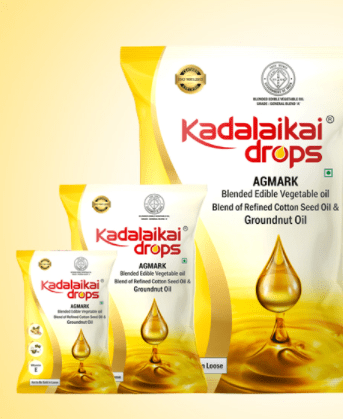
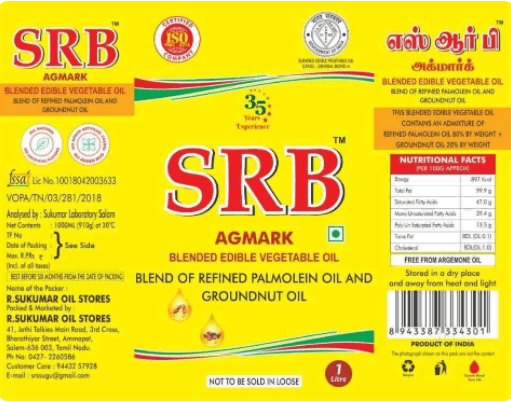
Laws: The sale of blended edible vegetable oil and fat spreads in addition to FSSAI regulation is governed by AGMARK. You can pick an oil blend using the AGMARK Logo.
What is the smoke point of cooking oil?
Smoke point is also known as the burning point of the oil. It is the temperature at which you can see bluish smoking from an oil upon heating. If you are cooking a recipe that requires oil to be heated at a high temperature, prefer edible oils that stay stable at higher temperatures. Burnt oil not only ruins the taste of the food but degrade the nutrients in oil and lead to the development of chemicals in it that are harmful to health. Some experts recommend preferring refined oils or ghee to prepare Indian recipes that require deep frying.
EVVO (extra virgin olive oil) Debate
Some health experts argue that EVVO which is one of the healthiest edible oil has a low smoking point and must not be used for cooking recipes at high temperatures. Some advocacy groups argue that there isn’t scientific evidence that supports this notion and that EVVO is suitable for recipes at high temperatures. Their claims have been backed by a few pieces of research but experts claim that these were sponsored work.
Avoid reheating your edible oils
We have the habit of reheating oil for frying which is harmful as it can release more toxic components leading to many diseases. For example, reheating of oil increases trans fatty acids in an oil and its consumption has been found to have negative impacts on health.
Therefore, do not reuse or reheat cooking oil for more than 2-3 times. Use adequate amount of oil for cooking i.e., try to finish it in single-use.
Identifying a fortified edible oil
Many Indians struggle with micronutrient deficiency. As oil is a common household food ingredient, adding micronutrients in it can be an efficient public health strategy to counter micronutrient deficiency.
Edible oils are commonly fortified with vitamin A and Vitamin D. These fortified oils can meet up to 25-30 per cent of our daily recommended dietary allowance for these nutrients. Oil packs fortified with vitamin A & D have a logo that can help us to identify a fortified edible oil.
Tips to use your cooking oil the right way
Related
The page you requested could not be found. Try refining your search, or use the navigation above to locate the post.
To draw the attention of all governments and policy makers and stakeholders, every year on the 7th of June World Food Safety Day is observed. It aims to inspire action to prevent, detect and manage foodborne risks.
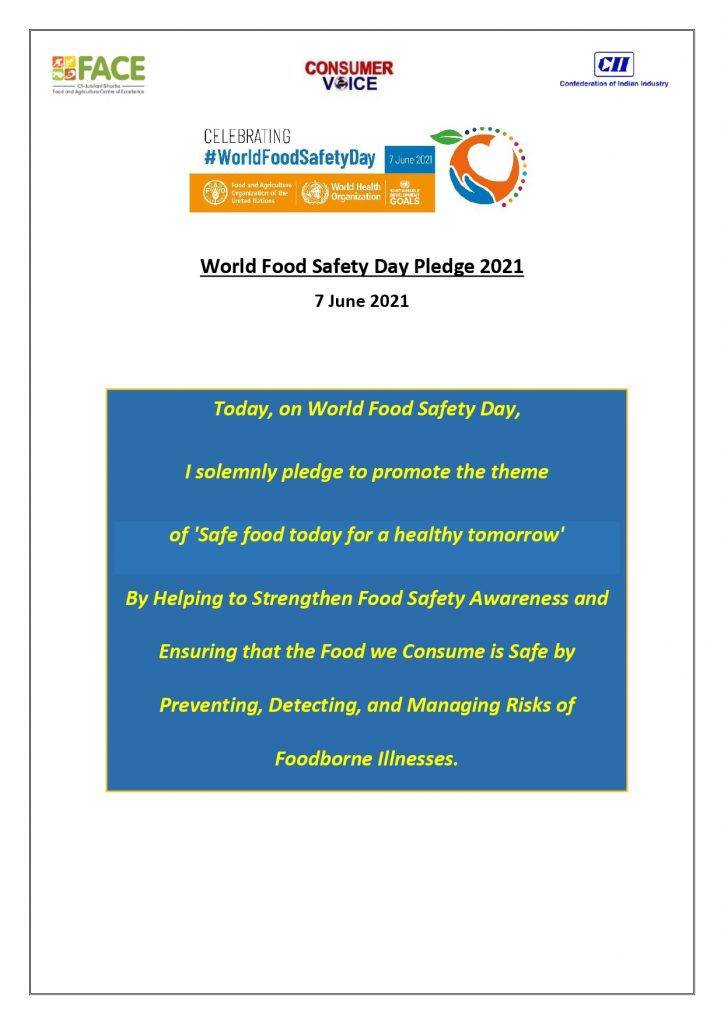
The World Health Organization (WHO) and the Food and Agriculture Organization of the United Nations (FAO) jointly facilitate the observance of World Food Safety Day, in collaboration with Member States and other relevant organizations. This international day is an opportunity to strengthen efforts to ensure that the food we eat is safe, mainstream food safety in the public agenda and reduce the burden of foodborne diseases globally. This day also contributes to food security, human health, economic prosperity, agriculture, market access, tourism, and sustainable development across the world.
Theme of World Food Safety Day 2021 – Safe food today for a healthy tomorrow
What is safe food?
Food provides all the essential nutrients, carbohydrates, fats, and protein in our bodies to sustain growth. Safe food is not only what is served at the table but the entire process contributes to food safety. Food Safety starts from the farm, to manufacturing, transportation, packaging and storing.
Food safety is a shared responsibility between governments, producers ad consumers. Along with strong food laws and regulations, it is also the responsibility of the individuals to ensure that the food is safe for them and their families.
How to ensure that your food is safe?
Though there are some common ways to ensure that your food remains safe by washing it thoroughly, storing it under correct temperature and keeping it free from bacteria that might lead to foodborne illnesses, yet we end up consuming food that might not be good for our body. Here are some simple ways to ensure that your food is safe and what you are consuming is healthy:
Wash your fruits and vegetables thoroughly under running water just before eating, cutting or cooking.
Wash cutting boards, dishes, utensils and countertops with a clean sponge and hot, soapy water after preparing each food item.
Read the nutrition label to understand the amount of fat, salt and sugar intake – limit your salt, sugar and fat intake as excessive use of it could increase the risk of non-communicable diseases or NCDs
Read the lables for fats and trans fats – In India, Food Safety and Standards Authority of India (FSSAI) has capped the amount of trans fatty acids (TFA) in oils and fats to 3% for 2021 and 2% by 2022

The deadliest is again on us. It is dangerous than ever before, took lives of thousands already and showing no sign of settling soon. Where there are numerous stories floating every day on nonavailability of many healthcare facilities, medicines, oxygen and doctors; there are human stories that give us hope. Take the following example.
She was selling flowers for a living on the streets of Mumbai.
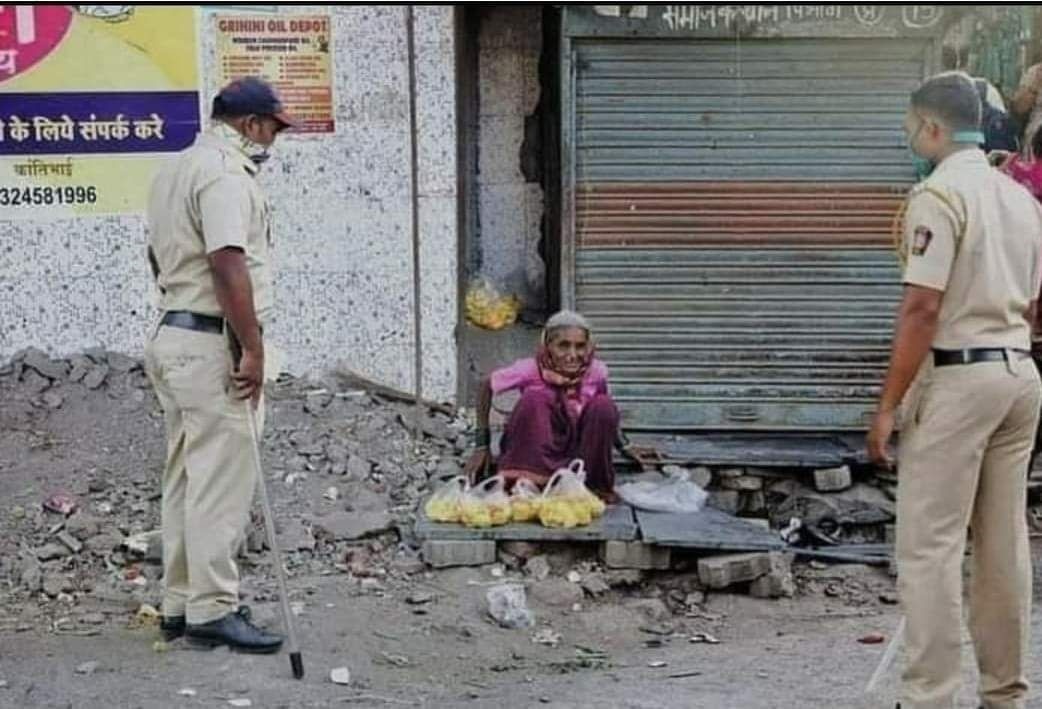
Mumbai Police advised her to pack up and leave the place owing to lockdown guidelines. She resisted.
She said she would die of hunger if not allowed to sell flowers.
The cops gave her Rs. 500 and promised to provide her 500/day till the lockdown is in force. She need not sell flowers until normalcy is restored.
Even when people will argue with the source of money that the department will manage to pay the old lady, this is a story of humanity and compassion.
Communities like United Sikhs, a Sikh relief organisation has cremated unclaimed bodies 322 times, to be precise.
There is another story of hope where a couple named Rasik Mehta and Kalpana Mehta from Gujarat had a fixed deposit for the future of their son, whom they unfortunately lost to Covid last year. Now they broke the FD of Rs 15 lakh, to help lives of other Covid patients. They have also given their car to be used as an ambulance. Moreover, they provide food to people in quarantine.
In line there are conglomerates who are helping and have contributed immensely in making the lives easier for their employees in the form of providing with Covid health insurance, paid leaves, special helpline to get blood or plasma, free teleconsultations etc.
Likewise, there are plenty of stories that tell us not to lose hope even at the tested time and keep fighting the virus and help save lives in whatever way one can.
I would here conclude in the words of Mahatma Gandhi, who said, “The simplest acts of kindness are by far more powerful than a thousand heads bowing in prayer.”
Happy Reading!
Sharmila Das
Editor
The page you requested could not be found. Try refining your search, or use the navigation above to locate the post.

Ordering food online is part and parcel of this stay-home period. The process is simple and fast. You can order delicious food of your choice anytime and get it delivered in few minutes. You can even repeat the exact order you placed last time. You just have to download food delivering applications such as Zomato, Swiggy, Faasos, etc. There is hardly any restaurant these days which is not providing services on these applications. All you need is a smart phone or a laptop and an account on these food delivery applications to enjoy your food from the selected restaurant. But hey, is there a better way in doing this altogether? Let’s check it here.
Richa Pande
This time, home food delivery is the preferred way to ease out the every-day-cooking pain. Covid-19 has changed almost everything across the entire delivery system. It has made us more conscious, and we should take necessary steps before ordering food as well as after the food is delivered. But many consumers are new to the experience of ordering food online. Here are some points to keep in mind, when ordering meals online-
Fast food restaurants such as Dominos, McDonalds, KFC, Pizza Hut etc. have their own food delivery apps. They also sell food through food delivery apps such as Zomato, Swiggy etc. Always check where you are getting a better price for food items you wish to eat. Also, compare it across the food apps, as you might get a better offer on a different food app.

You can select order veg. only option if you prefer vegetarian food items
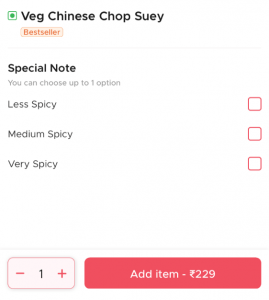
At times, you can also choose the spice preference while ordering food online.
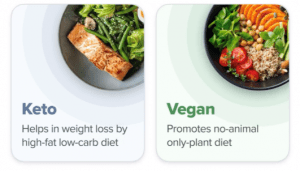
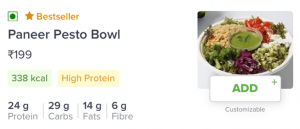
You can also opt for preparations as per lifestyle diets you are adhering to. For example- Keto & vegan Diet
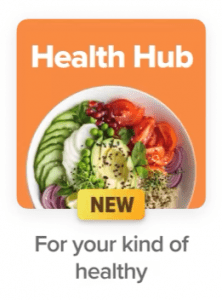
And you can also opt to pick restaurants that serve relatively healthier meals.

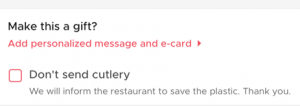
You can opt for this option to minimize the use of plastic.
You can opt for this option to minimize the use of plastic.
Related
The page you requested could not be found. Try refining your search, or use the navigation above to locate the post.