No Results Found
The page you requested could not be found. Try refining your search, or use the navigation above to locate the post.



World Consumer Rights Day is celebrated every year on 15th of March to highlight the power of consumers and their rights for a fair, safe and sustainable marketplace for everyone. This year the theme is ‘Tackling Plastic Pollution’. Through this campaign we intend to increase awareness and engage consumers globally to adopt and promote more sustainable practices.
Here are some hard facts which will help one to understand why tackling plastic pollution is so important:
(Sources: PlastIndia, 2019, Statista 2019, Consumers International)
The invention of plastics definitely came as a boon but no sooner it became a curse especially with single-use plastics. Plastics which are very useful commodities because of its properties like ductility, malleability, and water resistance have now become an environmental challenge. With lack of awareness and poor solid waste management in cities, plastics have resulted in its littering and damaging oceans, seas and land. Challenges are galore with recycling and management of plastic resources as well.
However, with time, consumers are gaining awareness and getting concerned about plastic pollution. As per Consumers International, a global study in 2019 found that there is a strong consumer response to plastic waste (with 82% of respondents using reusable cleaning utensils instead of single-use plastic alternatives, 72% bringing reusable bags when shopping and 62% using refillable drinking bottles) – and despite the increased use of single-use plastic during the pandemic, 55% of consumers globally have now become more concerned about the environment as a result of COVID-19 and nearly 74% of consumers (in Europe, the US and South America) are willing to spend more on sustainable packaging.
Keeping the urgent need to save our planet, the theme for World Consumer Rights Day 2021 has been kept at ‘Tackling Plastic Pollution’. The 2021 World Consumer Rights Day campaign will focus on 7Rs: Rethink, Refuse, Reduce, Reuse, Recycle, Repair and Replace. Consumer VOICE is committed to make the world a better place for consumers from every aspect including protecting it environmental pollution cause due to uneconomical waste disposal.
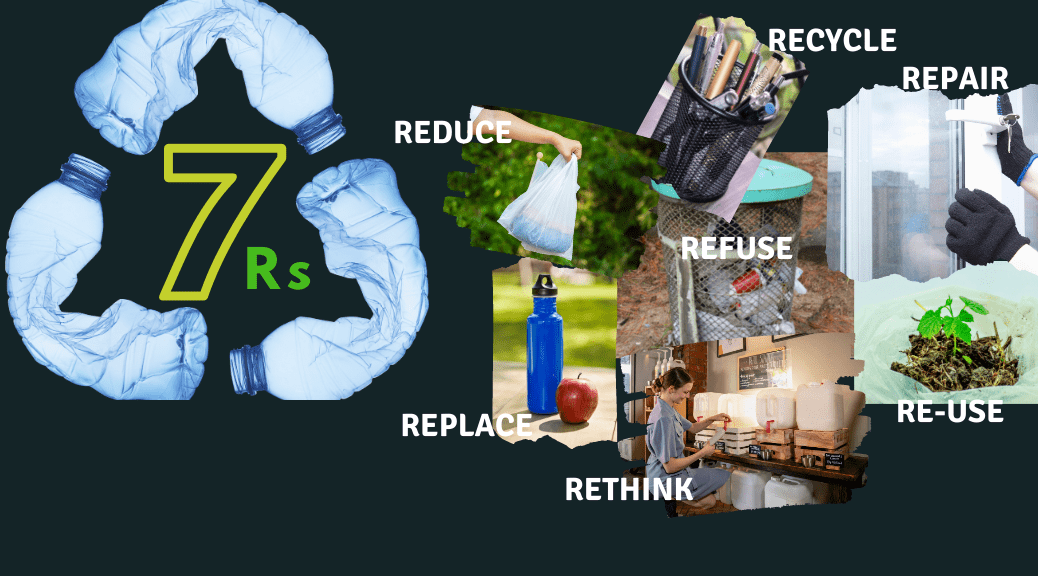
The 7Rs can be used in an effective way to ensure that we minimise plastic use, refuse unnecessary plastic where possible and demand more sustainable alternatives from businesses and governments. We can extend the lifetime of plastic products by reusingthem, dispose of plastic waste appropriately by following local recycling guidelines.
Refuse – Refuse to accept or support products or companies that harm the environment. One way of doing this is to refuse items that are over-packaged or packaged in plastic.
Reduce –One can reduce single use plastic bottles in kitchens and in daily supplies and instead use reusable and refillable products – eg avoid paper cups and paper plates
Reuse – Get in the habit of reusing jars and containers. Reuse plastic bottles for storing or for planting. You can also use bottles for storing cutlery, pen stands etc
Repair– Repair broken and damaged items or recycle them with some excellent ideas. There are many exciting ways household items can be repurposed and repaired.
Recycle – Recycling of plastic items will reduce waste and environmental pollution. There are various recycle ideas which can be used efficiently.
Replace – Replace plastic containers with eco friendly alternatives.
Rethink – Rethink before you buy plastic wrapped things from the market. Use unpackaged products to reduce the use of plastics.
Consumer VOICE has been in the forefront in generating awareness and promoting sustainable practices among consumers. Innovative ideas like recycling old plastic bottles for potted plants, refusing plastic bags and replacing it with recycled bags or cloth bags have been part of consumer sensitisation. Children play a crucial role in contributing towards the environment by taking small but solid steps in day to day activities. Encouraging children to drink water out of reusable can, spreading the awareness on the harmful effects of plastics with peer groups are ways which will form part of the campaign. Managing ewaste which accounts for a substantial proportion of plastics is very crucial when it comes to saving our environment. Consumer VOICE has also been spreading awareness through various workshops in the past on how one should become a responsible consumer and contribute diligently towards disposal of ewaste without harming the environment.

In the era being described as “Digital India”, it is important to increase the internet penetration but it is also important to improve the quality of internet services to be able to realize the goal of “Digital India”. Having taken the first step of getting connected, quality of services cannot be ignored and is the necessary second step that needs to be taken.
VOICE initiated a study on ‘Assessment of Impact of Quality of Internet Services on Internet Users’, in September 2016, supported by Ford Foundation, which was based on a sample of 52,000 across 19 states of India. The purpose of this study was to assess the impact of quality of internet services delivered to its consumers. It found several shortcomings/impediments which require attention for further enhancing quality of internet.
Assessment Of Impact of Quality of Internet Service is a national study under taken by Consumer VOICE to assess the:
‘NeedQoIS’ is an initiative taken by VOICE in the interest of internet users (consumers) to educate and enlighten them about Quality of Internet Service (QoIS) and engaging consumers in the fight for better internet service nationwide to make it a truly Digital India. (For more details, please visit https://www.facebook.com/NeedQoIS/)
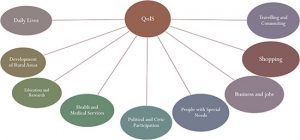
The study, besides seeking perceptions on various parameters of quality of internet, sought perceptions on the impact of internet on various aspects of life, which include daily lives, development of rural areas, education and research, business and jobs, health and medical services, political and civic participation, shopping, travelling and commuting, women empowerment and empowerment of people with special needs, and e-governance. It was found that each of these aspects is significantly impacted by internet.
The measurement of wireless internet speeds in this study was also undertaken. The average 3G speeds were only 1.5 mbps while average 4G speeds were only 4.10 mbps. These are among the lowest in the world. By definition, 4G speeds are 40 to 150 mbps and Indian telecom companies, claiming use of 4G technology are delivering 3G speeds to their customers.
Based on the study, following recommendations were made to TRAI –

This work is licensed under a Creative Commons Attribution 4.0 International License.
Consumer VOICE celebrated World Consumer Rights Day (#BetterDigitalWorld) at Bangalore by organizing a workshop in collaboration with the The Chair on Consumer Law and Practice, National Law School of India University. Prof. (Dr.) R. Venkata Rao, Vice Chancellor, NLSIU was the Chief Guest. Prof Sriram Khanna, Consumer VOICE and Prof.(Dr.) Ashok R. Patil, NLSIU were the expert speakers who discussed and explained the findings of this national study. Read More
Consumer VOICE Conversation Series held 18 Dec’17 aimed at enlightening consumers about the quality of internet services and also to awaken the concerned authorities to take the appropriate action to improve the quality of internet service in India under the initiative – NeedQoIS. The event also had officials from TRAI (Telecom regulatory Authority India) to present their point of view and answer the questions and issues raised by the audience.
The page you requested could not be found. Try refining your search, or use the navigation above to locate the post.
It’s an irony that while writing this blog on internet speed, work was hampered several times because of slow internet speed. At a time when India is trying to make headway as Digital India, people in India are still struggling over internet speed and quality issues. And if you feel your Internet Service Provider is the only one who is not giving you the desired quality, then don’t be disheartened. In a recently concluded study by VOICE it has been found the internet speed provided to users in the country is far below what is claimed by the service providers, and is amongst the lowest internationally. When the entire world including India will be celebrating World Consumer Rights Day on 15th March, it is time for us Indians to sit up and question TRAI on the internet speed and the quality that we receive.
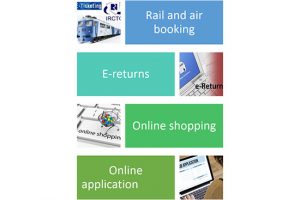
With the Indian government making sincere efforts to make the country a digital one, we are moving at a great speed from offline to online mode in our daily lives. From online shopping to online rail booking from online filling of forms to filing of e-returns everything is now online our daily lives are now intertwined online. But oftenthere have been road blocks in these because of internet speed and daily lives have been hampered greatly.
Digitisation of the economy has increased the usage of the Internet in almost all aspects of life – from the way we communicate with friends, to the way we shop, to the way we pay our utility bills and the way we travel.Daily commuting and holiday packages are possible just with a click on the mouse. However, all of these have been possible with a one-rider – high-quality Internet connection.
The audit of wireless internet speed which was also conducted by VOICE in eight states across four telecom circles included both metros and Tier II cities and it was found that users get much lower speed than what is claimed through this mode also. The study assessed the impact of Quality of Internet Service on 9 important aspects of life which includesDaily Lives, Business and jobs, Travelling and Commuting, People with Special Needs, Political and Civic Participation, Health and Medical Services, Education and Research, Development of Rural Areas and Shopping. The study concluded that the important parameters which has the highest impact on the daily life of the people is business and work.
With more and more businesses especially startups having most of their businesses online, with slow internet speed, they are bound to suffer huge losses. Even a common man’s entertainment quotient is dependent upon internet these days. Booking movie tickets or shows of your favourite music star is many a times available only online. Not only is the urban population who is feeling the pinch of poor internet quality but QoIS has greater impact for the development of rural India as well. So on this World Consumer Rights Day, let’s sensitise the concerned authority on the need to improve the quality of internet service.
Related
The page you requested could not be found. Try refining your search, or use the navigation above to locate the post.
Better living in the 21 st century is directly related to a better digital world. But is India really making progress in being Digital India? Do we have the sufficient bandwidth and speed to match up with the world? Well on paper yes, as most of us have 3G or 4G on our phones? But does it give the quality of service that it promises?
In a recently concluded study by VOICE it has found that the actual performance of 3G and 4G services is worse than what telecom operators promise.
Digitisation has increased our usage of the internet and brought everything literally on our fingertips. From online shopping to online classes, from online ordering of food, to online payment of essential services – internet has become a part of our daily lives.
But have you been struggling to open that payment app on your mobile phone or are you taking a long time to log in to your account? To make everything function smoothly, one needs a high quality internet connection. But are we really getting what we are paying for?
In a recently concluded study, ‘Impact of Quality of Internet Services on Internet Users’ Consumer VOICE assessed the impact of Quality of Internet Service on various aspects of life spanning across both rural and urban India. The study which was based on a sample size of 52,000 internet users across 18 states showed that the 9 out of 10 respondents affirmed that the quality of internet has a significant impact on the daily lives of the people.
Availability, Speed and Help Services were found to be significant parameters impacting overall QoIS. Reliance Jio was rated on top on all three parameters. Airtel and Rel Comm were the only other two to be rated above average on these parameters.
Our daily lives are intertwined with the quality of internet that we get from our service providers. From purchasing of rail tickets to booking hotels online, from paying online phone bills to paying insurance premium – poor internet speed and quality affects our daily lives.
TRAI defines 3G speeds as – from 1.8 to 40 mbps and 4G as- up to ‘100-150mbps’. However, in the study, average speeds found for 3G were 2.10 mbps and 4G were 3.16 mbps. Maximum was 12.70 mbps for 4G and 9.98 mbps for 3G.
It is not just the provision of service that will help the country become ‘Digital India’ but also the quality of internet service that determines the sustainability of this vision. Speed being an important parameter of QoIS, “Audit of wireless internet speed” was conducted in eight states across the four telecom circles. It was found that users get much lower speed than what is claimed. It also shows a wide gap between 3G and 4G speed claims of ISPs and their actual performance. The poor level of internet speeds requires the government and the telecom regulator to devise mechanisms to improve internet speeds in one way or another.
Need of the hour…for a Digital India
ISPs to include a speed measurement tool in their apps and maintain a record of average speed during the day, week and month.
ISPs to disclose minimum and maximum speeds on daily, weekly, monthly and quarterly basis. Compensate consumers for failing to adhere to average download speeds and down time. TRAI should create a mechanism for compensation for quantifiable losses below the benchmark.
TRAI’s MySpeed App should be made more robust and user- friendly. It should be able to provide speed comparisons for each BTS and also show comparisons of ISPs at given BTS.
Each ISP app must have a complaint feature with follow up of outcome of complaints.
So to have a new, better Digital India, better, faster and accurate internet quality is needed. With 15th March being the World Consumer Rights Day, the time is just ripe to raise awareness on the most important issue – the issue internet speed and accuracy that is affecting millions of Indians in everyday life. World Consumer Rights Day is the best way to make the biggest impact possible and sensitise the consumers. Click for updates on WCRD 2018
Related
The page you requested could not be found. Try refining your search, or use the navigation above to locate the post.
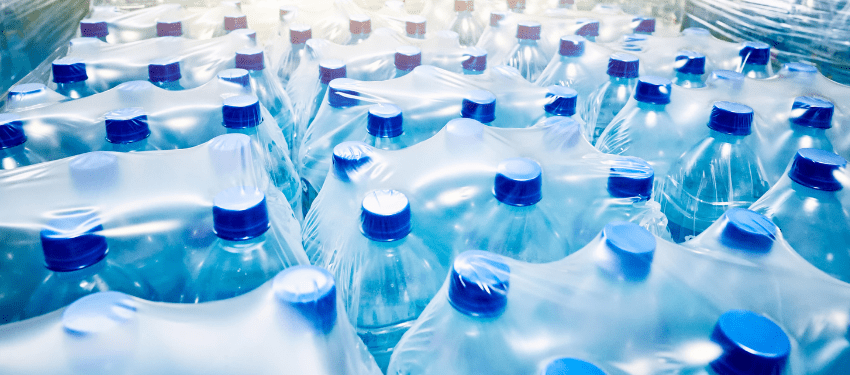
Packaged drinking water is now most commonly used by people everywhere. Whether travel, office or school, 1 lt packaged drinking water is used by one and all. But are they all safe? Do they meet the standard requirements? In order to find out the safety of 1 lt packaged drinking water, Consumer VOICE tested conducted in a NABL accredited lab. Other than lab testing some of the general observations that were made included the packing of drinking water and markings/labelingmrequirements were verified as per the Indian standard requirements.
Products Tested: Bisleri, Bailley, Rail Neer, Kingfisher, Bonaqua, Kinley, Aquafina
The comparative test programme was based on the mandatory Indian standard IS 14543:2016. The test parameters for this study were mainly based on Indian Standard to judge the overall quality of packaged drinking water and also by following the FSS Regulations/requirements.
TDS or Total Dissolved Solids is directly related to the quality of water purification systems and affects everything that consumes, lives in, or uses water, whether organic or inorganic. As per the Indian standard, TDS in packaged drinking water should be 500 mg/liter maximum. Drinking-water becomes significantly and increasingly unpalatable at TDS levels greater than 1000 mg/litre.
As per the national standard, the toxic substances which should be within prescribed limit of Indian standard present in packaged drinking water are Mercury, Cadmium, Arsenic, Cyanide, Lead, Chromium and Nickel.
All the tested brands were found safe for human consumption as they had complied with the Bureau of National Standard requirements IS 14543. Click here to get the copy of the digital magazine right now.
Related
The page you requested could not be found. Try refining your search, or use the navigation above to locate the post.