No Results Found
The page you requested could not be found. Try refining your search, or use the navigation above to locate the post.

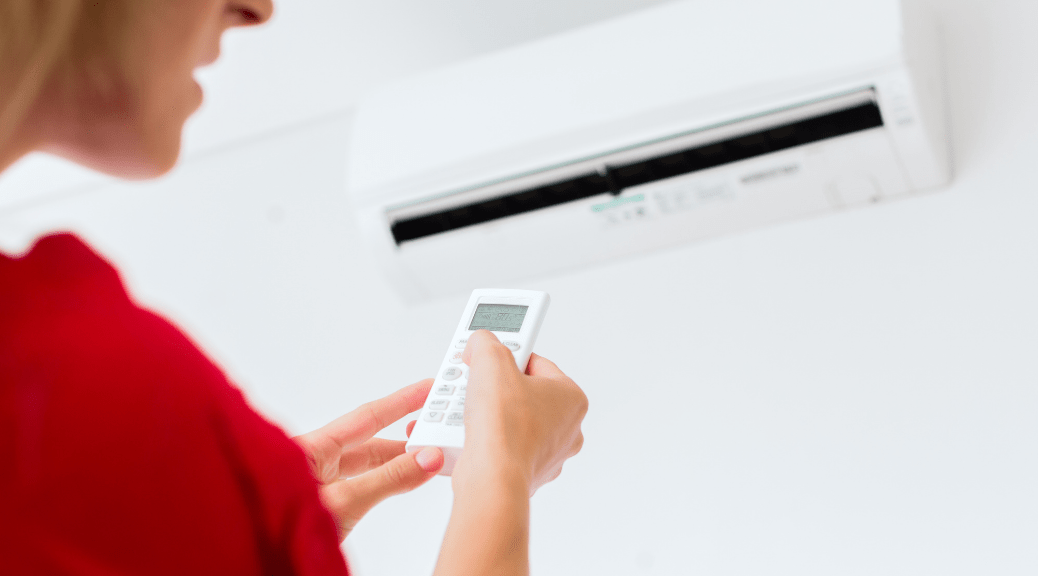
Electricity bills in summer shot up due to the use of ACs or Air Conditioners. However you can control this by implementing a few best practices. Following tips will will help you to have the most energy efficient ACs which in turn will lower the electricity bills.
On a hot day – say 43 degrees C – you may be tempted to put the air conditioner way down to 20 degrees C to get the room cool as quickly as possible. But if you can cope with setting the temperature at 25 degrees C, you will not only save on wear and tear on the AC’s motor, you will also save big on your energy bill. Each degree cooler, or warmer in winter, can add about 10 per cent to the running cost. The same principle applies in winter. If it’s 10 degrees C outside, try setting the indoor temperature to 18 degrees C rather than 25 degrees C. It also depends on the external temperature. Generally you’ll get better efficiency by aiming for a maximum temperature differential of about 8 degrees C. So, on a 35 degrees C day, set your indoor thermostat to 27 degrees C. Realistically, most people will still go for a cooler temperature. You can probably aim for a bigger differential if your house is very thermally efficient (well-insulated, double-glazed, etc).
Related
The page you requested could not be found. Try refining your search, or use the navigation above to locate the post.
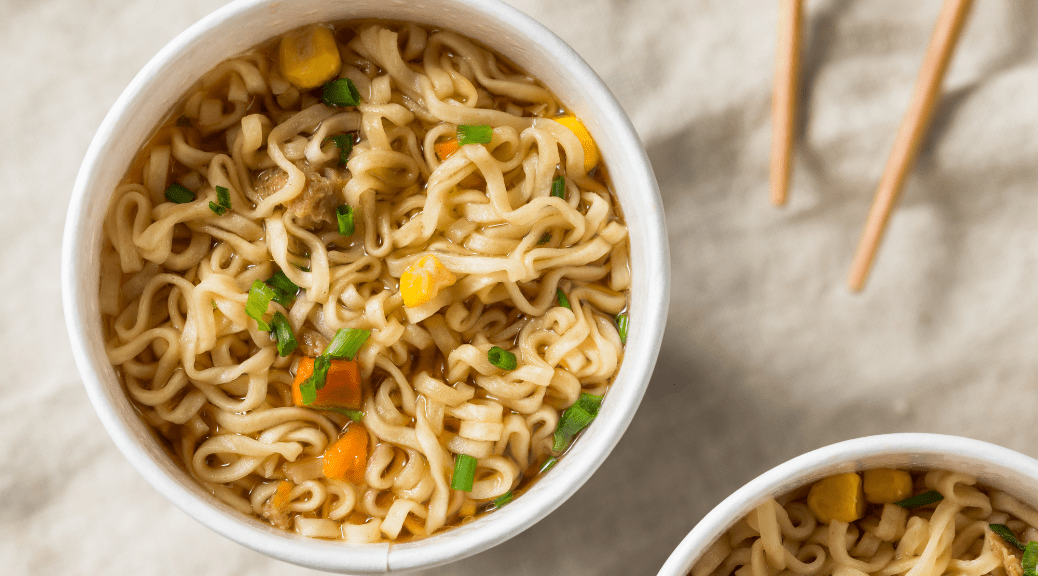
Most of us eat noodles almost every week or month because they are tasty, convenient and a filling option. But have you ever wondered about rarely known facts about instant noodles when you gorge on noodles from brands like Maggi, Wai Wai, Top Ramen or Knorr? If not, you should read on to know these rarely known facts about instant noodles.
How the noodles are cooked varies from country to country. In Nigeria, people cook it and serve it with delectable ingredients while in countries like China, it is served in a cup with chopsticks and you usually have it with seafood.
Believe it or not, noodles are about 4000 years old. In 2002, a bowl of noodles was discovered in China that was 400 years old. The bowl was earthenware, and its contents were preserved miraculously three meters below the ground at an archaeological site situated in Lajia.
Though it is a fact that noodles originated in Asia, it is also true that the name noodle is from the German language. It is derived from a German word named “Nudel” that comes from “knödel,” which means dumpling.
Noodles are not just your go-to food for satiating hunger when you are too lazy or tired to cook. It is a fact that noodles were originated in Japan by a businessman, Momofuku Ando who wanted to help people battling hunger as a result of Japan’s defeat in World War 2. Instant noodles were first sold in 1958.
One of the most astonishing facts about instant noodles is that 270 million portions of instant noodles are eaten around the world every day. This data was revealed by the World Instant Noodles Association. China consumes about 46 billion packets of ramen on a yearly basis.
Japan has three museums that are dedicated to instant noodles. It is also a country where slurping noodles is considered polite.
When you slurp noodles noisily in Japan, it is a sign that you appreciate the food. In China, long noodles signify a long life, and when you cut up a strand, it is considered as unlucky.
The longest noodle of the world was more than 3 km long. It was created by a Chinese food company Xiangnian Food Co. Ltd. where staff sent 17 hours in creating the noodle by mixing basic ingredients like water, bread flour, and salt.
Instant noodles are the best-selling item at the Riker’s Prison in New York because prisoners can make it instantly with hot water at any time of day or night.
There is a movie about instant noodles that stars Brittany Murphy called The Ramen Girl. Celebrities also love noodles. Jackie Cruz, a popular TV star even admitted that she could live off ramen for the rest of her life.
Which of these facts about instant noodles impressed or shocked you? Let us know by commenting below!
Related
The page you requested could not be found. Try refining your search, or use the navigation above to locate the post.
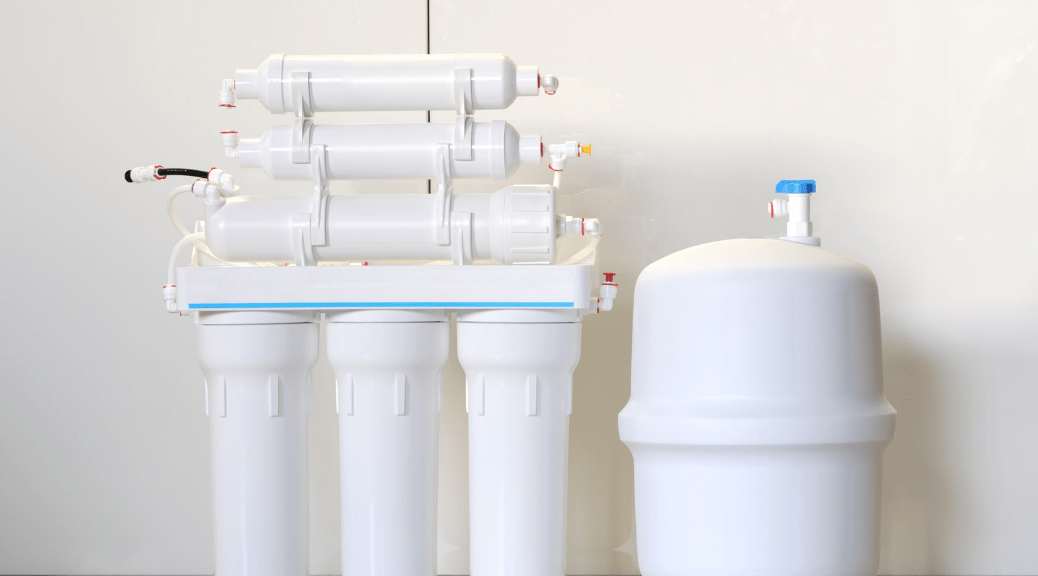
Some of us boil water before drinking it; some of us are resigned to buying packaged water regularly; and some of us invest in water filters and water purifiers. The last mentioned is a relatively expensive proposition but consumers are opting for it because it is considered to be the best bet against unsafe or contaminated water. The market for water purifiers – ranging from simple filters and gravity-based purifiers to those with latest technologies such as Reverse Osmosis (RO), Ultrafiltration (UF) and Ultraviolet (UV) and their combinations – is growing tremendously and various brands are available in each category.
Predictably, this vast range has also increased the complexity of buying the right purifier, whether for your home or office. Be that as it may, how many of us realize that the water purifier we buy should be as per the quality of water supplied in our homes/offices? Do we know what impurities are removed by which type of water purifier? Do we even know what these impurities are? The first thing you need to choose is the water-purification method, and knowing the quality of water in your area will help here. Also, know that some technologies involve wasting a lot of water to recover pure water, while those that involve less or no wastage may not be the best suited for the water in your area. The following guide will help you sort out the various parameters that you may want to assess before making a purchase.
Having done the first round of research, you will have to first decide which water-purification method works best for your needs and also suits your preferences. Let’s do a quick recap.
RO technology pushes the water molecules from a region of higher TDS level to one of lower TDS level by applying external pressure with the help of a water pump to reverse the natural flow of water. Water with impurities or high TDS is pumped at high pressure into the RO chamber, and this pushes the water molecules across the semi-permeable membrane to the other side while leaving the dissolved solids and other impurities behind. All the dissolved solids and impurities along with some input water, also known as RO wastewater, are discharged through a separate outlet.
The Bureau of Indian Standards (BIS) has specified the maximum TDS limit for safe drinking water as 500 ppm (500 milligrams per litre). There is absolutely no need to use an RO purifier if the TDS level is below 300 ppm. If your water source has low TDS, then the RO purifier will further reduce it to a very low TDS level. This means the purified water will then be devoid of essential minerals like calcium and magnesium which are required for our good health. Very low TDS may also not be acceptable to consumers due to its insipid taste.
RO purifiers are therefore recommended for purifying water that has high TDS level. However, there is also the fact that a significant part of the input water is discharged along with the dissolved impurities, which results in unnecessary wastage of water. On an average, RO purifiers produce 3 litres of wastewater for every 1 litre of purified water.
This technology uses ultraviolet rays for the purification of water. A UV purifier works by throwing high-intensity UV rays on the water which kills or inactivates the disease-causing bacteria and viruses. However, UV purifiers cannot remove any dissolved or undissolved impurities or chemicals from water. Because of this, most of the UV purifiers that are available in the market use some form of external sediment pre-filters to remove undissolved impurities and an activated carbon filter to remove chlorine and some dissolved impurities.
UV water purifiers are only recommended for areas where the water source has low level of TDS. If the water has low TDS level but is contaminated with bacteria and viruses and appears muddy, then you can use a UF+UV water purifier.
Ultrafiltration uses a semi-permeable membrane with much larger pores (approximately 0.01 microns) as compared to an RO (which has very small pores, of approximately 0.0001 microns).
The advantage of UF purifiers is it can work without electricity because the membrane has much larger pores and water can pass through it naturally using the force of gravity. This means no external pressure or water pump is required. Since UF purifiers do not hold back any water, there is no wastage of water.
There are some limitations, though. Because of the larger pore size, UF can only remove undissolved solids and larger impurities. It cannot remove the dissolved solids or reduce the TDS level. So, UF purifiers are not suitable for purification of high TDS water or hard water.
Gravity based purifiers work on the gravitational force from higher compartment to lower compartment. These are simplest to use and provide the most basic water purification. These filters generally comprise of sediment or sediment + activated carbon filters that can remove large and undissolved impurities like mud and sand along with some chemicals and microorganisms.
There are ceramic candle-based filters with two stainless-steel containers where the upper container is fitted with ceramic candles. The candles are impregnated with a silver solution that acts as a strong repellant against pathogenic bacteria. It is considered to be the safest conventional water filter as per Consumer VOICE’s repeated studies.
Although water-purifier makers try to differentiate their products from competitors, most of them actually use a mix of three major purification approaches – Reverse Osmosis (RO), Ultraviolet (UV) and UF (ultrafiltration).
WHICH TYPE OF WATER PURIFIER TO BUY?
The presence of bacteria and pathogenic (disease-causing) organisms is a concern when considering the safety of drinking water. Pathogenic organisms can cause intestinal infections, dysentery, hepatitis, typhoid fever, cholera and other illnesses. Water may also be contaminated with pesticides and arsenic.
A high percentage of water wastage is a major cause for worry. If you are using a RO water purifier at your home or office, you can consider the following options to reuse the wastewater.
Related
The page you requested could not be found. Try refining your search, or use the navigation above to locate the post.
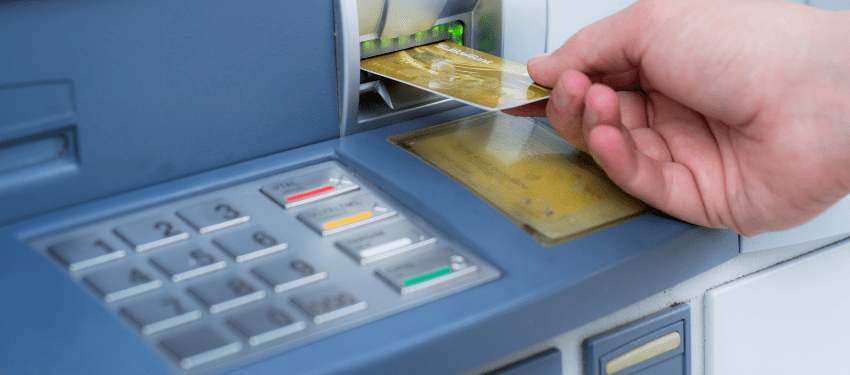
Withdrawal of money, balance check or mini statements form a small part of a lot of ATM services. Read on what are the other services you can avail from an ATM.
Subhas Tiwari
Banks including SBI, ICICI, HDFC and Yes Bank offer you different facilities from their ATMs. Let’s look at some of the ATM services other than cash withdrawal and balance check.
FD and checkbook request
You can request for fixed deposit at an ICICI Bank ATM. Under which, request for FDs ranging from Rs 10, 000 to Rs 50, 000 can be put through. You must have a resident savings or salary account with ICICI Bank. It is also necessary to have a debit card and PIN. SBI and ICICI Bank ATMs also have the facility of requesting for checkbook. The check book will be delivered to the register address in your bank.
Mobile recharge and pin change
Debit/ATM card PIN can be changed by going to the ATM. Also, you can recharge your prepaid mobile connection from an ATM if you are facing internet connectivity issues. There are many other banks including SBI, which are providing this facility from their ATMs.
Card to card transfer
You can also transfer funds to a customer of your own bank or a customer of another bank. A card-to-card transfer of up to Rs. 40,000 per day can be done from one SBI debit card to another at an SBI ATM. Union Bank of India, Bank of India, Canara Bank, Yes Bank etc. also provide funds transfer facility to their customers using debit cards of other banks as well.
Payment of utility bills and credit card bills
Utility bills such as electricity, water, and mobile postpaid bill can also be paid from an ATM. This facility is available in ATMs of SBI, HDFC Bank etc. Besides, credit card bills can also be done from ATM. One will just need to keep the credit card number handy.
Tax payment and donation
Tax can also be paid from ATM. Union Bank of India and HDFC Bank ATMs have this facility. For this, one has to register the debit card for payment of tax from the ATM on his bank’s website. ATM will provide you a slip with SIN number on payment of tax. You have to submit this number on the bank’s website within 24 hours. On the other hand, if you want to donate to a temple or charity, then this work is also done from ATM. For example, SBI ATM will give you Vaishno Devi, Shirdi Saibaba, Gurudwara Takht Saheb (Nanded), Tirupati, Sri Jagannath (Puri), Palani (Tamil Nadu), Ramakrishna Mission (Kolkata), Kashi Vishwanath (Banaras), Tulja Bhavani and Mahalakshmi Mandir (Mumbai) like many other temples and trusts.
Deposit and mobile banking registration
This facility is available at Axis Bank ATMs. You can withdraw cash from here as well as make a cash deposit. For this, you have to put money in the ATM machine or deposit it by cheque. Through ATM, customers can also register for mobile registration. SBI, ICICI Bank ATMs etc. are providing such facility to their customers.
Insurance premium paid and loan applied
Many banks have the facility of paying the insurance premium by going to the services option in ATMs. Apart from this, you can also apply for loan from ATM. ICICI Bank and HDFC Bank ATMs have this facility. ICICI Bank is providing an instant personal loan of up to Rs. 15 lakh to the customer through an ATM.
Related
The page you requested could not be found. Try refining your search, or use the navigation above to locate the post.

Research says, India witnesses over five lakh road accidents annually with most of the incidents involve two-wheelers. In such a situation, it is important to protect our two-wheelers and ourselves. If you’re wondering, what it requires, go through the below piece where we are telling you about taking a two-wheeler insurance policy.
Subas Tiwari
There are two types of bike insurance-third party liability insurance and on damage insurance. A third-party insurance policy covers you when your bike damages other vehicle. If your own bike gets dented then it is the on-damage insurance that comes to rescue. Third party liability insurance is a mandatory policy and also called TP insurance. A person needs to take this policy following the Motor Vehicle Act. And you stand a chance to get a traffic challan if you’re not a policyholder of third-party insurance. Good part is that, in both the kind of insurance policies, the company pays for any theft of the vehicle.
What the third-party insurance covers
Third-party insurance covers you when your bike damages someone’s property, someone’s car, bike or if anyone gets hurt or god forbid if someone dies in an accident with your vehicle. The policy will meet whatever legal expenses are incurred due to the above situations. Also, the insurance company will pay for you if a case goes to the court and the same asks to pay any fine. Kindy note that, an insurance company can pay a maximum of Rs 7,50,000 in the above-mentioned cases.
Third party insurance has a section of “Personal Accident Cover for Owner Driver”. The insurance company gives Rs.15 lakh if the bike driver dies in an accident while driving. S/he can claim this amount when the person has a valid registration certificate and driving license. This amount comes in the form of personal accident cover. However, there is an easily obtained, comprehensive rule, under the third-party insurance that comprehends all policies. Where the vehicle owner’s family can claim for compensation from the insurance company.
Choose add ons carefully
In a comprehensive insurance policy, companies provide many add on benefits. You can opt those match your need. In this policy, you will get the facility of zero depreciation cover, engine and gearbox protection cover, key and lock replacement cover, helmet cover, 24×7 site assistance add-on, etc.
Take insurance for a long time
By taking an insurance plan for a long time, you can also save a little money and you can also get rid of the hassle of renewing it every year. Apart from this, you can take advantage of the no-claim bonus throughout the term of the policy. Even if you have made a claim during this time period.
The following figures tell you the importance of insurance:
What does the motor vehicles act says about an insurance?
Chapter XI of the MV Act, 1988 deals with Insurance of Motor Vehicles with Third Party Risk & Clause 146 deals with “necessity of insurance against third party risk’.
Third party liability insurance
As of now, the MV Act mandates that all two-wheelers are to be covered under the third-party liability which shelters liability for injuries and damages to others, that you (the vehicle owner) is responsible for. This is also called Limited Liability Insurance which covers the insured and the owner/driver of the two-wheeler/pillion rider against third party liability arising out of an accident, which causes damage or loss to the third party or its property as well as death/disability of the owner/driver arising out of the accident. However, to fix the quantum of premium for third party liability cover, the IRDA rules will apply.
Insurance for comprehensive cover
While MV Act does not provide for covering insurance for other types of risks including, theft, fire, etc, as also damage to the owner’s vehicle, almost all the general (non-life) insurance companies are offering the comprehensive cover as an optional cover, which is not mandatory.
Why cover the vehicle for comprehensive cover?
A comprehensive policy covers the following:
The comprehensive cover (also called package policies) assures the following benefits-
On total or partial loss/damage to your two-wheeler
What are not covered in your policy (exclusions)?
(as and when driven by a person other than owner/driver and/or as stated in the ‘driver’s clause)
(The list is indicative and not exhaustive)
What are optional add-on covers?
The following additional covers are available on payment of extra premium-
Grievance redressal mechanism
Our study revealed that only a few insurance companies have posted a robust GRM system in their website. So, they are summarised below for our readers.
What is your grievance?
What the government could do?
Important to know
Related
The page you requested could not be found. Try refining your search, or use the navigation above to locate the post.