


No Results Found
The page you requested could not be found. Try refining your search, or use the navigation above to locate the post.

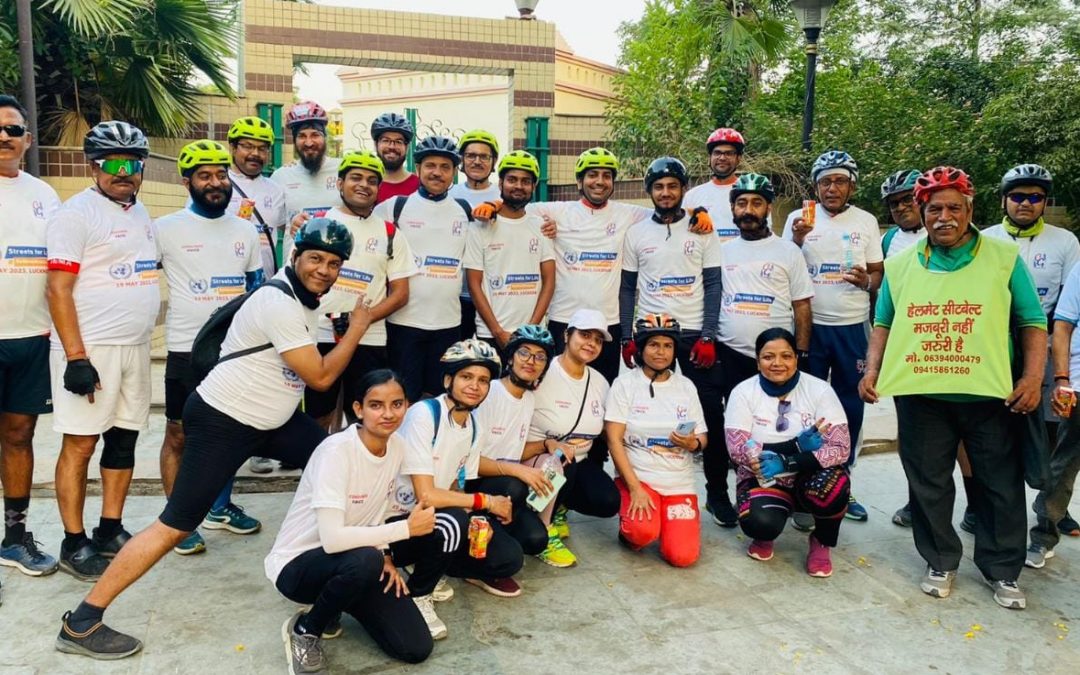
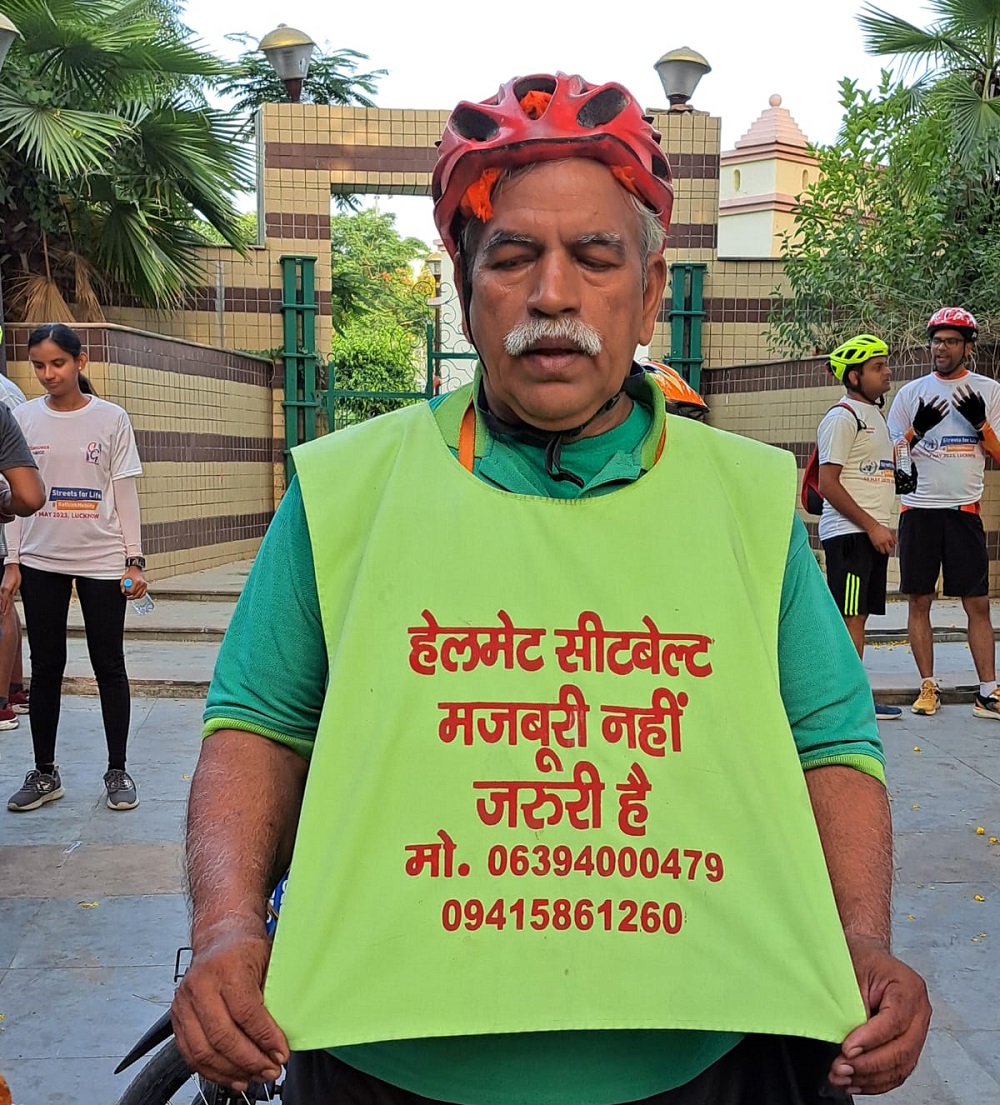
Jayanti Srivastava, Assistant Professor Amity University, Lucknow led the cyclists and emphasized on the need for mutual coordination among all the stakeholders related to road safety. A good number of people such as youths, lawyers, educationists, students and working professionals joined the event and supported the cause. Media also supported and provided good coverage in the regional newspapers.


A memorandum was also submitted by the consumer guild to strengthen road safety and to promote sustainable transportation supported by cyclists to the Chief Minister of the state.
Later the memorandum was submitted to the Principal Secretary, Home, Government of Madhya Pradesh with a copy to the Commissioner, Transport, Principal, Government of Madhya Pradesh.
Media supported the cause and provided very good coverage. We also highlighted the activities on social media.


The rallies involving students from schools of Guwahati were organized as a part of observing the UN Global Road Safety Week. Students of Tarini Choudhury Govt. Girls H.S. & M.P. School Guwahati on 18th May and Satgaon High School Guwahati on 19th May took part in the events. More than 400 students took part in the rallies organised and appealed to ensure the safety of children on roads near schools in Guwahati. Consumers’ Legal Protection Forum, Assam (CLPF) in association with Consumer Voice, New Delhi & Seuj Asom organized the events.

The students displayed placards with slogans ‘Slow down near Schools’, Your Speed Matters, Slow Down for School Zones’, Protect Our Future: Slow down for our Kids’, ‘Drive Responsibly, Slow down near Schools’ etc. A memorandum supported by students was also submitted to the transportation minister Parimal Suklyabaidya.
https://twitter.com/ConsumerVoiceIn/status/1661325071393361920
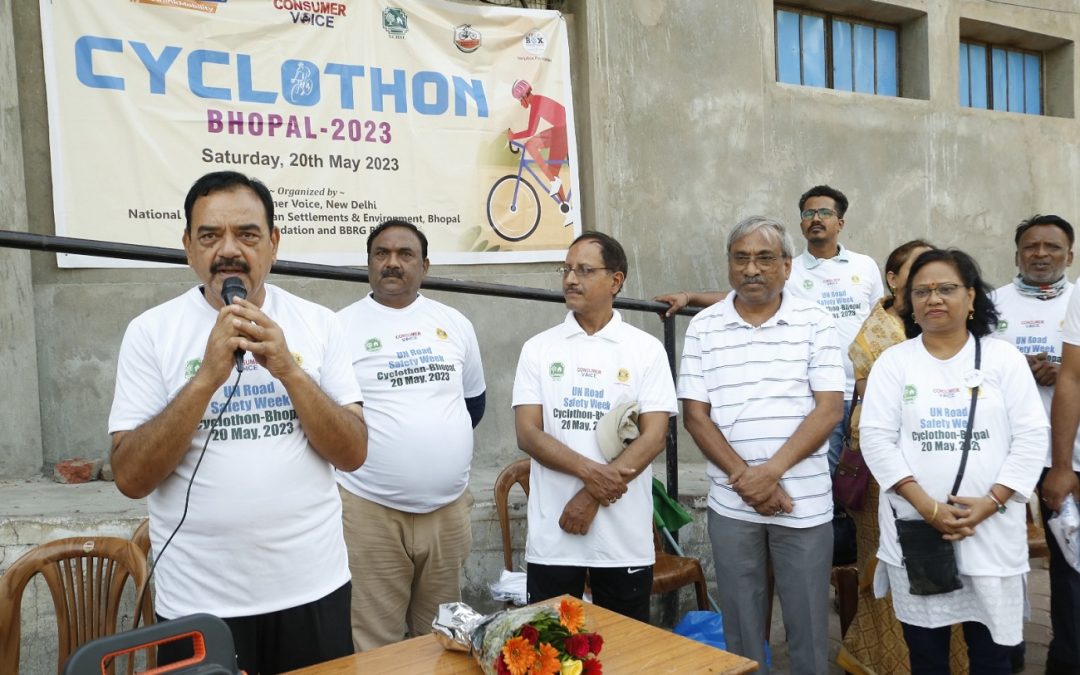


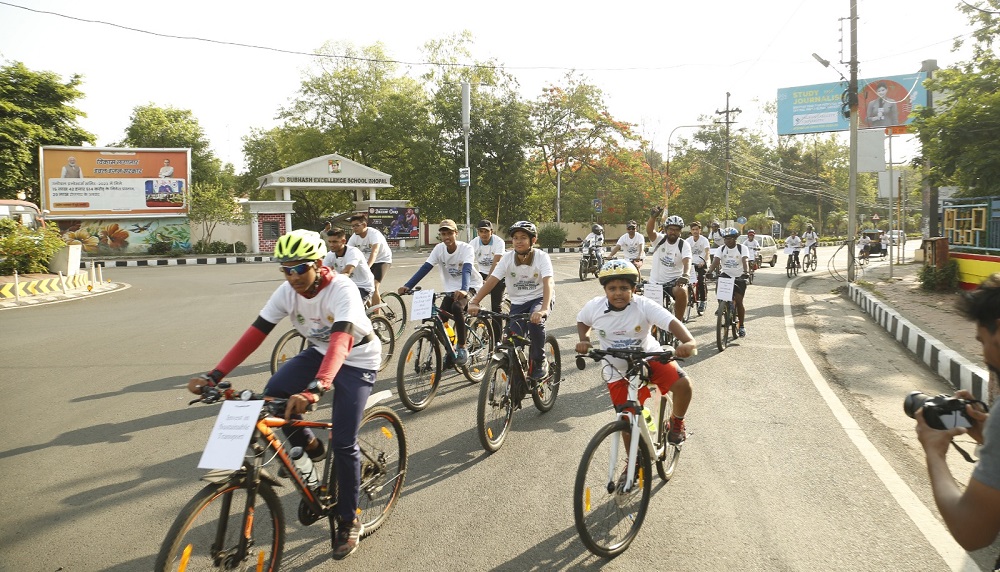
The rally was flagged off by Additional Commissioner of Police ( ACP) Shri Sushil Kumar Tiwari, who appreciated the initiative as well as provided important road safety tips to the participants. The aim of the cyclothon was to promote a sustainable transport system, particularly for pedestrians, cyclists, and children. Over 100 cyclists, mostly youth, students and citizens came forward to support the cause. They all were carrying the messages in Hindi and English language on their cycles to promote sustainable transportation with hashtags #ReThinkMobility and #StreetsForLife.

The participants signed a memorandum addressed to the Principal Secretary, Home, requesting the development of a sustainable transport system in Madhya Pradesh specifically for pedestrians, cyclists, senior citizens, and children. In the memorandum the participants conveyed that they feel that there is a desperate need for governments and their partners to rethink about mobility. The memorandum also stressed that when safe, walking and cycling can contribute to making people healthy, cities sustainable, and societies equitable. Safe, affordable, accessible and sustainable public transport is a solution for many societies’ ills.
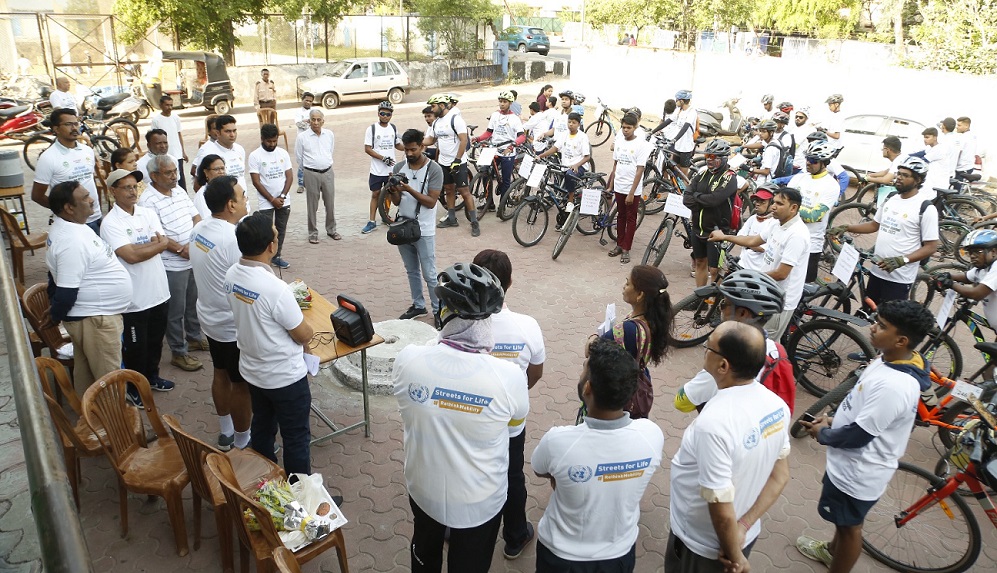
Later the memorandum was submitted to the Principal Secretary, Home, Government of Madhya Pradesh with a copy to the Commissioner, Transport, Principal, Government of Madhya Pradesh.
Media supported the cause and provided very good coverage. We also highlighted the activities on social media.

On March 23, 2023, the National Commission reached a decision in the case of Naresh Garg and Sons VS CHD Developers Ltd. Consumer Case No. 1753 of 2018. The Developers’ argument that the National Green Tribunal’s rules weren’t followed was rejected by the Commission as the cause of the delay. The bench stated that the opposing party cannot be permitted to profit from his own fault of non-compliance and refused to accept his justification as force majeure.
Dr Prem Lata, Legal Head VOICE
The complainant, Mr. Naresh Garg, applied to the Opposite Party, CHD Developers, for re-allotment of a unit near the Golf Course Avenue in Gurgaon by way of an application. The flat was earlier allotted to one Sh. Sarvesh Kumar Tiwari. The Opposite Party permitted the re-allotment, after all the necessary formalities and payment of charges, to the complainant. An apartment’s buyer agreement was also entered into between the parties and as per that, the possession of the unit was to be delivered by the opposite party within 42 months from the date of agreement. However, the Opposite Party failed to deliver the possession within the stipulated time. Hence, the Complainant filed this consumer complaint praying for a refund of the amount Rs. 79, 37,091/- with an interest and damages to the extent of Rs. 5 Lakhs.
Arguments extended by the Opposite Party
Observations of the National Commission
In light of the aforementioned discussion, the Opposite Party was ordered to refund the amount given by the Complainant along with compensation in the form of simple interest at 9% per annum from the date of each payment till the date of refund.
Similar cases decided by Hon’ble SC in similar matters
Facts: There was a substantial delay on the part of the developer in handing over possession of the apartments. OP took plea of force majeure conditions.
Supreme Court held
In view of the above discussions it is clear that Apex Court reiterates its stand that builders are to bear the consequences for the delays caused due to their own mismanagements and if any order by any courts are passed subsequently, that cannot be treated as force majeure conditions.
It is often noticed that complainants using words cheating, fraud or likewise words often used in criminal offences while complaining against financial institutes for deficiency in services. In return, banks and financial institutes also escape from their liability and suggest the consumer to file an FIR when the fraud if any is against bank or financial institute and not against consumer when the bank is the custodian for consumer’s money. Consumers can register complaints against banks for poor service, and the banks are responsible for looking into any fraud that occurred. But disputes over serious allegations of fraud or deceit are outside the purview of consumer courts.
Decided on 27.03.2023
Supreme Court reiterated in a case of The Chairman & Managing Director, City Union Bank Ltd. & Anr. Vs R. Chandramohan that the concept of “deficiency in service” under the Consumer Protection Act, 1986 must be distinguished from the criminal or tortious acts.
“The proceedings before the Commission being summary in nature, the complaints involving highly disputed questions of facts or the cases involving tortious acts or criminality like fraud or cheating, could not be decided by the Forum/Commission under the said Act. The “deficiency in service”, as well settled, has to be distinguished from the criminal acts or tortious acts. There could not be any presumption with regard to the wilful fault, imperfection, shortcoming or inadequacy in the quality, nature and manner of performance in service, as contemplated in Section 2(1) (g) of the Act. The burden of proving the deficiency in service would always be upon the person alleging it,” a Bench of Justices Ajay Rastogi and Bela Trivedi explained.
“As emerging from the record, some disputes were going on amongst the Directors of the Company and one of the Directors, if allegedly had committed fraud or cheating, the employees of the bank could not be held liable, if they had acted bona fide and followed the due procedure,” the Court said.

Did you know that saffron is one of the most expensive spices of the world? It is used in a variety of dishes in India. Its application extends to traditional medicine and cosmetics as well. Also, saffron is an important part of many religious ceremonies in India, particularly in Hinduism and Buddhism. However, shopping for saffron can be confusing and overwhelming. As a consumer, it’s important to consider quality, safety, price, and other factors when purchasing this delicate spice. In this article, we talk about saffron, its benefits, and some consumer tips that can help you in your search for the perfect saffron in the market.
Richa Pande
Saffron cultivation requires specific geographic and climate conditions. This limits its production to specific areas, which contributes to its high cost. Saffron is primarily produced in these countries- Iran, Afghanistan, India and Spain. It’s also cultivated in Morocco and Greece. Saffron cultivation and harvesting is a labour-intensive process that must be done by hand, which makes the production of saffron a time-consuming and expensive process. Also, it is only harvested once a year. This means that there is a limited supply of saffron each year, which drives up the price. It is used in a variety of dishes due to its unique flavour, and aroma. It is also used in traditional medicine and cosmetics due to its potential health benefits. This high demand drives up the price of saffron.
Saffron has a long and rich history in the Indian state of Kashmir, where it has been cultivated for centuries. Saffron was first introduced to Kashmir by Persian traders in the 11th century, who brought the spice to the region for cultivation. The spice quickly became popular in Kashmir due to its potential health benefits and its use in culinary and religious ceremonies The Mughal emperors, who ruled over Kashmir during the 16th and 17th centuries, were particularly fond of the spice and encouraged its cultivation. Saffron production in Kashmir declined in the 20th century due to factors such as political unrest and the availability of cheaper imports. In recent years, efforts have been made to promote sustainable farming practices and improve the quality of the Kashmiri Saffron. Today, Kashmir is still one of the major producers of saffron in the world, with the spice being a key part of the region’s cultural and culinary heritage.
Saffron is an essential spice in Indian cuisine. Its unique flavour and aroma make it a popular choice in both sweet and savoury dishes. Saffron is used to add colour and flavour to popular dishes like Biryani and Korma. It is added to kheer, and other milk-based recipes such as Lassi, Shrikhand, and Kulfi. It gives these delicacies a beautiful yellow colour and a distinct aroma. Saffron is also a popular ingredient in many Indian sweets and desserts, including Rasmalai, Jalebi, Gulab Jamun, and Kesar Peda. It gives them a rich and exotic flavour.
Saffron in also used to prepare Kashmiri Kahwa, a traditional Kashmiri tea made with green tea leaves, saffron, cardamom, cinnamon and almonds. It is known for its unique taste and aroma and is commonly consumed in the Kashmir as a refreshing beverage. In addition to its delicious flavour, Kashmiri Kahwa is believed to have several health benefits.
Ingredients:
Preparation:
Enjoy the delicious Kashmiri kahwa!
Saffron has been used in traditional medicine for centuries due to its various health benefits. Here are some of its potential health benefits.
Skin health: Saffron can help improve skin health by promoting blood circulation, reducing inflammation, and preventing oxidative damage.
*Note- It is important to note that if you have sensitive skin or are prone to allergies, it is recommended to do a patch test before using any new skincare products or ingredients.
Skin benefits – It hydrates skin, prevents premature aging, and evens out the skin tone and reduces the appearance of pigment.
Choose ISO Certified Grade A++ Saffron
The ISO grading system categorizes saffron into grades based on the levels of crocin, picrocrocin, and safranin present in the spice. Choose Saffron with A++ gradation marked on the label.
Look for the GI TAG
Geographical Indication (GI) sign is used on products that have a specific geographical origin and possess qualities or a reputation that are due to that origin. In India, there’s GI tagging available Kashmiri Saffron. By choosing saffron with Kashmiri saffron GI Tag, you ensure that you aren’t buying adulterated saffron. Buying it also is in economic interests of Indian Saffron producers.
What is Kashmiri Mongra Saffron?
Kashmiri Mongra Saffron is one of the best quality saffron in the world. It has a higher percentage of crocin, the compound responsible for its colour, flavour and aroma, which makes it more potent and flavourful than other varieties of saffron. It is grown in the Kashmir Valley, has a unique climate and soil that is ideal for growing saffron. The region experiences cold winters and mild summers, which is optimal for saffron cultivation. The soil in the Kashmir Valley is also rich in minerals, which helps to enhance the flavour and aroma of the saffron. It is traditionally cultivated using organic methods, without the use of any pesticides or chemical fertilizers. This results in saffron that is pure and free from harmful chemicals.
Check Packaging Before Purchasing Saffron
Saffron should be packaged in an airtight container to preserve its quality. Look for saffron that is packaged in a sealed, opaque container to protect it from light and air.
Compare Prices
Saffron is a highly valued spice, and its price can vary widely depending on the quality and the seller. Compare prices, and attributes of saffron sold by different sellers to ensure that you are getting a fair price for good quality saffron.
Determining Saffron Adulteration
Common adulterants- Parts of saffron flowers other than stigma, filaments from other plants, including corn fibres, safflower stigmas, calendula stigmas, pomegranate fruit fibres, filaments from other sources dyed with plant dyes such as beetroot, turmeric powder, and
Check for colour and aroma. Good quality saffron should have a bright red colour and a strong, pleasant aroma. If the saffron looks dull or has a weak or unpleasant aroma, it may not be of good quality. Do not buy the same brand again.

Put the saffron threads in lukewarm water. If the saffron threads loose the colour rapidly, then it’s adulterated.

The page you requested could not be found. Try refining your search, or use the navigation above to locate the post.