Is salt good or bad for you? Its’ both!

Is salt good or bad for you? Its’ both!

Is salt good or bad for you? Its’ both!

Salt

A simple yet very important ingredient like salt these days is available in different variations including iodized, low-sodium, rock salt, double fortified salt, etc. What is their significance? Is rock salt healthier than the normal salt? Will reducing salt make you iodine deficient? Does salt have only culinary and taste purposes or is it important for your health as well? Learn about these and much more in this article.

Richa Pande

Salt has been an integral part of our lives since time immortal. It enhances the flavour of our recipe, making it more palatable. Salt has also been used extensively and effectively used for food preservation. Salt can prevent growth of the bacteria in food preventing food spoilage. Therefore, pickles last so long. Historically, salt has always been accorded high value. This is why salt was taxed extensively throughout the world and high taxations on salt have caused revolts like that against Gabelle Tax in France in 1789 and the Salt Satyagrah led by Gandhiji in 1930 in India.

So does salt, have any health utility? Let’s try to understand.

Salt contains 40 per cent sodium ion(Na +) and 60 per cent chloride ion(Cl), by weight. Now why are these important for human body? Salt is the biggest contributor of sodium in our diet. Therefore, many times we use sodium as a synonym for common salt. Sodium and Chlorine are essential minerals required for fluid-electrolyte balance in our body. This is why we feel dehydrated or need to replace the electrolyte loss immediately when we sweat excessively or experience retching/diarrhoeal episodes. These electrolytes are also involved in aiding muscles and nerves to function well. Some studies have also linked low sodium diets with increased insulin resistance as well, but sodium deficiency is very rare due to presence of sodium in a lot of processed foods we eat daily. Salt is a common ingredient used in every household; it has been successfully used for decades for iodine fortification. Salt fortification has played a major role in reduction of iodine deficiency disorder in many counties worldwide.

However, we all know that excessive salt consumption can increase our chances of getting high blood pressure (hypertension), and other cardiovascular diseases. High salt intakes may also increase the growth of Helicobacter Pylori bacteria in our stomach and that can cause inflammation and gastric ulcers. Eating too much salt can also cause calcium deficiency. Therefore, the WHO recommends that adults should not consume more than 2300 mg of sodium, equivalent to 5 grams (1 teaspoon) of salt every day. Interestingly, as per a WHO report, Indians, on an average, consume almost 10 grams of salt every day.

It is therefore essential that we cut the amount of salt in our diet. We need to control our urge to add excessive salt to our recipes, avoid adding table salt to our preparations at home, and distance ourselves from food items with added salt like biscuits, chips, bakery foods, papads, etc. We can refer to food labels on packed products to ascertain how much sodium these items contain and keep 2300 mg of sodium as the upper limit for our daily consumption.

But if we cut the salt intake, will we become deficient in iodine? Again, let’s try to understand.

It is common knowledge that Iodine is an essential mineral and it’s deficiency can cause several health disorders. Salt is a major source of iodine in our diet. Can our attempts to reduce salt intake make us iodine deficient? As per the National Institutes of Health Factsheet on iodine, 3 grams of salt i.e. a bit more than half a teaspoon of iodized salt is sufficient to meet our iodine needs. If someone wishes to cut the salt beyond this limit, then they can still get iodine from other dietary sources such as- seaweed, eggs, dairy products and dried plums, also known as prunes. One must also note that too much consumption of iodine (from iodized salts and other dietary sources) can push someone to develop hyperthyroidism and could worsen it if the person already has hyperthyroidism.

Now let’s know more about different salt varieties in market-

How is Rock Salt & Black Salt different from regular table salt?

Rock salt is known as ‘sendha namak’ in India. Black Salt is a type of rock salt. It is known as Kala Namak in India. Rock Salts contain fewer additives than the regular table salt. For example, it does not contain anti-caking agents which are added in normal salt to prevent forming of lumps in the presence of moisture in the air.

These days some rock salts are combined with sodium and iodine sulphates as well and mixed with charcoal and then heated. If you are looking exclusively for natural salts, check the ingredients list on food labels of the pack.

How is Sea Salt different from regular table salt?

Sea salt is most commonly manufactured by directly evaporating the seawater. Salts labelled as ‘Sea Salt’, these days usually do not undergo any processing or are minimally processed. The good thing about unprocessed sea salt is that it has traces of some minerals like magnesium, potassium, calcium, etc. in it. But it has some health concerns as well.  Some studies reveal that sea salts can be contaminated with microplastics. Sea salt has also been found to be contaminated by fungi. This can cause food spoilage and could be toxic as well. Table salt on the other hand is processed for iodine fortification and also with the objective of making it free flowing in nature.

What is double fortified salt?

Double fortified salt is available in market these days that contains both iodine and iron. It could be used by anaemics and people desiring to prevent iron deficiency. It must be kept in mind that if you are already taking a lot of iron in your diet from other sources, you should avoid it or use it in rotation with other salts.

What is Low Sodium Salt & Can you use it?

Low -Sodium Salts are also known as salt substitutes. These salts have lower sodium levels which is usually substituted by potassium. These salts are recommended for hypertensive people and research confirms that its consumption could be helpful in lowering systolic and diastolic blood pressure in people with high blood pressure. Based on present evidence, it can be recommended only for pre-hypertensive and hypertensive people. However, more research is needed to establish this viewpoint.

Choose any salt as per your preference but with this cautionary note that it’s best to consume salt in moderation regardless of the type you choose. And if you are planning to switch to rock salt completely, seek a dietitian’s help to include iodine rich sources in your meals because remember iodine is essential for you.

Related

Equity Linked Saving Scheme (ELSS Mutual Fund)

Equity Linked Saving Scheme (ELSS Mutual Fund)

Equity Linked Saving Scheme (ELSS Mutual Fund)

Mutual Funds

How good it would be if with the accumulation of money, there is a bumper exemption on tax as well. Tax exemption also means a kind of savings. This savings money can be put to good use elsewhere. There is a scheme named Equity Linked Saving Scheme or ELSS, with the help of which one can save up to Rs. 46,800. Let’s check it out here.

Subas Tewari

Compared to Fixed Deposit or NPS, ELSS offers many tax saving facilities along with giving higher returns. Mutual funds earn more than FDs or NPS. Therefore, people who invest in ELSS funds or equities consider ELSS to be more effective. ELSS is such a fund which gives maximum returns with minimum lock-in period. ELSS is actually a combination of large and medium size stocks. This fund has been designed in such a way that it is easy for the person taking it to save tax. If you hold this fund for a longer period, there are many possibilities of growth and higher returns. There are many features of this fund. For example, you can start it by investing at least Rs 500. Investment facility is also available in this through SIP. The minimum lock-in period of 3 years is available in this fund. That is, after 3 years, you can easily leave this fund and withdraw your money. The biggest feature is that with the help of this fund, a taxpayer can save up to Rs 46,800.

Fund’s salient features

There is a limit on the minimum deposit amount in this fund to save tax. In this fund, you get a minimum deposit of Rs 500 and a maximum of Rs 1,50,000. How much you will earn from this fund depends on your deposit amount and market conditions. If we look at the track record of the last one year, then the situation is satisfactory because mutual funds along with shares etc. have also given good returns.

Multiple benefits with single investment

Actually, ELSS fund is a type of tax saving fund in which most of the funds are deposited in equity schemes. Equity funds are such schemes in which money is invested in the shares of companies. Companies are decided under equity according to the capital in the market and are invested in them. If a person deposits Rs 1.5 lakh in ELSS every year, then one can save tax of Rs 46,800 under section 80C of Income Tax. Also, it is allowed to invest more than Rs 1.5 lakh.

Why invest in ELSS?

ELSS is considered to be much better than those who follow the traditional methods of tax saving. Compared to Fixed Deposit or NPS, ELSS offers many tax saving facilities along with giving higher returns. Mutual funds earn more than FDs or NPS. Therefore, people who invest in ELSS funds or equities consider ELSS to be more effective. The biggest thing is that the lock-in period of ELSS is very less as compared to FD or NPS. That is, the possibility of high returns in a short time can be found in ELSS.

Who can invest?

ELSS can be invested by any person who wants to reduce his income tax under section 80C by investing money in tax saving scheme. It is an equity investment, so those who invest money for a long term and expect returns, who are less concerned about market risk, can make the most of this fund. Since ELSS has a lock-in period of 3 years, the fund is taxed on the basis of long-term gains. If earning more than Rs 1 lakh then interest of 10 per cent will have to be paid.

More work with less investment

There is no need to deposit a lot of money in this fund at once. That is, you do not need to take the tension that you will deposit a lot of money, only then you will be able to take advantage of this tax saving scheme. You can enter this scheme with very little money. By taking out the average of this fund every year, you can start investing with the same money. There is no need to make huge payments for each unit of the fund. If you want, you can start investing from 500 rupees. This also gives you discipline in investing.

What are ELSS funds?

ELSS is a mutual fund scheme and is quite similar to diversified equity fund of Mutual Fund. As the name suggests, the scheme primarily invests in equity market by buying equity stocks of companies listed on the stock exchanges. The units of the scheme are offered at the NAV (Net Asset Value). The NAV is announced for all business days and keeps changing primarily depending upon the movement in the prices of stocks held in the portfolio of the scheme in relation to market fluctuations. Mutual Fund ELSS is a good tax-saving instrument but still is not invested in large numbers by tax-savers. So, this article is just to wake them up and take notice of this tax-saving investing option so that there is maximum participation of the public from all walks of life.

What is the urgency to invest in ELSS?

It is most likely that the Direct Tax Code (DTC) proposed by the Government will come into effect (sooner than later), and your most dependable tax saving section – Section 80C of the Income Tax Act would undergo amendments. While the DTC includes a proposal to increase the eligible deduction under Section 80 C, Equity Linked Savings Schemes (ELSS) -also known as “tax saving mutual funds”, would no longer continue to be a part of eligible tax saving instruments, thus leaving you with fewer market-linked investment options to accelerate the process of wealth creation.

Who are advised to invest in ELSS?

YES. This is an important aspect of tax-planning especially when you look at ELSS as a tax-saving option. The following are the factors that could be considered. 

Those who have clear and focused financial goals

If you have financial goals set in your life, the same too should influence the way you do your tax planning and invest in tax saving instruments. So, say for example your goal is retiring from work 5 years from now, then your tax saving investment portfolio should be less tilted towards market-linked tax saving instruments, as you are quite near to your goal and your regular income will cease. Likewise, if you are many years away from the financial goal, you should ideally allocate maximum to market-linked tax saving instruments and less towards those instruments (tax saving) which provide you assured returns.

Those who have risk appetite

It refers to your ability to take risk while investing, and it is totally dependent on your age, income, expenses, and nearness to your goal. So, if your willingness to take risk is high (aggressive), you can tilt your tax saving investment portfolio more towards the market-linked instruments such as ELSS. But if you have a moderate-risk profile, then you can take a mix of 60:40 into market-linked tax saving instruments and assured return tax saving instruments respectively.

Thus, now if you are young, income is higher, and therefore willingness to take risk is highest along with your financial goals being far away; you may look at ELSS mutual funds to avail a tax benefit under Section 80C. Please note that ELSS mutual funds are 100 per cent diversified equity funds and a distinguishing feature about them is the compulsory lock-in period of 3 years brings in financial discipline towards holding one’s investments for the long-term. For investment in ELSS, there is a minimum investment amount of Rs. 500 which is unlike the other equity-oriented funds (which generally demand Rs. 5,000 as the minimum investment amount).

What should be the income bracket to enter investing?

It is said that if your income is high, your willingness to take risk is generally high. This can work in your favour, as you can allot your portfolio more towards equity-related instruments such as ELSS, and make your portfolio appear more aggressive. Similarly, if your income is not high enough, you can invest in other tax-saving instruments which provide you assured returns.

What age to enter investing?

Your age should determine your asset allocation. If you are young, you can take more risk and vice-versa. Hence, for prudent tax planning too, if you are young, you should allocate more towards market-linked tax saving instruments such as ELSS. Moreover, you would also enjoy the advantage of greater investment tenure which would enable you make more aggressive investments and create wealth over the long-term to meet your financial goals.

How to select ELSS funds?

Ideally while evaluating ELSS mutual funds, one should assess their performance over a 3-Yr time frame, as this would enable you to judge whether they have created wealth for your post- lock-in period.

Moreover, the Fund has to ensure to its investors to fairly low-risk, but should provide risk-adjusted returns thereby making it a low risk-high return investment proposition in the category.

Also, the returns should have been achieved by the Fund without indulging in much portfolio churning.

What are the benefits of ELSS MF?

Tax benefit on the investment

You can get full tax benefit of investment under section 80 C of Income Tax Act. Maximum taxable limit is Rs. 1, 50, 000 for the current Assessment Year.

Shortest lock-in period (period during which payment will not be made if you go in for tax benefit)

Lock-in period of ELSS is 3 years which is shortest in comparison to any other tax saving investment. This lock-in period is the only difference between diversified equity mutual funds and ELSS. When compared to bank tax-saving FDs, ELSS scores over them as bank FDs have a lock-in period of 5 years.

Tax-free returns

Any profit/ capital gain you have from ELSS is completely tax free. If you compare the returns from NSC and Tax-Shield Bank FDs, these are completely taxable and paid interest is added to your income for tax computation. So, you end up paying tax on interest received. Only PPF Offers tax- free returns but it has a maturity period of 15 years.

Tax free dividends

ELSS schemes give dividends on regular intervals and the dividend you receive is tax free.

No entry loads

Say if you invest Rs. 15, 000 in ELSS Scheme, your Rs. 15, 000 is invested in ELSS Mutual Fund. You have to decide how much do you want to pay your financial advisor. Take a word of caution: some insurance agents sell ULIPS as Mutual Fund + Insurance with lots of ‘load’ expenses.

High growth

Equity funds can be volatile in the short run, but have been known to beat inflation and create wealth over the long run. If you are looking at investing some money that you won’t need in future, and are willing to stand atop the ups and downs of the market, you may find ELSS an ideal tax saving option.

Systematic Investment Plan (SIP) in ELSS

In SIP, you invest a certain amount each month in a fund. It’s an effective way of investing in ELSS as the concept of rupee cost-averaging and the power of compounding works well. Even if you have done your tax planning for this year, start from 1st AUGUST, 2015.

Comparison with Unit-Linked Insurance Plan

The investors and tax-saving public sometimes think of ELSS funds and ULIPs as alternatives. This is a mistake as functionally, there is nothing common between ELSS funds and ULIPs. It’s a basic rule of saving not to mix insurance with investments. ELSS and ULIPs are two different products that serve different purposes.

ELSSULIP
ELSS is an equity fund in the marketULIP is a mix of life insurance and investment offered by life insurance companies
ELSS have predictable cost, and easily understandable returns and are transparent about how the fund operates and what it invests inFrom the premium paid, the insurer deducts charges towards life insurance (mortality charges), administration expenses and fund management fees. So only the balance amount is invested
Only payment of Fund Management Charge (as expenses) per year is applicableULIPs have high first year charges towards acquisition (including agents' commissions)
The total investment under ELSS is in Equity Funds onlyIn a ULIP, the mix of investment and insurance prevents savers from having a clear cost-vs-benefit understanding of either of the two components
In ELSS there in no fixed period of maturity except for the lock-in period as the Fund is open-endedWith an ULIP, you have to block your money for long periods of time. So you sacrifice on transparency and liquidity.
ELSS has a 3 years lock-in periodULIPs have 5 years lock-in
ELSS has no switching facility of funds as it is controlled by the Fund ManagerULIPs provide for ‘switch’ from one fund to another

Where do ELSS stand as a preferred fund for investment?

ELSS is one of the popular tax saving option for savvy investors, as not only that ELSS is a diversified equity mutual fund which has a majority of the corpus invested in equities, but also that it has a lock-in period of 3 years from the date of investment. The returns from investment in ELSS are based on schemes from equity markets. Returns from ELSS schemes are also tax-free.

Based on previous years’ returns, some of these funds have grown 3 times in 5 years. There is also no limit on investment in ELSS funds, but you can claim tax deduction of up to Rs.1,50,000 under Section 80C of the Income Tax Act.

ELSS is always better to invest-

  • Via SIP mode rather than lump-sum (for cost-averaging)
  • In GROWTH options (for wealth accumulation)
  • In DIRECT Plan (to save costs & higher returns)
  • Compare ELSS with other investment options and see the difference.

BEYOND TAX SAVING

ParameterPPFNSCELSS
Tenure15 years6 years3 years
Returns(Compounded Annually)
8.80 % ^
(Compounded
half-yearly)
8.60 to 8.90 % ^
Not assured dividends/ returns
Minimum investmentsRs.500Rs. 100Rs. 500
Maximum investmentsRs.1,50,000No limit*No limit*
Amount eligible for
deduction under Section 80C
Rs.1,50,000Rs.1,50,000Rs.1,50,000
Taxation for interestTax freeTaxableDividends and capital gain tax free
Safety/ Rating Highest HighestHigh Risk

Related

No Results Found

The page you requested could not be found. Try refining your search, or use the navigation above to locate the post.

Case Studies: Flat buyers can unite as one party against builders under Section 12 of CPA Act

Case Studies: Flat buyers can unite as one party against builders under Section 12 of CPA Act

Case Studies: Flat buyers can unite as one party against builders under Section 12 of CPA Act

This article will showcase case studies on flat buyers who can unite as one party against builders under section 12 of CPA Act.In a major relief for aggrieved homebuyers, justices Dipak Misra, AM Khanwilkar and MM Shantanagoudar of the Supreme Court have ruled (in an order dated 21 February 2017) that flat buyers can now approach the National Commission in case of a dispute with a builder, where the aggregate value exceeds Rs 1 crore. This ruling should bring to an end the spell of contradictory orders that were being passed by various benches of the National Consumer Disputes Redressal Commission (NCDRC) on this subject in recent times.

Amrapali    Sapphire    Developers    Pvt. Ltd  had  filed  an  application  seeking dismissal    of    complaint    primarily on  the ground  that  since  the  sale consideration  for  each  flat  was  lessthan  Rs  1  crore,  National  Commission  lacked  the pecuniary  jurisdiction  to  entertain  the  complaint. Another  contention  made  by  the  builder  was  that the  flat  buyers  could  not  club  the  individual  causes of action. The Commission had taken the view that Section  12  (1)  (b)  of  Consumer  Protection Act  did not preclude the recognised consumer association from filing a composite complaint on behalf of more than one  consumer  having  a  common  interest  or  similar grievance  against  the  builder.  In  fact,  if  they  were allowed to file multiple complaints in respect of several consumers,  that  would  result  only  in  multiplicity  of proceedings without serving any purpose.

ln this regard, National Commission had referred to the judgement passed by the Supreme Court in a civil  appeal  in  Atharva  Towers  Owners  Association versus Mis Raheja Developers Ltd, where it had ruled that it would not be correct to say that a complaint by  a  voluntary  consumer  association  on  behalf  of more than one consumer, having a similar cause of action  against  the  same  seller  of  goods  or  provider of  services,  would  not  be  maintainable.  The  only requirement  would  be  to  direct  each  and  every allottee on whose behalf the complaint was filed to file an affidavit concerning the prayers to the extent that they pertained to his individual grievances.

The National Commission further said that once it was accepted that a consumer complaint on behalf of more than one consumer could be filed by a recognised consumer  association,  it  could  hardly  be  disputed that it was the aggregate value of the services which had  to  be  taken  for  the  purpose  of  determining  the pecuniary  jurisdiction  of  the  consumer  forum  before which the complaint was filed. The Commission had further  simplified  the  process  of  deciding  pecuniary jurisdiction  and  said  that  the  aggregate  quantum  of compensation claimed in the petition would determine the question of jurisdiction, and when the complaint was filed in representative capacity on behalf of severalconsumers, the total amount of compensation claimed by the representative body on behalf of all the persons whom it represented would govern the valuation of the complaint petition for the purposes of jurisdiction.

ln  the  order  dated  30  August  2016,  National Commission  member  Justice  VK  Jain  had  ruled  in favour of the 43 flat owners in Amrapali’s Sapphire housing  project  and  said  that  they  could  form  an association  to  achieve  the  pecuniary  limit  of  Rs  1 crore for approaching the Commission directly.

Talking of Rules

The  above  ruling  of  National  Commission  was challenged   by   Amrapali   Sapphire   Developers   by taking the plea that as per the provisions of Consumer Protection Act, if the disputed amount was less than Rs1 crore, the complainant had to file the case in District Forum. Amrapali Sapphire Developers had taken shelter behind this rule to contend that the 43 flat buyers were not eligible  to  file  a  joint  plea  before  the  National Commission.   The   counsel   for   Amrapali   Sapphire Developers argued that the 43 flat buyers had shown that the cost of flats was above Rs 1 crore by joining hands in order to maintain their plea in National Commission.This was against the rule, the counsel contended.

However, the bench consisting of justices Dipak Misra,  AM  Khanwilkar  and  MM  Shantanagoudar observed the intention of the counsel for the builder group, who wanted the complainants to go through the lengthy process of approaching the District Forum, then the State Commission, and finally the National Commission. The bench saw through the mala fide intention,  which  was  to  delay  the  mechanism  of justice so that they could buy time for completion of delayed housing projects.

The   bench   rejected   the   appeal   of   Amrapali Sapphire    Developers    challenging    the    NDCRC decision   and   thereby   upheld   the   order   of   the National Consumer Disputes Redressal Commission (NCDRC) that flat buyers could jointly approach it in case of a dispute with a builder.

Contradictions in Orders

In the past, we have seen that many conflicting orders  have  been  passed  by  the  benches  of  the National    Commission. Here’s    an example, in Shubhechha    Welfare    Society    versus    Mls    Earth Infrastructure  Pvt.  Ltd,  the  National  Commission (in  the  order  dated  6  December  2016) held  that a   recognised   consumer   association   could   file   a complaint on behalf of a single consumer, whether or not that consumer was a member of that association, but  a  recognised  consumer  association  could  not file  one  complaint  on  behalf  of  many  allottees  by clubbing  sale  consideration  for  making  pecuniary jurisdiction  of  the  National  Commission.  Further, it was held that National Commission did not have pecuniary  jurisdiction  to  entertain complaints,  and that complaints had to be filed by complainant before the State Commission having pecuniary jurisdiction to entertain the complaint.

On  the  other  hand,  in  Ambrish  Kumar  Shukla versus Ferrous Infrastructure Pvt. Ltd it was held that if the aggregate of the value of the goods purchased or the services hired or availed by all the consumers having the same interest and the total compensation, if any, claimed for all of them came to more than Rs 1 crore, the pecuniary jurisdiction would rest with the National Commission alone. The value of the goods purchased or the services hired or availed of and the quantum of compensation, if any, claimed in respect of one individual would be absolutely irrelevant for the purpose of determining the pecuniary jurisdiction in such a complaint.

In  the  case  of  ALP  Social  Welfare  versus  Mls Amrapali  Leisure  Valley  Developers  Pvt.  Ltd,  ALP Social  Welfare  had  filed  a  case  on  behalf  of  85 flat   buyers.   The   subject   was   maintainability   of the  complaint  –  whether  ALP  Social  Welfare  was eligible  to  file  the  case  on  behalf  of  85  flat  buyers. The National Commission explained the purpose of Section  12  (1)  (b)  and  said  that  only  a  recognised consumer    association    could    file    a    complaint highlighting  the  grievance  of  aggrieved consumers. Further, the Commission explained the meaning of a  ‘recognised’  consumer  association  and  referred  to the  aims  and  objectives  of  ALP  Social  Welfare  to ascertain  whether  the  complainant  was  a  voluntary association. On reading the aims and objectives, the Commission  held  that  the  complainant  association had  been  formed  and  registered  for  social  welfare programmes  and  for  resolving  common  problems of  the  people.  There  was  no  reference  to  consumer welfare   or   consumer   disputes   in   the   aims   and objectives;  therefore,  the  association  could  not  be termed as a voluntary consumer association and the complaint  was  not  maintainable  under  Section  12 (1)  (b).  Unlike  in  the  case  of  Shubhechha  Welfare Society versus Mls Earth Infrastructure Pvt. Ltd, where the National Commission had held that a recognised consumer association could file a case on behalf of a single consumer and not numerous consumers, in thiscase it did not raise any issues on the representative capacity  of  the  complainant  –  rather,  it  was  on maintainability  of  the  complaint  under  Section  12 (1) (b).

As is apparent, there has been inconsistencies in the orders passed by the National Commission.The latest order passed by Supreme Court in the case of  Amrapali  Sapphire  Developers  versus  Amrapali Sapphire  Flat  Buyers  Welfare  Association  clearly draws the line on the subject of pecuniary jurisdiction. The apex court’s ruling comes as a breather for flat buyers  stuck  with  delayed  flats, they  now  know that they can come together and approach the apex consumer  commission. They can take  on  the resourceful realtors  who  use  their  money  and  power  to  exploit the common man.

Homebuyers can seek higher compensation than what is mentioned in agreement for delayed flat: National Commission

Homebuyers can seek higher compensation than what is mentioned in agreement for delayed flat: National Commission

Homebuyers can seek higher compensation than what is mentioned in agreement for delayed flat: National Commission

Recently, the Apex Consumer Court has passed an encouraging order for consumers whereby it held that builders can’t take advantage of the builder-buyer agreement to pay Rs. 5 per sq. feet per month as compensation for delay in handing over flats for unreasonable period. The buyers have the option to seek higher compensation after taking possession of the property or seek refund of the amount paid. The compensation would also be in addition to the refund amount with interest.

The National Commission heard an appeal filed by Emaar MGF challenging an order passed in August, 2016 by the State Commission, Chandigarh. One Govind Paul entered into a builder-buyer agreement with Emaar MGF for a property at Mohali Sector 105 which had to be delivered in three years. When the builder delayed the possession by 20 months, Paul approached the State Commission, Chandigarh. The State Commission in 2016 ordered the builder to refund Rs. 39,88,056/- with interest rate at 15%, along with Rs 3,00,000/-  compensation and Rs 25,000 as litigation cost. Aggrieved with the order of the State Commission, the builder moved to the Apex Consumer Court.

A bench of S.M. Kantikar and Dinesh Singh analysed the applicability and effect of the provisions of the agreement which speaks about time period during which the possession would be delivered and compensation to be paid in case of default from the builder. The Court observed that in case there is some short reasonable delay in offering possession, the builder would pay compensation for such short reasonable delay @ Rs. 5/- per sq. ft. per month of the super area till the date of notice of possession.  And the compensation for delay provided in agreement i.e. Rs. 5/- per sq. ft. p.m. cannot be for an unreasonably protracted period or indefinite, at best it can be for a short period that would appear to be reasonable per se and would be acceptable as such to a reasonable man. The Commission further stated that provision laid down in agreement by builder for compensation for delay implies that the delay could be for any period above 36 months, short or protracted, reasonable or otherwise, and the compensation for delay provided in agreement could be paid indefinitely for any period above 36 months is misconceived.

The National Commission said that the clear reading of the agreement reflects that the possession would be handed over not later than 36 months and for a short reasonable delay beyond 36 months a (somewhat token) compensation would be paid. To say that the possession can be delayed indefinitely or unreasonably and a token compensation for delay can be paid indefinitely or for an unreasonably protracted period is erroneous.  Indefinite or unreasonable delay with token compensation for delay cannot continue as such situation would be absurd.

While disposing off the appeal, the National Commission stated that the compensation prescribed in the agreement, at the rate of Rs. 5 per sq. ft. per month till the date of handing over the possession cannot be for an unreasonably long period of time.

The NCDRC, while stating that the buyer has option of seeking higher compensation or obtaining possession of the unit, enhanced the compensation to Rs. 5,00,000/- over and above the refund apart from increasing refund for the litigation cost to Rs. 50,000/-.

The National Commission concluded by saying that creating yet further harassment, uncertainty and difficulty for the consumer by delaying payments or making reduced payments etc. (if the adjudication is not stayed or quashed or modified by a higher authority / court) will be an unacceptable situation, to be viewed seriously. The harassment, uncertainty and difficulty of the consumer should end promptly and fully, the chapter should close.  Therefore, if the builder delays the adjudicated payments beyond the time stipulated, it would and should attract higher / penal interest and other compensation / costs.

Wasting all that food

Wasting all that food

Wasting all that food

Think.Eat.Save. The people behind World Environment Day this year have most certainly deliberately left out the spaces between the words. Perhaps so that we make the connection between our food choices and the larger impacts of these choices—and realize that the connection is too close for comfort and also too close to keep ignoring.

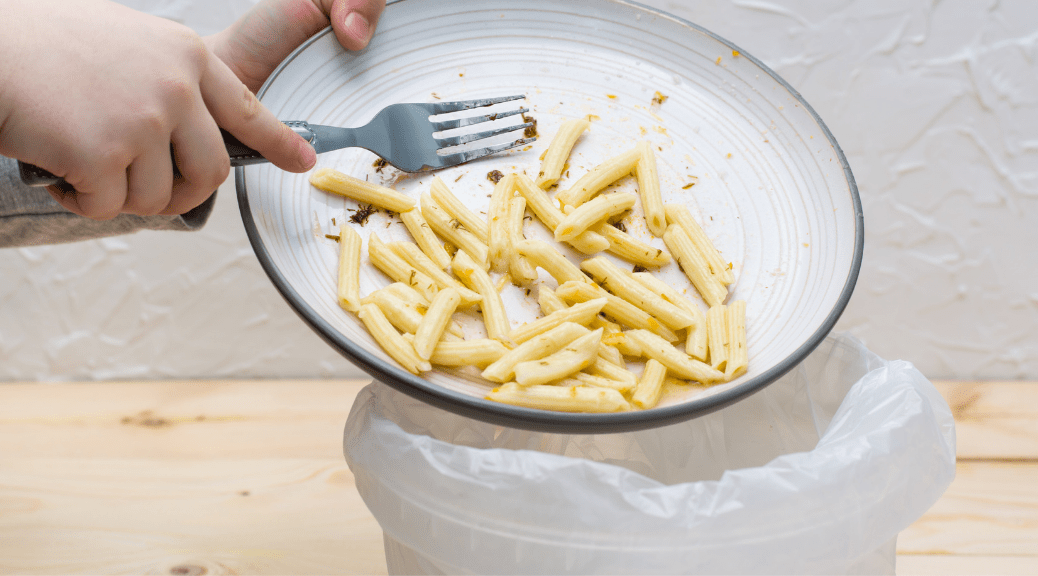
For a moment, let’s not ask why the food was wasted in the first place. Or how many hungry mouths the wasted food could have fed. Let’s only be bothered about what happens when the wasted food is thrown away.
Well, it breaks down in landfill, together with other organic materials, and becomes the main contributor to the generation of methane – a powerful greenhouse gas nearly 25 times stronger than carbon dioxide at trapping heat in the atmosphere. This process of global warming is not invisible or abstract.

Further, the breakdown of food waste in landfills releases nutrients, which can migrate out of the waste and into the surrounding environment. Too many nutrients can pollute our groundwater and waterways.

Next, let’s consider the food production lifecycle, or supply chain. Soils, water, natural resources and energy are used to plant, harvest, transport, process, package, distribute and market our food products. When food is wasted, all of these resources are lost—but not without contributing to greenhouse gas emissions. This includes direct emissions from agriculture and those attributed to energy, transport, food production, processing and distribution. In particular, consider the cost of transporting food from farm to processor, wholesaler to restaurant, store to households – and finally, from garbage bins to landfills.

The Numbers Are Innocent – We Are Not

The numbers in the public archive on how much food is wasted globally on an annual basis are capable of inducing anything from a grimace to a jaw drop, to sarcasm even. Many of us may even find the scenario surreal, especially when the numbers are presented in relative terms – for example, every year, consumers in rich countries waste almost as much food (222 million tonnes) as the entire net food production of sub-Saharan Africa (230 million tonnes).

That said, numbers ought to make one wary too, for these are inherently distant, clinical, unreal even. One may be lulled into a false sense of security or into a convenient space of feeling oneself to be ‘too small to make a difference’.

Indeed, what about those oft-felt sentiments of ‘what am I but a speck of sand in this vastness’ and ‘what difference in the universe’s name will my standalone action make?’ Or, if one wants to appear particular, put it on the government. It’s their responsibility, right? Well, not quite so. For one, the government does not make our shopping list. Secondly, we do tend to throw a lot of good food that is still edible because of overstocking, cosmetic blemishes, misinformation, or plain ignorance if not indifference.

Gobbling down the Numbers

  • The irrigation water used globally to grow food that is wasted would be enough for the domestic needs (at 200 litres per person per day) of 9 billion people – the number expected on the planet by 2050.
  • If we planted trees on land currently used to grow unnecessary surplus and wasted food, this would offset a theoretical maximum of 100 per cent of greenhouse gas emissions from fossil fuel combustion.
  • Between 2 and 500 times more carbon dioxide can be saved by feeding food waste to pigs rather than sending it for anaerobic digestion (the UK governments preferred option). But under European laws feeding food waste to pigs is banned. In Japan, South Korea and Taiwan, by contrast, it is mandatory to feed some food waste to pigs.
  • The UK, US and Europe have nearly twice as much food as is required by the nutritional needs of their populations. Up to half the entire food supply is wasted between the farm and the fork.
  • All the world’s nearly one billion hungry people could be lifted out of malnourishment on less than a quarter of the food that is wasted in the US, UK and Europe.
  • An estimated 20 per cent to 40 per cent of fruits and vegetables in the UK are rejected even before they reach the shops – mostly because they do not match the supermarkets excessively strict cosmetic standards.
  • The bread and other cereal products thrown away in UK households alone would have been enough to lift 30 million of the worlds hungry people out of malnourishment

All points are from Tristram Stuarts Waste: Uncovering the Global Food Scandal (Penguin, 2009)

Write a list

Check the ingredients in the cupboards and the refrigerator prior to writing the shopping list. This way we could avoid buying extra stuff. How often does the homemaker feel surprise/regret on noticing that the earlier packet of besan/ flour is almost crossing the ‘use by’ dates?
Also, check perishable items at home before buying again. Don’t let a spotty soft banana, bruised apple, or dry bread go into the bin.

The Action Begins at Home
Food waste can be minimized at home, in retail stores, and in restaurants. For example, grocery chains can mitigate wasting food by sorting out the spoiled food by separating it for organic usage. Furthermore, packaging foods in smaller quantities can eliminate or at least shorten food waste.

As consumers, when we begin to understand that food waste is something within our control—and not as intimidating as acting against the ozone layer depletion—we can simply begin by disciplining aspects of our purchase, consumption and disposal habits. To start with, why not simply buy less? Buying in smaller quantities means that we will most likely at least finish eating the food and throw out less.  It follows that the process of packaging food differently can save money and waste not only for the consumer but the producer as well, and even more importantly, this process is environment-friendly. For the producer, the gains accrue in terms of less transporting and storage costs. Studies (including Global Food Losses and Food Waste – FAO, 2011) have shown that in developing countries food waste and losses occur mainly at early stages of the food value chain and can be traced back to financial, managerial and technical constraints in harvesting techniques as well as storage and cooling facilities. Thus, a strengthening of the supply chain through support to farmers and investments in infrastructure and transportation could help to reduce the amount of food loss and waste.

In medium- and high-income countries, on the other hand, food is wasted and lost mainly at later stages in the supply chain. The behaviour of consumers plays a huge part in industrialized countries. The website of United Nations Environment Programme (UNEP) quotes a recent study that has revealed that worldwide about one-third of all food produced gets lost or wasted in the food production and consumption systems – and that almost half of this quantity is the result of retailers and consumers in industrialized regions discarding food that is fit for consumption. Raising awareness among industries, retailers and consumers as well as finding beneficial uses for food that is presently thrown away are useful measures to decrease the amount of losses and waste.

Write a kitchen diary
Maintain a kitchen diary that shows how much food moves uneaten into the garbage bin.

Beauty fixation
Supermarkets are found to be responsible for huge amounts of food wastages due to their emphasis on cosmetic appearance of food products. Their criterion for rejecting products from suppliers on grounds of appearance of produce promotes chemical-intensive farming among farmers, which has adverse environmental and health effects in addition to being financially unattractive.

Rotate
Another good idea – especially if you stock processed food in big refrigerators – is to rotate the stuff once in a while to bring out the perishable packets to the front while placing the recent food towards the back.

Quick action plan: easier than i thought

A) Buy what i need
  •  Plan
  •  Make a list
  •  Be realistic about how much I need
  •  Resist temptation to overbuy something that’s on sale
B) Eat what i buy
  •  Use what spoils first
  •  Not to prepare too much
  •  Eat leftovers
C) Keep them fresh
  •  Store foods to keep them fresh as long as possible
D) Not to toss it before it spoils
  •  Be aware of food-expiration dates
  •  Understand shelf-life limits
  •  Use preservation methods: freezing, canning, drying, pickling, etc.
E) Not to think trash
  •  Share extra food before it spoils
  •  Compost inedible food

The consumption value chain

However, the rest of us can hardly afford to feel sanctimonious or be complacent by putting all blame and responsibility at the door of the rich countries. As emerging economies like India come up the value chain, it may be safely assumed that their increasingly larger numbers of prosperous middle classes and the rich/super-rich will start showing behaviour similar to their counterparts in industrialized countries.

Statistics on how many tonnes of quality food are wasted in restaurants, make-shift food joints, social gatherings and households remind us that food waste is happening all around us. In 2011, India’s Food Minister KV Thomas had said that around 100,000 weddings and social events were held in the country every day. He remarked that food wasted each day at weddings and family functions in Mumbai alone would be enough to feed the city’s vast slum population.

Prevent storage losses if any

When grains and pulses are purchased in large quantities, keep a tablet of insect/weevil repellents in the container. Products such as sooji and dalia when stored for a longer period can be roasted lightly to prevent weevil infestation.

What is a food bank?

A food bank is a nonprofit distribution enterprise that serves the community through institutional feeding programmes. This acquires donated food in the form of grains, pulses, oil, spices, etc., sourced on the basis of community food habits and makes these available through a network of community-owned agencies. These institutional feeding programmes include school feeding programmes, after-school programmes, shelter homes, old-age homes and substance abuse clinics.

Keep an eye on the serving portion

Be wary of the quantity of food that goes onto the plate. Cultivate the habit of refilling only when the plate is cleared. Do not overestimate and tend to be generous what the guests and children can have at a time. By this, one can discourage children form overeating too.

Make compost

As much as 30 per cent of household waste can be diverted away from garbage when composting is done at home. Table scraps, fruit and vegetable scraps, crushed egg shells, tea leaves, stalks and coffee grounds are some of the materials that are good for making compost.
It is not difficult to make compost at homes. All that is required is a large drum or tin to hold the soil and the scraps together for decomposition to happen. You may take help from garden associations or look for information on the Internet.

Where is the linkage?

It is true that people cannot be forced to cut back on wasteful displays of food and spending, but if there is a way to get them thinking about the enormous amounts of food that get wasted, it will at least be a beginning. Concurrent with that must be the facilitation of system linkages including food waste collection services and observance of best practices in diverting the waste food to its best use – for instance, whether it will go towards feeding the hungry or be used as animal feed or nutrient-rich compost. There are also options to convert fats, oils, and grease (FOG) to biodiesel, replacing fossil fuel use. So far, efforts to pick up the leftovers and distribute them to the poor have not taken off in India due to lack of infrastructure. Many of us would think that there would be NGOs to provide a linkage between giver and needy ones. In India, though, practically no such NGO exists to pick up the surplus at all times.

So, what happened to Delhi Food Bank, launched as part of the India Food Banking Network (IFBN) with much fanfare in 2012 by Delhi Chief Minister Sheila Dikshit and Sam Pitorda, Advisor to the Prime Minister on Public Information Infrastructure and Innovations? Delhi was to be the first city in the country to set up food banks through which excess cooked and uncooked food would be collected from wedding receptions, parties, social functions, hotels and individual donors for distribution among hungry and poor people.

The scheme was modelled on the lines of food banks in Chicago in the United States where community groups ran them to feed hungry people by collecting excess food from hotels and wedding receptions, and through voluntary donations from individuals as well as various organizations. In fact, Delhi Food Bank was planned to be the prototype that IFBN would seek to modify, strengthen and replicate at a national level, so that by 2020 every district of India had access to a food bank.

We were informed that the infrastructure for collecting and distributing the food was being developed in cooperation with Delhi Government, DLF Foundation, Reliance Foundation and Cargill India. Donors of food only needed to send an sms to 58888, following which IFBN volunteers would collect the food items, while those who needed food could also send sms to same number.
As of today, Delhi Food Bank collects only non-perishables, not cooked food. The latter requires infrastructure like refrigeration, especially when the calls are received past the meal times. Furthermore, organizations are looking for regular and sustainable supply of excess food.

For the family pet

Stop buying processed dog food. It is a common practice among households to prepare the exact amount of chapattis/rice. Use the surplus from your chapattis/rice along with meat/eggs/milk/vegetables to give your pet a wholesome meal rather than the dry processed meal. It does not take much time to prepare a simple meal. Moreover; the packaged meal is not bombarded with extra goodness as it purports to be and saves money too.

Expect the waste 

Whenever we are planning a wedding, a party, or some such similar gathering, some amount of surplus food is inevitable. Suppose we plan ahead by identifying the needy in nearby areas for distributing the excess food? Would not that be a practical, engaging and effective way of participating in the food drive?

Responding to queries from Lakshmi Bhavani of Consumer Voice, Kuldip Nar, Managing Director, Aidmatrix Foundation (IFBN member responsible for operationalizing Delhi Food Bank), sent in his comments via email:
‘Non-perishable food waste is the focus of the Delhi Food Bank initiative and we are presently feeding 10,000 meals daily with the salvaging and donation of food, which helps those who need it the most.
For perishable food including agriculture produce or cooked food, there can be a system that can salvage and guarantee the minimum food amounts for a nutritional food plate. This, in turn, will help provide the guaranteed feeding that is required on a daily basis as a process.’

Waste as opportunity

Waste represents both a problem and an opportunity. At current levels, production, consumption and waste disposal patterns are not in sync with sustainable living. To drastically reduce waste generation, we need to make products with fewer natural resources and also break the link between economic growth and waste growth. Most products should be reused or their materials recycled.
The benefit of being at the minimal level of the waste hierarchy will not just be environmental. Waste is a drag on the economy. We can save money by making products with fewer natural resources, and we can reduce the costs of waste treatment and disposal.


Related

Raw fruit and vegetables beneficial for mental health

Raw fruit and vegetables beneficial for mental health

Raw fruit and vegetables beneficial for mental health

Raw fruits and vegetables may be better for your mental health than cooked ones, according to a new study from the University of Otago in New Zealand. The study, published in Frontiers in Psychology, found that people who ate more uncooked produce had lower levels of symptoms related to depression and other mental illnesses, compared to those who ate more cooked, canned, or processed fruit and vegetables.

The study was only able to show an association between raw produce and better mental health, not a cause-and-effect relationship. But the researchers say the link could have to do with the fact that many fruits and vegetables have more nutrients in their natural state—and that those nutrients may have a positive impact on mood and brain chemistry. They studied 400 people from New Zealand and the US aged 18 to 25 as this age group typically had the lowest fruit and vegetable consumption and were at high risk of mental health disorders.

Lead author and psychology professor Dr Tamlin Conner says public-health campaigns have historically focused on quantity of fruit and vegetables but the researchers suggest it is important to consider the way produce is prepared.

The top 10 raw foods related to better mental health are: carrots, bananas, apples, dark leafy greens such as spinach, grapefruit, lettuce, citrus fruits, fresh berries, cucumber, and kiwifruit.

“This research is increasingly vital as lifestyle approaches such as dietary change may provide an accessible, safe, and adjuvant approach to improving mental health,” Dr Conner says.

The researchers say their findings are important because most current health guidelines do not distinguish between raw and cooked or canned fruits and vegetables. “If our patterns are confirmed in intervention studies, it would suggest that heath policies could focus on promoting the consumption of raw and unprocessed produce for optimal well-being,” they wrote in their paper.

Related

Enquire Now

    X
    Enquire Now