Choose the best rice bran oil for a healthy life!

Choose the best rice bran oil for a healthy life!

Choose the best rice bran oil for a healthy life!

Wanting to live a healthy life is a decision to make. It’s no more a choice. Hence, the below compilation that takes you through the many nuances of choosing the best rice bran oil holds good for everyone. Here, we are going to talk about rice bran oil, a cooking oil enriched with oryzanol (a natural antioxidant). Among the many health benefits, the oil is also helpful in reducing hypertension, which is a major risk factor for cardiovascular disease, the deadliest non-communicable disease. As they say a stich in time saves nine, why not to know about the best rice bran oil that will satiate your hunger pangs and keep you fit as well. Here’ a complete guide.

A Consumer Voice Report

In this month’s comparative test study, our team has singled out seven popular brands of rice bran oils and tested the brands at an NABL accredited lab to rank the oils as per their performances. Rice bran oil is preferred primarily for its rich oryzanol, vitamin E, ideal fatty acid balance, antioxidant capacity, and cholesterol lowering abilities. Moreover, the oil is very light and the flavor is delicate. Foods cooked with rice bran oil absorb up to 15-20 percent less oil! Less oil absorbed results in reduced calories, better, lighter tasting food and enhanced flavor and palatability. Less oil absorbed also makes it more economical. In our comparative test of seven regular selling brands, each brand was evaluated based on parameters including oryzanol, saponification value, unsaponifiable matter, MUFA, PUFA, saturated fatty acid, moisture, refractive index, specific gravity, iodine value, peroxide value, flash point, argemone oil, etc. among others.

How we test

The comparative testing was done by following specified national standards FSS regulations. However, a few parameters were taken from other relevant national standard IS: 3448-2014 rice bran oil specifications. And as usual, the testing was conducted at an NABL accredited and FSSAI approved laboratory following the standard test procedures. Each brand was purchased from the retail market, masked and coded before given to the lab for testing.

Brands tested

So, here are the test results and rankings. The table below will show you which brand secured the highest and lowest positions.

Rank Score Brand Quantity,gm MRP, Rs Best Before, Months Manufacturer/ marketer
1 92 Gemini 1L (910 gm) 215 9 Cargill India Pvt Ltd
2 90 Good Life 1L (910 gm) 185 9 Reliance Retail Limited
2 90 Freedom 1L (910 gm) 185 9

Gemini Edible & Fats India Pvt.

Ltd.

3 87 Patanjali 1L (910 gm) 175 9 Patanjali Ayurved Limited
4 86 Emami 1L (910 gm) 180 8 Emami Agrotech Limited
4 86 Fortune 1L (910 gm) 205 12 Adani Wilmar Ltd.
5 84 Ricela 1L (910 gm) 215 9 A.P. Organics Ltd.

CV Recommendations

Top Performer

Gemini

Value for Money Brand

Good Life

Why Rice Bran Oil

Rice bran oil is a naturally occurring source of oryzanol, a nutrient is known to have anti-oxidant, anti-carcinogenic, anti-ulcer, anti-stress, lipotropic, hypothalamic, endocrinological effects and athletic benefits, it also treats nerve imbalance, disorders of menopause and benefits to the skin similar to that of vitamin E. The oil has the best balance of saturated, monounsaturated and polyunsaturated fats as recommended by the American Heart Association and the World Health Organization. It’s the oil of choice for improving serum cholesterol levels and preventing cardiovascular diseases.

Key findings

  • Based on overall score, brand Gemini performed on top followed by Good Life and
  • Good Life is the Value for Money brand
  • Good Life had the highest percentage of oryzanol followed by Gemini and
  • MUFA was found highest in Freedom and lowest in Gemini.
  • PUFA was found highest in Gemini and lowest in Freedom.
  • All brands have been found free from argemone/adulteration of other oils
  • Heavy metals and Aflatoxins have not been detected in any brand
  • All the brands have met FSSAI standard regulation

Comparative performance (scores) of physically refined rice bran oils

Brand

Parameters

Wt.

%

Gemini

Good Life

Freedom

Patanjali

Emami

Fortune

Ricela

Moisture

5

4.1

3.5

5.0

4.4

5.0

3.5

3.5

Refractive index

5

4.50

4.2

4.35

4.20

4.55

4.2

4.20

Specific Gravity

5

3.60

3.02

3.96

2.56

3.04

2.98

2.50

Iodine value

7

6.12

5.52

6.16

5.55

4.81

4.92

5.61

Peroxide value

5

4.50

4.65

4.75

4.85

5.00

5.00

4.85

Saponification value

7

6.32

6.75

6.62

6.76

5.10

5.40

5.94

Unsaponifiable matter

7

6.44

7.00

6.16

5.32

5.60

5.04

4.76

Flash Point

3

3.00

2.70

2.76

2.82

2.70

2.82

2.88

Acid value

4

4.00

3.72

3.44

3.72

3.72

3.72

3.72

Argemone oil

2

2

2

2

2

2

2

2

Oryzanol

12

11.28

12.00

9.36

10.32

9.84

10.80

9.12

MUFA

5

4.10

4.18

4.99

4.12

4.17

4.12

4.13

PUFA

5

4.95

4.32

3.11

4.25

4.26

4.60

4.40

Saturated Fatty Acid

4

2.83

2.53

3.53

2.32

2.45

2.60

2.48

Trans Fatty Acid

2

2

2

2

2

2

2

2

Heavy Metal

(Pb,As,Cd,Hg)

8

8

8

8

8

8

8

8

Aflatoxin total

4

4

4

4

4

4

4

4

Organoleptic tests

3

3

3

3

3

3

3

3

TEST PARAMETERS

Oryzanol

Oryzanol is a natural antioxidant and is known to reduce the absorption and deposition of LDL and VLDL (bad) serum cholesterol. Oryzanol may help in reducing hypertension. It may also improve bone-mineral density and liver function and gives relief from gastrointestinal distress. It shall not be less than one percent.

Oryzanol has been found well above the minimum requirement in all tested brands. Good Life had the highest percentage of oryzanol followed by Gemini and Fortune.

Unsaponifiable matter

Unsaponifiable matter includes substances those are frequently found dissolved in fatty acids and drying oils. Unsaponifiable matter should not be more than 3.5 per cent for chemically refined oil and 4.5 per cent for physically refined oil. All the brands have been found within the specified limit. Good Life scored highest in this parameter followed by Gemini and Freedom.

Saponification value

The saponification value helps to detect the presence of other oils/fats. Saponification value of rice bran oil should be between 180 and 195. All the brands have been found within the specified limit. Patanjali scored highest in this parameter followed by Good Life and Freedom.

Iodine Value

The iodine value is a measure of unsaturated fats. It is a quality parameter for edible oil. Iodine value of rice bran oil shall be between 90-105. All the brands have been found within the specified limit. Freedom scored highest in this parameter followed by Gemini and Ricela.

MUFA (Monounsaturated fatty acids)

MUFAs are a healthy type of fat. MUFA and PUFA as per the dietary recommendation helps in biochemical processes associated with nerves, brains, heart, digestion, and cell maintenance. Sunflower oil contains as much as 85 per cent MUFA. MUFAs lower the level of bad cholesterol (LDL) in the blood and raise the good cholesterol (HDL). MUFA was highest in Freedom and lowest in Gemini.

PUFA (Polyunsaturated fatty acids)

Polyunsaturated fats can help reduce bad cholesterol levels in your blood which can lower your risk of heart disease and stroke. Sources of PUFA include walnuts, sunflower seeds, sesame seeds, peanut butter and peanuts, flaxseed, poppy seed and oil of avocado, olive and safflower. PUFA has been found highest in Gemini and lowest in Freedom.

Peroxide value

Detection of peroxide gives the initial evidence of rancidity in unsaturated fats and oils. Concentration of peroxide in an oil or fat is useful for assessing the extent to which spoilage has advanced. As per the FSS Regulation it shall be up to 10 Meg/kg. All the brands have been found within the specified limit.

Specific Gravity at 30°C/30°C

Specific gravity is the ratio of the density of a material to the density of water. Specific gravity of edible oils should be less than 1.00 as they are immiscible liquids, which means they are insoluble in water. As per the Indian Standard, specific gravity of rice bran oil shall be in the range of 0.910–0.920.

Moisture and volatile matter

Moisture is the amount of water present in edible oils. The amount of water should be lower than 0.10 per cent by weight which is standard permissible limit. All the brands have been found within the specified limit. Freedom and Emami scored highest in this parameter.

Refractive index at 40OC

Refractive index of oil is used to detect rancidity in edible oil. It shall be between 1.4600-1.4700 for rice bran oils. All the brands have been found within the specified limit. Emami and Gemini scored highest in this parameter.

Flash Point, pensky-martens (closed)

At the flash point, the vapour may cease to burn when the source of ignition is removed. It should not be less than 250 degrees celsius in case of rice bran oil. The higher the flash point of rice bran oil, the lower is the risk of ignition in the oil. Flash point of all the brands was above 250 degree C thus meeting the requirement of standard. Gemini scored highest in this parameter.

Acid value

It is a relative measure of rancidity as free fatty acids are normally formed during decomposition of oil. It shall be not more than 0.5. All the brands have been found within the specified limit. Gemini scored highest in this parameter.

Test for argemone oil

The oil shall be free from argemone oil. Consumption of this oil can lead to health hazards. Argemone oil was not detected in any brand.

Heavy metals

Edible oils are generally low in trace element concentrations, however, metals such as arsenic (As), lead (Pb), cadmium (Cd) and mercury total can be found and are known for their toxicities which affect the health of consumers. All the brands passed these tests.

Aflatoxin

The total aflatoxin shall be maximum 15 µg/kg.

The crops can be contaminated by aflatoxins mainly due to the insufficiency of cultivation or storage techniques. The possible presence of aflatoxins in edible oil is inevitable which can cause some health problems for consumers. All the brands have been found within the specified limit.

Fatty acid profile

The proportion of different types of fatty acids varies from one type of oil to another. An average person should limit the saturated-fat intake. Eating a lot of saturated fat increases the level of bad cholesterol (low density lipoproteins, or LDL) in the blood. And it is generally acknowledged that high levels of LDL place one at greater risk of heart disease. Saturated and trans fats are unhealthy ‘bad’ fats that can increase one’s cholesterol, harden the arteries and eventually increase one’s risk for heart disease. Approximately 20 per cent to 35 per cent of one’s total calories should come from ‘good’ fats, like PUFAs and MUFAs.

Saturated Fat

Eating foods that contain saturated fats raises the level of cholesterol in your blood. Saturated fats raise HDL cholesterol and change LDL from small, dense (bad) to large LDL, which is mostly benign. Saturated fat has been found highest in Patanjali and lowest in Freedom.

Trans Fat

Rice bran oil is known for trans fat free oil. Trans fat was not detected in any brand.

Organoleptic tests

All brands have golden yellow colour, acceptable taste and flavor.

Packaging

Rice bran oil shall be packed in suitable well closed tin or plastic containers of food grade. The packing material should not affect the properties of the oil and at the same time maintains the shelf life of the product. All the brands of rice bran oils except Patanjali were packed in poly pack of 1 liter capacity. Patanjali had plastic bottle packing.

Marking

The containers shall be marked with the following information:

  1. Name, trade name, type and grade of the oil
  2. Name and business particulars of the manufacturer
  3. Net quantity of the contents in the container
  4. Batch number
  5. Month and year of packing/manufacture
  6. Best before
  7. Free from argemone oil
  8. Nutritional information
  9. MRP
  10. Customer care details

All the brands were marked with above information.

Net quantity

Net weight should be as declared on packaging. However as per legal metrology (Packaged commodity) rule, tolerance allowed is 1.5 per cent. All the brands have been found above or within tolerance 1000 ml.

Conclusion

The seven tested rice bran oil brands are safe in terms of toxic metal and aflatoxin. They have been found free from argemone oil and adulteration of other oils. Oryzanol was found well above the specified limit which is a natural antioxidant and is known to reduce the absorption and deposition of low-density lipoprotein (LDL). In a nutshell, rice bran oil is considered to be heart- friendly oil that might help in lowering cholesterol because it contains the right amount of oryzanol. All the brands passed the national standard requirement. In overall brand Gemini performed on top followed by Good Life and Freedom.

All brands have mentioned its shelf life between 8-12 months. Consumers must keep this in mind while buying (particularly large Pack above 5 Liter capacities), must ensure that its shelf life is adequate that it would remain stable within the consumption period.

Better to Know

a.     Shelf life

All the tested brands had a shelf life of 8-12 months. Consumers buying above 5-liter capacities

must ensure that the product shelf life is adequate for the consumption period.

b.   Good and bad fats in edible oils

Monounsaturated Polyunsaturated Saturated Trans
Good fat Good fat Bad fat Bad Fat
Reduces bad cholesterol (LDL) levels and increases good cholesterol (HDL) levels Reduces bad cholesterol (LDL) levels Increases overall cholesterol levels, especially bad cholesterol Inc reases the bad cholesterol (LDL) level and decreases good cholesterol (HDL) levels
Found in nuts and seeds, avocados, olive oil, and canola oil

Found in fatty fish such as salmon,

mackerel, trout and sardines, and also in corn, safflower, sunflower and

soybean oils

Found in animal-based foods such as meat, poultry and eggs, and also in butter, cream and other dairy products Also found in plant-based products such as coconut, coconut oil, palm oil, and palm kernel oil, and cocoa butter

Found in hydrogenated oil products such as vanaspati, margarine and vegetable shortenings used

in packaged snack foods such as cookies, crackers, and chips,

and fried foods.

Related

Aflatoxin: A toxin you should mind

Aflatoxin: A toxin you should mind

Aflatoxin: A toxin you should mind

In 2019, a national survey by the Food Safety and Standards Authority of India (FSSAI) detected Aflatoxin M1 (AFM1) in milk samples. It was found that the highest rates of AFM1 contamination were present in Delhi, Tamil Nadu, and Kerala. Milk is a staple commodity for all sections of society in India, and detection of Aflatoxin M1 in milk is a grave concern. Considering this, in 2020, FSSAI released Gazette Norms on Contaminants, Toxins Including Aflatoxin M1 and fixed the limit of Aflatoxin M1 at 0.5 µg/kg for milk (liquid), 6 µg/kg for skimmed milk powder and 4 µg/kg for whole milk powder. But what is Aflatoxin, and why is it so dangerous? Let’s try to understand here.

Richa Pande

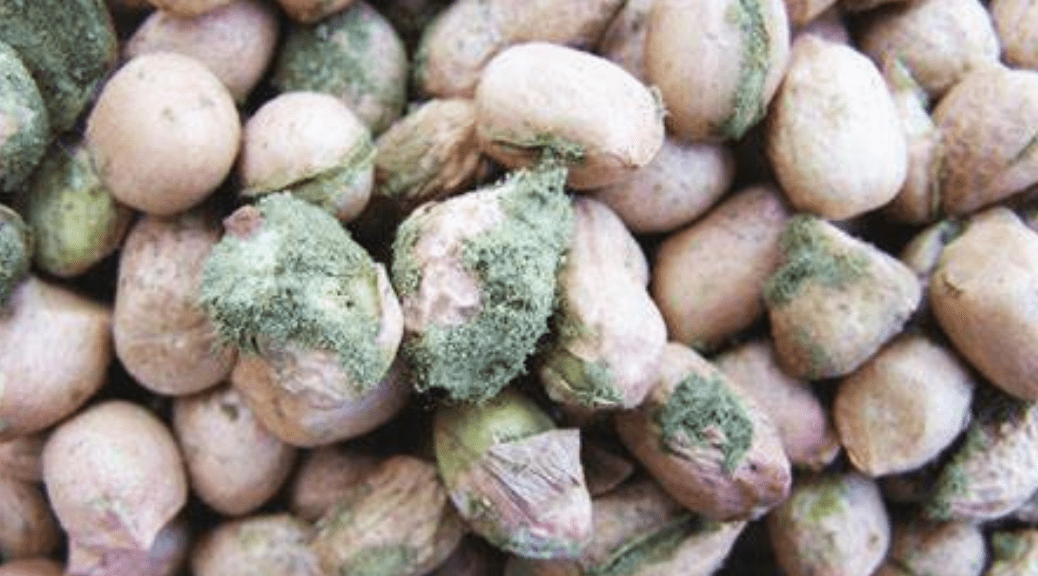
Aflatoxins are mycotoxins, i.e., toxins produced by certain fungi found in agricultural crops like maize and groundnuts. Some other food products commonly contaminated by aflatoxin are tree nuts such as pistachio and brazil nuts, cottonseed, copra, rice, maize, wheat, sorghum, pulses, figs, etc. oilseed cakes. Unrefined vegetable oil made from contaminated seeds or nuts usually contains aflatoxin. However, aflatoxin is destroyed in the refining process so that refined oils are safe.

The reason why aflatoxins are considered so harmful to human health is that they are carcinogenic. Their consumption is also associated with complications like hepatotoxicity, immunotoxicity, and teratogenicity. It can also lead to growth failure in children. Their consumption can cause stunting in children. Some studies often suggest that their consumption can lead to congenital disabilities in children. Aflatoxins can also decrease resistance to infectious agents, including grave diseases like tuberculosis & HIV. Large doses of aflatoxins can also lead to acute poisoning that can be life-threatening

Types of Aflatoxins

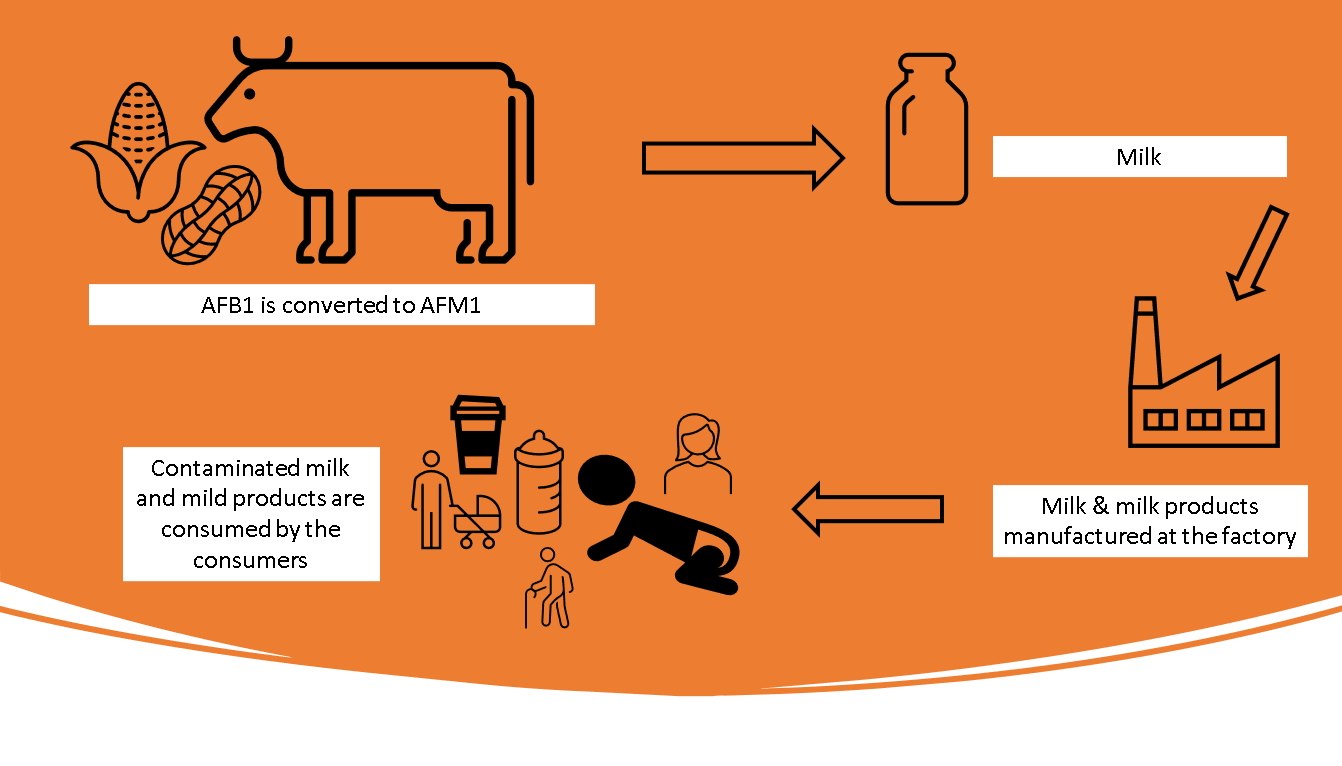
According to the World Health Organization (WHO), several types of aflatoxin (14 or more) occur in nature, but out of these four– Aflatoxins B1, B2, G1 and G2 are hazardous to humans and animals as they have been found in major food crops. Also, most human exposure comes from contaminated nuts, grains and products derived from them. Aflatoxin M1 (AFM1) discussed above, is a product of Aflatoxin B1 (AFB1) metabolism. If the cattle feed is laced with this Aflatoxin B1, it could be converted in to Aflatoxin M1 and could probably be detected in the milk. It’s surprising to note that humans may also be exposed to this aflatoxin through breast milk, especially in areas where the poorest quality grain is used for animal feed.


Food Stuff

What can you do as a consumer to prevent and reduce the consumption of foods contaminated with Aflatoxin?

  • Carefully inspect whole grains and nuts. If you see mould, discard the food. Note that the moulds do not just grow on the surface but penetrate deep into the food. It might be visible only on the surface, but the whole food product could have been contaminated.
  • Buy nuts as fresh as possible.  Buy reputable nuts and nut butter brands – aflatoxin moulds are not entirely killed by processing or roasting, so it is possible that they can be present in cashew butter, peanut butter, etc. Check their packaging methods.
  • Store nuts, including groundnuts in refrigerators at home. Storing nuts at a low temperature (refrigeration) have been found to have reduced aflatoxin levels for 3-6 months.
  • Assure that foods are stored adequately. Moisture promotes the growth of mould in foods.

Ensure that you have a diverse diet that is rich in vitamins, minerals and antioxidants.

Related

A2 Milk: Why you should know more about it?

A2 Milk: Why you should know more about it?

A2 Milk: Why you should know more about it?

You might have heard about A2 milk and the claims that it is better than the regular milk (A1 milk) commonly available in the market. Consumer perceives such milk as better option than regular milk. Even A2 ghee too is perceived as healthier. But, what’s the reality? Here’s a fact-check read on A2 milk.

Richa Pande

Take the example of A2 ghee; it is costlier. However, is it healthier too? Interestingly, any type of ghee made either from A2 or A1 milk are just fats. Any ghee does not contain protein, and it is mainly a protein BCM-7 present in regular milk that is under scrutiny for having some adverse health impacts. So, it is essential to be mindful when you are buying A2 milk products.

Behind the A2 milk controversy

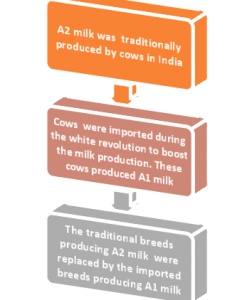
The A2 milk controversy has its roots in the milk revolution which was launched in the 1970s in India. The milk revolution, also known as ‘operation flood’ and ‘white revolution’, was an Indian food security program. It was a move to boost the milk production to meet the nutritional requirements of the nation. The program was a huge success and is still considered to be one of the most accomplished food security programs in India. The program emphasized on the import of cattle breeds for higher yield. This eventually led to the side-lining of the Indian breeds.

Traditionally, the cows in the African and Asian continents produced A2 milk. But the switch from A2 to A1 cows to boost the production let to the milk consumption switch in India. However, on the other hand, many developed and developing nations including China, Australia, USA & UK have imported the Indian and African breeds and are switching to A2 milk consumption.

Recently, it has been found that the consumption of A1 milk (now commonly consumed in India) could be linked with neurological disorders heart diseases, diabetes. Also, some individuals cannot digest this type of milk and its regular intake can lead to bloating and irritable bowel syndrome. This is harmful and can lead to many intestinal disorders. On the other hand, A2 milk does not have beta-casein 1 and thus it’s consumption does not result in the disorders which can be caused by the consumption of A1 milk.

A2 Milk

How is the composition of A1 milk different from A2 milk?

Let us begin by understanding that milk has beta casein protein in it. There are two types of variations of this protein i.e. A1 beta-casein and A2 beta-casein. The milk nomenclature is as per beta casein variant present in the milk. The difference is because of the change in the position of an amino acid. The A1 variant has histidine while A2 casein has proline.

Potential harmful impacts of consuming A1 milk 

  • Consumption of BCM-7 has been interlinked with causing type 1 diabetes, heart diseases infant death, autism, and digestive problems
  • Some research papers also interlink its consumption with adverse impacts on immune system  

Note that BCM-7’s absorption in its intact form into our bloodstream is not understood well. Many research studies couldn’t detect BCM-7 in the blood of healthy adults who drink cow’s milk, but some studies indicate that BCM-7 can be present in the bloodstream of infants who consumed cow milk. This predisposes the infants to the risk of developing type 1 diabetes in infants

The other side of the story

Although there are many studies which link consumption of A1 milk with some diseases, some experts argue that many Europeans and Americans have been consuming it for generations and it is safe for consumption. A systematic review by the European Food Safety Authority (EFSA) declares that no cause-and-effect relationship can be established between consumption of BCM- 7 (present in A1 milk) and the occurrence of acclaimed diseases. It is important to note that the conclusions of a systematic review are more reliable than a single study. The same article also quotes a NBAGR [ National Bureau of Genetic Resources] paper that, there are very few cattle with the A1 genes in India which are used for breeding and milking. As per this paper, the A1 milk and A2 milk are mixed when they are procured from small farmers. Even if the claims related to the A1 milk are true, the impact of A1 milk after being mixed with A2 milk is subdued and can cause little harm to human health.

Prices of the A2 milk products in India

   Cost Per Litre
A1 Milk ₹ 56- 90 per litre
A2 Milk ₹75- 110 per litre
A1 Ghee ₹ 450- 650 per litre
A2 Ghee ₹ 1500- 2300 per litre

How to assess if you are intolerant to A1 milk?  

As mentioned before, A1 milk can not only cause comorbidities like diabetes, heart diseases etc but can also impact your gut health. You can follow these steps to understand whether you are intolerant to it:

  • Carefully observe the changes you experience after consuming milk and milk products that you consume usually. Do you feel bloated? Does it ache? Does milk impact your motion? If yes you could be either intolerant to the lactose or beta-caesin1. If you are lactose intolerant, you can consume curd instead of milk as fermentation reduces the lactose levels in the milk.
  • You can buy lactose free milk from the market to check if the problem is because of the A1beta-casein or lactose in the milk. If the intolerance persists even after consuming the lactose free milk, it could be because of the A1 beta-casein. As many Indians rely on dairy products for protein intake, milk cannot be eliminated from the diet. These consumer tips might help someone who is intolerant to beta-casein1 in milk-
  • Switch to pasteurized A2 milk if it is available in your locality
  • Procure milk from local vendors who raise ‘desi cattle.’ However, please note that food safety can be compromised in procuring milk from local vendors.
  • You can buy soymilk as an alternative to the milk products.

FSSAI regulation on A1 and A2 Milk 

  • Standards of milk as specified in Food Safety and Standards (Food Product Standards and Food Additives) Regulations, 2011 do not mention or recognise any differentiation of milk based on A1 and A2 types.
  • Scientific panels on milk and milk products have discussed the regarding adverse/beneficial effects of A1 and A2 types of milk. They couldn’t arrive at a conclusion due to lack of clinical data and risk assessment.

All Editorials

No Results Found

The page you requested could not be found. Try refining your search, or use the navigation above to locate the post.

Antacids: Not healthy over the long term

Antacids: Not healthy over the long term

Antacids: Not healthy over the long term

There are these advertisements that feature individuals gulping down food in excessive amounts, leading to indigestion (also known as heartburn and acidity). This discomfort is often shown to be eased by the branded antacid, and invariably has a funny and loud burp as an accompaniment. The portrayal is funny but doing this – that is, resorting to the antacid – on a long-term basis can lead to serious health concerns. Such advertisements trick the consumers into believing that one can stuff their stomach with large amounts of food and subsequently ease the discomfort by popping an antacid. And trick it certainly is, for too much consumption of antacids is unhealthy. Find out why.

It is important to know that apart from gulping down an antacid to ease the discomfort, one must understand the cause of it and address it. One’s long-term health may be determined by this. Taking antacids doesn’t actually solve the problem; it merely affords immediate relief.

Heartburn happens when acidic contents of the stomach reflux back into the oesophagus (long, muscular tube that connects your mouth to your stomach) and inflame its sensitive lining. This leads to a burning sensation in the oesophagus. Antacids contain alkaline chemicals that neutralize the action of excessive acid produced in the stomach.

Excessive Production of Acid

Our stomach naturally produces acid to properly digest the food we eat. The production of this acid is dependent on the type of food and the quantity in which we eat it. Unhealthy lifestyle habits – such as an imbalanced diet and low physical activity – may contribute to an imbalance in the production of this acid.

Foods That Can Cause Heartburn

  • Products that contain caffeine
  • Alcohol
  • Sodas and carbonated beverages
  • Table salt/Salty foods
  • High-fat foods
  • Spicy foods

Too much acid production can lead to ulcers and other serious health concerns. Any long-term stomach discomfort must be reported. In any case, antacids should never be consumed for the long term without consulting a physician. 

Type of Antacids

Antacids can be divided into systemic and non-systemic antacids. Systemic antacids are absorbed mostly from the gut into the bloodstream, whereas non-systemic antacids are not.

ANTACIDS

  • Sodium bicarbonate
  • Sodium citrate & potassium citrate
  • These are also known as fruit salts

NON-SYSTEMIC ANTACIDS

  • Magnesium hydroxide
  • Aluminium hydroxide
  • Aluminium phosphate

COMPLEX ANTACIDS

  • Magaldrate
  • Almagate
  • Hydrotalcite

Source:  Antacids and alginate*-containing preparations: What is their mechanism of action and their place in the management of GERD? C. Scarpignato, G. Gimbo (Parma)

What Are Alginates?

Alginates are also used commonly to treat indigestion issues. Preparations containing alginate are very effective in easing acid refluxes. A combination of both is considered to be an apt solution for acid refluxes.

Indigenous Preparations in the Indian Market

There are many indigenous preparations that are known to relieve the symptoms of indigestion. These are marketed as ‘ayurvedic proprietary medicines’. Yet, despite being labelled as ‘ayurvedic’, quiet often these preparations are not completely ayurvedic. Also, to stabilize the ayurvedic ingredients, additives are added to these preparations. 

Key Findings

  • Many clinical studies have associated consumption of antacids with nausea and headache.
  • Consumption of antacids (aluminium-containing antacids) is known to cause constipation. This is because of the impact of aluminium on gut motility.
  • Due to the same reason, antacids that contain magnesium are known to cause diarrhoea (impact of magnesium on gut motility).
  • Milk-alkali syndrome is a condition in which the level of calcium and alkali (opposite of acidic) raises in the blood levels. This is caused by consuming either dietary supplements (to correct calcium deficiency) or antacids (which contain calcium) in excessive amounts. If it isn’t treated, it may lead to kidney failure or even death.
  • Excessive consumption of antacids (containing bicarbonates) can lead to increased bicarbonate levels in blood, leading to metabolic alkalosis.

Extra Caution Needed

Antacids are alkaline (basic) in nature. This is why they shouldn’t be taken along with acidic medicines (such as digoxin, phenytoin and chlorpromazine). The reason is simple. Antacids will react with these medicines and will limit the absorption of these drugs. Antacids containing magnesium reduce the absorption of antibiotics. Antacids also impact the elimination of some drugs from the body.

Liquid forms of antacids work faster than tablets.  If you are taking a tablet, chew it slowly. Do not gulp down the whole tablet with water. If you are taking liquid, it is advisable to take it undiluted or with very little water.

Antacids may impact the nutrient absorption in the body and their regular use may lead to depletion of essential vitamins and minerals in the body.

Patients suffering from kidney disease/heart disease/liver disease must not consume antacids without consulting a physician. Some antacids have sodium bicarbonates, which can lead to adverse effects. 

Some Remedies to Prevent Indigestion

  • Avoid consuming large meals, which can lead to excess production of acid and thereon to acid refluxes. Small meals ensure that the stomach is not overfilled with food.
  • Some individuals find spices and condiments – for example ajwain (carom seeds), pink salt, cardamom, heeng (asafoetida) – to be relieving when they experience indigestion. Scientifically, too, they have been found to aid in indigestion.
  • Curd has probiotics that help in keeping the gut healthy. Its consumption can aid in maintaining a healthy gut flora.

Other foods that you can add to your diet to help relieve heartburn include bananas, melons, oatmeal, grains, potatoes, ginger and green veggies.

Let’s Be Realistic About Eating Healthy

Let’s Be Realistic About Eating Healthy

Let’s Be Realistic About Eating Healthy

Instead of over-ambitious food resolutions, small changes in eating habits can make a big difference.

Dr Rajni Chopra 

Setting unrealistic dietary resolutions like zero eating out, zero-packaged foods, et al. are more often than not impossible to keep. Instead, moderation rather than abstinence would to be a more realistic goal to achieve. Our health would be better served by understanding, and then deciding, what we put inside our bodies. Specifically, the ingredients that we must be watchful of are oils and fats—an integral part of Indian cooking.

Oils and fats are used in various recipes—baking/shortening, deep-frying, sautéing, pan-frying, stir-frying, etc. Hence, it’s important to choose the right kind of oils and fats for cooking. After all, the kind of fat and its sources play a major role in defining how healthy or unhealthy a food item is.

Understanding Bad Fats

Half-a-million people die every year due to trans-fats, according to a World Health Organisation (WHO) study released in 2019. Trans-fat is the worst kind of fat, and yet it is surprisingly common. Understanding two of its major sources can help you avoid it. Naturally formed trans-fats are found in animal products, including high-fat meat, lamb and full-fat dairy foods.

On the other hand, trans-fats are also formed during the process of partial hydrogenation which is an industrial process to convert unsaturated oils into saturated fat. During this process, vegetable oil, which is liquid at room temperature, is converted into partially hydrogenated vegetable oil, which is solid at room temperature. As a result, it has better textural properties, better flavour and stability. Some food manufacturers also use partially hydrogenated oils to improve food’s texture, shelf life, flavour and stability in baked foods.

WHO has set in motion a plan to eliminate industrially-produced trans-fat by 2023, citing linkages to increased risk of coronary heart diseases, including mortality. Demonstrating the dangers of trans-fats in an Indian context, an Indian Council of Medical Research (ICMR) report found that our country has the highest number of trans-fat consumption-related deaths—77,000—per year.

Clearly, heart-healthy fats—those of plant and vegetable origin are the way to go. These help to maintain desirable levels of blood lipid profile. Replacing partially hydrogenated fat, saturated fat and fat of animal origin with natural vegetable oils (unsaturated fat) has been linked to a reduced risk of heart problems. Completely refusing street food/outside food or packaged foods is simply impossible for a majority of people.

Healthy, realistic choices

An occasional cookie/mathri, samosa or cupcake with our tea or coffee is not going to harm our health if we have a predominantly healthy diet and lifestyle. It is not going to be possible to practice a completely zero-eating-out policy. Culturally, eating out is often the most common social activity. In both scenarios, we should simply watch out for the sources of trans-fat.

When eating out, understand the way food has been prepared and avoid items that are prepared with reheated used cooking oil (samosa, kachori, cutlets, spring rolls, deep-fried dim sums, fries, etc.). Exercise the same caution when it comes to savoury snack items (e.g. bhujjia, namkeen) and bakery goods (cake puffs, khaari, and naankhatai). Reuse of heated oil for frying, a common street food practice, can increase the trans-fat content of fried products. Trans-fats also enters our diet through snacks like pizzas, burgers, french fries, mathris, etc., for which vanaspati is used as a shortening fat.

When you go shopping, read the labels on the foods you are thinking of buying, and look for options labeled as trans-fat-free. Also, look for foods that use natural vegetable oils (soybean, canola, corn, safflower and sunflower oils). When shopping for cookies, frozen desserts, chocolates, snacks and bakery items add to your shopping cart only items that are made from vegetable oil/fat and are not fried or cooked in hydrogenated vegetable oil or vanaspati or fat of animal origin.

When compared to more ambitious food resolutions, these changes may seem small but that is what makes them achievable. And, in the long run, they can have a significant impact on your heart health.

Related

Ketchup and Sauces

Ketchup and Sauces

Ketchup and Sauces What makes your samosa or your pakoda tasty? No...not only the masala that goes into it but the tomato ketchup or sauce that...

read more
ABCs of the processed foods!

ABCs of the processed foods!

Processed foods have become a part of our lives. Experts recommend to avoid eating them in excess due to their unhealthy nutrition composition or...

read more
Milk

Milk

Milk Milk from a glass, or milk in tea and coffee! Plain milk or flavoured or chocolate milk. A hot glass of milk or chilled milk…but ‘piyo glassful...

read more
Health Effects of Acrylamide Consumption

Health Effects of Acrylamide Consumption

Health Effects of Acrylamide Consumption

Acrylamide is a chemical compound that is formed in some foods when they undergo high-temperature cooking processes like frying, roasting and baking. Sugars and an amino acid (asparagine), which are naturally present in food items are responsible for acrylamide formation. These food items include potatoes, coffee, cereals, etc. According to USFDA, it is not formed/ or formed at lower levels in animal-based food products such as -dairy, meat and fish products. Acrylamide could be formed in food prepared at home or commercially available food items including ready-to-eat food items.

Acrylamide has probably always been present in cooked foods. However, acrylamide was first detected in certain foods in April 2002.

Since acrylamide is formed through cooking, acrylamide levels in cooked organic foods should be similar to levels in cooked non-organic foods.

Why Is Acrylamide Harmful for Health?

The International Agency for Research on Cancer (IARC) grades acrylamide as a “probable human carcinogen”, and National Toxicology Program (NTP), USA classifies it as “reasonably anticipated to be a human carcinogen.” It is also capable of causing nerve damage function (including muscle weakness and impaired muscle coordination) in human beings. The Joint Food and Agriculture Organization/World Health Organization Expert Committee on Food Additives (JECFA), in 2010 states acrylamideto be a human health concern, and acrylamide levels in food should be reduced.

Related

Ketchup and Sauces

Ketchup and Sauces

Ketchup and Sauces What makes your samosa or your pakoda tasty? No...not only the masala that goes into it but the tomato ketchup or sauce that...

read more
ABCs of the processed foods!

ABCs of the processed foods!

Processed foods have become a part of our lives. Experts recommend to avoid eating them in excess due to their unhealthy nutrition composition or...

read more
Milk

Milk

Milk Milk from a glass, or milk in tea and coffee! Plain milk or flavoured or chocolate milk. A hot glass of milk or chilled milk…but ‘piyo glassful...

read more

Enquire Now

    X
    Enquire Now