

Sabudana Unveiled: The Tapioca Tale and Beyond

Sabudana Unveiled: The Tapioca Tale and Beyond

Sabudana Unveiled: The Tapioca Tale and Beyond

Sabudana holds a special place in the hearts and traditions of millions. These small, translucent globules have become synonymous with fasting seasons in India, particularly during religious festivals like Navratri, Shivaratri, Ekadashi, and Saawan season. During these periods of abstinence from certain foods, sabudana emerges as a dietary staple, offering sustenance and culinary delight. In this article, we will discuss the origins of sabudana, its nutrient profile, and some labelling and handling tips that can enable informed food choices.

By Richa Pande

It is crucial to recognize that despite the common reference of sabudana as ‘sago’, sabudana is not the same as sago pearls. Sago pearls are derived from the Sago Palm Tree, while the sabudana we consume is made from Tapioca Tubers. In various countries like Australia, Brazil, and India, tapioca pearls made from cassava and cassava roots are also referred to as sago, sagu, or sabudana, but they are not obtained from the sago palm tree. Tapioca pearls and sago pearls differ from each other, even though both are starchy in nature. Sago is a starch obtained from the pith of the tropical palm tree known as the sago palm tree. On the other hand, tapioca pearls are made from the starchy part of the cassava roots, a starchy tuber plant originally found in South America but now grown worldwide in tropical regions. The consumption of ‘Tapioca Pearls’ in Kerala, India, is believed to have been popularized by the royal family of Travancore during the colonial era as a response to famine. The tapioca was extensively washed, and over time, this processing technique led to the creation of sabudana. The extraction process of sabudana involves harvesting the starchy parts of the plants, chopping, pounding, and thorough washing to separate the starch granules from the fibrous residue. After washing, the starch is left to settle, and excess water is drained off. The wet starch is then further processed to remove impurities and obtain the fine, pearl-like granules, which are eventually dried, packaged, and sold. Sago pearls are usually white, while tapioca pearls come in a variety of colours. Tapioca balls are sometimes bleached to achieve a white appearance.

Sabudana is a naturally gluten-free food, making it an excellent option for individuals with gluten sensitivity or celiac disease. With approximately 330-350 calories per 100 grams, sago is mainly derived from carbohydrates, and offers minimal protein and fat content, with less than 1 gram of each. As Sabudana is rich in carbohydrates, it serves as a quick source of energy. It is particularly beneficial for individuals who need easily digestible foods, such as those recovering from illness or experiencing digestive issues. It contains approximately 11% of the Reference Daily Intake (RDI) for zinc per 100 grams.

Sabudana is a versatile ingredient that can be used to prepare a variety of delicious dishes. Here are some popular recipes made from sabudana:

  • Sabudana Khichdi:A classic and popular Indian dish made with soaked sabudana, peanuts, potatoes, and spices. It is a common fasting food and can be enjoyed for breakfast or as a light meal.
  • Sabudana Vada:These crispy and flavourful fritters are made from soaked sabudana, mashed potatoes, peanuts, and spices. They are deep-fried to perfection and served with chutney or yogurt.
  • Sabudana Kheer:A delightful dessert made by simmering soaked sabudana in milk with sugar and cardamom. Garnished with nuts, it’s a perfect sweet treat.

Labelling Tips

  • Consumer awareness on sabudana labelling starts with checking the ingredient list on the packaging. Look for products that have a simple and clear ingredient list, preferably with minimal additives or preservatives. Ensure that the primary ingredient is “Tapioca “. Avoid items that have ambiguous terms or generic descriptions like “starch” or “pearls” without specifying the source. Additionally, be cautious about any allergens or potential cross-contamination mentioned on the label to ensure the product is safe for consumption if you have a food allergy. Being diligent about ingredient scrutiny empowers consumers to make healthier and more informed choices when selecting sabudana products. When consuming sabudana during fasts, ensure that the label does not include any allergy warnings about the product being processed in machinery used for cereal products like wheat.
  • When checking the label, also look for terms like “unbleached sabudana.”
  • Look for quality mark logos such as Agmark, or ISI (Indian Standards Institute), which indicates that the product complies with specific quality and safety standards. These logos provide reassurance about the product’s authenticity and adherence to regulatory guidelines. By incorporating these two practices, consumers can make well-informed choices, ensuring both the quality and safety of the sabudana they purchase.

Handling Tips

Proper storage and handling of sabudana are essential to maintain its quality and prevent spoilage. Here are some storage and handling tips for sabudana:

  • Store in a Cool, Dry Place:Keep sabudana in an airtight container in a cool and dry area, away from direct sunlight and moisture. Excess humidity can cause the pearls to stick together or become mouldy.
  • Protect from Pests:Ensure the storage container is tightly sealed to prevent pests and insects from contaminating the sabudana.
  • Check for Expiry Date:Always check the expiry date on the packaging before purchasing. Use the oldest stock first to maintain freshness.
  • Wash Before Use:Before using sabudana in any recipe, wash it thoroughly in cold water until the water runs clear. This helps remove excess starch and ensures the pearls do not clump together during cooking.
  • Soak Properly:If the recipe requires soaking sabudana, use an adequate amount of water, usually 2 to 3 times the volume of sabudana, and soak it for the recommended time to achieve the desired texture.

Decoding Car Loans Offered by Banks in India: A Comprehensive Overview

Decoding Car Loans Offered by Banks in India: A Comprehensive Overview

Decoding Car Loans Offered by Banks in India: A Comprehensive Overview

The Indian automotive industry has witnessed remarkable growth in recent decades, fuelled by urbanization, rising incomes, and changing lifestyles. As the desire for car ownership becomes more widespread, financial institutions, particularly banks, play a significant role in fulfilling this aspiration through car loans. Car loans offered by banks in India have revolutionized the way individuals access vehicles, making them an essential financial tool. This comprehensive overview delves into the intricacies of car loans, including their mechanics, benefits, eligibility, application process, interest rates, tenure, challenges, and impact on the automotive industry.   

Subas Tiwari          

The Significance of Car Loans

Car ownership has evolved from being a luxury to becoming a necessity for many Indian households. However, the high upfront cost of purchasing a car often poses a financial challenge. Car loans bridge this affordability gap, enabling individuals to own a vehicle by distributing the cost over a defined period. These loans empower consumers to choose the car of their dreams without depleting their savings or disrupting their financial stability.

Eligibility Criteria

Banks institute specific eligibility criteria to ensure that borrowers are capable of repaying the loan. These criteria typically encompass age, income, employment stability, credit history, and existing financial obligations. Banks assess these factors to ascertain the borrower’s creditworthiness and repayment capacity. A strong credit profile increases the likelihood of loan approval and favourable terms.

Application Process

The process of applying for a car loan involves several stages. Borrowers are required to provide documentation supporting their identity, address, income, and employment details. These documents facilitate the bank’s assessment of the borrower’s financial stability. Additionally, details related to the selected vehicle, including its cost, specifications, and registration particulars, are essential for loan processing.

Who can take a Car Loan?

Before applying for a car loan, there are some conditions, which you need to take care of. This includes information about age, minimum salary, type of job and residence.

Documents Required for Car Loan

  • Proof of Identity (PAN Card, Passport, Driving License etc.)
  • Proof of Address like Voter I Card, Passport
  • Age Proof
  • Photograph
  • Car Documents
  • Proof of income like three months’ salary slips, six months bank statement, income tax return
  • Some companies do not finalize the loan without a copy of the car insurance and driving license.

Hypothecation

When you buy a car by taking a loan, it is mortgaged with the lending company. This gives them the right to confiscate your property in case they are unable to repay your loan. If you are not able to pay the monthly instalment on time, they can pick up the car and take it away. Hypothecation letter is also a part of the car registration process. Once you repay the loan, you can remove the hypothecation of the lending company from the registration papers. To remove the hypothecation, you will have to go to the respective RTO office with no objection certificate, car insurance papers and address proof. It is important to note here that it is necessary to take NOC from the company giving the loan. After this, give it to the insurance company and issue the insurance paper in the name of the new owner.

Interest Rates

Interest rates are a critical component of car loans, significantly impacting the overall cost of borrowing. Banks offer two types of interest rates: fixed and floating. Fixed rates remain constant throughout the loan tenure, providing borrowers with predictable monthly payments. Conversely, floating rates fluctuate based on market conditions, influencing the monthly instalment amount.

Car Loan Interest Rate Comparison of Top Banks

Banks Name

Interest Rates

Axis Bank

7.45% – 14.50%

Bank of Baroda

7% onwards

Bank of India

6.85% onwards

Bank of Maharashtra

6.40% onwards

Canara Bank

7.30% Onwards

Central Bank of India

7.25% – 7.70%

Federal Bank

7.65% Onwards

HDFC Bank

7.95% – 8.30%

ICICI Bank

7.90% Onwards

IDBI Bank

7.50% Onwards

Jammu & Kashmir Bank

7.85% Onwards

Karnataka Bank

7.50% Onwards

Karur Vysya Bank

7.80% Onwards

Lakshmi Vilas Bank

7.05% Onwards

Nainital Bank

9.20% Onwards

Punjab & Sind Bank

7.10% – 7.45%

Punjab National Bank

6.50% Onwards

RBL Bank

12.00% – 14.00%

SBI

7.20% – 7.90%

UCO Bank

7.25% Onwards

Yes Bank

9.25% Onwards

Union Bank

8.65% – 11%

Indian Bank

8.05% Onwards

Interest Rate Sourced from: https://www.wishfin.com on 09.08.2023.


Loan Tenure and Equated Monthly Instalments (EMIs)

The tenure of a car loan determines the duration within which the borrower will repay the loan. Longer tenures result in lower monthly EMIs but higher overall interest payments. Conversely, shorter tenures lead to higher EMIs but lower total interest expenses. The Equated Monthly Instalment (EMI) comprises both the principal loan amount and the interest, spread over the loan tenure.

Down Payment

A down payment is an initial amount paid by the borrower toward the car’s purchase price. The percentage of the down payment varies based on the bank’s policies and the borrower’s financial capacity. A higher down payment reduces the loan amount, influencing the EMI and total interest payments. Some banks offer flexible down payment options to accommodate diverse financial circumstances.

Car Loan Amount

The loan amount depends on your age and income. How much loan you get for the car depends on the lending company. Typically, you get a car loan up to four to six times your annual income. Up to 80-90 per cent of the cost of the car gets financed. Some banks, however, finance up to 100%. It can be ex showroom price or on road price. Ex-showroom price is the amount paid to a dealer for buying a car. When you bring the car for driving on the road after paying registration charges, insurance, road tax etc. then it is the on-road price. When you go to take a loan for a second-hand car, then the expenses incurred in re-registration are not covered.

What are the expenses in a car loan?

Banks levy many charges for giving loan or repaying the loan ahead of time.

  1. The processing fee is charged when you apply.
  2. This can be 0.4-1 percent of the loan amount.
  3. Banks charge fees for premature repayment of the loan.
  4. Some banks charge five to six percent on this.

However, some banks do not charge for this. Some banks offer part payment facility to repay the car loan. This means you can repay a part of the loan whenever you have the money. Some banks also charge a fee on payment. You cannot prepay the loan within six months of taking the loan.

Impact on Borrowers

Car loans have a significant impact on borrowers’ financial lives. On one hand, they empower individuals to acquire a car and enhance their mobility. On the other hand, borrowers must manage the monthly EMI payments within their budget. Failure to repay the loan on time can adversely affect the borrower’s credit score, potentially limiting their access to future credit facilities.

The Automotive Industry and Car Loans

The availability of car loans has transformed the Indian automotive industry. These loans have widened the consumer base, spurring increased car sales and driving economic growth. The industry’s response to changing consumer preferences has led to innovations in design, features, and technology. Car loans, in conjunction with attractive financing offers, have contributed to the evolution of the automotive landscape.

Challenges and Benefits

While car loans offer numerous advantages, they also present certain challenges. Borrowers must be vigilant about additional charges, processing fees, and prepayment penalties that may impact the overall cost of the loan. Fluctuations in interest rates can influence monthly payments, requiring borrowers to account for potential changes. However, the benefits of car loans, including affordable access to vehicles and improved mobility, often outweigh these challenges.

Future Outlook

The future of car loans in India holds promise as the financial landscape evolves. Banks are likely to introduce innovative solutions tailored to diverse customer needs. Technological advancements may streamline the application process, making it more convenient for borrowers. Additionally, the growth of electric vehicles (EVs) could lead to specialized loan offerings aimed at promoting sustainable mobility and reducing carbon emissions.

Getting the best deal on a car loan from banks in India involves careful research, comparison, negotiation, and understanding of the loan terms. Here’s a step-by-step guide to help you secure the most favourable car loan deal:

  1. Research and Compare:Start by researching various banks and financial institutions that offer car loans. Look for reputable banks with competitive interest rates and favorable terms. Online comparison tools and financial websites can be helpful in comparing different loan offers side by side.
  2. Check Eligibility:Before applying for a car loan, review the eligibility criteria of different banks. Ensure you meet the age, income, employment, and credit score requirements. This will increase your chances of getting approved for a loan.
  3. Determine Loan Amount:Calculate the loan amount you need based on the car’s cost and the down payment you can afford. Consider including additional costs like insurance, registration, and taxes.
  4. Check Interest Rates:Interest rates significantly impact the total cost of your car loan. Look for banks offering competitive interest rates. Fixed interest rates provide stability, while floating rates might offer flexibility based on market conditions.
  5. Loan Tenure:Decide on a suitable loan tenure that aligns with your financial situation. While longer tenures result in lower monthly EMIs, they also lead to higher overall interest payments. Shorter tenures reduce interest costs but might result in higher EMIs.
  6. Down Payment:A higher down payment reduces the loan amount and monthly EMIs. Aim for a substantial down payment to decrease the overall financial burden. Some banks might offer flexible down payment options.
  7. Negotiation:Approach multiple banks with your requirements and negotiate the terms. If you have a good credit score and financial stability, you might be able to negotiate for better interest rates or loan terms.
  8. Read the Fine Print: Carefully read and understand the loan agreement, including terms, conditions, fees, and charges. Be aware of any prepayment penalties, processing fees, and hidden costs.
  9. Additional Benefits: Some banks offer additional benefits such as pre-approved loans, discounts on processing fees, or tie-ups with dealerships for better rates. Consider these perks when comparing loan offers.
  10. Credit Score Improvement: A higher credit score often results in better loan terms. If your credit score is not optimal, consider improving it by paying off existing debts, clearing any errors from your credit report, and maintaining a good credit history.
  11. Apply Online: Many banks offer the option to apply for a car loan online. Online applications are often more convenient and might come with exclusive offers.
  12. Loan EMI Calculator: Use an online EMI calculator provided by banks to calculate your monthly EMIs based on the loan amount, interest rate, and tenure. This will help you plan your budget effectively.
  13. Prepayment and Foreclosure: Check the terms for prepayment and foreclosure. Some banks might charge a penalty for repaying the loan before the tenure ends. Look for banks that offer flexibility in this regard.
  14. Seek Professional Advice: If you’re unsure about any aspect of the car loan process, consider seeking advice from financial advisors or professionals who can guide you in making an informed decision.

Remember that the best deal on a car loan is not solely about the lowest interest rate. It’s about finding a loan that aligns with your financial situation and goals. Take your time, compare multiple offers, and ensure you fully understand the terms before committing to a car loan from any bank.

Points you should remember before buying a Car

  1. Fix your budget-The first and foremost step while planning for a car purchase is determining how much you can spend. While you might have your eyes on a particular car, you cannot take it home unless your pocket allows it. According to a thumb rule, the total expenditure on all the cars including expenses on fuel, insurance premiums, maintenance costs, and more, within a household should be 25% of the total monthly income. Therefore, you will have to fix a budget that does not hamper your bills payment, savings, and other regular expenses.
  2. Choose between new and pre-owned car-Once you have fixed your budget, it is important that you decide whether you want to buy a new car or a pre-owned one. You can weigh all the pros and cons of buying either of the types of cars and priorities based on your requirement. Then, you can assess if the chosen type of car fits your budget by calculating the ownership cost of the car.
  3. Decide the kind of car you want-You should choose a car that best serves your requirement, circumstances, lifestyle, and taste. Make a list of the features and specifications of the car that you want such as seating, comfort, convenience, performance, and safety features. You will also have to decide whether you want to opt for a car with diesel or petrol engine. Based on your budget as well as your preference for an old or new car, you will have to narrow it down to a few car makes and models. Next, you can make a list of additional features that you would like to have in your car such as a sunroof, surround sound systems, heated seats, etc.
  4. Check the resale value of the car-In terms of resale value, some cars might have the upper hand over others due to a powerful engine, better fuel efficiency, and popularity of the manufacturing brand. Furthermore, since car maintenance is one of biggest concerns for buyers, cars which have more service centers and better spare parts availability usually have greater resale values. When you are looking to buy a car, you should check its resale value in case you have to sell it during a financial crisis or just want an upgrade in subsequent time.
  5. Secure your finances beforehand-One of the biggest mistakes that one can make is not looking into financing options before visiting a car dealership. While most of the dealerships provide financing options for their customers to help purchase the car they want or like, the interest rates offered during such circumstances are usually higher than the rates available in the market otherwise. You can check the current interest rates being offered by banks and other non-banking financing companies (NBFCs) in addition to any ongoing offers online.
  6. Look for options-Checking the prices from several different dealers is a smart move. When you are planning to buy a car, walking out of at least one dealership will help you learn about the lowest cost of a particular car that they can offer. This information comes handy when you go to another dealership and try to negotiate the price. Additionally, it is also wise to check the prices at a few dealerships out of town since dealership prices vary depending on the location as well.
  7. Learn about the car through a test drive-Even though you might have researched about the car and its features on the internet, you should take your time with the test drive. Ensure that you like the feel of the car while driving and otherwise. Even when the car is parked, you can experiment with the controls to check whether you and the passengers will be comfortable in it or not. Do not hesitate to ask for additional time to understand if you really like the car. In addition to comfort and features, you should also check the driving convenience, handling, brakes, etc. The car should also offer a quiet and smooth ride.
  8. Negotiate the prices and terms-Cars are the second greatest assets of an individual, after his or her property holdings. Therefore, you should negotiate the terms and prices as much as possible to get the best deal before you make the investment. Negotiating the price of the car will help you bring the car loan down and can save you money in the long run. You can practice your negotiating skills beforehand and do not feel bad to walk away from any offer. Remember that confidence is the key during such a negotiation.
  9. Focus on the total price instead of monthly payments-Trying to trick potential buyers into an expensive deal is second nature to salesmen. Do not be tempted to say yes to a low-cost deal with a long tenure since they might end up costing you more eventually. Also, make sure you learn about the total price of the car including all the hidden costs such as dealership costs, delivery charges, taxes, car preparation, and more. Dealerships often don’t often tell the customers about these additional charges unless the buyer enquires about them.
  10. Factor the car insurance premiums in the total cost-Insurance costs have a huge impact on the total price of the car; therefore, it is important that you consider it along with the car’s price during a purchase. While sports cars usually have more expensive insurance premiums than other cars, there are several cars which have a high premium amount due to separate reasons. For example, Honda Civic, Toyota Camry, and Honda Accord have a high resale value and, hence, are more prone to theft. Therefore, they might have a higher insurance cost compared to the other cars in the same segment.
  11. Avoid purchasing any add-on- Since salesmen earn commissions based on a percentage of the sales price, they might try to rope you into purchasing add-ons to increase the cost of the car. Try to keep the additional costs to a minimum by avoiding add-ons such as heated seats, rust proofing, rear camera, VIN etching, and dealership maintenance plan. You can also buy a GPS unit at a much cheaper price online, instead of buying the expensive built-in system.
  12. Do not buy an extended warranty along with your car-The extended warranties offered by dealers are often expensive and provide minimum coverage. Be it a new or used car, such warranties also do not usually cover mechanical failures. If you are purchasing a new car, make sure that it has a manufacturer’s warranty to cover most of the damage costs. In case of a pre-owned car, you can check whether it still has an active manufacturer’s warranty. If not, you can save that money instead for potential repair and maintenance expenses.
  13. Get the pre-owned car checked by a mechanic before purchase-In case you are planning to buy a used car, it is wise to get it thoroughly checked by an expert technician before the purchase is finalized. By doing this, you can not only become aware of the condition of the car but can also learn about any existing or potential concern as well. According to this report, you can decide whether you want to buy the car or the mechanical issues are too severe. This can also act as leverage while negotiating the price of the car.
  14. Do not make an impulse buy-Being a huge investment, it is advisable that you do not buy a car just out of impulse. Purchase a car only after performing extensive research on the market so that you don’t regret your decision later. If you check all the financing options available as well as the car makes and models in the market, you will be able to buy a car that you can enjoy for many years, without becoming a burden on you.
  15. Purchase a car while maintaining finances-Buying a car when you are repaying other debts can be a herculean task. If you are already paying off a car loan, the additional loan might impact your monthly income and savings. Therefore, purchasing a car only after the previous car loan is paid off is a better option than buying one while repaying an existing loan. By doing this, you will be able to avoid an upside-down car loan.


Since purchasing a car is a huge investment, you should perform thorough research to find the best interest rates as well as car make and model in the market to suit your needs and repayment capability. That way you can be well-prepared to negotiate and get the best deal possible on the new or used car of your choice. There are several aspects of a car that you should bear in mind to be able to choose the right one as per needs, such as fuel efficiency, type of fuel, availability of maintenance services and spare parts, etc.

India’s Remarkable Strides in Space, Education and Economic Reforms

India’s Remarkable Strides in Space, Education and Economic Reforms

India’s Remarkable Strides in Space, Education and Economic Reforms

With the successful landing of India’s Chandrayaan 3 on the Moon’s South Pole, the nation has achieved a significant milestone, solidifying its position as the fourth country to accomplish such a feat. India’s historic landing not only marks its place alongside Russia, the U.S., and China as lunar explorers but also makes it the first to land on the Moon’s South Pole. This achievement underlines India’s emergence as a global space superpower.

Addressing the Indian Space Research Organisation (ISRO), Prime Minister Modi extended his heartfelt congratulations to the scientists, recognizing the groundbreaking accomplishment. He emphasized that this success is not just a triumph for India alone, but a shared achievement for all of humanity. Prime Minister Modi noted that the successful lunar landing marks the beginning of a new era for India, symbolizing the dawn of a resurgent nation.

Shifting focus from the celestial to the scholastic, India’s Ministry of Education has orchestrated a transformative reform in the educational landscape. The unveiling of the National Curriculum Framework (NCF) for school education marks a turning point that promises greater flexibility, student agency, and cultural inclusivity. Education Minister Dharmendra Pradhan’s announcement of aligning textbooks with the NCF 2023 underscores a forward-looking approach that places students at the heart of the learning experience.

This visionary framework not only advocates for a richer academic experience but also recognizes the importance of holistic assessment. By shifting from traditional single-exam assessments to a more comprehensive and continuous evaluation system, India aims to foster genuine understanding, critical thinking, and a love for learning among its students.

Concurrently, a published report presents a projection of India’s economic growth accelerating to 8.5% in the April-June period of the current fiscal year. This considerable upswing exceeding the 6.1% growth rate was observed in the preceding January-March quarter. The report attributes this swift expansion to a supportive foundation and the resilient recovery of the services sector. Despite surpassing the RBI’s prediction of 8.1%, Icra’s chief economist, Aditi Nayar, exercised prudence by foreseeing potential challenges in the latter half of the fiscal year that could moderate this hopeful trajectory.

In both space exploration, economic and educational reforms, India is taking remarkable strides. These accomplishments not only elevate the nation’s stature on the global stage but also contribute to a brighter and more promising future for its citizens.

As readers, your support has been instrumental in delivering informative articles. We invite you to stay engaged, share feedback, and anticipate upcoming content covering diverse topics. We welcome your thoughts and suggestions at info@consumer-voice.org. Let’s foster an informed and empowered community together.

Wishing you enjoyable reading ahead!

Pallabi Boruah

Editor

Related

Green Action Week (GAW 2023)

Green Action Week (GAW 2023)

Green Action Week (GAW 2023)

OVERVIEW

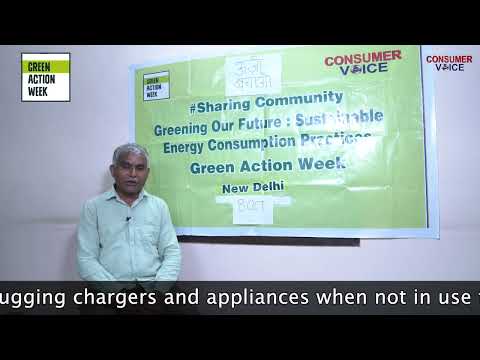
Green Action Week (GAW) is a global campaign to promote sustainable consumption. It is an initiative by the Swedish Society for Nature Conservation (SSNC) and is carried out in coordination with Consumers International (CI). This year (2023) Green Action Week will be celebrated from 1st October to 8th October. The theme of GAW 2023 is Sharing Community which works for people and the planet. We need to work together by ensuring that everyone has sustainable access to goods and services.

Objectives of GAW 2023

  1. To address unsustainable Consumption patterns among target groups (audience).
  2. Encouraging use of natural resources, reducing energy consumption and conserve resources and promoting sustainable alternatives.
  3. Supporting sharing community efforts to promote sustainable consumption patterns leading to adopt energy efficiency practices among consumers.

What is sustainable consumption?

Sustainable consumption is the use of products and services in ways that minimizes impacts on the environment. For several years humans have been behaving irresponsibly especially with nature and putting future generations at risk. Everything human does affects nature. The United Nations Environment defines sustainable consumption as the use of material products, energy and immaterial services in such a way that it minimizes the impact on the environment, so that human needs can be met not only in the present but also for future generations. Preserving the planet is not only the responsibility of an individual but requires a collective effort and therefore Sharing Community is so very important. A crucial part of sustainability is that sustainable consumption must enable socio-economic justice for everyone involved in the supply chain, as much as it addresses consumer and environmental concerns.

Current Challenges

India‘s rapid economic growth and urbanization has resulted in the challenge of unsustainable consumption patterns among its population and is an urgent need to address this. Consumer education is crucial to adopt sustainable and responsible consumption practices that minimize environmental impact and ensure a greener future through a sharing community.

With a rapidly growing population and a growing economy, the demand for energy in India has skyrocketed in recent years. At the same time, India is also grappling with severe environmental issues caused by fossil fuel-based energy systems, such as air pollution and climate change. India has a relatively high energy intensity, indicating the amount of energy required to produce a unit of GDP. As per 2019 data India’s per capita energy consumption equals 0.6 tonnes of oil equivalent (toe) as compared to the global per capita average of 1.8 toe. In Indian households appliances such as fans, refrigerators, ACs, microwaves and lighting contribute to significant energy consumption. We will be focusing on unsustainable consumption patterns of consumers in various sectors and promote sustainable practices through sharing community efforts.

WHAT IS SHARING COMMUNITY?

With the theme “Sharing Community”, Green Action Week seeks to highlight practical examples of more sustainable ways to access goods and services. People have also realised that adopting sustainable practices and reducing plastic consumption in their lives is the best gift that one can give themselves and to the environment.

Sharing Community brings people from diverse backgrounds together despite various limitations to put action oriented efforts through empathy and collaboration. Sharing is a concrete example of a more sustainable consumption culture.

STRATEGY

In our Green Action Week (GAW 2023 Campaign) we will promote responsible use of natural resources through energy efficient practices, and exploring sustainable ways of living will be encouraged through sharing community efforts. This will contribute towards reducing resource depletion, minimizing waste generation and creating a more sustainable and greener future for the society.

A workshop with consumers along with energy efficiency expert, environmentalists focusing on:

  • ways leading to energy efficiency and conservation
  • renewable sources such as solar cooker, switching to energy efficient LEDs, using star labelled products
  • dissemination of information of various energy efficiency schemes

A workshop with women & young girls focusing on:

  • promoting various ways to reduce energy consumption
  • promotion /finding natural resources (example using mud pitcher as a water coolant and chik/bamboo usage in houses as a coolant in homes).
  • demonstration of using available natural resources /upcycled products for energy efficiency purposes such as rainwater harvesting, collecting rain water to water plants, flushing toilets.
  • using up-cycled packaging material, finding creative ways to reuse packaging materials can contribute to reduce energy consumption and waste.

Workshop with Children & Youth- Encouraging Children & youth:

  • to adopt sustainable energy saving practices,
  • promote public transportation, pooling of car etc. Encouraging them to manage wastage etc.

Workshop with Children & Youth- Encouraging Children & youth to explore and document different visions of a future world. The goal is to capture the many ways in which people see consumption in this future world, and to inspire change worldwide.

The workshop’s objective is to delve into the concept of sustainable consumption in the future. This will be accomplished by engaging in visioning exercises that capture diverse perspectives on the future. By analyzing and contrasting these varied visions, we aim to craft a comprehensive report accessible to all, intended to spark inspiration. Moreover, our goal is to drive transformative change. Drawing from the success of envisioning alternate futures in futures studies research, we recognize the potential for these workshops to propel us towards positive advancements.

Mini Stories

EXPECTED OUTCOMES:

  • Through community efforts we will promote sustainable patterns and by adopting these patterns consumers can contribute to environmental sustainability, energy conservation and transition to a more sustainable future.
  • Strengthening VOICE of Women -As women play an important role in running daily household activities, strengthening their voices and educating them is very crucial to promote sustainable patterns of energy consumption and to promote energy efficiency.
  • Promoting sustainable way of living for greener future – Sharing community efforts will lead to strengthen the bond among various groups /stakeholders and entire community will be benefitted while tacking environmental problem.

 Articles

No Results Found

The page you requested could not be found. Try refining your search, or use the navigation above to locate the post.

Joint complaint & Class action are not the same, but both are accepted: Re-confirms SC

Joint complaint & Class action are not the same, but both are accepted: Re-confirms SC

Joint complaint & Class action are not the same, but both are accepted: Re-confirms SC

According to the Supreme Court’s order, the necessity of applying Order I Rule 8 of the Code of Civil Procedure, 1908 arises only in cases where a plaintiff represents the general public, specifically in complaints filed under Section 12(1)(c) of the 1986 Act. This rule does not apply when complainants in a similar position collectively file a complaint seeking identical relief. In such cases, there is no requirement to comply with Order I Rule 8 CPC since these complainants do not represent others, especially when there is no broader public interest involved. These complainants are seeking relief for themselves and nothing more.

Dr Prem Lata, Legal Head VOICE

  • Case title: Alpha G184 Owners Association V/S M/S Magnum International Trading Company Pvt. Ltd.
  • A. No.-004718 / 2022
  • Hon’ble Mr. Justice J.K. Maheshwari, Hon’ble Mr. Justice M.M. Sundresh
  • Decided 15 May 2023

Factual background

A construction company, against whom home buyers filed a consumer complaint before the National Commission due to the non-completion of a project within the promised timeframe, has once again sparked controversy. The builder argued that the current complaint is not valid for two reasons.

  • Complaint is not filed in the capacity of representation by someone under Order I Rule 8 of the Code of Civil Procedure, 1908 where public interest is involved.
  • Complaint of the association was not maintainable because the registration of the association of allottees did not conform with the Haryana Registration and Regulation of Societies Act, by-laws 2012 (HRRS Act).

The builder submitted an affidavit to the national commission, informing them that the matter mentioned in the writ petition is currently awaiting a decision from the High Court of Haryana. As a result, the national commission postponed the proceedings sine die.

Here is an appeal against the order of National commission.   

SC after going through the details observed:

“The need for the application of Order I Rule 8 of the Code of Civil Procedure, 1908 (hereinafter referred to as “CPC”), which speaks of a plaintiff representing the other public as a whole would be required only in a case involving a complaint under Section 12(1)(c) of the 1986 Act. In other words, it does not have any application when similarly placed complainants jointly make a complaint seeking the very same relief. In such a case, there is no question of Order I Rule 8 CPC being complied with as they do not represent the others, particularly when there is no larger public interest involved. Such complainants seek reliefs for themselves and nothing beyond.”

Court further held “a pedantic and hyper-technical approach would cause damage to the very concept of consumerism”.

On the second point of eligibility of association to file complaint Court noted

“That the issue of registration and byelaws of the association had no relevance in the proceedings before the Commission in light of the fact that individual affidavits were filed, the complaint would fall under Section 12(1)(a) (Manner in which complaint shall be made by a consumer) of the 1986 Act and that there was no need to go into the issue of whether the case would come under Section 12(1)(b) of the 1986 Act (Manner in which complaint shall be made by a consumer association.

“The 2019 Act facilitates the consumers to approach the forums by providing a very flexible procedure. It is meant to encourage consumerism in the country. Any technical approach in construing the provisions against the consumer would go against the very objective behind the enactment,” the Court observed.

The Apex Court directed the National Commission to expeditiously hear the matters on merits.

Earlier cases

The Class Action debate emerged during the Amrapali Sapphire Developers versus Amrapali Sapphire Flat Buyers Welfare Association case in 2019. In this case, 43 consumers collectively filed consumer complaints before the National Commission against Amrapali builders. The Flat Buyers Welfare Association had lodged the complaint in May 2016, citing a delay in the builder delivering possession of their flats. The builders contested the complaint by raising the following arguments.

  • Number of consumers cannot file cases together.
  • The pecuniary jurisdiction of Commission should be considered based on amount involved in each case separately.
  • RWA cannot be a complainant on behalf of residents.
  • The Supreme Court(SC) announced on that flat owners can now join hands and directly approach the National Consumer Disputes Redressal Commission (NCDRC) against real estate developers for delay in handing over possession of their flats. Thereafter ‘Class Action’ theory was specifically brought in Consumer Protection Act 2019.

In this connection, the judgment referred to Brigade Enterprises Ltd. v. Anil Kumar Virmani (2021)which held that consumers having similar interests can file a joint complaint and that they need not file in a representative capacity.

Reference was also made to the recent decision National Insurance Co. Ltd. v. Harsolia Motors And Ors. 2023 (SC) 313, which advocated against adopting a technical approach in interpreting Consumer Protection Act

Important Class Action Case after new act 2019: Vikrant Singh Malik & 25 Ors.Versus Supertech Limited & 2 Ors (Through its M.D.)

Following the enactment of a new act, the Supreme Court delivered a significant judgment on August 24, 2020 (SC) in a specific case, providing a comprehensive explanation of the Class Action theory. This landmark judgment is regarded as a guiding precedent for future cases involving Class Action. The case before the esteemed National Commission involved Vikrant Singh Malik & 25 Others versus Supertech Limited & 2 Others (Through its Managing Director), with the consumer case number 1290 of 2015.

The matter at hand revolved around the question of whether a complaint filed by 26 consumers who shared a common interest against the same builder in a housing matter could be accepted by the highest commission, considering that each complainant had a different status regarding their respective flats. All 26 consumers jointly submitted a complaint along with an application seeking permission to file a collective complaint. The filing of a joint complaint was based on the invocation of Section 2(1) (c) in conjunction with 2(1) (b) (IV) of the Act 86.

National Commission made two major observations:

  1. That there was variation of facts of each homebuyer about the allotment of their flat such as –
  • Apartment Distinct
  • Date of Buyer agreement different
  • Date of execution of agreement different
  • Price of flat different
  • Area of flat different
  1. Frame of complaint, nature of pleadings and relief sought is not fit to be called ‘class action’.  
  • Only seeks to highlight the grievance of 26 complaints whereas some other consumers having same grievance had settled the matter with builder.
  • Complaint does not possess the character of representative for all having the common interest which is the essential element of section 2(i)(c) and then could refer to section 13(6).

NCDRC dismissed the complaint in entirety, giving liberty to the complainants to file individual complaints before the appropriate forum. Matter now comes before the Supreme Court.

Supreme Court observes-

  • A complaint filed by all the consumers with the relief for the benefit of all consumers is maintainable.
  • Regarding factually different cost, size, booking date and price variation, Supreme court refers to full bench order in the matter of Ambrish Kumar Shukla v/s Ferrous Infrastructure Pvt. Ltd (2017) NC wherein the issue was explained in detail by giving example.

If a developer has sold 100 flats in a project out of which 25 are three-bedroom flats, 25 are two-bedroom flats and 50 are one-bedroom flats and failed to deliver timely possession, all the allotees irrespective of size shall have common grievance against the builder. Hence a complaint filed by all the consumers with the relief for the benefit of all consumers is maintainable under section 2(1) (c) of the act. Hence, Complainants could file a joint complaint if there is an element of sameness of the interest.

  • Complaint needs to be modified to make it Class Acton

The complaint lacks the collective representation of all the consumers involved. Furthermore, the facts indicate that some of the homebuyers have already resolved their issues with the builder and taken possession of their properties. Consequently, the complaint in its current form is not admissible and needs to be modified. Considering that the objective of the act is to protect consumer welfare, the National Commission for Dispute Resolution (NCDRC) can reconsider its decision to dismiss the complaint entirely, especially when the common interest among the complainants is clearly evident. Additionally, the issue can be examined since the advocate representing the complainants has requested permission to amend the complaint.

 Hence law laid down by Supreme Court for “Class Action” character as a consumer complaint thus stands as hereunder-

  • There should be an element of sameness of the interest and with common interest of all the consumers joining together.
  • The complaint should be represented by one leading case for protection of interest & benefit of all the consumers.
  • Factually different cost, size, booking date and price variation will not affect the character of “class action” against the same party with the same objective held by the Supreme Court.
  • The content of the complaint must also not be a single party centric. It should speak for all the consumers.

The Supreme Court has remanded the complaint back to the National Commission for Dispute Resolution (NCDRC) to reconsider its decision of dismissing the complaint entirely. This demonstrates that the court adopts a highly flexible approach, favouring consumers based on the specific facts and circumstances of each individual case.

Enquire Now

    X
    Enquire Now