No Results Found
The page you requested could not be found. Try refining your search, or use the navigation above to locate the post.

Situation-1
If your insurance policy provides for a cover against this virus infected disease, then you must remember that claim would be entertained only if you are hospitalized (admitted as an inpatient) for a minimum of 24 hours before discharge from the hospital. If no hospitalization takes place, then your claim on the policy may not come to fruition, unless your insurance policy provides for outpatient cover.
Situation-2
In this critical situation, one should keep calm and stop panicking. Rather, think prudently and act. If you contract this Coronavirus during the waiting period of the policy, then you may not get any relief from the policy. Normally, health insurance policies provide for a 30-day window for covering respiratory diseases such as Coronavirus.
Situation-3
If you have traveled from a Coronavirus-affected country and diagnosed ‘positive’, chances are that you will be covered under the regular indemnity health policy as long as you are quarantined in India. But you should not be traveling from Coronavirus-afflicted countries such as China, Hongkong, Taiwan, Italy, Iran, Japan, Singapore, South Korea, Thailand, etc. Your claim may also be rejected if you contract this virus from a family member who has traveled to these afflicted countries.
What does the IRDAI say?
The Insurance Regulatory and Development Authority (IRDAI) has recently asked the insurance companies to come out with policies to cover treatment costs for Coronavirus infection.
The IRDAI Circular (IRDAI/HLT/REG/CIR/054/03/2020 dated 04th March 2020) says that insurers should expeditiously attend to claims for Coronavirus treatment. Wherever hospitalization is covered in an insurance product, insurers should ensure that the cases related to this disease should be expeditiously handled.
To get the full story, click here
Related
The page you requested could not be found. Try refining your search, or use the navigation above to locate the post.
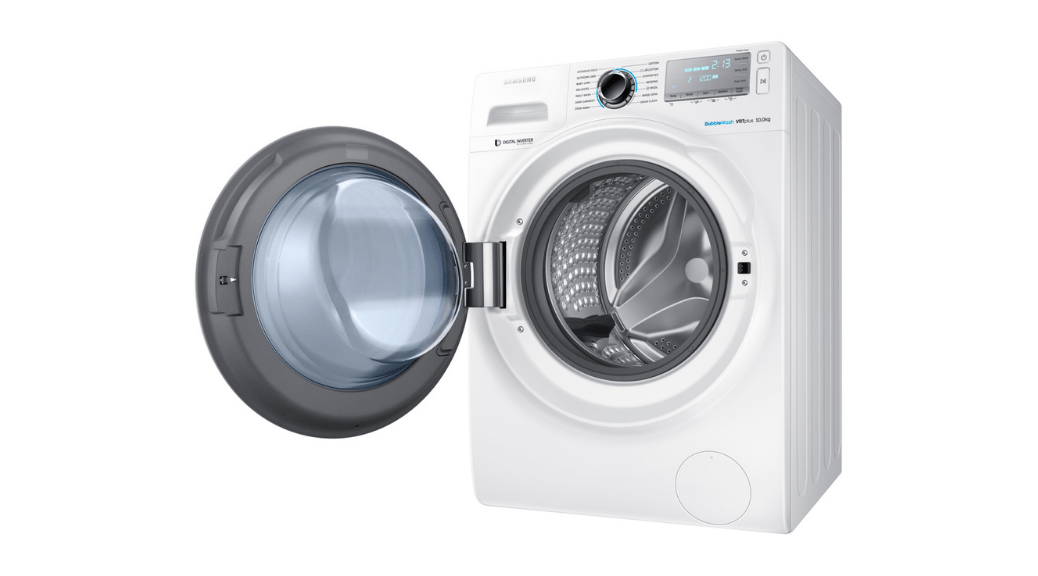
Buying a washing machine is one of the key decisions for a household because if you make a wrong decision, changing it can cost you a lot more than money. So, it is advised that you do thorough research on what washing machine features you need most and make the purchase accordingly.
Some of the top washing machine features are listed right here. Know about their usage and benefits before thinking of seeking a product that offers these.
This feature means that if a washing machine cycle is interrupted for any reason like a power outage, the cycle will restart from the point when it was interrupted. This saves time and money as the machine doesn’t redo the same process again. If you live in an area where power outage is common, this feature should be on your list.
If you intend to buy an automatic washing machine and not just a semi-automatic washing machine, you can expect the model to have automatic drainage in washing machine. It means that the water will be drained when the machine senses its time and you won’t have to do that manually.
This one is quite obvious. Child lock in washing machine ensures that once you select and start a washing session, it can’t be changed. This option is suitable for households with active kids who like to experiment with new things.
This washing machine feature is gaining a lot of popularity in India because hot water is considered better for cleaning clothes. This option is available in top rated washing machines only and can increase the price of a model. It is more required by people who have kids or an ailing person in the family to control bacteria progress in the home.
If a washing machine has this feature, the washing machine will detect load volume, fabric type and hence adjust the washing process. The water level required is also judged on the basis of sensors. This feature is not so popular because most people prefer to wash similar fabrics together and do the sorting quickly by using their hands. People who lack time to do such things manually usually opt for this feature.
This feature allows you to air dry clothes with the help of the vents added to the machine during the spin cycle. This function can be switched on and off as per your wish. When you turn it on, the vents will draw warm air from the surroundings and circulate it in the drum to ensure that your clothes are gently warmed, and water is evaporated. This one among washing machine features is best for people who avoid tumble dryers or need to wash bulky clothes regularly.
This feature allows you to control how much water will be used to rinse the clothes. If the clothes are not too dirty, you can use minimal water and save on the water bills. But if you have kids or people with sensitive skin or skin issues like eczema at home, you need to opt for extra water rinse to ensure that clothes don’t flare up allergies.
This feature allows the machine to remember your preferred choices when it comes to different wash loads like baby wash load, cotton wash load, etc. It negates the need to select settings manually every time you do the laundry. This feature is perfect for busy people who want to save time without making any mistakes.
In essence, it can be seen that though new washing machine features like child lock in washing machine or drainage in washing machine are making life easier, they are making the purchase decision more complicated. You should pick the features you need to most on the basis of your current and future requirements to ensure that you make a correct decision. Good Luck!
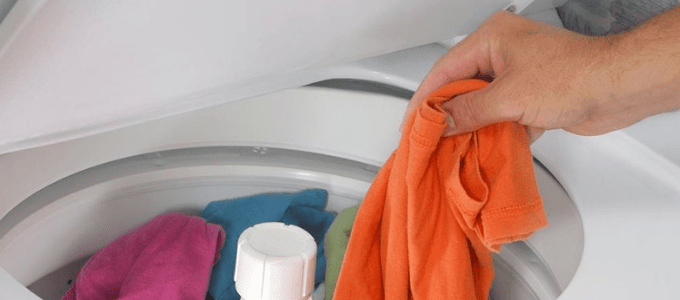
One of the few things that makes people anxious is the rising cost of the utility bills. If you are also among those countless Indians who want to reduce the energy spending of their homes then you should read on to know how to boost energy efficiency in washing machine. The tips we have mentioned here are tried and tested for enhancing energy efficiency in washing machine and can save you thousands of rupees in a year.
If you want to save washing machine energy, you should set the water temperature to cold as much as possible. Opt for warm water only if the clothes are too dirty or you suspect that they might have bacteria (like they belong to an ill person). Make sure that the clothes are rinsed in cold water even if you wash them in hot water.
Another trick to enhancing energy efficiency in washing machine is to plan your washing time right. You should wash clothes only when there is a full load and not when you feel like doing the laundry. It is a fact that every wash cycle used 60-90 liters of water so when you plan the washing, you will not only save energy but save water as well.
Do not make the common mistake of adding too much detergent to the clothes in order to make them smell great or look whiter. The more extra detergent you add, the more the machine would need to opt for extra rinses and the more would be the amount of water and energy consumed. Stick to the detergent guidelines as much as possible.
When hoping to achieve energy efficiency in washing machine, you should soak the clothes to get rid of tough stains or most of the dirt or you should dry them in the sunlight rather than opting to use the spin dryer. Both these options will ensure that the machine is used for lesser time and hence, less energy will be consumed.
Make use of high efficiency detergents whenever possible. They are better than regular detergents because they don’t produce too many suds and hence negate the need to repeatedly rinse laundry.
Every washing machine has some maintenance requirements like cleaning the lint screen before every load or cleaning the dryer duct on a regular basis. Make sure that you follow these instructions to ensure that the machine runs optimally and lasts long. The more you maintain the washing machine, the better it will work and the lesser would be the amount of energy consumed.
When hoping for enhancing energy efficiency in washing machine, you should use automatic cycle in the dryer rather than timed drying as the latter can lead to overheating while the former uses moisture sensors to determine if and when the laundry is dry.
In essence, it can be seen that saving washing machine energy, boosting energy efficiency in washing machine or enhancing energy efficiency in washing machine doesn’t involve too much effort on your part. Only small changes in habits are needed to make sure that you save on the energy bills. Adopt these tips from today and see the difference in a few months.
Related
The page you requested could not be found. Try refining your search, or use the navigation above to locate the post.
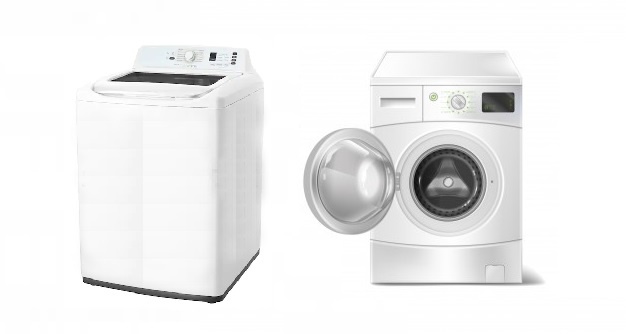
When you decide to finally shop for a washing machine and get rid of the hassle of washing clothes by hand, one question that comes to mind is which one should you opt for front loading washing machine or top loading washing machine. Here, we try to find the answer by mentioning the pros and cons of both the options.
Front-loading washing machines work by gently turning your washing over and over in a tumbling action, picking it up and repeatedly dropping it into the wash water. While it sounds harsh, they’re actually quite gentle on clothes. It also makes them better at handling unbalanced loads.
Front-loading washing machines use less water. Hence, you get to save money on the water bills. These machines also clean clothes and dry them more efficiently as the clothes are spun faster in the drum.
Many front loaders have ‘fast wash’ cycles so you can get done with the laundry faster. However, this one among benefits of front loading is not available in every model.
In front-loading washing machines, the wash cycle often takes longer than a top loader.
The cost of front-loading washing machines is higher that top loading options.
The noise and vibrations from front loaders are sometimes higher than top loaders. They also require a lot of space.
The cost of a top loading washing machine is quite less than a front loader.
They take less space than the front loaders as the drum door is placed on the top of the machine.
Understanding the use of top loading washing machines is easy. They are also easy to use as they usually have less features as compared to front loaders.
The drum in top loading washing machine doesn’t work as fast as a front loading washing machine. It means they are quitter and have less vibrations.
One key top loading washing machine disadvantage is that it uses more water as compared to a front loading washing machine. So, your water bills may increase.
Most top loading washing machines have fewer features. If you want a latest machine with all the advanced features, this won’t be a smart buy.
Choosing one from a front loading washing machine or a top loading washing machine is not an easy decision for anyone. You should consider your needs before you buy any of these. If you want more savings on water bills or you have a water shortage issue, you should pick a front loader. Similarly, if you want the washing machine to be space savvy, pick a top loader. There is no perfect answer that will suit all. It’s all about individual needs and choices. Be a smart consumer and do what’s right for you, not what everyone else is doing.
Related
The page you requested could not be found. Try refining your search, or use the navigation above to locate the post.