No Results Found
The page you requested could not be found. Try refining your search, or use the navigation above to locate the post.

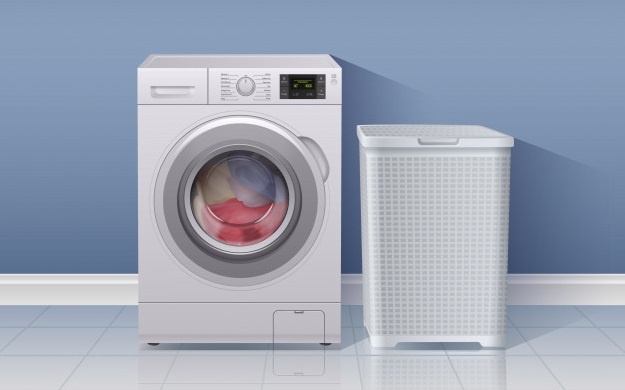
You might spend somewhere between INR 8000 to 80, 000 on a washing machine and its usage can account for as much as 20 per cent of the electricity you use. Hence it’s important that you consider following Do’s and Don’ts to increase the efficiency of the washing machine and the life span of it.
Today’s washing machines are bigger than ever and it’s tempting to cram in ‘just one more’ thing—but don’t. Even large-capacity machines have their limits. When they’re too full, water and detergent won’t reach everything; dirt gets trapped; and clothing doesn’t get clean. Plus, overloading causes unnecessary wear on your washer, and excess fabric wrinkling.
To get the best clean, it’s important to follow your detergent’s usage directions and measure it. Forgo measuring and you decrease cleaning performance, whether you add too little or too much. That said, it is all right to use a bit more for very dirty loads, or if you’re washing in hard water.
One cycle just doesn’t fit all. You probably use the ‘regular’ or ‘delicate’ cycles most often, but other settings and options are worth exploring, too. They offer extra rinses for bulky items, hotter water for better stain removal and whitening, and even slower agitation for less wrinkling.
Your machine probably has at least one dispenser for fabric softener, detergent, or both, and it needs cleaning. Remove and rinse them often, and at the end of the cycle, leave the detergent drawer open so any residual water evaporates (otherwise, it could cause odors).
If you can’t (or don’t) turn off the water to your machine when you’ve finished doing washing laundry, the most important thing you can do to prevent a burst hose is replace standard rubber ones with braided ones.
Related
The page you requested could not be found. Try refining your search, or use the navigation above to locate the post.
Washing machines have become an indispensable part of our lives and selecting the right one can be a huge task. Selecting a washing machine that suits your need will depend on your ability to analyse some factors and things to consider before buying.
Automatic machines do everything themselves: after you choose the wash program, the machine will fill water itself, go through the wash cycle, rinse, drain the water, and then do the spin cycle to remove all the excess moisture – all in the same drum.
The semi-automatic type needs to be manually filled with water before the wash begins (and then drained and filled with water again for the rinse cycle). You will also have to transfer your clothes from the wash drum to the spin compartment. In this way, you have more control over the washing process, but it is also more labour-intensive. These machines tend to have fewer special features and cycles than automatic washing machines, which is why they are also more affordable.
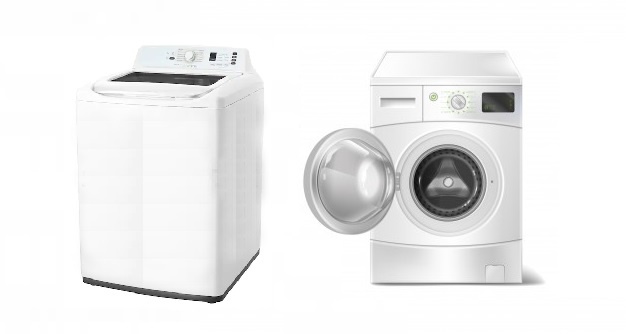
Front-load and top load washing machines have the same basic job – that of washing your laundry. Beyond that, though, there are quite a few differences between the two types.
If you have continuous water supply, you may prefer going for one of the front-loading models as the wash quality is better and they are relatively more energy- and water-efficient. Although about 10 to 20 per cent costlier, they are worth considering. Avoid going for machines loaded with complex features and selections as these may only end up complicating the washing. For better cleaning of heavily soiled clothes, prefer to use soak mode during prewash.
If you want to conserve water and electricity, you should know that front loaders use less water than traditional top loaders, which have to fill up entirely for the wash and rinse cycles. Opt for an Energy Star model, which reduces electricity and water use by about 20 per cent and 35 per cent, respectively, over non-rated models. The best front loaders clean better and are gentler than the top loading washing machines while using less water. Front loaders take longer than top loaders but spin faster, extracting more water and trimming dryer time.
Energy efficiency and consumption of water are important factors to consider when purchasing a washing machine. For example, fully automatic washing machines consume between 100 and 150 litres of water for full load for ideal one wash + two rinse.
Home-use washing machines in India have a range of 5 kg to 10 kg. For a family of two or those living alone, a 5 kg+ machine is more than sufficient. However, a bigger family will need a higher-capacity machine. Even a family of four, especially with small children, will require a high-capacity washing machine as children go through several pairs of clothing in a single day.
Measure the space and allow at least six inches behind the washing machine for water hookups. Measure the doors to your home to make sure a new washing machine can fit through them.
But there is another side to the picture. It has been observed that when the machine goes out of order, the spare parts of the model are no longer available because a new model has already replaced the earlier one. This is an area that manufacturers should take up as a matter of priority, especially in view of the problems consumers are facing and complaining about. How about designing the washing machines in a way that not only secures the availability of spare parts but also makes the machines easy and cheap to repair?
Washing machines may carry energy-efficiency star ratings based on key performance parameters covering washing efficiency, water consumption, energy consumption, etc. Participation in the star rating labeling program is voluntary at present. Manufacturers declare motor rating in watts, although actual energy consumption will depend on wash load. During our survey, it was observed that most brands did not declare water consumption despite this being an important parameter.
Ask for free installation as it is generally included in the unit cost. Also insist on free home delivery while placing the order.
Some brands claim to be powered by a 6th sense technology that adjusts water level, wash timings and detergent doses based on fabric type and load, while some others claim to be equipped with hot-wash technology with an inbuilt heater that not only removes tough stains but also eliminates dangerous bacteria from the clothes and protect you from skin diseases. Other features that are claimed by various brands include digital display, rat mesh, child lock, fuzzy logic, easy-to-use control panel, magic lint filter, automatic tub cleaning, express wash, delay start and auto restart. However you should consider the following for sure.
The tub can be made of plastic, porcelain-enamel or stainless steel. The first two are cheaper. Plastic tubs are more durable than enamel ones, which can chip and rust. Stainless steel tubs are the best as they are the most durable and can withstand high spin speeds.
Most machines have preset wash programs, such as ‘gentle wash’ for delicate clothes, and water-level options. You can customize and save favorite settings. These can be adjusted through rotary controls, a touchpad, or a touchscreen. The first type is the cheapest.
Time delay allows you to load the washing machine and start it later. This is useful if you want to avoid the noise at certain times.
If the washer has an inbuilt heater, this feature will help adjust the temperature of the water. This can prove useful in winter. Besides, hot water cleans clothes better. Some of the machines have steam setting, which helps fight dirt and stains well.
It restarts the machine from the point when the cycle was interrupted.
This feature is quite common in automatic machines and not so common in semi-automatic machines.
A self-explanatory feature, this helps in keeping the washing machine safe from children’s activities.
It enables the machine to detect load volume and fabric type, and adapt the washing process. The load sensor also controls the amount of water used to match the load size.
Related
The page you requested could not be found. Try refining your search, or use the navigation above to locate the post.

How optimistic are we about sustainable products? We as consumers do talk about sustainable products and some survey results even show that consumers are willing to pay more, but when it comes to sustainability, actions speak louder than words.
Sustainability as we all know is based on three pillars – economy, society and environment. In addition, consumers and households play a crucial role in the adoption of sustainable products and technologies, and are responsible for substantial proportions of energy use and waste. Moreover, ethical aspects of consumption are becoming more important. In order to gain an understanding of sustainable consumer and household behaviour, a degree of basic understanding is required about a consumer’s mindset. This is because consumers are a mirror of the society they live in.
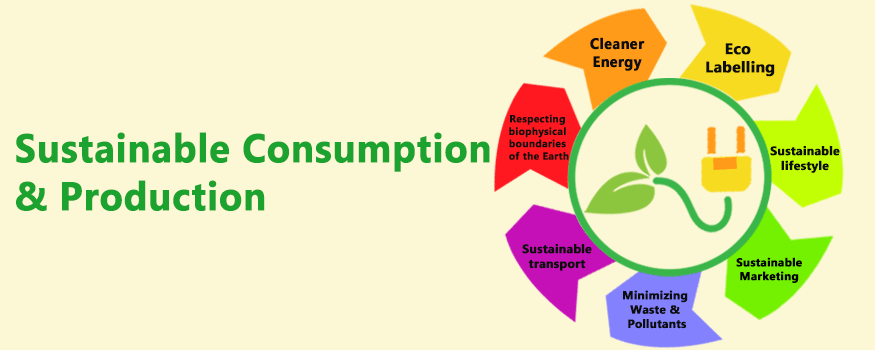
As defined by the Oslo Symposium in 1994, sustainable consumption and production (SCP) is about “the use of services and related products, which respond to basic needs and bring a better quality of life while minimizing the use of natural resources and toxic materials as well as the emissions of waste and pollutants over the life cycle of the service or product so as not to jeopardize the needs of further generations”.
To ensure sustainable consumption, production practices should respect the biophysical boundaries of the planet and reduce current global consumption rates to gel with the biophysical capacity and produce ecosystem services and benefits.
Sustainability today is shorthand for a complete moral system of cultural values, beliefs and attitudes related to a sense of responsibility for the greater good. Consumers today are being confronted by real and immediate sustainability challenges. Crises no longer seem far away in time or space — even abstract problems like climate change and the permanence of plastic waste have become pressing and present topics, and consumers say they want progress and solutions.
When it comes to overall responsibility, consumers are looking to companies and governments to lead on providing sustainable solutions to a wide range of problems linking to sustainability. Sustainable development and corporate responsibility both are relevant factors in today’s world. Effective implementation of sustainable growth requires intimate dynamics of company and environment as both need each other to co-exist. Consumers are skeptical of corporate motives and wary of government policies, but know that any solution to the collective problem must involve the collective entities that we currently have.
Overall, while the stakes are getting higher in a broad range of issues (environment, climate, waste, worker’s rights, etc.), eroding trust in government and corporations has left consumers hungry for leadership within the realm of sustainability.
For other articles by Consumer VOICE COO’s Desk, click here