
It takes time to Empower Consumers !

It takes time to Empower Consumers !

It takes time to Empower Consumers !

power to consumer
BY ASHIM SANYAL, COO CONSUMER VOICE

The year 2019 will be remembered as the year of consumer empowerment with the passage of Consumer Protection Act 2019 after 30 years. It has been a long haul for many consumer organizations working in the space of consumer education including Consumer Voice, to finally get the Bill  passed into an Act. Just to remind everyone that mere passage of the Act doesn’t mean final victory as rules are yet to be framed. So we have embarked on the next phase of submitting our views so that Rules when finalized, doesn’t miss out major issues which will disturb consumer protection processes.

Having said that, the year that passed by saw a tumultuous struggle for consumer voices against malpractices by the sellers. Prominent space was occupied by the E Commerce section which on one hand has gained tremendous consumer traction while on the other hand it unraveled the proof that if left unregulated, the industry can wreak havoc with the consumers. Hopefully 2020 will see a better traction since E Commerce will be a part of the Consumer Protection Act.

There is also a huge concern about the financial services with products being dumped to consumers with misleading promises. This is evident from the number of complaints we have received in 2019. This needs a check and I am sure that the financial sector will occupy a major attention span for consumer organizations.

Food safety, nutrition and hygiene have made some significant progress with the Eat Right India movement but the ground level masses are yet to receive its benefits. Urban and rural lives have been affected by Non Communicable Disease (NCDs). The very fact that government has recognized public health as a major concern is a point that benefits all strata of consumers.

With the Act in place, it is the time for implementation in coordination with various government departments. 2020 will be a busy year for Consumer VOICE as we will focus on awareness and sensitization. It is up to civil society organizations to take their voices to the right levels so that significant gains can be made in the area of consumer health, wealth and safety.

Wishing all our friends a Very Happy, Healthy and Prosperous 2020 from Consumer Voice family !   

For other articles by Consumer VOICE COO’s Desk, click here

The Price of Misleading Advertisements

The Price of Misleading Advertisements

The Price of Misleading Advertisements

Misleading-ads
BY ASHIM SANYAL, COO CONSUMER VOICE

Did you know irresponsible advertising can boomerang? Businesses are not allowed to make statements that are incorrect or likely to create a false impression. The Consumer Protection Act 2019 provides provisions for deterrent punishment to check misleading advertisements. The authority will have power to impose a penalty on a manufacturer or an endorser of up to 10 lakh rupees and imprisonment for up to two years for a false or misleading advertisement.

This rule applies to their advertising, their product packaging, and any information provided to you by their staff or online shopping services. It also applies to any statement made by businesses in the media or online, such as testimonials on their websites or social media pages.

It makes no difference whether the business intended to mislead you or not. If the overall impression left by a business advertisement, promotion, quotation, statement or other representation creates a misleading impression in your mind—such as the price, value or quality of any goods and services—then the behaviour is likely to breach the law.

Celebrities are great influencers. With a large population of India, living in villages, a celebrity endorsing a product or service, serves as a promise of quality and builds instant recognition and credibility. In many cases, the benefits of product or claims made in adverts may be misleading or not supported by any data.

In India, as in several advanced economies, there is only one body for Self-Regulation in Advertising – the ASCI (Advertising Standards Council of India), which is concerned with safeguarding the interests of consumers whilst monitoring/guiding the commercial communications of Practitioners in Advertising on behalf of advertisers, for advertisements carried by the Media, in their endeavours to influence buying decisions of the Consuming Public.

The goal is prevention rather than punishment, reflecting the purpose of civil law in setting things right rather than that of criminal law. The typical sanction is to order the advertiser to stop its illegal acts, or to include disclosure of additional information that serves to avoid the chance of deception. Corrective advertising may be mandated, but there are no fines or prison time. However the new Consumer Protection Act 2019 has harsh provisions for both.

ASCI assists the consumer by making available the rights, regulations, obligations and procedures for refund and return, complaints, faulty products and guarantees of products and services. They also assist businesses and industries by developing clear laws and guidelines in relation to unfair practices and misleading or deceptive conduct. It aims to promote fair competition and trading in the country.

To  sum up, the focus on misleading advertising rests on false or deceptive practice in relation to a specific list of key factors, omission of material information (unclear or untimely information) and aggressive practice by harassment, coercion or undue influence.

For other articles by Consumer VOICE COO’s Desk, click here
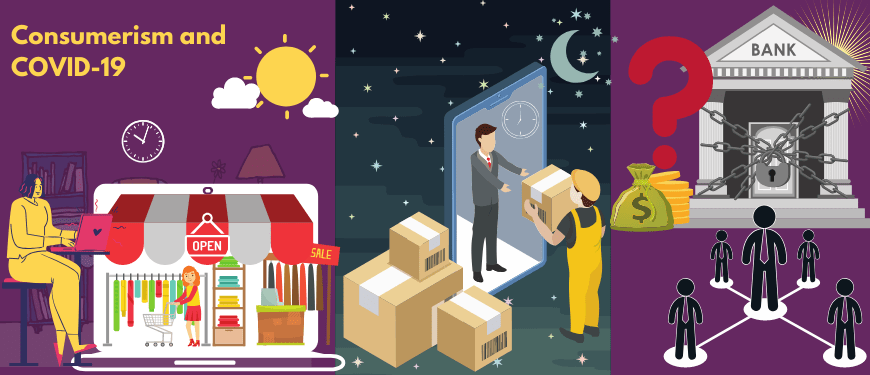
Consumerism – Present and Post Covid-19

Consumerism – Present and Post Covid-19

Consumerism – Present and Post Covid-19

COVID-19
BY ASHIM SANYAL, COO CONSUMER VOICE

We have already started thinking about how and how much consumerism and the role that it plays in the future, will change in the post Coronavirus scenario.

COVID-19 is spreading like wild fire throughout the world creating a path of death and destruction. Unfortunately, India has also fallen prey to this. The world is in danger of falling into a Great Depression, with millions of unemployed workers across the globe. With industries staring at a blank immediate future, the impact will especially hit the poor – both in terms of health and economics; many cannot even afford to wash their hands because of lack of water.

In India, especially, the small and medium scale Industries along with agriculture which form the backbone of our economy are on the brink of collapse as predicted by some experts. Millions of small wage earners are grappling to survive this ordeal and already the farm losses have started mounting. Social or physical distancing is a distant dream for slum dwellers and small factory workers.

People are stocking up on all kinds of food and other necessities, including medicines, should COVID-19 linger on for weeks or months. So the actions and reactions of COVID -19 are already visible. Consumer actions and reactions are a cause of the unprecedented crisis for a developing nation. Future seems to be very uncertain!

One can therefore predict that this period of deprivation and anxiety will usher new consumer attitudes and behaviors that will change the nature of future businesses.  Finally consumers will think twice what they consume, how much they consume, and how all this is influenced by class issues and inequality.  A new equitable buying and usage patterns will surely emerge bypassing class, creed, caste and income levels.

Business firms have an intrinsic interest in endlessly expanding consumption for the purpose of higher profits.  They rely on three disciplines to boost consumption and brand preference.  The first is innovation to produce attractive new products and brands to enchant customer interest and purchase.  The second is marketing that supplies the tools to reach out to consumers and motivate and facilitate their purchasing.  The third discipline is credit to enable people to buy more than they could normally buy on their low incomes.  Businesses aim to make consumption our way of life.  To keep their productive equipment and factories going, they must ritualize some consumer behavior.  All these 3 factors will see a changing pattern in the near future.

To sum up one can say that consumers will neither be swayed by availability, conveniences, choices, discounts or peer competitions. This COVID -19 phase would pass by surely through medical interventions, but it will usher in something called increased savings and their spending which has traditionally supported 70 percent of our economy.  If this goes down, our economy contracts in size.  A slowdown in economic growth will lead to more unemployment.  Add to the fact that more jobs are being lost to AI and robots. This will require capitalism to spend more on unemployment insurance, social Security, food stamps, food kitchens, and social assistance.

For other articles by Consumer VOICE COO’s Desk, click here
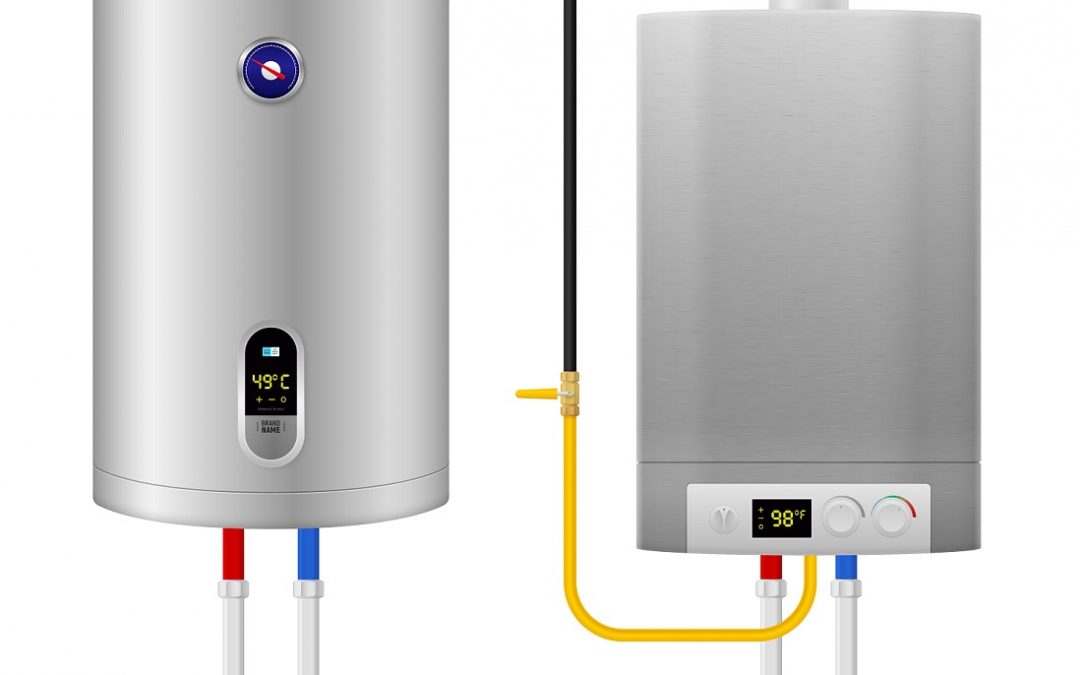
Which is the Best Water Heater (Water Geyser) between price range of 5K and 10K?

As we begin to feel the nip in the air, we know that it’s time to also take stock of our winter paraphernalia, beginning from quilts and woollens to electric heating devices including room and water heaters. This report is a result of our efforts to find out the best storage water heater/ geyser as per individual requirements, taking into consideration factors such as water usage, electricity consumption, standing loss, energy efficiency and longevity. By best we mean the one that is not only efficient in terms of electricity consumption or heating capabilities, but also the safest. If you are planning to buy a new geyser, you may very well end up being puzzled by the types of water heaters and geysers, models and sizes available. What you eventually choose will depend mainly on the purpose of the hot water, where you install the apparatus, bathroom spacing, your preference for instant geyser or storage geyser, and yes, your budget. Just know that just the brand name may not be sufficient to base a buying decision on. While traditional electric water heaters are huge in size and consume high energy, their modern counterparts are relatively energy-efficient and produce hot water as per need. Our Water Heater Buying Guide can help you to decide on the features that are important.

BRANDS COMPARED

  • Haier
  • Usha
  • Inalsa
  • Orient
  • Khaitan
  • Racold
  • Havells
  • Maharaja whiteline
  • Morphy Richards
  • Kenstar
  • Crompton
  • Ao smith
  • Bajaj
  • V-guard
  • Polar

PARAMETERS COMPARED

  • Rated Capacity (litres)
  • Rated Power (watt)
  • #Standing Loss (kWh)
  • Star Rating
  • Price

Types of water heaters and geysers

Types of water heaters and geysers

There are several type of water heaters and geysers available. Hence it is pertinent to know what suits your requirements.

Storage Tank Water Heaters

Cold water is heated and stored in a tank, ready to use anytime. It consists of a steel storage tank that holds hot water and a gas burner.

Benefits of Storage Tank Water Heaters

  • Very simple and relatively inexpensive system that uses little or no electricity.
  • Recovers hot water about two times faster than a same-size electric tank.

How it works:

  • Cold water is drawn into the bottom of the tank where it’s quickly heated by a gas burner. Heated water is stored in the tank and reheated until needed.
  • The tank thermostat controls the water temperature sent to your taps.

Instant or Tankless Water Heater

Tankless systems heat water on demand. The units don’t store hot water and are so small they can be hung on a wall. As water flows through the unit’s heat exchanger, it’s rapidly heated to the desired temperature. 

Tankless units are significantly more expensive to buy and complicated to install. Users may also notice a “lag time” between when a tap is turned on and the hot water starts flowing out of the tap.

Benefits of Instant Water Heater

  • Endless supply of hot water.
  • Efficiency rate of 80 per cent or higher. Pay only when you use hot water, usually two hours a day, instead of heating a tank of hot water all day.
  • Space-saver since there is no storage tank. Wall-mounted units are small and can be hung on almost any wall, including close to the point of use.

How it works

  • When a hot water tap is turned on, cold water travels through a pipe through the water heater unit and is rapidly heated to the desired temperature.
  • When the tap is turned off, the system shuts down and uses no energy.

Combination Water and Space Heating

Combination systems use a single natural gas water heater to provide both heat and hot water to your home. High-efficiency systems usually include a high-efficiency storage tank or tankless water heater.

Benefits:

  • Energy-efficient – reduces energy use.
  • Space-saver since there is no furnace.
  • Cost savings – lower on-going maintenance and operating costs since there is no furnace, although installation cost is higher.

How it works

  • Combo radiant floor heating: Warms from the floor up, utilizing hot water circulating through a network of plastic tubing embedded in concrete floors.
  • Combo hydronic baseboards: A direct replacement for electric baseboards. Hot water from the natural gas hot water tank is piped directly to each baseboard.
  • Combo fan coil and forced air: Uses existing duct work to distribute the heat recovered from the hot water tank. Electronic air cleaners, humidifiers, and air-conditioners can be used with this system.

Our experts have prepared a Water Heater Buying Guide and has also compared popular water heaters to help consumers  decide which water heater to buy.

<style>

Enquire Now

    X
    Enquire Now