No Results Found
The page you requested could not be found. Try refining your search, or use the navigation above to locate the post.

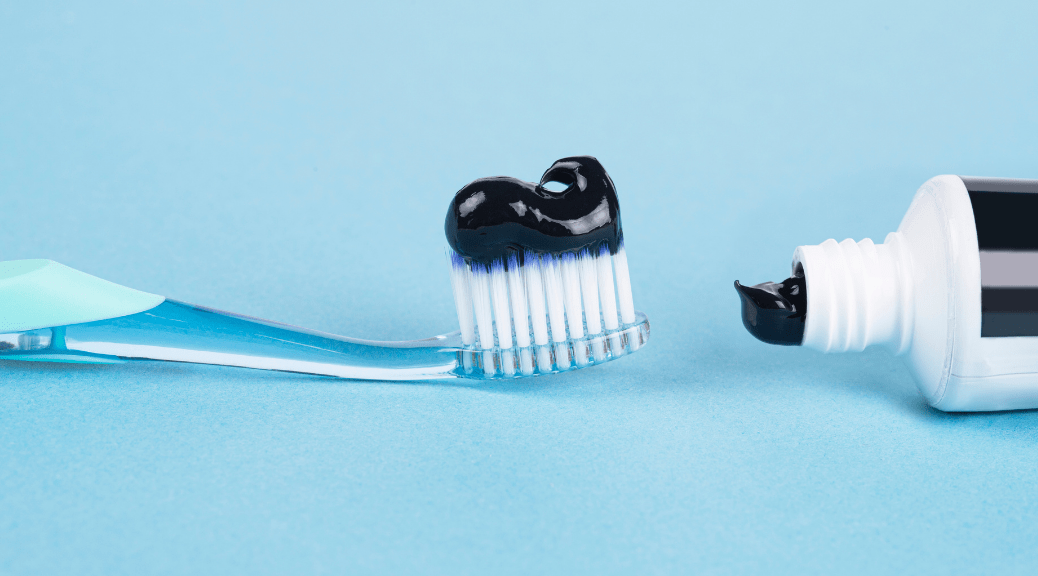
There were times when you heard the word charcoal, you thought of the old charcoal stoves on which your grandmothers used to cook food. But now, charcoal is present in everything from a face mask to a toothpaste.
If you want to know whether charcoal in toothpaste is a smart idea or it’s just another trend that will pass away with time then do read on.
What is Activated Charcoal and How it Works?
Before we move ahead with the details, you should know that charcoal in toothpaste is usually activated charcoal. It is a form of carbon which has been treated. After the treatment, the surface of the particles becomes porous. This surface helps the activated charcoal to attract unwelcome substances like bacteria, viruses, stains, tartar, etc.) in the mouth. These substances wash away with charcoal when you rinse your mouth.
The Bad
A simple solution for everyone who wants to know about charcoal in toothpaste would be to use charcoal-based toothpaste in smaller quantities and not expect too much from it. You can use it to remove surface stains,but it can’t be as effective as teeth whitening treatments done at a dentists’ office.
You should also know that if you rinse your mouth with charcoal-based toothpaste and not swallow it, it won’t get into your digestive tract and hence, won’t absorb any vital medications.
If you use charcoal-based toothpastes in limited quantities and under the supervision of a dentist, you will be able to avoid getting the enamel damaged or be a victim of tooth sensitivity. In case you don’t want to buy a charcoal-based toothpaste right away, you can try a toothbrush with charcoal-infused bristles every other day. They are a safer option and usually give the same results.
Related
The page you requested could not be found. Try refining your search, or use the navigation above to locate the post.

Everyone dreams of having pearly white teeth that are perfectly aligned and make us more beautiful. Unfortunately, most of us don’t have near perfect teeth,andthis compels us to rely on everything that promises to help, be it the baking soda or whitening toothpaste.
If you are an Indian consumer who is thinking about whitening toothpaste- does it really whiten your teeth then you have landed on the correct webpage. Here, we will not only guide you through the pros and cons of whitening toothpastes but will also let you know of a few alternatives that can be quite effective as well.
The top benefits of using teeth whitening toothpaste are:
The common issues regarding using a whitening toothpaste are:
If you want to try a few alternatives to whitening toothpastes then here are a few options:
In essence, it can be said that whitening toothpastes can be effective for many people and they may do more damage than good to other people. A smart move would be to talk to your dentist regarding teeth whitening toothpastes and buy a small one. If you are satisfied with the results, then only continue its use. Also, remember that you don’t need to use a whitening toothpaste forever, you can use it for as long as you need it and then switch back to your usual toothpaste.
Related
The page you requested could not be found. Try refining your search, or use the navigation above to locate the post.

With so many brands and types of toothpaste in the market, and with as many advertising claims, it can be a daunting task to choose the right one. The first step towards maintaining of dental hygiene is the use of the right tooth paste. However, the Indian market is flooded with a variety of toothpastes, each one making its own claim. If one promises to give us sparkling white teeth, the other promises to protect our gums.
Everyone’s body chemistry is different. You may find that particular toothpaste does not make your mouth feel as clean or refreshed as you would like. You may become sensitive to a certain ingredient. If you experience these or other symptoms, try changing the brand or type of toothpaste. Of course, if you have an allergic reaction or experience continuing symptoms, you should seek medical assistance right away.
So what might suit one might not suit the other person.
We tested eight toothpaste brands on attributes that determine their efficacy. These include Colgate, Closeup, Pepsodent, Sensodyne, Himalaya Sparkling white, Himalaya Complete care, Meswak and Babool. Do these fulfil the basic requirements specified in the national standard? The good thing is that the restrictions for fluoride are clearly being adhered to by all manufacturers, ensuring that these toothpastes are safe for dental care.
The samples were tested as per specifications in Indian Standard 6356 –2001, with amendments that cover non-fluoride/fluoridated type of toothpastes. The tests were conducted at an NABL-accredited laboratory. The parameters on which these toothpastes were tested included presence of nicotine and heavy metals, microbiological contamination, fluoride ion, fineness, foaming power, dispensing, inertness, gritty matter, pH and stability.
Related
The page you requested could not be found. Try refining your search, or use the navigation above to locate the post.
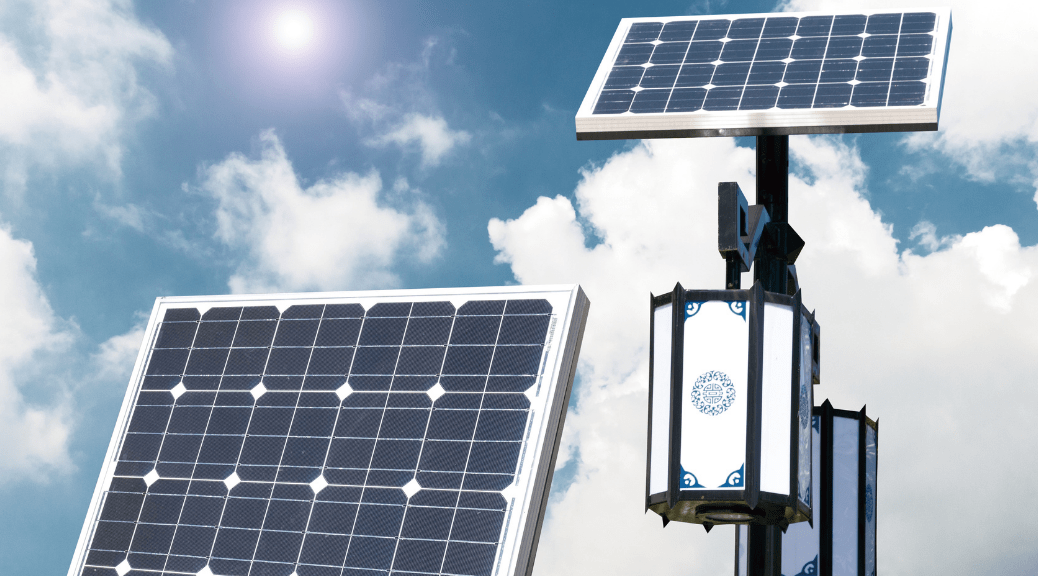
A solar rooftop photovoltaic (PY) system converts the sun’s light energy into electrical energy through solar panels mounted on the rooftop of a building. As light hits the solar panels, the solar radiation is converted into direct current (DC). The direct current flows from the panels and is converted by the solar inverter into alternating current (AC) used by local electric utilities. The plant can be connected to the grid or can be designed to be off-grid. Components that are required for rooftop solar installations are photovoltaic panels (to convert solar sunshine into direct electricity), batteries to store electricity when power is not required and the sun is shining, inverters to convert direct current (DC) into AC, cables and other miscellaneous items like junction boxes, earthing, lighting arrestors and conduits. Panels account for about 50 percent of the total cost
Solar panels are increasingly being installed by homeowners wishing to take advantage of a system that produces green energy and insulates them from rising energy prices. A rooftop solar power system can provide us with a clean and efficient source of energy for the home, saving us money and reducing dependence on the power grid. If you are worried about the amount of money spent in installation, just know that it will pay you back in just six to nine years in terms of savings in monthly bills. The useful life of a typical solar power plant is considered to be 25 years. The Indian government has committed to generate 100 GW of solar energy by 2022. By choosing solar, you make an investment you can be proud of and show your commitment to clean, renewable energy. In this report, we explain the common types of solar electric systems, the parameters on the basis of which one may choose the one that best suits their requirements, and other points that may concern the consumer.
Your vacant rooftop space will be fruitfully utilized. Your electricity bills will be reduced. This will be your contribution towards reducing dependence on the grid. This will also contribute in the reduction of CO2 emissions. Types of Solar Electric System The common types of solar electric systems are described here. Each has distinct applications and components. Grid-connected In this system the solar panels are connected to your local utility electrical grid. A grid-connected system consists of: Solar panels mounted on the roof An inverter to convert electricity from DC energy into AC. A junction box that connects the solar-panel wiring to the breaker panel on the home A power meter that displays how much power the home produces and uses Grid-connected with battery backup Very similar to the grid-connected system, this system adds a battery bank to collect the power generated from the solar panels. Power stored in the batteries can be used during outages. The battery bank collects power produced by the solar panels, sends it to the breaker box, and then into the house power system. Off-grid or standalone Off-grid systems are not tied to any utility power lines and are most common in remote areas where connecting to the utility grid is more expensive than purchasing an off-grid system. In off-grid systems, the solar electric system represents the home’s main source of power. Batteries store unused solar energy for use at night. Generators and other backup fuel sources are sometimes used as backup power when the solar power stored in the batteries is not enough to meet household needs.
In grid-connected rooftop, the DC power generated from the solar photovoltaic (SPY) panel is converted into AC power using a power conditioning unit (PCU), and it is fed to the grid, either of 33 kY/11 kY three-phase lines or of 440 volt/220-volt three-phase lines/single-phase line, depending on the capacity of the system installed at the institution/ commercial establishment or residential complex and the regulatory framework specified for respective states. These SPY systems generate power during the daytime which is utilized fully by powering captive loads and feed excess power to the grid. Where solar power is not sufficient due to cloud cover, etc., the captive loads are served by drawing power from the grid.
Such SPY systems can be installed at the rooftops of residential and commercial complexes, housing societies, community centers, government organizations, private institutions, etc.
A 1 kW rooftop system generally requires 12 sq. meters (130 square feet) of flat, shadow-free area (preferably south-facing). Actual sizing depends also on local factors of solar radiation and weather conditions and the shape of the roof.
You need to install the system through a state nodal agency or an MNRE-empanelled agency (that is, contractor) for getting MNRE subsidy.
Generation-based incentive (GBI) Exemption on open access as provided by DERC Exemption on conversion charges for residential consumers Exemption on wheeling charges, banking, cross- subsidy and other charges for installing SPY power systems installed under net-metering scheme. Excise duty exemption as provided by Ministry of Finance, Government of India, for installing a minimum 100 kWp grid-connected rooftop SPY power plant Accelerated depreciation benefit and tax holiday
Central financial assistance (CFA) of 30 percent of the benchmark cost or as applicable from time to time is provided for installation of grid-connected rooftop solar power plants, of capacity 1 kW up to 500 kW. This is available to residential consumers (irrespective of the electricity connection).
A vacant roof area of 10-12 sq. meters for installation of 1 kWp SPY system A three-phases/one-phase supply service connection Mandatory safety precautions/features installed as per the norms A single bi-directional meter for export and import Standard equipment as per the norms of MNRE Ownership permission and necessary documents
The usual benchmark for energy generated from a 1 kW solar power plant is 1,500 units per annum. The amount of actual energy generated depends on both internal and external factors. External factors that are beyond the control of a solar power developer can include these: a) number of sunny days, b) solar irradiation, c) day temperatures, d) air mass and e) location.
Consumer VOICE experts present you the most comprehensive solar rooftop system buying guide that tells about the solar panel price, cost of installation of solar panels on rooftop, metering, maintenance, link to the suppliers and contractors and much more.
Related
The page you requested could not be found. Try refining your search, or use the navigation above to locate the post.
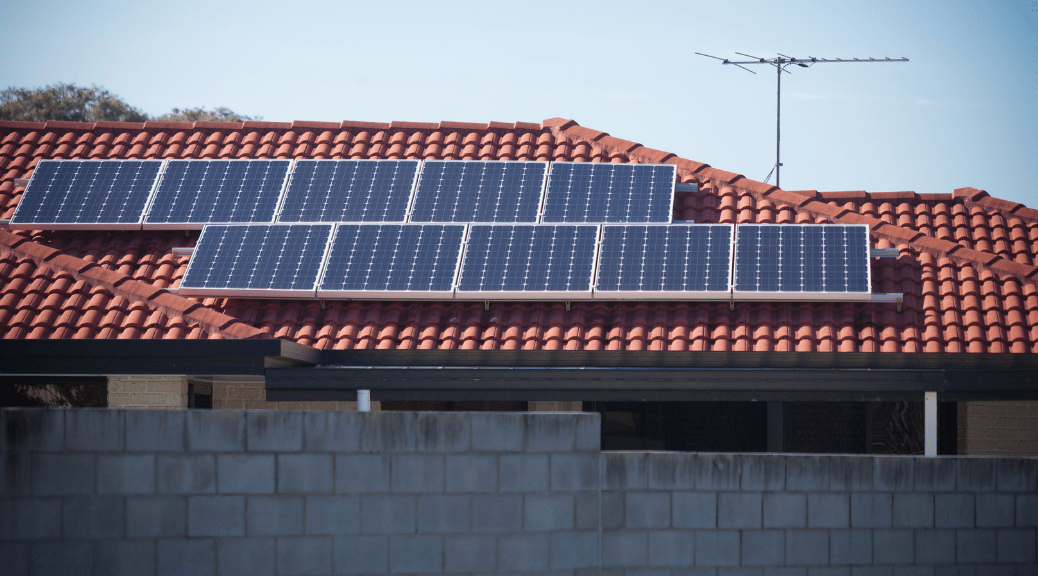
Consumer VOICE experts present you the most comprehensive solar rooftop system buying guide that tells about the solar panel price, cost of installation of solar panels on rooftop, metering, maintenance, link to the suppliers and contractors and much more.
Currently, there are two ways through which an individual can install a rooftop solar system. One is the capital-expenditure model where an individual needs to make an upfront payment. For those who are unwilling or unable to put up the money, or where rooftop space is limited, there is the renewable energy servicing company (RESCO) model. In this, a terrace owner or group of owners allows a solar developer to install a plant at a common place. The plant is installed, owned and run by the company or investor, and the consumer pays for the cheaper power at around Rs 5 to Rs 6 per unit – this compares favourably against the Rs 7 to Rs 9 per unit for conventional supply from discoms.
Step 01 Apply online.
Step 02 Empanelled agencies will contact you.
Step 03 Empanelled agency does pre-feasibility study.
Step 04 Agency will collect the balance cost payable by beneficiary after deducting subsidy payable by MNRE.
Step 05 Applicant has to pay connectivity charges and execute connectivity agreement with NDMC for net metering.
The type and size of solar rooftop system depends on individual requirements/factors. These include
The right choice will depend on how much sunlight your area receives, your budget, how much conventional power you want to offset with solar power, and where the solar panels will be mounted.
Efficiency is an important parameter. This is a measure of the panel’s electricity output (in watts) compared to its surface area – basically how much solar energy is converted into electrical power, which is usually around 15 per cent to 20 per cent depending upon the sophistication of the panel. Generally, the higher the efficiency, the more power you can get from a given roof area, and you might have lower installation costs too. However, if you have plenty of roof space, you may find it more economical to buy cheaper panels with lower efficiency and just use more of them.
The cost of a solar photovoltaic (PY) system will depend on many variables including the system size and the quality of components used. The approximate cost of a 1 kWp (kilowatt peak) rooftop solar PY project ranges from Rs 55,000 to Rs 87,000 for the state of Delhi – this includes installation charges but excludes cost of storage batteries (if required) and subsidy. The overall cost depends on the size of the project as rates are a little lower for a higher-size project. Prices of solar PY systems offered by various vendors can differ significantly.
There is a subsidy of 30 percent of maximum benchmark cost – which is Rs 75,000 – per kilowatt (kW) or the actual project cost, whichever is lower, from the ministry of new and renewable energy (MNRE), to be routed through Solar Energy Corporation of India (SECI). In Delhi, the local contractor will charge you after deducting the government-given subsidy, which they will later claim from the government.
Please refer to this link for local agencies in various states:
http://solarrooftop.gov.in/Agencies_list.html
Most solar electric systems come with a five- year guarantee and 25-year warranty, but maintenance may be required to comply with a manufacturer’s warranty.
The consumer can download the solar net- metering rooftop application form from the websites of DISCOMs. The consumer will receive a net import/export bill indicating either net export to the grid or net import from the grid. The consumer will settle the same as per existing norms.
In net metering, the excess solar energy is exported to the grid. This excess solar energy is deducted from the energy imported from the grid subject to certain conditions. The consumer pays for the net energy imported from the grid. The consumer shall be paid for net energy credits that remain unadjusted at the end of the financial year at the rate of average power purchase cost (APPC) of the distribution licensee for the respective year on provisional basis. The consumer shall settle the same as per existing norms. Discom will pay the consumer for surplus power generated which remain unadjusted at the end of financial year as per existing regulation. The trued-up price by Delhi Electricity Regulatory Commission (DERC) was Rs 5.00 per unit for FY 2015-16.
Proper maintenance of your system will keep it running smoothly. Most vendors recommend a yearly maintenance check by your installer.
Solar panel may need to be cleaned in climates with infrequent rainfall.
Related
The page you requested could not be found. Try refining your search, or use the navigation above to locate the post.