No Results Found
The page you requested could not be found. Try refining your search, or use the navigation above to locate the post.


People with COVID-19 can spread the virus through respiratory droplets when they cough, sneeze, talk, or breathe. They can spread the virus even if they don’t have any symptoms. While there are no face masks that are specifically made to protect against viruses alone, you can still find highly effective masks that can filter viruses and other airborne particles. This deadly disease gets spread: person-to-person and from infected surfaces or objects. The virus is known to mainly spread from one person to another. When the infected person is within 6 feet of healthy person and the person with the disease sneezes or coughs in the healthy person’s direction, tiny droplets of sputum carrying the virus can be inhaled by the healthy person. Although face masks do not fully protect people from getting infected by virus, they do help keep it at bay to some extent. It is still advised that you wear masks when you go to crowded places in your city.
Face masks are meant to prevent larger droplets and smaller aerosol particles we exhale from spreading; by capturing these particles as they exit our airways when we cough, sneeze or talk. These particles can carry viral load that can survive for hours or even days. Social distancing and good hand hygiene are the most effective approach than wearing a mask. Basic surgical masks and cloth masks provide little protection against airborne particles. As smaller particles can still get through incorrect mask and reusing single-use masks can increase rather than decrease your risk of infection. Therefore, higher-grade medical masks such as N95 respirators are single or limited-use, and need to be fit-tested to work correctly. These are for those who live in prolonged close contact with infected patients. Face coverings are not intended to help the wearer, but to protect against inadvertent transmission of the disease to others if you have it asymptomatically.
If you want to purchase a face mask, it’s best to opt for a reusable handmade cloth one if you can. WHO suggests that most people buy reusable mask or make their own rather than relying on disposable ones. High-filtration respirator masks are limited use and should be left for frontline workers. A homemade cloth mask doesn’t conform to any particular standards so be vigilant. The environmental impact of everyone using disposable surgical masks would also be high, as they are non-recyclable.
Cotton masks: These are simple and lightweight, usually in either pleated or molded design. Look for masks with multiple layers of fabric for additional filtration, or a filter pocket, rather than just one layer.
Synthetic fibres: There are masks from synthetic materials or combinations of different materials to enhance filtration. Polypropylene is a common type and is the same material used for higher-grade medical face masks. Some commuter-style masks use polyester or spandex on the outside and a more breathable/comfortable cotton layer on the inside to improve comfort for regular use.
Most masks have some kind of elastic straps to attach the mask to your face. To reduce the risk of infection, you need to be able to remove it just using the straps and not touching your face or the front of the mask. It’s worth checking these aren’t uncomfortable to wear and should help the mask fit closely to your face.
People may be asymptomatic or minimally symptomatic, and may not realise they are spreading viral particles when out in public. General public wearing face masks is not as clear cut as it is for social distancing and proper hand hygiene. So even if you’re wearing a mask, it’s vital to maintain these practices. Some experts fear improper mask use may even put people at more risk of infection, so it’s also important to know how to use and clean a mask safely.
It depends on the making of the individual masks and your preference. However, the thumb rule is to look for ties that are comfortable and also offer a snug fit. WHO has advised that people ideally use a three-layer mask, as this is thought to be more effective than a single or double layer. The WHO says the ideal combination of material for non-medical masks is three layers consisting of-an innermost layer of a hydrophilic (moisture absorbing) material (e.g. cotton or cotton blends), a middle hydrophobic (moisture repelling) layer of synthetic non-woven material such as polyproplylene or a cotton layer which may enhance filtration or retain droplets. These often come as disposable filters you buy alongside the mask.
It’s not recommended that children under two years old wear face masks, as they may pose a suffocation risk. Social distancing and hand hygiene are the best approaches for keeping them protected. Even with older children, the difficulty is in ensuring they use face masks properly, adhering to the hygiene guidelines.
Fabric masks are recommended to prevent onward transmission in the general population in public areas, particularly where distancing is not possible, and in areas of community transmission. Masks may help to protect others, because wearers may be infected before symptoms of illness appear.
After removal or whenever you inadvertently touch a used mask, clean hands by using an alcohol-based hand rub or soap and water. Discard single-use masks after each use and dispose of them immediately upon removal by soaking in household bleach solution and then throwing in a closed dustbin.
By Kapil Makhija, CEO, Unicommerce
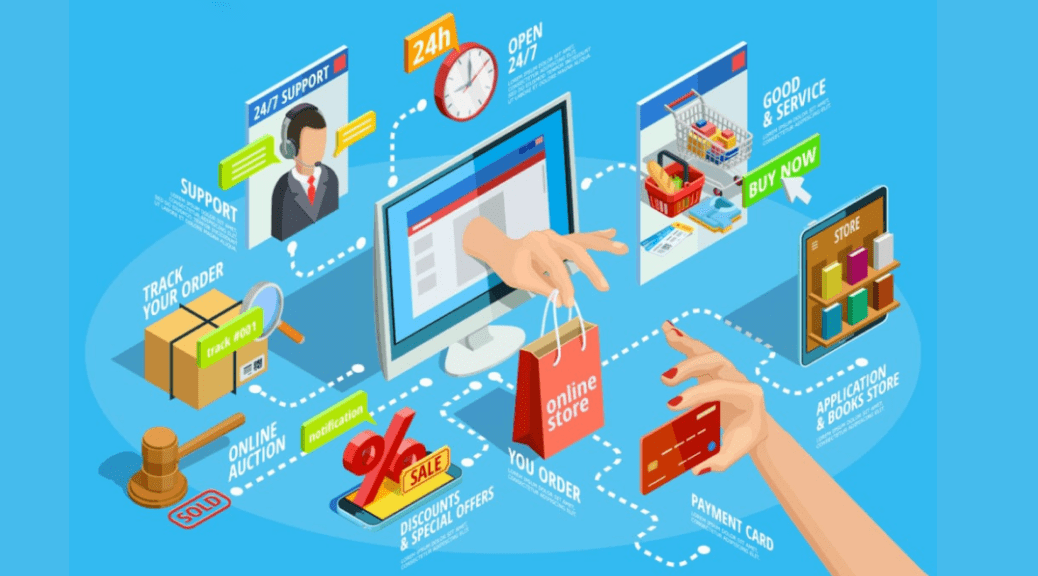
When we thought it’s over, it came back again. Yes, the second wave of Covid cases have shattered our expectations greatly. But all things are not gloomy at this front. As we have witnessed a new era where consumer buying behaviour has shifted online. So, what are those changes that made an entrance in the consumer buying trends? Kapil Makhija, CEO, Unicommerce penned down his observations here.
The world has been dealing with one of the biggest pandemics faced by mankind and people quickly adapted themselves to live in this new world of facemasks, social distancing, and video calls. It has led to the beginning of a new virtual era, where remote working and online shopping are the new normal. Consumers have embraced e-commerce with open arms and it’s going to be considered as the beginning of a new era for the e-tailing industry. It’s no mystery that the e-commerce business has seen an unprecedented uptick in the last six months, and consumers are habituated in buying stuffs and booking services online-here we can analyze the shift in consumer behavior triggered by the lockdown.
Businesses across sectors are moving online and India’s e-commerce industry is expected to report the greatest growth ever witnessed. There are new emerging sectors like FMCG and Personal Care which were predominantly offline and are now seriously considering an online business. There is also a sharp increase in consumer shopping from the brand website.
Given the rising number of online shoppers and the maturing ecosystem, here are five key consumer trends that are going to thrive in the ever-evolving e-commerce ecosystem.
Since the beginning of e-commerce in India, fashion and electronics have been the most popular category as they have been the key volume and revenue drivers for the e-commerce industry. The fashion segment has the largest share of order volume and the electronics segment leads the charge with a maximum share of GMV. However post-pandemic the e-commerce industry has seen people shopping across categories and the biggest gainers have been Personal Care, Beauty and Wellness (PCB&W), and FMCG & Healthcare (F&H) segments. As per the e-commerce trends report by Unicommerce and Kearney, the PCB&W segment saw volumes grow by 95 per cent supported with order value growth of 69 per cent in Q4 2020 as compared to the same period last year. The personal care segment has seen a rising number of new-age digital players that have created a mark and are giving tough competition to traditional brands with a global presence. FMCG & Healthcare (F&H) is another category that has benefited from people’s reluctance to venture out. The steep growth of FMCG has been due to a significant rise in first-time online grocery shoppers, making it an important category for mainstream e-commerce players like Flipkart and Amazon to actively focus and promote the grocery business. The report also stated that the FMCG category has reported an accelerated value growth of 94 per cent in Q4 2020 compared to the same period last year and the average cart value also increased by 33 per cent with an increasing number of consumers making bulk purchases.
Social media plays a key role in the formulation of opinions and influencing people. In simple words ‘Social Commerce” is a way of influencing consumers to make purchases while they are using a social media platform. The social commerce platforms empower small sellers to sell products to their network and these companies take care of their logistics and operations part, and primarily work on the commission model. Some of the leading companies in this space are Mall 91, Meesho, Roposo, SimSim, and Bulbul are becoming popular amongst consumers in Tier II and Tier III cities.
Another interesting format is WhatsApp commerce. WhatsApp is already being used by a large number of small business owners to conduct business through messaging and sharing pictures. In the last few years, we have seen the emergence of companies those have designed WhatsApp chatbots for retailers, which help them manage a large number of orders using AI. Now with the NPCI allowing UPI payment through WhatsApp, it’s expected to become one of the biggest social commerce platforms.
Until a few years back, e-commerce was considered as a retail choice of consumers from metropolitan and Tier I cities. Even today these cities continue to command the lion’s share of the overall country’s order volume, but there is a gradual increase in demands from Tier II and Tier III cities of India. Especially post lockdown, the e-commerce adoption rate in Tier II and Tier III cities has increased phenomenally. The recent “E-commerce Trends Report by Unicommerce and Kearney” stated that the Tier II and Tier III cities accounted for a whopping 90 per cent YOY incremental volume and value growth in the last quarter of 2020. The report also mentioned the total contribution of Tier II and Tier III+ cities increased from 32 per cent in Q4 2019 to 46 per cent in Q4 2020, eating up the 14 per cent share of traditional metropolitan and Tier I cities. The growth of these cities is supported by multiple factors like the rising adoption of social commerce, faster and timely deliveries, content in vernacular language, and the rising adoption of digital payment coupled with greater internet penetration.
As the increasing number of consumers shop online and the e-commerce ecosystem starts to mature, there is an increasing number of brands that are setting up their online store and consumers are also preferring to buy directly from brand websites. Brands’ own websites are finally turning a page in the Indian e-commerce space. The increasing numbers of brands are adopting the D2C strategy with renewed vigor to develop a strong connection with consumers. According to the “E-commerce Trends Report by Unicommerce and Kearney”, the number of companies investing in developing their own websites has increased by 51 per cent YOY in Q3 and 66 per cent YOY in Q4 2020. Brand websites are growing at a much faster pace, they have recorded a startling growth of 94 per cent in Q4 2020 as compared to the same period last year, while the marketplaces saw a growth of 58 per cent during the same time frame. As an increasing number of brands looking to build unique online positioning, it will be interesting to see how they continue to manage to attract customers and fare against marketplaces.
Value-conscious is not to be confused with discounts. Such buyer is the one who tries to find the best possible product or service and is also okay to pay a premium for a great shopping experience. Post pandemic, the discount offered by brands has reduced significantly, however, the demand continues to increase across all categories. While the demand has increased, the average order size has decreased, as consumers are spending judiciously considering the inflation and uncertain market conditions.
Today’s consumers also value and expect a great shopping experience, therefore brands need to invest time and effort in building robust business operations that can ensure timely and error-free deliveries. Companies are investing in forward and reverse supply chain capabilities with technology-led integration that helps them automate the processes and improve business efficiency.
To conclude, I must say we are in for a long overhaul where both businesses and consumers are going to see more new trends and habits in offing.
The page you requested could not be found. Try refining your search, or use the navigation above to locate the post.
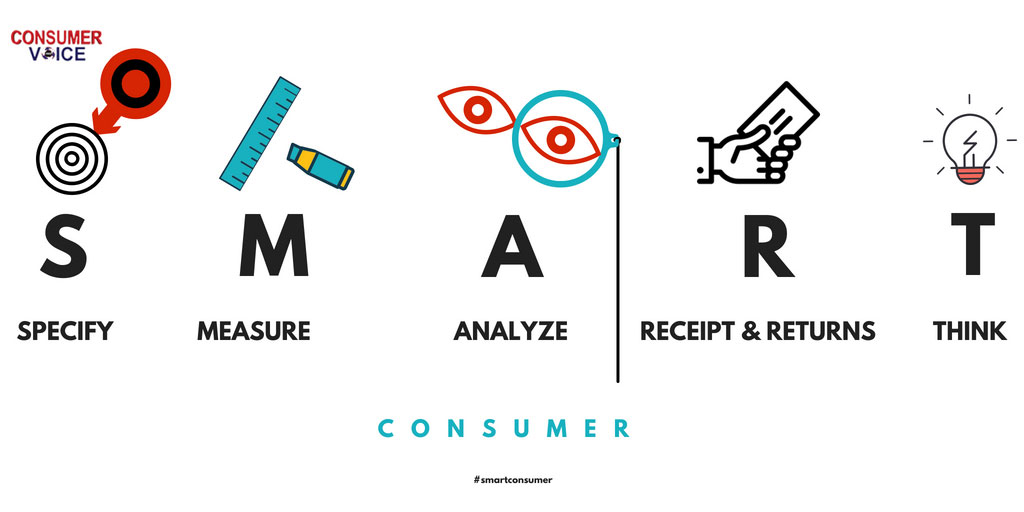
You want value for money but at times because of marketing gimmicks, end up taking a hasty decision to buy products or services that are not needed or don’t have the desired features or are simply below the standards. It is worse if you did not check the return policy or simply did not bother to have a bill. Hence a SMART Consumer is the one who buys best products or services as per requirements and knows how to protect oneself from any problem thereafter.
Specify: You should know the purpose of your purchase. Answer all the possible Ws – Why do you need this product or service? Who is going to use it? Where do we keep it? Etc.
Measure: Once you know the purpose of the purchase, fix a criterion. Make a check list of all the features and functions. This will help to narrow down your choices from the excessive variety of products that are available. You can measure the importance of each feature so that you can prioritize the ‘Must Haves’.
Analyse: Once you are armed with the checklist, it’s time to do the Market Analysis.
Receipts and Returns: Receipts are critical in case of local or unregistered sellers. Don’t fall prey to ‘without a bill-cash payment’ culture prevalent in India or be ready to lose all the guarantees or warrantees. A definitive Return Policy has become critical with online sales replacing the brick and mortar shops. A policy, that not only guarantees money back but there are no deductions too.
Think Tank: If you have diligently reached SMAR, there is a little chance of you taking a wrong decision but if it happens due to the malpractices of the retailers, manufacturers and service proviers, you have to be a think tank who when faces problems knows the solutions and they are:
Related
The page you requested could not be found. Try refining your search, or use the navigation above to locate the post.

The Reserve Bank of India (RBI) launched the Ombudsman Scheme for Digital Transactions (OSDT) vide a notification dated 31 January 2019 for redressal of complaints against ‘system participants’ as defined in the said scheme. It is an expeditious and cost-free apex-level mechanism for resolution of complaints regarding digital transactions undertaken by customers of the system participants. What is this office all about and what is it expected to do, and what may constitute grounds of complaint for customers, are aspects that this article will explain. So, the next time you are staring at the ‘transaction failed’ message on your screen, you may have to worry less, knowing that someone has got your back.
In its ‘Statement on Developmental and Regulatory Policies’ issued in December 2018, RBI said this: “With the digital mode for financial transactions gaining traction in the country, there is an emerging need for a dedicated, cost-free and expeditious grievance redressal mechanism for strengthening consumer confidence in this channel. It has therefore been decided to implement an ‘Ombudsman Scheme for Digital Transactions’ covering services provided by entities falling under Reserve Bank’s regulatory jurisdiction. The scheme will be notified by the end of January 2019.”
System participant means any person other than a bank participating in a payment system as defined under Section 2 of the Payment & Settlement Systems Act, 2007, excluding a system provider.
As per Clause 8 of the scheme, the Ombudsman for Digital Transactions shall receive and consider complaints on deficiency in services against system participants on any of the following grounds:
In respect of digital transactions done on third-party platforms, it will be the responsibility of the payment service provider to resolve customer disputes arising out of such transactions.
The Ombudsman shall receive and consider complaints relating to deficiency in services on the grounds mentioned above, irrespective of pecuniary value. He shall dispose of the complaints through
The Ombudsman endeavours to promote settlement of the complaint through conciliation/mediation by means of an agreement between the complainant and the system participant. If the terms of settlement (offered by the system participant) are acceptable in full and final settlement of one’s complaint, the Ombudsman will pass an order as per the terms of settlement and the same will then become binding on the system participant and the complainant.
If the system participant is found to have adhered to the extant norms and practices and if the complainant has been informed to this effect through appropriate means and the complainant’s objections, if any, are not received by the Ombudsman within the time frame provided, the Ombudsman may pass an order to close the complaint.
The compensation amount is limited to the amount arising directly out of the act or omission or commission of the system participant, or two million rupees (Rs 20 lakh), whichever is lower. The compensation shall be over and above the disputed amount.
The Ombudsman may award compensation not exceeding rupees 0.1 million (Rs 100,000) to the complainant for mental agony and harassment. The Ombudsman, while giving the compensation, shall take into account the loss of time and expenses incurred by the complainant, as also the harassment and mental anguish suffered by the complainant.
The complainant has the option to explore other recourse and/or remedies available as per the law.
One can file an appeal against the award or the decision of the Ombudsman rejecting the complaint, within 30 days of the date of receipt of communication of award or rejection of the complaint. The appellate authority may allow a further period not exceeding 30 days.
The Appellate Authority
Ombudsman Scheme for Digital Transactions
Consumer Education and Protection Department
Reserve Bank of India
First Floor, Amar Building Fort
Mumbai 400 001

I am a tuition teacher, I don’t need to file income tax. I am just a middle-class woman earning some money from my home kitchen, surely, I don’t need to file income tax. If you can relate to these statements then it’s probably time, we enlighten you on why tax filing is important for everyone, a self-employed person, a freelancer or a white collared employee of an MNC.
To make things easier, we have highlighted 13 reasons why you need to file income tax in India. Read them all here.
One good reason to file an income tax is to help the government decide the means and amounts of expenditure of citizens. When the government has realistic data, it helps in creating citizen-friendly policies.
Filing returns become mandatory for people who earn a specific amount of money in a year. If it is found that you are not filing the income tax when it’s mandatory for you, you can get in trouble with the income tax department.
If you want to register a property in your name, furnishing income tax returns of the past three years might help you to get done with the process easily.
People who want to take a home loan should maintain a steady record of all income tax returns as a loan provider would certainly want to see the same to establish your credibility as a loan seeker.
If you want a new credit card, providing copies of your income tax returns will help the card provider to issue you a card swiftly.
Claiming adjustments against past losses is easy when you have filed income tax consistently.
In case you want to file a revised return, you must have filed the original return previously.
When you have filed income tax returns for years, you can show it as a proof of your reliability to a loan company and persuade it to cancel your loan application rejection. It also comes in handy if the loan provider is offering a less amount than the amount of loan you need.
If you want to go abroad, you will need to have a visa interview. During the interview, you will be asked to furnish ITR receipts of the last few years or the latest year. It will ensure the country administration of the nation you plan to travel to that you will come back to India and won’t settle there.
In case you want to get a high valued life cover, the ITR receipts will come in handy. This is especially needed when you want to buy a term policy with a sum insured that is of INR 50 lakhs or more.
If you plan to bid for any government tenders, you will need to provide ITR receipts to prove that you are reliable. The number of receipts you need to provide varies from one government department to the other.
If you are self-employed or work as a freelancer, an ITR return might work as a substantial proof of income. It comes in handy during job interviews if you plan to join the corporate world again.
Believe it or not, if you are self-employed and you need to prove your earnings to a prospective bride or groom or their families, ITR receipts will help them trust you better, especially if it’s an arranged marriage.