No Results Found
The page you requested could not be found. Try refining your search, or use the navigation above to locate the post.


To encourage States/UTs to improve their performance and work towards establishing a proper food safety ecosystem in their jurisdiction, the Food Safety and Standards Authority of India (FSSAI) has released the State Food Safety Index (SFSI) annually for each financial year. The Index is a dynamic quantitative and qualitative benchmarking model that provides an objective framework for evaluating food safety across all States/UTs.
Shri Arun Singhal, CEO, FSSAI
The Food Safety Index reflects the overall performance of the States/ UTs on various parameters of food safety. These food safety parameters are broadly classified under following 5 significant factors assigned with separate weightage of marks.
Further, based on the fact that similar States should be compared to ensure comparability among similar entities for the generation of ranks of States/UTs under SFSI, the States/UTs are classified into 3 categories namely Large States, Small States and UTs for the evaluation and assessment.
The assessment and evaluation of each category were done by separate teams comprising of outside experts for food testing and food & nutrition professionals in addition to FSSAI officials. The teams examine the details received from States/UTs and also interacts with States/UTs through video-conferencing for verification and confirmation of data.
a) Ranking of States/UTs:
b) States/UTs with significant improvement in ranking during last year:
In an effort to galvanize States/UTs to work towards ensuring safe food for citizens, Union Minister for Health and Family Welfare Dr Mansukh Mandaviya released Food Safety and Standards Authority of India (FSSAI)’s 4th State Food Safety Index (SFSI) to measure the performance of States across five parameters of food safety. SFSI was started from 2018-19 with the aim of creating a competitive and positive change in the food safety ecosystem in the country. The index will help in providing safe and nutritious food to our citizens.
Dr. Mandaviya further added that the government is dedicated to ensure health security for every citizen in the country and for this it is focussing on primary, secondary and tertiary healthcare fronts with various initiatives like Health and Wellness Centres and strengthening of district hospitals under the National Health Mission. He praised the crucial role FSSAI plays in ensuring healthy and nutritious food to the citizens of our country. “It is important to note that states have an important role in ensuring food safety and healthy food practices. It is the need of the hour that we come together to ensure a healthy nation”, he further noted.
The Union Health Minister felicitated the winning State/UTs based on the ranking for the year 2021-22 for their impressive performance across parameters. This year, among the larger states, Tamil Nadu was the top ranking state, followed by Gujarat and Maharashtra. Among the smaller states, Goa stood first followed by Manipur and Sikkim. Among UTs, Jammu & Kashmir, Delhi and Chandigarh secured first, second and third ranks. Dr. Mandaviya also felicitated states which showed significant improvement in the State Food Safety Index.
To motivate Smart Cities to develop and execute a plan that supports a healthy, safe and sustainable food environment through adoption of various Eat Right India initiatives, the Health Minister also felicitated 11 winning smart cities of the EatSmart Cities Challenge, launched by FSSAI last year in association with the Smart Cities Mission under the aegis of Ministry of Housing and Urban Affairs (MoHUA). He also felicitated winners of the Eat Right Research Challenge for Cities and Districts and Eat Right Research Awards and Grants.
Encouraging the participants and congratulating them on the occasion of World Food Safety Day, Shri Rajesh Bhushan, Union Health Secretary, said that to prevent burden from food borne diseases and to ensure food safety, a multifaceted and multi stakeholder approach involving industries, government machinery, regulators, etc. is required and awareness must be created at each level of the society. Shri Arun Singhal, Chief Executive Officer (CEO), FSSAI said that food testing paradigm in the country is being improved in mission mode and Memorandum of Understanding (MoUs) have been signed with States/UTs, to carefully see the food safety implementation in their respective areas.
The page you requested could not be found. Try refining your search, or use the navigation above to locate the post.
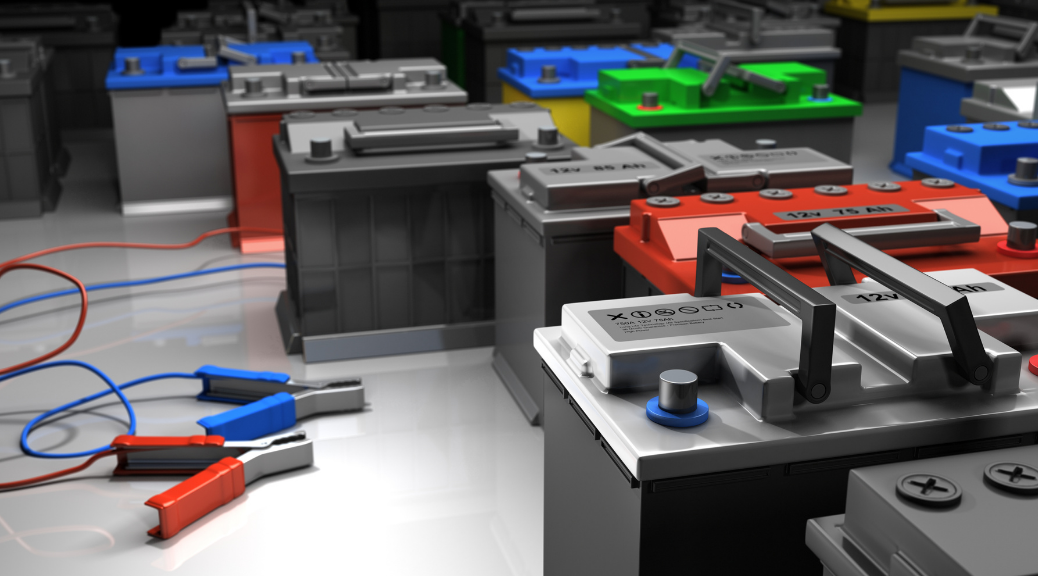
You don’t go to buy an inverter daily. Therefore, whenever the need hits you, make a smart choice of buying an efficient inverter that meets your requirement. The following compilation is a good reference to know the what, when and how of buying an inverter.
To begin with, know your power requirements and what electrical home appliances you will need/want to run on the inverter when there is no power. After all, you need that inverter to be able to operate your basic household electrical appliances. The first thing is to calculate how much backup you want, or how many appliances you want to support. Since each appliance has a different power requirement, it is advisable to note down what appliances are a must so that it will be easy for you to decide what capacity of inverter /battery you should purchase.
For example, If you want to support 4 fans, 3 tube lights, 3 CFL bulbs and one television, the total power requirement is (4 x 80 + 3 x 40 + 3 x 20 + 120) = 620 watts. So you will need an inverter that can support those 620 watts. Considering a power factor of 0.8, you will need an inverter/UPS of minimum 775 VA, or above, capacity.
Buying an inverter that meets your requirement and comes within your budget is dependent on many factors like the following:
There are three types of inverter based on the wave forms.
Sine-wave inverters are expensive compared to the other two types, but are the best for high sensitivity electronic equipments/heavy appliances. Modified sine-wave inverters are best for appliances with medium power requirements – for example, for televisions, laptop chargers, etc. Square-wave inverters are the least efficient inverters and can power only low-sensitivity applications such as lighting and heating.
kW and VA
Watts (W) and volt-amperes (VA) are units of measurement for electrical power. Watts refers to ‘real power’, while volt-amperes refer to ‘apparent power’. Electronic products show one or both of these values to provide information about how much energy they will consume or how much current they will draw.
The battery is the backbone of an inverter system. The performance and back up time of an inverter largely depends upon the battery quality and capacity. When you want to know ‘how much backup will the inverter provide’ or ‘for how many hours it can run all of your equipments’, you need to check the battery capacity. It is the battery capacity that decides the backup hours. It is expressed in Ah (ampere hours).
Tubular batteries and maintenance free batteries are popular nowadays. While on the costlier side, these have much higher storage capacity and longer life spans when compared to flat-plate batteries.
The battery is the backbone of an inverter system. The performance and back up time of an inverter largely depends upon the battery quality and capacity. When you want to know ‘how much backup will the inverter provide’ or ‘for how many hours it can run all of your equipments’, you need to check the battery capacity. It is the battery capacity that decides the backup hours. It is expressed in Ah (ampere hours).
Tubular batteries and maintenance free batteries are popular nowadays. While on the costlier side, these have much higher storage capacity and longer life spans when compared to flat-plate batteries.
An inverter is usually used for running energy backup for lights, ceiling fans, computers, television, etc. If you wish to run the refrigerator, washing machine, air conditioner, etc., you need to buy a higher-capacity inverter.
Batteries are available in various ampere-hour capacities. You need to first decide how much backup you require. Here is the formula to calculate the backup:
Load/Voltage x backup hours = amperes
For example, 542 watts/12V x 3 hours= 135Ah
|
Power Requirement |
Backup (in hours) |
Suggested Battery Size |
|---|---|---|
|
600 watts |
2 |
(600 x 2)/12 = 100Ah |
|
900 watts |
2 |
(900 x 2)/12 = 150Ah |
|
1000 watts |
3 |
(1,000 x 3)/12 = 250Ah |
| Feature | Flat-Plate Battery | Tubular Battery | Maintenance-Free Batteries |
|---|---|---|---|
| Battery life | Low (~ 3 years) | High (~ 5 years) | Medium (3 to 4 years) |
| Maintenance | High | Medium | Low |
| Water toppings | High | Medium | Low |
| Safety | Low | Low | High |
| Releases harmful gases | Yes | Yes | No |
| Ventilation requirement | Yes | Yes | No |
|
Weight |
Low |
High |
Depends on the model |
Your dealer will pay you for the dead battery or deduct the amount from the new battery price. Ensure that your battery is not disposed of in any manner other than by depositing it with the local dealer/manufacturer/registered recycler or at designated collection centres.
Comparisons at a Glance of Inverters: The survey was conducted in June 2022, covering 600-2000 VA Capacity Inverters and 150-200 Ah capacity tabular type battery.
| Sl No. | Brand | Model | Capacity | Sine wave/Quesi sine wave/square wave | Inverter | Battery (no. of batteries required) | Price, Rs. | Warrantee (year) |
| 1 | Luminous | Zelio+ 1100 | 900VA/756 W | Sine wave | Inverter UPS | 1 | 6599 | 2 |
| 2 | V Guard | Prime 1150 | 1000VA/800W | Sine wave | Digital Inverter UPS | 1 | 5798 | 2 |
| 3 | Luminous | Zolt 1100 | 900VA/756 W | Sine wave | inverter | 1 | 6689 | 2 |
| 4 | Livguard | LG700PV | 600VA | Square wave | inverter | 1 | 4036 | 3 |
| 5 | Luminous | Power Sine 800W | 700VA | Sine wave | inverter | 1 | 5123 | 2 |
| 6 | Microtek | UPSSEBz 1200 | 1100VA | Sine wave | UPS | 1 | 6590 | 2 |
| 7 | Microtek | UPS EB 900 | 800VA/672W | Sine wave | UPS Inverter | 1 | 5690 | 2 |
| 8 | Microtek | Luxe SW1400 | 1100VA/825W | Sine Wave | Inverter/Home UPS | 1 | 8990 | 2 |
| 9 | Genus | SURJA Pro 1150 | 40AMP 12 V | Sine Wave | Solar Home Inverter UPS | 1 | 7640 | 2 |
| 10 | Exide | 850VA | 850VA | Sine Wave | Home inverter | 1 | 5400 | 2 |
| 11 | Microtek | Energy Saver | 1625VA/1300W | Sine Wave | Inverter/UPS for Home | 1 | 9999 | 2 |
| 12 | Generic | AQ700+ | 600VA | Sine Wave | inverter | 1 | 4700 | 2 |
| 13 | Luminous | Zelio | 1700VA | Sine Wave | Inverter Home UPS | 2 | 10800 | 2 |
| 14 | Microtek | Hybrid | 950VA | Sine Wave | Ups Inverter | 1 | 5434 | 2 |
| 15 | Exide | 850VA pure sine wave | 850VA | Sine Wave | Ups Inverter | 1 | 6090 | 2 |
| 16 | Microtek | Upseb 900 | 800VA | square wave | Inverter | 1 | 3,680 | 2 |
| 17 | Microtek | Ups 24×7 Hb | 725VA | Sine Wave | Inverter | 1 | 4999 | 2 |
| 18 | Sukam | Falcon Eco | 1000VA | Sine Wave | Inverter | 1 | 4999 | 2 |
| 19 | Sukam | Falcon Eco | 2000VA | Sine Wave | Inverter | 2 | 6900 | 2 |
| 20 | Microtek | UPS EB | 700VA | square wave | Inverter | 1 | 4800 | 2 |
| 21 | Luminous | Hkva | 2 kva | Sine Cruze Wave | Inverter | 15699 | 2 | |
| 22 | Smarten | Superb 2500 VA | 2500VA | Pure Sine wave | Inverter | 2 | 15564 | 2 |
| 23 | LivFast | PS 2500 | 2500VA | Pure Sine Wave | Inverter | 2 | 13200 | 2 |
| 24 | Luminous | POWERX 2250 VA | 2250VA | Pure Sine Wave | Inverter | 1 | 11400 | 2 |
| 25 | Exide |
|
2200VA | Pure Sine Wave | Inverter | 1 | 12999 | 2 |
|
Sl No. |
Brand |
Model |
Capacity (Ah) |
Weight (kg) |
New price |
Warrantee (months) |
|
1 |
Exide |
New Insta Brite Battery |
150 |
41 |
9899 |
36 |
|
2 |
Amaron |
Tall Tubular Battery |
150 |
|
12,450 |
48 |
|
3 |
Luminous |
ILTT 18048 |
150 |
54.7 |
16650 |
60 |
|
4 |
Exide |
Inva Tubular IT500 |
150 |
|
|
|
|
5 |
Luminous |
RC 18000 |
150 |
53.3 |
14600 |
36 |
|
6 |
Genus |
Hallabol GTT170 |
150 |
|
12940 |
60 |
|
7 |
Luminous |
ILTT 26060 |
200 |
63.6 |
21300 |
60 |
|
8 |
Amaron |
CR150TT |
150 |
55.0 |
12450 |
36 |
|
9 |
Exide |
IMTT1500 |
150 |
55.0 |
15,929 |
36 |
|
10 |
Genus |
Invomax GTT180 |
150 |
|
13950 |
60 |
|
11 |
Luminous |
SC18054-150AH |
150 |
51.2 |
16100 |
54 |
|
12 |
Livguard |
PT 1554STJ |
150 |
|
13960 |
|
|
13 |
Exide |
IMST1500 |
150 |
43.0 |
14899 |
36 |
|
14 |
Okaya |
OPHT18060 |
150 |
50 |
15699 |
60 |
|
15 |
Genus |
GTT185 |
165 |
56 |
14275 |
60 |
Note: Price may vary from retailer to retailer and are negotiable. Before buying check price on amazon.in and flipkart.com and compare the models.
|
Back Up Time: Back up time of inverter battery depends on battery capacity (Ah) and connected load. Estimated back up time is given below in table : |
||||
|
Load, watts |
12 Volt Inverter Battery |
|||
|
100 Ah |
150 Ah |
180 Ah |
200 Ah |
|
|
Backup time, hours |
Backup time, hours |
Backup time, hours |
Backup time, hours |
|
|
50 |
19.2 |
28.8 |
34.56 |
38.4 |
|
100 |
9.6 |
14.4 |
17.28 |
19.2 |
|
150 |
6.4 |
9.6 |
11.52 |
12.8 |
|
200 |
4.8 |
7.2 |
8.64 |
9.6 |
|
250 |
3.8 |
5.7 |
6.91 |
7.68 |
|
300 |
3.2 |
4.8 |
5.76 |
6.4 |
|
350 |
2.7 |
4.11 |
4.93 |
5.4 |
|
400 |
2.4 |
3.6 |
4.32 |
4.8 |
|
450 |
2.1 |
3.2 |
3.84 |
4.26 |
|
500 |
1.92 |
2.8 |
3.45 |
3.84 |
The solar inverter consists of a solar charge controller and some switching circuits. It has a terminal for connecting battery and solar panels of correct rating. The battery is charged from the output of solar panels when it is under sufficient sunlight. It allows for reduction in the electricity bill. Solar inverter consists of solar panels, charge controller, batteries and inverters. In a solar inverter, the photovoltaic solar panel produces variable direct current (DC). Solar inverter converts the DC into alternating current. The solar panel can be placed at homes, offices, etc. The converted AC power can be used by power appliances.
While both UPS and inverters provide backup power supply during main power outage, inverters are preferred more for general electric appliances whose working may not get affected by extended delays in the power supply. UPS are used for electronic appliances such as computers, servers, workstations and medical equipment, which perform critical tasks and cannot tolerate delays in the power supply. The switching of UPS from the main supply to the battery is very immediate, so it is used to provide backup power of important or critical electronics equipment. In inverters, the switching from mains supply to battery takes time and hence these are used to provide power supply to less important electrical equipment. The UPS protects the load against spike, voltage fluctuation, and noise.
Related
The page you requested could not be found. Try refining your search, or use the navigation above to locate the post.




Term Insurance is not just an expense, it is a protection cover. Only 3.7 percent of the people in India have insurance, which means a large part of the population is without insurance cover. Not buying insurance is an injustice to loved ones. Particularly in times like Corona, term insurance will be able to help your family financially. So don’t miss out on the right term insurance, not just for yourself but for your family. Now, the central question is how to choose term insurance and why is it so important?
Subas Tiwari
Term insurance is a basic life insurance policy, which gives you a cover of protection. Many times people postpone term plans because they consider it an expense, but its premium is not expensive. It starts with just Rs. 400 and you get a good life cover. In case of sudden death of the insured, the family gets the entire sum assured.
Understand your income base and decide on the insurance cover based on that. Experts believe that there should be life insurance of 15-20 times the income. The cover can also be decided according to age. If you are below 30 years of age, then take a cover of 25-30 times of the income. If you are between 30-45 years, then take an insurance of 15-20 times of the income and if above 45 years, then 10 times the amount of income should be insured. It is also important to estimate how many people are dependent on your income.
It is wise to buy term insurance early. At an early age, you will be able to lock in the insurance at a cheaper premium. Younger people have lower premiums. The premium once paid, will always be fixed. Therefore, the sooner you buy term insurance, the more benefits you will be in.
1) Claim Settlement Ratio
This gives us an idea about the claim solving ability of the insurance company. If claims are intimated and the insurance company settles those, claim settlement ratio would be good. In simple words – claim settlement ratio is the number of claims settled by the insurance company out of every 100 claims it has received. Higher claim settlement ratio implies that majority of claims are getting settled. Higher the claim settlement ratio for the company, the better rated the company is in the eyes of the public.
2) Don’t get mislead by “per day premium” marketing gimmick
A lot of insurance companies have started to advertise their term insurance plans by sharing the cost per day basis, like for example – “Buy 1 crore term plan just for Rs 25/day”. However, note that these numbers might be applicable only for a certain age group and tenure of the policy.
Like it might happen that the advertised premium per day is only for the clients around 25 years and for a policy of 40 years. Your case will be different and the premiums might differ for you, so don’t get trapped by the lure of cheaper premiums.
3) Don’t buy single premium policies
At times, you have to choose between single premiums vs. regular premium while purchasing a life insurance policy. A lot of people think that just because they can afford to pay a onetime premium, it makes sense, but it’s not true.
Other than some cases, it does not make much sense to pay a one-time premium (single premium) while buying a term plan. The best option which will work for most people is the yearly premium. So if your agent is trying to explain to you how a one-time payment will help you save the cost, don’t fall for it.
4) Don’t get over-excited by term insurance riders
“Riders” are great add on with a term insurance plan, but only if you really require them or if they are specific to your case. Don’t add them just because it’s available and gives you a sense of more security. I mean if you travel a lot, the risk of dying in an accident is higher for you, so in that case, you can add an accidental rider. Here are various types of term plan riders
In the same way, if you feel that you want to cover the risk of some critical illness in the future and don’t want to buy a separate policy, then you can add critical cover. But don’t add any term insurance riders for the sake of it.
5) Buy the basic version of the term insurance plan
A term plan comes into various flavours nowadays. The most basic one is the one which pays you a lump sum on death. However, there are other variations now which also gives you income for 10/20 years along with the main cover, or pays only the income for the next 10/20 years and a small lump sum at the time of claim.
I think one should just choose the base policy in most of the cases. Most of the other options are designed for very specific situations and they are not “better” or “bad” compared to the base policy. To check this, you can go to any term insurance premium calculator and find out the premium with rider and without a rider.
6) Tell them if you are a smoker/alcoholic
One of the worst things you can do while purchasing any life insurance plan is to hide the fact that you are a smoker or consume alcohol. Please don’t hide it. There is nothing like a best term insurance plan for smokers in India at the moment.
Your premium calculation happens based on this critical information and if you hide these facts, then you are actually breaching the contract with the company and almost always your claim will be rejected at the end. Also, don’t think that just because you smoke just once in a while does not make you a non-smoker.
If you smoke (even though fewer number of times), you are a smoker in the eyes of the life insurance company. Same is the case with those who take alcohol.
Make sure you fill your own form because there have been cases when an agent just mentions the policyholder as non-smoker or non-alcoholic to make sure the policy is easily issued.
7) Don’t hide your health information
Another grave mistake done by policy buyers is to hide any critical health information while purchasing the policy. If you have any health issues or have gone through any major operations/surgeries then you should clearly communicate that to the insurance company. One of the reasons for term insurance claim rejection is hiding important facts while purchasing the policy. Please don’t wait for the insurance form to ask you the exact details.
An insurance policy is actually a proposal from your end in the eyes of law where you have to disclose all the facts and the company will accept your case or reject it. So the onus of providing all the information is on you.
8) Don’t hide your family health history
Even your family health history matters. If your parents or siblings have some illness, then even that should be shared by you. Please don’t hide it because even that information impacts your premium. Many people think that just because their parents had diabetes, it does not matter at all. That’s not true.
9) Don’t take small insurance cover (like 10-20 lacs)
Do you know that the average sum assured per India is in the range of Rs. 90,000 to 1 lac only? Indians on average are highly uninsured, however, that’s mostly true for those who do not have term plans. But even those who have term plan try to cut the corners and eventually take less term insurance cover.
The most favourite number nowadays is Rs. 1 crore. I see most of the people just taking a 1 crore term insurance plan thinking that it’s the right number. No, it’s not the case.
With the rising costs and lots of aspirations, Rs. 1 crore might not be enough for most of the families all their life. I suggest you should take a good enough cover which gives you enough peace of mind. Make sure you add up all your liabilities, 300 times of your monthly expenses and some more amount which can help your family reach your other financial goals and take at least that much cover. If your life insurance requirement is Rs. 1.3 crore, better take a 1.5 crore plan and not 1 crore.
10) Don’t forget to add nominee’s name
While filling the insurance form, make sure you carefully put the nominee’s name. But who can be a nominee in insurance? Ideally, it should be wife, children or someone whom you want to pass the term plan money. But try to avoid very old people as the nominee (in general).
Also make sure you mention this fact in your WILL too, or if you are not going to create a WILL right now, you can take the life insurance policy under MWP Act, so that your nominee will be the final person (it can only be wife and kids if you add MWP) who gets the money.
If you have bought the term plan long back and now your preference has changed, it’s better to change the nominee’s name.
11) Don’t take more than 1-2 policy
You should ideally have 1 term plan policy in your life insurance portfolio, the max can be 2 policies. But nothing more than that.
I have seen some people dividing their 2 crores of the cover into 4 policies of 50 lacs each with 4 different companies and it’s a little bit of stretch. In almost all cases, 1 single policy of a big amount is good enough.
However, if you still feel that you want to break it into two policies, that’s the maximum you should do. Also, some people who are going to buy another term plan after a couple of years should not note this point that they should eventually not have more than 2 policies.
12) Disclose the old insurance policy
When you buy any life insurance policy, it’s mandatory as per their rules to disclose the old insurance policy you already have. In most of the cases, when people buy a term plan for the first time, they already have a couple of traditional insurance plans, but they fail to declare that.
I suggest you don’t do that because as per life insurance policies, a company should know how much coverage you already have and only based on that they will offer you additional cover.
If you have already bought a term plan without mentioning your old policies, you should reach the customer care of the company concerned and share with them about your old policies.
13) Check the policy papers once you get it
One of the things which you should immediately do after receiving the policy is to check all the fine points and a copy of your medical examination. Kindly go through each point and make sure things like your age, name, blood group, address and other important things are mentioned correctly.
There have been cases, where the information has been wrong. If things are wrong, you can reach out to the company customer care to get it corrected.
14) Communicate to your family that you bought a term plan
You should share about buying the term plan with your family immediately along with the policy papers and the contact number of the insurer.
You can also write down the claim process on paper and keep that at a safe location and share it with your family. I know it’s not easy to talk about even though it’s the logical thing to do. Nonetheless, at least communicate with your family about the important things they should be aware of.
The page you requested could not be found. Try refining your search, or use the navigation above to locate the post.

Subas Tiwari
Indian residents falling under the following categories:
Joint deposit of gold by two or more eligible depositors is also permitted under the Gold Monetization Scheme. In such cases, the deposit shall be credited to the joint deposit account opened in the name of such depositors.
The minimum limit for depositing gold in the bank under the Gold Monetization Scheme is 10 grams. There is no maximum deposit limit. There are three options for depositing gold in the Gold Monetization Scheme. Short term bank deposits, medium term bank deposits and long term bank deposits. The tenure of Short Term Bank Deposit (STBD) ranges from 1-3 years. At the same time, the tenure of medium term and long term deposits is 5-7 years and 12-15 years respectively.
Talking about the interest on gold deposited in the bank under the Gold Monetization Scheme, the interest in short term deposits in Punjab National Bank ranges from 0.50 percent to 0.75 percent annually. Whereas in SBI, this rate ranges from 0.50 percent to 0.60 percent per annum. Both the banks offer 2.50% annual interest on long term deposits and 2.25% on medium term deposits. Under the scheme, banks will accept raw gold like gold bars, coins, and ornaments (without stones and other metals).
To deposit gold in the bank, customers need to fill in the application form, ID proof, address proof and investment form. Under the scheme, the Gold Deposit Certificate will be issued to the customers by the authorized branch of the bank. This certificate will be issued for pure gold (purity of 995). Nomination facility is also available under the Gold Monetization Scheme on the lines of other Rupee Deposit Schemes.
Those who deposited in the scheme in PNB before April 5, 2021, would be paid both principal and interest on maturity either in the form of gold or as an amount equal to the gold deposited + interest thereon. In both PNB and SBI, those who have deposited gold in the Gold Monetization Scheme on or after April 5, 2021, will be required to pay the principal amount on maturity under the short term deposit option either in the form of gold or as deposits on completion of the maturity period. It will be done in the form of an amount equal to the gold made. Interest will be paid in rupees.
Under the medium and long term deposit option, the principal will be paid on maturity either in the form of gold or as an amount equal to the gold deposited + interest thereon. However, in case of premature withdrawal, the payment will be in rupees only. Whether the maturity amount is in gold or in money, it is up to the customer.
Short Term Option: Premature withdrawal may be allowed. However, no interest will accrue in case of withdrawal before completion of one year from the effective date of deposit. In all other cases, a prepayment penalty of 0.15% will be levied.
Medium Term Option: Withdrawals are allowed any time after 3 years. But interest will attract penalty.
Long Term Option: Premature withdrawal is allowed any time after 5 years. But interest will attract penalty.
Response: No. However, banks should submit to RBI the implementation details including names of the Collection and Purity Testing Centres (CPTCs) and refiners with whom they have entered into tripartite agreement and the branches operating the scheme. Banks should also report the amount of gold mobilised under the scheme by all branches in a consolidated manner on a monthly basis in the prescribed format.
Response: Resident Indians [Individuals, HUFs, Proprietorship & Partnership firms, Trusts including Mutual Funds/Exchange Traded Funds registered under SBI (Mutual Fund) Regulations, Companies, charitable institutions, Central Government, State Government or any other entity owned by Central Government or State Government].
Response: An eligible depositor can open a Gold Deposit Account with any of the designated banks after meeting the KYC norms. Generally, deposits under the scheme shall be made at the CPTC/GMS Mobilisation, Collection & Testing Agent (GMCTA) which would then test the purity of the customers’ gold in their presence and issue deposit receipts of the standard gold of 995 fineness to the depositor and also inform the customers’ respective bank about acceptance of deposit. The designated bank will credit Short-Term Bank Deposit (STBD) or Medium/Long-Term Government Deposit (MLTGD) account of the customer, as is applicable, either on the same day of receipt of deposit receipt by the depositor or within 30 days of deposit of gold at CPTC/GMCTA (regardless of whether the depositor submits the receipt or not), whichever is earlier.
Thereafter, the interest on deposits will start accruing from date of conversion of gold deposited into tradable gold bars or 30 days after receipt of gold at the CPTC/GMCTA, whichever is earlier.
Response: The minimum deposit at any one time is 10 grams of raw gold (bars, coins, jewellery excluding stones and other metals) and there is no maximum limit for deposit under the scheme. The quantity of gold deposited will be expressed up to three decimals of a gram.
Response: The deposit under STBD (1-3 years), MTGD (5-7 years), and LTGD (12-15 years) can be made for only specified timeframe. These deposits can be subsequently renewed upon maturity.
Response: Yes, unless the potential depositor is already a bank’s KYC compliant customer.
Response: Banks and the CPTCs/GMCTAs may put in place a mutually acceptable procedure in this regard and notify that to the relevant CPTCs/GMCTAs.
Response: The scheme envisages the following types of deposits –
| Sr. No. | Type of Deposit | Duration | Minimum Lock-in Period | Applicable Interest Rate | Periodicity of Interest Payment |
| i. | Short Term Bank Deposit (STBD) | 1-3 years | As determined by banks | As determined by banks | As determined by banks |
| ii. | Medium Term Government Deposit (MTGD) | 5-7 years | 3 years | 2.25% p.a. | Simple Interest annually or cumulative interest at time of maturity compounded annually. |
| iii. | Long Term Government Deposit (LTGD) | 12-15 years | 5 years | 2.50% p.a. | Simple Interest annually or cumulative interest at time of maturity compounded annually. |
Response: It is determined by the Central Government and advised to banks by RBI.
Response: Joint deposit of two or more eligible depositors is allowed under the scheme. The deposit will be credited to a joint deposit account opened in name of such depositors. The existing rules on joint operation of bank accounts including nomination will be applicable.
Response: In case of STBD, the corresponding provisions will be as determined by designated banks. In case of MTGD or LTGD deposits, premature closure before the minimum lock-in period is available in case of death of depositor or default of loan taken against MLTGD certificate.
Response: The jewellery will be melted by the CPTC/GMCTAs to conduct the fire assay and the customer can then get back gold only in post-melted form. Thus, the decision regarding taking back jewellery in the original form must be taken by the customer after XRF test and before giving consent for fire-assaying.
Response:
| Sr. No. | Type of Deposit | Principal Repayment on Maturity | Interest Repayment on Maturity |
| i. | Short Term Bank Deposit (STBD)* | In gold or INR equivalent of the value of deposited gold at time of redemption | In INR with reference to value of gold in terms of Indian Rupees at the time of deposit. |
| ii. | Medium Term Government Deposit (MTGD) | In gold or INR equivalent of the value of deposited gold at time of redemption | In INR with reference to value of gold in terms of Indian Rupees at the time of deposit. |
| iii. | Long Term Government Deposit (LTGD) | In gold or INR equivalent of the value of deposited gold at time of redemption | In INR with reference to value of gold in terms of Indian Rupees at the time of deposit. |
| * with effect from April 05, 2021 | |||
In case of all types of deposit, the option of redemption of principal in gold or INR equivalent will be obtained at the time of making the deposit. Further, any premature redemption of MLTGD will only be in INR, while in case of STBD it will be as determined by banks.
Response: Suppose the principal amount is, say 302.86 grams of gold, and the customer has to be paid in gold, a bank can repay 302 grams in gold and 0.86 grams in equivalent amount of INR. It may be noted that the interest on deposit shall be calculated in INR on the value of gold at the time of deposit.
Response: No.
Response: Yes. Rupee loans can be availed against the collateral of Deposit Certificates issued by the banks under GMS.
Response: Yes.
Response: Yes. Designated banks are allowed to lend gold mobilized under the scheme to other designated banks for similar use as prescribed under the scheme.


