
test ticker
[t4b-ticker]
Personal Loan by Banks
Personal Loan by Banks
The festive season is approaching, and you might be considering various ways to immerse yourself in the holiday spirit. Perhaps you find yourself in need of quick and hassle-free cash. Maybe you’re planning a family trip out of town during festive holidays like Dussehra or Deepavali. It’s possible that you’re preparing for your wedding and require funds to book your honeymoon. Alternatively, there may be a family wedding on the horizon, necessitating financial resources for the celebration. You could also be facing a financial crisis.
If you find yourself in any of these compelling situations and lack sufficient cash on hand, obtaining a personal loan from a bank presents an ideal solution to meet these one-time, fixed expenses.
Subas Tiwari
What is a Personal Loan?
Personal loans are loans granted for a limited period with a fixed amount and charged interest which are both repayable in monthly instalments. They are called ‘clean’ or ‘unsecured’ loans, i.e., loans without obtaining any tangible security (property, deposits, bonds, etc.). Only personal sureties are required to be furnished to confirm that you are a dependable person in society & will not default on repayment of the loan given. Personal loans are generally used to meet temporary cash requirements such as wedding, children’s education, home improvement/repairs, luxury holiday, buying a car or to buy an electronic appliance, etc.
There are several banks and financial institutions providing attractive deals on personal loan offers with lucrative interest rates. Each personal loan lending institution has different eligibility criteria, rate of interest, and repayment tenure, which should be reviewed and compared to make an informed and smart decision before applying.
Eligibility for Personal Loan:
For Salaried Class
-Should be having a running bank account where salary is being credited regularly. The bank account need not be with the bank where one is applying for a personal loan, but banks prefer to consider such loans to be given to their own clientele as a priority.
-One should have a job of permanent nature. Banks would not give a loan to a person whose job is temporary.
-The length of service or employment also plays a part in expediting the loan sanction.
-Place of residence should either be owned or rented with a lease agreement.
-Residence proof (voter ID card, Adhaar Card, etc.) & identity proof (employment ID card, PAN card, etc.) copies should be produced duly self-attested along with bank application form along with 2 photographs.
-Though the reason/purpose of the personal loan is not mandatory, the bank would like you to state some reason (any one of the above or other purposes, which can be vague like-for meeting unplanned personal domestic expenses.
-If you already enjoy any other loan like car loan or home loan, those deductions will also be considered to calculate total deductions out of the salary & arrive at eligible loan amount.
-Your CIBIL score (see box) will also play a significant part in the bank’s decision in granting a personal loan.
-There is no fixed criterion for arriving at eligible loan amount, as individual banks have different methods of calculation, but the generally accepted practice is to fix a ceiling of about 50% of deductions from salary including the repayment of the loan to be granted. If you are within this ceiling, then the eligible amount could be about 10/12 times the gross monthly salary or 6 times the total taxable income as declared in Form 16 or the Income Tax Return. This can vary amongst nationalized banks & can be different among private banks (private banks commute on the take-home pay).
For Self Employed
They are those who do either business or freelancing assignments and some work from home. They may do part-time or full-time assignments & so may be having more than one employer. The following additional conditions may apply when they seek a personal loan from a bank.
-Since he does not get a salary, the business income as reflected in the Income Tax Return would be the basis of ascertaining his total income.
-He may be required to submit details of his enterprise.
-The performance of the business can also be a factor in influencing his loan sanction. In the case of new enterprise, banks can insist on collateral securities like bank deposits, bonds, etc. in addition to providing one or more personal surety of adequate Net Worth.
For Professionals
They are those who either have their own business/service like Doctor, Lawyer, etc. or those who are technically qualified but are working in an organization. The following could be additional conditions to be fulfilled.
-The attested copy of their Qualification would be required to be submitted along with the application form.
-Since some of the banks have specialized personal loan schemes for such professionals offering lower rate of interest on such loan, the lending may ask some details of the profession as also copies of Receipts/Payments and/or Income/Expenditure account.
Advantages/ Benefits of a Personal Loan to a consumer-borrower
- The first & foremost benefit is the quickness with which the loan application is either sanctioned or disposed of (rejected). The icing on the cake is in the timing.
- Secondly, in most of the sanctioned personal loans, the banks do not insist on any collateral security or in some cases, even personal guarantee/surety. So, it is advantageous for the loan-seeker, as he need not be under any obligation to his office colleague/friend to request for providing a personal surety.
- Most of the banks do not ask for margin component (borrower’s stake in the risk). Hence, there is absolutely no need for the consumer to run around to arrange to provide for depositing margin money.
- The purpose of the loan is immaterial in most cases. Hence, the consumer need not take pains to explain the genuineness of the purpose & submit proof for such purpose.
- Simple documentation is assured with no elaborate procedures.
- Making monthly repayments is now made consumer-friendly with banks agreeing to take post-dated cheques (PDCs) for the amount of each instalment and presenting the same on due dates of loan. The consumer need not visit the bank at all for such work. Where the loan instalment payable is to be taken out of the savings account of the customer, the banks obtain written instructions & act on them.
Disadvantages/Limitations to the consumer-borrower
- The first & foremost is that the rate of interest is the highest for this type of loan. It’s a costly cost to the consumer, as this is an ‘unsecured’ loan. In comparison, secured loans are comparatively cheaper.
- Secondly, the period of the loan is normally limited to 60 months. Banks do not favour or take exposure for a longer tenure. This limits the consumers’ requirements, where, by getting a longer period of repayment, he could bring his work to completion.
- According to bank sources, this type of loan has a higher risk and can end up as a Non-Performing Asset, if repayment stops midway either due to change of job/temporarily unemployed status/death of the borrower/change of address without trace, etc. Hence, many banks do not consider giving a loan for non-customers, i.e., those who have no previous bank dealings with the lender. So, this severely restricts the options available to the consumer-borrower to seek a loan from any bank in the vicinity of his residence or place of work.
- Most of the banks are not willing to grant personal loans of more than Rs.15.00 lacs even though their website/brochure talks of maximum amount being much more than what they say they will give. So, the consumer-borrower will not get the benefit of more loan even if he is otherwise eligible!
- Even though a couple of banks claim that they don’t need personal surety/guarantor for such loans, many of the banks insist on providing the same for the loan transaction to add trustworthiness to the loan contract.
Banks Personal Loan Interest Rates & Processing Fee
|
Bank |
Interest Rate (p.a.) |
Processing Fee |
|
HDFC Bank |
10.5% p.a. – 21.00% p.a. |
Up to 2.50% |
|
ICICI Bank |
10.75% p.a. – 19.00% p.a. |
Up to 2.50% |
|
Yes Bank |
10.99% p.a. – 20% p.a. |
Up to 2% |
|
Kotak Mahindra Bank |
10.99% and above |
Up to 3% |
|
Axis Bank |
10.49% p.a.- 22% p.a. |
Up to 2% of the loan amount |
|
IndusInd Bank |
10.25% p.a. – 27% p.a. |
3% onwards |
|
HSBC Bank |
9.99% p.a. – 16.00% p.a. |
Up to 2% |
|
IDFC First Bank |
10.49% p.a. onwards |
Up to 3.5% |
|
State Bank of India |
11% p.a. – 14% p.a. |
Up to 1.50% |
|
Karnataka Bank |
14.23% |
At the discretion of the bank |
|
Bank of Baroda |
10.90% p.a. – 18.25% p.a. |
Up to 2% |
|
Federal Bank |
11.49% p.a. – 14.49% p.a. |
At the discretion of the bank |
|
Bank of India |
10.25% onwards |
Up to 2% |
|
IDBI Bank |
10.50% p.a. – 13.25% p.a. |
Contact the bank |
|
Karur Vysya Bank |
10.50% p.a. – 13.50% p.a. |
1.50% onwards |
|
South Indian Bank |
12.85% p.a. – 20.35% p.a. |
Up to 2% |
|
RBL Bank |
14% p.a. – 23% p.a. |
Up to 3.5% |
|
Punjab National Bank |
11.40% p.a. onwards |
Up to 1.00% |
|
Bank of Maharashtra |
9.75% p.a. onwards |
Up to 1% |
|
Central Bank of India |
12.35% p.a. – 12.55% p.a. |
Up to 1% |
|
City Union Bank |
At the discretion of bank |
1.00% subject to a minimum of Rs.250 |
|
J&K Bank |
12.30% p.a. – 13.30% p.a. |
Up to 1% subject to a maximum of Rs.10,000 |
Interest Rates & Processing Fee Sourced from: https://www.bankbazaar.com on 04.09.2023
Here are 20 tips to consider when applying for a Personal Loan from Banks
- Assess Your Need: Determine why you need the loan and how much you need. Avoid borrowing more than necessary to prevent overburdening yourself with debt.
- Check Your Credit Score: Before applying, check your credit score. A good credit score can help you qualify for better loan terms and lower interest rates.
- Research Lenders: Compare personal loan offers from different banks and financial institutions to find the one with the most favourable terms and interest rates.
- Interest Rates: Pay close attention to the interest rates offered. A lower interest rate can save you a significant amount of money over the loan tenure.
- Loan Tenure: Choose a loan tenure that aligns with your repayment capacity. Shorter tenures typically have higher EMIs but lower overall interest costs.
- Fees and Charges: Understand the processing fees, prepayment charges, late payment penalties, and any other fees associated with the loan. Factor these into your decision-making.
- Loan Eligibility: Check the bank’s eligibility criteria to ensure you meet their requirements before applying. Eligibility criteria often include age, income, and credit score.
- Documentation: Prepare all required documents, such as proof of identity, address, income, and employment, before applying to streamline the application process.
- Co-applicant: If you have a lower credit score or income, consider adding a co-applicant with a better financial profile to improve your chances of approval and get better loan terms.
- Loan Amount: Borrow only what you can comfortably repay. Your EMI should not exceed 40-50% of your monthly income.
- EMI Calculation: Use online EMI calculators to estimate your monthly payments based on the loan amount, interest rate, and tenure.
- Read the Fine Print: Carefully read the loan agreement and terms and conditions provided by the bank to understand all clauses and obligations.
- Interest Calculation: Understand how the bank calculates interest (monthly reducing balance or flat rate) and how it affects your repayments.
- Prepayment Option: Check if the bank allows partial or full prepayment of the loan without incurring excessive charges. This can help you save on interest.
- EMI Date: Coordinate the EMI due date with your salary cycle to ensure timely payments and avoid late fees.
- Emergency Fund: Maintain an emergency fund to cover unexpected expenses, reducing the need for personal loans in emergencies.
- Budgeting: Create a budget to manage your finances efficiently and allocate funds for loan repayments.
- Regular Payments: Make timely EMI payments to maintain a good credit history and avoid penalties.
- Customer Support: Choose a bank known for excellent customer service to address any concerns or issues during the loan tenure.
- Review and Refinance: Periodically review your loan terms and consider refinancing if you find a better deal with lower interest rates.
Remember that personal loans should be used responsibly and for genuine financial needs. Borrowing without a plan can lead to debt accumulation and financial stress. Careful consideration and responsible financial management are essential when dealing with personal loans.
Reasons For Rejection of Your Loan
One of the possible causes for the bank to deny your loan application is outlined below. Therefore, it is advisable to be aware of these potential issues and take steps to avoid them, rather than experiencing regret and frustration later on.
Poor Credit Score
It is possible that this could be the reason for loan rejection. Nowadays Banks/FIs have voluntarily joined the Credit Information Agency called CREDIT INFORMATION BUREAU OF INDIA LIMITED (CIBIL) by sharing one’s credit details which includes all your present/previous loan transactions (even though they are closed & no longer is outstanding with that Bank) & credit card operations. Banks/FIs forward their own internal credit report on one’s credit performance and CIBIL awards marks based on that assessment (anything between 300 to 900 marks). CIBIL then uploads it in their website. The information is required to be updated (additions/deletions) at regular intervals by the Banks/FIs, who are admitted as Members of CIBIL. Banks invariably call for CIBIL report as soon as you apply for a loan. If your past transactions with a particular bank/FI either in loan repayment or credit card repayment were not up to the mark (termed poor CIBIL score-marks less than 700), then there is every chance of your present request for personal loan getting rejected by any other bank, where you intended to get the loan sanctioned. Hence it is advised for one to act prudently always to keep a clean repayment record for becoming eligible for any future credit requirements. Anyone can also seek their CIBIL score online by visiting CIBIL site (www.cibil.com). It is to the credit of this institution that 80% of approved loans (and sanctioned by banks) are of individuals with a CIBIL score of more than 750.
Past Default
Banks draw up a list of their own defaulters & upload in their computer systems for any branch to look into & verify the past record of any loan-seeker. This is in addition to CIBIL report which contains credit information of the loan-seeker with other Banks. Let us say that there were delay(s) in repaying a fridge loan or a car loan (due to many genuine reasons). Or like, for example, you may have shifted to a new leased accommodation. That house address may be in Banks’ defaulters’ list, as the previous occupants would have been bank defaulters!
There are certain enterprises run by loan-seekers which do not guarantee any regular income, and which could become a no-no for banks to lend.
Loan Guarantor
You might have stood as a personal surety by guaranteeing the repayment to the Bank in case of default by your friend, who was the borrower for a bank loan. You might have forgotten it, but the CIBIL report will also show you as a defaulter for the loan, even though you were only a guarantor! You could be in for a shock, but that’s how the system works! The moral lesson to learn is-think twice before offering to stand as personal surety to anyone.
Many Loans
While calculating your eligibility for a loan, banks will normally add up all the existing outstanding loans from banks, private borrowings, etc before arriving at the eligible amount. The loan-to-income ratio is calculated (banks generally say that the total deductions –including the repayment of the present loan-should not exceed 50% to 70% of your take-home/gross salary) by the bank before extending a loan. So, too many loans/liabilities could throw off a bank from granting a loan because of this reason.
Job Stability
If you shift jobs very frequently or shift your location several times, it becomes public knowledge & could go against you, as the bank could be asking searching questions on this score. Good employment track record plays a favourable role in bank’s decision to give you a loan. Since this loan is not secured by any collateral security & is given based on good track record of employment (loyalty factor) & credit profile (good or acceptable CIBIL score), stability in one’s life is of prime importance in the eyes of the Bank.
Tax Record
Banks could make a thorough assessment of your tax profile by asking for the Income Tax Return (ITR) copies of previous assessment years or can ask details of tax deducted at source /professional tax paid against your salary in the past, Failure to give them or submit satisfactory answers could come in the way in your bank’s decision. So, the advice is-obtain Income Certificate/TDS Certificate/Form 16-16 (A) from your employer & keep it on record (for the rainy day!). Produce the same when necessary.
Past Loan Rejections
If you have applied for a loan or credit card in the past & got rejected (for whatever reason), applying now could get you a rejection. The lesson to be learnt here is-go for a loan only if it is a must! Enjoying too many credit cards is also not a smart idea!
RBI Defaulters’/Wilful Defaulters’ Lists
If your name is here, then worry! The Reserve Bank of India, who is the Regulator for Banks in India, also maintains the above lists, which is updated & uploaded in their website. These pertain to RBI Defaulters with Banks of more than Rs.10.00 lacs from the entire banking system. RBI Wilful Defaulters’ List is culled from the banks based on wilful default (deliberate attempt to hoodwink the lenders in spite of adequate Net Worth). Take the recent case of United bank of India, which has treated Kingfisher Airlines as a ‘Wilful Defaulter’.

The Unhealthy Side of Health Drinks
The Unhealthy Side of Health Drinks
The recent sensation caused by a viral video featuring an influencer discussing the excessive sugar content in a specific health beverage has stirred up significant controversy. Although the video garnered praise from experts, consumer advocates, and scientists, some influential figures within the industry expressed concerns, leading to the influencer eventually removing the video from their channel. However, the influencer’s message resonated powerfully: just how secure are these supposedly healthy beverages?
Nilanjana Bose
If you wish to see your child grow stronger, taller and wiser then you should rethink the health drink strategy. Yes, you have read it right. If you feel health drinks are the best supplements for your children, then it’s time to think again.
Did you know that these malt-based health drinks are dangerously high in sugar and can lead to obesity and elevate risk of diabetes in children? As per UNICEF’s World Obesity Atlas for 2022, India is likely to be home to 27 million obese kids by 2030. Currently ranked 99 out of 183 countries in terms of handling the economic impact of obesity, one surely doesn’t want to add much to this unforgettable number. The latest ICMR study is also nothing to cheer for. India has more than 100 million people living with diabetes compared to 70 million people in 2019 according to the study published in Lancet recently. The study also revealed that 136 million people are prediabetic. The report also warns that ‘there are serious implications for the nation, warranting urgent state-specific policies and interventions to arrest the rapidly rising epidemic of metabolic NCDs in India.’
Lucrative Idea of Extra Nutrition
To attract both children and parents, most of the health drinks today are marketed to make children grow stronger and tougher. They are fortified with vitamins and minerals with claims of being the best for their children and families. It is not unnatural to find many parents including these health drinks in their daily routine in a bid to help them grow faster. But consumers need to understand that having anything extra doesn’t really take off the negative burden from the harmful nutrient content of the product.
The World Health Organisation recommends that adults and children reduce their daily intake of “free sugars” to less than 10 per cent of their total energy intake. The term “free sugars” refers to all sugars added to food or drinks, as well as sugars naturally present in honey, syrups and fruit juices.
In addition to the high sugar content, some health drinks also contain caffeine, which can cause headaches, and other side effects. Some also contain artificial sweeteners, which have been linked to a range of health problems including diabetes, obesity, and heart disease. According to most experts, ideally these drinks should not be given on a daily basis to children as they are laden with sugar thereby making them addictive to it. These drinks have the potential to make children feel full making parents feel happy. But what parents miss out is the fact that these drinks even if they are fortified with vitamins and minerals have sugar which is extremely harmful for the growth and development of the children. Parents may think that they are providing their children with a healthy alternative to soft drinks, but in reality, they are often doing more harm than good.
Marketing Strategy
What sparkles is what sells – the mantra of todays’ marketing strategy. With attractive packaging and even better claims, they reach the hearts and minds of the consumers, parents in this case, who are always looking for ways and means for their children to grow faster and quicker.
Most of these multinational companies play with the emotional angle of the parents and claim that if your child is not eating enough, he or she can get the deficient nutrition through these health drinks. Consumption of health drinks is not new in India. They existed even during the initial days of Independence when a certain drink almost captured the market. Then too, they used clever marketing strategies to lure the consumers. For decades, several brands have been selling these powdered drinks for children that are claimed to enhance healthy muscle growth and have body development properties with additional vitamins and minerals. Earning consumer trust and offering value many iconic brands have been around 75 years and more. They have centred their advertising around rebuilding energy, providing strength and helping in the overall growth of children.
These sugar laden health drinks have slowly but steadily entered the homes of Indian parents without understanding the long-drawn repercussions of it.
Why is too much sugar added in health drinks?
The reason why manufacturers add too much sugar to their products is because sugar has shown that it has addictive potential and acts specifically on certain brain pathways that provide a “reward effect” to consumers.
Advertisements and promotions change consumers’ perceptions and make them think that these sugary drinks are healthy thereby blinding them from fact-checking.
Role of the Government and other Stakeholders
What role should the government and other stakeholders assume in this situation? Numerous critics contend that the government’s current efforts are insufficient in safeguarding consumer rights against these detrimental products. Many advocate for more stringent regulations to ensure that companies are held responsible for the damage they inflict.
So, what can be done to protect consumers from these dangerous health drinks? The first step is for the government is to act as a watchdog and come up with strict safety standards. Until the government takes more decisive action, consumers will continue to be at risk from these dangerous “health drinks.”
The Solution – Front of Pack Labels
In September, FSSAI issued a draft regulation which proposes a star rating based labelling system. The draft was opened for public comments until November and the new regulation is keenly awaited. In 2018 the Food Safety Standards Authority India (FSSAI) published draft regulation for FOPL which was subsequently withdrawn for further deliberation. In 2019 December, FSSAI delinked FOPL from general labelling regulations. Since 2021, FSSAI and has sought consultations with civil society, industry and nutrition experts for a viable model for India.
With India on the verge of adopting historic food labelling norms that could be a game changer for public health, research and studies from a number of esteemed scientific and medical institutions are corroborating that warning labels work best for people. To support FSSAI in making the right choice, doctors and scientists are furnishing scientific and technical evidence to reiterate this unanimous choice.
|
Health Star Ratings |
Warning labels |
|
0 to 5 ratings – An overall rating |
Nutrient specific warnings like High in Fats, Sugar or Salt |
|
Consumers especially those suffering from hypertension or diabetes will not understand if their product is high in fat, sugar or salt |
Interpretive labelling and easy to understand |
A recent study by Indian Council for Medical Research (ICMR) and National Institute of Nutrition (NIN) study shows that warning labels deter more people from choosing moderately unhealthy or unhealthy variants. Warning labels, provide information about potential hazards associated with a product as they take into consideration nutrients of concern such as sugars, fats and salt.
Star Rating labels as suggested by FSSAI, could be detrimental in improving public health of the country and is no way connected with NCD control as it doesn’t distinguish between healthy and unhealthy foods for consumers. Stars are attributed based on positive nutrients in unhealthy foods which is not desirable and also consumers are unable to understand clearly. Warning FOPL labels on the other hand gives points out to unhealthy foods which consumers can understand and make a choice.
|
Latest success report of warning labels
|
Though the regulation is a welcome move by the FSSAI, but it is based on a limited study done by the IIM ignoring the studies done by AIIMS and IIPS. AIIMS Study & IIPS Study (both under MoH & FW) clearly stated that Warning Labels are best suited for diverse Indian population which is gradually adopting packaged foods. Warning labels also do not risk creating a “health halo” around unhealthy products with positive labels, which could lead to over consumption of foods and drinks with higher-scoring labels. In the backdrop of a severe crisis of a sharply rising incidence of overweight and obesity, consequently increasing the risk of non-communicable diseases or NCDs in India, a wrong FOPL will be a disaster and will not be able to control Non-Communicable diseases, the very purpose of the Regulation.
One of the best ways to ensure that consumers make the right choice especially when it comes to nutrition for children is by having clear labels on packaged foods to allow consumers to make a quick and informed choice without the need to decipher complex nutritional information.
|
“FOPL is the most effective approach for preventing obesity and nutrition related NCDs like diabetes and hypertension. People need to understand clearly and simply what is in the food that they are buying. Food labels have to interpret the nutrition information for consumers across age, income and literacy levels.” Dr. Barry Popkin W.R. Kenan Junior, University of North Carolina Gillings School of Global Public Health “The ‘KAP study on FOPL in India’ by AIIMS had revealed that people find simple ‘warning labels’ easiest to read and understand. We should choose a label design that is scientific and there is enough research now to back warning labels as the best for Indian people.” Dr Umesh Kapil, President of the Epidemiological Foundation of India “We can’t afford to get this wrong, not when over 60 lakh Indians are dying every year due to cardiovascular diseases, cancer, diabetes and other non-communicable diseases (NCDs). It is a well-known fact that Health Star Rating (HSR) misinforms consumers and does not compel industry to make their food products healthier, whereas a warning label provides instant recognition of unhealthy foods.” Ashim Sanyal, CEO, Consumer VOICE |
Hidden Dangers: How Food Marketing Tactics Impact Children’s Health
Hidden Dangers: How Food Marketing Tactics Impact Children’s Health
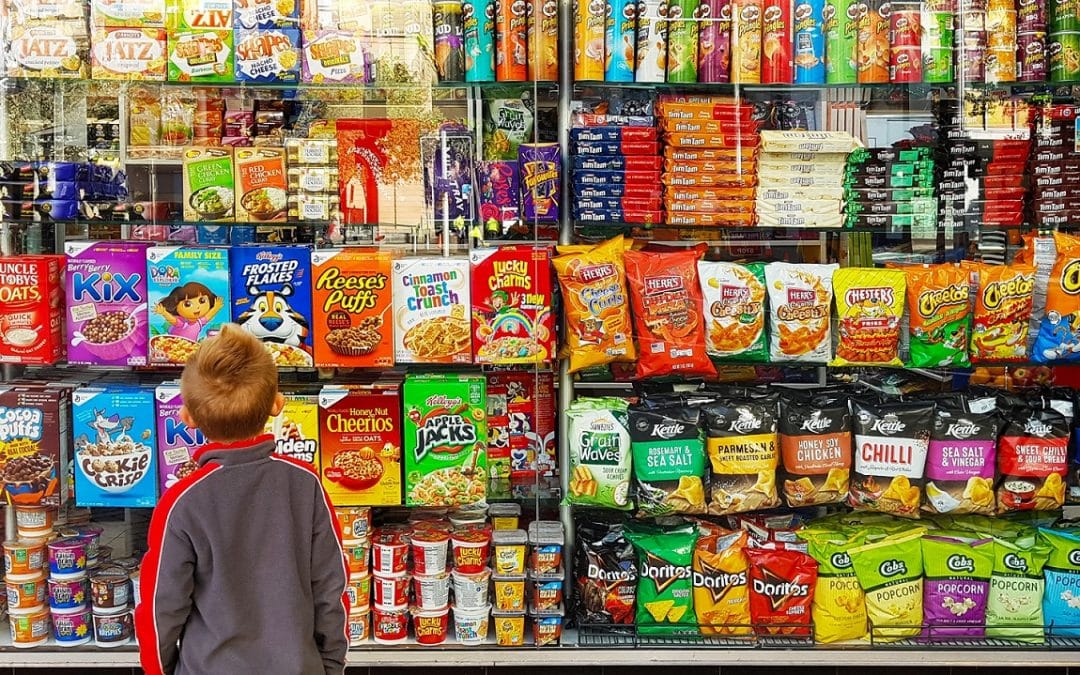
Back in the 1990s, an indigenous chips brand captured our hearts with its iconic tagline, “Bole Mere Lips, I Love …………. Chipps.” However, this cherished Indian brand eventually succumbed to the competition from an international MNC with a clever strategy – offering small, collectible discs adorned with cartoon characters called ‘tazos’ for free with every chip pack. For kids like me, it became a mission to collect as many tazos as possible, convincing our parents to buy more chips. We formed teams with friends and cousins, all driven by the excitement of the chase. As a result, the indigenous chips brand, once a household name, faded into obscurity. This nostalgic anecdote underscores the immense influence of food marketing tactics aimed at children. Do you also recall the maze of offers from a famous international fast-food chain, luring us with free toys? Behind the appeal of these giveaways lay meals laden with calories, low in fibre and protein, and drowning in sugar, not to mention the sugary drinks they bundled. Food marketers employ a range of strategies to captivate young palates, aiming to foster lifelong brand loyalty. If successful, they not only secure the children’s market but also pave the way for their brands to thrive among adolescents and adults in the future. In this article, we delve into these common food marketing tactics and offer parents valuable insights and tips to help their children make healthier food choices.
Richa Pande
In the world of children’s food choices, marketing wields substantial power. Be it through eye-catching packaging or irresistible characters, marketing has a knack for igniting cravings in the little ones. Sadly, a significant portion of this marketing sorcery is directed towards promoting less-than-healthy packaged snacks and treats, often loaded with sugar, fat, food additives which might not be good for children health. This marketing frenzy plays a pivotal role in the concerning surge of childhood obesity, calling for immediate attention. But here’s a glimmer of optimism! Parents have the potential to make a positive impact by staying informed and getting involved.
Join us as we explore the captivating realm of marketing, unhealthy snacks, and how parents can make a difference. And that begins with learning about the existing food marketing strategies targeting children. Here are some promotional strategies recruited by food marketers-
Stress can also be bad for your heart health as stress can cause irregular heart rate and rhythm, increased blood pressure, chronic intrinsic inflammation, and reduced blood flow to the heart. These hormonal surges can damage blood vessels and arteries, increasing blood pressure and raising risk of heart attacks or strokes. Prolonged stress can have negative impact on your digestive health as well. It can cause acid reflux, diarrhoea, constipation, stomach aches, heartburn, and can also increase your risk for having ulcers. Stress can also contribute to the build-up of adipose tissue and weight gain by increasing appetite and increasing storage of unused nutrients such as fat. Release of these stress hormones can weaken your immune system and reduce body’s response to infections. Individuals experiencing chronic stress are more susceptible to infections and prolong recovery from an illness or injury. Individuals with chronic stress can also experience behaviours such as overeating, alcohol or drug abuse, and social withdrawal. Stress can also lead to irregular, heavier, or more painful periods in women and can worsen the symptoms of menopause in women.
Food Advertisements on Children’s Television
Food advertisements on television exert a significant influence on children’s food choices, often playing a pivotal role in shaping their dietary preferences and habits. These advertisements are strategically designed to appeal to the sensory and emotional aspects of childhood, showcasing enticing visuals, catchy jingles, and beloved characters. When children are repeatedly exposed to images of foods high in Sugar, Fats, and Salt (HFSS Foods), it creates a powerful association between these products and feelings of happiness and pleasure. This can lead children to desire and request these foods from their parents or caregivers. Moreover, the persuasive tactics employed in these advertisements can override children’s ability to make informed, health-conscious choices. As a result, there is a concern that excessive exposure to food advertising, particularly for unhealthy products, contributes to childhood obesity and related health issues.
Cartoons on packaged foods
Cartoons featured on packaged foods hold a substantial sway over children’s food choices, making it a potent marketing tool. These colourful characters and mascots create an immediate and lasting impression on young minds, associating the product with fun and excitement. Children are drawn to the familiar and friendly faces. This phenomenon often leads to pester power, as kids request products featuring their favourite characters.


Popular Cartoons on Packaged Foods available in Indian food market {Name of the Brands Hidden}
Product Placement in Kids’ favourite cartoon shows
Product placement of unhealthy foods in kids’ cartoons can shape children’s food preferences and health negatively. Advertisers often use this tactic to make unhealthy foods and beverages appealing to young viewers. Such exposure can lead to poor eating habits, obesity, and related health issues. Children, being influenced by their favourite animated characters, may develop cravings for these products. This blurs the line between entertainment and advertising, making it hard for children to discern between content and commercials.
Product placement in story narratives of kinds’ favourite comics
Product placement in children’s comics subtly shapes preferences and choices, leveraging the emotional connection between beloved characters and products. By seamlessly integrating into storylines, it fosters positive associations, instilling familiarity and trust with the items showcased. This strategy effectively influences young readers’ behaviour while maintaining the enjoyment of storytelling.

Product Placement in a story narrative of a Popular Children Magazine {Name of the Brand Hidden}
Freebies with packaged foods
Freebies such as toys, puzzles, interactive games holds a considerable influence over children’s choices, as marketers recognize the allure of immediate gratification and psychological ownership in young minds. When presented with a choice, children often opt for products that come with enticing freebies like toys, stickers, or snacks, creating a sense of attachment to the brand. Their pestering power can also sway parental decisions, as caregivers may yield to their requests when a child fervently desires a product bundled with a free item. Collectible freebies further enhance this effect, encouraging children to choose products that complete their sets. Additionally, freebies can foster brand loyalty by associating positive emotions with a particular brand. The influence of peer pressure, limited availability, and compelling advertising further intensifies this effect, as children strive to fit in, seize scarce opportunities, and embrace trends. Furthermore, freebies serve as a means of introducing children to new products, potentially shaping their preferences and choices in the long run. In this way, freebies exert a multifaceted influence on children’s decision-making processes.

Offers on a food packaging
Game Websites by Brands
Food brand-developed game websites have a significant impact on both children and adolescents’ food choices through addictive game design and the promotion of unhealthy products. These games are engaging and rewarding, keeping young players exposed to brand messaging and products. They prominently feature less nutritious items, normalizing and making them appealing to both children and adolescents. The addictive nature, combined with this promotion, forms strong associations, potentially leading to unhealthy eating habits.
QR codes on package foods
QR codes on food packaging can strategically boost brand recall and influence product choice among adolescents and children. These codes encourage interaction, allowing kids to scan and engage using their devices, creating a direct link to the brand. Interactive experiences, especially tied to games or exclusive content, enhance brand recall. Children associate the brand with this engaging interaction, potentially leading to preferences during shopping. The excitement shared with parents fosters trust, influencing parents’ positive views and purchase decisions based on the brand’s interactive and educational content through QR codes.
Cashback schemes on packaged foods
Similar to QR codes, cashback schemes and other promotions featuring cartoons on food packaging can encourage children to choose specific products. These incentives offer a tangible benefit, making the product more appealing to both children and parents. The presence of cartoons further enhances the appeal, as they resonate with young consumers.
Contests by food brands promoted on packaged foods and social media channels
Food brands hosting contests on their products and social media channels is like adding some spice to their marketing recipe. These contests are super engaging, especially for teens, with cool prizes and interactive fun. Teens love to share their contest experiences on social media, spreading the brand’s name far and wide. This boosts brand recognition among the younger crowd. Plus, these contests create excitement and make the brand feel like a friend. This can nudge teens towards buying more of that brand’s products, building loyalty. In a nutshell, these contests use social media’s magic to grab teens’ attention and get them munching on those tasty treats.
Look at the nutrient profile of some of the packaged products that had components pertaining to Promotional Tactics Present on Packaged Foods Targeting Children-
|
Food Category |
Nutrient Profile Per 100 g of the product |
Ingredient List |
Promotional Tactics Present on Packaged Foods Targeting Children |
|
Chocolate 16 g pack |
Energy: 468 kcal Protein: 3.6 g Fat: 17.5 g Saturated Fat: 17.3 g Trans Fat: 0.2 g Carbohydrate: 75.1 g Sugars: 70 g Sodium: 74 mg |
Sugar, Hydrogenated Oils, Cocoa Solids (8%), Lactose-Rich Deproteinized Whey Permeate Powder, Milk Solids, Refined Wheat Flour (Maida), Emulsifiers (414, 442, 476), Colours (171, 102, 133, 124, 127, 122, 132, 110), Glazing Agent (903), Liquid Glucose, Flavours (Natural, Nature Identical and Artificial (Caramel And Vanilla) Flavouring Substances). |
|
|
Snack Rings 75 g pack |
Energy (Kcal) 493, Total Carbohydrates (G) 67, Added Sugars (G) 6.9, Dietary Fibre (G) 2.2, Protein (G) 5.4 Total Fat (G) 22.5, Saturated Fat (G) 10.4, Monounsaturated Fat (G) 9.4, Poly Unsaturated Fat (G) 2.6, Trans Fat (G) 0.01, Cholesterol (Mg) 0, Sodium (Mg) 830 |
Corn Flour (70%), Refined Palm olein Oil, Seasoning (Sugar iodised Salt. *Spices and Condiments (Contains Onion and Garlic), Black Salt, Acidity Regulators (INS 296, INS 330), Flavour Enhancers (INS 627, INS 631), Tomato Powder (1.4%), Tamarind Powder, Hydrolysed Vegetable Protein (Soya), Anticaking Agent (INS 551), Colour (INS 160c). Natural and Nature Identical Flavouring Substances). Anticaking Agent (INS 170). *Used as natural flavouring agent |
|
|
Chocolate Cake 120 g pack |
Energy (kcal) – 402 Total Fat (g) – 18.00 Saturated Fat (g) – 8.90 Monounsaturated (g) – 6.18 Poly unsaturated (g) – 1.56 Trans Fat (g) – <0.2 Carbohydrates (g) – 54.51 Sugar (g) – 26 Dietary Fibre (g) – 0.5 Protein (g) -5.48 Sodium (mg) – 200 |
Water, Refined Wheat Flour, Sugar, Palm Oil, Margarine (Partially Hydrogenated Oil, Palm Olein, Palm Oil And Palm Kernel Oil, Whey Powder, Penta Mix, Edible Starch, Emulsifiers, Acidity Regulators, Stabilizers, Anticaking Agent, Humectant, Raising Agents, Acidity Regulators, Preservatives, Added Artificial Flavours Of Mix Fruit And Vanilla |
One of India’s widely recognized cartoons featured on food packaging |
What parents can do to tackle food marketing techniques targeting their children?
Parents play a crucial role in protecting their children from the pervasive influence of food marketing techniques targeting them. Here are some strategies and actions parents can take to tackle this issue:
- Stay Informed
Staying informed about current research and guidelines on child nutrition and food marketing is crucial for making informed decisions about your family’s diet. It ensures you’re up to date with the latest insights on healthy eating and allows you to adapt your food choices based on evidence-backed recommendations, promoting better overall health and well-being for your children.
- Create a Healthy Food Environment
Maintaining a healthy food environment at home is vital. By stocking up on nutritious snacks and minimizing the presence of sugary or highly processed foods, you create an environment that encourages healthier eating habits. This approach supports better dietary choices for your family and reinforces the importance of nutritious options.
- Limit Screen Time
Limiting screen time, which includes TV and internet usage, is crucial in reducing children’s exposure to pervasive food marketing. By curbing screen time, parents can create an environment with fewer opportunities for advertisers to target their children with unhealthy food promotions. This measure allows parents to exert more control over their child’s media consumption and helps shield them from persuasive marketing tactics, promoting healthier food choices and behaviours.
- Read Food Labels Together
Engaging children in reading food labels during grocery shopping is an educational and empowering strategy. It encourages kids to develop essential skills in assessing food products, including ingredient identification, and interpreting nutritional information. By explaining aspects like sugar, salt, and fat content, parents help children make informed food choices. This collaborative approach not only fosters a deeper understanding of nutrition but also instils a lifelong habit of mindful food selection, promoting healthier eating habits.
- Educate your child and enroll them in Nutrition Literacy Programs
Clarify how corporations employ vibrant packaging, enticing slogans, and engaging characters to present unhealthy foods in an attractive manner. Following that, you can encourage participation in literacy programs aimed at teaching individuals how to critically evaluate food marketing tactics and instruct them on utilizing food labels to make well-informed dietary decisions.
- Advocate for Change
Parents can advocate for change by joining advocacy groups or engaging in campaigns to restrict advertising of unhealthy foods to children, making a substantial difference in food marketing practices.
- Lead by Example
Model healthy eating behaviours and food choices to reinforce good habits. When children see parents making nutritious choices and enjoying wholesome meals, they are more likely to follow suit. This positive influence helps create a lasting foundation for a healthy relationship with food and nutrition.