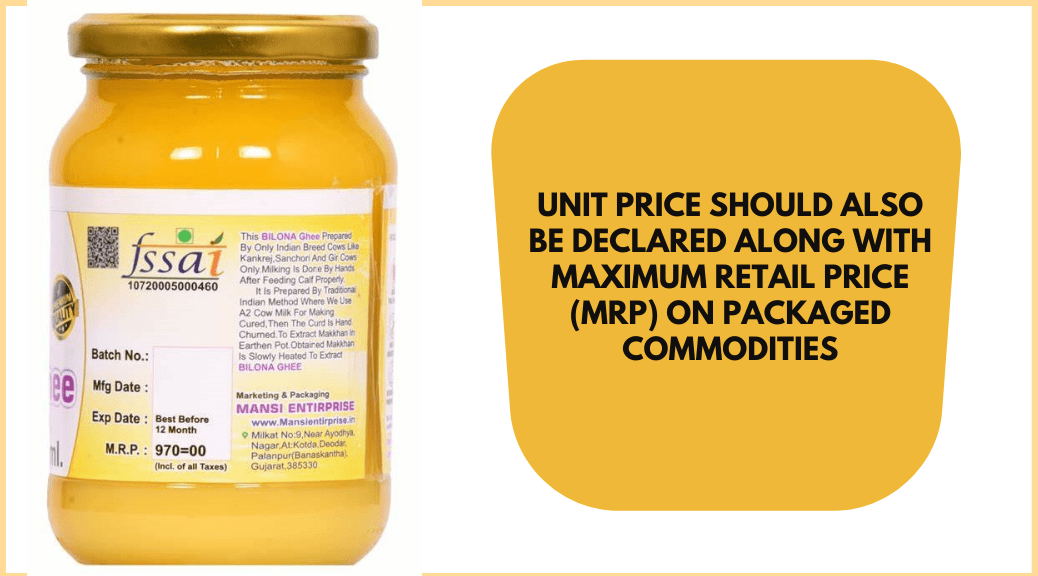
Unit Price should also be declared along with Maximum Retail Price (MRP) on Packaged Commodities

Unit Price should also be declared along with Maximum Retail Price (MRP) on Packaged Commodities

Unit Price should also be declared along with Maximum Retail Price (MRP) on Packaged Commodities

International and indian practice / regulations for selling commodities by retailers to consumers:

In international and Indian market, loose products are sold in standard unit of measure, such as per kilogram or litre or number or length, etc. So for consumer it is easy to compare price variation of different retailers.

In India, all packaged products have to mention Maximum Retail Price (MRP). Declaration of MRP is mandated by Legal Metrology (Packaged Commodity) Rules, 2011. MRP is a manufacturer declared price that is the highest price that can be charged for a product sold in India.

Whereas mostly in rest of the world, Retail Sale Price of packaged products used to vary from retailer to retailer.

Both systems have their own merits and demerits.

What is unit price?

Unit pricing – or comparative pricing – is a way to show the price of a commodity in relation to a standard unit of measure, such as the kilogram or litre.  Unit price gives fair idea about cheaper and costlier brands of same product.

Is there any standard for unit price?

ISO (International Organization for Standardization) is an independent, non-governmental, international organization has developed ISO 21041:2018, namely, Guidance on unit pricing, sets down several prerequisites that will allow consumers to compare the prices of similar items to make more informed buying choices.

Benefits to consumer when unit price along with mrp declared on packaged products:

Unit prices can be used to make many types of value comparisons, including between:

  • Package sizes: For example, if one juice manufacturer offers juice in a 200ml pack and another manufacturer offers juice in a 160ml pack, then unit pricing demands that the prices of both manufacturers be displayed according to one litre. This way, consumers can easily decide which company to opt for instead of having to perform calculations.

Related

Righteous move to remove ‘fair’ from lovely

Righteous move to remove ‘fair’ from lovely

Righteous move to remove ‘fair’ from lovely

cooking oil

Beauty is beyond color, caste, and creed. And the recent fallout by the several consumer bodies for promoting the notion of ‘fairness is determinant of beauty and success’ has been vehemently ridiculed. Facing such immense protests and reactions from various platforms, now FMCG major Unilever has decided to drop the word ‘fair’ from its bestselling skin lightening cream Fair and Lovely. Moreover, Unilever decided to remove other words such as “fair, white, & lightening,” in the packaging and communication of the iconic fairness cream and plans a rebranding of the same.

Unilever and its Indian subsidiary Hindustan Unilever Limited (HUL) and others have been criticised extensively for superficial claims and promoting colourism and making girls with darker shades feel insecure and inadequate. Pressure had been mounting since last week when US multinational Johnson and Johnson announced it would no longer produce or sell two of its creams which are popular in Asia and the Middle East in response to the death of George Floyd and the worldwide debate about racism it sparked.
A recent BBC report says Fair and Lovely is India’s largest selling skin lightening cream, with 24bn rupees ($317m; £256m) in annual revenue. The authenticity of the fairness creams has always been doubtful. To check the viability of such creams, Consumer VOICE in the year 2008 tested 10 brands of fairness cream where the report discarded the notion that fairness creams make you ‘fairer.

It would not be erroneous to say that the Rs 3000 crore fairness cream market is mere eyewash. It first plants, and then plays upon the planted insecurities in the consumer mind to keep raking in profits.
If we consider the overall scores obtained by the 10 brands in Consumer VOICE tests, it is evident that fairness efficacy results were ‘very light improvement’ and not lasts longer. In 2019, the Indian fairness cream market was reportedly worth nearly Rs 3,000 crore, according to the India Fairness Cream & Bleach Market Overview (2018-2023). Market revenues were expected to reach Rs 5,000 crore by 2023, the study estimated. This is unsurprising considering skin lightening products take up about half of India’s skincare market, according to a 2019 study by the World Health Organization.

How we did it?

Consumer VOICE tested all the 10 brands of fairness creams for their application efficacy by impaneling female and male volunteers who applied a fairness cream on their face (and neck wherever applicable) for four weeks according to application instructions given by the manufacturers. The volunteers were in the age group 18-40 years. To judge the performance of fairness creams, evaluation through photometry tests done under controlled conditions was carried out. The volunteers so chosen were neither too dark in complexion nor fair.

The results clearly show that fairness creams cause such little improvement that one might as well do without them. There is not much sense in using a fairness cream that costs anything between Rs 50 to Rs 500 and does precious little to lighten one’s complexion.

What’s inside your fairness cream?

Fairness creams (usually applied in summers) are generally stable mixtures of oils, fats, other essential ingredients, and water. Oil-soluble and water-soluble substances are brought together in an emulsifying agent to make a fairness cream. Of the 10 creams tested by Consumer VOICE, only Garnier and L’oreal mention ‘water’ as its key ingredient and on top of the list of ingredients. The rest of the brands completely ignore the presence of water as an ingredient, even when laboratory tests prove that all fairness creams tested have water as their major constituent.

Related

How to choose your food packets smartly

How to choose your food packets smartly

Choose that food pack smartly

food packet

Can you think of a life without a pack of munchy-crunchy food pack besides our daily atta, dal, maida stuff? Well, no! But do you read the information well before buying any such product available on e-commerce sites or your nearby store shelves? If the answer is no, then we suggest you start inculcating the habit of reading your food pack labels before shelling out. You can zoom the image of a food pack and see how many calories are there in the food or know whether the organic product you are buying has been approved by food regulatory bodies or not. In this article, we have come up with a few tips that might help you to make healthier and smarter food choices.

Richa Pande

Packaged food items have additives in them for longer shelf life. Food additives are mandatorily declared in the ingredient list. Ingredients are listed in a specific pattern. The item which is mentioned first is usually the major ingredient used to prepare the food item, then the net ingredient and so on in descending order of the quantum used in the preparing of the product. Sometimes, the ingredients are even presented as percentage of content. You can base your choices by referring to the ingredient list and the quantum in the food item. It is always recommended that you go through the ingredient list

There are guidelines by food regulatory bodies on how much of these additives can be added to the food items, and food companies generally adhere to them. But you could cross the safety limits for any food additive by consuming excessive amounts of food items containing the same additive daily. It is to be noted that these safety limits are prescribed for adults and kids separately and hence excessive consumption of packaged foodstuffs should be avoided. Another reason why we need to be careful is that these packaged foods are generally high in sugar, fats, and added salt.

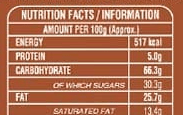
COOKIE 1

It has similar nutrient profile to that of COOKIE 2 but it has more food additives.

Nutrient

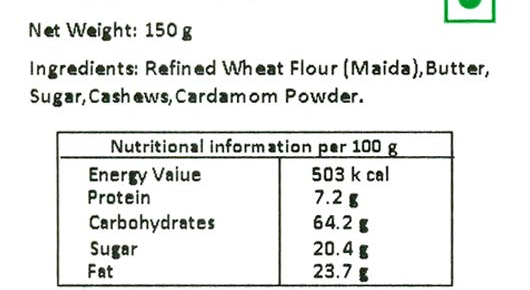
COOKIE 2

has similar nutrient profile to that of COOKIE 1 but it has lesser food additives.

INS numbers in the ingredient list

If you go through the ingredient list, you will notice INS numbers. Food additives have several colloquial names. To avoid confusion, universal numbers are allocated to different food additives. In Indian food packs, food additives are either referred to by their common names or by the universal INS numbers. In European Union countries, they are referred to as “E numbers”. Sometimes food manufacturers mention the contentious ingredient with a name which the consumer may be unaware of. Hence the consumer needs to be well informed to avoid being hoodwinked.

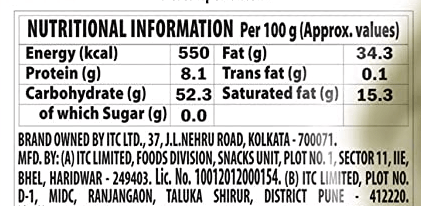
Checking the nutritional value of food products before making the purchase

Compare the variants and brands. Check the nutrition panel and compare the nutrition composition of the products. Prefer products that comply with the concept of clean labelling i.e., share complete information about a product. This will guide you in minding your portion sizes. After going through both the products, choose the products with the healthiest nutrition composition.

Nutrient
Nutrient

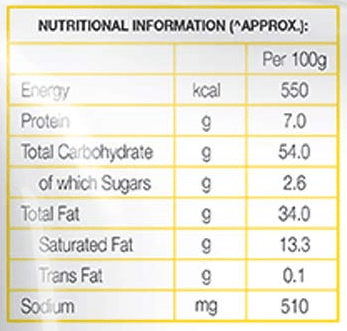
Plain Salt Chips Bag Brand 1 has lesser (by 2 g) saturated fats. Apart from this, it has almost a similar nutrient profile to that of Plain Salt Chips Bag Brand 2. Another thing to note is that brand 1 is also mentioning Sodium content and thus is supporting the concept of clean labelling.

Note that it is always recommended to mind the limit of saturated fats which is around 10-15 g per day. Therefore, pick a pack that has relatively lesser saturated fats and mind the portion sized to control the saturated fat intake.

Make a list of the items before you pick them

Always make a list of items you need before you decide to shop. This helps you in avoiding impulsive shopping. When you buy a product for the first time, read the ingredients list and nutrition table before purchasing the food item. Choose the food item only when you understand its label. It can help you not to make unnecessary purchases and in making healthier choices.

Check the existing front-of pack nutrition labels for quick comprehension

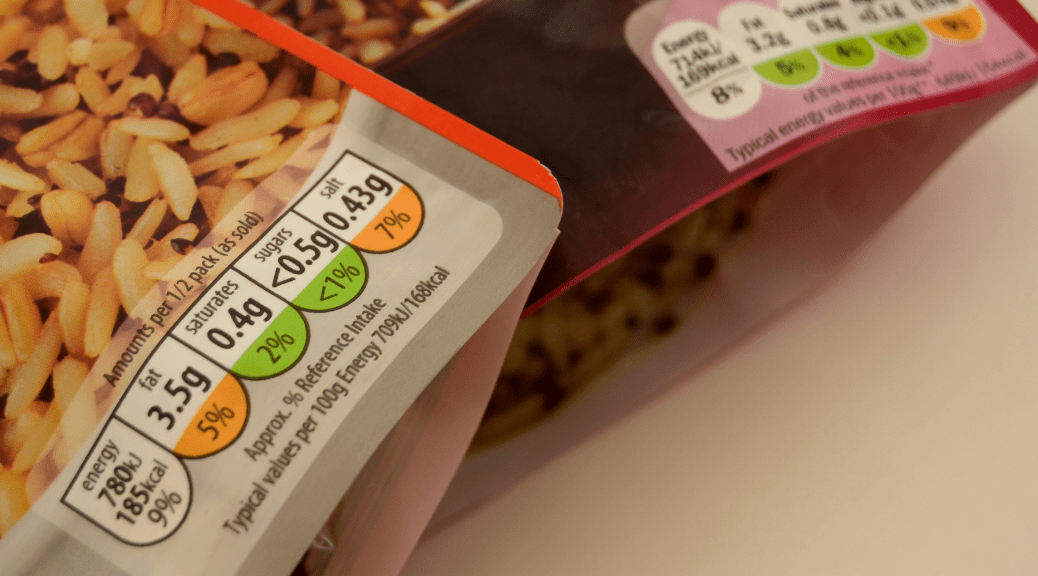
You might not find them in all the food packs in India but some global brands in the Indian market have started labelling nutrients on the front of the pack. From these food packs, one can get an understanding about the apt portion/serving size and calories in one portion/serving item. In some packs, you might also get information about other nutrients of concern like fat, sugar, sodium, and calories.

Nutrient
Nutrient

Choose smaller packs over the large packs for individual consumption

The smaller packets contain fewer calories as compared to the large ones. A 30g chips packet has 150 calories, while a 50g package has 250 calories. Always look for the recommended portion size on the pack.

Choosing food items using food certification and quality symbols- You can look for these food quality and certification marks on your food items to make healthy choices

  • AGMARK is a certification mark by the Ministry of Agricultural & Farmers Welfare, Government of India. The present AGMARK standards cover quality guidelines for 224 different commodities spanning a variety of pulses, cereals, essential oils, vegetable oils, fruits and vegetables and semi-processed products like macaroni and vermicelli.
Agmark
  • You will find either one of them on the food packs. Green logo certifies that the product does not contain non-plant-based ingredients or by-products. Previously the triangular red logo was also represented by a circle. The step to change it to a triangle shape was taken to help the colour-blind people
veg-nonveg
  • ISI (Indian Standards Institution) mark is a certification label-mark for industrial products in India. It is the most popular and recognised certification mark.
ISI
  • FSSAI stands for Food Standards and Safety Authority of India, which is the food regulatory body in India that deals with the food safety issues. This logo on the supplement means that the product’s manufacturing process has received certification from FSSAI.
fssai
  • ECOCERT was introduced in the year 1991. It is a certification given to those products that conform to a set of standards aimed at the least impact on the ecosystem. it serves as an advisory to consumers.
ecocert
  • FPO (Farmer Producer Organization) a mandatory mark that one will find on all processed fruit products sold in India such as packaged fruit beverages, fruit-jams, crushes and squashes, pickles, dehydrated fruit products, and fruit extracts following the Food Safety and Standards Act of 2006
FPO
  • Indocert is a government accredited certification authority in India which operates at both national and international level. It provides certifications for sustainable agricultural standards
Indocert
  • Gluten is a protein found in wheat and other cereals like barley and rye. Some people have gluten intolerance, which means that they cannot digest it and might encounter allergy like symptoms when they consume it. Presence of this logo ensures that the ingredients in the supplement are gluten-free
  • This logo enables people to identify that a certain food is fortified with a micronutrient.
fortified
  • Fair Trad logo- Look for this logo to pick a food item that has been grown and prepared following fair-trade practices.

Organic Food Logos

  • Jaivik Bharat Logo -It is a logo issued by Indian government authorities to the products which are grown organically as per the standards set by NPOP, India and PGS-India
Jaivik Bharat
  • USDA Organic Logo-This logo ensures that all the ingredients used in the development of this supplement are 95 per cent or more organic in nature. This means that they are free of chemical additives, pesticides, chemical fertilizers, and colors. The certification is provided by United States Department of Agriculture
USDA
  • India Organic Logo -Presence of this certification mark on the label of a supplement ensures that the ingredients in the products were grown organically and they comply with the standards set by National Standards for Organic Production (NSOP)
India Organic
  • EU Organic Logo-This logo on the label of a supplement ensures that the food supplement is made conforming to the organic food production guidelines set by the European Union
EU-Organic

Food packets have a lot of information on them. It is important that we go through it when we are purchasing a food item for the first time. Making this a habit can help us making healthier food choices in a long run.

Related

Ways to secure a Covid-19 personal loan

Ways to secure a Covid-19 personal loan

Ways to secure a Covid-19 personal loan

Covid Loan

The need of taking a personal loan has increased immensely facing many unexpected situations including job loss, pay cut or any medical emergency/treatment. Small businesses too have faced closures or less revenue generation due to the ongoing situation. Personal loans thus have emerged accessible to encounter any such instances. In the following article, we’ve talked about the steps of availing a personal loan including choosing a bank, interest rates to consider, documents to prepare along with many such relevant information.

Subas Tiwari

There are several banks and financial institutions providing attractive deals on personal loan offers with lucrative interest rates. Each personal loan lending institution has different eligibility criteria, rate of interest, and repayment tenure, which should be reviewed and compared to make an informed and smart decision before applying.

Government banks (PSU Banks) have launched a very good initiative by offering personal loans for Covid-19 treatment. They have started a special project of unsecured personal loan. Under which, a personal loan of up to Rs 5 lakh can be taken to mitigate any such mentioned expenses or emergency cases. The interest rate for this category of personal loans is low. Generally, interest rates for an unsecured personal loan range between 11 to 17 per cent. Here, the interest rate is cheaper. The country’s largest bank SBI is offering this personal loan at 8.5 per cent. However, presently there is no uniform interest rates for Covid personal loans as different PSU banks ask different rates. Along with the lot, Union Bank of India and Canara Bank have also announced Covid personal loan, lately.

A person can take this personal loan for himself or for any family member from government banks. The loan can be availed for a period of up to 5 years which implies that the banks will have to repay the loan amount within 5 years. In recent times, we have seen a lot of people taking personal loans at a very high rate to meet Covid treatment. Here, the Covid personal loans come handy.

How to apply?

You need to visit a government bank branch and apply for this loan. Presently, this can’t be done online. Once you’re sure of availing this loan, know that there are two ways to go for the same. The first is- after hospitalisation. Once you’re hospitalised, you will need to visit the bank branch with the hospital bill and the bank will decide the loan amount based on your repayment capacity. Second is, the hospital gives an estimated amount of the treatment cost to the concerned person, which will have to be taken to the bank and apply for the loan. In this type, banks can give loans ranging between Rs 25, 000 to Rs 5 lakh. However, it is up to the bank authority to approve or reject your loan application.

Eligibility of personal loan

For salaried class
  • Should be having an active bank account where salary is being credited regularly. The bank account need not be with the bank where one is applying for a personal loan, but banks prefer to consider such loans to be given to their own clientele on priority.
  • One should have a job of permanent nature. Banks would not give a loan to a person whose job is temporary or who has no means of regular income even though he may be owning movable assets.
  • The length of service or employment also plays a part in expediting the loan sanction.
  • Place of residence should either be owned or rented with a lease agreement.
  • Residence proof (Voter ID card, Aadhaar Card, etc) and identity proof (employment ID card, PAN card, etc) copies should be produced duly self-attested along with bank application form and 2 photographs.
  • Though the reason/purpose of the personal loan is not mandatory, the bank would like you to state some reason.
  • If you already enjoy any other loan like car loan or home loan, those deductions will also be taken into account to calculate total deductions out of the salary and arrive at eligible loan amount.
  • Your CIBIL score (see box) will also play a significant part in bank’s decision in granting a personal loan.

There is no fixed criterion for arriving at eligible loan amount, as individual banks have different methods of calculation but the generally accepted practice is to fix a ceiling of about 50 per cent of deductions from salary including the repayment of the loan to be granted. If you are within this ceiling, then the eligible amount could be about 10/12 times the gross monthly salary or 6 times the total taxable income as declared in Form 16 or the Income Tax Return. This can vary amongst nationalized banks and can be different among private banks (private banks commute on the take-home pay).

For self employed

Certain additional conditions may apply for geek employees, individuals who run their own business or freelancing assignments in availing a personal loan from a bank. Since he does not get salary, the business income as reflected in the Income Tax Return would be the basis of ascertaining his total income. S/he may be required to submit details of his enterprise.

The performance of the business can also be a factor to influence his loan sanction. In case of new enterprise, banks can insist on collateral securities like bank deposits, bonds, etc in addition to providing one or more personal surety of adequate net worth.

For professionals

They are those who either have their own business/service like doctor, lawyer, etc or those who are technically qualified but are working in an organisation.

The following could be additional conditions to be fulfilled.

  • The attested copy of their Qualification would be required to be submitted alongwith the application form.
  • Since some of the banks have specialised personal loan scheme for such professionals offering lower rate of interest on such loan, the lending may ask some details of the profession as also copies of receipts/payments and/or income/expenditure account.

Advantages/ benefits of a personal loan to a consumer-borrower

  • The first and foremost benefit is the quickness with which the loan application is either sanctioned or disposed off (rejected). The icing in the cake is in the timing.
  • Secondly, in most of the sanctioned personal loans, the banks do not insist on any collateral security or in some cases, even personal guarantee/surety unless you have less than the minimum prescribed years of service or your take-home pay is lesser. So, it is advantageous for the loan-seeker, as he need not be under any obligation to his office colleague/friend into requesting for providing a personal surety.
  • Most of the banks do not ask for margin component (borrower’s stake in the risk). Hence, there is absolutely no need for the consumer to run around to arrange to provide for depositing margin money.
  • The purpose of the loan is immaterial in most cases. Hence, the consumer need not take pains to explain the genuineness of the purpose and submit proof for such purpose.
  • Simple documentation is assured with no elaborate procedures.
  • Making monthly repayments is now made consumer-friendly with banks agreeing to take post-dated cheques (PDCs) for the amount of each instalment and presenting the same on due dates of loan. The consumer need not visit the bank at all for such work. Where the loan instalment payable is to be taken out of the savings account of the customer, the banks obtain written instructions (ECS) and act on them.

Disadvantages/limitations to the consumer-borrower

  • The rate of interest is the highest for this type of loan. Due to its unsecured nature of the loan, interest rate is on the higher side. Whereas secured loans are comparatively cheaper.
  • Secondly, the period of the loan is normally limited to 60 months. Banks do not favour or take exposure for a longer tenure. This limits the consumers’ requirements, where, by getting a longer period of repayment, he could bring his work to completion.
  • According to bank sources, this type of loan is having higher risk and can end up as a Non-Performing Asset, if repayment stops midway either due to change of job/temporarily-unemployed status/death of the borrower/change of address without trace, etc. Hence, many banks do not consider giving a loan for non-customers, i.e., those who have no previous bank dealings with the lender. So, this severely restricts the options available to the consumer-borrower to seek a loan from any bank in the vicinity of his residence or place of work.
  • Most of the banks are not willing to grant personal loans of more than Rs 15.00 lakhs even though their website/brochure talks of maximum amount being much more than what they say they will give. So, the consumer/borrower will not get the benefit of more loan even if he is otherwise eligible!
  • Even though a couple of banks claim that they don’t need personal surety/guarantor for such loans, many of the banks insist on providing the same for the loan transaction to add trustworthiness to the loan contract.

Do not make these mistakes while taking a personal loan

One should be very careful in taking a personal loan as its interest rates start from as low as 11 per cent, which is very high. Higher interest rate can weaken your financial position. Let us know how to take a personal loan. What is its process and what precautions should be taken while taking personal loan?

  • Be careful in choosing lenders-banks and NBFCs market personal loans very aggressively. Everyone claims at least the interest rate. But do your research. One can check this by visiting some bank branches or on loan aggregator websites to find out who is offering the lowest interest rate personal loan.
  • Avoid flat rate. Banks claim to give loans at flat rates. But don’t fall for the flat rate. This is a strategy to mislead the customer. The flat rate does not tell you how expensive your loan is.
  • Personal loans can be for a tenor of one to five years. Usually, while giving a bank or NBFC loan, it is seen that your EMI does not exceed 40 to 50 percent of your monthly salary. Let us now see what precautions should be taken while taking a personal loan.
  • Avoid Zero Percent EMI. Banks offer loans with the lure of zero percent EMI. But in the name of processing fees and file charges, they charge a substantial amount. If you take a loan of 50 thousand for a period of six months and pay a processing fee of Rs 2 thousand on it, then your interest rate falls to 14 percent, not 12.
  • Find out other charges. There is a fee for processing a personal loan. It is one to two percent. You will think it is not much. But many banks also charge foreclosure charges. That is, if you get the money and you repay the loan ahead of time, then foreclosure fee is levied. Find out about it.
  • Take care of credit history. While sanctioning a personal loan, banks also look at your credit history. Many times, if you go to more banks or NBFCs, then you are considered more needy. This has a negative effect on your credit history. It is better that you find out the interest rate through the loan aggregator website or portal before visiting several banks or NBFCs to find out the personal loan interest.
  • First of all, decide what your real need is. Accordingly, decide to take a loan.
  • Find out how much loan you can get. For this, you can visit any bank branch or you can find out from the bank’s online loan eligibility calculator. Banks like HDFC Bank offer personal loans up to Rs 40 lakh.
  • Find out the EMI of the loan you want. This can also be ascertained from the existing EMI calculator on the bank site. Or you can get it calculated from the bank branch.
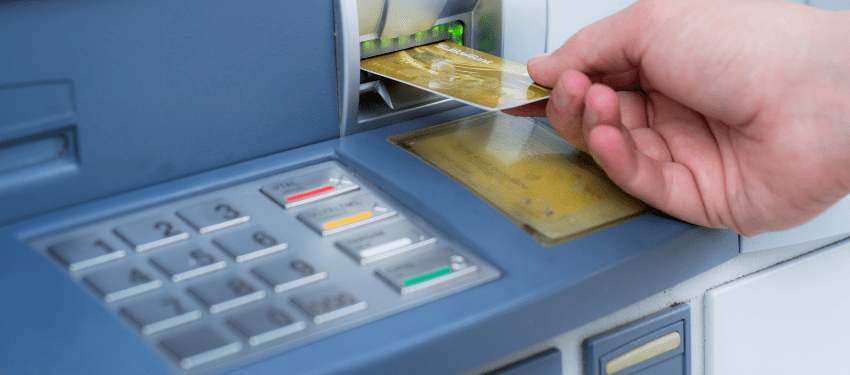
  • You can apply for personal loan directly by visiting the bank branch. You can apply for a personal loan through net banking, online app or ATM.
  • After this, the documents have to be submitted. In these, salary slip as income proof or income tax proof for self-employed people is required. Address proof, identity proof document or self-employed people also have to provide proof of degree or license.

RBI GIVES MAXIMUM OF 30 DAYS TO LENDERS FOR LOAN DISBURSAL

The RBI has come down heavily on commercial banks for causing inordinate delays in conveying their credit decisions/credit disbursal. In its latest notification to all the banks, they have been asked to carry out due diligence before arriving at credit decisions to ensure timely and adequate availability of credit. RBI has further said that banks must put in place loan disbursal timelines within 30 days of the RBI circular. Banks are also expected to make suitable disclosures on the timelines for conveying credit decisions through their websites, notice boards, product literature etc.

Leading bankers have opined that this move could push banks to cut procedural delays. They said that already individual banks have their own internal guidelines and timelines for disposal of small loans. But a centralized system as suggested by RBI would help and speed up matters.

Under the RBI Guidelines on ‘FAIR PRACTICES CODE’ for lenders, it has been stipulated that time-frame for disposal of loan applications up to Rs.2,00,000 should be indicated at the time of accepting the loan applications.

Related

No Results Found

The page you requested could not be found. Try refining your search, or use the navigation above to locate the post.

Decoding the new gold hallmarking rules

Decoding the new gold hallmarking rules

Decoding the new gold hallmarking rules

Gold Hallmark

Gold hallmarking is the accurate determination and official recording of the proportionate content of precious gold metal articles. Hallmarking is done of six caratages of gold jewellery/ artefacts, viz. 14, 18, 20, 22, 23 and 24 carats. While, the mandatory hallmarking is surely a welcome move for the consumers, let us take a quick look at the set regulations.

Ashok Kanchan

Bureau of Indian Standards (BIS), the national standards body of India through its network of regional/branch offices all over the country operates the hallmarking scheme for gold and silver jewellery. Regular surveillance audit of assaying and hallmarking centres and testing of random market samples drawn from registered jewellers.

Hallmarking provides third party assurance and satisfaction that customer gets right purity of gold (or silver) for the given price (value for money).

 Hallmarked gold jewellery  has five marks: BIS mark, purity in carat, assay centre’s name, jewellers’ identification mark and year of hallmarking.

Points to take note while purchasing gold jewellery

  1. a) Check the BIS certificate of registration displayed in the shop. 
  2. b) Check hallmark, consisting of five marks, on the article with the help of a magnifying glass of 10 X magnification available in the shop.
  3. c) Do not forget to take the bill/cash memo which should mention hallmarking cost, net weight of gold, purity in carat and fineness on the bill/cash memo. 

The new gold hallmarking rules

PREMIUM 

The central government has made it mandatory for the jewellers to sell only hallmarked jewellery. The mandatory hallmarking of gold jewellery is coming into force from 16th June, 2021.

A few points of latest government order

  • The hallmarking scheme has started with 256 districts of the country, which have assaying and hallmarking centres. 
  • At present, 943 assaying and hallmarking centres are operational in the country.
  •  Jewellers with annual turnover of up to Rs 40 lakh will be exempted from mandatory hallmarking. Watches, fountain pens and special types of jewellery like kundan, polki and jadau will also be exempted.
  • Export and re-import of jewellery as per the Trade Policy of Government of India – Jewellery for international exhibitions, jewellery for government-approved business to business domestic exhibitions will not be hallmarked.
  • According to the government order, any manufacturer, importer, wholesaler, distributor or retailer engaged in selling precious metal articles has to mandatorily get registered with the BIS. The registration process will be one-time and there will be no fees charged from jewellers for it.
  • Artisans or manufacturers who are manufacturing the gold jewellery on job work basis for the jewellers and are not directly related to sale to anyone in the chain are exempted for registration, the government said.
  • Gold of additional carats i.e. 20, 23 and 24 will also be allowed for hallmarking.
  • The ministry in its release clarified that old un-hallmarked jewellery available in households can be sold to jewellers. It said that that, jewellers can continue to buy back old gold jewellery without hallmark from consumer and in order to give adequate time to the manufacturers, wholesalers and retailers of gold jewellery, there would be no penalties till August end.
  • BIS (Hallmarking) regulations were implemented with effect from June 14, 2018. According to BIS, hallmarking will enable jewellery buyers to make the right choice and save them from any unnecessary confusion while buying gold.

Is the order applicable to gold bullion and coins also?

No, the order is applicable for gold jewellery and artefacts only. Gold bullion/coins of 999/995 fineness are permitted to be hallmarked by BIS approved Refinery/Mints (39 licensed refineries are in operation at present as on 01 Jan 2021). The list of BIS licensed Refineries/Mints is available at BIS website www.bis.gov.in under the hallmarking tab.

Information on hallmarking

All the information regarding hallmarking in detail has been provided at BIS website, www.bis.gov.in under hallmarking section. The information includes procedure and guidelines for jewellers and hallmarking centre, all the forms and list of registered jewellers and hallmarking centres etc. 


Related

ATM Facilities, Payment Utility services in ATM

ATM Facilities, Payment Utility services in ATM

What else you can get from an ATM?

ATM

Withdrawal of money, balance check or mini statements form a small part of a lot of ATM services. Read on what are the other services you can avail from an ATM.

                                                                                                                                                             Subhas Tiwari

Banks including SBI, ICICI, HDFC and Yes Bank offer you different facilities from their ATMs. Let’s look at some of the ATM services other than cash withdrawal and balance check.

FD and checkbook request

You can request for fixed deposit at an ICICI Bank ATM. Under which, request for FDs ranging from Rs 10, 000 to Rs 50, 000 can be put through. You must have a resident savings or salary account with ICICI Bank. It is also necessary to have a debit card and PIN. SBI and ICICI Bank ATMs also have the facility of requesting for checkbook. The check book will be delivered to the register address in your bank.

Mobile recharge and pin change

Debit/ATM card PIN can be changed by going to the ATM. Also, you can recharge your prepaid mobile connection from an ATM if you are facing internet connectivity issues. There are many other banks including SBI, which are providing this facility from their ATMs.

Card to card transfer

You can also transfer funds to a customer of your own bank or a customer of another bank. A card-to-card transfer of up to Rs. 40,000 per day can be done from one SBI debit card to another at an SBI ATM. Union Bank of India, Bank of India, Canara Bank, Yes Bank etc. also provide funds transfer facility to their customers using debit cards of other banks as well.

Payment of utility bills and credit card bills

Utility bills such as electricity, water, and mobile postpaid bill can also be paid from an ATM. This facility is available in ATMs of SBI, HDFC Bank etc. Besides, credit card bills can also be done from ATM. One will just need to keep the credit card number handy.

Tax payment and donation

Tax can also be paid from ATM. Union Bank of India and HDFC Bank ATMs have this facility. For this, one has to register the debit card for payment of tax from the ATM on his bank’s website. ATM will provide you a slip with SIN number on payment of tax. You have to submit this number on the bank’s website within 24 hours. On the other hand, if you want to donate to a temple or charity, then this work is also done from ATM. For example, SBI ATM will give you Vaishno Devi, Shirdi Saibaba, Gurudwara Takht Saheb (Nanded), Tirupati, Sri Jagannath (Puri), Palani (Tamil Nadu), Ramakrishna Mission (Kolkata), Kashi Vishwanath (Banaras), Tulja Bhavani and Mahalakshmi Mandir (Mumbai) like many other temples and trusts.

Deposit and mobile banking registration

This facility is available at Axis Bank ATMs. You can withdraw cash from here as well as make a cash deposit. For this, you have to put money in the ATM machine or deposit it by cheque. Through ATM, customers can also register for mobile registration. SBI, ICICI Bank ATMs etc. are providing such facility to their customers.

Insurance premium paid and loan applied

Many banks have the facility of paying the insurance premium by going to the services option in ATMs. Apart from this, you can also apply for loan from ATM. ICICI Bank and HDFC Bank ATMs have this facility. ICICI Bank is providing an instant personal loan of up to Rs. 15 lakh to the customer through an ATM.


Related

Enquire Now

    X
    Enquire Now