
No Results Found
The page you requested could not be found. Try refining your search, or use the navigation above to locate the post.


Air Purifier
There is no reason to breathe in polluted air as we have the best air purifier brand in the market. But how would you know the best brand? Here, our experts spill the beans on the right air purifier brand to help you to live fresh and pure!
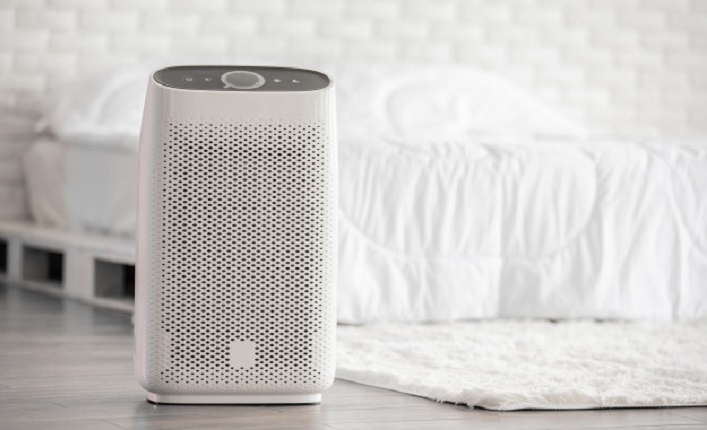
With large areas of India reeling under ‘poor’ to ‘very poor’ air pollution, many urban households have resorted to an air purifier.
However, getting a good quality air purifier is a difficult task as one needs to keep in mind many factors before buying one.
Our reviews, information and buying guides will help you choose the best air conditioner for your home and budget.
Everything you need to know to find the right air purifier for your household.
Articles
Air Purifiers are the need of the hour. It can refresh stale air and can reduce the chances of health issues caused by air pollution.
Related
The page you requested could not be found. Try refining your search, or use the navigation above to locate the post.
World No Tobacco Day 2020 – Towards a tobacco free generation

Tobacco products kill more than 8 million people every year which effectively means the future generation. With each passing day, tobacco and related industry is becoming smarter by the day. To target adolescents, the tobacco industry is coming up with several tricks and tactics. Some of these are:

But in this World No Tobacco Day, WHO is planning to debunk myths and expose devious tactics employed by these industries by launching counter-marketing campaign. This year the theme of World No Tobacco Day 2020 campaign is “protecting youth from industry manipulation and preventing them from tobacco and nicotine use”, that aims to sensitize and make the youth aware about the harmful effects of tobacco use and expose the tactics employed by the industry to attract the youth. Through this campaign, WHO encourages everyone to gain knowledge, spread awareness and create a ‘tobacco-free generation’.
Tobacco consumption among the younger generation has its own set of problems. As per WHO, nearly 37% children in India initiate smoking before the age of 10 and 14.6% of 13-15 year old students in India use tobacco. If one goes deeper to understand the reason for increased smoking among children, it is easy availability of tobacco and tobacco products like cigarettes and bidis.
One of the effective measures of stopping school children and minors from falling prey to tobacco smoking is implementation of vendor licensing through Cigarettes and other Tobacco products (Prohibition of Advertisement and Regulations of Trade and Commerce Production, Supply and Distribution) Act, 2003 (COTPA). COTPA, specifically prohibits smoking in all public places, prohibition of direct and indirect advertisement, promotion and sponsorship of cigarettes and other tobacco products, prohibition of sale of cigarettes and other tobacco products to minors and within 100 yards of any educational institution, and display of health warning, including pictorial warning on ill effects of tobacco use on the packages of all tobacco products.
The states and cities in India which have issued vendor licensing orders using the power under their respective Municipal laws and regulations include Himachal Pradesh, Patna (Bihar), Howrah (West Bengal) Rajasthan and Lucknow (Uttar Pradesh), Ranchi (Jharkhand ) and recently Madhya Pradesh, and Assam
Consumer VOICE and Voluntary Health Association of India conducted a Big Tobacco Tiny Targets study to determine the extent of tobacco products being marketed and sold around schools in India. A total sample of 243 schools and 487 points of sale were closely surveyed during this study in these 20 cities. The objective of this survey was to ascertain whether the ban on selling tobacco products near educational institutions as per the Cigarettes and Other Tobacco Products Act (COTPA) is being enforced in cities across the country or not.
Also Read: Cigarette and tobacco shops can no longer sell chips and candies
As per Mr.Ashim Sanyal, Chief Operating Officer, Consumer VOICE “Vendors sell cigarettes and bidis via single sticks, making these products cheap and accessible to children and youth. Selling of such products outside of educational institutes attracts the youth to get addicted. This move will surely curtail the tobacco consumption, he added.
Road Safety Network submitted recommendations to mitigate road crashes and deaths during lockdown
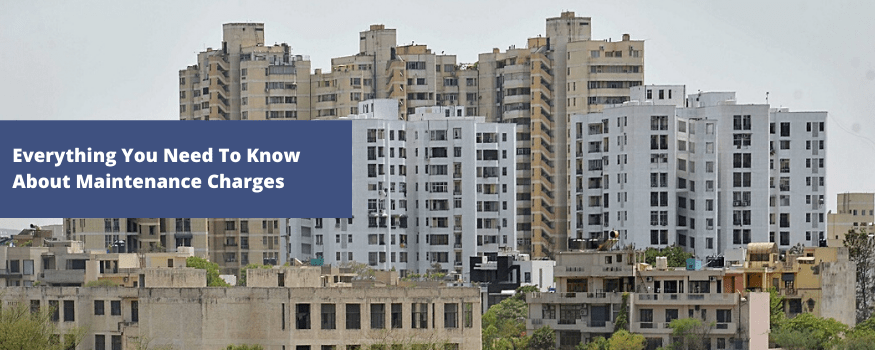
Everything You Need To Know About Maintenance Charges
Mrigank Sharma, a first-time home buyer, who invested in a 3BHK flat knew was in for a rude shock when the developer asked for an extra Rs 2.5 lakhs against the original payment plan as part of maintenance charges. Little did he know that to get the complete possession of the flat he had to fufill these formalities.
Sharma’s experience only highlights the fact that property transactions can be tricky, if it is not understood properly.
The homebuyer should not only be cautious about the cost of the property, but also future expenses which the builder can levy. Maintenance charge is one such expense, which can significantly impact the property buying decision of end-users and investors alike, while buying an under-construction or a ready-to-move-in property.
The monthly outgo on maintenance charges can make a big difference to your personal finance and saving money on this can help you accumulate a significant amount in the long-term. This can be particularly useful during challenging times like now, when the world is passing through the Coronavirus pandemic.
The maintenance fee is an annual fee to be paid by the owners/ tenants for the maintenance, repair, operations, and upkeep of the building. It is the duty of the promoter/ developer to provide essential services like parks, gardens, lobbies, stairs, elevators, fire escapes, community centers, common parking areas, power light, etc, the things that are necessary for the existence, maintenance and safety of the society.
As per Section 11 (4)(g) of the RERA Act, 2016, it is the duty of the promoter, to pay all outgoings until he transfers the physical possession of the real estate project to the allottee or the associations of allottees, as the case may be. The outgoings include payment of local taxes, charges for water or electricity, maintenance charges, including mortgage loan and interest on mortgages or other encumbrances etc
Here is a guide for you that will help you understand every small detail about the maintenance charge and you can keep yourself prepared if you are a first-time buyer. Maintenance charge covers the infrastructure and some amenities:
The maintenance charge amount either depends on the individual flat or calculated on the basis of per square feet of the flat. In the initial few years, this cost is collected by the builder till an association forms. The newly formed association may change the costs or introduce new rules consistently for improvement of maintenance.
The homebuyers are required to pay maintenance charges which may vary from project to project. Buyers must check maintenance charges before booking the flat. This should be calculated before you decide to pay the booking amount to the developer. You must know how much you are supposed to pay as maintenance charges when you actually start living in a project.
Usually housing societies levy the maintenance charges as per the area of the flat while others fix it on other variables when all the apartment are of the same size in that society. Also, a homebuyer should know the facilities provided under the charge. There are instances when builders charge advance maintenance cost for one or two years at the time of possession. Once you know how the maintenance charges are calculated, you have a basic idea on how much you are supposed to pay. Buyers should agree for only reasonable charges and not any arbitrary demand.
You will be asked to pay maintenance charges at the time of possession. The charges in all societies vary depending on the amenities and location. Some builders may ask you to pay maintenance charges for two years when you take possession but it depends on the builder and the time taken for forming the RWA. Since maintenance charges are applicable from the time a flat is occupied, its basic motive is to fund operations related to upkeep, maintenance, and upgrade of areas which are not directly under any individual’s ownership. RERA’s provisions enjoin upon the developer to see that residents don’t pay ad hoc charges.
Some developers ask you to pay maintenance charges along with the electricity meter and other charges due before giving you the keys. You should not pay maintenance charges if project registry has not been made and you do not have an occupancy certificate from the builder. You should only pay the maintenance charge once possession has bee delivered to you.
Once the RWA of your society is formed, you should take part in the process and make sure that the maintenance charges are reasonable. There should be no exception and you should not pay for housing units retained by builders as investment. You can look at the actual amount spent by the builder on maintenance, along with the break-up. It is the residents’ right to be aware of the amount spent by the builder on maintenance and ensure that he is not paying more than required. Till a society is formed, a builder pays for the maintenance and has to keep his books open for scrutiny by the residents.
Are you queries to know more? Then click here for the available legal remedy under RERA and FAQs related to maintenance charges. In the meantime, please visit our legal help desk page for further legal help.