
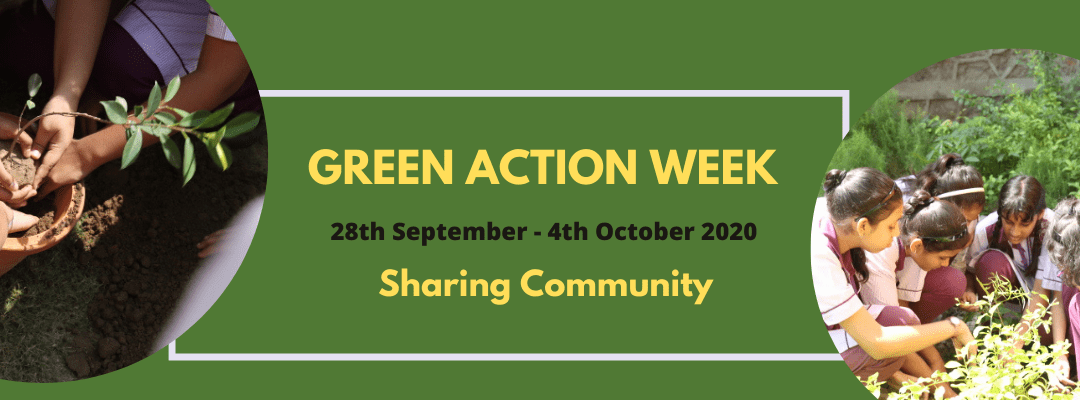
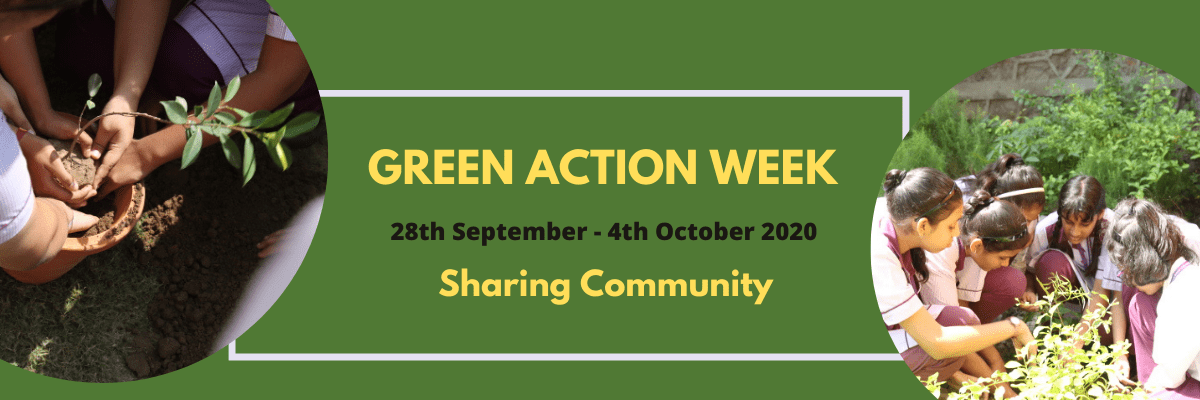
Green Action Week (GAW-2020)

Green Action Week (GAW-2020)

Green Action Week (GAW-2020)

OVERVIEW

Green Action Week (GAW) is an annual global campaign held in the first week of October every year, to promote sustainable consumption. It is an initiative by the Swedish Society for Nature Conservation (SSNC) and is carried out in coordination with Consumers International (CI).

THEME OF GREEN ACTION WEEK 2020

“Sharing Community with focus on sustainable consumption”

#sharingcommunity

AIM

Lockdown during COVID-19 led to no or lesser vehicles on road resulting in curbing down the pollution levels. However, lockdown is temporary, it has taught us that protecting of the environment is a continuous process. This lockdown gave us an opportunity to understand the value of connecting with nature and contributing towards sustainable consumption through sharing community. Consumer VOICE aims promote sustainable practices and will create a culture of community efforts towards protecting the environment.

WHAT IS COMMUNITY SHARING?


There has been too much stress on Mother Earth and COVID-19 has been an eyeopener of sorts. It has made us realise that we need to take care of our environment so that we can reap benefits from it. Some of the benefits that community sharing will provide are:

Sharing community is to encourage people to share their available resources, knowledge, skills leading to sustainable consumption to benefit the whole community and society. It also leads to the creation of new resources without ownership.

  • Collective efforts will encourage the ‘giving’ attitude amongst people.
  • People will learn and share their experiences with each other which will benefit the society as a whole.
  • New ideas will lead to innovative ways to deal with environmental problems.
  • Women participants are encouraged to come forward and contribute actively with their experiences and also to learn from others.

CAMPAIGN FOCUS

  • To develop sharing among community members without ownership.
  • To shed inhibitions and to encourage community members to come forward to contribute to society 
  • To encourage young minds to take a break from the virtual world and rekindle their love for nature while still under lockdown.
  • To encourage women to reuse kitchen waste and have their own small kitchen garden
  • To persuade women to stop use of chemicals in their daily lives and move towards sustainable consumption so that environment can be protected
  •  To motivate, encourage and train school students towards environment protection.
  • To promote planting and nurturing of more trees among for a cleaner and greener environment

STRATEGY

COVID-19 has affected us in ways more than one. With no social interaction and minimal physical activity, young minds are locked in the virtual world. It is a proven fact the nature helps us to relax and stay calm. These young minds need to be channelized and the best possible way to do so is through nature. Planting trees, nurturing them to protect the environment will help the young minds to stay calm.
We will also involve women and instill a culture of sharing of experiences among them. They will be encouraged to reuse kitchen waste and minimise use of chemicals.
We will be organising webinars and follow up webinars for target audiences will be organsied where women and young minds (students) will be encouraged to share their knowledge and expertise on making the environment a cleaner and safer one.
Young minds will be motivated to use technology to spread awareness about sustainable consumption, green practices and to create bond in community instead of playing video games or spending un-necessary time on the internet.
We will encourage participants to form citizens groups and social media platforms of their respective communities to keep the knowledge flowing.
We will be capturing the experiences of those people who already indulge in environmental activities and encourage them to share with others and motivate them to take up such activities.

EXPECTED OUTCOMES:

  • At present we all are going through difficult times whether economically or financially. It is therefore important to keep communication channels open and have youngsters involved in meaningful activities.  This edition of GAW will enhance sharing and caring through community efforts.
  • We will encourage the young minds to share their experiences with their peer group and help their friends understand the importance of sustainable practices in saving the environment.
  • Women and the neighbourhood will be encouraged to reduce use of plastics and chemicals from their day to day life.
  • We expect target audience to connect with nature and calm down their minds to face the tough phase especially the children
  • We expect interaction of cross cultural sections as webinar is digital way of connecting people .

Loading

India and WHO Framework Convention on Tobacco Control

India and WHO Framework Convention on Tobacco Control

India and WHO Framework Convention on Tobacco Control

The WHO Framework Convention on Tobacco Control (WHO FCTC) is the first international treaty negotiated under the auspices of WHO. It was adopted by the World Health Assembly on 21 May 2003 and entered into force on 27 February 2005. It has since become one of the most rapidly and widely embraced treaties in United Nations history.

The WHO FCTC was developed in response to the globalization of the tobacco epidemic and is an evidence-based treaty that reaffirms the right of all people to the highest standard of health. The Convention represents a milestone for the promotion of public health and provides new legal dimensions for international health cooperation. s. There are currently 180 Parties to the Convention including India.

It cites their determination “to give priority to their right to protect public health” and the “concern of the international community about the devastating worldwide health, social, economic and environmental consequences of tobacco consumption and exposure to tobacco smoke”. It then notes the scientific evidence for the harm caused by tobacco, the threat posed by advertising and promotion, and illicit trade, and the need for cooperative action to tackle these problems. Other paragraphs of the preamble note the role of civil society, and the human rights that the Convention aims to support.

India’s stand in implementing the WHO FCTC

Govt. of India ratified the WHO Framework Convention on Tobacco Control (WHO FCTC) in 2004, the first ever international public health treaty focusing on the global public health issue of tobacco control. WHO-FCTC provides for various measures to reduce the demand as well as supply of tobacco. India played a leading role in FCTC negotiations to finalize its provisions and was the regional coordinator for the South- East Asian countries. Ministry of Health & Family Welfare, Government of India organized the Seventh Session of the Conference of Parties (COP7) under the World Health Organization Framework Convention on Tobacco Control (WHO FCTC) from 7th—12th November 2016

The key demand reduction strategies are contained in Articles 6 to 14 which includes;
  1. Article: 6 – Price and tax measures to reduce the demand for tobacco.
  2. Article: 7 – Non-price measures to reduce the demand for tobacco
  3. Article: 8 – Protection from exposure to second hand tobacco smoke.
  4. Article: 9 & 10 – Tobacco content and product regulation
  5. Article: 11 – Packaging and labeling of tobacco products.
  6. Article: 12 – Education, communication, training and public awareness.
  7. Article: 13 – Tobacco advertising, promotion and sponsorship
  8. Article: 14 – Demand reduction measures concerning tobacco dependence and cessation
The key supply reduction strategies are contained in Articles 15 to 17 which includes;
  1. Article: 15 – Illicit trade in tobacco products.
  2. Article: 16 – Sales to and by minors;
  3. Article: 17 – Provision of support for economically viable alternative activities.

As per Global Adult Tobacco Survey-India (GATS2) India is home to over 27 crore tobacco users and globally it is the second largest producer and consumer of tobacco products. Available estimates in India show that smoking-attributable annual deaths were about 930,000, while the smokeless tobacco (SLT) attributable annual deaths were about 350,000, together accounting for about 1,280,000 deaths per year or approximately 3500 deaths every day.

In addition to the death and diseases it causes, tobacco also impacts the economic development of the country, and as per studies conducted by this Ministry, the total economic costs attributable to tobacco use from all diseases and deaths in the year 2011 was INR 104,500 crores, which is huge burden for a developing country like Indian to bear. Tobacco use is a major risk factor for the four main Non-communicable Diseases (NCDs) — cardiovascular disease, cancer, chronic lung disease and diabetes, which puts people with these conditions at higher risk for developing severe illness when affected by COVID-19. NCDs are estimated to account for 63% of all deaths in India and these are expected to rise.

Trans-fat and Hypertension

Trans-fat and Hypertension

Error: Contact form not found.

NATIONAL ROAD SAFETY WEBINAR

Nitin Gadkari, the Road Transport, Highways, and MSME Minister said road fatalities can be reduced by 50 per cent by 2025 as against the target of 2030 while addressing a webinar organised by Consumer VOICE along with the other partners of the Road Safety Network.  The webinar was organised on September 1, 2020 to mark the completion of one year of Motor Vehicles Amendment Act 2019. Read More

ROAD TO MOTOR VEHICLES AMENDMENT ACT 2019

 
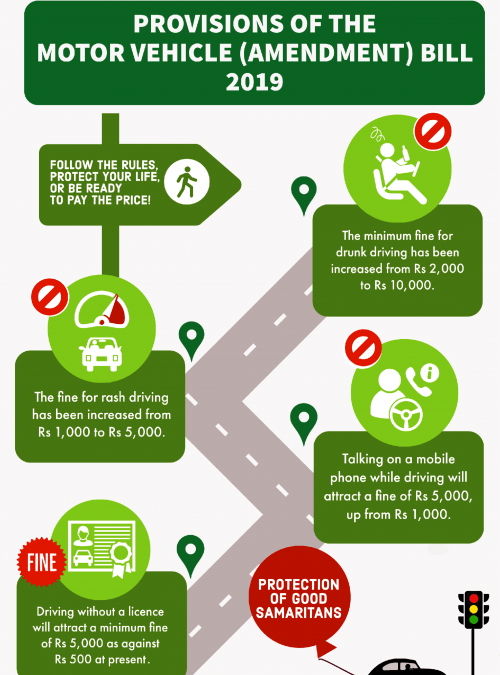
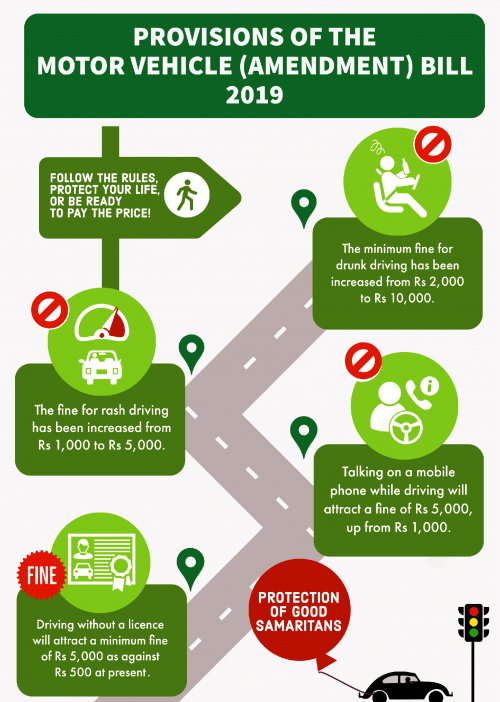
According to the road transport and highways ministry, half a million accidents are reported in India every year, in which 150,000 people lose their lives. A long awaited Motor Vehicles Amendment Act 2019 that introduces several amendments in the 30-year-old law has been passed by the Lok Sabha on 23rd July 2019 and Rajya Sabha on 31st July 2019. President Ram Nath Kovind on 9th Aug 2019 gave assent to the Motor Vehicles (Amendment) Act, 2019, that aims to make Indian roads safer, reduce corruption and use technology to overhaul the country’s transportation system. The amendments mainly focus on issues relating to improving road safety, citizens’ facilitation while dealing with the transport department, strengthening rural transport, last-mile connectivity and public transport, automation and computerization and enabling online services. The Bill was introduced in Parliament by the road transport and highway ministry in 2016, after which it was passed by the Lok Sabha in 2017. However, it failed to gather support in the Rajya Sabha.

LIST OF INCREASED PENALTIES UNDER MOTOR VEHICLE AMENDMENT ACT 2019

   
The Ministry of Road Transport & Highways (MoRTH) notified, the provisions of Motor Vehicles Amendment Act, 2019, for enhanced penalties (including Speeding, drink driving, helmet, SB), came into effect from September 1, 2019.
Section(Old Section)Old Provision/PropertyNew Proposed Provision/Minimum Penalties
177GeneralRs 100Rs 500
New 177ARules of road regulation violationRs 100Rs 500
178Travel without ticketRs 100Rs 500
179Disobedience of orders of authoritiesRs 100Rs 500
180Unauthorized use of vehicles without licenceRs 1,000Rs 5,000
181Driving without licenceRs 500Rs 5,000
182Driving despite disqualificationRs 500Rs 10,000
182 BOversize vehiclesNewNew
183Over speedingRs 400Rs 1,000 for LMV, Rs 2,000 for medium passenger vehicles
184Dangerous driving penaltyRs 1,000Up to Rs 5,000
185Drunken drivingRs 2,000Rs 10,000
189Speeding/ RacingRs 500Rs 5,000
192 AVehicle without permitUp to Rs 5,000Up to Rs 10,000
193Aggregators (violation of licencing conditions)NewRs 25,000 to Rs 1 lakh
194OverloadingRs 2,000 and Rs 1,000 per extra tonneRs 20,000 and Rs 2,000 per extra tonne
194 AOverloading of passengersRs 1,000 per extra passenger
194 BSeat beltRs 100Rs 1,000
194 COverloading of two-wheelersRs 100Rs 2,000, disqualification of licence for three months
194 DHelmetsRs 100Rs 1,000, disqualification of licence for three months
194 ENot providing way for emergency vehiclesNewRs 10,000
196Driving without insuranceRs 1,000Rs 2,000
199Offences by juvenilesNewGuardian/ owner shall be deemed to be guilty. Rs 25,000 fine with 3 years imprisonment. Juvenile to be tried under JJ Act. Registration of motor vehicle to be cancelled.
206Power of officers to impound documents Suspension of driving licences u/s 183, 184, 185, 189, 190, 194C, 194D, 194E.
210 BOffences committed by enforcing authoritiesTwice the penalty under the relevant section.

SIX MAIN RISK FACTORS OF ROAD SAFETY

  1. Seat Belt

Seat belts dramatically reduce risk of death and serious injury. Among drivers and front-seat passengers, seat belts reduce the risk of death by 45%, and cut the risk of serious injury by 50%. People not wearing a seat belt are 30 times more likely to be ejected from a vehicle during a crash. More than 3 out of 4 people who are ejected during a fatal crash die from their injuries.

  1. Speed

The speed of motor vehicles is at the core of the road traffic injury problem. Speed influences both crash risk and crash consequence. The physical layout of the road and its surroundings can both encourage and discourage speed. Crash risk increases as speed increases, especially at road junctions and while overtaking – as road users underestimate the speed and overestimate the distance of an approaching vehicle.

  1. Helmet

The main risk factor for motorized two-wheeler users is the non-use of crash helmets. The lack or inappropriate use of helmets increase the risk of fatalities and injuries resulting from road crashes involving motorized twowheelers. Head injuries are a major cause of death, injury and disability among users of motorized twowheel vehicles. Many of these head injuries could have been prevented or their severity reduced through the use of simple and inexpensive helmets.

  1. Drink & Drive

Impairment by alcohol is an important factor influencing both the risk of a road crash as well as the severity of the injuries that result from crashes.

  1. Child Restraints

A child safety seat is a seat designed specifically to protect children from injury or death during vehicle collisions. Child restraints work in the same way as adult seat-belts.

  1. Mobile distractive driving

Using mobile phones can cause drivers to take their eyes off the road, their hands off the steering wheel, and their minds off the road and the surrounding situation. This cognitive distraction have the biggest impact on driving behaviour.

IMPACT

  • We submitted a petition on December 2015 to the Honorable Minister Shri Nitin Gadkari and State Minister for an immediate introduction of Road Safety Bill in monsoon session at central level.
  • At state level our partners have submitted petition to Transport Ministers of the respective states and copies have been sent to Shri Nitin Gadkari.
  • We have received support from 58 Members of Parliament across all parties.
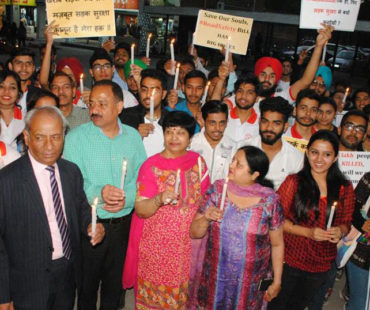
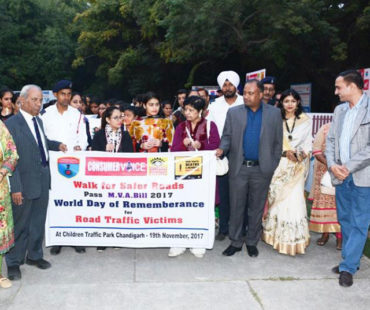
  • Workshops and Candle Marches were held on World Day of Remembrance (WDR) for Road Safety across major states and cities in India like Chandigarh, Lucknow, Cuttack, Bhopal and Patna which were a huge success.
GRSP-gallery-4-370x310
previous arrow
next arrow
Some of the important activities that formed part of our campaign were:
  • Consumer VOICE organized Cyclothon (Cycle Rally) event on January 7, 2017  on the occasion of Road Safety Week at Nehru Park, Neeti Marg, Chanakyapuri, New Delhi. The theme of the Cyclothon was ‘Child Safety
    and Safer Roads – Every Life Counts’.
  • The VOICE team also approached relevant ministries (Ministry of Road Transport and Highways and Ministry (MORTH) and Ministry of Consumer Affairs to push for the bill.
  • World Day of Remembrance (WDR) was organised in 2015, 2016 and 2017 from 15th till 20th November in 10 states
  • A National workshop was held on February 2015 to brief our state partners to garner support from MPs across states.

CAMPAIGN UPDATES

No Results Found

The page you requested could not be found. Try refining your search, or use the navigation above to locate the post.

MEDIA REITERATES OUR EFFORTS

Walk to create road safety awareness

November 18, 2019 | The Telegraph

Citizens on Sunday participated in a walk organised by  … Read more

City observes World Day of Remembrance

November 18, 2019 | The Sentinel

Consumer’s Legal Protection Forum, Assam, Consumer VOICE, …. Read more

Road Safety Network urges the government to issue an ordinance on road safety

February15, 2019 | Business Standard

A day after the last session of the current Lok Sabha, the Road Safety Network … Read more

Citizens Awareness Group holds walk in memory of mishap victims

Nov 19, 2018 | Times of India

The Citizens Awareness Group here organized a walk which originated from … Read more

Citizens Awareness Group holds walk

Nov 19, 2018 | The Pioneer

Citizens Awareness Group, Chandigarh with support from Consumer Voice,.. Read more


WORLD REMEMBRANCE DAY (WDR) 2019

World Day of Remembrance 2019 “Life is not a Car Part” The World Day of Remembrance for Road Traffic Victims (WDR) is commemorated on the third Sunday of November every year – to remember the many millions killed and injured on the world’s roads, together with their families, friends and …. Read more

WDR

No Results Found

The page you requested could not be found. Try refining your search, or use the navigation above to locate the post.
India and WHO Framework Convention on Tobacco Control

Pecuniary Jurisdiction under Consumer Protection Act, 2019

The National Consumer Disputes Redressal Commission (NCDRC) in M/S Pyaridevi Chabiraj Steels Pvt. Ltd. V. National Insurance Company Ltd. & Ors. [Consumer Case No. 833 of 2020]  held that for determining the pecuniary jurisdiction of the Consumer for a and the value of the goods “paid” as consideration has to be taken and not the value of goods or services “purchased”. It was observed by the court that the case being governed under the Consumer Protection Act, 1986, NCDRC would have jurisdiction in the matter since pecuniary jurisdiction thereunder was determined by taking the “value of the goods or services and compensation”. Meaning thereby that the value of the goods or services as also the compensation would be added to arrive at a conclusion as to whether the National Commission has the jurisdiction or not.  It was further observed by the court that under the new law, the NCDRC has jurisdiction to entertain complaints where the “value of the goods or services paid” as consideration exceeds R. 10,00,00,000.

It was held that, “It appears that the Parliament, while enacting the Act of 2019 was conscious of this fact and to ensure that Consumer should approach the appropriate Consumer Disputes Redressal Commission whether it is District, State or National only the value of the consideration paid should be taken into consideration while determining the pecuniary jurisdiction and not value of the goods or services and compensation, and that is why a specific provision has been made in Sections 34 (1), 47 (1) (a) (i) and 58 (1) (a) (i) providing for the pecuniary jurisdiction of the District Consumer Disputes Redressal Commission, State Consumer Disputes Redressal Commission and the National Commission respectively.”

To learn more about the case, get a copy of our digital magazine today!

Enquire Now

    X
    Enquire Now