No Results Found
The page you requested could not be found. Try refining your search, or use the navigation above to locate the post.



By Ashok Kanchan
| Sl. No. | Brand | Manufacturer / Marketer |
| 1 | Bambino | Bambino Agro Industries Ltd. |
| 2 | Ching’s | Capital Foods Pvt. Ltd. |
| 3 | Knorr | Hindustan Unilever Ltd. |
| 4 | Snac tac |
Reliance Retail Ltd. |
|
Age Group |
Category of work |
Body Wt |
Protein |
Carbohydrate |
| (kg) | (gram/day) | (gram/day) | ||
|
Men |
Sedentary |
65 |
54.0 |
130 |
| Moderate | ||||
| Heavy | ||||
|
Women |
Sedentary |
55 |
45.7 |
130 |
| Moderate | ||||
| Heavy | ||||
| Pregnant woman |
55 + 10 |
+9.5 (2ndtrimester) +22.0 (3rdtrimester) |
175 | |
|
Lactation 0-6m
7-12m |
+16.9
+13.2 |
200
200 |
Dietary Fibre refers to plant cell wall components that are not digestible by human digestive enzymes. Dietary fiber requirement can be met by adopting a diet that incorporates plant origin foods including fruits, vegetables and grains.
Benefits of a high-fibre diet
The 2020 Report of the Expert Group of National Institute of Nutrition (NIN), Hyderabad of Indian Council of Medical Research (ICMR) recommended about 40 gram /2000 kcal has been considered as safe intake.
Per serving carbohydrate, protein and fibre measurement
| Sl. No. | Brand | Carbohydrate | Protein | Fibre / Dietary Fibre | |||
| In one Serving(gram) | % of RDA (for man / woman) |
In one Serving (gram) |
% RDA for man |
In one Serving (gram) |
% RDA (ICMR) Recommendation) | ||
| 1 | Bambino | 8.1 | 6.2 | 1.3 | 2.4 | 1.0 | 2.5 |
| 2 | Ching’s | 10.4 | 8.0 | 0.7 | 1.3 | NM | – |
| 3 | Knorr | 9.2 | 7.1 | 0.7 | 1.3 | 0.5 | 1.25 |
| 4 | Snac tac | 9.2 | 7.1 | 1.1 | 2.0 | NM | – |
NM -Not Mentioned
—————————————————————————————
Adults should consume less than two grams of sodium, or five grams of salt per day. A person with elevated sodium levels could be at risk of raised blood pressure which increases the risk of heart disease and stroke.
——————————————————————————————–
Foods which are high in fat, sugar and salt are linked with obesity and non-communicable diseases such as diabetes, hypertension and high blood pressure.Food Standards Agency of United Kingdom (U.K.) developed Traffic Light Labeling guidelines to help consumers to:
The above labeling system however is not followed in India.
The criteria for foods were set out as follows (per 100-gram food):
| Ingredient |
Green (Low content) |
Amber (Medium content) |
Red (High content) |
| Fat | less than or equal 3 gram | More than 3 gram to 17.5 gram | more than 17.5 gram |
| Sugar | less than or equal 5 gram | More than 5 gram to 22.5 gram | more than 22.5 gram |
| Salt | less than or equal 0.3 gram | More than 0.3 gram to 1.5 gram | more than 1.5 gram |
Results will be interpreted, which can be easily understood as follows:
Green: Eat often (Desirable)
Amber: Eat occasionally (Neutral)
Red: Eat sparingly (Undesirable)
Traffic Light Rating
| Sl. No. | Brand | Fat | Sugar | Salt | ||||
|
In 100 gram (gram) |
Traffic Light |
In 100 gram (gram) |
Traffic Light |
In 100 gram (gram) |
Traffic Light |
Salt per Serve (gram) |
||
| 1 | Bambino | 6.2 | Amber | 19.0 | Amber | 12.2* | Red | 1.8* |
| 2 | Ching’s | 3.3 | Amber | 34.2 | Red | 11.3* | Red | 1.5* |
| 3 | Knorr | 5.7 | Amber | 35.7 | Red | 10.1* | Red | 1.3* |
| 4 | Snac tac | 4.9 | Amber | 20.3 | Amber | NM | – | – |
NM – Not Mentioned
*Sodium multiplied by 2.5
Unit pricing or comparative pricingis a way to show the price of a commodity in relation to a standard unit of measure, such as the kilogram or litre or number. Unit price gives fair idea about cheaper and costlier brands.
| Sl. No. | Brand |
Maximum Retail Price (MRP) (Rs.) |
Declared Serve Sizes (Numbers) |
Declared Net Weight on packet (Gram) |
Unit Price (Price per Serve) (Rs) |
| 1 | Bambino | 60.00 |
8 (Buy one get one free) |
50 | 7.50 |
| 2 | Ching’s | 55.00 | 4 | 55 | 13.75 |
| 3 | Knorr | 55.00 | 4 | 53 | 13.75 |
| 4 | Snac tac | 49.00 | 4 | 60 | 12.25 |
Related
The page you requested could not be found. Try refining your search, or use the navigation above to locate the post.
Consumer Voice Urges the Prime Minister to Pass Motor Vehicles Amendment Bill 2017 in Upcoming Winter Session of Parliament
India Loses 413 Lives in Road Accidents Every Day in the Absence Of A Strong Road Safety Law
New Delhi: Consumer VOICE submitted memorandum to the Hon’ble Prime Minister Shri Narendra Modi , urging to pass Motor Vehicles Amendment Bill 2017 in the upcoming winter session of Parliament and save 413 lives which are lost in road accidents every day. Once the bill is cleared from the Rajya Sabha, it will ensure the formation of a new stricter law which will help in saving precious human lives lost in road accidents every year.
In the press interaction meet organised on 4th october at Press Club of India,New Delhi Mr. Ashim Sanyal ,Chief Operating Officer ,Consumer VOICE said that the passage of Bill is crucial in the upcoming winter session .The provisions of proposed bill has very important elements for saving lives on roads and therefore parties across political lines should ensure its passage during the winter session”.
Mr.Dave Cliff, Chief Executive Officer,Global Road Safety Partnership and global road safety expert shared his view point on global road safety scenario and success stories on how countries have put stricter laws in reducing the road fatalities. He emphasised that India can achieve its goal of reducing fatalities by 50% by the year 2020 through passage of MVA Bill 2017 and its implementation by state governments.
As per the annual publication ‘Road Accidents in India-2016’ a report released by Ministry for Road Transport and Highways on Sept. 06, 2017 total 4,80,652 road accidents, 1,50,785, road traffic deaths took place and 4,94,624 persons were injured in India in year 2016. Everyday-1,317 Accidents take place and 413 Persons killed on Indian Roads.
The Motor Vehicles (Amendment) Bill 2017 is already cleared by Lok Sabha in last session and is due for passage by the Rajya Sabha.
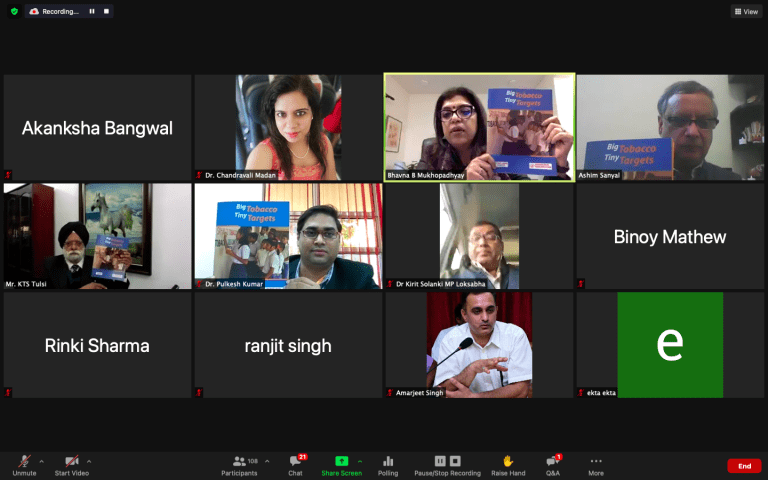
On 12th January, on the occasion of Swami Vivekanada’s birth anniversary, which is also celebrated as National Youth Day, the report of Big Tobacco, Tiny Targets Study 2020 was released online. The study was conducted across 1011 educational institutions and 885 points of sale were investigated. A mobile app in 25 cities across 10 states of India was used by Consumer Voice and Voluntary Health Association of India (VHAI) for the study. The report was inaugurated amidst the august presence of Shri KTS Tulsi, Hon’ble Member of Parliament, Rajya Sabha, Dr. Kirit Premjibhai Solanki, Member of Parliament, Bhavna B Mukhopadhyay, Chief Executive, Voluntary Health Association of India and Ashim Sanyal, Chief Operating Officer, CONSUMER VOICE. The event also witnessed the participation of civil society members from Consumer VOICE, Voluntary Health Association of India (VHAI), and other civil society organisations, public health experts, parents, school children ,educationists, and media
The report is an eye opener of sorts. It reveals that tobacco companies are systematically targeting youth as young as eight years old in India, by selling and advertising tobacco products near educational institutions. Over 72% point of sale around educational institutions in 25 cities were found to be displaying cigarettes, bidis and smokeless tobacco products near candies and sweets at the eye level of children. These were selling single stick cigarettes and offering free/ discounted tobacco products to school children.
The result of this study only strengthens our resolve to implement COTPA more stringently. As Ashim Sanyal points out“Tobacco companies have been exploiting loopholes in the law by selling and advertising their products around educational institutions and endangering the lives of our young generation, we therefore urge the Government to strengthen COTPA 2003 to protect our children & youth from falling prey to the tactics of tobacco companies.” This will help in ending tobacco marketing to children and youth who are the future of any nation. This was also asserted by Dr. Kirit Premjibhai Solanki, Member of Parliament that “5500 children begin tobacco use daily in India and consequently may become addicted. It’s critical to make sure we strengthen our laws and penalty provisions to deter tobacco companies from selling and advertising of their addictive products to our children and youth.”
Dismay at the fact the children as young as 10 and 12 years are being targeted by tobacco companies, Shri KTS Tulsi, Hon’ble Member of Parliament, Rajya Sabha said that, “It’s critical to improve our existing laws and have stronger penalty provisions to protect our children and youth from menace of tobacco for healthy India”.
Dr. Pulkesh Kumar, Deputy Secretary, Ministry of Health & Family Welfare, Govt. of India who also graced the occasion emphasized the need to protect our children from the harmful effects of tobacco and implementation of COTPA in a more stringent manner.
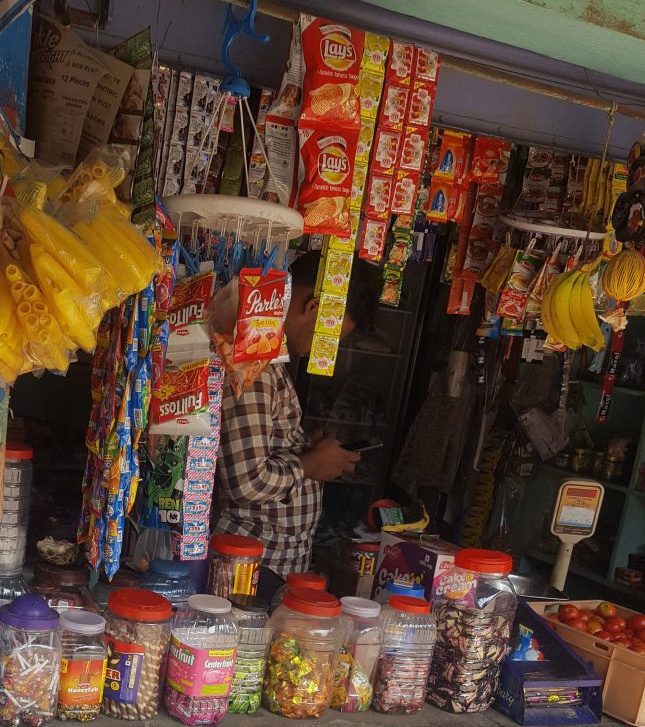
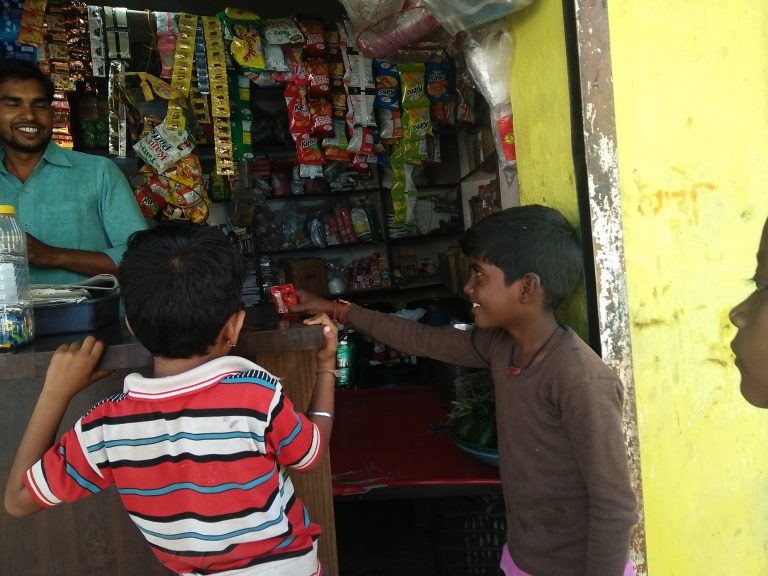
“Our educational institutions are not safe so long as the tobacco industry continues to lure our children and youth into buying their deadly products” as rightly pointed out by Bhavna B Mukhopadhyay, Chief Executive, Voluntary Health Association of India.
It’s time that we wake up to this serious threat and save our children from the harmful effects of tobacco consumption.
Click here for media coverages
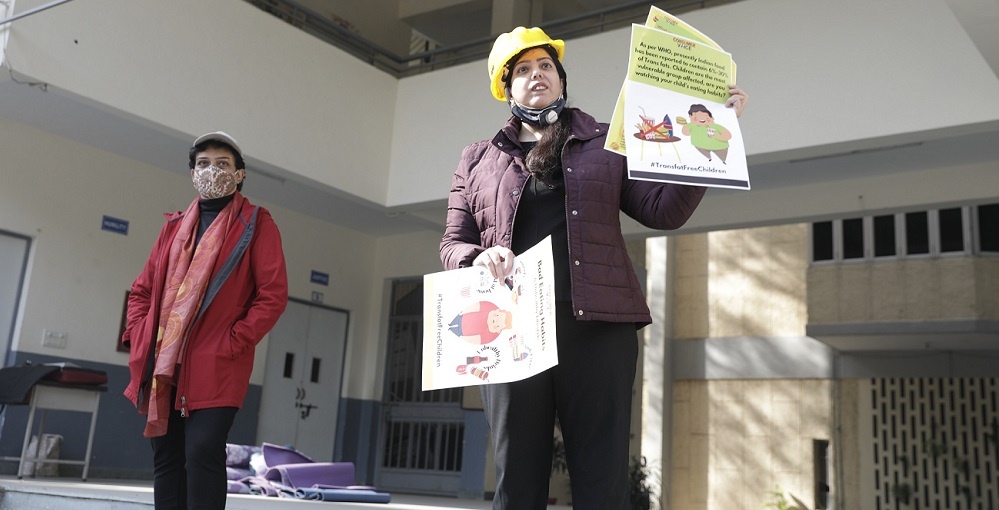

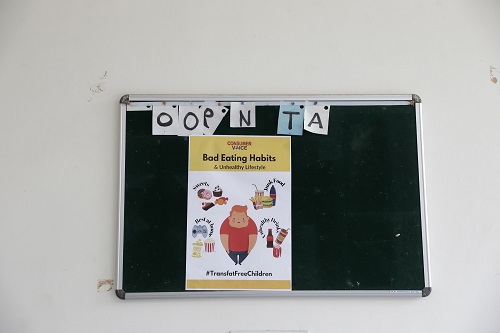
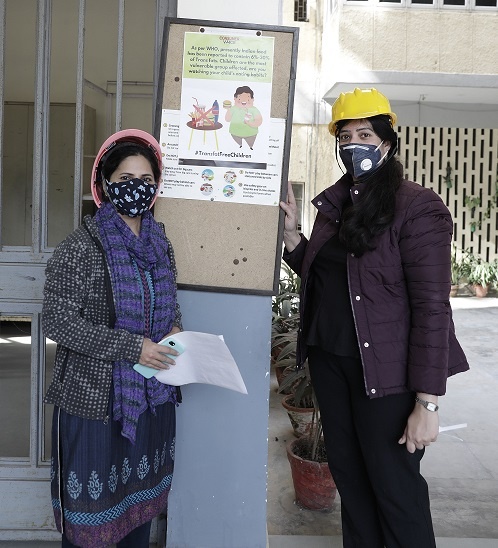
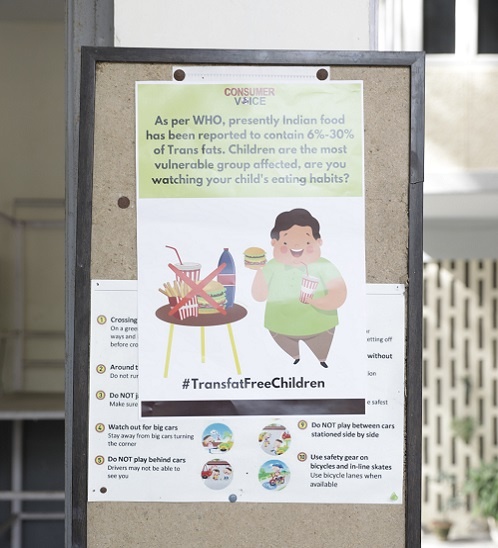
Various Informative posters on the subject matter were prepared and shown to students such as what is trans fatty acids, what are different types of foods to be avoided, ill effects of trans fatty acids etc. These posters were also put on school boards after permission of the school authorities.
Stickers with ‘No to Trans Fat’ messages were also circulated among students to put on their school bags as a reminder to avoid trans fatty acids in the food. We witnessed great enthusiasm among students and school staff. Around 45 students of middle and senior sections participated in the interactive session.
National Consumer Day 2020 – Time for consumers to awake and arise

Every year 24th December is observed as National Consumer Day in India with a specific theme. On this day the Consumer Protection Act, 1986 had received the assent of the President.
The enactment of this Act is considered as a historic milestone in the consumer movement in the country.
This day provides an opportunity for individuals to highlight the importance of the consumer movement and the need to make every consumer aware of their rights and responsibilities.
This year the theme of National Consumer Day is ‘The Sustainable Consumer’. We need drastic action to address the global crises of climate change and biodiversity loss. The decade of the 2020s is our last chance to limit global warming since pre-industrial times, in line with the Paris Agreement and to reverse the current trend of wide-scale biodiversity loss.The consumer movement should highlight the lifestyle changes consumers can make to play their part, and what governments and businesses need to do to make sustainability the easy choice for consumers.
The Consumer Protection Act 2019 is in force from 20th July 2020. The Act will empower consumers and help them in protecting their rights through its various notified rules and provisions like Consumer Protection Councils, Consumer Disputes Redressal Commissions, Mediation, Product Liability and punishment for manufacture or sale of products containing adulterant / spurious goods.
The Act includes establishment of the Central Consumer Protection Authority (CCPA) to promote, protect and enforce the rights of consumers. The CCPA will be empowered to conduct investigations into violations of consumer rights and institute complaints / prosecution, order recall of unsafe goods and services, order discontinuance of unfair trade practices and misleading advertisements, impose penalties on manufacturers/endorsers/publishers of misleading advertisements.
Under this act every e-commerce entity is required to provide information relating to return, refund, exchange, warranty and guarantee, delivery and shipment, modes of payment, grievance redressal mechanism, payment methods, security of payment methods, charge-back options, etc. including country of origin which are necessary for enabling the consumer to make an informed decision at the pre-purchase stage on its platform. The e-commerce platforms also need to acknowledge the receipt of any consumer complaint within forty-eight hours and redress the complaint within one month from the date of receipt under this Act.
The Act introduces the concept of product liability and brings within its scope, the product manufacturer, product service provider and product seller, for any claim for compensation.
The Act provides for simplifying the consumer dispute adjudication process in the consumer commissions, which include, among others, empowerment of the State and District Commissions to review their own orders, enabling a consumer to file complaints electronically and file complaints in consumer Commissions that have jurisdiction over the place of his residence, videoconferencing for hearing and deemed admissibility of complaints if the question of admissibility is not decided within the specified period of 21 days.
An Alternate Dispute Resolution mechanism of mediation has been provided in the new Act. This will simplify the adjudication process. A complaint will be referred by a Consumer Commission for mediation, wherever scope for early settlement exists and parties agree for it. Mediation will be held in the Mediation Cells to be established under the aegis of the Consumer Commissions. There will be no appeal against settlement through mediation.
As per the Consumer Disputes Redressal Commission rules, there will be no fee for filing cases upto Rs. 5 lakh. The CCPA may impose a penalty on a manufacturer or an endorser of up to Rs 10 lakh and imprisonment for up to two years for a false or misleading advertisement. In case of a subsequent offence, the fine may extend to Rs 50 lakh and imprisonment of up to five years.
Consumer VOICE wishes all citizens an eventful National Consumer Day 2020 under the new strong Act and hopes that many consumers will join us in also celebrating the International Consumer Rights Day on 15th March 2021. Let’s pledge to make consumers’ voices heard !
For other articles by Consumer VOICE COO’s Desk, click here