No Results Found
The page you requested could not be found. Try refining your search, or use the navigation above to locate the post.

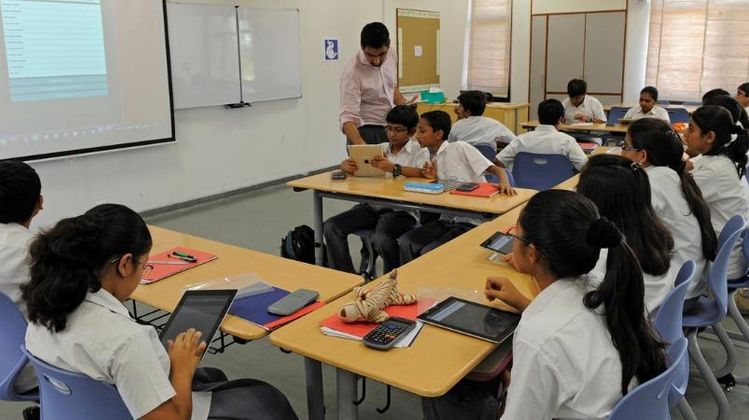
In our country, it is a well settled law that as per Article 141 of our Constitution, the judgments made by the Supreme Court are binding on all lower courts of the country. Hence the laws laid down by the Supreme Court are binding on all High courts & on all lower courts/tribunals of the country. However, in spite of strong views taken by the apex court about judicial discipline, violation of basics by the lower courts/tribunals is yet in substantial increase. Lower courts and tribunals refuse to follow and accept the verdict of law by the larger benches giving reason of some minor differences in the facts. This amounts to disrespect to constitutional ethos and indiscipline of this kind can have grave impact on the judicial institutes- SC while adjudicating the case of Official liquidator vs Dayanand.
Dr Prem Lata, Head Legal VOICE
“Judicial Discipline is a paramount feature for a Judicial Institution’- said three judges bench of the Apex court while adjudicating the matter of Official liquidator vs Dayanand and raised its concern on several such judgments namely U.P. SEB vs Pooran Chandra Pandey and criticized this kind of disobedience and also directed that such judgments not to be treated as obiter dictum.
A judge’s expression of opinion uttered in court or in a written judgement, but not essential to the decision and therefore not legally binding as a precedent. In England an ‘obiter dictum’ has no binding effect either upon a coordinate Court or upon a subordinate Court. In our country, it is a well settled law as per Article 141 of our constitution that judgments made by the Supreme Court are binding on all lower courts of the country. Hence the laws laid down by the Supreme Court are binding on all High courts & on all lower courts/tribunals of the country. But in spite of strong view taken by the apex court about judicial discipline, violation of basics by the lower courts/tribunals is yet in substantial increase. Lower courts and tribunals refuse to follow and accept the verdict of law by the larger benches giving reason of some minor differences in the facts .This amounts to disrespect of the constitutional ethos, and indiscipline of this kind can have a grave impact on the judicial institutes. The above observation of the Supreme Court three judges bench was in this context.
Now, coming to the real question, whether Supreme Court of India has really declared anywhere that education is not service under Consumer Protection Act in the light of thunderous judgment given by National commission in Manu Solanki vs Vinayak University case which stands contrary to many judgments pronounced by the Supreme Court? Can the order passed by the National Commission be considered obiter dicta and not the precedent for lower commissions when Supreme Court judgments are contrary to the Manu Solanki judgment?
Having regard to the pendency of Civil Appeal No 3504 of 2020 (Manu Solanki and Others vs Vinayaka Mission University), the issue as to whether education is a service within the Consumer Protection Act, is pending before this Court. A bench of Justices D Y Chandrachud, Indu Malhotra and Indira Banerjee, (Manu Solanki and Others vs Vinayaka Mission University), has admitted an appeal filed by Manu Solanki and other students of a medical course against Vinayaka Mission University at Salem in Tamil Nadu, alleging deficiency in services.
Since there are divergent views of this Court bearing on the subject as to whether an educational institution or University would be subject to the provisions of the Consumer Protection Act 1986, the appeal would require admission. The Supreme Court has agreed to examine the question as to whether an educational institution or University can be sued under the consumer protection law for deficiency in services
SC asked lawyer Soumyajit, appearing on behalf of university, to file the response within six weeks to the appeal filed against a decision of the National Consumer Disputes Redressal Commission (NCDRC). Again while granting leave in a special leave petition filed by Rajendra Kumar on October 29, 2021, the Supreme Court observed that an appeal pertaining to the issue of whether education is a service within the CP Act was already pending before the court (Civil Appeal of Manu Solanki was admitted in 2020) and that this should be tagged with that. Now both the appeals are pending before the Hon’ble SC for its final verdict.
The students in the above appeal cited judgments in which it has been held that educational institutions would come within the purview of the Consumer Protection Act, 1986.
Facts leading to above appeal before the Apex court emerge from the judgment by NCDRC in above cited Manu Solanki case Hon’ble National commission which has opened a plethora of issues on Education as service. As many as 25 bunches of cases having number of petitioners and respondents have come to the National Commission from all over the country either in appeals or in Revision petitions for explanations to education as service.
In the present case in hand, namely, Consumer Case No. 261 Of 2012 Manu Solanki & 8 Ors vs Vinayaka Mission University, Tamil Nadu with 24 more cases, issue is not limited to whether education is a service or not. These cases raise a number of issues related to education.
The above issues had never been raised so far when services of education under consumer protection act are discussed by the apex court or apex commission.
Point no 1
Student is a consumer as per Supreme court three judges Bench in the case of Usmania Islamia Academy vs State of Karnataka, three judges bench comprising Justice V N Khare, Justice S N Variyavaha and Chief Justice K G Balakrishnan pronounced a detailed order on 14.8.2003, which held that education is a service by discussing every aspect covered by the educational institute in providing education to the students. Number of guidelines were issued through this three judge’s bench order and UGC was directed to frame rules on the basis of this order. UGC then circulated certain guidelines for the institutes that –
Following this order, again there was Supreme Court ruling in the year 2004 in the matter of Bhupesh Khurana vs Buddha Dental College & hospital holding college unfair for their misleading information about the college. This theory is being followed by the National Commission till date.
No case against this judgment has been passed by SC. This judgment is further followed by Bhupesh Khurana vs Buddha Dental College Hospital in the year 2009 by Supreme Court two judges bench considering the grievance of students after entire course is finished and they found institute neither recognised nor affiliated contrary to their promise and advertisement. This was a case post rendering services by the institute and this case is not reverted back by the Supreme Court in any other case. Hence on first point, established law is that student is a consumer.
Point no 2
Definition of education is of no relevance when we talk of services Service is defined under the act not only for education but for all possible services not limited to any particular discipline. Section 2 (42) of act 2019 and section 2(O) of act 1986 define as hereunder-
Section 2(1) (o) in the Consumer Protection Act, 1986
(o) “service” means service of any description which is made available to potential users and includes, but not limited to, the provision of facilities in connection with banking, financing insurance, transport, processing, supply of electrical or other energy, board or lodging or both, housing construction, entertainment, amusement or the purveying of news or other information, but does not include the rendering of any service free of charge or under a contract of personal service.
There is no word education or educational institute in this act which needs defining it for the purpose of any clarification of service.
Point No 3
What can be called an educational institute is the issue is not even remotely connected when we talk of services? It really does not matter whether service provider is educational institute, health care institute, financial services provider, housing board constructing houses or hotels boarding lodging service provider.
The case cited for defining any institute whether educational institute or not is absolutely of no relevance rendering services under Consumer Protection Act does not need it to be necessarily labelled as educational institute.
National commission referred to the following case-The Hon’ble Supreme Court in State of Punjab & Ors. Vs Senior Vocational Staff Masters Association & Ors. observed that vocational courses are those courses in which teaching is not on regular basis, though they play an important role in the grooming of students in different fields. Vocational education can also be termed as job oriented education and trains young people for various jobs and helps them acquire specialize skills.
Further reference is made to the fact that The Union Cabinet has approved a merger of the existing Regulatory Institutions in the skills space — National Council for Vocational Training (NCVT) and the National Skill Development Agency (NSDA) into the National Council for Vocational Education and Training(NCVET). The main purpose and objective of NCVET is to recognize and regulate and assess the skill related service regulators. It is clarified that even if there is any defect/deficiency/unfair trade practice in the services offered by private bodies in offering these courses and are not regulated and do not confer any degree or diploma recognized by any approved authority do fall within the ambit of definition of ‘Educational Institutions’
Further Hon’ble Seven Judge Bench of the Supreme Court in P.A. Inamdar vs State of Maharashtra, coaching centres cannot be equated to regular schools or colleges which are regulated by a Regulatory Authority and also confer a Degree/Diploma on the student who has passed in the examinations conducted as per the Rules and norms specified in the statute, hence coaching centres are promoting rote learning and not imparting actual knowledge
Let it be so if in view of the above discussion some institutes are not fit to be called educational institute under UGC guidelines or any other education ministry rules. Consumer Protection Act is only concerned that the students pay fee and avails services whether it is educational institute or not, it is service provider.
Point no 4 & 5
On these two points again, discussion is about the character of an institute and interestingly student is considered a consumer against coaching institute, so no issue on that.
Point no 6
Post education grievance has already been taken up by Supreme Court in Bhupesh Khurana vs Buddha Dental College Hospital case in the year 2009 in detail, and there is no question of any contrary view unless the Supreme Court rules out or makes contrary judgment.
Point no 7
Regarding observation of NC in Manu Solanki case, incidental activities are not a part of education hence the institute is not responsible. National Consumer Disputes Redressal Commission took to task educational institutions on a number of issues, one of the most notable being the award of damages to the parent of a three year old girl child who drowned in a septic tank left open on the school premises. The Commission here made it clear that safety of students was an integral part of the service provided by educational institutions (S. Somasundaram Vs Sri Chakravarty International Matriculation Academy, 2001). The same NC now gives different version.
Let all institutes be barred to earn profit by facilitating parents to get transport, sports, extra curriculum activities and stop charging fee under these heads. Parents can separately file case against swimming coach or transporter or hostel management for rendering deficient services. However, the matter is before the Supreme court now and it seems from the remarks by apex court, they may consider Universities also as service provider which as on date are not covered as per Supreme court 2009 judgment on Bihar Examination Board vs Suresh Prasad Sinha, and Maharishi Dayanand University vs Surjeet Kaur.
All eyes are on Supreme Court to set all controversies at rest on the very crucial issue of education as service under CP Act.
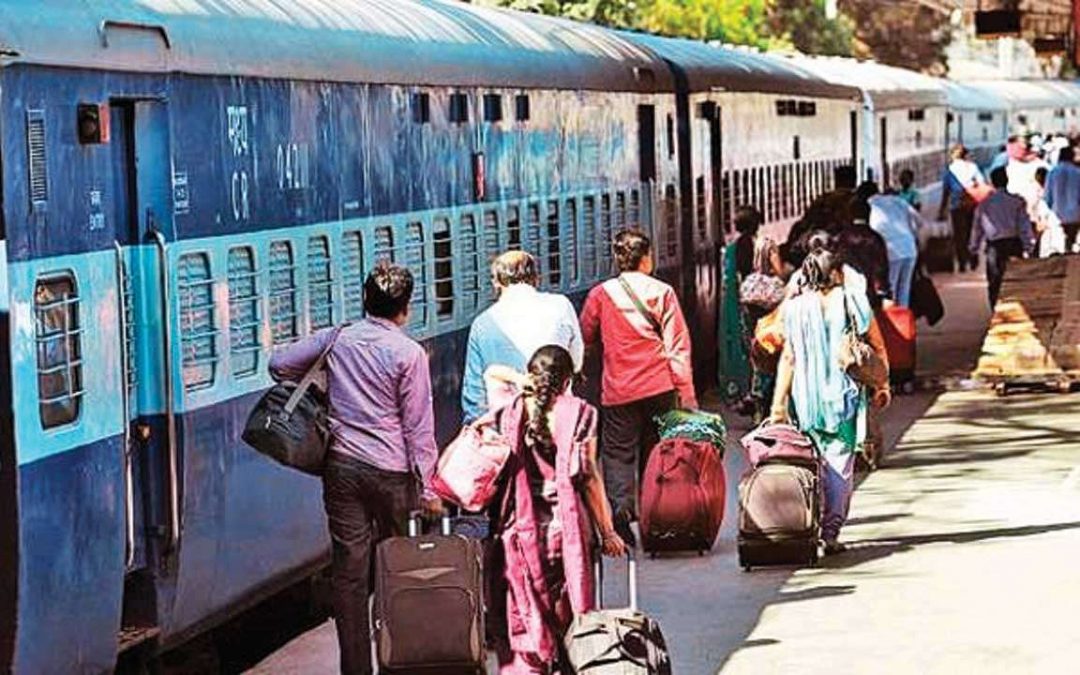
Who cares about buying travel insurance for rail travel? That too when one can get insurance coverage of up to ₹10 lakh at a premium of 35 paise for financial protection against rail accidents and other untoward incidents including robbery.
You might have overlooked it, but Indian Railway Catering and Tourism Corporation (IRCTC) has been providing you insurance every time you book a ticket through its website or mobile app. While booking tickets for your train journey on IRCTC site, you will get an option on “Travel Insurance” where you can choose whether you want travel insurance or not. Since the cost is only 35 paise, it is advisable to choose this one.
Subas Tiwari
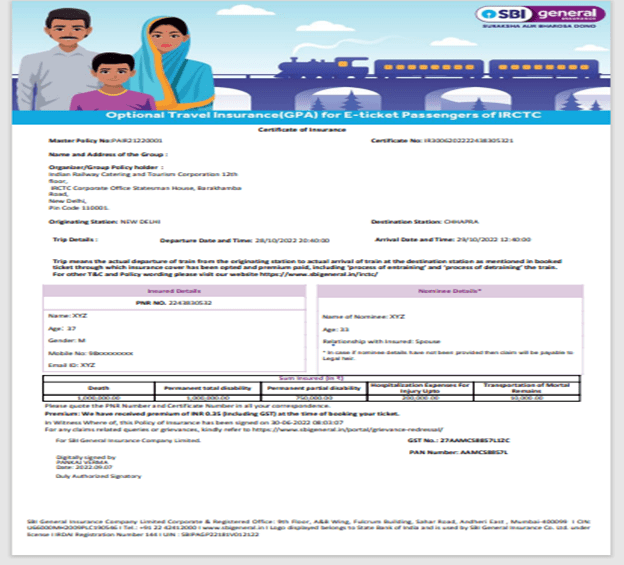
Rail travel insurance provides coverage of Rs 10 lakh for death and permanent total disability arising out of any train accident or other untoward incident. 7.5 lakh is available for permanent partial disability. 2 lakhs coverage is available for hospitalization expenses for injury. Accidents, robbery, and other violent acts during train travel are covered by the policy. Insure for yourself & family when you book your tickets by train. It is simple & easy. No hassles of medical test, filling up of forms, etc.
Indian Railway Catering and Tourism Corporation (IRCTC), a Subsidiary of the Ministry of Railways, Government of India has floated this unique concept in rail travel in India, which is inviting raves amongst the travelling public for offering additional rail safety for train travellers.
As a pilot exercise, this scheme is open only to those who book travel tickets on online platforms (through e-tickets). Now, let us get down to understand what the scheme is & how does it extend rail insurance cover.
The premium amount is Rs.0.35 paise per passenger (inclusive of all taxes). However, there are conditions attached to this premium. That is, if you opted for this travel insurance, then it will be compulsory for all passengers booked under the single PNR. Also, in the case of ticket cancellations, the premium charged would have to be forfeited & would not be refunded.
The above is applicable on a train accident or other ‘untoward incident’ including terrorist attacks, dacoity, rioting, shoot-out or arson, as well as for short termination, diverted route and Vikalp trains. Further claims under train accident and untoward incident cases will be as per definition under Sections 123 read with Sections 124 and 124A of the Railways Act, 1989.
IRCTC offers Rail Insurance cover in partnership with the following General Insurance Companies (under Personal Accident Cover)
Rail customers shall receive the policy information through SMS and on their registered email IDs directly from insurance companies along with the link for filling nomination details. However, policy number can be viewed from ticket booked history at IRCTC page.
After the booking of ticket, the nomination details are to be filled at the respective insurance company site. If nomination details are not filled, then the settlement has to be made with legal heirs, if the claim arises.
However, the following are the terms & conditions governing the insurance cover-
The Policy document would be issued as a soft copy to your registered email ID.
The above-listed exclusions are not exhaustive.
According to unconfirmed sources, it is understood that the scheme could be liberalized to include all rail travellers based on customer feedback on success of the existing scheme, thus paving the way for secured & safe rail travel in India.
Related
The page you requested could not be found. Try refining your search, or use the navigation above to locate the post.
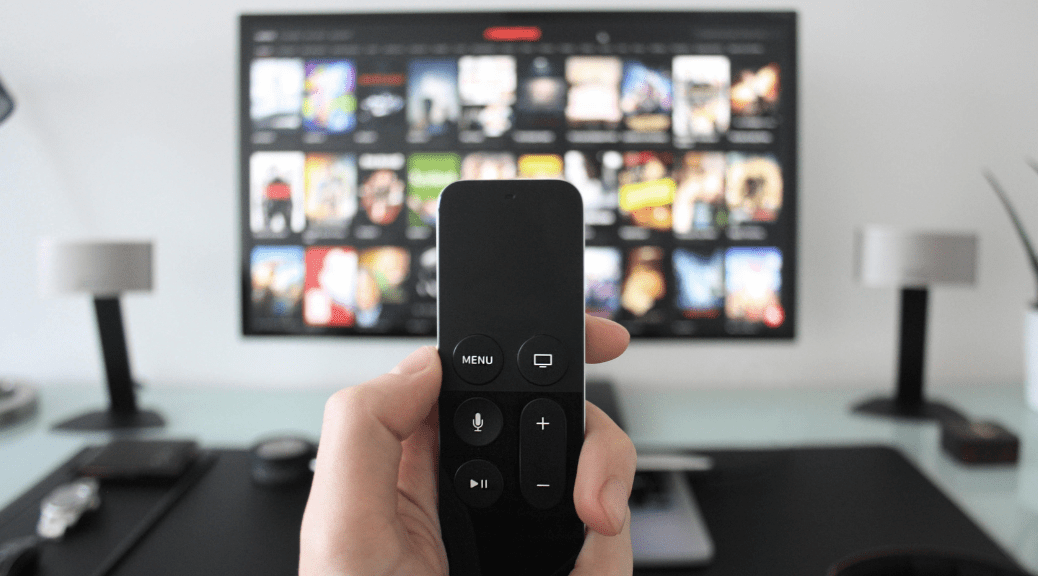
Choosing a TV from a variety of available options may be a difficult task for you as the television industry is upgrading continuously with various new brands & models. This buying guide will help you in making informed decision while purchasing your new smart TV. Not all smart TVs are created equal. Perhaps the TV you like does not have the operating system of your choice. Perhaps the additional features you want are not available either. So you will want to do your homework and do some research before the purchase is done. In this report, we will cover different features of smart TVs together with what to expect from your smart TV.
The major feature separating smart TVs and not-so-smart TVs is an internet connection. This allows one to access on-demand content from apps like BBC iPlayer, ITV Hub and All 4, and stream television shows and movies from a variety of apps and services, like Netflix, Amazon Prime and YouTube. Many smart TVs also let you go to social media sites such as Facebook and Twitter. A growing number of smart TVs have full web browsers that let you go almost anywhere on the internet. Many smart TVs come with point-and-click remote controls that can manage onscreen interactions using hand motions or by responding to your voice commands. Most smart TVs also provide capabilities to connect with external devices such as a USB flash drive, a mobile phone, etc.
|
Smart TV |
Non-Smart TV |
|
| Description | A television that has access to the internet and hence is ‘smarter’ than a normal TV | A basic television that allows one to view images and listen to sounds – that is, watch videos |
| Wi-Fi | Needs Wi-Fi | Does not need Wi-Fi |
| Access to internet | √ | X |
| Built-in apps | √ | X |
| Movies streaming (from Netflix, Amazon Prime, etc.) | √ | X |
| Check and send emails | √ | X |
| Project phone screen on TV | √ | X |
| Watch your own pictures or videos stored on a smartphone | √ | X |
-> Display type: It all starts from what type of display technology you want, whether it’s LCD, LED, OLED or UHD.
LCD: Liquid crystal displays are pretty common to find, and may be the cheaper option. They are energy-efficient and usually have good colour and resolution.
LED: TVs branded as LED are actually LCD TVs that use LEDs as a backlight for the liquid crystals in the display. If a TV has ‘local dimming’, it will have an advantage when it comes to contrast ratio, which is a plus. On top of that, LED TVs are less power-hungry than standard LCDs and plasma.
OLED: Organic light-emitting diode (OLED) TVs use coloured LED lights to create the image, so they save on power, though not always as much as LED TVs. However, since OLED screens are costly to make, you’ll have to pay more. They also suffer from some of the viewing-angle problems.
UHD TVs: Ultra-high definition (UHD) TVs, also called 4K TVs, have screen resolutions of 3,840 x 2,160. That’s four times the 1,920 x 1,080 pixels found in your full HD TV. The more densely packed array of pixels in UHD sets makes them capable of greater picture detail.
-> Resolution
HD-ready, full HD, or 4K? These are terms used to denote the resolution of the TV screen. The higher the resolution, the better the image quality. HD-ready offers 1,366 x 768 pixels resolution, full HD 1,920 x 1,080 pixels, and 4K 3,840 x 2,160 pixels. We recommend that if you have the budget, get a 4K TV. If not, then go for a full HD screen. HD-ready TVs are cheaper and while they are good enough for watching SD (standard definition) content, you can notice the marked differences in sharpness and clarity compared to a full HD TV.
-> Size
The common TV panel sizes available today are 32, 40, 42, 46/49, 55, 65, 79, 84, 98 and 105 inches. To determine the ideal screen size for best viewing experience, measure the distance between where the TV will be placed and your bed/couch/chair.
You could consider a bigger set for spacious family rooms, or you will be sitting very far from the TV. Consider how many people in your family typically watch at once and where you are going to put your new set. Then pick the largest screen size that will fit comfortably into that space—and your budget.
-> Installation/Placement
Before purchasing the TV, decide where you want it to be placed – on a table stand or mounted on a wall. Most manufacturers today ship TV sets with a stand in the box, though the wall-mount brackets have to be purchased separately. Keep in mind that if you decide to mount the TV on a wall, you will need to find a way to hide the dangling cables. It is recommended that you keep the TV in a location where the other devices – set-top box, game consoles, portable storage devices, and DVD players can easily be connected.
Smart TVs have been around for a while now and you can easily get one between Rs.15000- 50,000. Smart TV comes preloaded with an operating system (OS) that functions similar to a smartphone OS. You can connect it to the internet to view content as well as install additional apps.
Most smart-TV models have built-in web browsers allowing you to surf the internet and view web pages, photos and videos from the comfort of your sofa. Apps on smart TVs either come pre-installed or are available to download from an app store. Most smart TVs offer TV- and film-streaming on services such as Netflix and Amazon Video, catch-up TV on apps such as BBC iPlayer, and social networking on Facebook and Twitter. Besides, smart TVs let you wirelessly stream videos, music and pictures from your phone, tablet or laptop straight to your TV. This is often called casting. Additional services include customizable home screens and recommendations of things to watch based on your personal tastes. Some are useful, others feel more like gimmicks.
Overall, keep in mind that a smart TV is expensive compared to the normal sort of TV. You can get a 42-inch standard TV at the price of a 32-inch smart TV.
You’ll need an internet connection to get your smart TV online. Most smart TVs are now Wi-Fi-enabled, meaning you can wirelessly connect them to your internet router and other devices like smartphones. Some older models require a brand-specific Wi-Fi adaptor, which usually slots into one of the USB ports. You can also connect your TV using an Ethernet cable, but if it's not close to your router then you’ll need a long lead or a power line adapter.
A good broadband speed is essential if you want to stream video. For example, if you want to stream 4K ultra HD content on Netflix, you’ll need at least 25Mbps to get the best experience. Also, go for an unlimited broadband package so you can avoid any extra charges for exceeding your data limit while streaming.
Once a device goes online, it’s vulnerable – and your TV is no exception. At the same time, you need to consider whether or not nefarious types would even be interested in cracking into your TV.
Things have improved over the years. Some brands make a point of highlighting security features in their TVs. For example, as of now, protections like third-party anti-virus software that you can get for your PC isn’t really available for smart TVs.
What we as consumers can do is practice constant vigilance and stay updated. Add two-step authentication to apps that require a login, if it’s available. Also, connect to the network via Ethernet if you can. It is much harder for hackers to break into a hardwired connection compared to Wi-Fi.
Watching movies or TV shows on Netflix uses about 1 GB of data per hour for each stream of standard-definition video, and up to 3 GB per hour for each stream of HD video. Thus, watching a movie will consume about 7 to 8 GB of data.Streaming services and costs Netflix is the major streaming option for home television audiences. It is the world’s top video-streaming service that allows users to watch content on screens ranging from smartphones to smart televisions. Netflix subscription plans in India start at Rs 199, 499 and 699 per month. Hotstar's premium offering costs Rs 299 per month or 899/Year and premium for Rs.1499/year, while Amazon Prime offers unlimited content for just Rs 179 per month or Rs 1499 per year.
Your TV contributes to your energy bill, so choosing an efficient one will save you money. The energy star ratings help you compare relative energy efficiency. Choose the TV with more stars when choosing between two similar-sized models because it will cost you less to run. In India, it is now mandatory to fix star rating label on TVs. Star rating denotes how energy-efficient your appliance is. Because of the energy labelling scheme of BEE, the quality of TV affixed with the energy label is assured to a large extent. So while going for a TV, make sure it carries the energy label.
Most of us tend to stick to known, market-leading brands. Nevertheless these may not be the best choice always. There are various factors to consider, other than the brand name. Does the brand have a network of service centres in your area? Is the installation included in the price, and what kind of warranty does it come with?
-> Assembled TVs
These days you can find dealers in the retail market stocking assembled TVs without any brand name but are replicate copies of branded TVs in terms of packaging, labels, features, physical look and smart features. Most assembled TVs are made to look like popular brands. Be careful about being persuaded by the cost, which may be as much as 50 per cent cheaper as compared to popular branded TVs, as these come with no/limited warranty and have limited life too. Moreover, authorized dealers of the brand will refuse to repair these counterfeit items. You will be dependent on local service mechanics.
They may give you one year warrantee on extra charges. They import components of LED TVs and assemble it locally, therefore it is cheaper than normal market rate.
-> TV life
With introduction of LED/LCD TVs, it has been found from consumers that TVs go unserviceable, especially the display panel, in a much shorter period as compared to the earlier CRT-based TVs. The replacement of a new and genuine display panel costs high depending upon the panel size. Some of the brands are coming with one year warrantee additional warrantee on panels. If possible, avoid going for expensive TV models as these may not last. On the other hand, take an extended warranty or go for AMC if you are going ahead with an expensive TV.
• Turn the TV off when no one is watching it.
• Buy a model with higher star rating (5 stars).
• LED and LCD TVs are generally more energy-efficient than plasmas.
• Know that larger screens consume more electricity than smaller screens.
• Know that the brighter the screen, the more energy the TV uses.
• Do not leave the TV in standby mode for a long time.
• Position your TV so that it isn’t in direct sunlight.
• Do not clean the screen panel with wet cloth or when it is ‘on’.
| Sl No. | Brand | Model | Size (inches/mm) | HDR/ Full HD/UHD | Display Resolution (pixels) | No. of USB Ports | No. of HDMI ports | Annual Energy Consumption# (units/year) | BEE Star Rating | Price (Rs) | Warranty, Months |
| 1 | Sony Bravia | KD-32W830 | 32/80 | HD Ready | 1366 x 768 | 2 | 3 | 68 | 1 | 26489 | 1 |
| 2 | Toshiba | 32E35KP | 32/80 | HD Ready | 1366 x 768 | 2 | 2 | 46 | 4 | 13999 | 1 |
| 3 | Redmi | L32M6-RA/L32M7-RA | 32/80 | HD Ready | 1366 x 768 | 2 | 2 | 52 | 4 | 14999 | 1+1 |
| 4 | Samsung | UA43AUE60AKLXL | 43/108 | UHD | 3840×2160 | 1 | 3 | 32490 | 1+1 | ||
| 5 | OnePlus | 43Y1S Pro | 43/108 | UHD | 3840×2160 | 2 | 3 | 29999 | 1+1 | ||
| 6 | Sony Bravia | KD-32W820 | 32/80 | HD Ready | 1366 x 768 | 2 | 3 | 68 | 1 | 22999 | 1 |
| 8 | MI | L32M6-EI | 32/80 | HD Ready | 1366 x 768 | 2 | 3 | 54 | 4 | 14999 | 1 |
| 9 | Samsung | UA43AUE60AKLXL | 43/108 | UHD | 3840×2160 | 1 | 3 | 32490 | 1+1 | ||
| 10 | Onida | 32HIF1 | 32/80 | HD Ready | 1366 x 768 | 1 | 3 | 13999 | 1 | ||
| 11 | Acer | AR43AP2851UDFL | 43/108 | UHD | 3840×2160 | 2 | 3 | 25989 | 1 | ||
| 12 | Sony Bravia | KD-43X74 | 43/108 | UHD | 3840×2160 | 2 | 3 | 43990 | 1 | ||
| 13 | Mi | L43M4-4AIN | 43/108 | UHD | 3840×2160 | 2 | 3 | 26499 | 1 | ||
| 14 | Hisense | 43A6GE | 43/108 | UHD | 3840×2160 | 2 | 3 | 26990 | |||
| 15 | TCL | 32S5200 | 32/81 | HD Ready | 1366 x 768 | 1 | 2 | 76 | 1 | 15990 | 1 |
| 16 | Mi | L43M6-INC | 43/108 | Full HD | 1920×1080 | 3 | 3 | 90 | 4 | 19999 | 1 |
| 17 | AKAI | AKLT43S-DFS6T | 43/108 | Full HD | 1920×1080 | 1 | 3 | 88 | 3 | 23999 | 1 |
| 18 | LG | 32LM560BPTC | 32/80 | HD Ready | 1366 x 768 | 1 | 2 | 68 | 1 | 17899 | 1+1 |
| 20 | Mi | L40M6-EI | 40/100 | Full HD | 1920×1080 | 2 | 3 | 85 | 3 | 20999 | 1 |
| 21 | LG | 43LM6360PTB | 43/108 | Full HD | 1920×1080 | 2 | 3 | 75 | 1 | 36910 | 1+1 |
| 22 | Thomson |
|
32/80 | HD Ready | 1366 x 768 | 2 | 3 | 10999 | 1 | ||
| 23 | Thomson | 43PATH4545BL | 43/108 | UHD | 3840×2160 | 2 | 3 | 21999 | 1 | ||
| 24 | Samsung | UA43AUE60AKLXL | 43/108 | UHD | 3840×2160 | 1 | 3 | 32490 | 1+1 | ||
| 25 | LG | 43LM5650PTA | 43/108 | Full HD | 1920×1080 | 2 | 3 | 122 | 1 | 24490 | 1+1 |
Note: Price may vary, check on amazon.in or flipkart.com.
#Annual energy consumption is estimated based on a daily usage of 6 hours in ‘on’ mode and 12 hours in ‘standby’ mode.
Related
The page you requested could not be found. Try refining your search, or use the navigation above to locate the post.

Eggs are one of nature’s most nutrient-dense foods. They are rich in essential micronutrients and provide high-quality protein. There are innumerable benefits of eating eggs regularly. Selection of eggs is simple, but presence of different varieties of eggs in the market and different health claims on egg cartons might confuse consumers. In this article, we talk all about how to choose quality eggs, and have also listed some tips that could help in safe handling of eggs.
Richa Pande
Eggs contain 13 essential vitamins and minerals and are a good source of protein of high biological values. Biological value refers to the proportion of absorbed protein from a food item which is incorporated into the proteins of the organism’s body. Eggs are one of the few dietary sources of vitamin D which has several health benefits. They are also a good source of biotin, which plays a vital role in assisting enzymes to break down fats, carbohydrates, and proteins in food. They also contain antioxidants such as lutein and zeaxanthin that help protect our body from free radicals.
|
Chemical Constituents In (%) |
Chicken | Turkey |
Guinea Fowl |
Quail | Duck | Goose |
| Water (%) | 72.8 -75.6 | 71.6-75.7 | 71.3-74.1 | 73.1-76.4 | 68.2-71.4 | 68.9-72.3 |
| Proteins (%) | 12.8 – 13.4 | 12.6-13.6 | 12.8-14.2 | 12.5-13.4 | 13.1-14.2 | 13.4-14.3 |
| Fats (%) | 10.5 – 11.8 | 10.8-12.6 | 11.2-12.8 | 10.6-11.7 | 13.8-15.0 | 12.4-13.6 |
| Carbohydrates (%) | 0.3 – 1.0 | 0.6-0.8 | 0.7-0.9 | 0.8-1.0 | 1.1-1.3 | 1.1-1.3 |
| Ash (%) | 0.8 – 1.0 | 0.7-0.9 | 0.7-0.1 | 1.0-1.2 | 0.9-1.0 | 1.0-1.4 |
Many health-conscious people discard egg yolk and prefer only the egg white portion of the egg as it is rich in proteins, and has very less amounts of fat and cholesterol. But it must be noted that fat-soluble vitamins like vitamin A & D are present only in the egg yolk portion. The yolk also contains many essential B-Complex vitamins.
Egg yolk should be discarded due to the cholesterol content
A single egg contains about 180-200 mg of cholesterol which is over half of the recommended daily intake of 300 mg, and this is a concern for many health experts which is why they refrain from recommending regular daily consumption of eggs. It has been found that eating egg yolk affects different people, differently i.e., the response to eating whole eggs varies between individuals. One study suggests that in 70% of people, eggs don’t raise cholesterol at all, and in 30%, eggs can raise total and LDL cholesterol. It is recommended that individuals with genetic history of hypercholesterolemia should limit the consumption of egg yolks. Also, it is advisable to eat egg yolks in moderation. So, suppose if you are having two eggs a day, it’s better to eat one whole egg and discard the yolk of the other egg to keep the cholesterol intake in check.
If eggs are dirty, wash them to remove the dirt
Eggs become porous when washed, hence never wash eggs. Also, due to washing, Salmonella (a kind of bacteria that causes food borne infection) can move into the inside of the egg through pores in the shell, increasing the risk of infection.
Eggs remain fresh if stored at room temperature and need not be refrigerated
Refrigerating eggs keeps them fresh for longer duration as compared to storing them at room temperature and also minimises the risk of any bacterial growth.
Raw eggs are better than cooked eggs and aids recovery from any disease
Never give raw eggs to anyone including pregnant woman, infants or older people as eating raw eggs enhances the risk of Salmonella infection. It should never be given in raw form to those who are seriously ill, especially when they are sick. It is preferably better to consume cooked eggs in which egg white is firm and yolk is completely thickened. Cooking eggs does not reduce the protein content or nutrients present in them to an unavailable form.
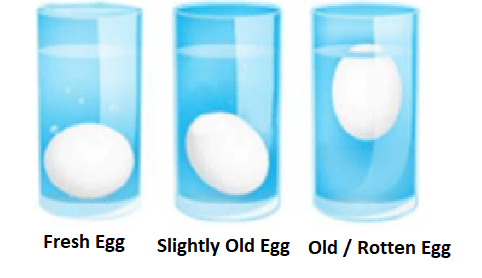
If the egg floats, it indicates that it is a stale/ rotten egg. The egg might float beacause of its weak shell and fine cracks.
The page you requested could not be found. Try refining your search, or use the navigation above to locate the post.

Since the incident of Covid-19 and the high speed spread of infection in the second quarter of 2020 in our country, Dolo-650 has become a household name. It is an antipyretic pill which is manufactured using one of the most common, and oldest, generic formulations known as paracetamol. It is commonly used to treat aches and reduce high temperatures and has been in the market since the 1960s. The Covid-19 pandemic pushed the sales of this oval-shaped white pill and made it the ‘most sellable’ medicine in India.
Now, however, the maker of Dolo-650 mg, Micro Labs, has been accused of offering freebies worth Rs 1,000 crore to doctors to endorse and promote this anti-fever drug. In July, the Income Tax department conducted searches at the offices and residences of the top management of Micro Labs for alleged tax evasion. The searches were related to financial documents, balance sheets and business distributor networks of the company.
However, Jayaraj Govindaraju, Executive Vice President, Marketing and Communication at Micro Labs Limited clarified, “We have certainly not spent 1000 Cr on Dolo 650 during COVID year, as no company can spend that much amount on a brand that achieved a peak sale of about 350 Cr in the last year.”
Federation of Medical and Sales Representatives Association of India has filed a Public Interest Litigation (PIL) stating that the company gave over Rs 1,000 crore freebies to doctors for prescribing an irrational dose combination of Dolo-650. The PIL has sought to make pharmaceutical companies liable for giving freebies to doctors as an incentive to prescribe their drugs. The PIL further demands statutory backing to the Uniform Code of Pharmaceutical Marketing Practices (UCPMP).
The Supreme Court has also articulated that giving free gifts to doctors by pharmaceutical companies to promote the sale of drugs is ‘clearly prohibited by law’. The Supreme Court dubbed it as ‘a matter of great public importance and concern’, the manipulation of prescriptions by pharmaceutical companies in return for their free gifts to doctors.
These kind of allegations on the pharma industry are, nonetheless, not new. Various pharma companies have been accused time and again of offering freebies, foreign vacations and numerous other perks to doctors to prescribe their medicines. Do let us know what your opinion on this is!
I hope you have loved reading about this topic, which is currently all over the news right now. In the meantime, keep reading the articles we have brought you this month. We have tips on home loans, a smart TV buying guide, a discussion on liquid funds and many more. Do share your thoughts at info@consumer-voice.org.
Until then, happy reading!
Pallabi Boruah
Editor
The page you requested could not be found. Try refining your search, or use the navigation above to locate the post.