No Results Found
The page you requested could not be found. Try refining your search, or use the navigation above to locate the post.


The relationship manager of a well-established bank reached out to my daughter, who is in the beginning of her twenties, and proposed an investment plan. The investment plan, according to him, is the best investment option available at present in the market. Further, he added an insurance cover that makes this investment secure and lucrative. Describing the plan, he highlighted the investment plan’s key attributes such as guaranteed maturity benefit at the end of the term, yearly guaranteed addition coupled with a guaranteed loyalty addition, and a high premium benefit resulting in a higher basic sum assured. It is important to mention that investment plans of this type are becoming the norm and open to everyone. Emphasizing the word guaranteed repeatedly is especially effective in attracting younger individuals. However, it limits their access to better investment opportunities that could be a more financially sound decision for them to consider.
To support his argument, the relationship manager used an illustration to show that such type of investing is a wise decision. In addition, he orally stated that the proposed investment would yield returns of 8%, which is better than many existing corporate FDs.
|
End of Policy Year |
Premium (₹) |
Accrued Guaranteed yearly Additions (₹) |
Guaranteed Loyalty Additions |
Guaranteed Maturity Benefit |
Death Benefit (₹) |
| 1 | 50000 | 5000 | 0 | 0 | 605665 |
| 2 | 50000 | 15000 | 0 | 0 | 615665 |
| 3 | 50000 | 30000 | 0 | 0 | 630665 |
| 4 | 50000 | 50000 | 0 | 0 | 650665 |
| 5 | 50000 | 75000 | 0 | 0 | 675000 |
| 6 | 50000 | 105000 | 0 | 0 | 705665 |
| 7 | 50000 | 140000 | 0 | 0 | 740665 |
| 8 | 50000 | 180000 | 0 | 0 | 780665 |
| 9 | 50000 | 225000 | 0 | 0 | 825665 |
| 10 | 50000 | 275000 | 0 | 0 | 875665 |
| 11 | 0 | 275000 | 0 | 0 | 875665 |
| 12 | 0 | 275000 | 0 | 0 | 875665 |
| 13 | 0 | 275000 | 0 | 0 | 875665 |
| 14 | 0 | 275000 | 0 | 0 | 875665 |
| 15 | 0 | 275000 | 100111 | 875665 | 875665 |
Nevertheless, the proposal included an additional table that showed the actual premium to be paid, which included GST and Cess. The proposal has a single, convenient location where one can find the total premium amount, GST, and cess. The reason could be that they want to avoid prospective investors from factoring in the effect of GST and cess on the eventual returns. The final premium will align with the table below.
|
Premium |
First year |
Second year onwards |
|
Base Premium (Yearly) |
₹ 50,000 |
₹ 50,000 |
|
GST and Cess |
₹ 2,250 |
₹ 1,125 |
|
Total Yearly Premium (incl. GST and Cess) |
₹ 52,250 |
₹ 51,125 |
The typical focus on Table 1 figures may lead novice investors to be swayed by its substantial absolute figures and associated death benefits, Isn’t? Over time, ULIP and money back insurance policies have established this experience. We endeavor to offer recommendations to investors before they commit to this type of investment.
First, one should avoid focusing solely on absolute figures when evaluating returns. Initially, an absolute number may appear attractive, but eventually it may be inconsequential in terms of its value. The real value of ₹ 8.75 lakh after fifteen years will not hold much significance in this situation. The Rule of 72 may determine the extent to which inflation influences the worth of money over a period. For example, divide 72 by the annual inflation rate. By dividing 72 by the inflation rate of 8 percent, it can be determined that it takes 9 years for the purchasing power of money to decrease by 50 percent.
Second, the Death benefit clause has the potential to be alluring to many. It is unusual that a person in their twenties has financially dependent parents. Even if that is the case, the death benefit amount of this plan is meager to serve any significant purpose. If the purpose is to get compensated in the event of the individual’s demise, it would then be prudent to evaluate a basic term plan instead of the current one. Thus, if something unfortunate were to happen, the financial benefit to the supposed dependents would hold little value. That being said, it is also commonly accepted that the probability of experiencing misfortune in early life is insignificant. We believe that investors who have crossed a certain age threshold will not be eligible for such a scheme.
Third, one should not trust verbal investment returns without verification, and this is the last but not the least important thing to remember. One cannot rule out the possibility of mis-selling of such products. Consequently, it is advantageous to compute the Internal Rate of Return (IRR), an easily calculable metric using a financial calculator. Online calculation is an option if one cannot do it. Conceptually, IRR is that discount rate which equates the present value (PV) of the cash inflows with the PV of the cash outflow. We input the data into Excel and determined that investing in it would only yield a return of 5.66%. With such a low return, the investment will lose even its face value eventually because the retail inflation rate is higher than that. One may alternatively choose to invest in equities, mutual funds, or debt instruments such as PPF and EPF, given the investor is too conservative. The usual investing
rule is to invest in bonds that match one’s age. Young investors, therefore, should seriously consider equity investment over debt investments.
| Year 1 | Year 2 | Year 3 | Year 4 | Year 5 | Year 6 | Year 7 | Year 8 | Year 9 | Year 10 | Year 11 | Year 12 | Year 13 | Year 14 | Year 15 | IRR |
| -52250 | -51125 | -51125 | -51125 | -51125 | -51125 | -51125 | -51125 | -51125 | -51125 | 0 | 0 | 0 | 0 | 875665 | 5.66 |
About the foregoing discussion, it is advisable to avoid investment recommendations that involve complex products that combine investment and insurance. The investment plan must align with investment options, and a simple term insurance policy should provide insurance coverage. Last but not the least, it is a prerequisite to determine IRR when there are cash inflows and outflows happening over a period, regardless of the size or nature of those flows. We should compare the obtained IRR against our expected returns.
Sharad Ranjan-Professor of Economics, Zakir Husain Delhi College Evening (University of Delhi)
Hariti Tyagi – Analyst, KPMG Global Services
The page you requested could not be found. Try refining your search, or use the navigation above to locate the post.
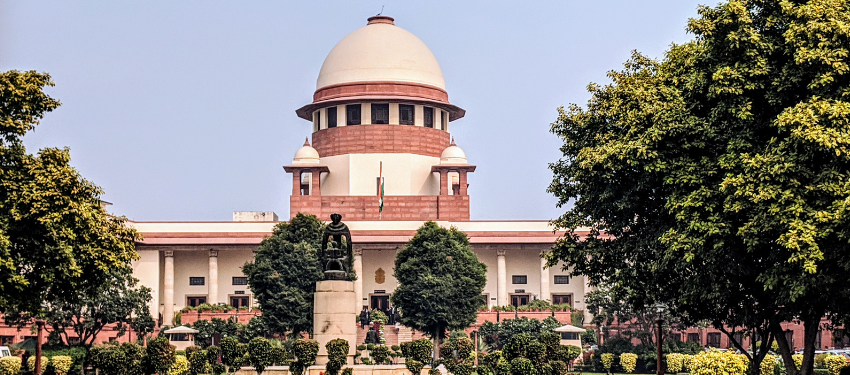
In a case before the Supreme Court against Railways, it was held that the theft cannot be considered a deficiency in the Railway’s service. The Court ruled that if a passenger is unable to protect their belongings, the Railways cannot be held responsible. However, it does not necessarily mean that Railways are exempt from responsibility in all theft cases. This ruling sets a precedent, but each future case will be assessed independently based on its specific circumstances and evidence.
Dr Prem Lata, Legal Head VOICE
On 15th June 2023, the Supreme Court found merit in the Railway’s arguments that they were not accountable for the theft of Rs. one lakh belonging to Surender Bhola, the consumer who had filed a complaint before consumer commission. The complainant stated that the cash was in a belt tied around his waist and was stolen while he was travelling on the train. The District Consumer Forum had initially ruled in favour of the complainant, awarding him one lakh rupees, and this decision was upheld by both the State and National Commission.
However, despite the decisions in favour of the complainant at lower levels, no one represented the complainant’s case before the Supreme Court for six years. As a result, the Supreme Court held that Railways cannot be held responsible for the theft.
Each case is unique, with its own set of facts and circumstances, and any court decision is contingent upon these specific details and the relevant laws. Past judgments from the Supreme Court cannot be universally applied as precedents for all cases, as the circumstances in each case may vary significantly. The previous rulings related to the deficiency of service by the Railway have established the following principles so far –
In the above case, neither the fact of theft could be established, nor was railway proved negligent in any manner.
Date Of Judgment: 06/04/2004(SC)
Factual story: On 4th December 1991, a consumer boarded a 1st Class Air-conditioned berth on the Howrah-Bombay Mail train from Nagpur to Bombay. Her luggage contained valuable items, including gold, pearl, silver, diamond jewellery, and other valuables, amounting to a total value of Rs. 1,11,756. During her journey, she was assaulted by unauthorized passengers, who forcibly took away her gold, silver, pearl, diamond, and other valuable possessions.
Numerous individuals entered the compartment and caused extensive damage, breaking doors, window bars, glass panels, seating berths, and toilets. In response to the incident, the appellant pulled the alarm chain three times, leading to the train stopping at Igatpuri Station. There, she, along with other legitimate passengers, disembarked. She sought assistance and protection from the Railway Authorities but did not receive any help.
After arriving in Bombay, she lodged a complaint with the police concerning the entire incident. Following the complaint, the Maharashtra State Commission partially allowed the appellant’s claim and awarded a total compensation of Rs. 1,41,756. Subsequently, the Railway administration filed an appeal before the National Consumer Disputes Redressal Commission, arguing that they were helpless when an unruly mob entered the railway compartment and caused harm to the passengers and their property.
“Railway administration failed to take precaution and preventive measures. The appellant suffered injury and no protection or support was given to her. The total absence of any steps having taken by the concerned Railway Administration to mobilise adequate police force sufficiently beforehand when the occurrences of such mob-violence by ticketless travellers on stations enroute Nagpur to Bombay were to their prior knowledge”.
The above judgments make two things evident. To hold the Railways liable, both the theft and negligence on their part must be proven.

Eco-friendly parenting is a conscious and proactive approach to raising children that not only prioritizes their well-being but also promotes energy efficiency practices. In a world where environmental concerns are becoming increasingly urgent, parents play a vital role in instilling sustainable habits in their children from a young age. By incorporating eco-friendly principles into parenting, we can not only reduce our carbon footprint but also teach our kids valuable lessons about environmental stewardship. This article explores various strategies and tips for eco-friendly parenting that focus on promoting energy efficiency practices within the family dynamic. From sustainable choices in everyday routines to fostering a deeper connection with nature, eco-friendly parenting can have a lasting impact on both our children’s future and the planet’s health.
Reduce Energy Consumption: Practice energy-saving habits in your home, such as turning off lights and appliances when not in use. Teach your child the importance of conserving energy.
Recycle and Upcycle: Teach your child about recycling and repurposing items. Encourage them to get creative with upcycling projects, turning old items into new toys or decorations.
Sustainable Toy Choices: Choose toys made from sustainable materials like wood, bamboo, etc.
Toy Rotation -Instead of constantly buy new toys, create toy rotation system. Store some toys away and periodically swap them to keep playtime fresh and exciting.
Teach Environmental Awareness: Educate your child about the importance of protecting the environment. Take nature walks, visit local parks, and discuss topics like recycling and conservation.
Green Transportation: Use eco-friendly transportation methods like walking, biking, or using public transport when possible. This sets a positive example for your child and reduces your carbon footprint.
Composting: If you have a garden, consider composting food scraps and organic waste. Involve your child in the process to teach them about composting and soil health.
Encourage Sustainable Habits: Lead by example by adopting eco-friendly habits in your daily life. Children often learn best through observation and imitation.
Eco-friendly parenting extends beyond its positive impact on the environment; it serves as a cornerstone for instilling a profound sense of responsibility toward the planet in your child’s upbringing. This approach revolves around the deliberate selection of choices that not only prioritize your child’s well-being but also safeguard the Earth’s health. By embracing eco-friendly practices, parents can empower their children to become environmentally conscious individuals who are deeply committed to preserving our planet for future generations.

In a world where energy resources are finite, and the effects of climate change are becoming increasingly apparent, it’s more important than ever for individuals to take responsibility for their energy consumption. Our collective reliance on fossil fuels and inefficient energy practices has not only depleted precious resources but also accelerated the global climate crisis. As a result, there is a growing need for individuals, businesses, and governments to adopt sustainable and energy-efficient practices to mitigate these pressing issues. In this context, promoting energy efficiency in everyday life is a crucial step towards a more sustainable future.
Choose Energy-Efficient Appliances: When purchasing new appliances, look for the ENERGY STAR label, which signifies energy efficiency. Also, consider the size and capacity of appliances to avoid wasting energy (Please check link of start labelling by Bureau of energy efficiency https://beeindia.gov.in/en/star-label)
Upgrade to LED Lighting: Replace incandescent bulbs with energy-efficient LED bulbs. LEDs use significantly less energy and last longer.
Unplug Idle Electronics: Many devices and chargers continue to draw power even when not in use. Unplug chargers and turn off electronics when not in use or use smart power strips.
Seal Gaps and Leaks: Inspect your home for drafts around windows and doors. Seal gaps with weather stripping and use caulk to seal leaks, improving insulation.
Use Natural Lighting: Open curtains and blinds during the day to maximize natural light and reduce the need for artificial lighting.
Air Dry Clothes: Whenever possible, air dry your clothes instead of using a clothes dryer. If you do use a dryer, clean the lint filter after every load for better efficiency.
Plant Trees and Shade: Strategically plant trees or install shading devices outside windows to reduce heat gain in the summer, which can lower cooling costs.
Cook Efficiently: Use lids on pots and pans when cooking to reduce cooking times and energy usage. Match the size of your cookware to the burner size.
Wash Clothes in Cold Water: Use cold water for washing clothes whenever possible.
Limit Shower Time: Shorten your shower time and install low-flow showerheads to reduce hot water usage.
Carpool and Use Public Transit: Share rides with others or use public transportation to reduce the number of individual car trips.
Invest in Renewable Energy: Consider installing solar panels or wind turbines if feasible to generate clean energy at home.
Consumer VOICE is actively dedicated to championing energy efficiency practices among consumers. As part of their commitment to fostering a more sustainable and environmentally responsible future, they are actively participating in the Green Action Week 2023 campaign. This campaign serves as a platform for sharing knowledge and building a community of individuals and organizations striving for a greener planet. Consumer VOICE’s involvement underscores their mission to empower consumers with the information and tools they need to make energy-efficient choices and collectively contribute to a more sustainable world.
https://consumer-voice.org/green-action-week/green-action-week-2023/
Vehicle Burnt, total claim rejected for not filing FIR
Please provide Case law for arguments?
Facts: Tractor /Vehicle got burnt at night ,informed Reliance Insurance Co. in the morning Company gave complaint Reference No also 3116082678
Policy No 2601252343006331, Claim forms got signed
Vehicle total loss claim rejected for the reason FIR not done with police or information to fire brigade. Surveyor named as Manish appointed after 18 months but survey never done.
Case at argument stage at DCDRC, Nagour Rajasthan
Please provide Case law for arguments?
“the insured to intimate the company or submit the papers within specific time is for the purpose of investigation, loss assessment etc. but this condition should not prevent genuine claims marely on technical grounds when delay is due to unavoidable circumstances”.
“insurer’s decision to reject the claim shall be based on sound logic and valid grounds, be noted such limitation clause does not work in isolation and is not absolute.”
“Surveyor is supposed o sumit his reportwithin maximum of 6 months anf insurance company is supposed to take decision on claim within 30 days of receipt of surveyor report’
Surveyor report is a very important document
“In the matters concerning insurance whether it is a matter related to vehicle insurance, an accidental case or general insurance of house, factory or even insurance of goods on the way through carrier. Surveyor report is a very important document and ordinarily it cannot be challenged. Surveyor is an authorised agent of insurance companies who conducts survey of the spot, investigate the incident, evaluates loss and communicate to insurance company about the loss payable to the insured as per rules with its report’’
Bharti Exa Life Insurance Co.
Question: What will happen to my execution petition heard on 28.9.23 and notice to party for compliance?
Facts: Order in favour on 20.4.23 from Gurgaon DCDRC
Execution Application heard on 28.9.20 and notice for compliance
Now one order from State Commission Panchkula to OP to file application for condonation of delay of 36 days .Implementation of order stayed
Answer: Your execution order has been stayed because appeal has been filed but yet not admitted
You need to contest their delay issue and if delay condoned, contest the case on merits .Execution petition will not be taken up now.
Question: Samsung phone purchased from flipcart
Not functioning, service rejected saying purchase done on 5.9.1015
How can get relief
Answer:
Question: Return Rejected, (Product not mentioned) Unhappy with support system
Facts :flipcart order OD42880334085351910
Credit issued by IDFC bank without consent and forced to accept product
EMI to be paid for CIBIL score
Answer: If loan from bank, it’s your responsibility. You might have signed terms, no one forces to accept product if payment not made .Bank pays on your instruction only your grievance with product is different from Bank dealing
Can check with flip cart for reason of return rejection, no cause given, no date of purchase. Hence cannot suggest, just follow the system provided for online purchase.
Question: Electricity bill ,Excesses billing issue
Facts : Bill paid regularly for five years .This time bill Rs 51200/-
Department says –Your bill was coming very less, now billed you on average basis.
Your meter is faulty, five years bill raised
Status on bill always shown –F never informed about fault when meter reading taken.
Answer: Ask for inspection report which says meter faulty
Ask for meter reading of all five years. If they don’t have meter reading, they cannot calculate for average billing also depending upon last six months bill before meter goes faulty
As per section 56 of Electricity Act 2003, Department cannot raise bill for more than two years
Consumer Case No CC-44/2023 Ph 7776057735
My case before Commission, Date given as per the OP advocate, is it fair or a practice to see convenience of OP advocate
Question: Is it appropriate to include the Branch Manager and MD of Unity Small Finance Bank Ltd as individual parties in the dispute before the Consumer Commission?
Answer: For suits, claims, or complaints initiated by corporations, authorities, or units, they must be submitted under the name of an authorized individual. If an order is issued for compliance, a designated individual should be held accountable to represent the case and handle its submission or contestation.
Relevant Case Law- H.K. Singla vs. Avtar Singh Saini & Ors. Decided On 14th December 2018
Supreme Court as the case H.K. Singla Vs. Avtar Singh Saini & Ors. [Civil Appeal No. 11969 of 2018 Decided On 14th December 2018.
The district court’s ruling established the responsibility of the secretary of the Chandigarh State Bank of Patiala Employees Co-operative USE Thrift & Credit Society to reimburse the complainant’s deposited sum along with interest. However, the secretary was not held personally accountable in the ruling. As a result, he could not be subjected to imprisonment under section 27 of the law because he was not named as an individual party or held personally liable on behalf of the society.
Complaint of Medical Negligence Against a Nursing Home
Question: Can a Nursing Home deny the patient access to their medical information?
Answer: Mandatory and bound to provide all information related medical treatment, status and other related issues.
Case Law Jothi against State, Department of Health and Family Welfare & others
While deciding the allegation of not providing information to patient, Court held:
“When a patient enters a government hospital, he or she is examined first. The symptoms are recorded. The condition is noted. Scan or X-ray is taken. A diagnosis is made. Treatment is prescribed. Medicines (if available!!) are given. Every stage will have to be contemporaneously and accurately recorded. In the case of inpatients, discharge summary should contain all the relevant particulars. We have moved into the digital age. It should therefore not be difficult to store all the information in the digital mode. A patient is entitled to be furnished all the relevant records pertaining to his or her treatment. This right can be effectuated only if the information is stored digitally. Proper maintenance of record is an integral part of the medical services.
Question: Can I file case against school?
The negligence of Sri Sri Academy, the school attended by my son Krishna Singh, resulted in him getting injured while participating in a dance activity at Shankar Vidya Mandir Foundation. In response to the situation, a teacher called upon a watchman who physically dragged my son to a restroom on the third floor.
I received a call notifying me of the incident a significant two hours after it happened. It took an additional three hours to arrange for transportation to a nursing home. Initially, the school owner had assured me that he would provide video footage of the dance and the incident. However, he later retracted this assurance, explaining that the IT department staff was on a week-long leave.
Consequently, I had to take my son to Max Super Speciality Hospital in Delhi, where he remains in the intensive care unit receiving treatment. He is currently battling a traumatic condition known as Transverse Myelitis with Guillain-Barré Syndrome (GBS).
Answer: You have the option to file a case regarding the school’s failure to provide proper services. The delay in providing information exacerbated the damage that could have been minimized had it been addressed promptly. It is distressing that your child was not given proper care and was instead left to fend for themselves by being sent to a restroom.
The strength of your case hinges on whether the diagnosed condition was pre-existing and known to you or not. The Supreme Court has ruled in several instances that schools fall under the purview of the Consumer Protection Act. In a landmark case, a three-judge bench in Osmania Islamic Academy v. State of Karnataka, delivered a comprehensive judgment on August 14, 2003. The court held that students are considered consumers, acknowledging that education is a service. The judgment thoroughly examines all aspects covered by educational institutions in delivering education to students.
Bhupesh Khurana v Buddha Dental College & hospital Judgment dated on 13 February 2009 Civil Appeal No.1135 of 2001
SC again in Civil Appeal No 3504 of 2020 (Manu Solanki and Others vs Vinayaka Mission University), the issue as to whether education is a service within the Consumer Protection Act, is pending before the Supreme Court.
“Since there are divergent views of this Court bearing on the subject as to whether an educational institution or University would be subject to the provisions of the Consumer Protection Act 1986, the appeal would require admission. Admit,”
Question: Is it possible for me to approach the Consumer Forum to file a complaint against both a government hospital and a private hospital? The patient was initially treated at the government hospital, where negligence occurred, and subsequently, they were transferred to a private hospital in a critical condition. Unfortunately, despite receiving treatment at the private hospital, the patient passed away.
Answer: You are considered a consumer according to the Consumer Protection Act if you have made payments for the services you’ve availed. Although government hospitals typically offer free services, if they have private rooms or charge specific individuals while not imposing charges on you, you fall within the realm of being a consumer.
V.Shantha V/S Indian medical association 1995 SC set the criteria –
Case Law Dr Hema, Dr Sulekha Dr Sethunath v/s S.Jayan & Others .11(2016) CPJ 306 NC National Commission has held that complainant do not fall within purview of consumer under the Consumer Protection Act.
Question; Want to file case against Builder .Agreement done at Lucknow, I am residing in Delhi .Jurisdiction of which Consumer Commission?
Answer: New Act has made the provision that complaint can be filed at the place where consumer has work place or residence. No matter where OP has workplace, offices or residence
Jurisdiction to entertain complaints where the value of the goods or services paid as
Consideration does not exceed one crore rupees:
Provided that where the Central Government deems it necessary so to do, it may
prescribe such other value, as it deems fit.
(2) A complaint shall be instituted in a District Commission within the local limits of
whose jurisdiction,—
(a) the opposite party or each of the opposite parties, where there are more than
one, at the time of the institution of the complaint, ordinarily resides or carries on
business or has a branch office or personally works for gain; or
(b) any of the opposite parties, where there are more than one, at the time of the
institution of the complaint, actually and voluntarily resides, or carries on business or
has a branch office, or personally works for gain, provided that in such case the
permission of the District Commission is given; or
(c) the cause of action, wholly or in part, arises; or
(d) the complainant resides or personally works for gain.
12. Mukleshwar Garnayakfrom Odisha
Question: Date of Birth Issue
Date of Birth on Adhar card and 10th certificate are the same but actual date of birth is not this, do not have birth certificate also .How will it affect with New Birth rules.
Answer: New Birth and Death (Amendment) Act is applicable from 1st 0ctober 2023.
Henceforth from 1st October, birth certificate shall be required for admission in schools, issuance of driving licence, preparation of voter list Adhhar number registration of marriage appointment to the Govt jobs.
But those who already have school certificate or adhar cards or licence etc, those will stand valid.
Use of birth certificate: The Bill requires the use of birth and death certificates to prove the date and place of birth for persons born on or after this Bill comes into effect. The information will be used for purposes including: (i) admission to an educational institution, (ii) preparation of voter lists, (iii) appointment to a government post, and (iv) any other purpose determined by the central government.
Ref Section 13of the Act
“(3) Notwithstanding anything contained in any other law for the time being in force, the certificate referred to in sub-section (2) or section 12, shall be used to prove the date and place of birth of a person who is born on or after the date of commencement of the Registration of Births and Deaths (Amendment) Act, 2023, for the purposes of—
(a) admission to an educational institution;
(b) issuance of a driving licence;
(c) preparation of a voter list;
(d) registration of a marriage;
(e) appointment to a post in the Central Government or State Government or a local body or public sector undertaking or in any statutory or autonomous body under the Central Government or State Government;
(f) issuance of a passport;
(g) issuance of an Aadhaar number;
Question: Promised to give admission as irregular student in Bhuwan College Bengaluru Rajiv Gandhi Institute. Session 2022-2023. Admission not given, exams not allowed in spite of payments throughout the academic session (2022-2023) in instalments for every term. Total paid Rs 1,79000/-She has come from chhatisgad to Bengaluru for job, cannot do regular course. First Rs 30000/- given to college but thereafter to the account employee of college gave with a promise to get admission
Answer: Appears case of misleading and abstracting money .May be could not or was not possible to get admission as irregular student.
Govt advocate appointed, case for mobile to be filed nothing done for last two months .What to do?
Answer: Contact Legal Services Authority where you applied for and got Govt. advocate, complain for the same
Question: Student of BSc 2nd year Have no birth certificate but on records it is 2003 which is correct .As per new rules, for everything birth certificate required
Answer: as above reply to question 2
Use of birth certificate: The Bill requires the use of birth and death certificates to prove the date and place of birth for persons born on or after this Bill comes into effect. (1st October 2023)
Question: Two shops in my house, electricity bill comes on one meter only Department disconnected supply and imposed Rs 34000/- bill
Answer: you are using domestic meter for commercial use .This is unauthorised use of electricity as per section 126/135 of Electricity Act 2003. Hence penal billing done.
Get separate meter for shops, request department to give some rebate if you promise to follow the system.
Question: OP not complying the order .If party goes to jail after NBW, how will I get relief
Answer: Sending jail and fining for non-compliance of order will not dilute your right .OP will still have to pay your dues as ordered, it cannot be changed even if OP finishes his jail period.
Question: excess bill received after 20 months .took meter for checking to department ,got acknowledgment of meter given.Before court not appearing for two dates ,no WS given45 days are over. Can court refuse to take WS on next date? They say meter not received by them I have proof
Notice to party-15.7.2023
Hearings -3.7.2023, 11.8.20231.9.2023, 12.9.2023
Answer: Yes, you give in writing to commission to close the defence of OP, and go ahead with your case and order on merits.