No Results Found
The page you requested could not be found. Try refining your search, or use the navigation above to locate the post.


By Shri Arun Singhal, CEO, FSSAI
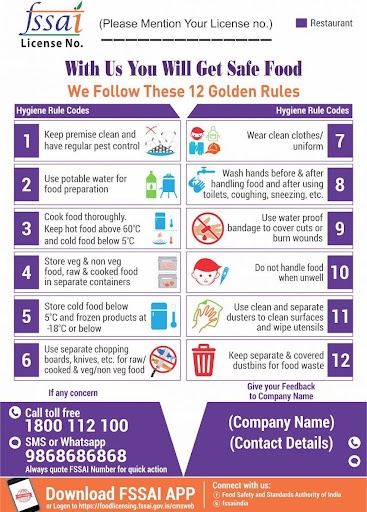
Given the frequency of getting food delivered at home these days, it is important to assure consumers that the food they eat is safe and hygienic for consumption no matter from where they get it from. Moreover, a tropical country like India with a hot and humid climate, it is susceptible to food spoilage and contamination from bacteria that thrive in such a climate. Both food handlers and consumers often lack awareness on basic food safety, hygiene and sanitary practices leading to consumption of unsafe food. This results in food-borne illnesses, which affect a large number of people in India. Thus, food safety is of utmost importance. After all, food that is not safe is not food.
So, how do you know that the place where you eat serves safe food? The Food Safety and Standards Authority of India (FSSAI) has come out with a solution to help you make the right food choices. As the apex regulatory food authority in the country, the mandate of FSSAI is to ensure safe and wholesome food for all 135-crore citizens of the country. The Food Safety and Standards Act (FSS), 2006, specifies general hygiene and sanitary practices to be followed in food service establishments in Schedule-4. FSSAI ensures that these are implemented through various regulatory, training and capacity-building and compliance measures. To make it easy for consumers to make informed choices about the food they eat, FSSAI has now introduced a voluntary scheme called Hygiene Rating Scheme for food service establishments.
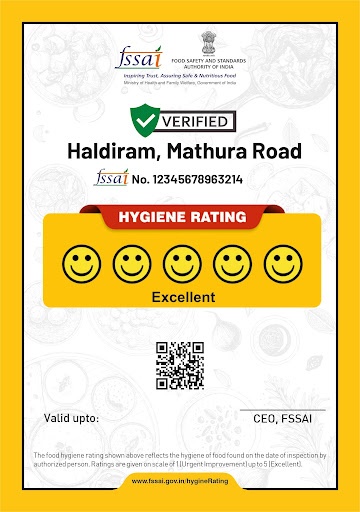
The Hygiene Rating Scheme is a technology-driven, user-friendly scheme where food establishments are given a rating on a scale of 1-5, where 5 indicates “excellent” compliance and 1 indicates “poor” compliance of food hygiene and safety standards. The rating are displayed in form of symbols i.e. smileys. This scheme encourages food businesses to ensure high standards of hygiene and sanitation and allows consumers to make informed food choices. This scheme is currently applicable to restaurants, cafes, bistros, diners and other eating-places, sweet shops, bakeries and meat shops. It also includes interfacing with e-commerce platforms such as food delivery services and apps to encourage their associated eating places to adopt the scheme.
A comprehensive checklist has been created based on the criteria a food business needs to meet hygiene and sanitation standards laid in Food Safety and Standards Act, 2006. The food business is then audited basis this checklist and awarded a rating by a third-party audit agency empanelled by FSSAI. A certificate is generated based on this rating and displayed for consumers at the premises. This helps consumers identify if the place is hygienic or not. A rating of 3 stars and above is considered a ‘Good Rating’.
This Hygiene Rating is helpful for both food businesses and consumers. Through this rating process, food businesses have the opportunity to understand the basic criteria for ensuring safe food and implement these practices through training and capacity building of their food handlers. Moreover, food businesses that are compliant can showcase their efforts to consumers by displaying this certificate prominently at the premises. This gives them a competitive edge over other businesses and wins the trust and loyalty of their consumers.
For consumers, this rating is a helpful tool to easily identify if the food being served is safe or not. This empowers consumers to make informed choices and exercise their right to choose a place to eat not only on the basis of taste and service but also health. It also plants the idea of food safety and hygiene in the minds of consumers, making those who are unaware also cognizant of the importance of food safety when they eat out. Overall, such a scheme benefits everyone as a whole because improved hygiene standards means fewer instances of food-borne illnesses among citizens overall, better health and productivity of people, reduced burden on the healthcare system and ultimately growth and development of the economy and the country as a whole.
So next time you visit your favourite restaurant, be sure to check its Hygiene Rating. If it doesn’t have one, you can encourage the restaurant to get one. You will then be able to enjoy your favourite food without worrying about an upset stomach. Other customers will also benefit from this initiative.
Like this:
The page you requested could not be found. Try refining your search, or use the navigation above to locate the post.

We think we all are aware of the nitty-gritties of buying stuffs online. Sure. We’ve been quite habituated with the techniques of checking different sites for price, quantity, offers etc to ensure the best buy. However, when it comes to buying jewelry online, things are not that easy. Ashish Vijay, Co-founder & CFO, Miorah.com shares five tips of buying online jewelry in the following read.
The Internet has redefined the shopping behavior of consumers across the globe. Digital space has emerged as the new hotbed of advertising, shopping, and commercial activity wherein its impacting and influencing people’s day to day lives at a rapid pace. Consumers are now more comfortable with virtual experiences than physical one, as they are adapting to online purchases. A scholarly article by Lee and Zhang (2002) suggests that after e-mail usage, instant messaging and web browsing, online shopping is the third most popular internet activity. However, when it comes to buying jewelry online, here are a few tips.
The page you requested could not be found. Try refining your search, or use the navigation above to locate the post.

With the greater awareness about the health hazards and the intensity of damage chemical products could cause to the body, consumers got a little push towards the organic products. The transformation of adopting organic products started around the 90’s as more and more people became health conscious and product aware. Shyam Arya, Cosmetic Scientist & Chairman, Indus Cosmeceuticals wrote about the industry and the path ahead.
With the coming of a few brands the prices for the products were further driven down to help it fit in the pocket of a few more consumers and that led to an upwards trend for organic products gradually from early 2002.
It was never a hidden fact that the chemicals glutted products we apply on our body harm us in the long run, but the intensity was never known by the consumers until lately. Additionally, the lack of alternatives, their availability in the market and economic viability helped boost their market share too.
The surge in interest for organic products was a boost to an industry where growth has been moderated in recent years as household penetration increases. From 2010 to 2016, the average growth rate of the category was 10 per cent, but settled into mid-single digits since then. Although sales have continued to grow annually, by 2018, organics were struggling to gain market share despite topping $50 billion for the first time.
The organic industry has come a long way with a drastic change in the consumption of organic products in the last decade. On the consumer side, the infusion of a much-needed boost to product awareness, has helped realise the importance of inculcation of organic products in the consumers’ lives. From food to beauty, consumers have been strongly drawn to organically curated products owing to their health cautious behaviour. The internet, dieticians, dermatologists and various other branches of science with the increased amount of research and study, have played their fair role in bringing about this change. Additionally, a surge in the purchasing power of customers had also added to the chain. It is seen that the millennials are more strongly attached to the use of organic products. Their constant pervasion is also a factor behind their families accepting organic into their lives.
The producers too have become well aware of the exact customers’ usages. The increased research and development in the making of the products, bolstered by the better infrastructure and technology availability has helped the organic industry jump forward a few steps. Variations that are being brought in by the brands, help them cover a larger customer base.
The recent hit by Virus has got everyone concentrating on the maintenance of their health. As consumers prioritise their overall wellness during the pandemic, supplement sales are expected to grow 12 per cent. With the pandemic, people have started opting for healthier alternatives wherever available. They have been distancing themselves from the chemical-based, health deteriorating, easily available products. This combined effect helped organic products’ demand pick up. The sales for the products rose more than 20 per cent in the spring of 2020. The pandemic has got people to understand the importance of organic and natural products in their lives. The disease-induced awareness has helped people learn about the basic requirements of their bodies and health. People are looking for natural substitutes to their everyday use commodities. Trend suggests that people are even shifting to vegan products.
After coming this far the organic industry still faces a few hurdles. But the biggest challenge is the lack of organic resources and land for developing the products. This forces brands to import ingredients. These lead to driving up the price of the product.
Additionally, segregation of genuinely natural brands from those claiming to be one, also called as greenwashing, hampers the growth of the unfeigned product.
Also, consumers have been using chemical-based products for a long time now. The inherient quality of instant results from the chemical products makes people impatient with the preparation and application time of organic products. This impatience is a major roadblock for the organic industry.
While the organic market is growing steadily, it is still far from becoming a mass product. Currently, the organic market is also not consumer-driven and only for people who can afford or willing to pay the premium price, which leads to a small percentage of the consumer base. High price mark-ups for organic products than conventional products are also one of the major factors affecting the sale of organic products. While the high price is because of the cost associated with the product like procuring in bulk, the logistic cost involved in the procurement of organic products from certified organic farms and the distribution within the city increases the cost of the product. Hence, the organic industry needs to travel a long road for the development of better infrastructure and technology, to help cover a larger customer base.
The page you requested could not be found. Try refining your search, or use the navigation above to locate the post.
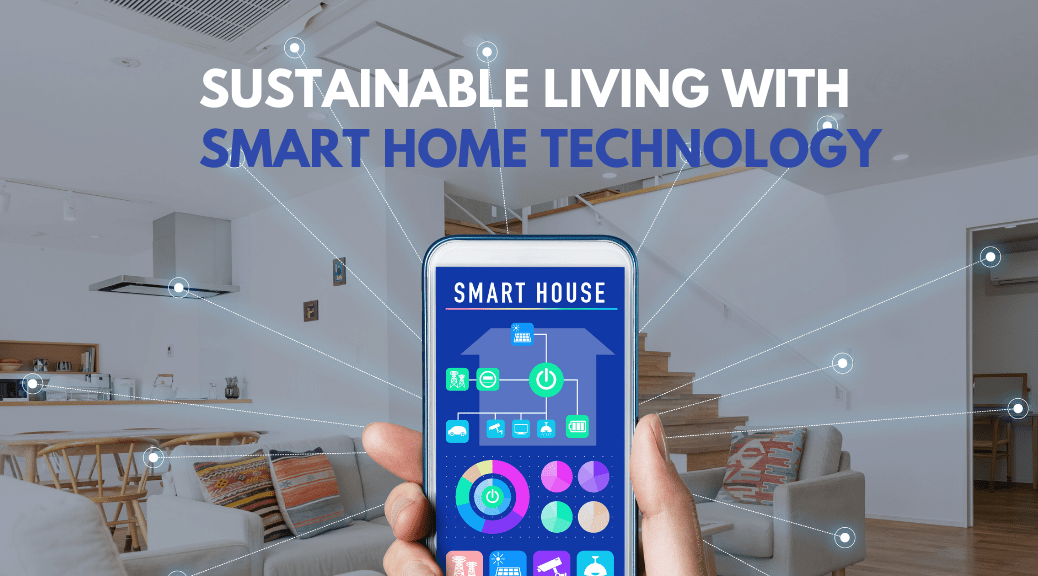
With global warming on the rise and increasing concerns about our carbon footprint, it is time that we start adopting sustainable means of living. Although we have made leaps in waste management, we are yet to address the inefficient energy consumption due to our daily lifestyle. With Smart Home Technology, we can not only monitor this excessive use of energy but also reduce it significantly.
By Divyateja Kondeti, Co-founder and CEO, SmartDEN
Smart Home Technology can significantly reduce your expenses and help increase your saving as devices consume less electricity and monitor energy consumption. Homeowners can save anywhere between 20% to 30% on their electricity bills by embracing this technology. Here are some of the devices that can help you do the same:
Your home cooling & heating systems account for almost half of your electricity bill. Installing a smart thermostat can save about 10% every year by tweaking the HVAC (heating, ventilation, and air condition) system while not at home. Homeowners can schedule it to their daily routine, control it remotely, and get information via sensors and the weather forecast. Advanced smart thermostats have additional occupancy and temperature sensors that are installed throughout the home to know when you are away. Homeowners can also pair their thermostat with connected shades and fans to save even more money.
Even though it is not a viable option for residential apartment owners, smart thermostats are the most popular energy-saving device amongst villa and independent homeowners.
– Smart Lights & Switches
Lights being left switched on for no reason at all is a common occurrence. This negligence is a major drain on your electricity bill, as lighting takes up almost 20% of your monthly utility costs. Installing smart lights and switches can ensure that the lights are not being left on unnecessarily.
– Energy Monitoring
Energy monitoring allows you to monitor the energy consumption of all your smart devices and give you a detailed report of your consumption habits. The first step to adopting a better lifestyle is to understand what you are currently doing wrong. A smart home monitor is a device that will provide the reality check you need as homeowners will not only receive the complete data on their phone but the device will also give them suggestions to reduce their energy consumption.
– Smart Plugs
Most of our modern devices such as TVs, Gaming Consoles & Computers enter standby mode and continue to draw power even when not in use, instead of powering down completely. Although this allows them to communicate with other devices, get updates and perform faster, it is a complete waste of energy, when no one is around to use them. This is called “Vampire Draw” and it accounts for almost 20% of energy consumption in every Indian household. Using Smart Plugs, homeowners can completely cut the power, ensuring energy is not unnecessarily wasted.
Smart Home Technology is becoming more widely accepted as homeowners can understand that a smart home can be easily installed, is easy to use and can also be secure. Justified with complete remote control and its numerous cost-saving features, the initial investment of Smart Home Technology is no longer a barrier for homeowners, as all modern homes seem to be making the inevitable shift to Smart Homes.
Think about it, how many times have you returned from work only to see your fans running & bathroom lights on. Leaving on the geyser and the oven are very common panic attack when at work. Most of us brush it off as carelessness, as we might just have to pay a higher electricity bill. What we do not realize, is that it is a hefty price for the environment.
According to research conducted by NRDC (Natural Resources Defense Council) in 2015 states that around 37% of carbon dioxide emissions are from electricity production just in the US and similar in India according to CEA (Central Electricity Authority).
This is a major concern, as the rate of Global Warming is at an all-time high and all of us must be socially responsible to reduce our carbon footprints. One way is to switch off appliances by using smart switches which will intelligently understand your usage patterns. By switching to smart ways, you are not only being a responsible citizen, but you will also own a home that contributes to your efficient lifestyle and a drop in your electricity bills.
Going wireless might not be a necessity but it makes life much easy & efficient. Most of us no longer use landlines as smartphones are much more portable and can store all our contacts within the device – this means no more books to write down contacts. Also, think about the last time you paid an exorbitant amount for an STD or an ISD call. Smartphone apps allow you to communicate with your friends and relatives using your Wi-Fi for free and you can even see them on video. Remember the frustration of waiting in long lines to withdraw money. Cashless payment apps are more convenient and require minimal physical contact, which is the need of the hour.
Evolving with and adopting technology has made our lives so much better than we could have once imagined. This is the same reason we should all adopt smart home technology.
Smart Homes are the future of modern living and will soon be a part of every household. Do not be late to the party – Transform your home into a smart home and enjoy its limitless features.
The page you requested could not be found. Try refining your search, or use the navigation above to locate the post.
By Kapil Makhija, CEO, Unicommerce
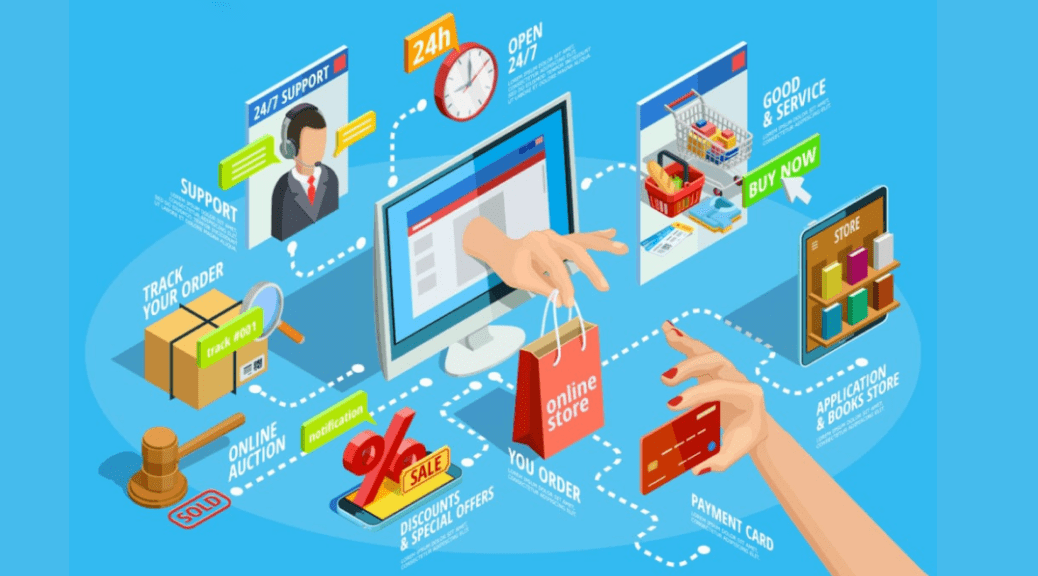
When we thought it’s over, it came back again. Yes, the second wave of Covid cases have shattered our expectations greatly. But all things are not gloomy at this front. As we have witnessed a new era where consumer buying behaviour has shifted online. So, what are those changes that made an entrance in the consumer buying trends? Kapil Makhija, CEO, Unicommerce penned down his observations here.
The world has been dealing with one of the biggest pandemics faced by mankind and people quickly adapted themselves to live in this new world of facemasks, social distancing, and video calls. It has led to the beginning of a new virtual era, where remote working and online shopping are the new normal. Consumers have embraced e-commerce with open arms and it’s going to be considered as the beginning of a new era for the e-tailing industry. It’s no mystery that the e-commerce business has seen an unprecedented uptick in the last six months, and consumers are habituated in buying stuffs and booking services online-here we can analyze the shift in consumer behavior triggered by the lockdown.
Businesses across sectors are moving online and India’s e-commerce industry is expected to report the greatest growth ever witnessed. There are new emerging sectors like FMCG and Personal Care which were predominantly offline and are now seriously considering an online business. There is also a sharp increase in consumer shopping from the brand website.
Given the rising number of online shoppers and the maturing ecosystem, here are five key consumer trends that are going to thrive in the ever-evolving e-commerce ecosystem.
Since the beginning of e-commerce in India, fashion and electronics have been the most popular category as they have been the key volume and revenue drivers for the e-commerce industry. The fashion segment has the largest share of order volume and the electronics segment leads the charge with a maximum share of GMV. However post-pandemic the e-commerce industry has seen people shopping across categories and the biggest gainers have been Personal Care, Beauty and Wellness (PCB&W), and FMCG & Healthcare (F&H) segments. As per the e-commerce trends report by Unicommerce and Kearney, the PCB&W segment saw volumes grow by 95 per cent supported with order value growth of 69 per cent in Q4 2020 as compared to the same period last year. The personal care segment has seen a rising number of new-age digital players that have created a mark and are giving tough competition to traditional brands with a global presence. FMCG & Healthcare (F&H) is another category that has benefited from people’s reluctance to venture out. The steep growth of FMCG has been due to a significant rise in first-time online grocery shoppers, making it an important category for mainstream e-commerce players like Flipkart and Amazon to actively focus and promote the grocery business. The report also stated that the FMCG category has reported an accelerated value growth of 94 per cent in Q4 2020 compared to the same period last year and the average cart value also increased by 33 per cent with an increasing number of consumers making bulk purchases.
Social media plays a key role in the formulation of opinions and influencing people. In simple words ‘Social Commerce” is a way of influencing consumers to make purchases while they are using a social media platform. The social commerce platforms empower small sellers to sell products to their network and these companies take care of their logistics and operations part, and primarily work on the commission model. Some of the leading companies in this space are Mall 91, Meesho, Roposo, SimSim, and Bulbul are becoming popular amongst consumers in Tier II and Tier III cities.
Another interesting format is WhatsApp commerce. WhatsApp is already being used by a large number of small business owners to conduct business through messaging and sharing pictures. In the last few years, we have seen the emergence of companies those have designed WhatsApp chatbots for retailers, which help them manage a large number of orders using AI. Now with the NPCI allowing UPI payment through WhatsApp, it’s expected to become one of the biggest social commerce platforms.
Until a few years back, e-commerce was considered as a retail choice of consumers from metropolitan and Tier I cities. Even today these cities continue to command the lion’s share of the overall country’s order volume, but there is a gradual increase in demands from Tier II and Tier III cities of India. Especially post lockdown, the e-commerce adoption rate in Tier II and Tier III cities has increased phenomenally. The recent “E-commerce Trends Report by Unicommerce and Kearney” stated that the Tier II and Tier III cities accounted for a whopping 90 per cent YOY incremental volume and value growth in the last quarter of 2020. The report also mentioned the total contribution of Tier II and Tier III+ cities increased from 32 per cent in Q4 2019 to 46 per cent in Q4 2020, eating up the 14 per cent share of traditional metropolitan and Tier I cities. The growth of these cities is supported by multiple factors like the rising adoption of social commerce, faster and timely deliveries, content in vernacular language, and the rising adoption of digital payment coupled with greater internet penetration.
As the increasing number of consumers shop online and the e-commerce ecosystem starts to mature, there is an increasing number of brands that are setting up their online store and consumers are also preferring to buy directly from brand websites. Brands’ own websites are finally turning a page in the Indian e-commerce space. The increasing numbers of brands are adopting the D2C strategy with renewed vigor to develop a strong connection with consumers. According to the “E-commerce Trends Report by Unicommerce and Kearney”, the number of companies investing in developing their own websites has increased by 51 per cent YOY in Q3 and 66 per cent YOY in Q4 2020. Brand websites are growing at a much faster pace, they have recorded a startling growth of 94 per cent in Q4 2020 as compared to the same period last year, while the marketplaces saw a growth of 58 per cent during the same time frame. As an increasing number of brands looking to build unique online positioning, it will be interesting to see how they continue to manage to attract customers and fare against marketplaces.
Value-conscious is not to be confused with discounts. Such buyer is the one who tries to find the best possible product or service and is also okay to pay a premium for a great shopping experience. Post pandemic, the discount offered by brands has reduced significantly, however, the demand continues to increase across all categories. While the demand has increased, the average order size has decreased, as consumers are spending judiciously considering the inflation and uncertain market conditions.
Today’s consumers also value and expect a great shopping experience, therefore brands need to invest time and effort in building robust business operations that can ensure timely and error-free deliveries. Companies are investing in forward and reverse supply chain capabilities with technology-led integration that helps them automate the processes and improve business efficiency.
To conclude, I must say we are in for a long overhaul where both businesses and consumers are going to see more new trends and habits in offing.
The page you requested could not be found. Try refining your search, or use the navigation above to locate the post.