
It’s time for consumers to wake up from their deep slumber!

It’s time for consumers to wake up from their deep slumber!

It’s time for consumers to wake up from their deep slumber!

power to consumer
BY ASHIM SANYAL, COO CONSUMER VOICE

Arise and awake consumers ! Something we all have been hearing since the last 3 decades or more! This is true for most of the developing nations where the businesses rule the markets and we often hear about consumers being duped either by fly by night operators or by known corporate houses. This is also true in a country like India where in 1986 the Consumer Protection Bill was passed. Kudos to those who could envisage the need for consumer protection in a then “controlled economy”.

We have come a long way since then. Markets have opened up, world class products are being offered, MNCs setting up offices in India, E commerce platforms making waves, and large multi brand retails have set up businesses in India. The missing element in all these developments is involvement and participation of consumers to make the market place a balanced playing field. Proactive and reactive consumer actions have seen globally markets evolve into a “need based” respected zone where both the businesses and consumers realize that we need each other.

Alas, the Indian markets have been subjected to cruel consumer sufferings with little respite even from known brands. The dual and deceptive policies the corporate houses have for the Indian markets are obvious and omnipresent. One prime cause is sleeping consumers who don’t even want to understand their rights under the constitution bolstered by CPA of 1986. One argument is that it’s a poor man’s economy but this can’t hold water under current economic conditions with a rising middle class and young buyers. This is the very reason that world brands and corporate houses are making a beeline to India.

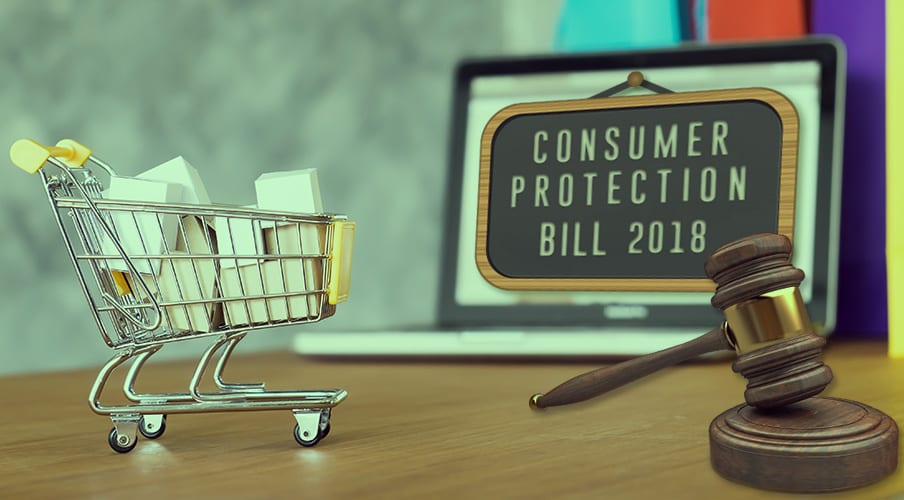
So the need of the hour is to set up mechanisms that work to punish the market culprits. Very obviously this is the government’s job as by merely awakening consumers one is flooding the consumer and civil courts with no respite for years. The much awaited Consumer Protection Amendment draft Bill 2018 which is languishing in the parliament provides some ready answers as a carefully thought out regulation. But obviously it would need a push by asserting consumers who express their disappointment with the delay and press hard for its immediate passage once the new government is formed.

Consumer Voice has petitioned for its early passage and consumers can participate in urging the government for attention. Through the given link one can add to the growing number of consumers who can be catalyst for this major development. Urging all to sign the petition, so that consumers can’t be overlooked or defrauded in the market place. Add your muscle to the movement.

For other articles by Consumer VOICE COO’s Desk, click here

Is India ready for E-commerce?

Is India ready for E-commerce?

Is India ready for E-commerce?

e-commerce
BY ASHIM SANYAL, COO CONSUMER VOICE

Driven by the rising smart phone penetration, the launch of 4G networks and increasing consumer wealth, the Indian e-commerce market is expected to grow in leaps and bounds in the near future. But is India e-commerce ready?

Ecommerce can change the economies of the developing nations like India. It can integrate Indian markets to the global market which in turn improves and strengthens the economic growth. However, Ecommerce in India is in its early stages and there are also major challenges that can hold back its growth despite this being the area of stupendous growth as often quoted. In fact it is still at a nascent stage with neither the market being stable nor the policies or regulations in place.

Ecommerce as a way of doing business is a new concept for Indian families. People usually buy and sell on face-to-face basis. Indians want to feel and see the product that they want, negotiate on best deals face to face, and buy. This is the type of business activity we are familiar with, which is entirely different from online way of doing it. The idea of buying goods and services virtually is not the type of risk Indians are ready to accept easily. They are also not confident whether online merchants are trust worthy enough to deliver products and services as promised. This process of slow acceptance through small trials with “Payment on Delivery” as a unique method has taken a huge toll in its natural fast growth.
On the other hand, merchants as well are afraid to sell their products over the Internet. Considering the lack of online buying habits of the society, and because of the reason that electronic way of doing business is not well-known, they think it is a high business risk to take. They usually are not willing to invest on online ventures. Thus both these hamper the growth of Ecommerce in India. Basically, “trust” is a major issue in online business environment and because there are no Ecommerce policies and laws in India both sellers and buyers have absolutely nowhere to go in case of disputes.

Ecommerce also requires a strong technological foundation. One of the major ones is access to the Internet. To run an online business one needs an Internet connection with stable and high connection speed. However, mostly the Internet connection is very limited and slow. Besides, the cost of possessing it is high. Another major technological facility Ecommerce needs is personal computers. Possessing computers is expensive which is another major challenge for the growth of Ecommerce. Banking is another major facility needed to do Ecommerce. And in most cases, lack of this major facility is a big barrier both for the seller and the buyer. Ecommerce can survive only if online payment systems are used as a mode of payment and not COD which is not cost effective.

Most importantly, to do Ecommerce, perfect legal system and policy is required. This is a basic requirement which gives space to both buyers and sellers. Without them it is impossible to do online business. However, India still has a long way to go before it has all the systems in place. Though the growth of Ecommerce has been at a fast pace, the government has not acted fast as a facilitator and left this vacuum of Ecommerce policy framework.

The perfect co-operation of government, professionals, online merchants, banks and customers is a must to see an Ecommerce boom through trust and faith. If they can work together and collaborate, they can fully avoid all the above mentioned obstacles and can benefit the nation from the outputs of Ecommerce economy.

For other articles by Consumer VOICE COO’s Desk, click here
If you want to Breathe, Protect the Environment NOW!

If you want to Breathe, Protect the Environment NOW!

If you want to Breathe, Protect the Environment NOW!

protect-environment
BY ASHIM SANYAL, COO CONSUMER VOICE

We cannot continue with our wasteful way of life. Saving the environment is not just about helping the animals or birds, it is about us as well. It is also about how we treat the environment at large and the entire eco system. As individuals we are constantly trying to make our lives comfortable but at the cost of rapid environment degradation which may not get reversed.

Major environmental issues are forest and agricultural degradation of land, resource depletion (such as water, mineral, forest, sand, and climate), public health, loss of biodiversity, loss of balanced ecosystems alongside livelihood and security for the poor.

Family is the first school of environment-learning in the right sense. Family members can give the right kind of lessons in environmental protection to the children through many illustrations and elders should set examples. We should go for a simple lifestyle to reduce the carbon footprint. To begin with, whenever you go out of the room, make it a rule to switch off electrical appliances, don’t allow water to drip, keep the hill stations and beaches free from plastics, don’t cut trees- plant them.

Unfortunately, some people believe that only the government and the big companies in general are responsible for the protection of environment. This is far from true. In fact, every person can contribute towards protecting the environment from pollution, residues, emissions, all kinds of wastes and increasing population. Everyone is naturally entrusted with the responsibility and authority to take care of environment.

Agriculture and irrigation are emphasized for food production, but not enough attention is paid to the understanding of the importance of forest wealth. Forests are just considered to be encircling the land that can be harvested for farming. Trees have been cut indiscriminately and generally, there is an apathetic attitude to the need to replace them with new trees. Trees are the biggest source of oxygen. In the process of photosynthesis, plants emit the most essential oxygen. In this way, trees provide the basis for the life of man. Apart from this, vegetation also forms the diet of the creatures. Flora provides nourishment to us.

The vegetables we eat today are grown using chemicals and pesticides. If we grow vegetables without the use of chemicals and pesticides, it will enhance soil fertility, and will be beneficial for both our health and the environment. Minimize the use of packaged commodities as they comprise one-third of the industrial waste. So, think about packaging before buying the product.

We should not waste water because water is life. Clean and fresh water is the need of our daily life as well as it is becoming more and more valuable over time and if we are not doing anything to save it so far, water will be more expensive than gold in the future. Pollution is rapidly increasing due to vehicular emissions. If you take care of your vehicles properly and periodically check their pollution levels, you can contribute greatly to environmental protection and conservation. Also, walk as much as you can to reduce burning of fossil fuel.

A growing population exerts pressure on agricultural land, causing environmental degradation, and forcing the cultivation of land of higher as well as poorer quality. This environmental degradation ultimately reduces agricultural yields and food availability, famines and diseases and death, thereby reducing the rate of population growth – a complete reverse cycle !

In 2000, India’s Supreme Court directed all Indian cities to implement a comprehensive waste-management programme that would include household collection of segregated waste, recycling and composting. These directions have simply been ignored. No major city runs a comprehensive programme of the kind envisioned by the Supreme Court.

On the recognition of World Environment Day, let us reconnect with nature, and recommit to creating a cleaner, greener and healthier planet. You and I can connect easily with this mission by contributing in a small way.

For other articles by Consumer VOICE COO’s Desk, click here
The fight against NCDs and trans fat

The fight against NCDs and trans fat

The fight against NCDs and trans fat

transfat
BY ASHIM SANYAL, COO CONSUMER VOICE

Non-communicable diseases (NCDs) have emerged as the leading cause of human mortality and morbidity in low, middle and high-income countries alike and India is not an exception. WHO has flagged off this as a major disaster for future and their control program REPLACE lists out the basic control measures. Food Regulator in India Food Safety and Standards Authority of India (FSSAI) has also issued a draft notification on eliminating chemical trans fats in food by 2022. NCDs are directly linked with lifestyle, food and diet. Smoking and alcohol consumption adds to the problem. Overweight and obesity are also associated with elevated blood pressure and blood cholesterol resulting in hypertension, diabetes, renal problem along with cardiac arrests.

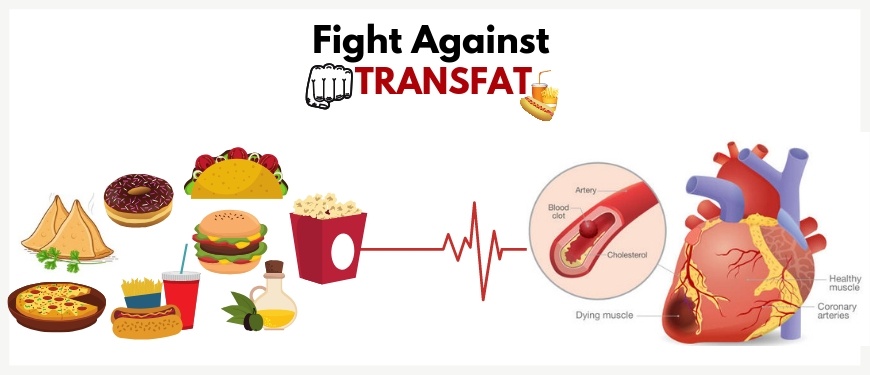
Food systems have undergone dramatic changes in the past decades. Indian consumers, especially children are influenced not by the nutritional quality of the foods but that which are more affordable and tasty. Excessive intake of sugar, salt, saturated fats and trans fats are the major risk factor of Non-Communicable Diseases. Chemical trans fat is the worst you can eat and it is the leading cause for NCDs. Food loaded with chemical trans fat increases the risk of heart disease, the leading killer of men and women. These include street food, sweets, bakery items and other delicacies which we enjoy and are made in vanaspati oil or hydrogenated vegetable oils loaded with chemical trans fat.

Lifestyle changes have prompted us to increase intake of packaged food in our daily lives which is incidentally loaded with trans fat, salt, sugar and saturated fats. It has increased the rate of NCDs in India. This along with lazy lifestyle has become epidemic and a killer without us realizing it. The economic costs of NCDs are also accelerating worldwide. Hypertension in its passive form is difficult to detect and results in sudden illness or deaths.

The government of India is implementing National Programme for Prevention and Control of Cancer, Diabetes, Cardiovascular Diseases and Stroke (NPCDCS) in all the States/UTs under National Health Mission (NHM) to generate awareness on healthy diet. This along with Ayushman Bharat where front line health workers work and clinics are a part of preventive and promotional healthcare strategy. A key focus of the National Health Policy,2017 is on preventive healthcare.  Eat Right India with the slogan of “ Thoda Kam” is the theme of FSSAI through safe, healthy and sustainable diets with less intake of salt, sugar, fats and chemical trans fat.

Consumer organizations need to actively involved in the shaping of policies that influence health along with the government.  NCDs are very difficult to manage with only traditional health measures, but innovative interventions do exist, and can be effectively implemented.  Food Safety and Standards Authority of India (FSSAI) constituted an Expert Group to address the issue of High Fat, Sugar and Salt (HFSS) and the ‘Guidelines for making available Wholesome, Nutritious, Safe and Hygienic Food to School Children in India’ should be implemented with strict measures.

For other articles by Consumer VOICE COO’s Desk, click here
The Curse of Child Labour and Generating Consumer Awareness

The Curse of Child Labour and Generating Consumer Awareness

The Curse of Child Labour and Generating Consumer Awareness

Child Labour
BY ASHIM SANYAL, COO CONSUMER VOICE

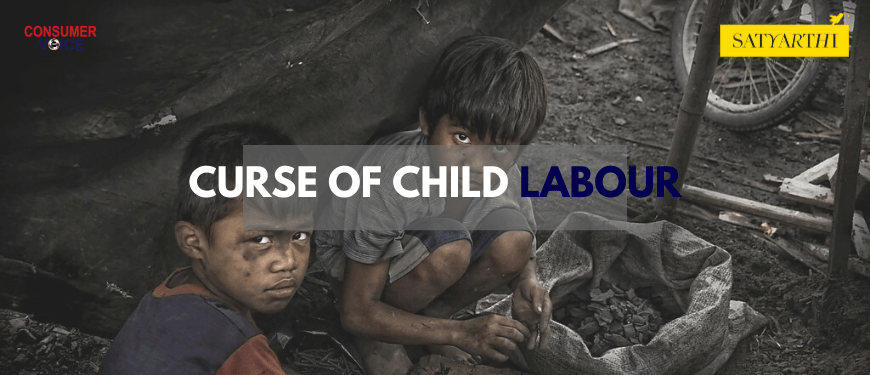
According to the Census of India 2011, 10 million children are engaged in labour or seeking work. This picture is alarming. Add to that, instances of children working in the harshest of conditions like mining, zari and carpet factories, the case of child labour becomes grim. And inadvertently we as consumers could be using products like makeup kit, carpet or zari dress made by children – children who should be studying in schools and not toiling in the factories and employed as slaves many a times.

Child labour is not only wrong from the humanitarian point of view but it also violates the fundamental rights of a child to life, freedom, equality and his/her right against exploitation. It also perpetuates the cycle of poverty and illiteracy for generations.

Child labour needs to eliminated and uprooted from the grass root level and a landmark step towards this effort was the enactment of the Child Labour and Adolescent (Prohibition and Regulation) Act, 1986, or CLPRA in 2016.

Increased awareness of child rights among consumers is the need of the hour. One needs greater convergence between different stakeholders in child protection for rehabilitation of children. Globally, the International Labour Organization and UNICEF recommend a multi-pronged strategy to tackle child employment that involves better enforcement of laws, increasing awareness and strengthening education systems. India needs to act NOW and act FAST.

Consumers should boycott goods made by child labour and ensure they do not employ children in workplaces or at home as violates both the law and their dignity.

For other articles by Consumer VOICE COO’s Desk, click here

Enquire Now

    X
    Enquire Now