No Results Found
The page you requested could not be found. Try refining your search, or use the navigation above to locate the post.


As we stand on the cusp of a new year, there is a palpable sense of anticipation in India, fuelled by the promising prospect of upcoming general elections and a notable reduction in inflation. According to the consensus among chief executives of leading companies, this dual catalyst is poised to breathe new life into consumer demand across diverse categories, spanning from groceries to apparel and electronics. The expected resurgence is forecasted to take root from March-April onwards, marking a pivotal turning point in the nation’s economic trajectory.
Consumer goods companies had initially set their sights on a demand recovery in the December quarter. While this projection did not materialize as expected, there is a silver lining in the form of a pronounced halt in the slowdown of consumption. Chief executives are now reporting a noteworthy uptick in the sales of mass-segment products after a hiatus of over three years. This rekindling of consumer interest is viewed as a positive harbinger for the economic landscape.
Shifting our focus to infrastructural advancements, a noteworthy development is underway in Rajasthan’s Didwana district. India is on the brink of achieving a significant milestone with the completion of its first dedicated fast railway trial track by October 2024. This ambitious project, being constructed on the lines of esteemed railway systems in America, Australia, and Germany, aims to enhance the country’s railway system testing facilities. Once completed, this track will position India as the first country with comprehensive testing facilities adhering to international standards for rolling stock.
The high-speed train test track, a product of the Research and Standards Organization (RDSO), spans from Gudha-Thathana Mithri to Nawan railway station in the Jodhpur division of Northwestern Railway. This initiative showcases India’s commitment to advancing its railway technology, with a focus on meeting the technical needs of its growing railway network.
In the financial domain, the Vivaad Se Vishwas scheme has played a pivotal role in settling contractual disputes and claims of Micro, Small, and Medium Enterprises (MSMEs) affected during the Covid period. The Finance Ministry reports that Rs 2,302 crore has been settled so far under this scheme, with over 900 claims worth Rs. 20,000 crores received. Notably, Rs. 1,652 crores worth of claims have already been resolved, underlining the scheme’s efficacy in providing a resolution mechanism for contractual disputes.
However, amid these positive developments, a sobering reality check comes in the form of a recent spike in Covid-19 cases. India has witnessed a multifold increase, with Kerala contributing significantly to the reported cases. This serves as a stark reminder that while strides are being made on various fronts, the battle against the pandemic remains an ongoing challenge.
As we reflect on the progress and challenges facing our nation, we extend our heartfelt gratitude to our esteemed readers for their unwavering support. Your engagement, feedback, and ideas have been instrumental in our mission to deliver informative articles. We invite you to continue sharing your thoughts and suggestions at info@consumer-voice.org, as we collectively foster a knowledgeable and empowered community.
Wishing you an enriching and enjoyable reading experience ahead!
Pallabi Boruah
Editor
The page you requested could not be found. Try refining your search, or use the navigation above to locate the post.

National Consumer Day is observed annually on December 24th in India, marking the enactment of the Consumer Protection Act, 1986. It emphasizes awareness of consumer rights, responsibilities, and the significance of protection. The Act was a pivotal step in safeguarding consumers from unfair practices and ensuring quality standards. This year’s theme is “Consumer Protection in the era of E-Commerce and Digital Trade”.
Rinki Sharma
The Consumer Protection Act, 2019, was the most recent amendment to the Consumer Protection Act in India. The Consumer Protection Act, 2019, came into effect on July 20, 2020. This Act aimed to strengthen consumer rights and protection in the wake of changing market dynamics, especially with the growth of e-commerce and digital platforms.
The Consumer Protection Act, 2019 in India introduced several provisions to safeguard consumers in the context of e-commerce. These features are designed to enhance consumer rights, provide mechanisms for dispute resolution, and establish accountability for e-commerce entities. Here are some key silent features of the Consumer Protection Act, 2019 relevant to e-commerce:
Definition of E-Commerce-The Act explicitly defines e-commerce to cover buying or selling of goods or services, including digital products, over a digital or electronic network.
Consumer Rights in E-Commerce -The Act reinforces consumer rights in the digital space, ensuring that consumers have the right to information, right to choice, right to safety, and right to be heard in e-commerce transactions.
Liability -E-commerce entities are held accountable for the authenticity of goods and services they provide. Any false or misleading advertisements, as well as the sale of counterfeit products, can lead to legal consequences for the e-commerce platforms.
Establishment of Central Consumer Protection Authority (CCPA)-The Act establishes the CCPA to promote, protect, and enforce the rights of consumers, specifically in the context of unfair trade practices and misleading advertisements in e-commerce.
E-Commerce Redressal Mechanism-The Act provides for the establishment of Consumer Disputes Redressal Commissions at the district, state, and national levels. These commissions have the authority to handle and resolve complaints related to e-commerce.
Product Liability in E-Commerce-Manufacturers, sellers, and service providers are held liable for any harm caused to consumers due to defective products or deficient services, including those transacted through e-commerce platforms.
Consumer Protection against Unfair trade practices -Unfair trade practices, including deceptive advertising, are expressly prohibited. E-commerce entities are obligated to provide accurate information about products and services, pricing, and terms and conditions to prevent misleading consumers.
E-commerce Terms & Conditions -E-commerce platforms are required to prominently display terms and conditions, including the return policy, refund policy, and grievance redressal mechanism. This ensures transparency in transactions and helps consumers make informed choices.
Digital Contracts & Payments -The Act recognizes digital contracts and transactions, offering protection to consumers engaging in online transactions. It addresses issues related to online payment systems and electronic contracts to enhance consumer confidence in digital commerce.
Consumer Awareness and Education -The Act emphasizes the importance of consumer awareness and education. E-commerce entities are encouraged to contribute to consumer awareness programs to inform users about their rights and responsibilities in online transactions.
In the modern age, our strength as consumers comes from understanding our rights, practicing responsible behaviour, and actively supporting efforts that champion consumer rights. Let’s navigate the digital landscape with care, ensuring our rights are upheld, and collaboratively contribute to building a fair and secure online marketplace.
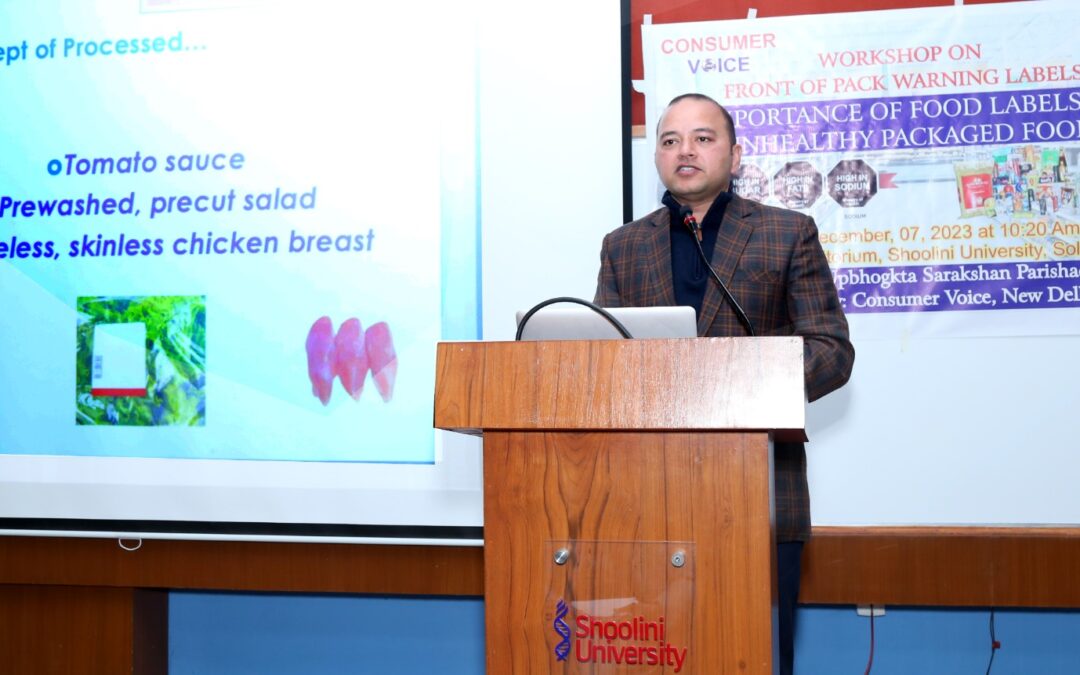


On December 7th, 2023, Consumer VOICE in association with Himachal Upbhogkta Sanrakshan Parishad organised an youth sensitisation program in Shoolini University. The program which was organised at RTA auditorium in Shollini University was attended by more than 250 students from various disciplines. The session began with a welcome address by the Chairman of Himachal Upbhogkta Sanrakshan Parishad, Shri Joginder Kanwar. He introduced the theme of the workshop and welcomed all the guests. Prof P K Khosla, Chancellor of Shoolini University set the tone of the session by giving examples of how important it is to eat the right food.
Ms Nilanjana Bose, Project Lead, Food and Health, Consumer VOICE then shared her knowledge with the young participants on Front of Pack Labels. With the help of a power point presentation, she spoke about the importance of Front of Pack Lables. She also elaborated on the different types of FOPL designs and the best practices used world-wide. The presentation also highlighted FSSAI draft notification of introducing Front of Pack lables on packaged foods but with star ratings. She highlighted the difference between star ratings and warning labels. The session also saw some interesting presentations by Prof Dr Rohit Goyal and Asst. Professor Srimati Shrishti Mathur of Shoolini University. IEC materials and certificates were distributed to all the students present in the workshop.


On November, 30th, 2023, an youth awareness program was organized by Consumer VOICE on what and importance of Front of Pack Labels at Dr B R Ambedkar University, Karampura campus. The program started off with a welcome note by Dr Samik Chowdhury, Associate Professor, School of Global Affairs who spoke about the importance of health and right nutrition among the young population of India. While non-communicable diseases tend to manifest in adulthood, many have their origins in behaviours adopted during childhood and young adults. Unhealthy diets rich in salt, sugar and fats and lack of physical exercises increases the risk of NCDs among young adults. It is important to address non-communicable diseases among the youth as it directly affects the nutrition, education and mental well-being of an individual. Today’s youth who are already stressed with work, career and future, unhealthy eating habits only add to the existing problems.
The session was then continued by Mrs Nilanjana Bose, Project Lead, Food and Health, Consumer VOICE. With the help of a presentation, she introduced the relatively new subject of Front of Pack Lables to the students. She spoke about the different types of FOPL and why Warning Lables are the best. By citing examples of Latin American countries that have implemented Front of Pack Warning Lables she also highlighted Indian studies that showed that more people preferred warning labels on unhealthy packaged foods over other designs. Ms Ekta Purohit, Communications Manager, Consumer VOICE highlighted the importance of effective communication for promoting health and nutrition through various social media channels.
The program was attended by more than 50 students from across departments of the University. IEC materials and certificates were also issued by Consumer VOICE.


A similar youth sensitisation program on Front of Pack Lables was done in Bhonwal Convent School , Bijnaur Lucknow on 28 November with support from Consumer Guild, Lucknow where more than 250 students participated. Abhishek Srivasata of Consumer Guild highlighted the harmful effects of unhealthy packaged foods and how one should avoid foods rich in fats, salt and sugar. He also discussed about the various types of Front of Pack Lables and why Warning Lables are the best. While interacting with the students he elaborated on the difference between Warning Lables and other label designs and how it will help us identify unhealthy foods.


In Assam, young college students from the School of Pharmaceutical Sciences, USTM attended a session on Front of Pack Lables (FOPL) organised by Consumers’ Legal Protection Forum, Assam with support from Consumer VOICE on November 17th, 2023. After introducing the subject and talking about the harmful effects of packaged foods by their Head of the Department, the students were given IEC materials on FOPL. Ajoy Hazarika of CLPF Assam, spoke about FSSAI draft regulation on FOPL and how star ratings are not good. He also highlighted the best practises used mostly in Latin American countries like Chile and Mexico where after having Front of Pack Warning Lables on packaged foods, consumption of unhealthy foods has come down reasonably.


On December 4th, 2023, Rajkot Saher Jilla Grahak Suraksha Mandal along with the support of Consumer voice, went across three educational institutions to generate awareness on unhealthy packaged foods and Front of Pack Lables. Ramaben Mavani, President of Rajkot Saher Jilla Grahak Suraksha Mandal set the tone of the session by talking about the harmful effects of packaged foods. She highlighted the fact that consumption of unhealthy packaged foods are one of the main reasons for the rise in NCDs in India. Ramajibai Mavani, Founder President of Rajkot Saher Jilla Grahak Suraksha Mandal spoke about the importance of having healthy foods and the role of nutrition in our daily lives. Ekta Purohit, Communications Manager, Consumer VOICE shared a presentation on Front of Pack Labels. She highlighted the different types of label designs and also why should one avoid foods rich in fats, salt and sugar. She also shared the latest draft regulation of FSSAI on FOPL and why one should adopt warning labels instead of star ratings as recommended by FSSAI. The session was organised in 3 different institutions including Murlidhar B.Ed College, Mirambika College and Panchshil College, Rajkot. IEC materials were distributed among the students as well.
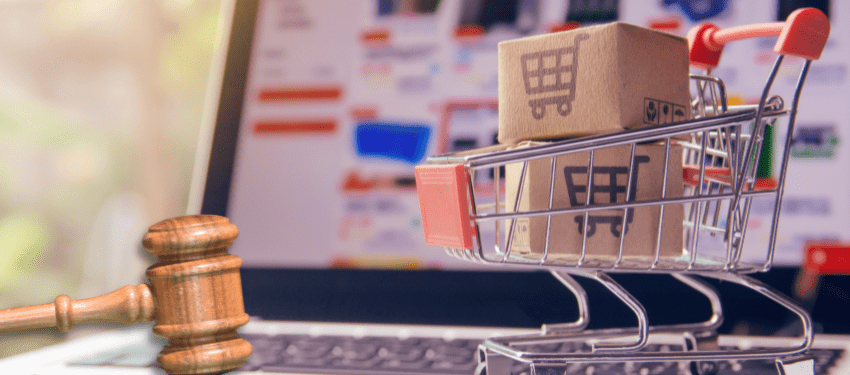

This day aims to protect consumer rights and protect them from market abuse and social injustices that may undermine their rights. In India, National Consumer’s Rights Day is celebrated every year on December 24. The day serves as a reminder that consumers have the right to be protected from unfair business practices and to have access to safe, quality goods and services. It also highlights the need for governments, businesses, and other stakeholders to work together to promote consumer rights and address consumer concerns. This day also provides an opportunity for individuals to highlight the importance of the consumer movement and the need to make every consumer more aware of their rights and responsibilities.
BY ASHIM SANYAL, COO CONSUMER VOICE
National Consumer Rights Day is often confused with World Consumer Rights Day, which is celebrated on the 15th March. Though both have the same purpose of building consumer awareness, the former is observed at the National level while the latter is celebrated globally. Incidently,India celebrates both days. The history of Consumer Rights Day in India can be traced back to 1986 when the Consumer Protection Act was passed by the Parliament. This Act introduced consumer rights aiming to protect consumers from exploitation in the market.
National Consumer Rights Day and the Consumer Act have gone a long way in protecting consumers from being cheated by manufacturers and sellers indulging in unfair trade practices. This year, Consumers International has selected ‘Fair and responsible AI for consumers’ as the theme for World Consumer Rights Day 2024. For India’s Consumer Rights Day 2023, the theme selected appropriately is “Consumer Protection in the era of E-Commerce and Digital Trade”. Both themes cover the changing market and consumer spaces due to influx of digital trade and AI which has its own pitfalls and benefits for consumers. A choice that consumers have to consciously make!
Consumer rights mean that every consumer or buyer across the world has the right to have information on the quality, purity, price, and standard of various products, goods, and services. If you will win a consumer today, you will win him for life and enjoy great success in your business. No business can survive without consumers and therefore, consumers must be respected and valued more than anything else.
A very Happy National Consumer Rights Day 2023 to you from Consumer VOICE !
The page you requested could not be found. Try refining your search, or use the navigation above to locate the post.
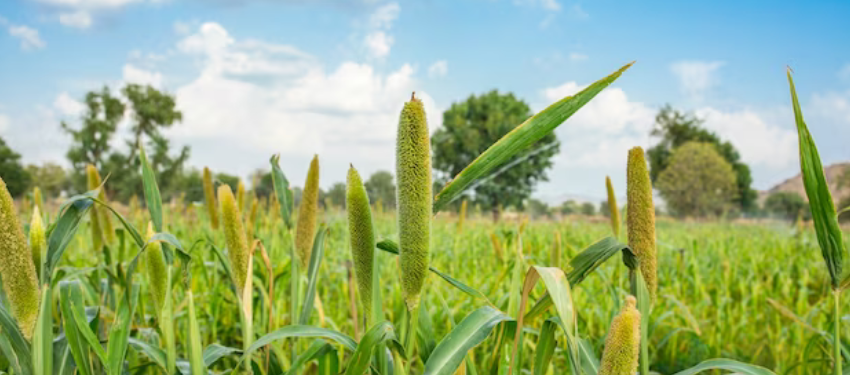
Shifting away from dependence on the ‘Big Food’ industry to boost millet production and consumption, policies should emphasize integrating millets into government food schemes. Highlighting the limitations of Production Linked Incentives in realizing millets’ nutritional value, the suggestion is to encourage street food vendors and small-scale outlets to offer millet-based meals, particularly in rural markets.
Reshma Roshania
NCAER (rroshania@ncaer.org)
India is leading a compelling initiative to encourage the consumption of millets. By successfully advocating for the designation of 2023 as the International Year of Millets at the United Nations, India has established itself as the worldwide hub for the production, research, and innovation of these healthful grains.
Millets hold significant promise in addressing India’s concurrent nutritional challenges, including prevalent ‘hidden hunger’ and elevated cardio-metabolic diseases. Nevertheless, the current approaches to reintegrate millets as a staple in mainstream diets may be off course and face the risk of failure unless more careful and imaginative strategies are implemented promptly.
The Ministry of Food Processing Industries’ Production Linked Incentive Scheme for Millet-Based goods (PLIS-MBP) is encouraging the “Big Food” industry to introduce millet-based goods through sales-based incentives in an effort to promote the consumption of millets. The program’s objective is to encourage the production of millet-based goods that are ready to eat and cook.
Food industry giants like Kellogg, Nestle India, Britannia, and Hindustan Unilever have joined on board and are creating a variety of packaged cookies, instant noodles, breakfast cereals, powdered drinks and savoury snacks that fall under the ultra-processed food category. Ultra-processed foods are made up of components that are extracted from whole foods using industrial processing techniques. To make the product more palatable and extend its shelf life, flavour enhancers, artificial colouring, stabilisers, and preservatives are typically added along with sugar, salt, and fat.
To encourage their use, ultra-processing millets is not the answer, though. It will actually be detrimental. There is little doubt about the findings: eating a diet high in processed foods raises the risk of obesity, heart disease, metabolic syndrome, depression, and early death (Pagliai et al. 2020). These dishes are becoming more and more well-liked in India across all socioeconomic classes, in both rural and urban settings. According to one research of teenagers in Delhi, ultra-processed meals can account for as much as 20% of a teen’s daily caloric consumption (Jain and Mathur 2020).
Furthermore, a lot of money is being invested in start-ups that are creating millet-based products. The Indian Institute of Millets Research’s Nutrihub incubator, in contrast to sales-based incentives, provides seed cash, training, mentorship, access to investor networks, and use of R&D facilities to “nutri-cereal” entrepreneurs during the idea and prototype stages. Numerous of these start-ups produce goods devoid of additives and artificial substances under the moniker “clean food.” Nevertheless, their prices are likewise exorbitant. It’s obvious that the formerly “poor man’s food” is now being promoted to the urban elite.
There is a difference between the so-called “People’s Movement,” which conjures up images of a fight for food sovereignty to give farmers more power and bring back the traditional millet, and the actual direction that this movement may take—that is, into the hands of Big Food and onto the tables of the wealthy.
A significant push from the Centre to integrate millets into the National Food Security Act’s pillars is absent from the plan. Although millets are frequently heralded as the “key” to resolving India’s food insecurity, particularly in light of the country’s unpredictable environment, they are by no means an essential part of the nation’s programmes for ensuring food security.
The strength of street food, which forms the foundation of Indian cuisine, must be acknowledged in the campaign for millets. Farmers are being pushed to grow more millet, while Big Food and start-ups are being encouraged to produce packaged items made from millet. The middle group, which consists of street vendors and small-scale food establishments, is severely lacking in representation. This group sources materials for producing fresh and minimally processed cuisine.
These entrepreneurs are able to provide millets to the general public in a more healthful manner. Think of dishes like bajra ladoos, ragi tikki chaat, and puffed jowar bhel. Is it possible for current incentive programmes to incorporate inventive suppliers and imaginative dhaba chefs in order to encourage reasonably priced and easily available millet-based products? The original ready-to-eat food was, after all, street food—minus the packaging and intellectual property.
It’s also critical to recognise and accommodate rural preferences. Since India is still 65% rural, millets must be both easily accessible and desired by the rural populace in order to genuinely become the staple meal they once were. Nonetheless, the majority of research on people’s knowledge, beliefs, and practises related to millets comes from urban India.
For example, a recent multi-city study discovered that the main justification for eating millets was the presence of a pre-existing medical condition, like diabetes (Kane-Potaka et al. 2021). Since non-communicable diseases are underdiagnosed in rural areas, such findings from the urban setting might not be very applicable there. Furthermore, millets are important in many rural areas since they are used as animal feed; therefore, before initiating awareness campaigns and “millet mahotsavs,” preferences should be investigated and understood in order to customise messaging.
Currently, PLIS-MBP criteria state that goods based on millet must include at least 15% millet in order for public money to be supported. This suggests that substances like sugar, hydrogenated fats, processed white flour, and additives could make up the other 85%. In spite of this, people are probably going to be sold these products as health foods. Examples of possibly mislabelled superfoods are products like Quinoa Puffs promoted as a diet snack or Oats Instant Noodles labelled as “nutrilicious”. Controlling Big Food labelling and advertising is essential to keeping millets from turning into a nutritional catastrophe.
It’s important to remember that rice and wheat became staples on our plates not because of massive marketing campaigns, celebrity endorsements, or international campaigns, but because of structural policies that guaranteed farmers’ profits and consumer affordability. Similar factors should direct millets’ path into general consumption in order to avoid potential problems in their marketing and promotion.
Jain, A and P Mathur (2020), “Intake of Ultra-processed Foods Among Adolescents from Low- and Middle-Income Families in Delhi”, Indian Pediatrics, 57(8):712-714.
Kane-Potaka, Joanna, et al. (2021), “Assessing Millets and Sorghum Consumption Behavior in Urban India: A Large-Scale Survey”, Frontiers in Sustainable Food Systems, 5(680777).
Pagliai, G, et al. (2021), “Consumption of ultra-processed foods and health status: a systematic review and meta-analysis”, British Journal of Nutrition, 125: 308-318.
This article first appeared in Hindu Business Line & I4I.