What is Basmati Rice and how is different from other varieties?

What is Basmati Rice and how is different from other varieties?

What is Basmati Rice and how is different from other varieties?

Basmati Rice

WHAT IS BASMATI RICE?

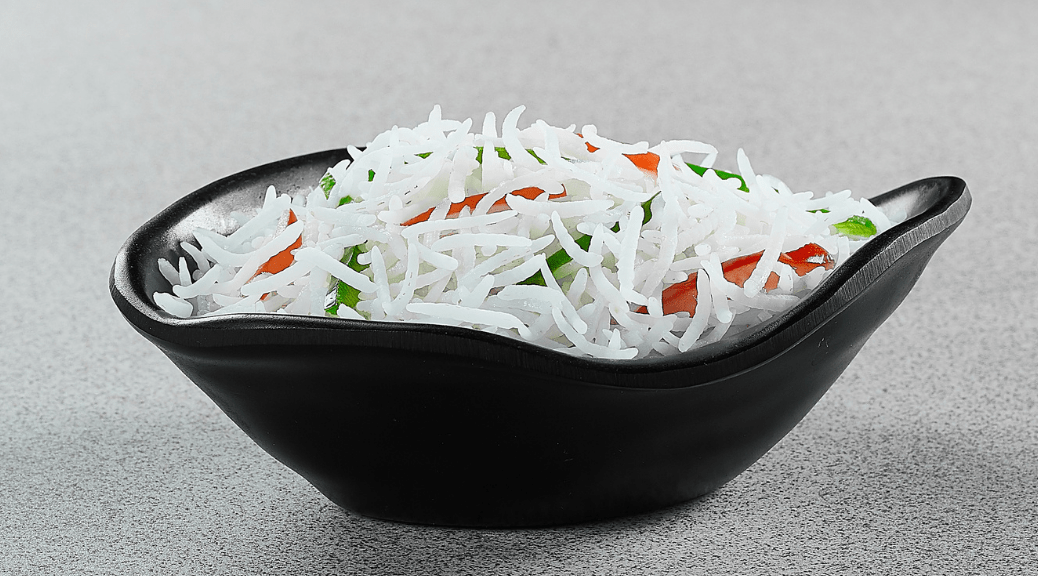
Basmati is a type of long-grain aromatic rice.  Basmati rice is a special quality of rice that is grown in India and Pakistan. Basmati rice has a unique fragrance and flavor caused due to presence of a chemical called 2-acetyl-1-pyrroline. This chemical is found in Basmati rice at about 90 ppm (part per million), which is 12 times more than non-basmati rice varieties.

With effect from 5 February 2016, basmati rice is a registered GI (geographical indication) product. Agricultural and Processed Food Products Export Development Authority (APEDA), as registered proprietor of the GI, is responsible for putting in place a system for administration of GI and authentication of the product reaching consumers in India and abroad.

It is grown for many centuries in the specific geographical area, at the Himalayan foothills of Indian sub-continent, blessed with characteristics as extra- long slender grains that elongate at least twice of their original size with a characteristics soft and fluffy texture upon cooking, delicious taste, superior aroma and distinct flavor. Agro- climatic conditions of the specific geographical area as well as method of harvesting, processing and aging attribute these characteristic features to Basmati rice. Owing to its unique characteristics the “ scented Pearl” lends a touch of class that can transform even the most ordinary meal into a gourmet’s delight. Basmati is also available in white or brown versions, depending on the extent of the milling process.

AREAS OF CULTIVATION IN INDIA:

The areas of Basmati Rice production in India are in the states of J & K, Himachal Pradesh, Punjab, Haryana, Delhi, Uttarakhand and western Uttar Pradesh.

EXPORTS

India is the leading exporter of the Basmati Rice to the global market. The country has exported 40,00,471.56 MT of Basmati Rice to the world for the worth of Rs. 21,604.58 crores (or 3,230.24 US$ Mill.) during the year 2016-17

Major Export Destinations (2016-17): Saudi Arabia, Iran, United Arab Emirates, Iraq and Kuwait.

HOW IS BASMATI RICE DIFFERENT FROM OTHER VARIETIES?

Grain size and shape

Basmati is a long grain rice. The non-basmati rice comes in all different shapes and sizes- long, slender, short and thick, bead and round.

Aroma

Basmati has a characteristic fragrance and flavor. It contains a chemical compound called 2-acetyl-1-pyrroline which gives it aroma. Whereas non-basmati varieties, doesn’t have an aroma.

Aging

Like wine and cheese, the older it gets the better flavor and aroma it would extract. Hence the aged Basmati costs higher than the recent productions.

Post cooking elongation

Basmati rice becomes almost double its size on cooking. Such a significant increase in size cannot be seen in non-basmati varieties. This makes it one of the highly demanded rice in the world.

Stickiness

Cooked grains of Basmati rice are characteristically free flowing rather than sticky.

Yield

Yield of basmati rice from the agricultural land is almost half the non-basmati varieties. This is also one of the reasons for its higher costs.
Basmati is grown only in the Himalayan region of India or few parts of Pakistan whereas non-basmati varieties could be grown anywhere in the world.  

More breakage

Long and slender grains of basmati are more prone to breakage in the production process which involves milling and polishing of rice grain.

Consumer VOICE experts tested 12 brands of  basmati rice on basis of grain length/breadth ratio, average precooked grain length,  elongation ratio and most importantly DNA analysis was conducted to check the adulteration of pure basmati with non-basmati rice.  Click to know complete results for the best basmati rice.

Encourage healthy eating among children by opting for trans fat free food

Encourage healthy eating among children by opting for trans fat free food

Encourage healthy eating among children by opting for trans fat free food

Transfat Free Children

Rachna, a 35 year old working woman found that her 8 year old kid was gradually moving towards obesity and losing interest in outdoor activities. Similary, Rajat found it difficult to manage his 10 year old daughter as she was not paying attention to her studies and was not interested in activities.

Rachna and Rajat are not alone in this league. There are many such parents who are not aware of the unhealthy transfatty laden foods that are harming the health of children. Rachna found that his child was eating lot of packaged and processed food like chips, noodles, bakery items etc. Rajat also found that both he and his child were consuming a lot of oily food which were being made at home. Coupled with minimal physical activities, this resulted in weight gain too.

Let’s understand what transfatty acids are and why they are harmful:

Transfatty Acids

There are two types of trans fats found in foods. Naturally formed trans-fats are found in animal products, including high-fat meat, lamb and dairy foods. While trans fats is a form of unsaturated fat, trans fat is also produced when vegetable oils are chemically altered by partial hydrogenation to stay solid at room temperature, giving them a much longer shelf life

Food manufacturers use these hydrogenated oils/vanaspati to extend shelf life, add texture, taste and increase stability.

Why are they harmful?

  • Increase the risk of heart attack, heart diseases and diabetes
  • Raise LDL  (Bad Cholesterol )and lower HDL (Good  Cholesterol )
  • May reduce serotonin production in the brain affecting mental health

Where they are found?

  • In processed and packaged food like sausage rolls, meat pies, noodles etc.
  • In fried items like jalebis, boondi laddus, pakodas, puri, samosa etc.
  • Baked food items like pastries, cakes, cookies etc.
  • Fats and Oils like margarine, vanaspati etc
  • Reheating of oil – When same oil is used again and again

What you can do?

Though we can’t avoid sweets, snacks etc completely but we can always make healthier choices:

  • Encourage children to choose healthy options. Children follow their elders, parents so it’s important to create a healthy food environment at home.
  • Encourage children to go for fruits, seasonal vegetables, and homemade snacks.
  • Avoid oily food, reheating of oil at home while preparing snacks /food etc.
  • Avoid foods high on salt, sugar, fat and saturated fats.
  • Always try to serve /have fresh food instead of packaged & processed foods.
  • Talk to children and communicate about importance of healthy food and healthy life.
  • Indulge children into physical activities like running, swimming etc.
  • Packaged and processed foods are easy foods don’t consume them as they are easy options and don’t let children have access to such easy foods.
  • Look at the labels and go for products using natural vegetable oil /fat and are not made in hydrogenated vegetable oil /vanaspati or fat of animal origin
  • Avoid items which are prepared using reheated cooking oil.

Rinki Sharma
Lead – Projects , Consumer VOICE


Things you should know about Application Supported by Blocked Amount (ASBA)

Things you should know about Application Supported by Blocked Amount (ASBA)

Things you should know about Application Supported by Blocked Amount (ASBA)

ASBA

With the Zomato IPO in the headlines, you might want to know how to subscribe an issue in the Initial Public Offering or IPO. If you’re so, we suggest you to understand what is an Application Supported by Blocked Amount (ASBA). It is a process developed by India’s Stock Market Regulator SEBI for applying to IPOs, Rights issue, FPS etc. In ASBA, an IPO applicant’s bank account doesn’t get debited until shares are allotted to them. Let us understand what it entails here and what a consumer needs to go though. 

Subas Tiwari

ASBA facility is adopted for application of Initial Public Issue IPO and Follow-on Public Offer (FPO). It is a SEBI based facility on your bank account which was launched in May 2010. It is a process by which retail investors block the relevant amount in their savings account till the shares are allotted, to apply for investment in an IPO or FPO. If shares are allotted to you then this amount is deducted from your bank account otherwise it is unblocked after the allotment process is completed. It can also be understood that if the investor has subscribed for the IPO, then under the process money will not be deducted from the investor’s account until he gets the IPO issue.

ASBA or Application Supported by Blocked Amount is an application containing an authorization to block the application money in the bank account, for subscribing to an issue.

If an investor is applying through ASBA, his application money shall be debited from the bank account only if his/her application is selected for allotment after the basis of allotment is finalised, or the issue is withdrawn/failed.  

Detailed procedure of applying in IPO through ASBA

Under ASBA facility, investors can apply in any public/rights issues by using their bank account. Investor submits the ASBA form (available at the designated branches of the banks acting as Self-Certified Syndicate Banks) after filling the details like name of the applicant, PAN number, de-mat account number, bid quantity, bid price and other relevant details, to their banking branch by giving an instruction to block the amount in their account. In turn, the bank will upload the details of the application in the bidding platform. Investors shall ensure that the details that are filled in the ASBA form are correct otherwise the form is liable to be rejected.

Who can apply through ASBA facility?

SEBI has been specifying the investors who can apply through ASBA. In public issues with effect from May 1, 2010, all the investors can apply through ASBA.  

In rights issues, all shareholders of the company as on record date are permitted to use ASBA for making applications provided he/she/it:

  • is holding shares in dematerialised form and has applied for entitlements or additional shares in the issue in de-materialised form;
  • has not renounced its entitlements in full or in part;
  • is not a renounce;
  • who is applying through blocking of funds in a bank account with the Self Certified Syndicate Bank (SCSB).  

Applying through ASBA vis‐à‐vis applying with a cheque

Applying through ASBA facility has the following advantages:

  1. The investor need not pay the application money by cheque; rather the investor submits ASBA which accompanies an authorisation to block the bank account to the extent of the application money.
  2. The investor does not have to bother about refunds, as in ASBA only that much money to the extent required for allotment of securities, is taken from the bank account only when his application is selected for allotment after the basis of allotment is finalised.
  3. The investor continues to earn interest on the application money as the same remains in the bank account, which is not the case in other modes of payment.
  4. The application form is simpler.
  5. The investor deals with the known intermediary i.e. its own bank.

Is it mandatory for investors eligible for ASBA, to apply through ASBA only?

No, it is not mandatory. An investor, who is eligible for ASBA, has the option of making the application through ASBA or through the existing facility of applying with cheque.  

Can I make application through ASBA facility in all issues?

Yes, you can make application through ASBA facility in all the issues (i.e. public and rights. List of Self Certified Syndicate Banks (SCSBs) and their designed branches i.e. branches where ASBA application form can be submitted, is available on the websites of BSE (www.bseindia.com) and NSE (www.nseindia.com) and on the website of SEBI (www.sebi.gov.in). The list of SCSBs would also be printed in the ASBA application form. 

Self-certified Syndicate Bank (SCSB)

SCSB is a bank which is recognised as a bank capable of providing ASBA services to its customers. Names of such banks would appear in the list available on the website of SEBI. No, ASBA can be submitted to the SCSB with which the investor is holding the bank account.  Five (5) applications can be made from a bank account per issue.  

You can either fill up the physical ASBA form available with SCSB and submit the same to the SCSB or apply electronically/online through the internet banking facility (if provided by your SCSB).  

Can I use the existing application form for public issues?

Investor is requested to check the form carefully. In case of public issue, the application form for ASBA will be different from the existing application form for public issues. The application forms will be available with designated branches of

SCSB. In case of rights issue, there will not be a separate form for ASBA. The investor has to apply by selecting ASBA option in Part A of the Composite Application Form. 

How to withdraw my ASBA bids

During the bidding period you can approach the same bank to which you had submitted the ASBA and request for withdrawal through a duly signed letter citing your application number, TRS number, if any. After the bid closure period, you may send your withdrawal request to the Registrars before the finalisation of basis of allotment, who will cancel your bid and instruct SCSB to unblock the application money in the bank account after the finalisation of basis of allotment.  

What to do when application gets rejected

You have to approach the concerned SCSB for any complaints regarding your ASBA applications. SCSB is required to give reply within 15 days. In case, you are not satisfied, you may write to SEBI thereafter.

It is to keep in mind that in ASBA, the entire bank account does not get blocked. Only the amount to the extent of application money authorised in the ASBA will be blocked in the bank account. The balance money, if any, in the account can still be used for other purposes.

If the withdrawal is made during the bidding period, the SCSB deletes the bid and unblocks the application money in the bank account. If the withdrawal is made after the bid closure date, the SCSB will unblock the application money only after getting appropriate instruction from the registrar, which is after the finalisation of basis of allotment in the issue.     

And investors need not necessarily have their DP account with the SCSB, where they are submitting the ASBA form. One is required to submit ASBA to the SCSBs only.  

An investor can apply either through ASBA or through existing system of payment through cheque. If an applicant applies through both, ASBA as well as non‐ASBA then both the applications having the same PAN, will be treated as multiple application and hence will be rejected.

The bids received through ASBA mode gets reflected in the demand graphs displayed in the website of stock exchanges. In case there is an error by SCSB in entering the data in the electronic bidding system of the stock exchanges, the SCSB shall be responsible.

The SCSB shall give a counterfoil as an acknowledgement at the time of submission of ASBA and also the order number, generated at the time of uploading the application details, if sought by the investors in case of need.

ASBA forms need to be treated similar to the non‐ASBA forms while finalising the basis of allotment. In case the issue fails/withdrawn the SCSB shall unblock the application money from the bank accounts upon receiving instructions from the registrar.

In case of any complaints, the investor shall approach the bank, where the application form was submitted or the registrars to the issue.

This can be done provided that your bank have core banking facility and the ASBA form is submitted at a branch which is identified as designated branch by the bank.

The chance of getting allotment is same for all the applicants whether application is made through ASBA or non‐ASBA. ASBA is a simple, easy and smart way of applying in public issues. There are many advantages of applying through ASBA like money does not go out of investors’ account, no hassle of refund, investor keep earning interest on the blocked amount as banks have started paying interest on daily basis w.e.f April 1, 2010 and it gives better opportunity for utilisation of money.

ASBA forms can be submitted only at the SCSBs. In case investor does not have an account with any of the SCSBs, then he cannot make use of the ASBA.

                                                                         (Source: SEBI)

Related

No Results Found

The page you requested could not be found. Try refining your search, or use the navigation above to locate the post.

What can we learn from Olympians?

What can we learn from Olympians?

What can we learn from Olympians?

Olympians

To be resilient should be the first lesson irrespective of what work you are doing. Irrespective of the time and severity, you will be knocked down at some point and the mental strength to bounce back and punch a blow on the “face of failure” is your mental superpower.  If you are able to do it repeatedly and come out as the winner then you are a champion of your life and profession! Should I include students here? Surely yes. This is not easy for any age, sure. However, as Bob Marley once said, “You never realize how strong you are, until being strong is the only choice you have.”

Take the example of Saikhom Mirabai Chanu. The endearing smile on Mirabai Chanu’s face after winning the silver medal in the women’s 49-kg class weightlifting competition in the Tokyo Olympic Games has been etched in all our minds forever. We all cheered for her win, however, only a few know the pain that she has had to endure. Her win at the Tokyo Olympic Games is the happy culmination of a journey punctuated by a range of pain both physical and emotional. It is this self-determination that pushes you beyond boundaries and limits that were set as goalposts.  

She has defeated her loss at the 2016 Olympic Games. There, she had registered a no-lift. She has overcome the pain of missing the Asian Games due to an injury. With total lifts of 203kg, including 87kg in Snatch and 115kg in Clean and Jerk, she earned herself the Olympic Games silver medal, an appropriate reward for the sacrifices she has made in her pursuit. And there are many Mirabai Chanu who have been constantly hitting the boundaries and coming out as winners. She is the most recent example to put here. And likewise, there are many in the shadows who will win medals with their grit and willpower. Few more names would have surfaced by the time I finish writing. 

This is the power of resilience. Just when you think it’s over and you can’t go on, you rise from that moment. You accumulate your strength and decide to give it another try. Time and again, experts keep saying that mental toughness wins as many medals as physical strength. It’s a balance. So, don’t you think we all should glean mental toughness from an Olympian and adapt it to our working life? It is wonderful if you’re talented but what if you are not mentally strong enough. Your journey can end midway if you don’t have the mental capacity to go on until you reach your destination. There’s always going to be somebody else out there who will outwork your talent. This life is short. You’ve only got time for so many shots.

At some point in our lives, we tend to become stressed, overwhelmed and sad. Some folks start eating unmerited food to cope with the pain of being broke. Life gives us tough times. The key is enforcing standards, a mark to reach and to start your journey afresh from the last failure. However, this too is tough. It means we need to challenge ourselves, mentally and physically, to meet the new standard if they are for our ultimate betterment. As we all should, we need to embrace the new standard to be a master of all areas of our lives and achieve success. It’s not about what you are doing but all about how you are doing!

Happy Reading!
Sharmila Das
Editor


All Editorials

No Results Found

The page you requested could not be found. Try refining your search, or use the navigation above to locate the post.

Keep these 5 things in mind while buying jewelry onlinez

Keep these 5 things in mind while buying jewelry onlinez

Keep these 5 things in mind while buying jewelry online

Online Jewelery

We think we all are aware of the nitty-gritties of buying stuffs online. Sure. We’ve been quite habituated with the techniques of checking different sites for price, quantity, offers etc to ensure the best buy. However, when it comes to buying jewelry online, things are not that easy. Ashish Vijay, Co-founder & CFO, Miorah.com shares five tips of buying online jewelry in the following read.

The Internet has redefined the shopping behavior of consumers across the globe. Digital space has emerged as the new hotbed of advertising, shopping, and commercial activity wherein its impacting and influencing people’s day to day lives at a rapid pace. Consumers are now more comfortable with virtual experiences than physical one, as they are adapting to online purchases. A scholarly article by Lee and Zhang (2002) suggests that after e-mail usage, instant messaging and web browsing, online shopping is the third most popular internet activity. However, when it comes to buying jewelry online, here are a few tips.


  1. Buy only certified or hallmarked jewelry- The benchmark to follow while buying gold online is to look for hallmark certification. Customers need to make sure that the gold they buy is from a BIS (Bureau of Indian Standards) hallmarked jeweler. And the ornament/coin/bar carries BIS hallmark. They can also find a list of jewelers selling BIS-certified jewelry on BIS website. The BIS hallmarking scheme is aligned with international criteria on hallmarking. As per this scheme, registration is granted to the jewelers by BIS under hallmarking scheme. The BIS certified jewelers can get their jewelry hallmarked from any of the BIS recognised assaying and hallmarking centres.
  2. Return and after sales service policy should be in favor of customer– The Covid-19 crisis has led to dramatic shifts in consumer behavior. This has also added an extra responsibility on retailers as they must work hard to meet ever-evolving customer experience requirements to win and remain relevant. To remain relevant in this changed environment, retailers should ensure that the product return policies and after sales follow up is aligned with customer satisfaction and customers should always check the return and exchange policies on the shopping platform before placing orders.
  3. Weight and color according to the price in precious metal jewelry– Raw, un-worked gold pricing is based on the karat ratio and the gold weight. It is important to keep in mind the colour and weight of the jewelry before confirming to the online purchase. Jewelry pricing, is generally based on several factors, including weight, design and craftsmanship. The techniques used in jewelry construction are a key factor in ensuring its durability and flexibility for added comfort and the same factor may tend to increase the gold price for that piece. Gold jewelry is mainly produced by machine. Hand finishing and various customisations can potentially also increase the cost. Natural gold is always in deep yellow color with metallic luster, only when it is alloyed with certain metals it creates various color hues like white, pink/rose, green and other colours. Before buying online jewelry, one must educate themselves on how the pricing factor differs basis the number of factors, including karat ratio, gram weight, design, and craftsmanship.
  4. Be sure to the design & it’s details on company page & quality of product- Often, we tend to judge the quality of the products based only the photographs but that is how we get may get cheated. Many customers who bought jewelry online say that the finishing, metals used in the jewelry do not resonate with the pictures that were posted on the shopping website and hence, the product is not worth the money. This is because most sellers display photos of the original jewelry and deliver fake ones. Always read the product descriptions and reviews mentioned on the website before adding product into the cart. If product specifications are missing, or does not seem reliable, refrain from that purchase.
  5. Check contact details and SSL certificates to know authentication of brand to believe- The acronym SSL stands for “Secure Sockets Layer”. SSL is the standard security technology for establishing an encrypted link between a web server and a browser. Building trust and transparent relationship with customers is of prime importance in this age of social media information overload. Brands can effectively do that by upholding a standard of professionalism, protecting consumer data, effective communication, and receiving prominent awards and accolades that adds to their credibility. An SSL certificate plays a role in how a consumer judges the trustworthiness of your online store.

All Editorials

No Results Found

The page you requested could not be found. Try refining your search, or use the navigation above to locate the post.

Enquire Now

    X
    Enquire Now