No Results Found
The page you requested could not be found. Try refining your search, or use the navigation above to locate the post.


By Shri Arun Singhal, CEO, FSSAI
Given the frequency of getting food delivered at home these days, it is important to assure consumers that the food they eat is safe and hygienic for consumption no matter from where they get it from. Moreover, a tropical country like India with a hot and humid climate, it is susceptible to food spoilage and contamination from bacteria that thrive in such a climate. Both food handlers and consumers often lack awareness on basic food safety, hygiene and sanitary practices leading to consumption of unsafe food. This results in food-borne illnesses, which affect a large number of people in India. Thus, food safety is of utmost importance. After all, food that is not safe is not food.
So, how do you know that the place where you eat serves safe food? The Food Safety and Standards Authority of India (FSSAI) has come out with a solution to help you make the right food choices. As the apex regulatory food authority in the country, the mandate of FSSAI is to ensure safe and wholesome food for all 135-crore citizens of the country. The Food Safety and Standards Act (FSS), 2006, specifies general hygiene and sanitary practices to be followed in food service establishments in Schedule-4. FSSAI ensures that these are implemented through various regulatory, training and capacity-building and compliance measures. To make it easy for consumers to make informed choices about the food they eat, FSSAI has now introduced a voluntary scheme called Hygiene Rating Scheme for food service establishments.
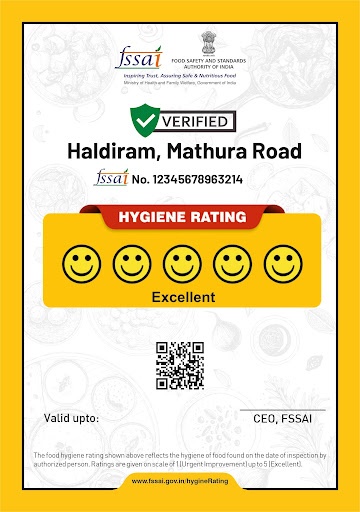
The Hygiene Rating Scheme is a technology-driven, user-friendly scheme where food establishments are given a rating on a scale of 1-5, where 5 indicates “excellent” compliance and 1 indicates “poor” compliance of food hygiene and safety standards. The rating are displayed in form of symbols i.e. smileys. This scheme encourages food businesses to ensure high standards of hygiene and sanitation and allows consumers to make informed food choices. This scheme is currently applicable to restaurants, cafes, bistros, diners and other eating-places, sweet shops, bakeries and meat shops. It also includes interfacing with e-commerce platforms such as food delivery services and apps to encourage their associated eating places to adopt the scheme.
A comprehensive checklist has been created based on the criteria a food business needs to meet hygiene and sanitation standards laid in Food Safety and Standards Act, 2006. The food business is then audited basis this checklist and awarded a rating by a third-party audit agency empanelled by FSSAI. A certificate is generated based on this rating and displayed for consumers at the premises. This helps consumers identify if the place is hygienic or not. A rating of 3 stars and above is considered a ‘Good Rating’.
This Hygiene Rating is helpful for both food businesses and consumers. Through this rating process, food businesses have the opportunity to understand the basic criteria for ensuring safe food and implement these practices through training and capacity building of their food handlers. Moreover, food businesses that are compliant can showcase their efforts to consumers by displaying this certificate prominently at the premises. This gives them a competitive edge over other businesses and wins the trust and loyalty of their consumers.
For consumers, this rating is a helpful tool to easily identify if the food being served is safe or not. This empowers consumers to make informed choices and exercise their right to choose a place to eat not only on the basis of taste and service but also health. It also plants the idea of food safety and hygiene in the minds of consumers, making those who are unaware also cognizant of the importance of food safety when they eat out. Overall, such a scheme benefits everyone as a whole because improved hygiene standards means fewer instances of food-borne illnesses among citizens overall, better health and productivity of people, reduced burden on the healthcare system and ultimately growth and development of the economy and the country as a whole.
So next time you visit your favourite restaurant, be sure to check its Hygiene Rating. If it doesn’t have one, you can encourage the restaurant to get one. You will then be able to enjoy your favourite food without worrying about an upset stomach. Other customers will also benefit from this initiative.
Like this:

The page you requested could not be found. Try refining your search, or use the navigation above to locate the post.

The page you requested could not be found. Try refining your search, or use the navigation above to locate the post.

The RBI has announced a few changes in the starting and keeping a bank locker. As the news guidelines are going to be affected from January 1, 2022, let us take a quick look of what it necessitates.
Subas Tiwari
Under the new guidelines, the liability of the bank towards locker in case of fire, theft, building collapse and fraud by bank employees will be limited to 100 times of its annual rent. The revised locker guidelines will come into effect from January 1, 2022. Banks will have to include a provision in the locker agreement under which the person renting the locker will not be able to keep any illegal or dangerous goods in it.
The Reserve Bank said that on the basis of various developments in the banking and technology sectors, nature of consumer complaint and information provided by banks and Indian Banks’ Association (IBA), it has decided to “deposit lockers/safe custody items provided by banks” facility’ is reviewed.
Let us know here about the new rules and how they are going to affect you.
According to the new RBI guidelines, banks will have to implement a board approved policy, in which their responsibility can be fixed for the goods kept in the locker due to negligence. According to the rules, the bank will not be responsible for any loss in case of natural calamity or ‘Act of God’ i.e. earthquake, flood, lightning and storm.
But this does not mean that the bank is free from its responsibilities. Banks will have to ensure proper arrangements to protect their premises from such calamities. Apart from this, the entire responsibility of the security of the premises where there are safe deposit lockers will be with the bank itself. According to the new rules of the Reserve Bank, in case of fire, theft, building collapse or fraud on the part of bank employees, the liability of banks will be limited to 100 times of their annual rent.
If the rent for the locker has not been paid by the customer for three consecutive years, then the bank can take action on it and can open any locker following the due process.
According to the RBI new rules, banks will have to include a provision in the locker agreement, under which the locker rental customer will not be able to keep any illegal or dangerous goods in the locker.
According to the new rules, it will be necessary for banks to send SMS and email of locker operations to the customers. Banks will have to provide receipt for all applications for locker allotment. If the locker is not available, the banks will have to give the number of the waiting list to the consumers. The branch wise locker allotment information and waiting list of banks will be linked to Core Banking System (CBS) or any other computerized system compliant with cyber security framework.
As per the new guidelines, the existing customers of the bank who have applied for locker facility and who are fully compliant with CDD (Customer Due Diligence) norms can be given the facility of Safe Deposit Locker/Safe Custody Article. According to the new rule, the facility of Safe Deposit Locker/Safe Custody Article can be given to the customers who do not have any other banking relation with the bank.
Banks will be able to shift the locker from one place to another only after informing the customer. Term deposit can be used as locker rent. The bank will have to take adequate steps to protect the strong room/vault. It will be necessary to keep the CCTV footage of entry and exit for at least 180 days.
In the earlier centuries, people went to the banks demanding a personal locker facility in view of a spate of robberies which were happening in their households. Their take that banks usually are safe havens with high-end security systems in place, security guards, alarms, etc-so banks were the safest places on earth to keep one’s valuables such as gold ornaments. But this high-end security systems in banks have spurred a burning question nowadays!
Everyone is reviewing their decision to continue to hold a locker in a bank in the light of recent incident of stealing of contents of bank lockers in Haryana by burglars. Readers might also remember the 2014 fire which engulfed one of India’s leading banks in Chennai (fortunately, the locker cabinets escaped the fire) which stoked media discussion about the safety of bank lockers under these circumstances.
So, we venture here to try and understand the way to go about hiring a bank locker and the responsibilities which come with being a locker hirer and the limited uses of this service which are offered by banks under public utility services
During earlier times, banks were letting out lockers as a favor to high-end customers who were even otherwise dealing with the bank in the matters of deposit/loans/remittances. However, during the latter part of 1970s, after nationalisation of private banks, banks were looking to increase their customer base while looking into ways of accruing non-fee- based income to boost profits. This hunger for additional business threw a slew of public utility services such as issuance of letter of credits, guarantees and of course hiring out bank lockers.
It is as easy as opening a bank account. Request in writing for a bank locker of the size you need; request for a free personal look-in to the locker cabinets to know the depth of the locker you wish to hire; sign an agreement for locker-hiring; open a bank savings account to deposit locker rent and locker deposit; obtain the key to your allotted locker and come some other day or same day to keep the contents in the hired locker. You would also have to sign the locker visit register to mark your presence.
of a bank which severely restricts the freedom to get the locker contents in case of an emergent situation; incidentally, bank holidays in an area often coincides with a religious public holiday, thereby denying access to bank lockers (to enable the locker-hirer to take out the ornaments for wearing on such important occasions)
Insurance companies dealing with non-life (general) insurance products do not cover bank lockers for the purposes of extending insurance cover under a household package policy. However, in case one wishes to have insurance cover on the jewellery items (such as ornaments in gold, silver, platinum; precious stones, diamonds, etc) and/or currency notes kept in bank locker(s), insurance cover under Jewellery Block Insurance Policy (as a part of the Household Package Policy) is being made available by most of the insurance companies in India.
However, this insurance cover is only for ornaments and other pieces of jewellery as well as cash. Also, one may have to show supporting receipts for having purchased them with their purchase value (other than what was acquired from marriage gifts).

Term insurance plans work as recourse to face different uncertainties. If you are planning to take term insurance plan, make sure to gather information about the cover amount, policy term, premium etc. The following article gives you an in -depth coverage of all things essential to start a term insurance plan.
Subas Tiwari
Term insurance brings additional benefits such as posthumous family financial protection, tax savings, critical illness, accidental death etc. If we talk about the types of term plans, then there are pure term plans, return on premium term plans and term plans with income benefits. But first, let us understand what is a term insurance policy.
One of the most misunderstood financial products in India is “Term Insurance”. In fact, “Insurance” in itself is not understood or appreciated enough. Most people consider insurance as just another form of savings or tax savings instrument, which can earn them safe, stable returns over the long run. Some products in the insurance space do provide this regular saving facility, but that is not the purest form of insurance.
The true and simplest meaning of insurance is – protection against risk. Now this risk may be to life or property or many other things. But in this article, let’s focus on life insurance, and specifically term insurance. It’s a policy where you pay premiums in return for a benefit to your family in case you die, and you get nothing if you survive the insurance period.
Tell this to people and most will ask, “Why should I pay annually for a product if I am not going to get anything back?” Very few understand that you pay premiums because there is a guarantee that if something happens to you, your family will be paid the pre-decided amount. Therefore, you have the peace of mind that even if you are not there; your loved ones will not have to bear a financial loss as well.
Just consider this – in the unfortunate event of one’s death, the immediate family will receive sufficient amount to maintain their standard of living. This payout can also fund their child’s education, help pay off dues and even provide capital in case the spouse wants to start a business to support the family. This is the reason term insurance is also known as a “pure risk” plan – simply because it mitigates the risk of you not being there to provide financial support to your family.
Term insurance is the oldest form of insurance and is the least expensive plan to cover the risk of death. Term plan is a no-return plan just like your medi-claim or car insurance cover. If claim is made within the insured period, the nominee will get the full sum assured as otherwise there is no maturity value or cash value for this plan. It provides coverage for a specific period or term say 10 to 30 years. Term insurance plan is a must for a person who has dependents or a family of which he is the sole bread-earner. If you have family members dependent on your income, you need term insurance.
One should not make the mistake of taking term insurance premium as an expense but treat this as a hedge for the protection and security of your loved ones. You need to compare the premiums before selecting the right company and also have to go through the exclusions in the plan. This will help you in selecting the right term plan. Looking at all the facts available, term insurance is the obvious choice for insurance for life.
Term insurance is the simplest or the purest form of life insurance. In this case, there is a provision that in the event of the demise of the insured person, the family of the deceased is paid a pre-determined amount as part of the coverage.
For example, a person bought a term insurance plan for a sum of Rs 30 lacs. The tenure or the term of the policy is 20 years. So, if the insured person passes away in the duration when the policy is valid, the family (the nominee or the legal heirs as the case may be) will be paid a sum of Rs 30 lacs.
Another important aspect of term life insurance is to ascertain the safety net which the family of the insured will require in the event of the demise of the insured. The calculation is done by keeping a view on the existing standard of living of the family and the funds that would be required in order to continue to live with the same standard of living. Also, to be considered are the various important events like marriages, higher education etc; and the debt that the deceased must have left behind to the legal heir(s).
After the calculation of the aforementioned future expenses, the person can come to a definite number or the coverage which he/she may require in order to provide for the family or dependents so they can continue their existing standard of living.
But one thing is very clear. The earlier the insured takes this policy to benefit his family after the unexpected death, the lesser is the cost of premium he/she has to pay to keep the policy alive.
One should look at the best term insurance plan in India depending on age, income and life insurance need. The online premiums are cheaper than off-line term plans and are quite easy to avail also. In the recent past, online term plans have gained immense popularity due to their easy access.
Some of the insurance companies are offering discounts on online purchase of term plan policies, because it saves the companies a lot of labour and man-hours trying to sift through hordes of paper/documents, which can be easily viewed online and preserve it for future use without much difficulty.
We have brought out the salient features and workings of term plan insurance online in this article (SEE BOX) for the information of our readers.
Choosing the cover amount is the most important thing to do before buying a term insurance policy. It depends on the individual, how much minimum cover he needs. Going by the thumb rule, salaried people should take a cover of 10 times of their annual income and at the same time keep increasing it with increasing income. You can also calculate the cover amount online. There are many online tools available in which you can calculate the cover amount as per your income and profession.
Selecting the term of the policy is the second most important task in the selection of a term plan. If you are taking the policy at a young age, then choose the longest-term policy. This will also give you an opportunity to buy the policy at a lower premium.
You can buy the term policy through an agent or online. You may also have to pay a lower premium if you do it directly through the company’s website or aggregator website. At the same time, if you take it from the agent, you will have to pay a higher premium.
Choosing the company
Choosing a good company is very important before buying a term insurance policy. Before taking a policy from any company, check its claim record ratio. Along with this, also know the financial position of that company and keep in mind the company’s service, method of payment, etc.
Even after a term plan, there is also a possibility that the policyholder may become a victim of disability due to an accident or he may lose his hearing. In such a case, a rider should also be taken for financial security. However, for this you have to pay an additional premium.
Some more important aspects of term insurance
The public, consisting of the common man, the office-goer, the professional are mostly aware of life insurance products in the insurance sector. But many don’t know or aware, is the topic of discussion in this article. May be, the professionals and the babus in the corridors of power, will have the benefit of knowing this product, which is term plan insurance.
Most of us know that there are 24 life insurance companies operating in India out of which Life Insurance Corporation of India corners almost 70 per cent of the total life insurance business. There is no best investment product anywhere; the answer is a relatively better product based on offering benefits with reasonable costs.
There are basically three types of insurance plans available in the market. They are:
(1) Traditional or conventional plans
Traditional plans are mostly saving products and give guarantee of sum assured and also give bonus every year depending on the profitability of the company. The investment options are with the insurer and they take a call where to invest on the plans available in the market.
(2) Unit linked insurance plans
ULIP plans are market-related and the risk of investment is borne by the policyholders. Policyholders have the right to choose the investment option available in the plan i.e. from 100 per cent in debt to 100 per cent in equity. ULIP products are more complex than traditional plans.
(3) Term insurance plans
First, think about why you want to buy a term insurance plan? Of course, like everyone else, you also believe that nothing will happen to you. We, too, would wish the same for you. But the harsh truth is that this life is highly uncertain. There is always an element of concern or risk which leads you to ask the “What if?” question. You must buy term insurance to answer this very question as the entire financial trauma arising out of that question will remain unanswered.
Have you ever realized the value of a term insurance plan? Don’t just take a term plan just because everyone is going for that or that you might be considered as a prudent wise man! But do a cross- check whether your family can be benefited easily if required so in future. So, feel the necessity and then proceed further to choose the best product.
This gives us an idea about the claim solving ability of the insurance company. If claims are intimated and the insurance company settles those, claim settlement ratio would be good. In simple words, claim settlement ratio is the number of claims settled by the insurance company out of every 100 claims it has received. Higher claim settlement ratio implies that majority of claims are getting settled. Higher the claim settlement ratio for the company, the better rated the company is in the eyes of the public.
One should go with the company who has a better claim settlement ratio and a good reputation. So that after the death of the insured, his family does not have to face much trouble to get the money. In simple words, with better claim settlement ratio, you can understand the ability of the company to pay the amount to insurer’s family. How many policies were settled successfully and if company denied paying the amount showing some reason, then you will ask in how many policies and claim amount was done? So, it’s better to stay with the company who generally or mostly paid out all insurance claims.
Generally, 99 per cent of insurance business are canvassed by agents only- mostly by our uncle, aunty and relatives, etc. Don’t believe any one while filling the form. Most of the time people just sign the policy document and then leaves the rest of the details to be filled in by the insurance agent. You are the best person to fill up your personal details. Any wrong information which you might think as a negligible factor can be pointed out later by the insurer to your family to find a reason for rejection of claim in favour of the nominee/legal heirs.
The latest buzz in term plan industry is the online term plans. You can simply provide the data online and subscribe to your term plan instantly with a lower premium. The insurance companies extend cheaper premiums on on-line term policies as it saves them a lot of paperwork and physical labour of verifying the documents. But the problem here is, most of the term plans do not involve a proper procedure to check individual’s health condition and other factors. Due to that, it is very risky to subscribe to a term plan although the premium is lowest. Your family might be in trouble in future. So, it’s better to pay the premiums and subscribe the same term plan through agent/sales officers by following every procedure clearly. Companies can have a better and clear record about your insurance to track in future.
One can go online and calculate the premium, then can start the process of buying the policy and submit details such as name, age, tenure, sum assured and medical information which can affect the premium. After all this, one gets a premium quote and then it is paid online.
After the premium is paid, there are few things which are yet to be completed. The proposer will get a mail from company or get a call from company that some representative of the insurance company will come to the residence and collect the important documents; the documents are also required for Know Your Customer (KYC). Based on the age and given information, the insurer can decide if one will have to appear for medical test or not. If there is anything wrong in medical examination which can affect the premium (and consequently can increase company’s risk of insuring), then they can increase the premium (loading) or choose not to offer the policy. One can then decide to continue with them by paying the additional premium or cancel the policy.
The page you requested could not be found. Try refining your search, or use the navigation above to locate the post.
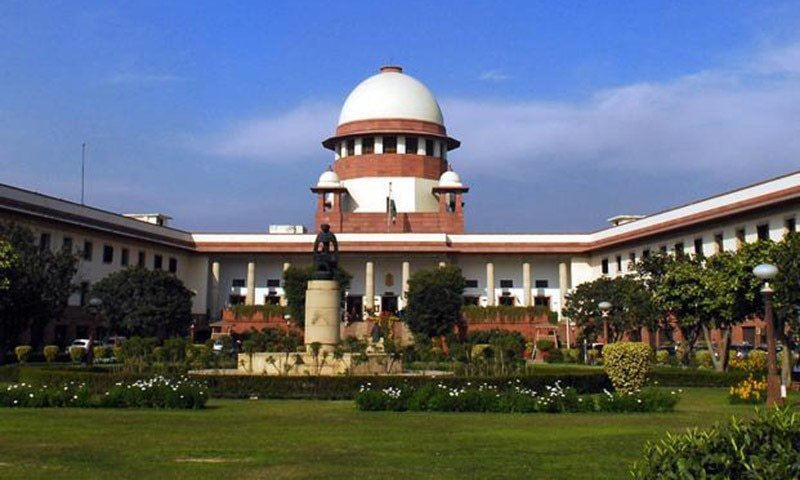
Inaction of the governments in appointing president and members/staff of districts and state consumer disputes redressal commission and inadequate infrastructure across India has led Supreme Court to direct centre to conduct legislative impact study of Consumer Protection Act 2019.
Ankur Saha
The legislative intent behind the Consumer Protection Act, 2019 is empowerment of the consumers. However, the ground reality is quite different as there is little endeavor to translate this legislative intent into an administrative infrastructure with requisite facilities, members and staff to facilitate the decision on the consumer complaints. “Statistics can be deceptive but sometimes statistics reveal the truth. The position prevalent in the State Consumer Forums and the District Consumer Forums is best reflected by the statistics of existing vacancies, insofar as the chairman and the members are concerned.”
The Bench was addressing the inaction of the governments in appointing president and members/staff of districts and the State Consumer Disputes Redressal Commission and inadequate infrastructure across India.
Observing the lackadaisical attitude of governments with regard to notifying rules under the Section 44 of the Consumer Protection Act, 2019, the Bench issued directions to all the states and union territories qua the issue of appointment of chairman and members of the state and district commissions and notify the rules within two weeks. The Bench made it clear that where the states still dilly dally on the issue of notifying the rules, the model rules framed by the Government of India will automatically kick off and apply to the concerned states and union territories i.e. Consumer Protection and (salary, allowances and conditions of service of president and members of the state commission and district commission) Model Rules, 2020.
Regarding the large number of existing vacancies, the Bench directed that all the existing and potential vacancies should be advertised, if not already advertised, within a period of two weeks. Noticing that some of the States and UTs had not constituted the selection committees in terms of Rule 6(1) of the Consumer Protection (Qualification for appointment, method of recruitment, procedure of appointment, term of office, resignation and removal of the President and members of the State Commission and District Commission) Rules, 2020 (“2020 Rules”), a direction was issued to the states/UTs concerned to constitute the selection committees within four weeks.
Considering the excuse given by some states that the of selection was being held up because the number of posts had not been prescribed/sanctioned in consultation with the Central Government as mandated under Section 42(3)(b) of the said Act, the Bench stated that the mandate is of each State Commission to consist of a President and not less than four members i.e. insofar as the president and four members are concerned; it is only if the number of members have to be more than four, that such number of members may be prescribed in consultation with the Central Government. Therefore, the Bench stated that if the states feels that the numbers of members have to be more than four, that process of discussion cannot derail the process of appointment of president and four members in any case.
Accordingly, the Bench directed that all the vacancies whether for the post of president or members should be finally filled up by the 30 states and union territories within a maximum period of eight weeks.
Noticing that usually, most of the affidavits had been filed at the last minute resulting in the inability of the Amicus Curiae in presenting the appropriate picture before the Court, the Bench expressed that such last-minute rush of affidavits which derails the effective hearing before the Court could not be countenanced. The Bench came down heavily on the administration stating that the Court was spending time on aspects which administration should be doing. The Bench directed, “The States should give their inputs in time so that a picture up to date is presented before us by the Amicus Curiae and last-minute filing of the affidavits by the states is not acceptable.” Accordingly, the states and UTs were directed that updated position should be furnished to the Amicus within two weeks.
So far as the aspect of infrastructure and man power was concerned, the Bench directed that wherever the Amicus Curiae requires the response in a particular format, the states are bound to respond in that format. Regarding the vacancies in NCDRC, the Bench was of the view that there was no reason why the Central Government should take more time to fill up the vacancies and thus, the schedule laid down for the State Governments to fill the vacancies was held to be applicable of Central Government as well. The information was also sought with regard to infrastructure as to whether the premises were rented or owned by the Government. If rented, the location of the rented premises.
On the issue of a Legislative Impact Study and whether the same was undertaken before the new Act of 2019 came into place, the Bench observed that through the new Act expanded the jurisdiction of the consumer forums which would result in the litigation shifting to the Consumer Tribunals apart from the aspect of the variation in the pecuniary jurisdiction by increasing the jurisdiction of the District and State forums, no legislative impact study had been done to ascertain how many more cases would arise in these foras to make necessary arrangements for infrastructure and man power.
The Central Government was stated to be assisting the States by a Scheme titled as, “Computerization and Computer Networking of Consumer Commissions” (CONFONET) which provided the ICT infrastructure to Consumer Commissions and replaced old infrastructure, provided HR support by deployment of technical man power to enable/monitor computer based system in each and every Consumer Commission in India; provided an online module of case monitoring system, facilitated reporting and monitoring at all levels, strengthened transparency and accountability in judicial system etc. The scheme was stated to be fully funded by the Central Government and was being implemented through the NIC. The Court asked the states whether they had utilized the opportunity and the funding provided by the Central Government and in what manner.
The states were directed to furnish the information to the National Commission within two weeks about position of vacancies so the same could be uploaded on the website of the National Commission failing to which they will be treated as in breach of the Court’s directions. In order to ensure that all the aforesaid directions are complied with, the Bench directed that the concerned Chief Secretaries of the States in case of non-compliance within the time frame stipulated will attend the virtual Court proceedings and so would be the position for Union of India where the concerned secretary would be the Secretary, Consumer Affairs.
Related
The page you requested could not be found. Try refining your search, or use the navigation above to locate the post.