No Results Found
The page you requested could not be found. Try refining your search, or use the navigation above to locate the post.


Shri Arun Singhal, CEO, FSSAI
Launched in March 2021, the EatSmart Cities Challenge aims to motivate ‘Smart Cities’ to develop and execute a plan that supports a healthy, safe and sustainable food environment through adoption of various Eat Right India initiatives. The cities were required to implement an action under each of five action areas – Licensing and Registration of Food Businesses and Surveillance Drives; Benchmarking and Certification; Changing settings in schools and campuses; Creating a Sustainable Food Environment; Behaviour Change Campaigns, over a five-month implementation phase. A total of 108 cities had registered in the challenge out of which 20 cities were shortlisted for evaluation by an external jury panel comprising of national and international experts. Upon evaluation, 11 cities were selected as winners for the next phase of scale up.
In the pilot stage of the Challenge, significant improvements were made in the overall food ecosystem across the cities. Some of the key highlights include:
According to the CEO, FSSAI, Shri Arun Singhal, “The EatSmart Cities Challenge will have a positive impact on the lives of urban population by motivating them to eat right. This Challenge will support a large-scale effort to transform our Country’s food ecosystem to one that is safer, healthier and climate friendly. The world is seeking inspiration and innovation from the 11 chosen cities which are the front-runners of this challenge. I appreciate efforts displayed by all the participating cities and hopeful that this will be a game changer in creating massive social and behavioural change towards right eating practices in the years to come.”
In the scale up stage, cities will adopt an aggressive approach through food systems approach in implementation of various Eat Right India programs at a larger scale. They will also work towards making their interventions sustainable and to scale it up across wider network. To support the cities, FSSAI along with Food Foundation, UK will organize a series of activities and deliberation sessions to provide technical assistance and showcase their efforts at international forums. This will be a 3-month incubator programme where the winning cities will learn and develop strategy and policies to refine their food vision and integrate them with the overall smart cities structure. Food Foundation will also work with the cities and help them prepare to showcase their efforts at various international forums including the Food Cities 2022.
The page you requested could not be found. Try refining your search, or use the navigation above to locate the post.

Summers are here, and accordingly we must make some dietary changes in this season to adapt to the heat. Summer calls for a diet which helps us to cool down our body temperatures. As temperature rise, we tend to sweat more in summers therefore keeping ourselves hydrated is very important. Also, it is important to watch the intake of the foods that ought to produce heat. Read this article to know more about keeping yourself healthy in this summer season.
Richa Pande
Take light and frequent meals instead of heavy meals rich in fats and carbohydrates as they tend to increase temperature of your body.
Try to include more fresh fruits and vegetables in your diet. Eat tomatoes, cucumber, watermelon, berries, and avocado. You can have them as salads or juices.
Keep drinking fluids. Drink at least 2-3 litres of water in a day. If you don’t like drinking plain water, then try infused water. It adds a flavour to plain water. Some common infused water choices can be-
Take plenty of juices, soups, and shakes. Hydration is not just about taking fluids but also maintaining the electrolyte balance in the body. It’s advisable to have electral to maintain the electrolytes and fluid balance. If you are indulging in a sport or any physical activity like trekking, be mindful about the timings i.e., choose early morning or evenings and keep yourself properly hydrated.
| Signs of Dehydration |
|
• Dry, itchy skin • Experiencing headache, dizziness, fatigue • Muscle cramps, not urinating frequently |
We are likely to eat more ice creams in summer as it makes us feel cool, but always choose ice-creams that are natural. Ensure that they contain no preservatives and pick the one with less amounts of sugar. Also, mind the portion sizes.
These drinks tend to dehydrate the tissues.
Food-borne illness episodes tend to increase during summers. Street vendors might not have proper sources to maintain the temperature of food, which may increase the risk of food borne illnesses.
During summers, the risk of food getting spoiled increases as compared to other seasons. Store leftovers in refrigerator if there are any. Try to consume more of freshly cooked food. Cook in small quantity and avoid eating stale or leftover food as it increases the chances of food poisoning. Raw foods and cooked foods must be separated when stored in the refrigerator. Store raw meat and fish in the freezer, keep raw fruits and vegetables in the basket below, and raw milk usually goes into the chiller.
Taking probiotics such as curd can help you improve your immune system, protect against infection, and improve your digestion and absorption of food and nutrients, including water.
Onion, garlic, black pepper, ginger, some root vegetables, and spicy foods are best avoided in the summer.
Avoid getting out during daytime. Prefer going out during morning or evening time. Ultraviolet rays are harmful for your skin. So, take necessary precautions to avoid sunburns. Always wear sunscreen. Heat strokes are very common in summers. Wear light colour clothes and light fabrics such as cotton. Avoid dark colour clothes (as they absorbs heat) or heavy fabrics such as silk as they tend to increase the body temperatures. Cover your body with clothes and try not to expose it much to sun as it’s not good for your skin. Always cover your eyes with sunglasses as ultra-violet rays are not good for your eyes as well.
The page you requested could not be found. Try refining your search, or use the navigation above to locate the post.
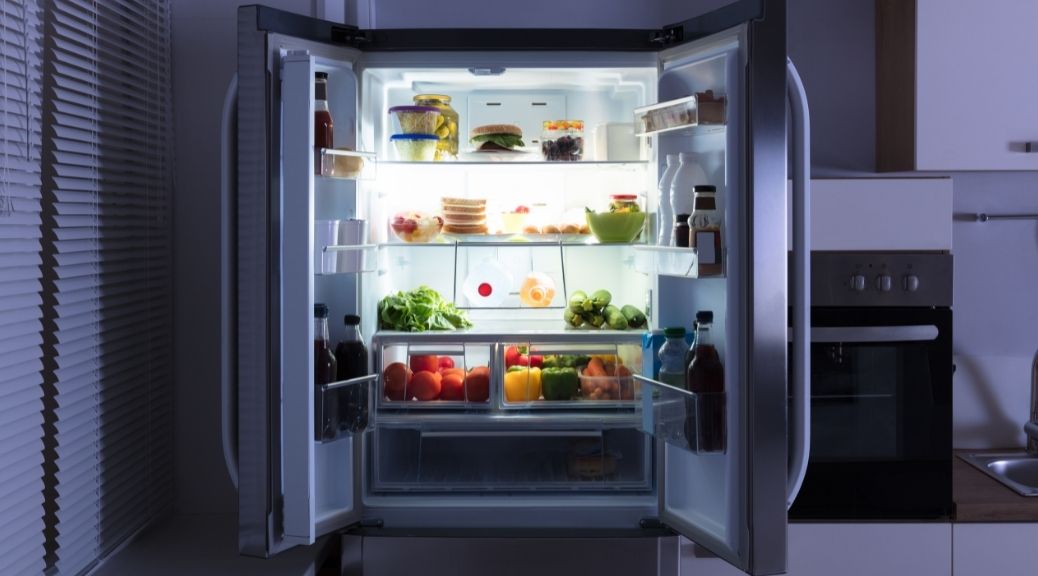
| Family Size | Capacity |
| Bachelors or couple | Less than 200 litres |
| Small family | 200 to 300 litres |
| Family of four | 250 to 350 litres |
| Larger family | 300 litres or more |
Keeping Food Cold and Safe?
Keeping food cold and safe for long periods is the whole point of a fridge, but not all are equal in this regard. Above 40 degrees F of food compartment is considered an unsafe zone, which means that food is susceptible to spoiling or growing harmful bacteria – therefore set the thermostat accordingly.| Sl No. | Brand | Model |
Total Storage Volume (Litres) |
Freezer + Fresh Food Volume (Litres) |
Electricity Consumption (unit / year) | Convertible Type | BEE Star Rating | Price, Rs. | Warrantee, Years |
| 1 | Haier | HEF-25TDS | 258 | 68+190 | 182 kwh | Yes | 3 | 24690 | 1+10 |
| 2 | Samsung | RT28A3453S8/HL | 253 | 69+184 | No | 3 | 24450 | 1+10 | |
| 3 | LG | GL-I292RPZX | 260 | 75+185 | 198 | No | 3 | ||
| 4 | Whirlpool | IF INV CNV 278 3S | 265 | 75+184 | 190 | Yes | 3 | 27240 | 1+10 |
| 5 | Samsung | RT30T3443S9/HL | 275 | 69+206 | 199 | 3 | 27490 | 1+10 | |
| 6 | Whirlpool | INTELLIFRESH INV CNV 305 3S | 292 | 74+210 | 194 | Yes | 3 | 32490 | 1+10 |
| 7 | Samsung | RT30T3743S9/HL | 275 | 255 | 199 | Yes | 3 | 28890 | 1+10 |
| 8 | Samsung | RT28A3032GS/HL | 253 | 53+181 | 243 | No | 2 | 23990 | 1+10 |
| 9 |
Whirlpool
|
FP 313D Protton Roy | 300 | 73+223 | 500 | No | nil | 32490 | 1+10 |
| 10 | LG | GL-I292RPZL | 260 | 75+177 | 194 | No | 3 | 25290 | 1+10 |
| 11 | Haier | HEF-25TDS | 258 | 68+190 | 182 | yes | 3 | 24690 | 1+10 |
| 12 | Godrej | RF EON 236B 25 HI SC DR | 236 | 64+170 | 243 | No | 2 | 19985 | 1+10 |
| 13 | LG | I292RPZX | 260 | 75+185 | 194 | No | 3 | 25290 | 1+10 |
| 14 | Haier | DAZZLE STEEL, HEB-25TDS | 256 | 231 | 180 | Yes | 3 | 26190 | 1+10 |
| 15 | Samsung | RT28T3743S8/HL | 253 | 69+184 | 193 | yes | 3 | 26290 | 1+10 |
| 16 | LG | GL-D241ASCY | 235 | 35+200 | 143 | 4 | 21990 | ||
| 17 | Godrej | RF EON 244C 35 RCIF ST RH | 244 | 62+182 | 197 | yes | 3 | 22290 | 1+10 |
| 18 | Whirlpool | NEOFRESH GD PRM 305 2S | 292 | 75+210 | 259 | No | 2 | 28990 | 1+10 |
| 19 | Godrej | RF EON 255B 25 HI RY DR | 255 | 64+190 | 243 | No | 2 | 21990 | 1+10 |
| 20 | Whirlpool | 260 IMPRO PLUS ROY 4S INV ALPHA STEEL | 245 | 47+198 | 140 | No | 4 | 22990 | 1+10 |
| 21 | Toshiba |
GR-A28INU (UK)
|
252 | 78+178 | 247 | No | 2 | 25590 | 1+10 |
| 22 | Bosch | CTC27S03EI | 263 | 62+201 | yes | 3 | 27990 | 1+10 |

Nidhi Khare, additional secretary, Department of Consumer Affairs, says, “The NCH data is becoming a major source of information for the Central Consumer Protection Authority (CCPA) to act upon. We are building intelligence into the complaints that we receive on the national consumer helpline where people are raising all kinds of issues. We then see if there is any pattern where people from different parts of the country are making similar complaints about one product or one policy, and if there is ground for class action, we initiate investigations.” Khare is also the chief commissioner of CCPA.
The CCPA was established under the provisions of the Consumer Protection Act, 2019. It came into force from July 20, 2020. The main aim of the CCPA is to uphold, protect and enforce the rights of consumers as a class. It also has the authority to conduct investigations into the violation of consumer rights. Other duties include institution of complaints, prosecution, recall of unsafe goods and services, order discontinuation of unfair trade practices. It also takes action against misleading advertisements and impose penalties on manufacturers, endorsers and publishers of misleading advertisements.
Recently in March, CCPA had asked GlaxoSmithKline (GSK) Consumer Healthcare Ltd to withdraw the advertisements of Sensodyne products that claimed to be “recommended by dentists worldwide” and “world’s No.1 sensitivity toothpaste”. In yet another example of CCPA’s vigilance, it has imposed a penalty of Rs 10 lakh on eyewear manufacturer Sure Vision India for a misleading advertisement and directed it to discontinue the commercial. Sure Vision claimed its products improved eyesight naturally and eliminated eye strain. The CCPA initiated action after it received a complaint against the firm, and directed the Director General (Investigation) to investigate the claims made by the company in the advertisement. So, we know that consumers complaints are taken very seriously and they are working tirelessly to lessen those too.
I hope you have loved reading about this topic, which concerns all of us as consumers. In the meantime, keep reading the articles we have brought you this month. We have FSSAI CEO’S article on EatSmart Cities Challenge, a discussion on mutual funds investing, selecting the best diabetic care food and many more. Do share your thoughts at info@consumer-voice.org.
Until then, happy reading!
Pallabi Boruah
Editor
The page you requested could not be found. Try refining your search, or use the navigation above to locate the post.
This judgment is not the result of incorporating the word telecom in the Consumer Protection Act 2019. It is in fact a revisit by the apex court three judges bench on the merit of the case as it stands under the earlier Consumer Protection Act 1986. The apex court reversed the order, finding it erroneous in view of the applicability of the then prevailing law.
Dr Prem Lata, Legal Head VOICE
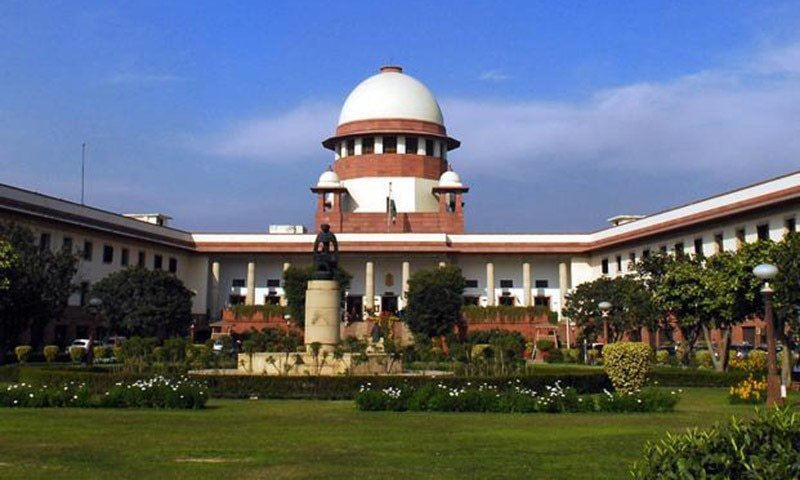
It was a historic day when the Hon’ble Apex Court after long thirteen years declared on 16th Feb 2022 in Civil Appeal No 923, Vodafone Idea Cellular Ltd. Versus Ajay Kumar Agarwal that Consumer Protection Act is a specific and not a general act. The bench comprising Justices DY Chandrachud, Surya Kant and Vikram Nath further observed that the existence of an arbitral clause under the Indian Telegraph Act, 1885, will not oust the jurisdiction of the consumer forum. The above order was in appeal arising out of judgment dated 26 May 2016 of the National Consumer Disputes Redressal Commission.
A dispute between a consumer and Vodafone Idea Cellular Ltd started on 25 May 2014, at Ahmedabad District consumer forum with allegation of deficiency in services. The telecom company raised an objection to the maintainability of the complaint by placing reliance on a Supreme Court judgment in General Manager, Telecom v. M Krishnan and Another. This objection was dismissed at District Forum, State Commission and also National Commission, holding that a private service provider is not a ‘telegraph authority’ for the purposes of Section 7B of the Indian Telegraph Act 1885. The matter came to Supreme Court referring to Section 7B, of the act which provides disputes concerning a telegraph line, appliance or apparatus, between the telegraph authority and the person, for whose benefit the line has to be determined by arbitration.
In 1992, a case came before the National Commission for adjudication to decide on the issue as to whether existence of a remedy by way of arbitration in the Indian Telegraph Act preclude an aggrieved consumer to seek remedy under the Consumer Protection Act. While deciding this matter between the Telecom Dist. Manager, Patna and Bihar State Warehousing Corporation, the national commission held that consumer can seek remedy under the Consumer Protection Act.
Yet again, on another occasion in the case of District Manager, Telephones, Patna V Dr Tarun Barthvar, the question before the commission was as to whether the consumer forum had the jurisdiction to decide a dispute involving meter reading or excess billing which are covered under section 7B of the Indian Telegraph Act 1885. The commission gave a positive response to it. Further, in a case of Mahanagar Telephone Nigam Ltd V Ghevar Chand Seasmal Sonigara, 1992, the question was more specific as to whether it was not mandatory for the complainant to invoke the arbitration clause under the Telegraph Act. The National Commission held that it was not.
A similar issue was raised in case of Union of India V Dr B S Sidhu 1992, in a case of Govt of India, Secretary, department of Telecom V Satya Narayan Lal, and also in case of Union of India through Rajkot Telephone V Dhanji Bai, National Commission. In all the above cases, it was held that consumer court has the jurisdiction to deal all such cases inspite of arbitration clause in the telegraph act. In yet another case of Divisional Engg. Telecom Moradabad V Virender Kumar, the National Commission confirmed the jurisdiction of consumer forum.
Supreme Court also held in a number of cases while deciding the various issues under Consumer Protection Act, that since the inception of the act that section three of the consumer protection act gives additional remedy to the consumer apart from the other provisions available to him. Till the latest judgement pronounced by the Honorable Supreme Court on 1.9.2009, the Consumer forum had been dealing with all telecom matters filed by consumers.
The Supreme Court, in civil appeal no 7687 of 2004 in the case of GM Telecom V M Krishanan, barred the jurisdiction of consumer forum and held that such disputes will be decided by arbitrator under section 7B of the Indian Telegraph Act. The arbitrator shall be appointed by the Central Govt either specifically for determination of referred dispute or generally for the determination of disputes under this section. The apex court has further remarked that it is a well settled law that overrides the general law. In that context, a two judge bench of this Court said, “In our opinion when there is a special remedy provided in Section 7B of the Telegraph Act regarding disputes in respect of telephone bills, then the remedy under the Consumer Protection Act is by implication barred”.
After this judgment, questions arose as to whether this bar applied to private players also. These private companies came into the field of telecommunication through the notification allotting license to these companies. Ministry of Communication, Department of telecommunications, licensing group, and basic service cell issued notification on 24th may 1999. Through this notification, exercising the provisions of sec 19B of part 111 of the Indian telegraph act 1885, the Central Govt conferred the power upon the duly authorized licensee /private basic telephone services operators to provide services to any persons, public corporations, and autonomous bodies, State Govt or Central Govt. It is said at clause 1(b) that these licensee(s) are to always comply with the provisions of the act or any other law for the time being in force meaning thereby that these private licensee are to adhere with section 7B of the Indian Telegraph Act. The question was would the central govt. make arrangement of arbitrators for all private players also when consumers are left with no remedy but the arbitration provision which is final for them. Not only that, it is quite possible that no arbitrator was appointed on the request of aggrieved consumers. Even the provisions under the Arbitration and Conciliation Act 1996 for appointment of arbitrator through civil court is a full fledge case in itself, not easily reachable to consumers.
Subsequently, a letter from the Department of Telecommunication dated 24 January 2014 was issued and stated that the judgment in M Krishnan on Section 7B of the Act of 1885 would not be applicable to a private service provider since it is not a ‘Telegraph Authority”.
Further, with the SC remark that special act prevails over general law, huge number of cases related to banks, railways, societies and other specific acts started pouring into consumer forums which issues were already settled by Supreme Court through various orders that consumer protection act is an additional remedy to consumers under section 3 of act 1986.
Ministry of Consumer Affairs then issued notification and circulated among all Consumer forums and commissions to accept telecom cases for adjudicating but consumer courts could not accept cases because article 141 bound them to follow apex court precedence .Due to this reason, parliament had to incorporate telecom word in Consumer Protection Act 2019.
Supreme Court finally held on 16 Feb 2022 in Civil Appeal No 923 of 2017, Vodafone Idea Cellular Ltd. Versus Ajay Kumar Agarwal that