India Takes a Stride towards Tobacco Awareness and Infrastructure Development

India Takes a Stride towards Tobacco Awareness and Infrastructure Development

India Takes a Stride towards Tobacco Awareness and Infrastructure Development

India is making significant strides on the global stage, tackling critical issues and showcasing its potential for growth and progress. Two recent developments have captured attention: the country’s efforts to raise awareness about the dangers of tobacco consumption and its ambitious infrastructure development plans. These endeavours not only reflect India’s commitment to public health and economic advancement but also present opportunities for international collaboration and investment.

Tobacco consumption remains a grave concern worldwide, causing millions of preventable deaths and disabilities each year. India, as the second-largest consumer and producer of tobacco, has taken a significant step towards combating this health crisis. The Union Health Ministry has mandated anti-tobacco warning messages on over-the-top (OTT) platforms, ensuring that online content publishers comply with the new rules. This move aligns with India’s commitment to spreading awareness about the deadly effects of tobacco and marks an important milestone in the country’s fight against tobacco addiction.

In addition to its efforts to promote public health, India is also making significant investments in infrastructure development. Prime Minister Narendra Modi recently announced a record-breaking USD 125 billion investment in various infrastructure projects. PM Modi emphasized that these projects not only have the potential to strengthen India’s growth story but also provide unlimited opportunities for the American corporate community. With India’s emergence as a global leader, the Prime Minister urged American businesses to seize the advantage and become fast movers in this dynamic landscape.

The India-US partnership, according to PM Modi, goes beyond convenience. It is rooted in shared convictions, commitments, and compassion. The groundwork for collaboration between the two nations has been laid by their respective governments, and now the responsibility lies with the corporate sector to embrace the immense possibilities for mutual prosperity. PM Modi’s call to business leaders and philanthropists from both countries highlights the immense potential for cooperation, economic growth, and social impact that this partnership holds.

India’s ongoing initiatives in tobacco awareness and infrastructure development showcase the country’s determination to address critical issues and create a path towards progress. These efforts not only benefit the nation’s citizens but also present opportunities for global stakeholders to contribute to India’s growth story. The collaborative approach between India and the United States sets a positive precedent for international cooperation and paves the way for inclusive development.

As India emerges as a global superpower, these recent developments reflect the nation’s commitment to the welfare of its people and its determination to create a prosperous and sustainable future. With the combined efforts of governments, businesses, and individuals, India is poised to continue its upward trajectory, offering opportunities for global engagement and transformative change.

I hope you have loved reading the editorial and will continue to support us in bringing the best, interesting and informative articles for your perusal. In the meantime, keep reading the articles we have brought you this month. We discuss Health Insurance Policy for Senior Citizens, a review on Water Purifier for your home and many more. Do share your thoughts at info@consumer-voice.org.

Until then, happy reading!

Pallabi Boruah

Editor

Related
Are freebies good for economic health and can they empower the poor?

Are freebies good for economic health and can they empower the poor?

Are freebies good for economic health and can they empower the poor?

Does India need freebies from the government to survive? What is now popularly called the ‘freebie politics’ has its own economic implications. As the proverb goes there are no free lunches, freebies in the form of free units of power can be detrimental for the economy. Though welfare schemes are common and need for a country like India, there is a thin line between welfare schemes and free distribution.

This is what Dr Bhamy V.Shenoy discusses in its 4-part series on economic freebies. Part 1 of the series follows below:

Are economic freebies a boon or a bane for the poor?

One of the oft repeated arguments against freebie is that it can result in unmanageable deficit and create economic havoc. Still political parties can win elections by offering all kinds of freebies. However our constitution makers anticipated such a situation. They have provided guard rails to stop such behavior on the part of political parties of ever increasing freebies.

Politicians especially from the AAP claim that India’s constitution allows them to offer welfare measures. At the same time the same constitution through Articles 292 and 293 mandate borrowings to be within limits. The Constituent Assembly of India discussed these articles on 10th August 1949 led by H V Kamath and Ananthasayanam Ayyangar. To quote them,” So far as borrowing is concerned they may be short or long-term imposing heavy obligations upon not only the present generation but future generation also”. How true.

Let us take a look at the research findings of international institutions (International Monetary Fund, International Energy Agency and the World Bank) and academicians who have studied the controversial topic of subsidy in different parts of the world.

Their findings show that a subsidy like Gruha Jyothi (subsidizing power consumption) is harmful and in the long run affect the very poor people it is expected to help. However all of them do support giving conditional or unconditional benefits in the form of cash to needed families. In fact even the concept of minimum guaranteed income (Graha Lakshmi is one such admirable guarantee and so also earlier Bhagya Lakshmi) is justified if financial conditions of the countries allow such schemes and keep deficit within limits.

In 2010 Iran successfully replaced offering subsidized fuels by giving cash transfer. Even though petrol prices increased by 400% and diesel prices by 900%, subsidy reform was widely accepted. Like Iran, Jordon implemented similar subsidy reform in 2015 with equal success. In fact way back in 1997, five million poorest families were helped in Mexico with conditional cash transfer (if they send their children to school) and was a great success. Similar success stories of cash transfers instead of subsidyhave succeeded in Yemen, Mauritania, and Morocco.

Economic historians will have a challenging task to figure out why India took many years to learn from all these successful efforts.

Bhamy Shenoy

About the Author

Dr. Bhamy V. Shenoy, an IITM graduate has worked in International energy  sector and has more than 50 years of experience. He is currently the Trustee and Board Member of Consumer Voice of Delhi, Trustee of Sehgal Foundation of Gurugram, Governing Council member of Nitte Engineering College, Advisor to Pratham Mysuru and Founding Working President of Mysuru Grahakara Parishat. He has served as board member of Georgian National Oil Company, advisor to ONGC, governing council member of Manipal Institute of Technology, advisor to Center for energy economics at University of Texas, Austin, etc. Dr. Shenoy has fought since early 90s till recent years to expose mother of all corruption in PDS kerosene distribution and residential LPG generating more than Rs. 50,000 crores of black money per year before the introduction of DBT. He has also successfully fought to expose rampant corruption in oil sector in Georgia.

You can reach out to the author through bhamysuman@gmail.com

Related

Artificial sweeteners aren’t sweet for your health

Artificial sweeteners aren’t sweet for your health

Artificial sweeteners aren’t sweet for your health

Let’s start off with something related to our health, shall we? For those of you who choose diet coke or zero-calorie soda as a means to control your weight, there is some concerning information. The World Health Organization (WHO) recently released new guidelines that highlight the potential drawbacks of sweeteners such as aspartame and stevia. Contrary to their presumed benefits for weight loss, these sweeteners can actually have detrimental effects on health. They have been found to increase the risk of developing type 2 diabetes and cardiovascular diseases. That’s really alarming!

In light of the aforementioned guidelines, the Food Safety and Standards Authority of India (FSSAI) has stated that its scientific panel is currently conducting a comprehensive examination of the matter. There has been a notable increase in the sales of non-sugar sweeteners and products utilizing such sweeteners in India. Renowned brands like Coca-Cola, PepsiCo, Kellogg’s, and Dabur, offering products like Diet Coke, Special K, Pepsi Black, have gained significant popularity among individuals pursuing a healthy lifestyle and aiming to reduce their sugar intake. So, there’s something you need to think about. Maybe it’s time to make some natural changes into your food instead of relying on preservatives, don’t you agree?

The Central Consumer Protection Authority (CCPA) has taken action against five e-commerce platforms for the sale of seat belt alarm stopper clips. The consumer body has directed these online retailers to remove the listings of such clips from their websites. The CCPA discovered that these clips were being openly sold on various e-commerce platforms. Following an investigation, the authority issued orders to Amazon, Flipkart, Snapdeal, Shopclues, and Meesho, instructing them to remove the listings of seat belt alarm stopper clips.

That’s a very good step indeed. However, as consumers, we need to be aware and on the lookout for such violations too.

Germany has entered a state of recession as confirmed by the country’s statistical office, as its economy contracted for the second consecutive quarter in the first three months of 2023. During this period, the gross domestic product (GDP) of Europe’s largest economy declined by 0.3 percent. This comes after a decrease of 0.5 percent in Germany during the final quarter of 2022. In comparison, India continues to maintain its position as one of the world’s fastest-growing economies. The overall growth remains strong, with an estimated 6.9 percent growth for the entire year, and the real GDP growing by 7.7 percent year-on-year during the initial three quarters of the fiscal year 2022/23.  Moreover, India’s economy is expected to grow by 6.7 per cent in the calendar year 2024.  

I hope you have loved reading the one subject editorial and will continue to support us in bringing the best, interesting and informative articles for your perusal. In the meantime, keep reading the articles we have brought you this month. We discuss Personal Accident Insurance, a review on Small Wind Turbine for Home and many more. Do share your thoughts at info@consumer-voice.org.

Until then, happy reading!

Pallabi Boruah

Editor

Related

Why consumption is good

Why consumption is good

There is an amazing capacity of consumption. I feel, we consumers are the happiest souls when we consume something of our choice. Be it a slice of...

read more
Stories of hope in pandemic

Stories of hope in pandemic

The deadliest is again on us. It is dangerous than ever before, took lives of thousands already and showing no sign of settling soon. Where there...

read more
A wrong medical certificate by a clinic causing loss of job opportunity in Saudi Arabia; Deficiency in services held  

A wrong medical certificate by a clinic causing loss of job opportunity in Saudi Arabia; Deficiency in services held  

A wrong medical certificate by a clinic causing loss of job opportunity in Saudi Arabia; Deficiency in services held  

The Kerala State Consumer Dispute Redressal Commission is currently addressing a significant case that has garnered attention due to the far-reaching implications of the central law known as the Clinical Establishments (Registration and Regulation) Act, 2010. In this case, Manoj Chacko’s employment prospects in Saudi Arabia were negatively impacted when Gulshan Medicare, a clinic operating under the regulations of the aforementioned law, issued an incorrect “X-RAY UNFIT” certificate to him. The Kerala State Consumer Dispute Redressal Commission upheld the judgment of the District Commission, which found Gulshan Medicare to be deficient in services and involved in unfair business practices.

  Dr Prem Lata, Legal Head VOICE

The Clinical Establishments (Registration and Regulation) Act, 2010

“Clinical establishment” means— (i) a hospital, maternity home, nursing home, dispensary, clinic, sanatorium or an institution by whatever name called that offers services, facilities requiring diagnosis, treatment or care for illness, injury, deformity, abnormality or pregnancy in any recognised system of medicine established and administered or maintained by any person or body of persons, whether incorporated or not; or

(ii) a place established as an independent entity or part of an establishment referred to in sub-clause

(iii), in connection with the diagnosis or treatment of diseases where pathological, bacteriological, genetic, radiological, chemical, biological investigations or other diagnostic or investigative services with the aid of laboratory or other medical equipment, are usually carried on, established and administered or maintained by any person or body of persons, whether incorporated or not.

Gulshan Medicare V/S Manoj Chacko

First Appeal No a/116/2017 decided on 1.12.2022

Facts leading to dispute

On August 21, 2013, the complainant, who worked in Saudi Arabia, returned on a 15-day leave. A minor delay in his return led to the issuance of a second visa, and he was now required to get a medical certificate following a check-up. In accordance with Gulf Cooperation Council regulations, he got in touch with Gulshan Medicare, a medical facility permitted to do the required medical examinations for people applying for jobs in GCC nations.

A check-up was conducted on November 21, 2013, for a fee of Rs. 4200, and an x-ray revealed right upper zone fibrosis, which prevents entry into Gulf countries. A licenced radiologist who was stationed in Bombay and was unavailable to sign the report nevertheless issued the chest x-ray report. The complainant sought a second opinion from Dr. P. Sukumaran, a pulmonologist at Bharat Hospital Kottayam, after determining that the report was inappropriate. He attested that there is no clinical or radiological indication of an active respiratory ailment in the complainant. The complainant asked to examine the report, and his employer also asked to revisit the situation, but both requests were turned down. Complainant filed consumer complaint before District Commission Ernakulum alleging clinic issued unfit certificate with ulterior motive to help getting visa to someone else.

Disputant issues

  1. Certificate does not contain signature and seal of doctor. Remarks on certificate shows “x-ray unfit”.
  2. Job of complainant was written as plumber whereas he was a male nurse.
  3. Certificate was not issued as per guidelines prescribed in act 2010 minimum standard of facilities and services to be provided by medical imaging services (Diagnostic Centre).
  4. Qualified doctor /radiologist was not available at the centre when test was conducted, they were stationed elsewhere and report was issued but not signed.
  5. A crucial document like medical report while giving negative or unfit certificate needs to be carefully checked. In the present case, even other opinion or employers request to review was turned down by the clinic.

On November 13, 2016, the District Consumer Commission issued an order declaring the clinic to be lacking in services and imposed a compensation of Rs one lac on the complainant. Subsequently, the matter was challenged at the State Commission level. The State Commission diligently reviewed all the documents submitted by both parties to reach a logical conclusion.

Dr. P Sukumaran, a pulmonologist, determined that the complainant showed no clinical or radiological evidence of any active respiratory disease. Furthermore, the pertinent provisions of the Act concerning the clinic’s duties and responsibilities were also examined.

Art 16(6) guaranteed that medical fitness certificate given to the expatriates should be authenticated and validated. Article 16(11) said that all issued certificates will be stamped with the seal of the centre after a medical examination has been carried out. Evidently report was neither stamped with seal nor signed by the doctor, hence its authentication or validation was under question.

Additionally, the obligation specified in section 4.3, which necessitates the presence of a qualified radiologist or a related medical practitioner for the interpretation of the report, was not fulfilled. It was discovered that the doctor responsible for examining the report was not present in Ernakulam but instead was stationed in Mumbai. There was no substantiation to establish the presence of a qualified doctor or radiologist at the testing centre. Given that an erroneous report could potentially result in the loss of job opportunities for the candidate, it was imperative to thoroughly review the report, particularly when it indicated unfitness.

State commission confirmed the order made by District Commission holding the clinic deficient in services.

Intervention by HC of Delhi on necessary qualification and procedure for signing reports under the Act

It is noteworthy to mention that a matter concerning the qualifications of radiologists and doctors who sign reports under the Clinical Establishment Act 2010, was brought before the High Court of Delhi. The High Court of Delhi has issued a notice to the Health Ministry in response to a writ petition filed against the amendments made in the Rules 2020 of the Clinical Establishment Act. The bench of the Delhi High Court, comprising Prateek Jalan and Chief Justice DN Patel, issued the notice on December 17, 2020.

Dr. Rohit Jain submitted a writ petition to the High Court of Delhi, requesting a directive to declare the Clinical Establishment (Central Government) Amendment Rules, 2020, of the Clinical Establishment Act, 2010 as ultra vires. These revised rules permit individuals holding a Master’s of Science or Ph.D. degree and working as technicians in diagnostic laboratories to sign and authenticate medical reports without the counter signature of a qualified MBBS or MD in Pathology. Since every test report is considered a medical report that necessitates the application of expertise, interpretation, and diagnosis from the outset, it is imperative that only individuals with qualifications of MBBS or MD should be authorized to sign such reports.

Arguments by the petitioner were-

  • According to Section 15(2) of the Indian Medical Council Act, 1956, only a registered medical practitioner can practice modern medicine, and that a medical laboratory report can only be countersigned by a registered medical practitioner with a post graduate qualification in pathology. The qualifications of MSc or PhD are unregulated and cannot be equated with MBBS or MD in Pathology.
  • It is also pointed out that Supreme Court also in its 2017 judgment expressed the same views that according to Section 15(2) of the Indian Medical Council Act, 1956 only a registered medical practitioner can practice modern medicine, and that a medical laboratory report can only be countersigned by a registered medical practitioner with a post graduate qualification in pathology.

Ref. High Court of Delhi-17th December 2020

Following the notice from the High Court of Delhi, the Ministry of Health and Family Welfare issued a notification in New Delhi on April 9, 2021, marked as S.O. 1992(E). This notification stated that, in accordance with the authority granted by subsection (1) of section 3 of the Clinical Establishments (Registration and Regulation Act, 2010 (23 of 2010), and in replacement of the previous notification dated June 18, 2020, the Central Government has established a National Council for Clinical Establishments, which will be chaired by a designated chairperson.

Related

No Results Found

The page you requested could not be found. Try refining your search, or use the navigation above to locate the post.

Small Wind Turbine for Home

Small Wind Turbine for Home

Small Wind Turbine for Home

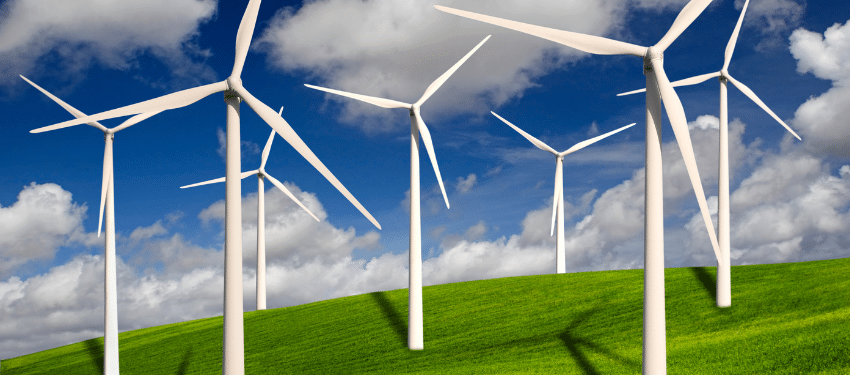
India’s renewable energy sector has witnessed tremendous growth, and among the various sources, wind energy emerges as a highly effective solution to address concerns related to depleting fossil fuels, coal imports, greenhouse gas emissions, and environmental pollution. When choosing a turbine, it is essential to consider several factors to ensure it aligns with your requirements. These factors include the appropriate size, suitability for the available wind resource, reliability, warranty, availability of spare parts, and the proximity of operation and maintenance providers. By carefully considering these aspects, you can select a turbine that best suits your needs.

A wind turbine is a device that converts kinetic energy of wind into electrical energy. They’re much more compact though — small enough to install either on your roof or in your garden – and some have curved blades, not unlike a whisk. Small wind turbines still function like their bigger counterparts — you’ll get clean electricity generated entirely by the power of wind. As a renewable and non-polluting source, wind energy offers a sustainable and affordable alternative, reducing the dependence on traditional fuel sources and transportation. By harnessing wind power, India can significantly contribute to the generation of green and clean electricity.

Types of Small Wind Turbines for Home

There are two main types of home wind turbines

  1. Horizontal axis turbines
  2. Vertical axis turbines

These turbines can either be placed on a rooftop or as a standalone tower. When choosing a standalone tower, the placement and build are important.

Roof-mounted wind turbines

Roof Mounted

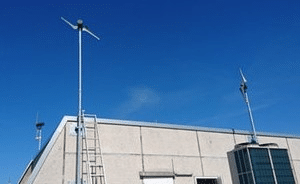
Roof-mounted wind turbines are installed on top of your roof. It’s typically cheaper to install a roof-mounted turbine than a standalone one, although their size means they are less powerful. You can normally generate around 1–2 kilowatts (kW) of electricity.

Standalone wind turbines

Standalone Wind

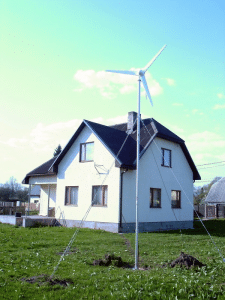
Standalone wind turbines are more powerful than roof-mounted turbines, because they’re bigger and can take better advantage of the wind. It still depends where you place them though — a standing turbine flanked by trees or taller buildings isn’t going to be optimal. They work most efficiently in open spaces, which means standalone wind turbines are best suited for rural properties with a lot of land. That makes them less ideal for urban environments. Standalone wind turbines typically generate between 3–15 kW per day, and some of the largest models can generate more than 25 kW.

Top Wind Turbine Manufacturers in India

  1. Siemens
  2. Suzlon
  3. Winds of the World (India)
  4. Regen Powertech private limited
  5. Inox Wind limited
  6. Orient Green Power Limited
  7. Indowind Energy Limited
  8. RRB Energy Limited (India)
  9. Vestas India – International Players
  10. Enercon India Pvt limited – International Players
  11. Gamesa wind turbines private limited – International Players
  12. GE Wind Energy Limited – International Players

How long does it take to install?

Installing a roof-mounted turbine can be done in few hours by a professional. Standalone wind turbines can take longer. It’s always best to get a trusted professional to install your wind turbine, especially with standalone systems.

How Do Wind Turbines Work?

Wind turbines use wind to make electricity. Wind turns the propeller-like blades of a turbine around a rotor. The turbines are connected to shafts. When the turbines turn, the shaft turns. The shaft then turns a generator. The turning of the generator creates a flow of electrons, which creates electricity that an external battery bank stores. . 

You must place wind turbines in an area that receives a minimum amount of wind according to the supplier. For an average home wind turbine, that’s usually a wind speed of 5.5 mph or more. Without this minimum amount of wind, the blades just won’t spin, and no electricity will be produced. However, the rated energy output of a turbine can’t be achieved unless the turbine has access to its rated wind speed, which is the average amount of wind needed to get the generator producing at max capacity. For example, a 500W turbine rated for 27 mph wind speeds will only generate around 100W of power when the wind is 10-12 mph.

Advantages of Wind Power

  • Wind is a form of clean and renewable energy
  • Installation time is less
  • Fuel cost is zero
  • Operation & Maintenance cost is very low
  • There is no adverse effect on the environment. The whole system is pollution free and environment friendly
  • Wind turbines save space
  • Wind power generation promotes domestic economic growth

Challenges of Wind Power

  • Wind power must compete with other low-cost energy sources
  • Turbines produce noise and alter visual aesthetics
  • Wind turbines can be dangerous to some wildlife(birds)
  • Wind power is limited by location

Which is better: 3 blade or 5 blade wind turbine?

Compared to the traditional three blade wind turbine, a five-blade turbine can increase annual performance. The speed of the blades of a five-blade turbine is 60% of the three-blade wind turbine. Five-blade wind turbines reduce the chance of high-speed malfunction.

Capacity

Small wind turbines used in residential applications generally  range in size from 400 watts to 20 kilowatts, depending on the amount of electricity you want to generate. A 1.5-kilowatt wind turbine will meet the needs of a home requiring 300 kilowatt-hours per month in a location with a 6.26 meters-per-second annual average wind speed.

Grid-Connected Small Wind Electric Systems

Small wind energy systems can be connected to the electricity distribution system. These are called grid-connected systems. A grid-connected wind turbine can reduce your consumption of utility-supplied electricity for lighting, appliances, electric heating and cooling, and vehicle charging. If the turbine cannot deliver the amount of energy you need, the utility makes up the difference. When the wind system produces more electricity than your household requires, the excess is credited and used to offset future use of utility-supplied power. 

Wind Power in Isolated Grid Systems

Wind power can be used in isolated off-grid systems, or microgrid systems, not connected to an electric distribution grid. In these applications, small wind electric systems can be used in combination with other components — including a small solar electric system — to create hybrid power systems. Hybrid power systems can provide reliable off-grid power for homes, farms, or even entire communities that are far from the nearest utility lines.

Wind Resource Considerations — You can have varied wind resources within the same property. In addition to measuring or finding out about the annual wind speeds, you need to know about the prevailing directions of the wind at your site. In addition to geological formations, you need to consider existing obstacles, such as trees, houses, and sheds. You also need to plan for future obstructions, such as new buildings or trees that have not reached their full height. Your turbine needs to be sited upwind of any buildings and trees.

System Considerations — It is encouraged that you only consider small wind turbines that have been tested and certified to national performance and safety standards. You will need to take the length of the wire run between the turbine and the load (house, batteries, water pumps, etc.) into consideration. Using larger wire will also increase your installation cost. Your wire run losses are greater when you have direct current (DC) instead of alternating current (AC). If you have a long wire run, it is advisable to invert DC to AC.

Is wind or solar better?

Wind is a more efficient power source than solar. Compared to solar panels, wind turbines release less CO2 to the atmosphere, consume less energy, and produce more energy overall.

Can you put a wind turbine on your roof?

Wind turbines achieve optimal performance in open areas where there are no barriers or obstructions that disrupt wind patterns. Consequently, turbines installed in urban areas are generally less efficient. To maximize energy production, it is crucial to have a consistent wind flow in terms of both speed and direction.

Installing a rooftop small wind turbine makes sense if you can get the equipment high enough and out of the way of obstacles. Of course, living in a windy area also helps. Otherwise, the installation and maintenance costs might outweigh the savings due to a lack of sustained winds.  Several field trials have found that building-mounted turbines perform poorly, producing only a small fraction of the energy they would produce if properly sited. Standalone wind turbines are more powerful than roof-mounted turbines.

How much does a small wind turbine cost in India?

The pricing for small wind turbines typically begins at Rs 70,000 per kW. These costs vary based on factors such as the materials used, the technology employed, the location, and whether the turbine is grid-connected.

What is the minimum wind turbine size?

Turbine blades for small wind turbines are typically 1.5 to 3.5 metres (4 ft 11 in – 11 ft 6 in) in diameter and produce 0.5-10 kW at their optimal wind speed.

What is the Service Life of the Wind Turbine?

Wind turbines are designed for a service life of 20-25 years. During this period, it is possible to replace the blades of the main mechanisms. In any case, this issue should be specified when ordering a wind turbine.

What to Look for when Buying a Wind Turbine?

The turbine you decide to purchase must fit your needs for size, wind resource, availability, reliability, warranty, spare parts availability, and proximity of operation and maintenance teams.

 Are Wind Turbines Noisy?

Modern wind turbines generate minimal noise. While the turbine blades may produce a whooshing sound when encountering air turbulence, this noise is typically overshadowed by the natural background noise of the blowing wind.

Small wind turbine for home with specifications and prices. Survey was conducted in May 2023.

S.No.

Brand

Capacity in watt

Specifications

Price, Rs.

1

Layfuz


1200


Colour: White
Material: Aluminium Alloy Shell + Nylon Fibre Blade
Blade: S-Type, 5 Blades
Rated Voltage: 12V
Maximum Power: 1200W
Start-up Wind Speed: 2m/s
Rated Wind Speed: 12m/s
Working Temperature: -40℃~80℃
Item Size: 66 * 120cm / 26.0 * 47.2in
Package Size: 68 * 28 * 21cm / 26.8 * 11.0 * 8.3in
Package Weight: 9.5kg / 20.94lbs

35000

2

Zhangxi

1200

Voltage: 12 Volts

Special Feature: Portable

Colour: White

Total Power Outlets:1

Frequency: 50 Hz

Aluminium alloy body and nylon fibre bs, with high temperature spray casting, ultraviolet-proof, acid rain proof, durable to use, can stand bad weather conditions and fit for outdoor use.

50350

3

Layfoxz

1200

Aluminium Alloy Shell Nylon Fibre B B: 5 B s

Shape: Lantern

Rated Voltage: 12V

Maximum Start-up Wind Speed: 2m/s Rated

Wind Speed: 12m/s

Working Temperature: -40℃~80℃ Item Size: 60 * 90cm / 23.6 * 35.4in (H * Dia.) Package Size: 61 * 44 * 30cm 

48359

4

‎Layfoxz

1200

 Colour: White

Material: Aluminium Alloy Shell Nylon Fibre B B : S-Type, 5 B s Rated Voltage: 12V Maximum Power: 1200W (Under ideal environment which includes wind speed, temperature, surrounding building and more) Start-up Wind Speed: 2m/s Rated Wind Speed: 12m/s Working Temperature: -40℃~80℃ Item Size: 66 * 120cm / 26.0 * 47.2in

34919

5

Zhangxi

1200

Colour: White

Wattage: 1200 Watts

Voltage:12 Volts

Special Feature: Portable

Frequency: 50 Hz

Aluminium alloy body and nylon fibre b s, with high temperature spray casting, ultraviolet-proof

50939

6

AIXING

1200

Lantern Wind Turbine Generator

Voltage:12 Volts

Special Feature: Portable

Total Power Outlets:1

Frequency: 50 Hz

Aluminium alloy body and nylon fibre bs, with high temperature spray casting, ultraviolet-proof, acid rain proof,

60804

7

AIXING

1200

Wattage:1200 Watts

Special Feature: Portable

Total Power Outlets: 1

Frequency: 50 Hz


43564

8

Socialme

400

Model: NE-400R
Rated Power: 400W
Optional Rated Voltage: 12V, 24V
Starting Wind Speed: 2m / s
Rated Wind Speed: 13m / s
Safe Wind Speed: 45m / s
Net Weight Of Host: 11kg
Wind Wheel Diameter: 0.9m
Wind Wheel Height: 0.6m
Number Of Blades: 5PCS
Blade Material: Nylon fibre
Generator: Three-phase AC permanent magnet generator / permanent magnet suspension generator
Braking Method: Electromagnetic brake
Working Temperature: -40 ℃ ~ 80 ℃

45599

9

Layfuz


400

Colour: White
Material: Aluminium Alloy Shell + Nylon Fibre Blade
Blade: S-Type, 3 Blades
Rated Voltage: 12V
Rated Power: 400W
Start-up Wind Speed: 2m/s
Rated Wind Speed: 12m/s
Working Temperature: -40℃~80℃
Item Size: 66 * 120cm / 26.0 * 47.2in
Package Size: 68 * 28 * 21cm / 26.8 * 11.0 * 8.3in
Package Weight: 7888g / 17.4lbs

34064

Source: amazon.in

Note: for latest prices check at amazon.in or get quotation from https://www.indiamart.com.We will be publishing updated report on this product in next year.

Reference: https://www.energy.gov

Related

No Results Found

The page you requested could not be found. Try refining your search, or use the navigation above to locate the post.

Enquire Now

    X
    Enquire Now