No Results Found
The page you requested could not be found. Try refining your search, or use the navigation above to locate the post.


The answer of how to use a debit card online is mentioned below:
The answers to how to use a debit card online and how to use a debit card online safely are quite simple for those who want to learn the process. Only a few simple debit card safety tips can ensure that your debit card is ever misused and you don’t lose any money just because you opted for a convenient and time-saving way of shopping.
The page you requested could not be found. Try refining your search, or use the navigation above to locate the post.

Here Consumer Voice will guide you on how to use debit card for online payment or how to use debit card online purchases while ensuring the safety of your confidential information. Read on the tips and follow them for as long as possible.
Though many people take it for granted, choosing the right bank matters when it comes to the safety of online transactions. While selecting a bank, you should pick one that has opted for additional debit card protections for the consumers and goes beyond the ordinary rules to ensure that consumers don’t have to bear the costs if they have been a victim of online fraud.
Never share your PIN with anyone, be it someone claiming to be a bank employee or the ATM guard who wants to help you get cash instantly. Never write it down but memorize it. If you can’t remember the PIN by memory, make it cryptic like adding a zero after every digit while noting it down to ensure extra protection. If possible, use the debit card in credit mode to get extra liability protection from some banks.
There are some basic security rules you should know like using a website with https:// for financial transactions and avoiding transactions on websites that have only http:// at the beginning of the URL. You should also use ATMs at bank branches whenever possible as hacking them id difficult due to the presence of security cameras. Also, don’t use public wireless access for any financial transaction. Small things can make a huge difference in keeping you safe.
It is quite clear that the answer to is it safe to shop online with a debit card is yes if you learn to be a smart consumer. If you remember the tips above on how to use debit card for online payment or how to use debit card online purchases safely then you will remain protected for long and reduce the probability of being vulnerable to an online transaction fraud.
The page you requested could not be found. Try refining your search, or use the navigation above to locate the post.
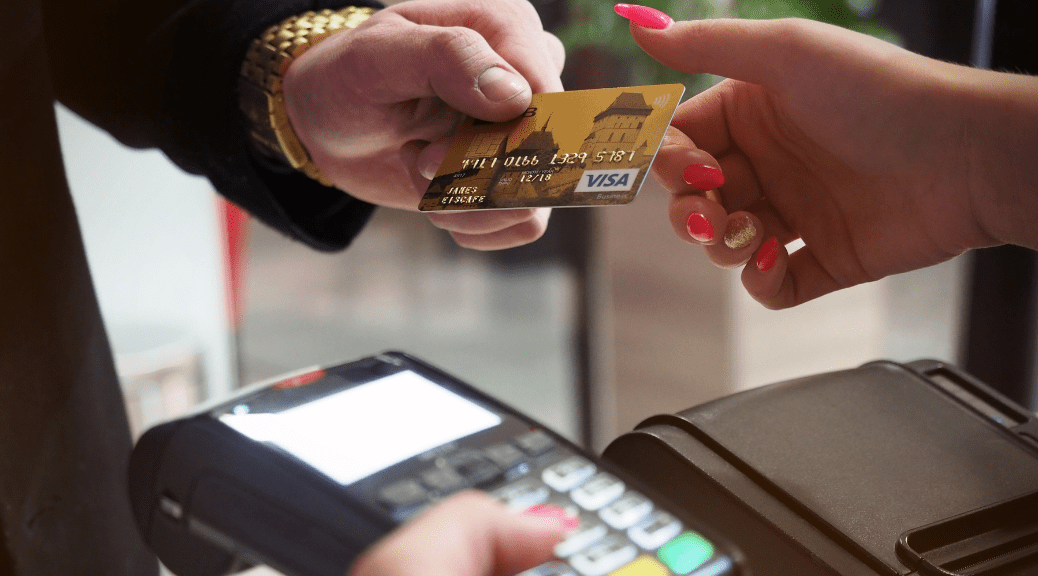
Remember your credit card is a temporary loan. So one of the most important credit card tips is to use it wisely only when you need it and not when you want to. For example, you can avoid using a credit for shopping for a LCD TV as it is a want but you can pay your hospital bill which is a need. This will not only help you to avoid the debt trap but you can avoid high interest charges as well.
Remember to settle your bill every month. Though paying off the full amount is the wisest thing to do but if you can’t, do settle the minimum payment before the due date to avoid heavy penalty and higher interest rate. It will also avoid a negative mark on your credit score.
Not all are aware that credit card infact can be used as a budgeting tool and helps you control your budget. By making a list of credit card purchases every month, you can keep a tab on how much you spend every month. This will help you cut down on un-necessary expenses. You should make a budget for yourself and try not to overstep it. But remember before using it as a budgeting tool, you should have enough balance in your bank account to pay off the bill in the following month before the due date.
One of the best credit card tips is using it for rewards card. Use a card that offers rewards while making a purchase. Rewards like airline miles, cash discount on next use or retail points are things you should keep a watch on. Keep a watch on credit card offers!
Credit rating is important because it is an important part of your finances. Keep your credit utilization ratio (percentage of total available credit that you are using) under 30% to maintain a healthy credit score. For example if you credit limit is Rs 10,000, then you should keep your balance under Rs 3000.
Though there are various mechanisms to check credit card frauds, but frauds still happen and you must know the types of credit frauds to protect yourself from one. Never disclose the PIN or CVV number to anyone to ensure security of the card – this is one of the most basic and important one.
Kepp yourself updated with the latest interest rates, policies and changes that are being implemented by the government financial bodies and how they will effect your credit card plan. There are many things that credit card companies do not want you to know. So, the mantra is stay informed and stay up-to-date.
A credit card can be a very useful financial tool if used responsibly. Paying bills on time, avoiding over spending and not making purchases beyond need, can help you take control of the credit card rather than the credit card taking control of you.
Consumer VOICE experts compared credit cards on basis of credit card interest rates, best credit card deals and other parameters to list the best credit card.
The page you requested could not be found. Try refining your search, or use the navigation above to locate the post.

There are various types of credit cards when you apply for credit card and you are offered one based on your needs and repayment power. Before submitting your credit card application, understanding the credit card features will not only help you choose the best credit card but also enable you to use it wisely. One should be aware of the credit card services before applying for one.
Carrying a lot of cash is a cumbersome process. So, credit card is a good alternative to cash. It helps one to shop conveniently without having to carry cash of various denominations.
This is the most important credit card feature. Credit limit is the maximum amount you can charge on the card. So when you cross the limit, your creditor will charge an over limit fee. You can opt for a normal credit limit which is given by the bank at the time of issuing a credit card or for a revolving credit limit which varies with the financial exposure of the credit cardholder.
APR or the annual percentage rate is the interest rate applied to balances carried beyond the grace period. Credit cards have different APRs for different types of balances, like balance transfers or purchases. Higher APRs are charged for balance transfers and cash advances.
These are the routine charges charged by the credit card company which include annual charges and additional charges like charges for an add-on card.
Credit card companies keep a record of all your transactions and such a record helps the companies to raise appropriate billing amounts payable by their cardholders, either on a monthly or some periodic basis.
Not all credit cards offer rewards on purchases. Credit card perks differ from company to company and also on the type of card that you opt for.
Grace period is referred to the minimum number of days a credit card holder is given to pay his or her credit card bill. This grace period does not involve any interest or charges but if you carried a balance from the previous month, you may not have a grace period for your new purchases.
Though all credit cards allow cash withdrawals but interest charges for cash withdrawals are higher than usual and no grace period is provided for cash transactions.
Credit card is important and essential but one needs to be cautious about its security. Take adequate precautions and protect yourself against any credit card fraud by knowing various types of credit card frauds. You must also know credit card tips for smart users.
Consumer VOICE experts compared credit cards on basis of credit card interest rates, best credit card deals and other parameters to list the best credit card.
The page you requested could not be found. Try refining your search, or use the navigation above to locate the post.
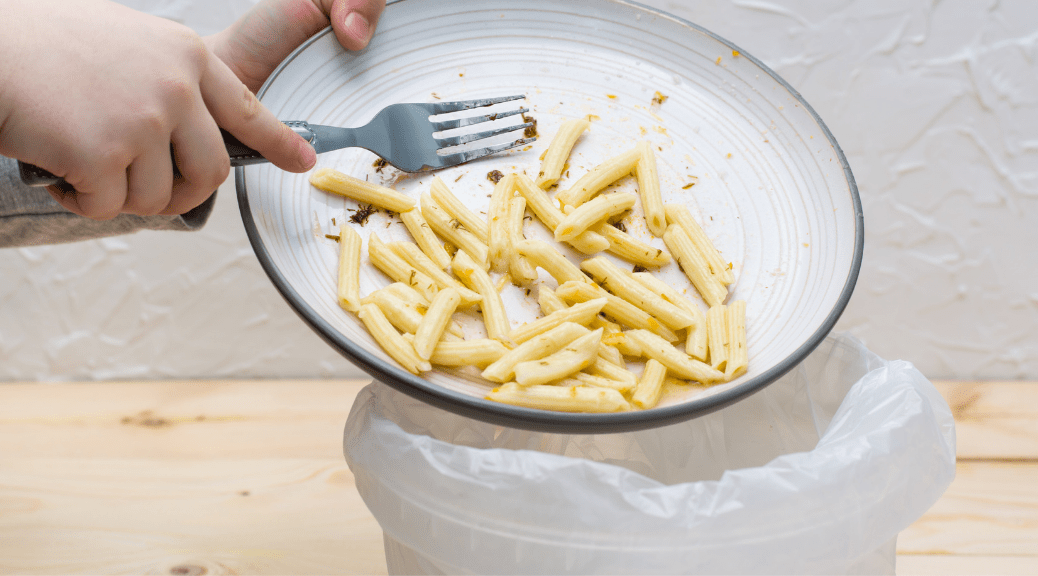
Think.Eat.Save. The people behind World Environment Day this year have most certainly deliberately left out the spaces between the words. Perhaps so that we make the connection between our food choices and the larger impacts of these choices—and realize that the connection is too close for comfort and also too close to keep ignoring.
For a moment, let’s not ask why the food was wasted in the first place. Or how many hungry mouths the wasted food could have fed. Let’s only be bothered about what happens when the wasted food is thrown away.
Well, it breaks down in landfill, together with other organic materials, and becomes the main contributor to the generation of methane – a powerful greenhouse gas nearly 25 times stronger than carbon dioxide at trapping heat in the atmosphere. This process of global warming is not invisible or abstract.
Further, the breakdown of food waste in landfills releases nutrients, which can migrate out of the waste and into the surrounding environment. Too many nutrients can pollute our groundwater and waterways.
Next, let’s consider the food production lifecycle, or supply chain. Soils, water, natural resources and energy are used to plant, harvest, transport, process, package, distribute and market our food products. When food is wasted, all of these resources are lost—but not without contributing to greenhouse gas emissions. This includes direct emissions from agriculture and those attributed to energy, transport, food production, processing and distribution. In particular, consider the cost of transporting food from farm to processor, wholesaler to restaurant, store to households – and finally, from garbage bins to landfills.
The Numbers Are Innocent – We Are Not
The numbers in the public archive on how much food is wasted globally on an annual basis are capable of inducing anything from a grimace to a jaw drop, to sarcasm even. Many of us may even find the scenario surreal, especially when the numbers are presented in relative terms – for example, every year, consumers in rich countries waste almost as much food (222 million tonnes) as the entire net food production of sub-Saharan Africa (230 million tonnes).
That said, numbers ought to make one wary too, for these are inherently distant, clinical, unreal even. One may be lulled into a false sense of security or into a convenient space of feeling oneself to be ‘too small to make a difference’.
Indeed, what about those oft-felt sentiments of ‘what am I but a speck of sand in this vastness’ and ‘what difference in the universe’s name will my standalone action make?’ Or, if one wants to appear particular, put it on the government. It’s their responsibility, right? Well, not quite so. For one, the government does not make our shopping list. Secondly, we do tend to throw a lot of good food that is still edible because of overstocking, cosmetic blemishes, misinformation, or plain ignorance if not indifference.
Gobbling down the Numbers
All points are from Tristram Stuarts Waste: Uncovering the Global Food Scandal (Penguin, 2009)
Write a list
Check the ingredients in the cupboards and the refrigerator prior to writing the shopping list. This way we could avoid buying extra stuff. How often does the homemaker feel surprise/regret on noticing that the earlier packet of besan/ flour is almost crossing the ‘use by’ dates?
Also, check perishable items at home before buying again. Don’t let a spotty soft banana, bruised apple, or dry bread go into the bin.
The Action Begins at Home
Food waste can be minimized at home, in retail stores, and in restaurants. For example, grocery chains can mitigate wasting food by sorting out the spoiled food by separating it for organic usage. Furthermore, packaging foods in smaller quantities can eliminate or at least shorten food waste.
As consumers, when we begin to understand that food waste is something within our control—and not as intimidating as acting against the ozone layer depletion—we can simply begin by disciplining aspects of our purchase, consumption and disposal habits. To start with, why not simply buy less? Buying in smaller quantities means that we will most likely at least finish eating the food and throw out less. It follows that the process of packaging food differently can save money and waste not only for the consumer but the producer as well, and even more importantly, this process is environment-friendly. For the producer, the gains accrue in terms of less transporting and storage costs. Studies (including Global Food Losses and Food Waste – FAO, 2011) have shown that in developing countries food waste and losses occur mainly at early stages of the food value chain and can be traced back to financial, managerial and technical constraints in harvesting techniques as well as storage and cooling facilities. Thus, a strengthening of the supply chain through support to farmers and investments in infrastructure and transportation could help to reduce the amount of food loss and waste.
In medium- and high-income countries, on the other hand, food is wasted and lost mainly at later stages in the supply chain. The behaviour of consumers plays a huge part in industrialized countries. The website of United Nations Environment Programme (UNEP) quotes a recent study that has revealed that worldwide about one-third of all food produced gets lost or wasted in the food production and consumption systems – and that almost half of this quantity is the result of retailers and consumers in industrialized regions discarding food that is fit for consumption. Raising awareness among industries, retailers and consumers as well as finding beneficial uses for food that is presently thrown away are useful measures to decrease the amount of losses and waste.
Write a kitchen diary
Maintain a kitchen diary that shows how much food moves uneaten into the garbage bin.
Beauty fixation
Supermarkets are found to be responsible for huge amounts of food wastages due to their emphasis on cosmetic appearance of food products. Their criterion for rejecting products from suppliers on grounds of appearance of produce promotes chemical-intensive farming among farmers, which has adverse environmental and health effects in addition to being financially unattractive.
Rotate
Another good idea – especially if you stock processed food in big refrigerators – is to rotate the stuff once in a while to bring out the perishable packets to the front while placing the recent food towards the back.
However, the rest of us can hardly afford to feel sanctimonious or be complacent by putting all blame and responsibility at the door of the rich countries. As emerging economies like India come up the value chain, it may be safely assumed that their increasingly larger numbers of prosperous middle classes and the rich/super-rich will start showing behaviour similar to their counterparts in industrialized countries.
Statistics on how many tonnes of quality food are wasted in restaurants, make-shift food joints, social gatherings and households remind us that food waste is happening all around us. In 2011, India’s Food Minister KV Thomas had said that around 100,000 weddings and social events were held in the country every day. He remarked that food wasted each day at weddings and family functions in Mumbai alone would be enough to feed the city’s vast slum population.
When grains and pulses are purchased in large quantities, keep a tablet of insect/weevil repellents in the container. Products such as sooji and dalia when stored for a longer period can be roasted lightly to prevent weevil infestation.
A food bank is a nonprofit distribution enterprise that serves the community through institutional feeding programmes. This acquires donated food in the form of grains, pulses, oil, spices, etc., sourced on the basis of community food habits and makes these available through a network of community-owned agencies. These institutional feeding programmes include school feeding programmes, after-school programmes, shelter homes, old-age homes and substance abuse clinics.
Be wary of the quantity of food that goes onto the plate. Cultivate the habit of refilling only when the plate is cleared. Do not overestimate and tend to be generous what the guests and children can have at a time. By this, one can discourage children form overeating too.
As much as 30 per cent of household waste can be diverted away from garbage when composting is done at home. Table scraps, fruit and vegetable scraps, crushed egg shells, tea leaves, stalks and coffee grounds are some of the materials that are good for making compost.
It is not difficult to make compost at homes. All that is required is a large drum or tin to hold the soil and the scraps together for decomposition to happen. You may take help from garden associations or look for information on the Internet.
It is true that people cannot be forced to cut back on wasteful displays of food and spending, but if there is a way to get them thinking about the enormous amounts of food that get wasted, it will at least be a beginning. Concurrent with that must be the facilitation of system linkages including food waste collection services and observance of best practices in diverting the waste food to its best use – for instance, whether it will go towards feeding the hungry or be used as animal feed or nutrient-rich compost. There are also options to convert fats, oils, and grease (FOG) to biodiesel, replacing fossil fuel use. So far, efforts to pick up the leftovers and distribute them to the poor have not taken off in India due to lack of infrastructure. Many of us would think that there would be NGOs to provide a linkage between giver and needy ones. In India, though, practically no such NGO exists to pick up the surplus at all times.
So, what happened to Delhi Food Bank, launched as part of the India Food Banking Network (IFBN) with much fanfare in 2012 by Delhi Chief Minister Sheila Dikshit and Sam Pitorda, Advisor to the Prime Minister on Public Information Infrastructure and Innovations? Delhi was to be the first city in the country to set up food banks through which excess cooked and uncooked food would be collected from wedding receptions, parties, social functions, hotels and individual donors for distribution among hungry and poor people.
The scheme was modelled on the lines of food banks in Chicago in the United States where community groups ran them to feed hungry people by collecting excess food from hotels and wedding receptions, and through voluntary donations from individuals as well as various organizations. In fact, Delhi Food Bank was planned to be the prototype that IFBN would seek to modify, strengthen and replicate at a national level, so that by 2020 every district of India had access to a food bank.
We were informed that the infrastructure for collecting and distributing the food was being developed in cooperation with Delhi Government, DLF Foundation, Reliance Foundation and Cargill India. Donors of food only needed to send an sms to 58888, following which IFBN volunteers would collect the food items, while those who needed food could also send sms to same number.
As of today, Delhi Food Bank collects only non-perishables, not cooked food. The latter requires infrastructure like refrigeration, especially when the calls are received past the meal times. Furthermore, organizations are looking for regular and sustainable supply of excess food.
Stop buying processed dog food. It is a common practice among households to prepare the exact amount of chapattis/rice. Use the surplus from your chapattis/rice along with meat/eggs/milk/vegetables to give your pet a wholesome meal rather than the dry processed meal. It does not take much time to prepare a simple meal. Moreover; the packaged meal is not bombarded with extra goodness as it purports to be and saves money too.
Whenever we are planning a wedding, a party, or some such similar gathering, some amount of surplus food is inevitable. Suppose we plan ahead by identifying the needy in nearby areas for distributing the excess food? Would not that be a practical, engaging and effective way of participating in the food drive?
Responding to queries from Lakshmi Bhavani of Consumer Voice, Kuldip Nar, Managing Director, Aidmatrix Foundation (IFBN member responsible for operationalizing Delhi Food Bank), sent in his comments via email:
‘Non-perishable food waste is the focus of the Delhi Food Bank initiative and we are presently feeding 10,000 meals daily with the salvaging and donation of food, which helps those who need it the most.
For perishable food including agriculture produce or cooked food, there can be a system that can salvage and guarantee the minimum food amounts for a nutritional food plate. This, in turn, will help provide the guaranteed feeding that is required on a daily basis as a process.’
Waste represents both a problem and an opportunity. At current levels, production, consumption and waste disposal patterns are not in sync with sustainable living. To drastically reduce waste generation, we need to make products with fewer natural resources and also break the link between economic growth and waste growth. Most products should be reused or their materials recycled.
The benefit of being at the minimal level of the waste hierarchy will not just be environmental. Waste is a drag on the economy. We can save money by making products with fewer natural resources, and we can reduce the costs of waste treatment and disposal.
Related
The page you requested could not be found. Try refining your search, or use the navigation above to locate the post.