No Results Found
The page you requested could not be found. Try refining your search, or use the navigation above to locate the post.


The practice of forfeiting earnest money in real estate transactions is a critical legal aspect that both buyers and sellers need to comprehend. This earnest money, typically a deposit made by the buyer to demonstrate their commitment to the purchase, can become a subject of contention and legal scrutiny if the deal doesn’t proceed as planned. In this article, we will delve into the intricacies of the law surrounding the forfeiture of earnest money in real estate, shedding light on the regulations, rights, and responsibilities governing this aspect of property transactions through some cases. Whether you are a buyer, seller, or simply an individual interested in the intricacies of real estate transactions, this discussion will provide valuable insights into the legal framework that governs earnest money in the real estate sector.
Dr Prem Lata, Legal Head VOICE
A landmark judgement by the National Commission (NCDRC)
Facts:
The National Commission, when addressing the number of Supreme Court cases on this matter, relied on Section 74 of the 1872 Contract Act. According to this section, in cases of breach of contract, actual damages must be proven to penalize the other party. In situations where a buyer cancels their booking for a flat or property, it’s noted that the property remains solely with the builder, and there is minimal loss to the builder. In light of this, the National Commission ordered a forfeiture of 10% of the total sale cost of the property.
Cases Referred:
A landmark judgement National Commission (NCDRC)
Facts:
The complainants received the draft of the Builder Buyer Agreement on 16th April 2015. Upon reviewing the agreement, they found certain terms and conditions to be unacceptable. Consequently, they conveyed their concerns via an email dated 26th August 2015 in response to the draft agreement, which had been initially sent to them in a letter dated 16th July 2015. Among the objections raised by the complainants were the following:
Since the issues raised by the complainants were not addressed, they via email dated 06.12.2017 sought refund of the amount which they had paid to the OP along with interest. Rejecting the contentions advanced by the OP and allowing the consumer complaint, the Commission directed refund of the entire amount of Rs.37,05,892 which the said complainant had paid to the OP, along with interest on that amount @ 9% per annum.
Such wholly one-sided agreements were termed as unfair and were not approved by the Hon’ble Supreme Court in Pioneer Urban Land & Infrastructure Ltd. Vs. Govindan Raghavan (2019) 5 SCC 725, decided on 2nd April 2019 which to the extent it is relevant reads as under:
“Incorporation of one-sided clauses in an agreement constitutes an unfair trade practice as per section 2®of consumer protection act.”
Quoted law-Section 2 (r) of the Consumer Protection Act, 1986 defines ‘unfair trade practices’ in the following words:
“‘Unfair trade practice’ means a trade practice which, for the purpose of promoting the sale, use or supply of any goods or for the provision of any service, adopts any unfair method or unfair or deceptive practice …”, and includes any of the practices enumerated therein. The provision is illustrative, and not exhaustive.
This court’s ruling states that our judges are duty-bound by their oath to uphold the Constitution and the law. The Constitution was established to ensure social and economic justice for all citizens of the country. Article 14 of the Constitution ensures that all individuals are entitled to equality before the law and equal protection of the laws. This principle dictates that the courts will not enforce, and will instead invalidate, when necessary, an unfair and unreasonable contract or any unfair and unreasonable clause within a contract. This holds particularly true when such contracts are entered into by parties who do not possess equal bargaining power.
The counsel representing the complainant also cited a decision of this Commission from the date 23.10.2017 in the case of Amit Kansal Vs. M/s. Vatika Limited CC No. 1244 of 2015. This case is related to an allotment made in the same project, ‘Tranquil Heights’. In the Amit Kansal case, the terms of the builder-buyer agreement sent to the complainants were not acceptable to him, and as a result, he requested modifications to the agreement, which the builder did not agree to. Consequently, he ceased making further payments and approached this Commission through a consumer complaint, seeking a refund of the amount paid to the builder along with interest, among other claims. The builder opposed the complaint, alleging, among other things, that the complainant was a speculator aiming for quick profits and had an obligation to sign the standard builder-buyer agreement sent by the builder for signatures.
Allowing the consumer complaint, this Commission directed refund of the entire amount which the said complainant had paid to the OP, along with interest on that amount @ 9% per annum.
The RERA Estate Appellate Tribunal in Maharashtra ruled that when a sale and purchase transaction of a flat is cancelled at the initial stage, with the allottee merely booking the flat and making an initial payment on a printed form, and no further progress occurs in the transaction, where the parties never reach the point of executing a sale agreement, in such a unique situation, it is essential to consider the core objective of RERA, which is to safeguard the interests of consumers. Therefore, any amount paid by the home buyer to the promoter should be refunded to the allottee if they decide to withdraw from the project.

Question 1: If I intend to file a case against a builder, and the agreement was executed in Lucknow, while I currently reside in Delhi, which Consumer Commission would have jurisdiction over the matter? (Shubhit)
Answer: The new legislation has introduced a provision allowing a complaint to be filed at the location where the consumer either works or resides. It doesn’t depend on the whereabouts of the opposing party’s workplace, offices, or residence.
Subject to the other provisions of this Act, the District Commission shall have jurisdiction to entertain complaints where the value of the goods or services paid as consideration does not exceed one crore rupees, provided that where the Central Government deems it necessary so to do, it may prescribe such other value, as it deems fit.
A complaint shall be instituted in a District Commission within the local limits of-
(a) The opposite party or each of the opposite parties, where there are more than
one, at the time of the institution of the complaint, ordinarily resides or carries on
business or has a branch office or personally works for gain; or
(b) Any of the opposite parties, where there are more than one, at the time of the
institution of the complaint, actually and voluntarily resides, or carries on business or
has a branch office, or personally works for gain, provided that in such case the permission of the District Commission is given; or
(c) The cause of action, wholly or in part, arises; or
(d) The complainant resides or personally works for gain.
Question 2 : The date of birth on my Aadhaar card and my 10th certificate matches, but it is not my actual date of birth. I don’t possess a birth certificate either. How will the new birth registration rules impact my situation? (Mukleshwar Garnayak, Odisha)
Answer:
New Birth and Death (Amendment) Act is applicable from 1st 0ctober 2023. Henceforth from 1st October, birth certificate shall be required for admission in schools, issuance of driving licence, preparation of voter list, Aadhaar number, registration of marriage appointment and Govt jobs. However, those who already have school certificate or adhar cards or licence etc, those will stand valid.
Use of birth certificate: The Bill requires the use of birth and death certificates to prove the date and place of birth for persons born on or after this Bill comes into effect. The information will be used for purposes including: (i) admission to an educational institution, (ii) preparation of voter lists, (iii) appointment to a government post, and (iv) any other purpose determined by the central government.
Notwithstanding anything contained in any other law for the time being in force, the certificate referred to in sub-section (2) or section 12, shall be used to prove the date and place of birth of a person who is born on or after the date of commencement of the Registration of Births and Deaths (Amendment) Act, 2023, for the purposes of—
(a) Admission to an educational institution;
(b) Issuance of a driving licence;
(c) Preparation of a voter list;
(d) Registration of a marriage;
(e) Appointment to a post in the Central Government or State Government or a local body or public sector undertaking or in any statutory or autonomous body under the Central Government or State Government;
(f) Issuance of a passport;
(g) Issuance of an Aadhaar number.
Question 3: I was assured admission as an irregular student at Bhuwan College, Rajiv Gandhi Institute in Bengaluru for the 2022-2023 session. However, despite making payments throughout the academic year (2022-2023) in instalments for each term, admission was not granted, and I was not allowed to sit for exams. In total, I paid Rs 1, 79,000. I had come from Chhattisgarh to Bengaluru for a job and couldn’t commit to a regular course. I initially provided Rs 30,000 directly to the college, but afterward, I made further payments to an employee’s account with the college with the assurance of securing admission. (Priyanka, Bengaluru)
Answer: This seems to be a case involving deception and the misappropriation of funds, possibly stemming from the inability to secure admission as an irregular student. You
Question 4: Electricity billing for both shops in my residence is consolidated into a single meter. The Department disconnected the power supply and imposed a bill of Rs 34,000.
Answer: You are currently utilizing a residential meter for commercial purposes, which is considered unauthorized use of electricity under Section 126/135 of the Electricity Act 2003. Consequently, penal billing has been applied. To resolve this issue, consider installing separate meters for your shops. You can also request the department for a potential rebate if you commit to complying with the recommended system.
Question 5: The opposing party is failing to adhere to the court’s directive. In the event that the party is incarcerated following the issuance of a Non-Bailable Warrant (NBW), what steps can I take to seek redress? (Venkateshan, Karnataka)
Answer: Punishing the non-compliant party with imprisonment and fines will not diminish your entitlement. The opposing party remains obligated to settle the dues in accordance with the court’s original order, and this obligation cannot be altered even if the opposing party serves their jail sentence.
Question 6: I received an excessively high bill after a 20-month period. I submitted my meter to the department for inspection and received an acknowledgment of the meter being in their possession. However, the opposing party failed to appear in court for two scheduled dates and did not provide a Written Statement (WS) within the allotted 45-day period. Can the court refuse to accept their WS on the next court date? They claim they never received the meter, but I have evidence to the contrary. (Guddu Kumar, Rohtas)
Notice to party-15.7.2023
Hearings -3.7.2023, 11.8.20231.9.2023, 12.9.2023
Answer: Certainly, you can submit a written request to the commission to terminate the opposing party’s defence, allowing your case to proceed, and an order to be issued based on the merits of the case.

One of the greatest medical discoveries of the 20th century, antibiotics have saved countless lives by efficiently treating bacterial infections around the globe. However, the overuse and abuse of antibiotics have given rise to a formidable adversary, antibiotic resistance. This global health crisis threatens to undo decades of progress in healthcare, rendering once-treatable infections untreatable. Antibiotic resistance occurs when bacteria evolve and develop a resistant to the drugs designed to kill them. This alarming phenomenon is a global health threat, and raising social awareness about it is vital to combat this impending crisis effectively. This article intends to raise awareness of the serious problem of antibiotic overuse, its link to drug resistance, and the wide-ranging effects it has on people and society.
By Dr Vikrant Kumar, AIIMS, New Delhi
Antibiotic resistance is a complex issue with far-reaching consequences. It arises primarily due to the excessive and inappropriate use of antibiotics in both human and animal healthcare. When antibiotics are overprescribed or taken improperly, bacteria can adapt and develop resistance, making these potentially life-saving medications useless. This phenomenon is not new, as bacteria have also naturally developed resistance mechanisms over millions of years. However, the accelerated pace of resistance due to human activity is alarming. Factors contributing to antibiotic resistance may include:
The consequences of antibiotic resistance are dire and far-reaching:
Global Implications
Antibiotic resistance is a global threat, impacting countries regardless of their level of development. Resistant bacteria can spread internationally, endangering public health worldwide. In addition, resistant infections can disrupt international trade and travel, affecting economies and creating public health crises.
Antibiotic resistance calls for a diversified strategy:
If not addressed, antibiotic resistance poses a serious risk to the public’s health and could have catastrophic effects. At every level, from individual accountability to international cooperation, immediate action is required. We may expect to maintain the effectiveness of antibiotics and secure our ability to fight bacterial infections by embracing appropriate antibiotic use, encouraging research, and putting in place efficient rules, ensuring a healthier future for everyone. The moment to take action is now as the clock is running out.
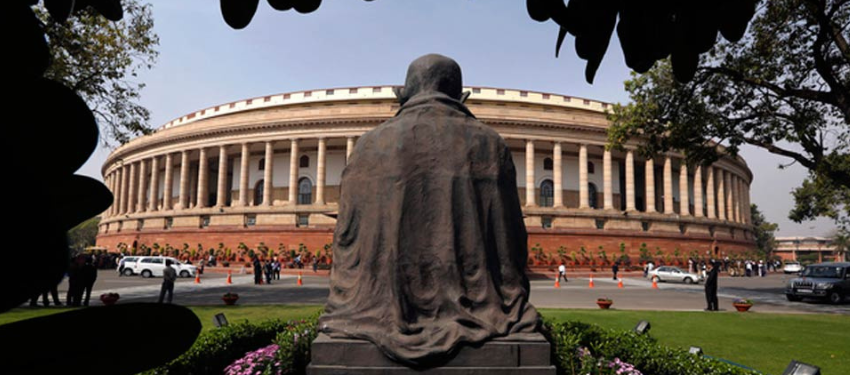
History was scripted when The Constitution (One Hundred and Twenty-Eighth Amendment) Bill, 2023, seeking to reserve 33% of seats in Lok Sabha and state Assemblies for women, was passed unanimously by Rajya Sabha, a day after it sailed through Lok Sabha.
The passage of the Women’s Reservation Bill marks a monumental milestone in India’s democratic journey. This historic legislation, the first to be cleared by both Houses in the new Parliament building, sends a resounding message of gender equality and empowerment. With 214 votes in favour and none against in the Upper House, the unanimous support reflects the nation’s commitment to ensuring women’s voices are heard more effectively.
In addition to this historic achievement, India has another reason to celebrate. JPMorgan’s decision to include Indian government bonds in its widely tracked emerging market debt index is poised to have a significant economic impact. This inclusion is expected to lead to billions of dollars in investments in India, reinforcing the nation’s position as the world’s fifth-largest economy. The eligible Indian Government Bonds, with a combined notional value of $330 billion, are classified as “fully accessible” for non-residents, further enhancing India’s appeal to global investors.
On the global stage, world leaders have pledged to boost efforts to provide universal health coverage to all people by 2030. At the UN General Assembly, a landmark political declaration was agreed upon, with countries committing to concrete actions and funding to achieve this ambitious health goal. With more than half the world’s population lacking access to essential health services, this commitment is a crucial step in addressing global health disparities and poverty caused by limited access to healthcare.
Moreover, the upcoming Summit of the Future, set to take place in September 2024, presents a unique opportunity to reinvigorate multilateralism and strengthen global governance. UN Secretary-General António Guterres emphasized the importance of this summit in aligning multilateral institutions with the realities of today’s world, emphasizing equity and solidarity.
In a world filled with challenges and uncertainties, these developments demonstrate that collective action, commitment to gender equality, and addressing global health disparities are pivotal to shaping a brighter and more inclusive future for all. As we celebrate these historic moments, let us recognize the power of unity and shared goals in shaping a better world.
As our valued readers, your backing has played a crucial role in bringing informative articles to you. We encourage you to remain actively involved, provide feedback, and look forward to our forthcoming content that will encompass a wide range of subjects. Your ideas and recommendations are eagerly awaited and can be shared with us at info@consumer-voice.org. Together, let’s nurture a community that is well-informed and empowered.
Wishing you enjoyable reading ahead!
Pallabi Boruah
Editor
The page you requested could not be found. Try refining your search, or use the navigation above to locate the post.

Healthcare costs are rising exponentially, and the incidence of critical illnesses is on the rise in India. A critical illness health insurance policy is designed to offer financial protection and support when one is diagnosed with a covered critical illness. This report delves into the specifics of critical illness health insurance policies available in India.
Subas Tiwari
Critical illness health insurance is a stand-alone policy that provides a lump-sum benefit to the policyholder upon the diagnosis of a covered critical illness. It is distinct from regular health insurance policies, which typically cover hospitalization and medical expenses. Critical illness policies offer a fixed payout to help policyholders meet medical costs, loss of income, or other financial requirements during treatment and recovery.
Critical illness policies offer comprehensive coverage for a wide range of critical illnesses. The lump-sum payout can be used for various purposes, such as:
The list given above is only indicative & illustrative & not exhaustive.
Myth 1: Critical Illness Insurance is the same as Health Insurance.
Fact: Critical Illness Insurance and Health Insurance are two different types of insurance. While health insurance covers hospitalization expenses and medical treatments, critical illness insurance provides a lump-sum payment upon the diagnosis of a covered critical illness. The payout from critical illness insurance can be used at the policyholder’s discretion, such as covering non-medical expenses, loss of income, or seeking specialized treatments.
Myth 2: Critical Illness Insurance is unnecessary if you have a healthy lifestyle.
Fact: While a healthy lifestyle can reduce the risk of critical illnesses, it doesn’t guarantee immunity from them. Critical illnesses can affect anyone, regardless of their lifestyle. Critical illness insurance provides financial protection during challenging times, allowing policyholders to focus on their recovery without worrying about financial burdens.
Myth 3: Critical Illness Insurance covers all medical conditions.
Fact: Critical Illness Insurance has a defined list of covered illnesses. The list typically includes major conditions like cancer, heart attack, stroke, organ failure, and more. However, not all medical conditions are covered. It is essential to review the policy documents and understand which illnesses are included and excluded from the coverage.
Myth 4: Only older people need Critical Illness Insurance.
Fact: While the risk of critical illnesses increases with age, young people can also suffer from severe medical conditions. Critical illness insurance can be beneficial for people of all age groups, especially those with family histories of critical illnesses or specific health risk factors.
Myth 5: Critical Illness Insurance is expensive.
Fact: The cost of critical illness insurance varies based on factors like the insured’s age, coverage amount, policy features, and medical history. While it may have higher premiums compared to regular health insurance, the financial protection it offers during a critical illness can outweigh the costs.
Myth 6: Pre-existing conditions are covered under Critical Illness Insurance.
Fact: Most critical illness insurance policies exclude pre-existing conditions for a specific period. If the policyholder is diagnosed with a critical illness related to a pre-existing condition during the waiting period, the claim may be denied. It is crucial to understand the waiting periods and policy exclusions before purchasing the insurance.
Myth 7: Critical Illness Insurance covers all medical expenses.
Fact: Critical illness insurance provides a lump-sum payout upon diagnosis of a covered illness. However, it does not cover all medical expenses. Regular health insurance is designed to cover hospitalization and medical treatment costs, while critical illness insurance offers financial support beyond medical expenses.
Myth 8: Critical Illness Insurance provides immediate coverage.
Fact: Like most insurance policies, critical illness insurance typically has a waiting period before coverage becomes effective. This waiting period can vary depending on the insurer and the policy. It is essential to be aware of the waiting period and understand when coverage starts.
Myth 9: You can purchase Critical Illness Insurance after diagnosis.
Fact: Critical illness insurance is meant to provide protection before the diagnosis of a critical illness. Once you are diagnosed with a covered critical illness, you won’t be eligible to purchase or claim the insurance for that specific condition.
Myth 10: Critical Illness Insurance is a guaranteed payout.
Fact: The policyholder must meet specific criteria and undergo a medical assessment for a successful claim. If the diagnosis does not meet the policy’s definition of a covered critical illness, the claim may be denied.
It’s essential to dispel these myths and have a clear understanding of critical illness insurance before purchasing a policy. Reading and comprehending the policy terms and conditions, coverage details, and exclusions are vital to making an informed decision that best suits your needs. If there are any doubts or questions, it’s wise to seek advice from insurance experts or professionals.
1. Assess your needs: Evaluate your medical history, family medical history, lifestyle, and the prevalent critical illnesses in your region. This will help you determine the coverage amount and types of illnesses you need to be insured against.
2. Compare plans: Research and compare different insurance providers, their plans, coverage, benefits, and premiums. Look for plans that offer comprehensive coverage for a wide range of critical illnesses.
3. Coverage scope: Check the list of critical illnesses covered under the policy. Common critical illnesses typically covered include cancer, heart attack, stroke, kidney failure, and organ transplants, among others. Make sure the policy covers the illnesses most relevant to your situation.
4. Waiting period: Be aware of the waiting period for specific illnesses. Many critical illness policies have a waiting period before the coverage becomes effective for certain conditions. Opt for a plan with a shorter waiting period if possible.
5. Pre-existing conditions: Understand how the policy treats pre-existing conditions. Some policies may have a longer waiting period or exclude coverage for pre-existing conditions.
6. Sum insured: Choose an adequate sum insured that considers your lifestyle, medical expenses, and potential future healthcare costs. A higher sum insured might result in higher premiums, but it offers better protection.
7. Claim process: Review the claim settlement process of the insurance company. A smooth and efficient claim settlement process is essential during critical times.
8. Exclusions: Carefully read and understand the policy exclusions. Know which situations or illnesses are not covered by the policy to avoid surprises when filing a claim.
9. Renewability and age limit: Check the policy’s renewal provisions and the maximum age until which the policy can be renewed. Opt for a policy with lifelong renewability options if possible.
10. Network hospitals: Confirm the list of network hospitals where cashless treatments are available. Having a wide network of hospitals will be beneficial in emergencies.
11. No-claim bonus: Some policies offer a no-claim bonus, where the sum insured increases if you do not file a claim during a policy year. Consider policies that provide this benefit.
12. Waiting period for claims: In some policies, there might be a waiting period before you can make a claim. Understand this aspect and choose a policy with reasonable waiting periods.
13. Premium affordability: While you shouldn’t compromise on coverage, ensure that the premium is affordable and fits within your budget. It’s essential to pay premiums consistently to keep the policy active.
14. Read reviews and feedback: Look for reviews and feedback from existing policyholders to understand their experiences with the insurance company’s services and claim settlement process.
15. Seek professional advice: If you find the process overwhelming or have specific health concerns, consider seeking advice from a qualified insurance advisor or agent.
Remember that critical illness insurance is not a substitute for comprehensive health insurance. It should complement your regular health insurance coverage to provide additional financial protection against major illnesses. Take your time to research and make an informed decision based on your specific needs and circumstances.
Conclusion:
Critical illness health insurance policies in India play a vital role in safeguarding individuals and families against the financial burden of critical illnesses. By offering lump-sum payouts, these policies provide much-needed support during difficult times. However, individuals must carefully assess their needs, compare policies, and select a plan that best aligns with their requirements and budget.