No Results Found
The page you requested could not be found. Try refining your search, or use the navigation above to locate the post.


Let’s start off on a positive note, shall we? An International Monetary Fund (IMF) official predicted that India would contribute 15% to world growth in 2023. In the approaching year, it is anticipated that China and India will each contribute 50% to global growth (2023). Krishna Srinivasan, director of the IMF’s Asia and Pacific Department (APD), stated at a roundtable with journalists from south Asian nations that India is likely to contribute roughly 15% to global growth.
Let’s talk about another very significant development. The Union Budget was recently presented on 1 February. It received a mixed response from different sections of people. Let us know your views on the budget!
For individual income tax payers, the Union Budget 2023 has offered significant gains. The highest income tax rate under the new tax system has been lowered from 42.74% to 39%, while the maximum surcharge has been dropped from 37% to 25%. Because of this, everyone will pay less in taxes.
There have also been some very significant advances. 220 crore people were immunised, totalling 102 crore. PM Suraksha Bima and PM Jeevan Jyoti Yojana will provide insurance coverage for 44.6 crore people. Under PM Kisan Samman Nidhi, cash transfers of 2.2 lakh crore will be made to over 11.4 crore farmers.
The Pradhan Mantri Kaushal Vikas Yojana. 4.0 will be introduced to train tens of thousands of young people in the next three years in modern skills for Industry 4.0, including coding, AI, robotics, mechatronics, IOT, 3D printing, drones, and soft skills. To prepare young people for opportunities abroad, 30 Skill India International Centres would be established in various States.
The lengthening of the highways by 25,000 km will result in improved multimodal connectivity. 2,000 kilometres of rail infrastructure will be part of it as well, all powered by local technology. Eight ropeway projects and 100 cargo terminals will be constructed in total to improve connectivity. All in all, exciting times ahead!
I hope you have loved reading the editorial and will continue to support us in bringing the best, interesting and informative articles for your perusal. In the meantime, keep reading the articles we have brought you this month. We discuss Women’s Health and Nutritional Needs, Home Loan by NBFCs and many more. Do share your thoughts at info@consumer-voice.org.
Until then, happy reading!
Pallabi Boruah
Editor
The page you requested could not be found. Try refining your search, or use the navigation above to locate the post.
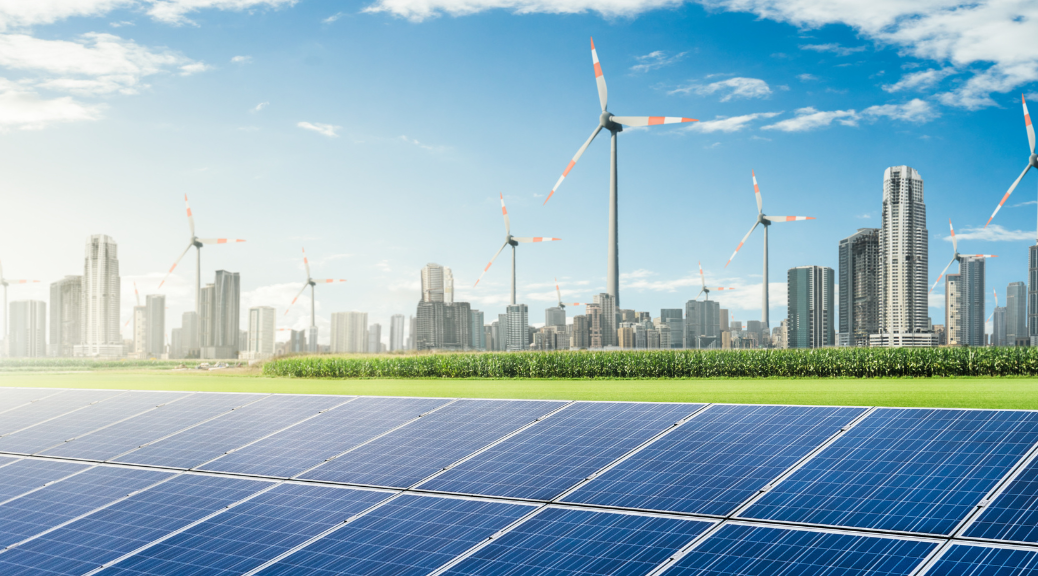

World Consumer Rights Day was inspired by John F Kennedy, who was the first leader to send a special message on 15 March 1962 to the US Congress in which he formally discussed consumer rights concerns. In 1983, it was first marked by the consumer revolution and now mobilizes every year because of important issues and campaigns which is now celebrated every year on March 15 as World Consumer Rights Day (WCRD) raising global awareness of consumer rights, consumer protection and empowerment.
This year the theme of WCRD 2023 will be: Empowering Consumers Through Clean Energy Transitions. In India too the day is being celebrated by the Department of Consumer Affairs and other organizations.
Global energy crisis is looming large with energy shortages, increased prices of oil and other economic factors especially after the pandemic. However, the energy crisis deepened following Russia’s invasion of Ukraine in February 2022. This had an untold impact on vulnerable consumers and also on climate change. The International Energy Agency (IEA) said the world faces its first “truly global energy crisis” in addition to unaffordable energy bills. It added that unaffordable energy bills remain a huge problem, driven up as the exports of oil and gas have been restricted.
Currently most of the global energy is depended on excessive use of non-renewable sources of energy like coal and gas which in turn puts a strain on our water and oxygen resources by causing pollution. Fossil fuels contribute to almost 75 percent of global greenhouse gas emissions and nearly 90 percent of all carbon dioxide emissions. It is therefore imperative to prevent deadliest impact of climate change to reduce greenhouse gas emissions by almost half by 2030 and reach net-zero by 2050.This should be seen as a turning point for speeding up the world’s transition to green energy.
The clean energy transition means shifting energy production away from sources that release a lot of greenhouse gases, such as fossil fuels, to those that release little to no greenhouse gases. Nuclear power, hydro, wind and solar are some of these clean sources.
One must realize that the shift to clean and sustainable energy resources will involve shift of resources between industrial sectors and local governments. Governments must quickly adapt to the use and disbursing of renewable energy as availability and quality of renewable resources vary.
Stakeholders in this process have varying degrees of political and economic power, and understanding how political economic factors influence clean energy transitions is crucial to effective policy formulation and facilitating transitions to sustainable energy systems. A ‘clean energy transition’ refers broadly to a substitution of technologies and associated fuel inputs across the full set of energy subsectors and consumers of energy, both as intermediates and final goods.
No one needs a net zero world more than the world’s largest and oldest democracy- India. India has huge potential for green transition investments such as solar, hydro or wind.
However, a clean energy transition is highly unlikely to occur on its own. Political economy considerations take a leading role. India and China are cases in point. In 2009, it is fair to say that India’s negotiation strategy aimed to position climate change as a developed country problem. In contrast, India’s INDC (Intended Nationally Determined Contributions) offers serious attempts to reduce the carbon intensity of its GDP. China has gone further, offering to peak emissions by 2030 with declines thereafter.
However in 2019 India announced that it would take up its installed capacity of renewable energy to 450 GW by 2030. The Production Linked Incentive Scheme (PLI) scheme is another initiative of the Government of India with respect to enhancing the manufacturing sector for the production of raw materials for renewable energy. Offshore wind too has been given a new lease of life through recent government reforms and targets. With a coastline of about 7,600 km, offering the potential to install ~195GW of offshore wind capacity, the segment can contribute to India’s clean energy target.
A latest report of Institute for Energy Economics and Financial Analysis, India’s renewable energy capacity is projected to grow rapidly with 35-40 GW added annually through to the fiscal year 2029/30. Installed renewable energy capacity (including large hydro) rose from a few megawatts (MW) in 2010 to ~163 gigawatts (GW) as of August 2022. India’s ambitious renewable energy targets and the associated policy and reform framework have been an important tailwind for the sector’s development.
“The good news is that the lifeline is right in front of us,” says UN Secretary-General António Guterres, stressing that renewable energy technologies like wind and solar already exist today, and in most cases, are cheaper than coal and other fossil fuels. We now need to put them to work, urgently, at scale and speed.
Every year 15th March is celebrated as World Consumer Rights Day. The goal of this day is to increase public awareness of the demands and rights of consumers worldwide. By commemorating the day, we have the opportunity to call for the respect and protection of all consumer rights as well as to voice our opposition to social injustices and market practises that violate those rights.
The United Nations has officially recognised and endorsed World Consumer Rights Day. Consumers International has been running the campaign for 40 years, bringing the entire consumer movement together to celebrate. Each year, members of Consumers International contribute to choosing the campaign theme in order to encourage international action on critical consumer concerns.
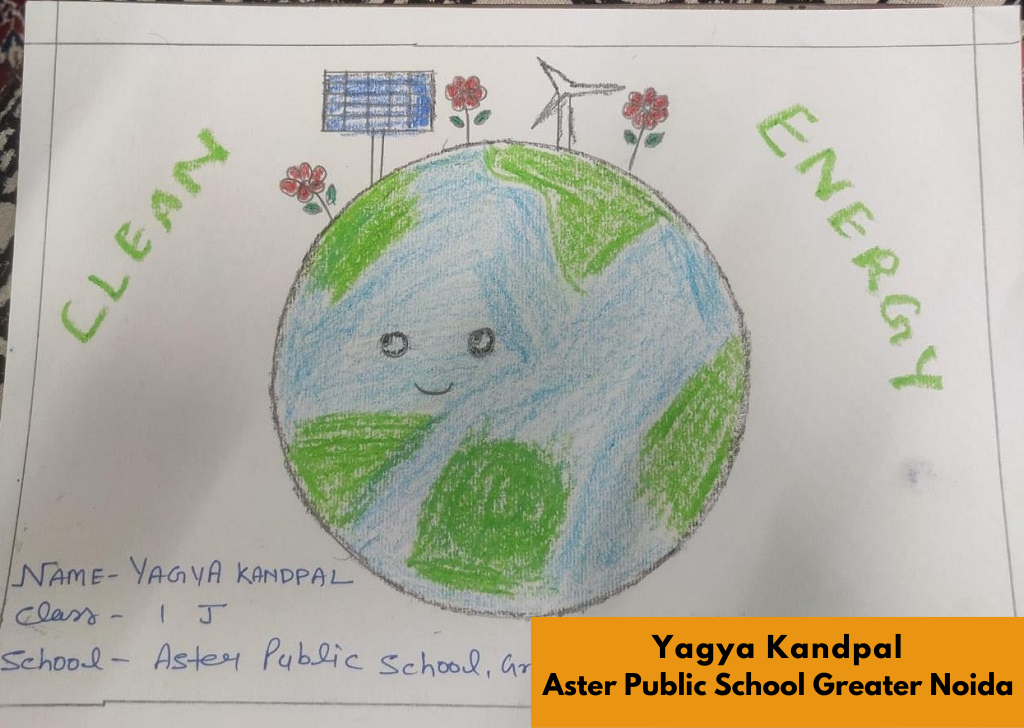
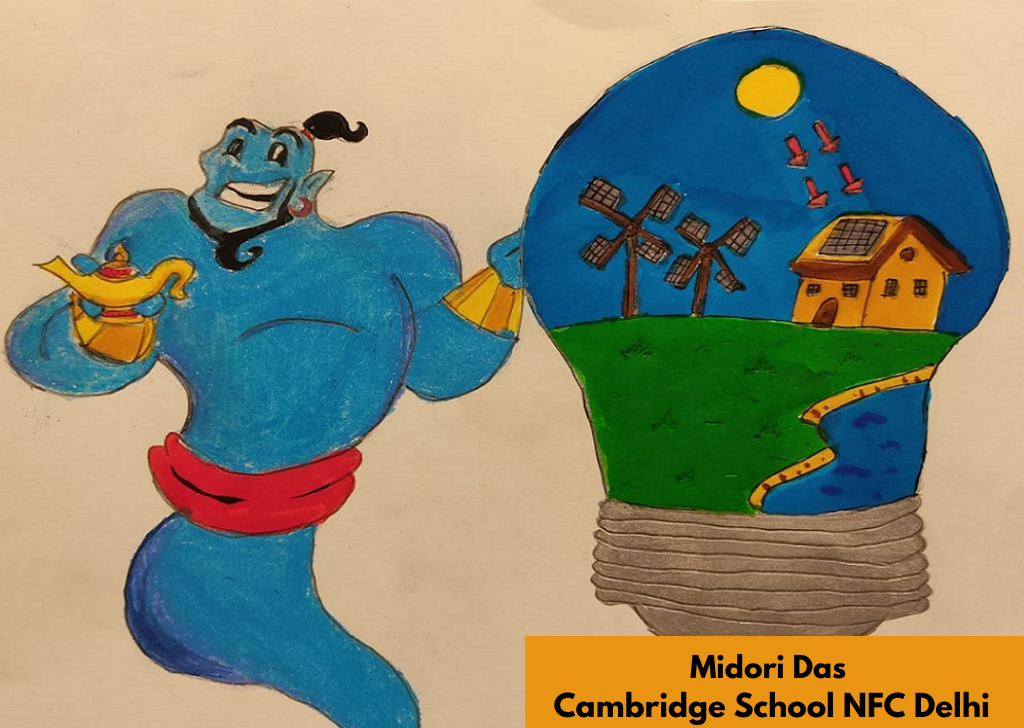
“Clean Energy Transitions” is the theme this year. The term “energy transition” describes the change occurring within the global energy sector from fossil-based energy production and consumption systems, such as oil, natural gas, and coal, to renewable energy sources like wind and solar as well as lithium-ion batteries.
The United Nations has officially recognised and endorsed World Consumer Rights Day. Consumers International has been running the campaign for 40 years, bringing the entire consumer movement together to celebrate. Each year, members of Consumers International contribute to choosing the campaign theme in order to encourage international action on critical consumer concerns.
“Clean Energy Transitions” is the theme this year. The term “energy transition” describes the change occurring within the global energy sector from fossil-based energy production and consumption systems, such as oil, natural gas, and coal, to renewable energy sources like wind and solar as well as lithium-ion batteries.
The transition to clean energy entails moving energy production away from sources that emit a lot of greenhouse gases, such as fossil fuels, and toward sources that emit very little or no greenhouse emissions. Among these clean sources are nuclear power, hydropower, wind power, and solar electricity. According to the International Energy Agency(IEA), in order to meet these climate targets by 2050, at least 80% of the world’s electricity must be switched to low-carbon sources, with roughly two thirds of it still coming from burning fossil fuels.
The world’s fight against climate change has never been more important than it is now, thanks to India’s announcement that it intends to achieve net zero emissions by 2070 and to fulfil 50% of its electricity needs from renewable sources by 2030. India is setting the bar for new economic development models that could sidestep the carbon-intensive strategies many nations have previously taken and serve as a model for other emerging economies.










Ideally, the normal blood pressure in human beings is 120/80 mm. Hg. A blood pressure of 140/90 mm. Hg. or above is considered high. If blood pressure has been monitored regularly for a week and recorded above 140/90 mm. Hg. on two or more occasions, the person is diagnosed to be hypertensive.
The highest of blood pressure will sometimes go unnoticed due to want of symptoms. The only way to know one has high blood pressure is to get it measured. Due to the lack of symptoms, hypertension is also called a silent killer. The symptoms one might experience could include:



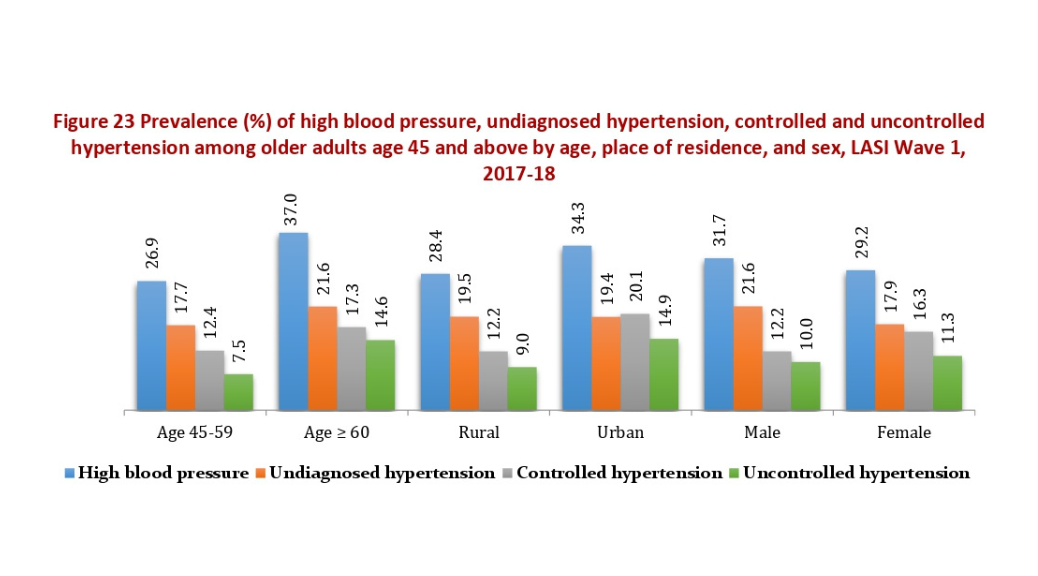
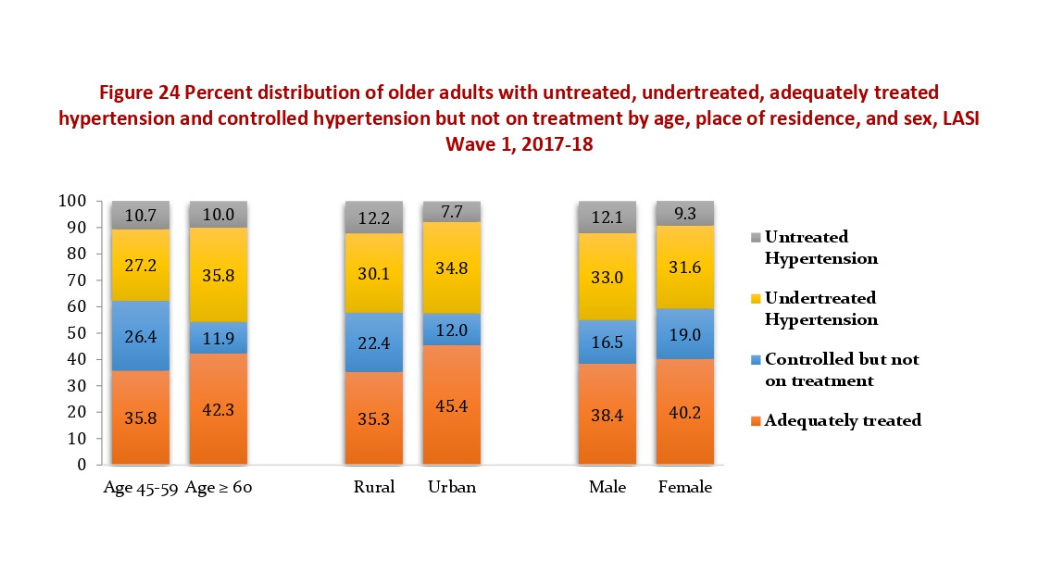
The India Hypertension Control Initiative (IHCI) a multi-partner initiative conducted a cohort study in 24 IHCI sites in four Indian states — Punjab, Madhya Pradesh, Maharashtra and Telangana was jointly funded by the World Health Organization (WHO) and the Indian Council of Research (ICMR). The aim of the study was to strengthen hypertension or high blood pressure management and control by surveilling and treating patients.
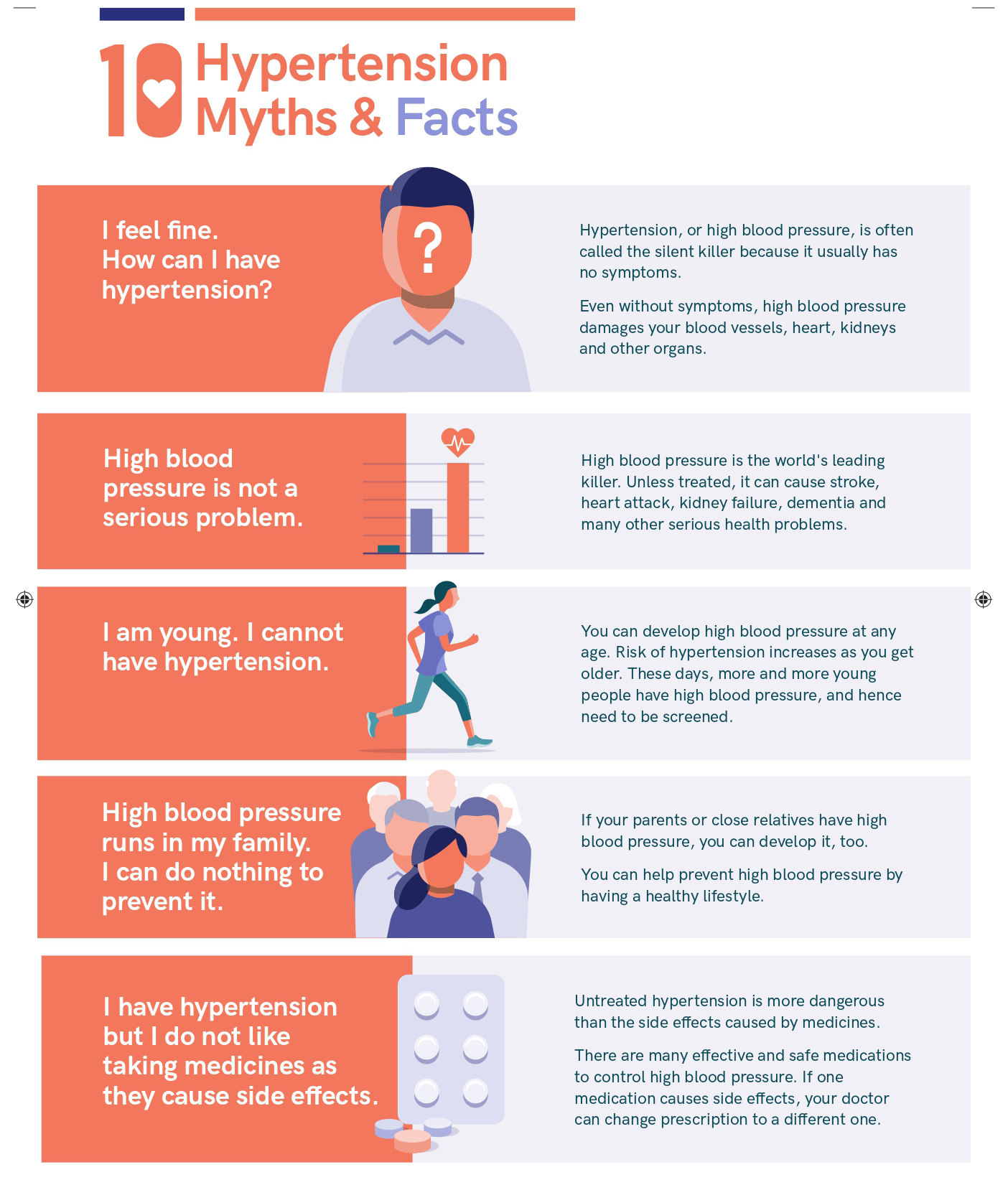
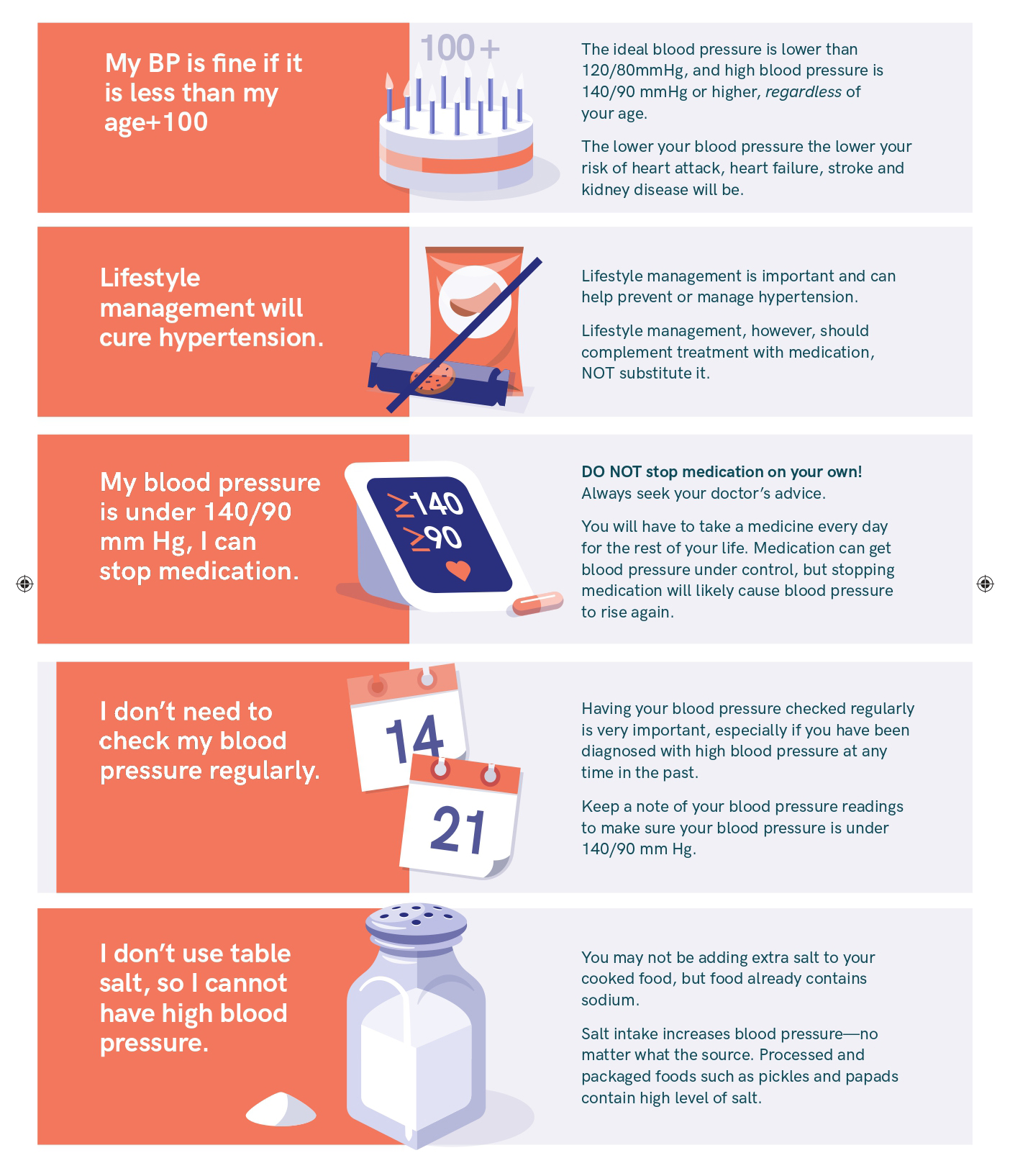

Hypertension affects more than 30% of the adult population worldwide, more than one billion people around the world. It is the main risk factor for cardiovascular diseases, especially coronary heart disease and stroke, but also for chronic kidney disease, heart failure, arrhythmia and dementia.
India Hypertension Control Initiative Study The India Hypertension Control Initiative (IHCI) a multi-partner initiative conducted a cohort study in 24 IHCI sites in four Indian states — Punjab, Madhya Pradesh, Maharashtra and Telangana was jointly funded by the World Health Organization (WHO) and the Indian Council of Research (ICMR). The aim of the study was to strengthen hypertension or high blood pressure management and control by surveilling and treating patients. The details of the study could be found here.
Consumer VOICE welcomed 2021 with this great decision. The campaign for the elimination of trans fats in oils has finally seen the light of the tunnel. After more than a year’s hard work and efforts, the Food Safety and Standards Authority of India (FSSAI) has announced that all edible refined oils, vanaspati, bakery shortening, margarines, vegetable fat spreads and mixed fat spreads may only contain up to 3% trans fats by January 2021 and 2% or less trans fats by January 2022. The move is the first step by FSSAI towards fulfilling its commitments made in 2018 to reduce trans-fats in both edible oils and in all foods.
May 23, 2024 | Jagran
उत्तर भारत में हीट वेव का कहर जारी है। आने वाले कुछ हफ्तों तक इससे राहत मिलने के आसार नहीं हैं। मौसम विभाग ने हालात को देखते हुए रेड अलर्ट जारी किया है। Read More
May 18, 2024 | Money Labh
हर भारतीय तक पहुंचने वाले खाद्य पदार्थ सुरक्षित हों, यह जिम्मेदारी देश के खाद्य नियामक भारतीय खाद्य संरक्षा एवं मानक प्राधिकरण (FSSAI) की है। Read More
May 13, 2024 | The Print
The Indian Council of Medical Research-National Institute of Nutrition (ICMR-NIN) — the country’s apex nutrition authority — has updated its dietary guidelines, advising against sugar for children under two years of age. Read More
March 14, 2024 | Bhaskar Live
Rising levels of hypertension or high blood pressure in the country are alarmingly threatening kidney health, according to health experts on Wednesday, ahead of World Kidney Day… Read More
March 14, 2024 | Lokmat Times
Rising levels of hypertension or high blood pressure in the country are alarmingly threatening kidney health, according to health experts on Wednesday, ahead of World Kidney Day… Read More
March 14, 2024 | The Tribune
Rising levels of hypertension or high blood pressure in the country are alarmingly threatening kidney health, according to health experts, ahead of World Kidney Day on March 14… Read More
The page you requested could not be found. Try refining your search, or use the navigation above to locate the post.
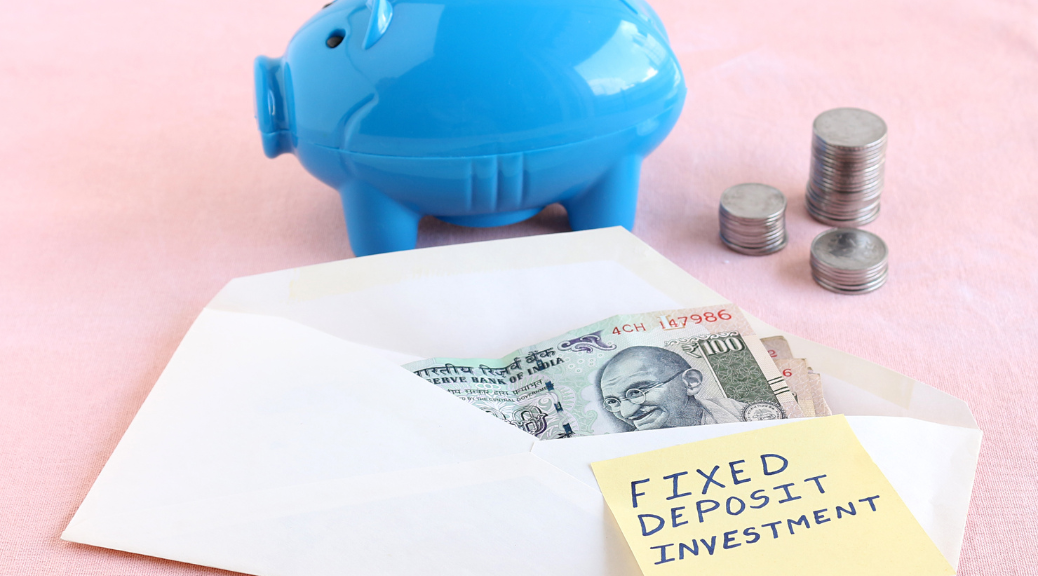
After the big increase in the repo rate by the Reserve Bank of India (RBI) in the last few months, all the major banks of the country have increased the interest rates offered on their fixed deposits (FD) several times to attract new customers. Due to this, investing in FD has once again become beneficial.
Significantly, to reduce inflation, RBI is increasing the repo rate. RBI has increased rates by a total of 190 basis points since May. It is likely to increase further. That is, the increase in rates on FD may continue even further. This is good news for investors. After Corona, banks had reduced the interest rates on FDs significantly. Now it has started increasing.
Subas Tiwari
A fixed deposit or an FD is an investment instrument that banks and non-banking financial companies (NBFC) offer their customers. Through an FD, people invest a certain sum of money for a fixed period at a predetermined rate of interest in an FD. The rate of interest varies from one financial institution to another, although it is usually higher than the interest offered on savings accounts.
Fixed deposits are available for different periods, ranging from very short-term tenures of 7-14 days to long tenures of 10 years. A fixed deposit is sometimes known as a term deposit.
You may think of a fixed deposit as lending money to a bank or an NBFC. When you invest in an FD, the financial institution guarantees to return the invested sum at the end of the tenure, known as the maturity period, and pays you interest for it. The bank may use this money to lend to other borrowers and charges them an interest for the same. A portion of this interest is passed on to you.
The interest offered depends on the tenure or maturity period of the FD. A 7-day fixed deposit will carry a lower annual interest rate compared to a one-year FD. This is to compensate for the time-risk of money. Simply put, a rupee today is more valuable than the same rupee a year from now. This is because inflation pushes up prices over time. A rupee will buy you more goods today than it will a year from now. An investor needs to be compensated for this.
You can choose to reinvest the interest or receive an interest amount periodically in your bank account.
Cumulative FDs pay you the interest and the principal at maturity. The interest is reinvested every year. This means that you will not be eligible to receive regular interest pay outs, instead of receiving a lump sum at the end of the FD tenure. The cumulative FD option may be suitable for you if you do not need a regular stream of income. Under this option, you will also benefit from the power of compounding, as the following year’s interest will be calculated on the principal plus interest of the previous year.
Non-cumulative FDs will pay you interest at fixed intervals. You could choose to receive interest payments monthly, quarterly, half-yearly, or annually, depending upon your needs. This will give you a regular stream of income. However, the downside of non-cumulative FDs is that you will lose out on earning interest on interest.
Before you invest in a fixed deposit, you must know the different FDs offered in the market.
Standard fixed deposits are investment schemes wherein you invest an amount for a fixed period and a predetermined interest rate. The period of investment or tenure can range from 7 days up to 10 years. The interest offered depends on the duration of investment as well as the financial institution offering this instrument.
For individuals over 60 years of age, banks and NBFCs offer a higher interest rate on FDs than other investors, usually providing about 25-50 basis points (0.25-0.50%) more. They also provide an additional tax benefit. Interest from senior citizen FDs does not carry a tax deducted at source if it does not exceed ₹50,000 a year. Other investment options do not provide this benefit for seniors.
For individuals who are not senior citizens, the TDS deduction limit is at ₹40,000 a year. Investing in FDs as a senior citizen will reduce your overall tax burden and hence, increase returns.
There are specific tax-saving FDs that are eligible for tax deductions. A tax-saving FD has a maturity period of 5 years and the principal amount, up to ₹1, 50,000 per annum is tax-deductible under section 80C of the Indian Income Tax Act.
A recurring deposit is a type of fixed deposit wherein you can invest a fixed sum monthly or quarterly for a specified time. The interest rate is predetermined. At the end of the maturity period, you will receive your principal along with interest calculated proportionately. For instance, you can deposit ₹1,000 every month for five years. Interest on the first deposit will be paid for five years while that on the last deposit will be paid for one month.
A flexible fixed deposit is linked to your savings account. In this instrument, you can instruct your bank to automatically transfer any sum beyond a predetermined balance to a fixed deposit via an auto sweep-in feature. For instance, if you want to maintain a balance of ₹20,000 every month, any excess will be transferred to an FD. Conversely, if your balance falls below ₹20,000, the bank will liquidate a portion of your FD to maintain your balance. It gives you the benefit of liquidity and investment.
The interest on the flexi-deposits is higher than savings account interest rates but lower than standard fixed deposit rates.
Non-resident Indian citizens can invest in non-resident external (NRE) or non-resident ordinary (NRO) fixed deposits. NRE FDs are suitable for citizens earning in a foreign currency. Although there are currency fluctuations, the most significant advantage of NRE FDs is that the whole amount, principal and interest, are tax-free. NRO FDs can be deposited in Indian or foreign currency and are taxable at 30% per annum.
Some companies or corporate entities also offer fixed deposits. While they offer a higher rate of interest than banks and NBFCs, the risk associated with corporate FDs is higher. While bank and NBFC deposits enjoy backing and insurance coverage from the DICGC, corporate fixed deposits do not provide this insurance. If a company goes bankrupt, there is no guarantee that your money in corporate deposits can be recovered.
All banks which are members of the Deposit Insurance & Credit Guarantee Corporation enjoy protection by way of enjoying insurance coverage against bank winding up and/or liquidation of bank for which the banks need to pay a nominal insurance premium at regular intervals. The bank depositors thereby enjoy DICGC cover up to Rs.5, 00,000 per deposit account in each bank in the event of such unfortunate events taking place at any time.
The interest earned on fixed deposits is taxable. It is charged at your applicable tax slab under the head of “Income from Other Sources”.
However, banks will deduct TDS (tax deducted at source) at the rate of 10% per annum from your interest. That can be accounted for when filing your income tax. When filing your taxes, calculate the interest income you have earned for the year, compute tax by charging tax based on your income tax slab rate and then deduct any TDS amount. This is the net tax payable. TDS on interest income is deductible only if your total interest is above ₹40,000 per annum. For senior citizens, the limit is ₹50,000.
|
Name of Bank/ NBFC |
Regular FD Rates |
Senior Citizen’s FD Rates |
|
Bajaj Finance Ltd. |
7.70% |
7.95% |
|
State Bank of India |
5.40% |
6.20% |
|
ICICI Bank |
5.50% |
6.30% |
|
Axis Bank |
5.50% |
6.05% |
|
HDFC Bank |
5.50% |
6.25% |
|
Bank of Baroda |
5.30% |
6.30% |
|
IDFC Bank |
5.75% |
6.25% |
|
Kotak Mahindra Bank |
5.10% |
5.60% |
|
Canara Bank |
5.35% |
5.85% |
|
Yes Bank |
7.00% |
7.75% |
|
IndusInd Bank |
7.00% |
7.50% |
|
Punjab National Bank |
5.25% |
6.00% |
|
IDBI Bank |
5.10% |
5.60% |
|
Union Bank |
5.40% |
5.90% |
|
Citibank |
3.75% |
4.25% |
|
RBL Bank |
6.75% |
7.25% |
|
Indian Bank |
5.15% |
5.65% |
Sourced from- ET Money on 15th Dec 2022