DNA Fingerprinting: A key to know your ancestry

DNA Fingerprinting: A key to know your ancestry

DNA Fingerprinting: A key to know your ancestry

A new field of study was opened in 1984 when Professor Sir Alec Jeffreys generated the first genetic fingerprint in his lab at the University of Leicester. Talking about his discovery, Sir Alec said, “My life changed on Monday morning at 9.05 am, 10 September 1984. What emerged was the world’s first genetic fingerprint. In science it is unusual to have such a ‘eureka’ moment. We were getting extraordinarily variable patterns of DNA, including from our technician and her mother and father, as well as from non-human samples. My first reaction to the results was ‘this is too complicated’, and then the penny dropped and I realised we had genetic fingerprinting.”

Dr. Anil Kumar Tomar

Scientist-D

Department of Biophysics, AIIMS, New Delhi

Genetic fingerprinting, or commonly referred as DNA fingerprinting, is a revolutionary method that has transformed the study of forensic science. It is a method that employs analysis and comparison of DNA to solve legal issues like paternity testing and inheritance disputes, establish identity in criminal cases when biological evidence is discovered at crime scenes, and identify victims of major catastrophes, and mutilated and unidentified bodies. In addition, it is also routinely applied in immigration issues, and wildlife forensics. The principle behind DNA fingerprinting is the idea that some portions of each person’s genome have a unique genetic code. To discover a person’s unique genetic profile, this technique entails analysing and comparing specific segments of their DNA. Within the DNA molecule, this code is made up of nucleotide sequences that are organised in a definite order. Short tandem repeats (STRs), for example, are highly variable DNA sections that can be used to create a unique pattern or “fingerprint” for each person. There are various steps involved in the DNA fingerprinting process. A biological sample is first used to extract DNA; this sample could be blood, saliva, hair, or any other bodily fluid. DNA is cut into specified fragments using restriction enzymes and the polymerase chain reaction (PCR) is used to amplify DNA segments, which are then separated by a gel electrophoresis technique and bands of DNA fragments are visualised by X-ray. The DNA profile of the person is represented by the resulting band pattern.

Soon after its discovery, the first paternity case, an immigration case, and the identification of identical twins were all solved in 1985 using DNA fingerprinting. While, the first criminal investigation to use DNA fingerprinting evidence occurred in 1986. Few years later, a leading British chemical company, Imperial Chemical Industries (ICI) marketed the first commercially available kit. As a very accurate and reliable technology for identifying suspects, establishing ties between crime scene evidence and criminals, DNA fingerprinting has had a significant impact on forensic investigations. Further, identifying disaster or mass casualty victims, settling paternity and kinship issues, and studying genetic diseases and population genetics have all benefited greatly from its use. However, the ability to trace and identify ancestral lineages using DNA fingerprinting has become more important. Scientists can discover the genetic markers that have been passed down through the generations by examining particular sections of an individual’s DNA, revealing information about one’s ancestry.

The widespread use of DNA fingerprinting by anthropologists, social scientists, and genealogists to support conventional / historical research and create connections with biological parents is a result of technology advancements and low costs. The capabilities and applications of DNA fingerprinting have been substantially enhanced by the development of DNA sequencing technologies. The simultaneous examination of several genetic markers using next-generation sequencing (NGS) technology boosts the efficiency and discriminatory power of the process. Ancestry DNA tests help people to discover more about their family roots. People frequently utilise DNA ancestry tests to learn about their ethnicity and family history. DNA ancestry tests available to the public are Y chromosome test, mitochondrial DNA test, autosomal DNA test, single nucleotide polymorphisms (SNPs), etc.

A Y chromosome test is employed to ascertain whether tested males have the same paternal ancestry. The Y chromosome is passed down from father to son and has extremely low mutation over many generations. All males in a direct male line will have the same Y chromosome profiles, if such a line can be identified. This test is the best way to determine whether alleged males are genuinely connected biologically. On the other hand, mitochondrial DNA testing is used to determine maternal lineage. While mitochondrial DNA is inherited by all children, only biological females have the ability to pass it on to future generations. Thus, this test is applicable to both biological males and females to know about their maternal ancestry. Autosomal DNA tests are not specific in that way and are applied to confirm parent/child relationships and all other relationships up to the second cousins. Autosomal DNA is inherited from the autosomal chromosomes. Humans have 22 pairs of autosomal and one pair of sex chromosomes (X and Y). SNPs are the most prevalent form of genetic variations in people. Each SNP is a variation in a single nucleotide, the basic unit of DNA. SNPs are common genetic variations that can be used to infer a person’s ethnicity or ancestry. SNP testing may be superior to Y chromosome or mitochondrial DNA testing, which only consider one ancestral line. Their ability to identify degraded DNA strands is an advantage.

Looking at present scenario, this technique has evolved exponentially in terms of technological innovations and commercialization. It is now commercially available for consumers at a reasonable price. If you want to learn about your ancestry, you can simply select and order from a range of DNA fingerprinting tests as per your requirements. The major global firms that provide these test facilities are Family Tree DNA, Easy DNA, Ancestry.com DNA, and 23andMe. Several companies in India are also offering these services, including DNA Forensics Laboratory, DDC Laboratories India, map my genome, Xcode Life, and DNA Labs India.

Related

EatSmart Cities Challenge

EatSmart Cities Challenge

The Food Safety and Standards Authority of India (FSSAI) in association with the Smart Cities Mission under the aegis of Ministry of Housing and...

read more
Stay Healthy This Summer!

Stay Healthy This Summer!

Summers are here, and accordingly we must make some dietary changes in this season to adapt to the heat. Summer calls for a diet which helps us to...


read more
Portability of Health Insurance

Portability of Health Insurance

Portability of Health Insurance

If you find yourself dissatisfied with the services provided by your current mobile phone service provider and wish to switch to a different company, you can easily port your mobile number. Similarly, you also have the option to port your health insurance policy, allowing you to transfer your policy from one insurance provider to another.

                                                                                                                                                                  Subas Tiwari

Portability of Health Insurance

When you change your health insurance policy from one insurance company to another, you don’t have to lose the benefits you have accumulated.

In the past in health insurance policies, such a move resulted in your losing benefits like the waiting period for covering “Pre-existing Diseases”.

Now IRDA protects you by giving you the right to port your policy to any other insurer of your choice. It has laid down that your new insurer “shall allow for credit gained by the insured for pre-existing condition(s) in terms of waiting period”.

This applies not only when you move from one insurer to another but also from one plan to another with the same insurer.

Rights

  • You can port your policy from and to any general insurance company or specialised health insurance company
  • You can port any individual/ family policies
  • Your new insurer has to give you the credit relating to waiting period for pre-existing conditions that you have gained with the old insurer
  • Your new insurer has to insure you at least up to the sum insured under the old policy
  • The two insurers should complete the porting as per the timelines prescribed in the IRDA (Protection of Policyholders’ Interests) Regulations and guidelines

Conditions

  • You can port the policy only at the juncture of renewal. That is, the new insurance period will be with the new insurance company
  • Apart from the waiting period credit, all other terms of the new policy including the premium are at the discretion of the new insurance company
  • At least 45 days before your renewal is due you have to
  • Write to your old insurance company requesting a shift
  • Specify company to which you want to shift the policy
  • Renew your policy without a break (there is a 30 day grace period if porting is under process)

IRDA Facilitation

IRDA has created a web-based facility to get and maintain data about all health insurance policies issued by insurance companies to individuals so that it can be accessed by the new company to which a policyholder wishes to port his policy.

This enables the new insurer to obtain data on history of health insurance of the policyholder wishing to port his policy.

Process for Health Insurance Portability Policy

If you think that health insurance portability is an excellent choice for yourself and now you are wondering how to port your health insurance policy, here are the details of how to complete the process:

Stage 1

First of all, you may have to fill the IRDA portability form to initiate the process. Note that a policyholder can initiate a portability request when the policy is due for renewal. You will have to approach the insurance company where you wish to port your existing health insurance policy. The new insurer will send you a couple of documents that include a portability form and a proposal form. They may also send details about various health insurance products that the company offers.

Stage 2

Once you fill all the necessary forms and submit it to your new insurance company, they will get in touch with your previous insurer for obtaining your medical records and other related information. They might also ask for your claim history. Your old insurance company is bound to share this information via IRDA i.e. the insurance regulator when they receive such requests.

Stage 3

When the new insurance company receives all the required details, they will decide whether or not they wish to provide you a health insurance policy. This is called underwriting of a policy. An underwriter will analyse the data related to you and consider your risk profile to decide about providing health insurance to you. Your new insurance company is supposed to underwrite your policy within 15 days if they decide to insure you. In case of a delay in this time period, it is considered that you are insured under the new insurance company.

Documents Required For Porting a Health Insurance Policy

The process of porting a health insurance policy can differ slightly based on the terms and conditions of the insurance company. You need to get in touch with your current and previous insurer to understand the exact set of documents required for the purpose of porting the policy. You may be asked to submit the following documents to initiate the process:

  • Identity Proof
  • Address Proof
  • IRDA portability form
  • Proposal Form
  • Insurance Policy
  • Claim History if applicable
  • Declaration of no claims, if applicable
  • Documents related to medical history

Advantages & Disadvantages of Health Insurance Portability

Switching to a new health insurance company has its own set of advantages and disadvantages. We will discuss both in this section. You can read through them and then decide whether you want to make a switch to a new insurer or renew the existing health insurance policy at your current insurance company.

Benefits of Porting Health Insurance Policy

Benefits of porting to a new health insurance company are as follows:

  • Customize the Policy- You have an option to customise the policy to an extent. This way you can make changes in the policy to suit your existing needs from a medical insurance policy.
  • No Claim Bonus- In case you have an accumulated No Claim Bonus on your existing policy, your new insurer will calculate this discount and incorporate it with the amount of premium you are supposed to pay. Thus, you can continue to avail the benefit of No Claim Bonus by leading a healthy lifestyle.
  • Health Insurance Benefits- Apart from the accumulated No Claim Bonus, all the other benefits of your policy remain intact even after you make a switch. Porting allows you to keep the existing benefits and avail new ones with a new insurer.
  • Premium- The current health insurance market in India is brimming with competition. Insurers want policyholders to join them and buy a health insurance policy. Thus, porting the existing policy may lower your premium while the benefits may increase

Disadvantages of Porting Health Insurance Policy

Disadvantages of porting to a new health insurance company are as follows:

  • Porting on Renewal- As mentioned earlier, porting a health insurance policy is only possible near the date of renewal. A policyholder may not be allowed to port the policy when the renewal date is far away.
  • Changes in Plans- Changing the existing health insurance policy drastically is not allowed. You can make certain changes in the extent of coverage, however, changing the whole plan is not possible.
  • Extra Coverage- The policyholder needs to pay a higher amount of premium for buying any kind of additional coverage at the new insurance company.

What to Do If They Reject Portability Requests?

There could be a few reasons why one’s health insurance portability gets rejected. Let’s take a look at these reasons and understand what a policyholder can do in such cases.

  • Providing incomplete information-This can lead to rejection because the new insurance company is not provided with true and complete information about the policyholder. Getting in touch with the insurance company to provide all the required details might be done to get an approval.
  • Not submitting the documents in time- As mentioned earlier, there is a timeframe in which the policyholder needs to get in touch with the new insurance company and apply for a switch. If there is a delay, the request for porting the policy may get rejected. The policyholder must now wait for the next renewal date and make sure that necessary timelines are followed.
  • Claim history- There are high chances that your request for porting the policy may get rejected if the claim history is not proper. The company has a right to reject the request in case of frauds or misrepresentation of information.

Things to Remember While Porting For Health Insurance

A medical emergency can affect a person in both financial and emotional ways. It can easily deplete your savings if you do not have proper health insurance coverage. Buying a policy without considering your needs, lifestyle, and coverage can have a huge impact on the claim amount. Thus, it is important to consider the following things while porting your health insurance policy from one insurer to another.

  • Limits and Sub-limits- Each type of coverage of a health insurance policy has a certain cap on the claimable amount. For example, the daily room rent could be capped to Rs. 2500. You need to check such limits when you port health insurance policy and make sure that you are okay with the limits and sub-limits of the new policy.
  • Benefits- Each health insurance policy is designed to provide certain features that are helpful for the policyholder. You need to understand that these features or benefits are limited to the policy and cannot be ported. For example, if your old policy offers pre-hospitalization coverage for 30 days and the new insurance company offers this coverage for 15 days, you cannot change this feature. You have to make do with the new coverage.
  • Premium- The new insurance company may offer a lower premium for a similar insurance policy. However, you need to make sure that the coverage offered for a lower premium is sufficient for your needs. Lower premiums for a lower coverage will increase your out of pocket expenses at the time of a medical emergency. ‘Out of pocket expenditure’ refers to the money you pay directly to the hospital or a medical facility without the involvement of the insurance company.

Frequently Asked Questions (FAQs)

Here are some answers to the most asked questions related to Health Insurance Portability.

From the article, I understood that making a switch between two insurance companies is possible. However, is it possible to switch between plans in the same insurance company?

Yes, it is possible to switch to a new health insurance policy offered by the existing insurance company. This process will not take as much time as switching to a new insurance company, because your current insurer already has all the details required to make a switch.

I have already served half of the waiting period. Will it reset upon porting the policy to a new health insurance company?

Probably not. If the applicable waiting period for a specific condition is similar to that of the old policy, then you may only have to serve the remaining waiting period under the new plan. However, this solely depends upon the terms and conditions of the new health insurance company.

Why should I port my health insurance policy?

You should port your health insurance policy if you are not happy with the services provided, coverage, or premium with respect to the current insurance company and your health insurance policy.

Does the age of a policyholder matter while porting health insurance?

Yes, the age of a policyholder is a vital factor while porting the policy. The older the person the more will be the health insurance premium. An insurance company may also reject a proposal based on the risk factor associated with the age of a policyholder.

Is it a good idea to buy health insurance coverage from two different insurance companies?

Buying health insurance from two different insurers depends upon the coverage being purchased. There is no point in buying similar coverage from multiple insurers. Instead, consider buying different coverages to create a comprehensive health insurance portfolio. This can provide all-round coverage in the time of a medical emergency.

Info sourced from: https://policyholder.gov.in & https://www.acko.com

Related

No Results Found

The page you requested could not be found. Try refining your search, or use the navigation above to locate the post.

From Convenience to Consciousness-Navigating the World of Packaged Soups

From Convenience to Consciousness-Navigating the World of Packaged Soups

From Convenience to Consciousness-Navigating the World of Packaged Soups

Soup has always been a comfort food, warming our souls and soothing our taste buds. In our fast-paced lives, packaged soups have become a convenient go-to option. Nonetheless, are they as healthy as they claim to be? Let’s dive into the world of packaged soups, unravel their healthfulness, and discover tips to make smarter choices.

Richa Pande

In today’s fast-paced world, packaged soups have emerged as a convenient and time-saving choice for numerous individuals looking for a quick meal. However, it is crucial to take into account the nutritional value of these convenient options and make well-informed decisions that promote our overall well-being. While not all packaged soups are created equal in terms of healthiness, this article aims to explore the realm of packaged soups, shed light on their nutritional aspects, and offer practical guidance for selecting the most suitable options that align with our dietary requirements and personal preferences.

Before we dive into the specifics of packaged soups, it’s important to understand the overall nutritional landscape of these products. While they offer convenience and a wide range of flavours, it’s crucial to be mindful of their ingredients and nutrient composition. Packaged soups can vary significantly in terms of their nutritional profiles, with some being more wholesome than others.

One key factor to consider is the sodium content. Many packaged soups tend to be high in sodium, which can have adverse effects on our health when consumed in excess. Excessive sodium intake has been linked to increased blood pressure and an increased risk of heart disease. Therefore, it’s advisable to choose soups with lower sodium levels or opt for reduced-sodium varieties.

Another important consideration is the presence of added sugars. While soups may not immediately come to mind as a source of added sugars, some packaged options can contain significant amounts. Added sugars not only contribute to excess calorie intake but can also lead to weight gain, increased risk of chronic diseases, and dental issues. Checking the ingredient list for terms like sucrose, corn syrup, or fructose can help you identify soups with lower added sugar content.

Additionally, it’s essential to be mindful of added additives and preservatives commonly found in packaged soups. Ingredients like corn flour, maltodextrin, and food colours are often used to enhance flavour, texture, and appearance. While these additives are generally considered safe for consumption, some individuals may prefer to avoid them due to personal preferences or specific dietary restrictions. Choosing soups with minimal artificial additives can help you make healthier choices. 

Tips for Choosing Healthier Packaged Soups

When it comes to selecting packaged soups that promote your well-being, there are a few key factors to keep in mind. By following these tips, you can make informed choices and enjoy the convenience of packaged soups without compromising your health goals.

  • Read the Nutrition Label:Take a close look at the nutrition facts panel on the packaging. Pay attention to serving size, calories, sodium, sugar, and fat content. Aim for soups that are lower in sodium and added sugars, and opt for options with healthier fats, such as unsaturated fats.
  • Check the Ingredient List: The ingredient list provides valuable information about what goes into the soup. Look for soups with minimal ingredients and avoid those with added preservatives, artificial flavours, and excessive sodium. Seek out options with whole, recognizable ingredients like vegetables, lean proteins, and whole grains. Choose options with recognizable and natural ingredients.
  • Look for Low-Sodium Options: High sodium intake can lead to various health issues. Sodium content can vary greatly among different brands and flavours. Compare food labels, and opt for options with lesser amounts of sodium. Consider diluting the soup with water or adding extra vegetables to lower the overall sodium concentration.
  • Be aware of hidden sugars and unhealthy fatsin some packaged soups. Check the nutrition labels and pick soups with minimal added sugars and healthier fat sources.
  • Choose Soups with Real Vegetables and Protein:Seek out soups that contain real vegetables and lean protein sources like beans, lentils, or chicken. These additions can boost the nutritional value of the soup, providing essential vitamins, minerals, and fibre.
  • Avoid Maltodextrin in packaged soups:Maltodextrin, a common food additive in processed soups, is a highly processed ingredient derived from starch. It can cause blood sugar spikes. To minimize maltodextrin consumption, read ingredient labels carefully and choose soups without this additive. Make informed choices for better health.
  • Opt for organic alternatives of packaged soups:Organic soups are made with pesticide-free ingredients, avoiding artificial additives. They prioritize natural, nutrient-dense ingredients, supporting your health and sustainable agriculture. Look for certified organic labels and enjoy the comforting convenience of packaged soups with added benefits.
  • Pay attention to the recommended serving size on the nutrition label:The recommended serving size for packaged soups is typically mentioned on the label. Stick to the suggested portion to maintain a balanced diet. It’s easy to underestimate portions when indulging in delicious soups. If portion control is a concern, look for single-serving packets. This can help you manage your portion sizes more effectively and avoid overeating.

Consider Preparing Homemade Soups

Consider making your own soups at home using fresh ingredients to ensure maximum nutrition and flavour. This way, you can control the sodium and sugar content, avoid preservatives and additives, and customize the soup to your taste preferences. With some planning and creativity, you can whip up a batch of soup that’s both delicious and nourishing. It’s a good idea to make extra and freeze individual portions for later. This way, you’ll always have a nutritious and convenient meal option on hand. Additionally, resist the temptation to sieve your homemade soups as it removes valuable fibre and nutrients.

Invest in quality storage containers to keep your soups fresh and organized. Don’t forget to label them with the date to ensure you use them within a reasonable time frame. Stocking your freezer with homemade soups is a smart strategy for busy days or when you’re craving a comforting and healthy meal. Choose food-grade plastic containers for storing your homemade soups, ensuring they are BPA-free and specifically designed for food storage. Avoid using glass containers in the freezer as they can crack due to temperature changes.

By being mindful of the healthfulness of packaged soups and making informed choices, we can enjoy the convenience without compromising our well-being. Remember, it’s all about striking a balance and being conscious of the ingredients and nutritional value. So, the next time you reach for a packaged soup, arm yourself with the knowledge shared in this article and savour a delicious and nourishing meal!

Related

Ghee

Ghee

Ghee A spoonful of ghee is all that you need for good food, good health and strong immunity.Ghee has been in almost all Indian kitchens since time...

read more
Insurance cover against Tsunami & Earthquake

Insurance cover against Tsunami & Earthquake

Insurance cover against Tsunami & Earthquake

Tsunamis are massive sea waves triggered primarily by earthquakes that occur under the sea. A considerable amount of water may be displaced when an earthquake or volcanic activity occurs. Waves are formed when water is disturbed. When these waves approach shallow water in coastal locations, they become high and crash into the shoreline. Tsunamis wreak extensive devastation to people and property.                                                                                                                                             

SubasTiwari     

Following the tsunamis that struck Japan and India in 2004, a debate arose as to whether insurance coverage for tsunami is available in India. Tsunamis have been reported in India as long back as 1762 AD. The Indian peninsular is covered by the water bodies on three sides; therefore, those staying in the coastal area in earthquake-vulnerable areas require a tsunami insurance coverage. Coverage for tsunami insurance is not required if you are living in the inlands, comfortably far away from the sea.

Sadly, insurance companies are yet to provide a tsunami policy and the world over, the only option for tsunami insurance is through coverage provided for natural calamities like flood, landslide, earthquake, volcanic movement, etc.

The term ‘tsunami’ and ‘tidal wave’ is the same thing. The world ‘tsunami’, a Japanese word was created by the scientific community to distinguish tsunami damage from other forms of flood and earthquake damage. Earthquakes, submarine landslides and volcanic eruptions are some of the sources of these killer waves.

Why no Tsunami insurance Cover?

A characteristic that distinguishes tsunami from most other major hazards is that it does not occur from one cause. As some experts say, to define tsunami as a result of earthquake only is a narrow definition. While ‘earthquake’ is a narrow term to define the cause of tsunami, ‘earth movement’ is a broad term that includes earthquakes, landslides, rockslides, mudslides, subsidence, etc. Therefore, it is better to take insurance for both flood and earthquakes.

 Tsunami Prone Areas in India

The government has identified a list of areas prone to tsunami in India on eastern coast. These include –

1) Puri
2) Kakinada
3) Machilipatnam
4) Nizampatnam-Vetapalem
5) Chennai
6) Cuddalore-Pondicherry
7) Rameshwaram
8) Thoothukudi
9) Alappuzha-Chavara
10) Kochi

You should know that tsunamis aren’t common in India due to their geography. However, India isn’t immune to tsunamis. Past records show the tsunami-affected areas in India that suffered a major blow. These tsunamis originated in the Indian Ocean.    


How to Prepare for a Tsunami

1) Before a Tsunami

  • One should get ready before a tsunami strikes. It will help reduce damage to your home and business, it will also help you to survive.
  • Ask your council about your tsunami risk. If you live in a coastal area, always keep a check on the local warning arrangements.
  • If you have a disability or special requirements, arrange with your support network to alert you of any warnings and emergency broadcasts.
  • Always advance a Household Emergency Plan and have a Getaway Kit ready with you.
  • Know where the nearest high ground is and how you will reach it. Plan to get as high up or as far inland as you can. Plan your escape route for when you are at home, as well as for when you may be working or holidaying near the coast.

2) During a tsunami

  • If possible, keep your getaway kit with you if possible. Do not travel into the areas at risk to get your kit or belongings.
  • Try to take pets with you if you can do so safely.
  • One should move instantly to the nearest higher ground, or as far inland as you can. If you have evacuation maps handy, follow the routes shown.
  • Walk or bike if possible and drive only if essential. If driving, keep going once you are well outside the evacuation zone to allow room for others behind you.
  • If in any case, one cannot escape the tsunami, then he/she should go to an upper storey of a sturdy building or climb onto a roof or up a tree. Or grab a floating object and hang on until help arrives.
  • One should remember that boats are usually safer in water deeper than 100 metres than if they are on the shore. Always move boats out to sea only if there is time. It should be safe to do so.
  • Never go to the shore to watch for a tsunami. Always try to stay away from at-risk areas until the official all-clear is given.
  • Listen to your local radio stations as emergency management officials will be broadcasting the most appropriate advice for your community and situation.

3) After a tsunami

  • Always try to be connected to the radio for civil defence advice and do not return to the evacuation zones until authorities have given the all-clear.
  • Be aware that there may be more than one wave and it may not be safe for up to 24 hours, or longer. The waves that follow the first one may also be bigger.
  • Check yourself for injuries and get first aid if needed. Help others if you can.
  • Do not visit for any sightseeing.
  • One should extreme caution while re-entering homes or buildings, floodwaters may have damaged buildings. 
  • Be sure to take notes and photographs for insurance purposes if the building gets into damage state. If you rent your property, contact your landlord and your contents insurance company as soon as possible.

A tsunami is actually a series of waves. One must not go to an affected coastal area until it is declared to be safe by authorities.

Sourced: https://www.vedantu.com

Types of possible insurance coverage

In India insurance for perils due to tsunami can be ensured through some coverage provided in Home, Auto, and Fire and special peril insurance policies.                                                                                           Earthquake Insurance in India Insurance as a whole has a very low penetration in India. Total insurance premium In India hovers around 0.5 % of the global premium and around 1.5 % of GDP of India. Majority of the population remains uninsured. Penetration of insurance can also be adjudged by the fact that insured losses are a small fraction of total economic losses in the event of catastrophe. The Bhuj Earthquake of Gujarat is one of the greatest earthquake disasters that India has faced in the last 200 years. An official figure published by the government states a death of 17,122 persons, a figure that has since been reduced to 14,000. However, the number of fatalities is likely to have been much higher. The economic loss is US$ 4.5bn, with insured losses in the range of US$ 100m (Annual Review: Natural Catastrophes 2001, Munich Re). Earthquake risk is inbuilt in many of the Life and Non-Life policies. Life policies cover death due to various causes and the risk of earthquake is not excluded. Non-life policies provide for cover against accidental death or injury under various kinds of personal accident policies and hospitalization benefit for treatment of accidental injury under Mediclaim. As far as property insurance is concerned, Householders Insurance provides insurance coverage to the Building and its Contents. The granted covers include Fire and allied perils including earthquake. The own damage section for two wheelers and four wheelers under motor package policy provides cover against earthquake risk. Other classes of insurance such as Marine, Engineering, Rural and other miscellaneous insurance also cover earthquake risk in some form or the other.

What does the policy against calamities cover?

The policy (Cost: Rs 0.6 per Rs 1,000) insures your house against fire, natural calamities like floods, storms, cyclones and earthquakes, riots, terrorist attacks, gas cylinder explosions, etc. What are covered are loss of the building and its contents. What are not covered are loss or damage to documents, bonds, securities, precious stones, jewellery, cash, and valuables.

Who among earthquake victims can claim insurance benefits? For what?

All those individuals who are policyholders (or their nominees) can claim insurance cover. The earthquake falls within the purview of personal accident insurance policy and fire insurance cover taken by organizations, companies, business establishments and institutions. Individuals may submit that earthquake is a personal accident and claim benefits. It is legal. Only a token premium needs to be paid. Claims can be made for damages to households and business establishments, loss of belongings, death, and injuries.

What should be done to fine-tune insurance sector for India-specific situations?

Experts suggest that insurance against fires, earthquakes and other such calamities must be made mandatory for housing establishments, just as in the case of motor insurance, where insurance against risk due to a third party is compulsory. It is being pointed out that developed countries have exclusive property insurance policies tailor-made for specific localities. So an earthquake-prone state like Gujarat ought to have a law that makes property insurance mandatory. This, experts feel, has multiple benefits: survivors of calamities would not have to depend on charity; liability-averse insurance companies would offer housing cover only for good structures; this, in turn, would pressure builders to construct top-quality houses/complexes; priceless data on disaster-prone areas/zones would be created.

TAC* Rates for earthquake

  *Tariff Advisory Committee on insurance
BIS ZoneRisk ZoneRates Remarks
Zone I 1.00% High Damage Risk Zone
Zone II0.50% Moderate Damage Risk Zone
Zone III0.20% LowDamage Risk Zone
Zone IV0.10% Very LowDamage Risk Zone
Zone-I comprises of entire north-eastern India, parts of Jammu and Kashmir, Himachal Pradesh, Uttaranchal, Rann of Kutch in Gujarat, parts of North Bihar and Andaman & Nicobar Islands. Zone-II covers remaining parts of Jammu & Kashmir and Himachal Pradesh, Union Territory of Delhi, Sikkim, northern parts of Uttar Pradesh, Bihar and West Bengal, parts of Gujarat and small portions of Maharashtra near the west coast and Rajasthan. Zone-III comprises of Kerala, Goa, Lakshadweep islands, and remaining parts of Uttar Pradesh, Gujarat and West Bengal, parts of Punjab, Rajasthan, Madhya Pradesh, Bihar, Jharkhand, Chhattisgarh, Maharashtra, Orissa, Andhra Pradesh, Tamil Nadu and Karnataka. Zone-IV covers remaining parts of the country.
Rise and decline of the Consumer Movement in India

Rise and decline of the Consumer Movement in India

Rise and decline of the Consumer Movement in India

The consumer movement is an organised social movement that promotes consumer protection and is often led by consumer organisations. It argues for consumer rights, particularly when those rights are actively violated by the activities of corporations, governments, and other organisations that offer customers with goods and services. Consumer movements frequently push for higher health and safety standards, truthful product information in advertising, and consumer representation in legislative bodies.

Bhamy V. Shenoy

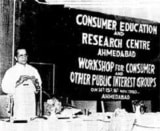
Ralph Nader is widely regarded as the founder of the current consumer movement in most parts of the world. In India, however, we do not have a single such towering leader. Manubhai Shah, the founder of the Consumer Education and Research Centre (1978), and H. D. Shourie, the founder of Common Cause (1980) are both deserving of such a high honour.  Manubhai Shah focused mostly on assisting individuals with personal problems or identifying consumer issues.  Shourie’s initiatives aimed to effect systemic change through PILs filed before the Supreme Court.  

In Karnataka some of the pioneers of the consumer movement were Jajie Mandanna, the founder of Karnataka Consumers Services Society (1974),  Dr. K P S Kamath, the founder of Udupi Balakedarara Vedike (1980), and Prof Narayan Rao in Udupi. There were some well-known NGOs who followed the pioneers at the national level: Sriram Khanna of Consumer Voice in Delhi (1983), S R Desikan of Consumer Association of India in Chennai (1983), and Pradeep Mehta of Consumer Unity and Trust in Kolkata (1984). But before the mid-80s, there were not many NGOs in the consumer protection movement. However, special mention must be made of an individual activist M. R. Pai of free enterprise in the 80s. He concentrated on fighting for consumer-friendly services from monopolies like Indian Airlines, Indian Nationalized Banks, and Indian Telephones.     

The adoption of the Consumer Protection Act on December 24, 1986 (COPRA) was a major impetus for the Modern Consumer Movement in India. Because of such a revolutionary Act, India observes December 24 as National Consumer Day. However, even after ten years, there were less than 800 NGOs, most of which had minimal budgets and relied on government handouts. There are currently roughly 2000 NGOs, the majority of which exist simply on paper.

It is paradoxical that in the US, President Kennedy has been credited as launching the Consumer Movement on March 15, 1962 by declaring four consumer rights – right to Safety, right to Information, right to be Heard, and right to Choose. In 1982, Consumer International, which has membership of 250 consumer groups, decided to celebrate March 15 as World Consumers Rights Day.

Consumers in the US were protected through competition and strong laws preventing unfair trade practices. But in India where consumers were taken for a ride in the absence of competition, we had to wait till 1986 to get the progressive Consumer Protection Act.  To add to the woes of Indian consumers, our court system is notoriously slow in solving disputes where justice was often delayed and thus denied by endless adjournments. Thus, COPRA was a saviour. Unfortunately, it did not last long. The main ideals of COPRA were to give speedy (within 90 days) and summary justice without involving lawyers. Unfortunately, today these consumer redressal commissions have become “civil courts” where adjournments are normal, lawyers are never present and summary trials are never held.

But none of the consumer NGOs was big enough or had enough expertise to bring about systemic changes to promote competition. It was the time when one had to wait for months, if not years to buy scooters/motor bikes, get telephone connection, procure LPG, etc. For buyers of cars, choice was limited to three brands. It was only after 1991 when economy was liberalized, consumers were able to have their choice while buying cars and two wheelers and too without waiting. Air travel became easier and cheaper with the entry of several private airlines, and much later, we also had the choice of phone connections when mobile phones became available.  

However, the nascent consumer movement did not realize that the best weapon to help consumers is competition and not a plethora of laws and regulations.  For that matter, even now most NGOs concentrate on helping consumers through COPRA, which was significantly improved in 2019. New features of the Consumer Protection Act were mediation, imposing fines on celebrities for misleading and false ads, bringing online trading under the preview of the act, filing cases online, product liabilities, setting up of a Consumer Protection Authority, etc.  

Nevertheless, even the best act cannot help the consumers if those in authority fail to implement it in true spirit and have empathy for long suffering consumers. Food Safety and Standards Authority of India (FSSAI) Act is one such act. Because of the failure to implement it, food adulteration is rampant (as much as 20%), affecting the health of millions. NGOs need to work in not only helping consumers to use COPRA but also to put pressure on the government to enforce the implementation of the Acts in true spirit. Often the laws like FSSAI are used as weapons of corruption rather than to help citizens.

Soon after the passage of COPRA, consumer NGOs organized national level annual meetings to discuss strategies to strengthen consumer movement. First such meeting was held in Kochi (1990) followed by Delhi (1991 and 1993), Kolkata (1992), and Hyderabad (1995). Efforts to form a pan-India umbrella organization did materialize in 1991 to form Confederation of Indian Consumer Organizations. But it lasted only for a few years. Well-established leaders like Manubhai Shah, and H. D. Shourie kept away from such meetings. Once the initial momentum of COPRA started to wane and consumer redressal commissions became replica of civil courts, the decline of Indian consumer movement began.  

While we can find fault with the NGO leaders for their lack of vision and leadership qualities, main culprits are the consumers themselves. We the citizens, especially the literate ones, do not take responsibility while living in a democracy. Our duty is to take an active part in the democratic process of electing honest, dedicated, and competent leaders by casting our votes. Only then does a Consumer become King in the private sector, and citizens will be treated as masters while seeking services from servants of the government. Unfortunately, today, we are neither “Kings” nor “Masters” because of our failure to fulfil our duties s citizens.  

Even the basic responsibility of getting a receipt while buying goods or services is not complied with by most consumers. When given a chance to save taxes, we are tempted not to demand receipts. We do not realize that we then lose our rights as consumers to use the Consumer Protection Act however progressive it may be. Even when we are cheated, how often do we protest?  

Though we know very well that only when we are united and have a strong organization (think of labour unions fighting for members’ rights), we can fight for our consumer rights against the more powerful profit-driven private enterprises or corruption-ridden, inefficient government bureaucracy. Still, we do not even become a member of credible NGOs to support activists which are public-spirited. On the other hand, some try to find faults with the activists or criticize them for not taking up what they think are more pressing problems, or they completely ignore them just as they ignore taking part in democratic processes.

To revitalize the consumer movement, we need just two simple strategies – to take active part in the democratic process of electing the most suitable candidates, and second, to support and take active part in the consumer movement. The million-dollar question is how to implement these strategies.  

After examining the growth and fall of the consumer movement, as well as proposals for revitalization, it may be good to conclude by relating the experience of Mysuru Grahakara Parishat (MGP). Even at the risk of being accused of blowing my own horn, I’d like to explain briefly, if subjectively, the successes and shortcomings of MGP, which I founded in 1989.  

There has not been a single issue affecting Mysuru that MGP has not attempted to resolve in its 33 years of existence. Apart from assisting thousands of individual citizens in resolving their problems, MGP attempted to effect systemic changes in institutions in order to minimise corruption and improve the standard of living for all customers.  

They are:

  • Recommending self-assessment of property tax system,
  • Breaking single monolithic Karnataka Electricity Board into power generation and distribution companies,
  • Removal of lead from petrol,
  • Getting regulatory bodies to fix tariff like KERC for monopolies,
  • Participating actively in development of Mysuru Development plans to prevent Mysuru going the way of Bengaluru,
  • Preserving lakes,
  • Saving parks from encroachment,
  • Greening and cleaning Mysuru,
  • Promoting an autonomous and professional company to manage water supplies and sewage,
  • Improving traffic safety, streamlining operations at RTO to eliminate corruption,
  • Eliminating diversion of subsidized PDS kerosene and residential LPG,
  • Preventing food adulteration.   

Despite our mixed success, we have considerable visibility in the city today. Some commissioners’ have complimented that every city should have an NGO like MGP, which is beneficial to authorities too. However, despite MGP’s initial objective of obtaining 10,000 members in the first five years, we have never surpassed 1000. However, MGP has succeeded in establishing a strong platform for a number of activists to serve Mysuru. This was accomplished entirely via the efforts of volunteers, with no government funding.   

Ralph Nader

Ralph Nader

Jajie Mandanna

 Jajie Mandanna

HD Shourie

H D Shourie  

MR Pai

M R Pai

Manubhai Shah

Manubhai Shah

KPS kamath

 K P S Kamath  

Enquire Now

    X
    Enquire Now