No Results Found
The page you requested could not be found. Try refining your search, or use the navigation above to locate the post.

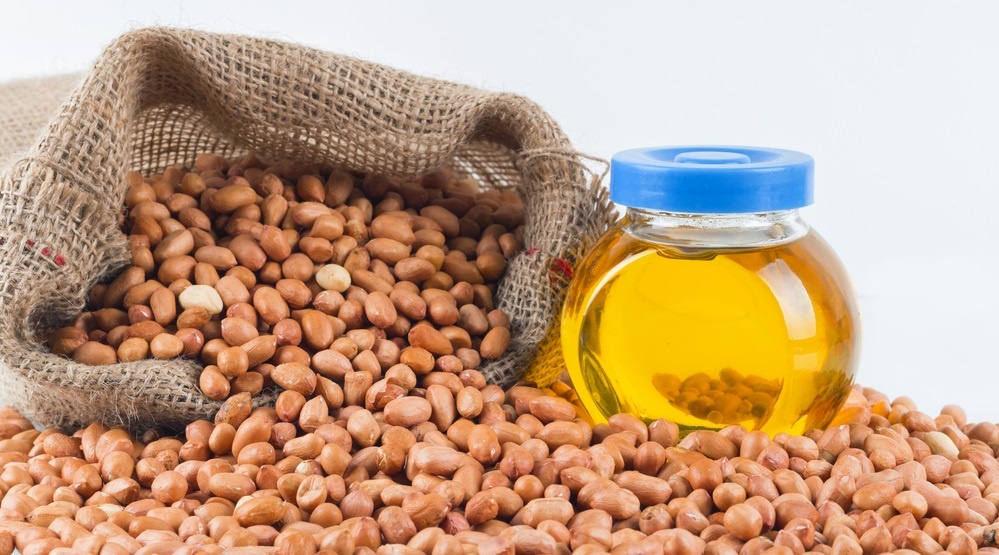
A Consumer Voice Report
Consumer VOICE tested 12 popular brands of groundnut oils and evaluated each brand on parameters including organoleptic tests, MUFA, PUFA, iodine value, unsaponifiable matter, saponification value, refractive index, bellier turbidity temperature, peroxide value, saturated fatty acids, moisture and insoluble impurities, argemone oil, flash point, and aflatoxin among others.
The test program for groundnut oil was based on FSS regulation and Indian Standard IS: 544-2014, which covers the product requirements. The Indian Standard (IS 544: 2014) though prescribes 5 grades of the oil, yet, refined, grade 1 and 2 express type and refined solvent types are recommended for direct edible purposes.
The team purchased 12 groundnut oils samples marketed in the country and sent for laboratory testing. The testing was performed at a reputed laboratory with accreditation from the National Accreditation Board of Test Laboratories (NABL).
The following table contains results of the 12 brands of refined and filtered groundnut oils. A quick glance below will help one to know the best brand in both the filtered and refined categories.
| Rank | Score Out of 100 (Rounded off) | Brands | Net Quantity | MRP
in Rs |
Best before, Month | Manufactured/ Marketed by |
| 1 | 88 | Gemini | 1L (910
gm) |
170 | 9 | Cargill India Pvt. Ltd., |
| 1 | 88 | Fresh &
Pure |
1L (910
gm) |
170 | 9 | Future Consumer Limited, |
| 2 | 87 | Ankur | 1L (910
gm) |
180 | 12 | Ankur Oil Industries |
| 2 | 87 | Porna | 1L (910
gm) |
175 | 6 | SKM Foods Foods (Edible Oil Division)
SKM Animal Feeds and Foods (India) Pvt. Ltd., |
| 2 | 87 | Dhara | 1L (910
gm) |
173 | 8 | Mother Dairy Fruit & Vegetable Pvt. Ltd., |
| 2 | 87 | Patan- jali | 1L (910
gm) |
155 | 9 | Patanjali Ayurved Limited., |
| 2 | 87 | Gulab | 1L (910
gm) |
145 | 12 | Gulab Oil & Foods Pvt. Ltd., |
| Rank | Total Score Out of 100 (rounded off) | Brands | Net quantity | MRP in Rs | Best before, Month | Manufactured/ Mar- keted by |
| 1 | 90 | Dalda | 1L (910 gm) | 185 | 9 | Bunge India Pvt. Ltd. |
| 2 | 89 | Nature Fresh | 1L (910 gm) | 170 | 9 | Cargill India Pvt. Ltd., |
| 2 | 89 | Gagan | 1L (910 gm) | 191 | 9 | Bunge India Pvt. Ltd., |
| 3 | 88 | Fortune | 1L (910 gm) | 160 | 9 | Adani Wilmar Ltd., |
| 3 | 88 | Postman | 1L (910 gm) | 220 | 12 | S.K. Oils., |
◆ In the filtered category, brand Gemini and Fresh & Pure secured number 1 position.
◆ In the refined category, Dalda scored highest followed by Nature Fresh and Gagan.
◆ Brands Gemini and Fresh & Pure are value for money oils in the filtered category and Nature Fresh in the refined category.
◆ In sensory tests, brand Dalda performed on top followed by Gagan and Ankur.
◆ Aflatoxin was not detected in any brand.
◆ All brands had met the Food Safety Standard Regulations requirement and thus they are safe for consumption.
◆ All the brands were free from adulteration.
| Filtered/Virgin Groundnut Oil | Refined Groundnut Oil | ||||||||||||
| Brand
Parameters |
Wt. % | Gemini | Fresh &
Pure |
Ankur | Porna | Dhara | Patanjali | Gulab | Dalda | Nature
Fresh |
Gagan | Fortune | Postman |
| Organoleptic tests | 12 | 10.66 | 10.41 | 10.84 | 10.61 | 10.32 | 10.68 | 10.7 | 11.01 | 10.14 | 10.92 | 10.71 | 9.87 |
| Net Quantity | 2 | 2 | 2 | 2 | 2 | 2 | 2 | 2 | 2 | 2 | 2 | 2 | 2 |
| Presence of Mineral oil | 3 | 3 | 3 | 3 | 3 | 3 | 3 | 3 | 3 | 3 | 3 | 3 | 3 |
| Presence of Argemone oil | 3 | 3 | 3 | 3 | 3 | 3 | 3 | 3 | 3 | 3 | 3 | 3 | 3 |
| Refractive index | 6 | 5.76 | 5.52 | 5.52 | 5.04 | 5.76 | 5.52 | 4.56 | 5.52 | 5.04 | 5.28 | 5.28 | 4.08 |
| Moisture & insoluble impurities | 5 | 4.00 | 4.00 | 4.00 | 4.00 | 3.60 | 3.80 | 4.00 | 4.00 | 4.40 | 4.20 | 3.80 | 4.40 |
| Flash point | 4 | 3.92 | 2.56 | 2.80 | 2.76 | 2.56 | 2.80 | 2.72 | 3.28 | 3.08 | 2.52 | 2.48 | 2.68 |
| Saponification value | 6 | 5.22 | 4.80 | 5.16 | 5.04 | 5.70 | 5.16 | 5.82 | 5.94 | 5.52 | 5.22 | 4.98 | 5.58 |
| Iodine value (Wij’s) | 6 | 4.75 | 5.71 | 5.21 | 4.78 | 5.42 | 4.94 | 4.68 | 4.92 | 5.47 | 4.58 | 5.11 | 5.71 |
| Unsaponifiable matter | 6 | 4.80 | 5.28 | 5.04 | 5.76 | 5.04 | 5.28 | 5.04 | 5.76 | 5.76 | 5.76 | 5.76 | 5.76 |
| Bellier turbidity temperature | 5 | 3.50 | 4.85 | 3.50 | 3.50 | 4.10 | 3.50 | 3.50 | 3.65 | 4.40 | 3.50 | 3.95 | 4.55 |
| Aflatoxin | 4 | 4 | 4 | 4 | 4 | 4 | 4 | 4 | 4 | 4 | 4 | 4 | 4 |
| Acid value | 5 | 4.50 | 3.90 | 3.70 | 4.20 | 3.80 | 4.00 | 3.80 | 4.50 | 4.50 | 5.0 | 4.50 | 4.50 |
| Peroxide value | 5 | 4.42 | 4.51 | 4.85 | 4.45 | 4.19 | 4.42 | 4.79 | 4.80 | 3.26 | 4.68 | 4.80 | 3.42 |
| Saturated fatty acids | 5 | 3.96 | 3.86 | 3.98 | 4.08 | 3.86 | 4.02 | 4.26 | 3.64 | 4.06 | 3.98 | 3.78 | 4.20 |
| Monounsaturated fatty acids | 7 | 5.80 | 5.47 | 6.02 | 6.33 | 5.68 | 6.13 | 6.60 | 5.38 | 5.64 | 5.87 | 5.42 | 5.24 |
| Polyunsaturated fatty acids | 7 | 6.08 | 6.33 | 5.87 | 5.61 | 6.08 | 5.78 | 5.49 | 6.27 | 6.31 | 6.02 | 6.33 | 6.80 |
| Trans fatty acids | 3 | 3 | 3 | 3 | 3 | 3 | 3 | 3 | 3 | 3 | 3 | 3 | 3 |
| Filtered/Virgin Groundnut Oil | Refined Groundnut Oil | ||||||||||||
| Brand
Parameters |
Wt. % | Gemini | Fresh &
Pure |
Ankur | Porna | Dhara | Patanjali | Gulab | Dalda | Nature
Fresh |
Gagan | Fortune | Postman |
| Organoleptic tests | 12 | 10.66 | 10.41 | 10.84 | 10.61 | 10.32 | 10.68 | 10.7 | 11.01 | 10.14 | 10.92 | 10.71 | 9.87 |
| Net Quantity | 2 | 2 | 2 | 2 | 2 | 2 | 2 | 2 | 2 | 2 | 2 | 2 | 2 |
| Presence of Mineral oil | 3 | 3 | 3 | 3 | 3 | 3 | 3 | 3 | 3 | 3 | 3 | 3 | 3 |
| Presence of Argemone oil | 3 | 3 | 3 | 3 | 3 | 3 | 3 | 3 | 3 | 3 | 3 | 3 | 3 |
| Refractive index | 6 | 5.76 | 5.52 | 5.52 | 5.04 | 5.76 | 5.52 | 4.56 | 5.52 | 5.04 | 5.28 | 5.28 | 4.08 |
| Moisture & insoluble impurities | 5 | 4.00 | 4.00 | 4.00 | 4.00 | 3.60 | 3.80 | 4.00 | 4.00 | 4.40 | 4.20 | 3.80 | 4.40 |
| Flash point | 4 | 3.92 | 2.56 | 2.80 | 2.76 | 2.56 | 2.80 | 2.72 | 3.28 | 3.08 | 2.52 | 2.48 | 2.68 |
| Saponification value | 6 | 5.22 | 4.80 | 5.16 | 5.04 | 5.70 | 5.16 | 5.82 | 5.94 | 5.52 | 5.22 | 4.98 | 5.58 |
| Iodine value (Wij’s) | 6 | 4.75 | 5.71 | 5.21 | 4.78 | 5.42 | 4.94 | 4.68 | 4.92 | 5.47 | 4.58 | 5.11 | 5.71 |
| Unsaponifiable matter | 6 | 4.80 | 5.28 | 5.04 | 5.76 | 5.04 | 5.28 | 5.04 | 5.76 | 5.76 | 5.76 | 5.76 | 5.76 |
| Bellier turbidity temperature | 5 | 3.50 | 4.85 | 3.50 | 3.50 | 4.10 | 3.50 | 3.50 | 3.65 | 4.40 | 3.50 | 3.95 | 4.55 |
| Aflatoxin | 4 | 4 | 4 | 4 | 4 | 4 | 4 | 4 | 4 | 4 | 4 | 4 | 4 |
| Acid value | 5 | 4.50 | 3.90 | 3.70 | 4.20 | 3.80 | 4.00 | 3.80 | 4.50 | 4.50 | 5.0 | 4.50 | 4.50 |
| Peroxide value | 5 | 4.42 | 4.51 | 4.85 | 4.45 | 4.19 | 4.42 | 4.79 | 4.80 | 3.26 | 4.68 | 4.80 | 3.42 |
| Saturated fatty acids | 5 | 3.96 | 3.86 | 3.98 | 4.08 | 3.86 | 4.02 | 4.26 | 3.64 | 4.06 | 3.98 | 3.78 | 4.20 |
| Monounsaturated fatty acids | 7 | 5.80 | 5.47 | 6.02 | 6.33 | 5.68 | 6.13 | 6.60 | 5.38 | 5.64 | 5.87 | 5.42 | 5.24 |
| Polyunsaturated fatty acids | 7 | 6.08 | 6.33 | 5.87 | 5.61 | 6.08 | 5.78 | 5.49 | 6.27 | 6.31 | 6.02 | 6.33 | 6.80 |
| Trans fatty acids | 3 | 3 | 3 | 3 | 3 | 3 | 3 | 3 | 3 | 3 | 3 | 3 | 3 |
This is a very important parameter where subjective panel tests were conducted based on their critical examination and opinion. These tests were conducted in the lab involving panel members under the supervision of trained experts. Panelists judged the groundnut oil brands on the criteria/attributes including colour and appearance, flavour/odour, visual defects, taste, and overall acceptance. Among the brands tested, Dalda was liked most followed by Gagan and Ankur.
Monounsaturated fatty acids (MUFAs) are a healthy type of fat. MUFA as per the dietary recommendation help in biochemical processes associated with nerves, brains, heart, digestion, and cell maintenance. MUFAs lower the level of bad cholesterol (LDL) in the blood and raise the good cholesterol (HDL). MUFA results are given below:
| S.No | Brand | Results, % |
| 1. | Ankur | 58.0 |
| 2. | Dalda | 53.4 |
| 3. | Dhara | 55.9 |
| 4. | Fortune | 53.7 |
| 5. | Fresh & Pure | 54.1 |
| 6. | Gagan | 56.9 |
| 7. | Gemini | 56.4 |
| 8. | Gulab | 62.2 |
| 9. | Nature Fresh | 55.3 |
| 10 | Patanjali | 58.8 |
| 11. | Porna | 60.2 |
Polyunsaturated fats can help reduce bad cholesterol levels in the blood which can lower the risk of heart disease and stroke. Highest PUFA was found in Postman and it was lowest in Gulab.
The iodine value is a quality test for edible oils which is a measure of the unsaturation of fats and oils and is expressed in terms of the number of centigrams of iodine absorbed per gram of sample. The iodine value of groundnut oil should be between 85 – 99. All the brands found within the required limit. However, Fresh & Pure and Postman scored highest in this parameter and Gagan scored the lowest.
Saponification value helps to detect the presence of other oils/fats. The saponification value of groundnut oil should be between 188 – 196. All brands were found within the specified limit. However, Dalda scored highest in this parameter.
Unsaponifiable matter includes those substances frequently found dissolved in fatty acids and drying oils which cannot be saponified by caustic treatment, but which are soluble in the normal fat solvents. The unsaponifiable matter should not be more than 1.0 per cent in groundnut oil. All the brands were found within the specified limit.
The refractive index of oil can be used to detect rancidity in edible oil. It should be between 1.4620-1.4640. All the brands were found within the specified limits. However, brands including Gemini and Dhara scored highest in this parameter.
BTT test is useful to check the purity of groundnut oil. It should be in the range of 39°C to 41°C. All brands were found within specified limit and Fresh & Pure scored highest in this parameter.
As per the FSS Regulation, acid value should not be more than 6.0 and it should be 0.5 for the refined grade. All brands were passed this test. Filtered oils were found having the acid value higher than refined oils but all brands met the standard requirement.
The peroxide value is defined as the amount of peroxide oxygen per 1 kilogram of fat or oil. Peroxide value is the most commonly used assay for measuring the state of oxidation in fats and oils and its value measures the oxidative rancidity or degree of oxidation of the fat/oil, but not its stability. The maximum level of peroxide value should be at 10 meq/kg for refined oil and 15 meq/ kg for filtered groundnut oil. All the brands passed this test. However, brands such as Ankur, Dalda and Fortune scored highest in this parameter.
Eating foods that contain saturated fats raises cholesterol level in your blood. Saturated fats raise HDL cholesterol and change LDL from small, dense (bad) to large LDL, which is mostly benign. Saturated fat was highest in Dalda and lowest in Gulab brand.
Just like saturated fats, they also raise the level of ‘bad’ cholesterol in our blood. Trans fat was not detected in any brand.
Moisture and insoluble impurities may present in edible oils. The amount of water should be as low as possible. Its permissible limit is 0.1 per cent for refined oils. All the brands were found within the permissible limit of 0.1 per cent. However, Nature Fresh and Postman scored highest in this parameter.
Mineral oil is colorless, odorless, light mixtures of higher alkanes. Mineral oil should not there in groundnut oil. Adulteration of vegetable oil is usually by using mineral oils or any other cheaper oil. All the brands were found free from mineral oil.
Argemone oil is very toxic and may cause eye disease leading to blindness. Regular consumption of it may also cause disease called epidemic dropsy, resembling wet beriberi. Argemone oil should be absent in groundnut oil. In our test report, Argemone oil was found absent in all the brands tested.
The flash point of a volatile material is the lowest temperature at which it can vaporize to form an ignitable mixture in air. At the flash point, the vapor may cease to burn when the source of ignition is removed. It should not be less than 250 oC for refined groundnut oils. Higher the flash point of groundnut oils, the lower is the risk of ignition in the oils. Gemini scored highest in this parameter and other brands of groundnut oil were found with a good flash point.
A kind of toxin or poison produced by the mold Aspergillus flavus. When animals or humans consume these compounds, they may produce severe undesirable health effects. Agmark is more stringent, requiring an absence of this carcinogen. Aflatoxin generally develops due to poor oil seed storage conditions and presence of undesirable moisture present in the oil seed that enable Aflatoxin to develop in the stored oil seeds. It should not be 10 µg/kg maximum as per FSSR. All brands passed the FSS Regulation limit for Aflatoxin.
According to legal metrology (packaged commodity) rules for 1000-10000 ml tolerance allowed is 1.5 per cent. All the brands were found above the claimed quantity.
Packing of the groundnut oil should be of food- grade packing material that should not affect the properties of oil as well as also maintains the shelf life of the product as far as possible. Brands Fortune, Fresh & Pure, and Gemini oils were packed in a poly pack. Dhara was packed in Tetra Packing. The rest of the brands were packed in a 1 ltr plastic bottle.
These details should be clearly and indelibly marked on the pack including name of the material, type or grade, manufacturer’s name, and trademark, batch/code number, month and year of manufacture, best before, net quantity, green dot, MRP and customer care details. All the brands had the desired label information and most of the brands had mentioned nutritional values of the groundnut oil on their packaging.
We collected 12 popular brands of refined and filtered groundnut oils from the retail market and tested in a NABL accredited laboratory following the national standard (Food Safety and Standard Regulations). All brands had met the national standards, Food Safety Standard Regulations requirements and thus safe for consumption. Brands Gemini and Fresh &Pure secured number 1 position in the filtered category. In refined category, Dalda secured number 1 position. We found all the brands were free from the adulteration of other oils.
Refined Vs Filtered(Kachi Ghani): Refined oil is a product obtained after treating natural oils with various chemicals which can cause various diseases such as cancer, diabetes, heart and kidney ailments, among others. However, “oil extracted through “Filtered/Virgin” process is unrefined oil. The filtered oils are better than refined ones. Also, filtered oils are produced at a lower temperature which retains most of the nutrition. Yes, filtered oils do have a strong aroma which makes them unwanted for deep frying as they can overpower the taste of food. So we would advise that it’s better to consume filtered oils regularly as they are healthier and refined oils to be consumed for certain types of cooking methods.
All brands had mentioned about its shelf life of 6-12 months. The consumers must keep this in mind while buying groundnut oil (particularly large pack of above 5-liter capacity), must ensure that the shelf life is adequate that would remain stable within the consumption period for which large pack is purchased.
| Monounsaturated | Polyunsaturated | Saturated | Trans |
| Good Fat | Good Fat | Bad Fat | Bad Fat |
| Reduces bad cholesterol | Reduces bad | Increases overall cholesterol | Increases the bad |
| (LDL) levels and | cholesterol (LDL) | levels, especially bad | cholesterol (LDL) level |
| increases good | levels | cholesterol | and decreases good |
| cholesterol (HDL) levels | cholesterol (HDL) levels | ||
| Found in nuts and seeds, avocados, olive oil, and canola oil | Found in fatty fish such as salmon, mackerel, trout and sardines,
and also in corn, safflower, sunflower and soybean oils |
Found in animal-based foods such as meat, poultry and eggs, and also in butter, cream, and other dairy products
Also found in plant-based products such as coconut, coconut oil, palm oil and palm kernel oil, and cocoa butter |
Found in hydrogenated fat products such
as margarine and vegetable shortenings Used in packaged snack foods such as cookies, crackers, and chips, and fried foods |
The only way to ensure that you consume healthy oil is by switching between two-three of them – for instance, by using groundnut oil one month and then using sunflower oil/mustard oil in another. Any single oil alone is not preferred.
Blending oils is another option, whereby you take equal proportions of different oils in one container and then use it. This way you do not get prolonged exposure to the side effects of one type of oil and also get the benefits of different oils.
You could also have two or more different kinds of oils in your kitchen which you could use for different purposes. For example, you could use olive oil for salads, groundnut/rice bran oil for frying, and mustard/soybean/sunflower oil for other cooking purposes. This will let you avail of the health benefits offered by each oil brand.
The page you requested could not be found. Try refining your search, or use the navigation above to locate the post.
The page you requested could not be found. Try refining your search, or use the navigation above to locate the post.
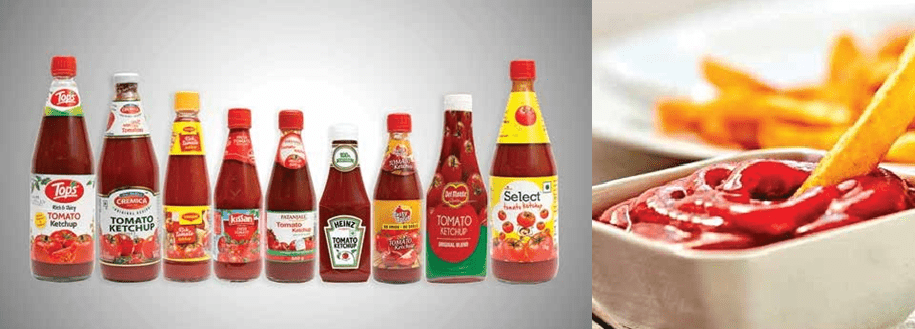
A Consumer Voice Report
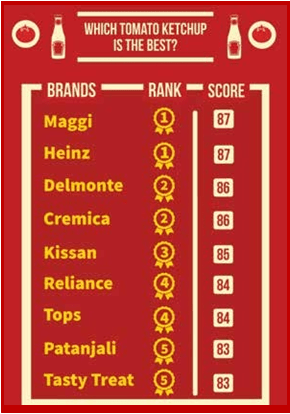
The team tested nine different popular tomato ketchup brands. One may see the table below to understand which brand scored high in this evaluation process.
| Rank | Total Score out of 100 (rounded off) | Brand | Quantity, gms |
MRP, Rs. |
Best Before, Months | Manufacturer/ marketer |
| 1 | 87 | Maggi | 500 | 97 | 12 | Nestle India Ltd. |
| 1 | 87 | Heinz | 450 | 99 | 12 | Heinz India (P) Ltd. |
| 2 | 86 | Delmonte | 500 | 95 | 9 | Field Fresh Foods Pvt. Ltd. |
| 2 | 86 | Cremica | 950 | 155 | 12 | Cremica Food Industries Ltd. |
| 3 | 85 | Kissan | 500 | 99 | 12 | Hindustan Unilever Ltd. |
| 4 | 84 | Reliance | 1000 | 150 | 12 | Reliance Retail Ltd. |
| 4 | 84 | Tops | 1000 | 140 | 18 | G.D. Foods MFG. (I) Pvt. Ltd. |
| 5 | 83 | Patanjali | 500 | 70 | 12 | Patanjali Ayurved Limited |
| 5 | 83 | Tasty Treat | 500 | 90 | 12 | Future Consumer Enterprises Ltd. |
• Brands Maggi and Heinz were the top performers.
• Of the tested nine brands, Heinz is the only tomato ketchup brand that came out with no preservative.
• Patanjali had the highest level of lycopene (6.8 mg out of 100gm) followed by Delmonte (6.2 mg out of 100gm) and Maggi (5.5 mg out of 100gm). Lycopene is a powerful antioxidant, with many health benefits. The more the lycopene, the more is the ripened tomato content.
• Cremica got the highest points in sensory panel tests followed by Kissan and Heinz. Sensory panel tests were conducted in a test lab involving experienced lab scientists under the supervision of technical experts.
• All the brands were found well within the specified limits of heavy metal (arsenic and lead), microbiological tests (total plate and mould count along with yeast and spores).
• All the brands met the minimum requirements specified in the national standards, making them safe for consumption. However, moderate consumption is advisable since ketchups contain
preservatives, salt, and vinegar.
The tomato ketchup samples were examined as per the test program developed by VOICE Society based on FSSAI regulations and relevant Indian standard IS: 3882. The comparative testing was conducted as per the standard test methods and requirements applicable to the product. The designated NABL accredited laboratory had conducted testing on masked and coded samples and accordingly the test report was issued to us.
| Brands Parameter |
Wt. % |
Maggi | Heinz | Delmonte | Cremica | Kissan | Reliance | Tops | Patanjali | Tasty Treat |
| Net weight | 3 | 3 | 3 | 3 | 3 | 3 | 3 | 3 | 3 | 3 |
| Total soluble solids | 8 | 6.70 | 6.42 | 7.02 | 6.70 | 6.75 | 7.35 | 6.92 | 7.09 | 6.90 |
| Specific gravity | 6 | 5.39 | 5.24 | 5.68 | 5.39 | 5.42 | 5.86 | 5.57 | 5.75 | 5.53 |
| Acidity as acetic acid | 6 | 5.28 | 5.64 | 5.28 | 6.00 | 5.28 | 5.82 | 5.28 | 5.28 | 5.28 |
| Preservative as Benzoic acid | 4 | 3.77 | 4.0 | 2.29 | 2.16 | 1.88 | 2.19 | 2.53 | 1.87 | 1.77 |
| Lycopene | 12 | 7.68 | 7.01 | 8.35 | 5.09 | 6.53 | 3.84 | 6.53 | 8.93 | 4.80 |
| Product Fill | 5 | 4.75 | 4.70 | 4.50 | 4.87 | 4.52 | 4.72 | 4.75 | 4.75 | 4.52 |
| Salt as NaCl | 4 | 3.28 | 2.08 | 2.56 | 3.04 | 3.04 | 2.56 | 2.80 | 2.56 | 3.04 |
| Heavy Metals | ||||||||||
| Arsenic | 2.5 | 2.5 | 2.5 | 2.0 | 2.5 | 2.0 | 2.5 | 1.5 | 2.5 | 2.5 |
| Lead | 2.5 | 2.5 | 2.5 | 2.5 | 2.5 | 2.5 | 2.5 | 2.5 | 2.5 | 2.5 |
| Organoleptic Tests | 36 | 31.33 | 32.64 | 32.31 | 33.90 | 32.70 | 32.62 | 31.54 | 28.06 | 32.18 |
Infographic by Ashita Sharma
The more the lycopene, the more is the ripened tomato content. Low levels of lycopene indicate the use of either less or unripe quantity of tomato pulp or poor quality of tomatoes. There is no specified requirement for lycopene in the BIS or Food Safety and Standards Regulations. Patanjali was found with the highest level of lycopene at 6.8 mg out of 100gm, followed by Delmonte at 6.2 mg out of 100gm and Maggi at 5.5 mg out of 100gm.
A total soluble solid is an expression for the combined content of all inorganic and organic substances contained in a liquid. The main ingredients of the tomato ketchup are water, tomato paste, sugar, salt and a minor quantity of vinegar, spices, preservative, etc. As per the national standards (BIS & FSS Regulations,), tomato ketchup should not have less than 25 % of total soluble solids. The tested brands were found well above the minimum requirement of 25%. Highest TSS was found in Reliance and lowest in Heinz.
As per the BIS standard, the specific gravity should be at 1.111 minimum. The tested brands passed this level of requirement as well.
Acidity content in tomato ketchup is related to the shelf life of the product. If acidity (acetic acid) is lower than the minimum limit, microbes may grow and will allow contamination of the product thereby reduce the shelf life of the product. All the brands met the standard requirement and passed the test. However, Cremica secured the highest in this parameter.
The container should be well filled with the product and occupy not less than 90.0 percent of the net weight of the container when packed in a bottle. The tested brands had met this specific requirement as well. Cremica scored highest in this parameter followed by Maggi and Patanjali.
Benzoic acid is a preservative. The presence of preservative generally increases the shelf life of the product and prevents the deterioration of nutritional values, taste, odour and microbial contamination. However, an excess amount of preservative is not desirable. As per the standards, the product should not contain more than 750 ppm (parts per million)of permissible preservatives. All the brands were found within the limit. This preservative was found absent in Heinz tomato ketchup as claimed by them.
There is no specified requirement in FSSAI and BIS regulations for salt in tomato ketchup. Salt is used in tomato ketchup for taste enhancement. In our test, we found salt was the highest in Heinz at 3.1 percent and it was the lowest in Maggi at 2.6 percent.
Tomato ketchup is a fun food and taste enhancer consumed in limited quantity, therefore, this parameter is the most important and given the highest point of 36 percent. Sensory panel tests were conducted in a test lab involving experienced lab scientists under the guidance/supervision of technical experts. The tests were conducted as per the specifications laid down in the BIS including Colour, Consistency, Taste & Flavour and Absence of defects.
| S. No. | Brand | Score out of 36 |
| 1. | Cremica | 33.90 |
| 2 | Kissan | 32.70 |
| 3. | Heinz | 32.64 |
| 4 | Reliance | 32.62 |
| 5. | Delmonte | 32.31 |
| 6 | Tasty Treat | 32.18 |
| 7. | Tops | 31.54 |
| 8 | Maggi | 31.33 |
| 9. | Patanjali | 28.06 |
**Cremica topped the sensory tests followed by Kissan and Heinz.
Toxics like arsenic and lead are a cumulative poison that enters either through the soil or during production. These accumulate in the body and cause irreversible damage to the brain, nerve cells, red blood cells, and the kidneys. The permissible limit for arsenic in tomato ketchup is a maximum of 1.1 ppm, and for lead, it is a maximum of 2.5 ppm. All the brands were found well within the limit of the specified standard. However, traces of arsenic were detected in Top, Delmonte, and Kissan, but well within the specified limit.
Lead was not detected in any brand up to the detection limit of DL-0.1mg per kg.
Microbiological contamination is a very important factor in determining the quality of food products. Microbiological tests were conducted for three major microbes present in food products as TPC (Total plate count), mould count and yeast and spores count. These microorganisms are responsible for many foods borne diseases. Due to improper or poor manufacturing practices microorganisms occur in the finished product. As per the national standards (FSS Regulation), the product should comply with the following requirements:
1. Total Plate Count: Not more than 10000/ml,
2. Yeast and Spores: Not more than 125 per 1/60 cmm,
3. Mould Count: Positive in not more than 40 % of the field examined.
All the brands passed this test.
The weight of the tomato ketchup was measured and compared with the declared values on their packaging. Legal metrology rule has specified different tolerances for different sizes of packs. In our comparative test, all the brands passed this evaluation level as they were found carrying the declared net weight.
Packing is an important part of the product for maintaining its consistent quality. It should be user- friendly with the shape and size of the package. Seven out of nine brands were packed in a glass bottle, two in plastic bottles. All the brands met this standard requirement.
The following information should be marked on the product label:
Name of the material, name and address of the manufacturer, batch number, date or month of manufacture, net weight of the contents (in gms / kilograms), list of ingredients, FSSAI license no, green dot mark (vegetarian mark), MRP in Rs, best before month and year, instructions for storage and use, nutritional facts/information and customer care contact details. All the brands passed this level of the test.
Source: Stylecraze.com
The page you requested could not be found. Try refining your search, or use the navigation above to locate the post.

Cryptos have been quite popular in India and now with the imposition of 30% tax on all digital incomes including NFTs (Non-Fungible Tokens) and cryptos made the investors community lose a heart again. My introduction to crypto happened just a few months back; well, I heard about Bitcoin much before. Coming to crypto, it is a digital currency designed to work as a medium of exchange through a computer network that is not reliant on any central authority, such as a government or bank, to uphold or maintain it.
Along with the pandemic, which spurred the transition from online learning to online investing for many, the Supreme Court’s decision last year to revoke a 2018 ban on trading digital tokens has increased interest in cryptocurrency. Some teens are even convincing their parents to try a hand at trading digital tokens.
Besides, there have been a lot of discussions around this medium of exchange. Before the 30% tax imposition by our Finance Minister Nirmala Sitharaman in her Budget 2022 speech, there was enormous uncertainty surrounding the cryptocurrency transactions in India. Speculations were doing the rounds that there will be a bill /regulation on the crypto framework in India.
Then there were also views that India government might ban cryptos in India. However, settling the dust now, the imposition of 30% tax is a new addition to its working in India. So far, investors community have been voicing their demands asking to lower the tax because, the imposition of tax is on its income-mind it—only income. It does not include the operation revenue, cost and not to talk about any losses. Hence the doldrums!
However, there is a certain segment of investors/entrepreneurs who are quite optimistic and happy about the 30% tax also. Because, at least it cleared the air that the Indian government is not going to ban crypto in India-which was in speculation. Even then, experts are saying, even though the tax has come, but it does not mean that the government has legalised this.
In fact, Finance Secretary TV Somanathan already stated that Bitcoin, Ethereum, and other cryptocurrencies along with NFTs will never become legal tender in India. He further cautioned that those investing in private crypto need to understand that such transactions don’t have government authorisation. On the contrary, there are talks of launching ‘digital rupee’, which is proposed to be launched by the RBI, to work as a legal tender.
Yet, the popularity of crypto in India is showing no sign of slowing down. Reportedly, in 2021, India recorded the second-highest number of cryptocurrencies users around the world, according to a recent report. It said that India is second only to Vietnam in the number of cryptocurrency users.
Now, its only time that will decide the fate of cryptocurrency in India. Till then, keep reading the list of pieces we brought you this month. We’ve FSSAI CEO’s article on food procession system, electric chimneys, selecting the best sunflower oil brand and a lot more.
Do share your thoughts at info@consumer-voice.org.
Happy reading!
The page you requested could not be found. Try refining your search, or use the navigation above to locate the post.

Subas Tiwari
The page you requested could not be found. Try refining your search, or use the navigation above to locate the post.