Six Positive Changes in New Consumer Protection Law Passed in Lok Sabha – An Analysis by Prof Sri Ram Khanna & Consumer Voice Team

Six Positive Changes in New Consumer Protection Law Passed in Lok Sabha – An Analysis by Prof Sri Ram Khanna & Consumer Voice Team

On Thursday, 20 December 2018 The Consumers Protection Bill, 2018 was passed just before the house was adjourned for the day amid noisy disruptions. It was the first Bill to be introduced in  2018 budget session of Lok Sabha after it passed the legislative deliberations test in the Parliamentary Standing Committee. In 2016 the parliamentary Standing Committee had examined the earlier version of Consumers Protection Bill, 2015 and made its recommendations which have taken over a year to process. The first version of the Bill had been finalized during UPA II.

WHAT ARE THE SIX POSITIVE CHANGES?

The changes in the existing Act of 1986 are mostly positive. We have identified six positive features in the 2018 Bill which seeks to repeal and replace the 1986 Act lock stock and barrel. These include: First setting up of a new Executive Regulatory Authority called Central Consumers Protection Authority (CCPA) specialized to protect consumers. Second, it sets up a Mediation Cell in each consumer Court to mediate on consumer disputes. Thirdly, it widens the geographical jurisdiction of a consumer court to include the home or workplace of the complainant and substantially enhances pecuniary jurisdiction of consumer courts at all three levels. Fourth, it introduces the concept of Unfair terms of Contract which can be nullified by a Consumer Court. Fifth, it introduces punishment to jail and fine for misleading ads and injury from adulteration and spurious goods. Sixth, it introduces the concept of Product liability action widening the jurisdiction of the consumer courts. These positive changes need to be welcomed and appear to be like the warmth of the winter sun on a chilly, cloudy day in North India.

The Six positive issues that constitute the sunshine hiding behind the dark clouds on a winter morning are explained

Setting up of a Central Consumer protection Authority:
The Bill establishes a Consumer Protection Authority to investigate into consumer complaints, issue safety notices for goods and services, and pass orders for recall of goods and against misleading advertisements. It provides teeth to this Bill where the Authority can intervene to protect consumer’s interest in the market place. While the present law has provisions enabling the Central and State Governments to file cases in Consumer Courts, hardly any such cases have been filed in last three decades. This authority will be able to intervene in the market in a wide number of situations which have been elaborated in the BILL. It’s likely to emerge as a Regulatory Body for Consumers Protection.

Setting up of Mediation Centres in Consumer Courts:
A new chapter has been added to the Bill relating to setting up the mechanism for undertaking mediation in consumer disputes. The philosophy is that willing parties to a dispute should discuss the dispute with an empanelled Mediator to find a mutually acceptable solution to the dispute instead of long drawn litigation. Mediation Centres would be set up at the Central, State and District levels prescribed by respective state and central governments. This would enable settlement of disputes by a mediator upon reference by a consumer court.

Widening the jurisdiction of Consumer Courts:
The existing principle of jurisdiction of a District consumer court is the place where the cause of action arose or where the branch of the opposite party is located. This point is settled by the Supreme Court which held in Sonic Surgical (CIVIL APPEAL NO. 1560 OF 2004) that the case should be filed only in the jurisdiction of the branch office where the cause of action arose. The complaint cannot be filed in any branch of the opposite party. The proposed Section 34(1) raises the jurisdiction of District Consumer Court from existing Rs. 20 lacs to Rs. one crore. The proposed Section 34 (2) (d) adds the place where the complainant resides or personally works for gain as another place where the complaint can be filed. This welcome change completely upsets the ratio decendi in the Sonic Surgical case which is frequently being cited by Consumer Courts to oust geographic jurisdiction in cases where the cause of action arose at another place. The pecuniary jurisdiction of the State Commissions has been enhanced from Rs. 20 lacs and it goes up from one crore to Rs 10 crores and that of the National Commission to over Rs 10 crores.

Unfair Terms of Contract:
All contracts in India have been judged on the basis of jurisprudence based on The Indian Contract Act of 1872. For nearly 146 years Indian courts have upheld the validity of all terms of contracts if the contract was validly entered and have refused to judge the reasonableness of terms of contracts once parties have bound themselves to such contracts. The major exception being contracts in which minors were parties or the object of the contract was against public purpose or policy. The Bill classifies six contract terms as ‘unfair’. These cover terms such as (i) payment of excessive security deposits; (ii) disproportionate penalty for a breach; (iii) refusal to accept early repayment of debts; (iv) unilateral termination without reasonable cause; (v) causing consumer detriment by assigning a contract to another party; (vi) one which puts the consumer at a disadvantage. The Parliamentary Standing committee had recommended that the Bill should lay down principles which widen its scope to determine whether contract term is unfair. This would allow terms of contracts other than the specified six to be classified as unfair. The change in the opening para of Section 2(46) does not appear to do justice to this recommendation and could have been better worded to widen it meaningfully. Only State Commissions and National Commission are being empowered to declare such terms of contracts as null and void. This will certainly reverse the current trend of contractual jurisprudence in B to C transactions and is to be welcomed by consumers.

Jail for false and misleading ads, sale of spurious products and adulterated food:
Though the 1986 Act has adequate provisions for action against misleading ads which are deemed to be unfair trade practices, the act has been described as toothless as there was no penalty against such advertisers. The Bill has dropped the earlier proposal to penalize celebrities endorsing misleading ads. Under Section 89 two years jail and fine of Rs. 10 lacs is prescribed for misleading ads. The term of jail and fine are enhanced to five years and Rs. 50 lacs in case of a repeat offence. The Parliamentary Standing Committee had suggested a fine of Rs. 10 lakh or an imprisonment of two years or both, to deter such advertisements. It also suggested that these penalties will be applicable to the persons who endorse the products in the advertisements. The Bill does not have any such provision against the endorsing celebrity. Though the celebrities on their parts may be forced to do due diligence about the features of the product they are promoting. The proposed Section 90 prescribes jail for sale of adulterated food while Section 91 provides for jail for sale of spurious goods.

Product Liability:
A new chapter has been introduced in the Bill to enforce product liability against manufacturers and even make them recall the product from the entire market. The 2015 Bill proposed that in order to enforce product liability, a claimant must establish four kinds of defects in the product, the injury caused from it, and that it belonged to the manufacturer. The claimant must also establish that the manufacturer had knowledge of such a defect. It was argued before the Standing Committee that the conditions to establish a product liability claim are unreasonable. The Parliamentary Standing Committee observed that this puts an undue burden on the consumer, since it would not be possible to claim liability if any one of the conditions are not met. It recommended that the provision be redrafted such that the consumer has to prove any one of the conditions instead of all six of them. The Committee also noted that it was not clear if deficiency in services is covered under the Bill. It recommended that the Bill should also specify conditions for establishing deficiency in services.

SOME DEFICIENCIES REMAIN AS A DARK CLOUD HIDING THE SUNSHINE

However, these welcome changes are being overshadowed by the dark clouds of deleting existing due process sections of establishing consumer court judges that is like hiding warm sunshine on a chilly winter morning. The new Bill has dropped the due process for appointments of consumer court judges which is based on a political consensus contained in CPA, 1986. It’s like a damner on an otherwise welcome bill with six positive additions to the existing Consumer Protection Law. The now missing listing of qualifications, criteria for selections, selection committee composition and terms of office of consumer court judges which are part of the existing law have been dropped and demoted to rule making as delegated legislation. Rules are also law and are made by a Ministry without any open consultation process and notified by Government in the official Gazette. This dropping opens the door for changes that have the potential to introduce arbitrariness, favoritism and selection of unqualified persons close to the ruling dispensation. The unpleasant topping on this cake is the dark cloud dropping the formal role of High Court Chief Justices in mandatory consultation for appointment of judicial officers as heads of State Commissions and Chief Justice of India in appointment of president of National Commission. The existing provisions of Chief justices heading selection committees to pick consumer court judges have also been dropped. This is not welcome particularly because the smallest consumer court will handle cases up to value of Rs one crore in a case.

SUGGESTION FROM CONSUMER VOICEConsumer VOICE suggests retaining the following sections of 1986 act in current bill:

COURTS QUALIFICATION OF MEMBERS SELECTION COMMITTEE COMPOSITION TERM & APPOINTMENT
DISTRICT FORUM       10(1)    10(1)(A)    10 (2)(3)
STATE COMMISSIONS       16(1)    16(1)(A)   16 (2), (3)
NATIONAL COMMISSION       20(1)    20(1) (A)   20(2), (3)

These six positive highlights are going to make this law much stronger, mature and sophisticated as compared to the Bill first passed in 1986 and thrice amended.  One can say that much water has flown down the Yamuna since 1986 when this law was first enacted. The Consumers protection Bill 2018 will replace the old Act of 1986 lock stock and barrel while retaining all essential features but making significant change and additions to make it stronger to protect consumers.

Prof Sri Ram Khanna is managing editor of Consumer Voice and former Dean and head of Commerce, Delhi School of Economics

Also Read: Consumer Protection Bill 2018 | Consumer Protection Act 1986

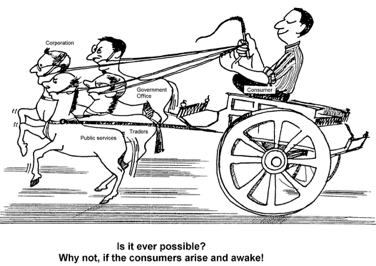
Indian Consumers: Arise, Awake To Urge Adaption Of Consumer Protection Bill

Indian Consumers: Arise, Awake To Urge Adaption Of Consumer Protection Bill

No need to pay extra for bottled water at cinemas, malls and airports: Ram Vilas Paswan

Packaged Drinking Water

By Bhamy V. Shenoy

Consumer Protection Bill (CPB) 2018 was passed by the Lok Sabha on Dec 20th, 2018. Actually this bill was tabled in 2015. However Rajya Sabha did not pass the bill and the new Parliament has to take this up after the election.

CPB was not at all controversial. All political parties would have been interested to support the long suffering consumers if only they realized that their voters demand from them a robust act to protect their rights. After all all voters are consumers in one way or the other. But it did not happen. New bill had several consumer friendly provisions. It would have established a Central Consumer Protection Authority to protect consumer rights and to look into misleading advertisements, had provisions to fine and ban on celebrities for endorsing misleading advertisements, would have encouraged alternate dispute litigation mechanisms etc.

Consumer Voice, a well known Delhi based consumer protection NGO has started a petition to urge all the political parties to pass the consumer protection bill (CPB 2018) when the new Parliament meets after the election. CV publishes a monthly magazine to inform the consumers of the comparative testing of products and services. Such information is invaluable for consumers and not to be misled by all kinds of ads.

Unless we the citizens show interest, new parliament irrespective of which combination of parties come to rule is unlikely to take this bill on a priority basis. What a shame that even after passage of four long years, we have failed to have a progressive consumer protection act to replace the one of 1986.  This is mostly because of consumer indifference.

Some efforts have been made in the past to get signatures for petition like this, but none achieved the critical mass of at least one lakh signatures ( even one lakh is not much to speak of in a society where crores are active on the social network).

Some may argue what is the use of passing another law when the previous law has not really helped the consumers as expected. Consumer courts established  under previous law have adapted the dysfunctional culture of general courts giving never ending adjournments and has failed to uphold the spirit of giving judgements with no or minimum adjournment in 90 days. This is mostly because we the citizens have failed in our responsibility of putting pressure on the government to implement the law properly. Hopefully the new consumer movement which is now being promoted by some NGOs to push the political parties to adapt a more progressive act may make a difference.

We all talk of how social network plays an important role. Can anything be more important than helping the consumers who face problems every day while buying goods and services either from the public or private sectors? If we the citizens take interest, we should be able to get at least a million signatures to the petition. It will definitely make a difference. Link to sign to petition is at   http://chng.it/LfD68DFn.  Soon after reading the article, do not postpone to sign it. It takes less than a minute. Let us get inspired by Swami Vivekananda’s words, “Arise, awake and stop not till the goal is reached”. Our goal is to get millions to sign the petition to convince all the political leaders to put consumer protection on their manifesto.

Bhamy V. Shenoy is a governing council member of Consumer Voice.

Related

No Results Found

The page you requested could not be found. Try refining your search, or use the navigation above to locate the post.

How to get the best insurance for your pets

How to get the best insurance for your pets

Health Insurance

Have you heard of pet insurance in India? If not, there here is some good news for all pet lovers in India. Pet insurance, which is already a flourishing industry abroad, is also beginning to take off in India. Given the rising cost of purchase, grooming and medical care for pets, it may be time to cover the risks. Care and concern for pets has seen a massive transition over the years. Many insurance companies in India have realised this need and have thrown open the gates for pet insurance. A pet insurance is akin to other insurance policy that cover the expenses incurred at the time of any emergency. A pet insurance covers everything from veterinary bills for treatment/ accidents to loss or theft and death of pets. It also covers third party liabilities risks in the event of loss.

Features of pet insurance

  • Customized plans – Customized pet insurance plans are available for pets such as dogs, cats, birds, etc.
  • IRDA approved – The pet insurance plans are approved by IRDA (Insurance Regulatory and Development Authority). There are various types of pet insurance schemes that fall under this plan, such as: cattle, dog, horse and cat insurance etc.
  • Sum assured – Generally, the sum assured for pet insurance products like dog insurance, ranges from Rs. 15,000 to Rs. 30,000. This depends on the breed and other related factors.
  • Add-on cover – Some insurance providers offer add-on covers for the base policy, such as for the loss of show entry fee. This cover is offered for the forfeit of entry fee for dog shows when the pet cannot make it to the show due to an injury or illness.
  • Third party liability – Some pet insurance policies offer third party liability cover, in the event that your pet bites/ attacks a third party or causes damage to third party property.
  • Types of cover – There are three types of pet insurance cover, namely, lifetime cover, time-limited cover and money-limit cover. Lifetime cover protects the pet and its owners against any critical/ long-term illness. This includes diseases such as eczema, arthritis, etc. The policyholder who opts for a lifetime pet insurance policy, will receive a specified amount each year towards treatment of the pet. Time limited pet insurance policy offers financial protection to a pet only for a specific period after a pet has contracted an illness or suffered an injury. Money-limit cover offers financial benefits to pet owners to meet the medical expenses of their pets. There is no time limit for this policy and it can be used until the money limit is reached.
  • Premium – Generally, the premium to be paid for the pet insurance policy in India is equal to 3 – 5 per cent of the sum assured.

To learn more about pet insurance and how is it done and the companies that cover pet insurance, do get a copy of the March 2021 Consumer VOICE English magazine today!

Related

No Results Found

The page you requested could not be found. Try refining your search, or use the navigation above to locate the post.


Workshop organized by Consumer Voice on the “Evolving Behavior of Indian Consumers on Mobile”

Workshop organized by Consumer Voice on the “Evolving Behavior of Indian Consumers on Mobile”

E-commerce and mobile technologies are welcome and sky is the limit for their growth, provided they take along consumers, instead of trying to benefit from consumer ignorance” stated Shri Hem Pande, Secretary, Department of Consumer Affairs, Govt of India during his valedictory address in the workshop organized by Consumer Voice, at India Habitat Center, New Delhi today to release of white papers based on the results of a study on the advent of mobile and its impact on consumer behaviour in India. He further announced that the Consumer Protection Amendment Bill is under active consideration of government to address new challenges and consumer concerns and hope to get is passed soon.

Giving the background of the study Mr. Ashim Sanyal, COO of Consumer Voice said, “The increasing popularity of the mobile internet in India makes it important to investigate how the move to mobile is likely to affect Indian consumers and businesses. Mobiles have become the easiest and most cost effective medium to reach out to largest number of Indian consumers by advertisers, government agencies, political, commercial and social organizations.”

In the workshop, Consumer Voice shared the results of their study in the form of two papers:
“Study of Mobile Internet Use in India” and “Search Options available to Indian users”. Some of the findings presented by Hemant Upadhaya (Advisor VOICE) of the study reveal:

  • App use in India has outpaced global growth; Indians use a relatively high proportion of apps compared to other countries, with analysts finding that average mobile usage grew by more than 131% between 2014 and 2015.
  • There is an increased growth of vertical apps. Consumers now search for products and services across
    different apps and there is no one dominant search option.
  • Emergence of hyperlocal apps that are enabling a fast and convenient experience for users
  •  Social media sites have emerged as the largest use case and the entry point for users
  •  Mobile advertising is growing but more importantly the innovations in this space are enabling quick decision making for customers.

The presentation was followed by a panel discussion and a Q/A session. The panel consisting of Mr. Arvind Kumar-Advisor TRAI, Mr.Saurabh Khurana-Tata Teleservices, Mr. Himanshu Periwal from IXIGO; Mr. Ashish Pandey from Yes Bank and Mr.Anmol Sahni ,IMRB International.

Mr. Arvind Kumar Advisor TRAI said that TRAI’s main mandate is to protect consumers and there is need of regulation over and above the market competition to ensure better services to the consumers. He told that TRAI is aware of the growth of apps and will take necessary steps for consumer protection, if required.

The other panelists also opined that mobile and specialized apps have become a tool to better understand and cater to the need of consumers but for the growth of the sector lies in consumers’ confidence, trust, quality of services and convenience. The workshop was attended by more than 50 participants from Telecom Industry, E-commerce, App developer fraternity, Telecom Operators, Market Research Agencies and Academicians.

For more information please contact: (Please find more details on workshop in the attached abstract)
Mr. Hemant Upadhyay (Advisor IT)
M:91+9811101961;Email; huconsumervoice@gmail.com
Consumer VOICEE-34 East of Kailash,New Delhi -110065
Ph: 011-47331023
www.consumer-voice.org

Smart Products – a Boon or a Bane

Smart Products – a Boon or a Bane

Smart Products – a Boon or a Bane

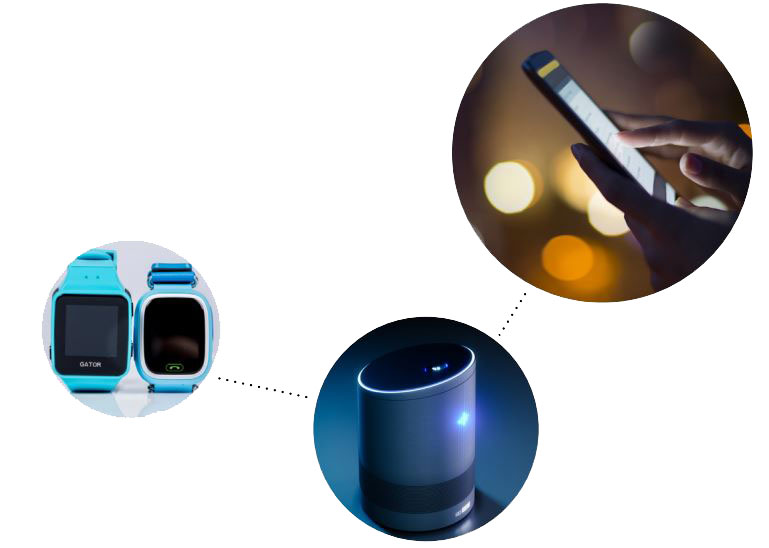
We are digitally connected and wired in our daily lives. Our life is now measured by our presence in the digital space. Our life revolves around smart products and how smartly we use them. Your AC is switched on even before you enter your home, your smart phone reminds you of the next PPT presentation, your smart watch checks your daily calorie intake and your geyser remains ready with hot water on time. But the question is how trusted are our smart products and how much trust we can have on them.

The IoT (Internet of Things) as we know it is the key to smart shopping, smart transportation, smart homes, and smart healthcare.  Software and hardware devices of trusted smart products are getting interconnected forming a meshed network of information, most of which is stored in the Internet. Trusted smart products help us to get digitally connected and a lot of data exchange happens through it.

As predicted by research firm IDC, by 2020 there will be more than 28 billion objects with data-exchange capabilities.

Though in many ways it has proved a major boon for our lives, it is a major security threat as well.

IoT, the acronym for The Internet of Things, refers to the physical devices connected all over the world through the internet and which is used for collecting and sharing data. By using the processors and wireless networks, it’s possible to turn anything into anything.

BENEFITS OF THE INTERNET OF THINGS FOR CONSUMERS

The Human brain is no longer the only smartest thing now. It faces stiff competition (if you swear by smart products more than your brain) from smart speakers and products that make our homes, offices and vehicles smarter. It sets the alarm, it plays music the moment we ask for it, it reads aloud the news for us and even gets us traffic updates. So you can no longer give an excuse to your boss that you have been late to office because of traffic!
On a more serious note, home security system makes it easier to monitor what is going on inside and outside, or to see and talk to visitors virtually.
For consumers of the 21st century, a smart home is one where they will come into contact with internet-enabled things. A smart healthcare system is one that will give us body signals even before we realize them. A smart school uses smart boards for making the GenZ smarter than ever. Smart products have made life simpler, and increased safety for children and the elderly. However, many of these innovations could have major implications for our personal privacy.

SECURITY AND PRIVACY

Software of trusted products if not updated on a regular basis makes it easier for hackers and risks the users’ private life. Hackers are now targeting IoT devices such as routers and webcams because of their lack of security. IoT devices are prone to virus attacks through malware across organizations.

Privacy remains a constant headache when all the sensors are collecting data. It can tell from when your day starts to when it ends; where are you going to what you are eating and when you are sleeping sensing the usage of smart devices timings.

AFFORDABILITY

Though the cost of many smart products like smart phones and smart TVs have been lowered in many countries, the cost of data is still huge which serves as a barrier to internet access.

DATA PRIVACY AND PROTECTION

A 2018 global consumer study revealed that 52% of users are more concerned about their online privacy compared to one year ago. While 43% of respondents from a different survey said they wanted to know more about the data collected about them via their connected devices and 47% worried about identity theft. Objects within a connected system may not reveal much information on its own but when collated and analysed with other information it could reveal the details of the user profile.

TRANSPARENCY

Even a random survey in office or in your locality might reveal that most consumers or users are unaware about how personal information is collected, used and disclosed. Consumers International member Deco Proteste in Portugal, carried out mystery shopping for Smart TVs in shops. They found that no pre-purchase information was available to consumers on how the devices collected and used their data. However, agreeing to the provider’s data collection policy is essential in order to use the TV.

For our comfort, we as consumers have unwittingly compromised our privacy. So it is upto us now to decide how far can we go on this.

Just like every invention, smart products too have its own pros and cons, so does Internet of Things. So think before you get wired and digitally connected.

Enquire Now

    X
    Enquire Now