
100% on the Pack. 62% in the Product. Where Does Consumer Trust Stand?
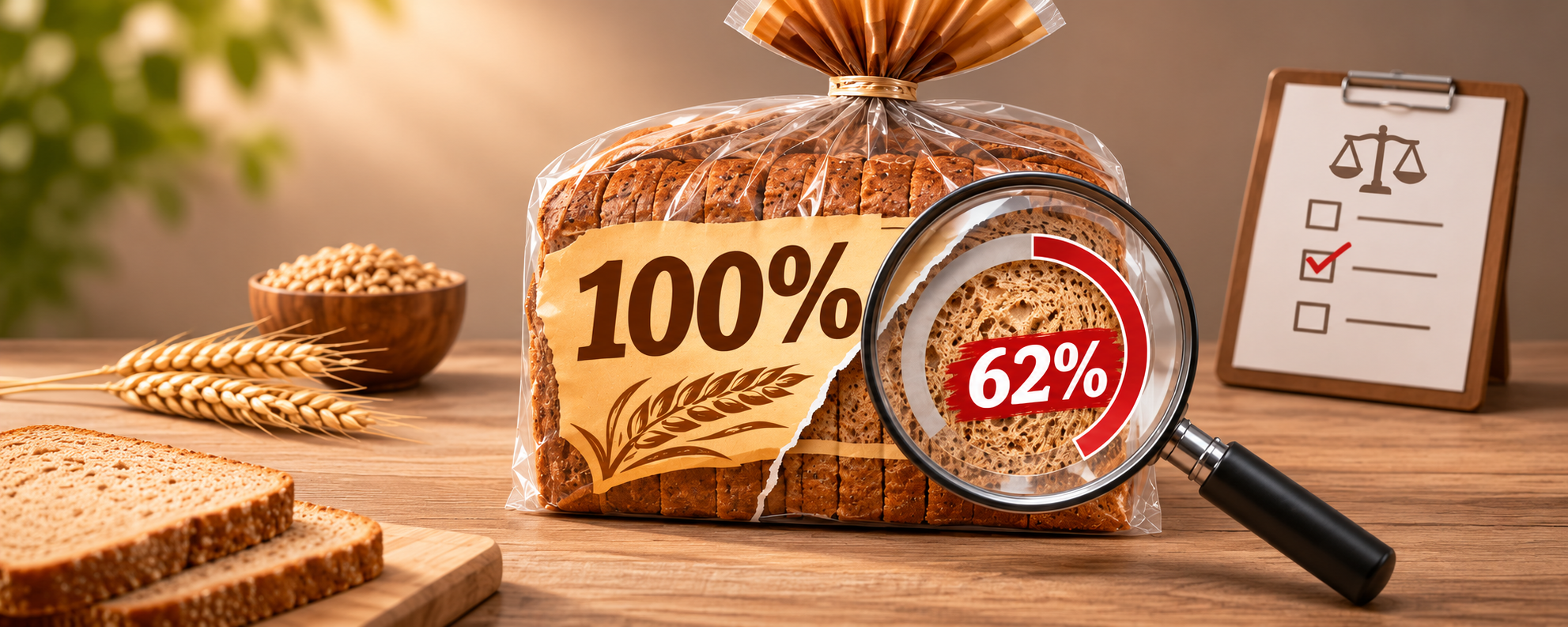

The CCPA’s ₹1 lakh penalty on Britannia Industries over its ‘100% Whole Wheat Bread’ claim raises a question far bigger than the price of a loaf of bread.
The product contained 62% whole wheat flour, against the 75% threshold prescribed for the nomenclature ‘Whole Wheat Bread’.
By Avijit Bose, COO, CONSUMER VOICE
Also Published on LinkedIn ↗
The company’s smaller-print qualification did not, in the regulator’s assessment, neutralise the prominent claim on the packaging.
Enforcement must create meaningful deterrence. A ₹1 lakh penalty may address an individual violation, but the larger policy question is whether penalties adequately reflect the scale of commercial reach, consumer exposure and potential benefit derived from misleading claims.
The consumer buys the promise, not the fine print.
Transparency is a business obligation, not a marketing choice.
India needs a marketplace where innovation and commercial ambition coexist with truthful advertising, scientific substantiation and consumer accountability.
Ultimately, consumer trust is not manufactured in an advertising studio. It is earned through honesty in the product, transparency on the label and accountability in the marketplace.
My view: The real measure of a consumer-friendly business is not how convincingly it sells, but how honestly, it delivers.